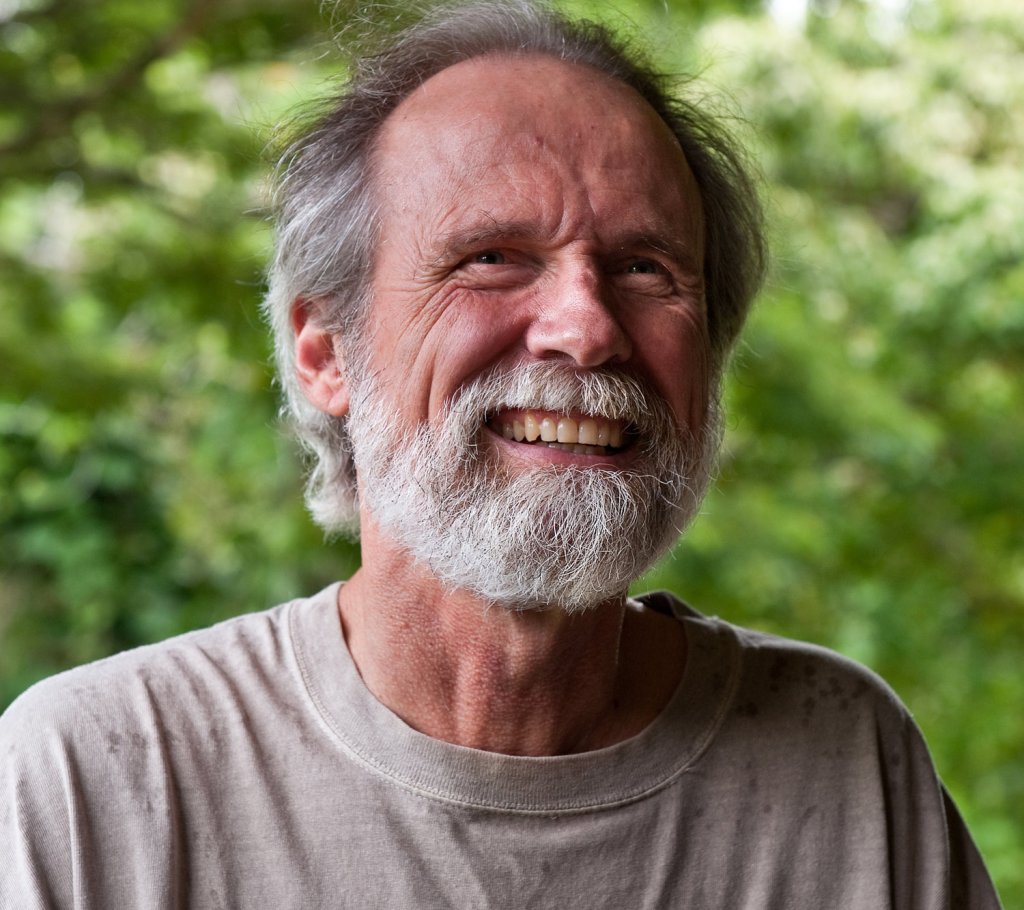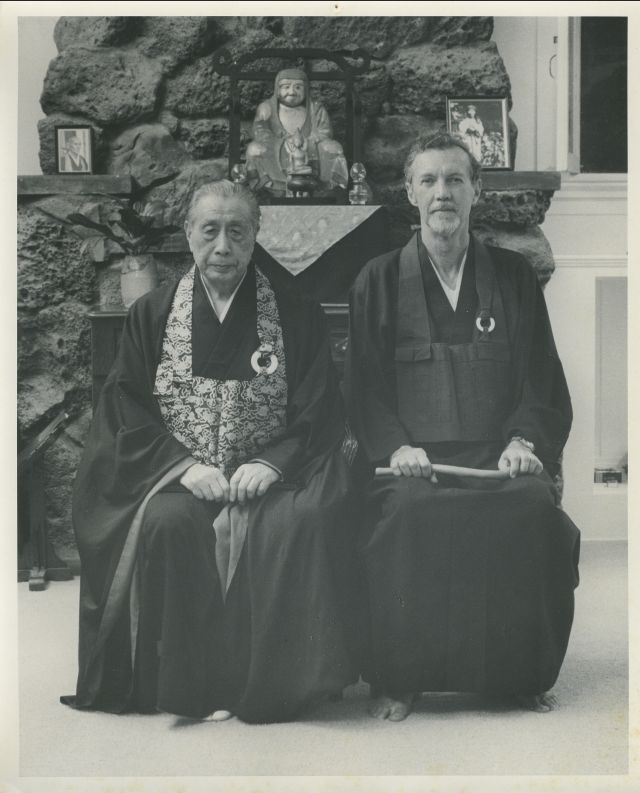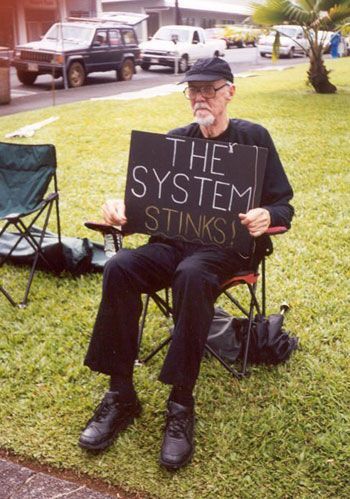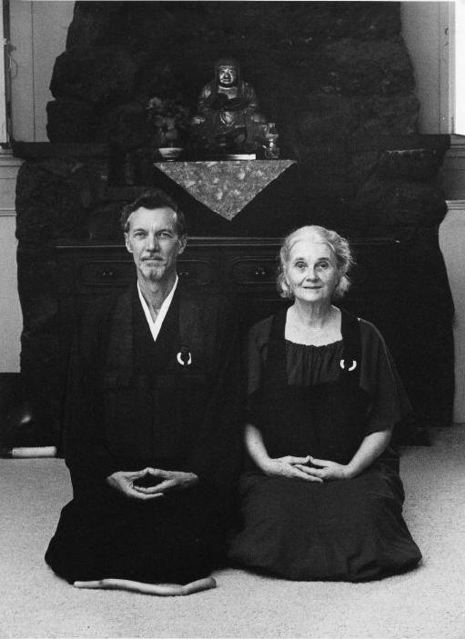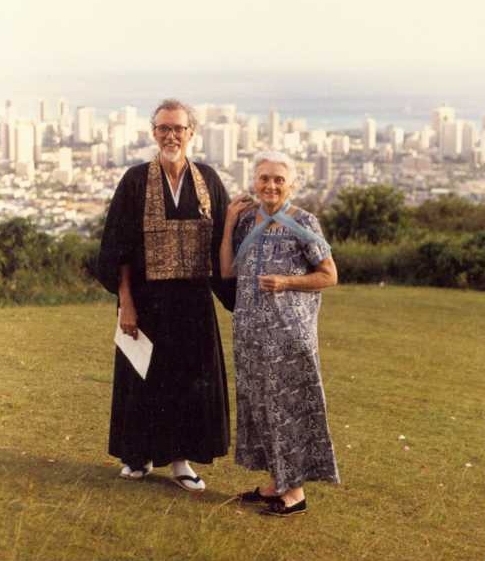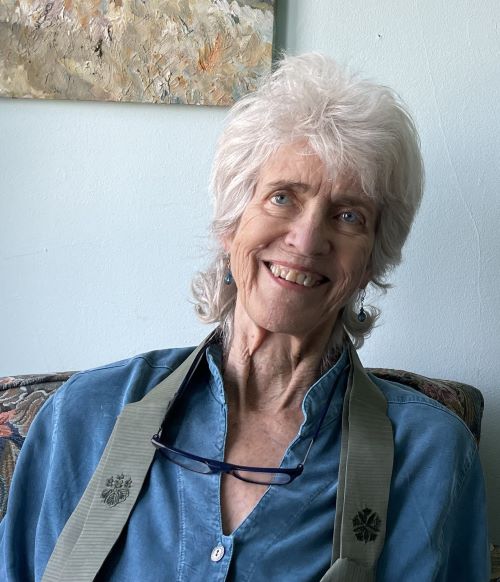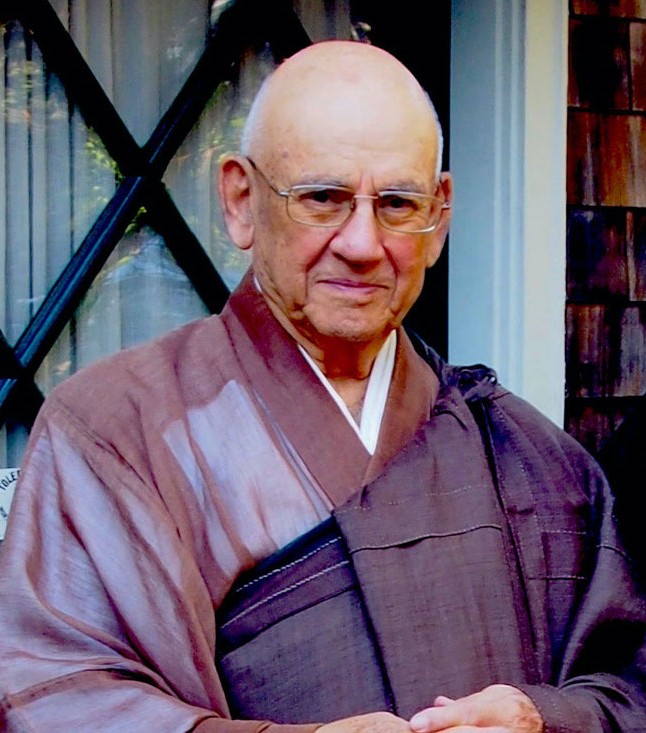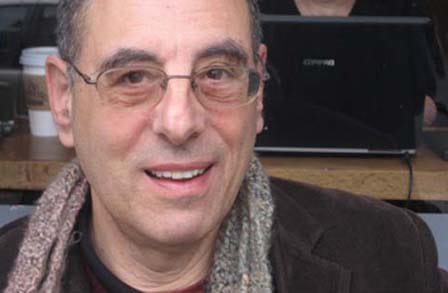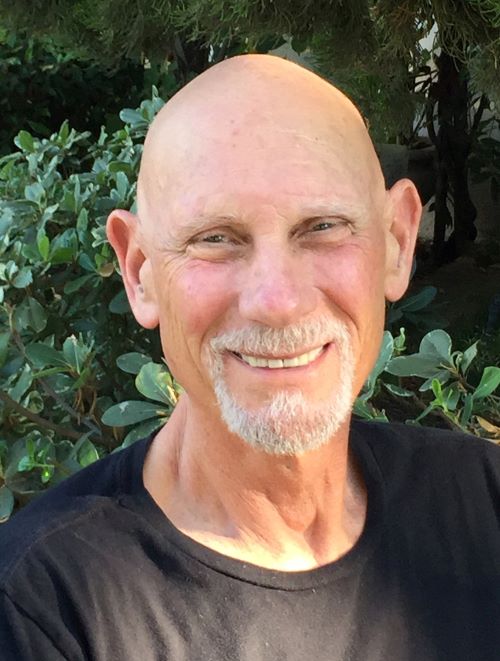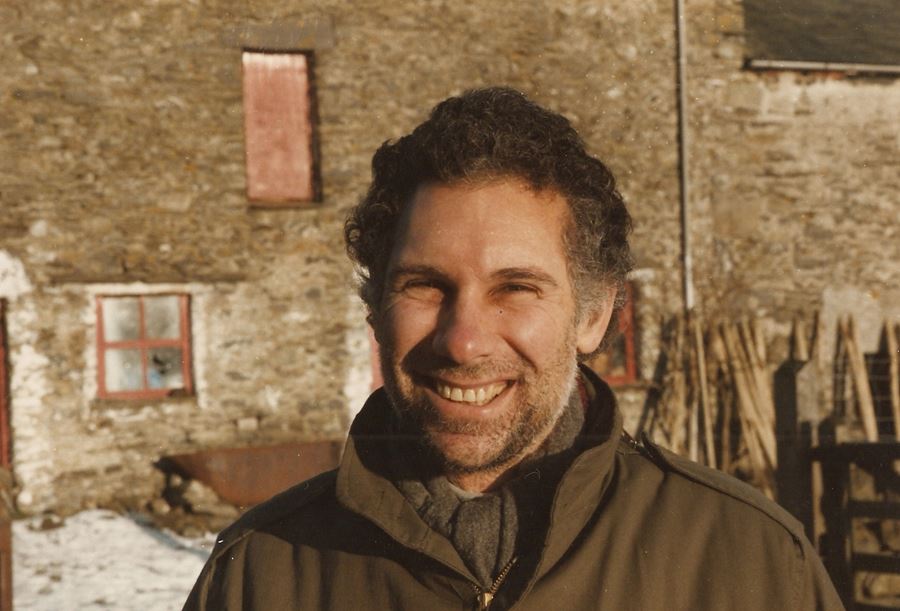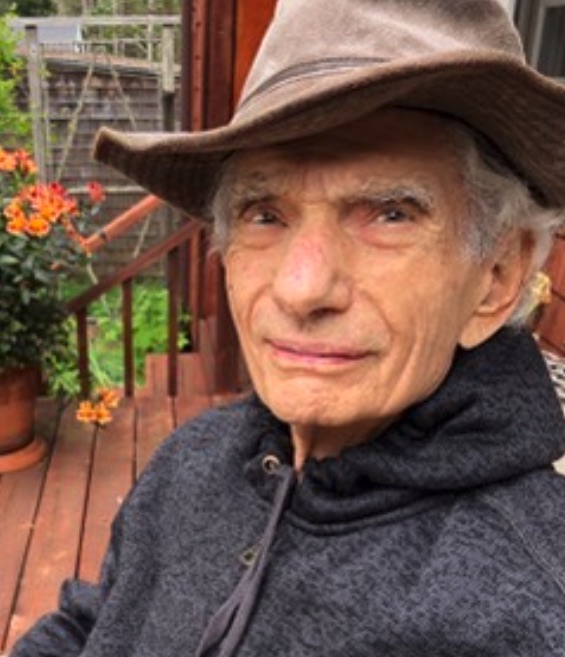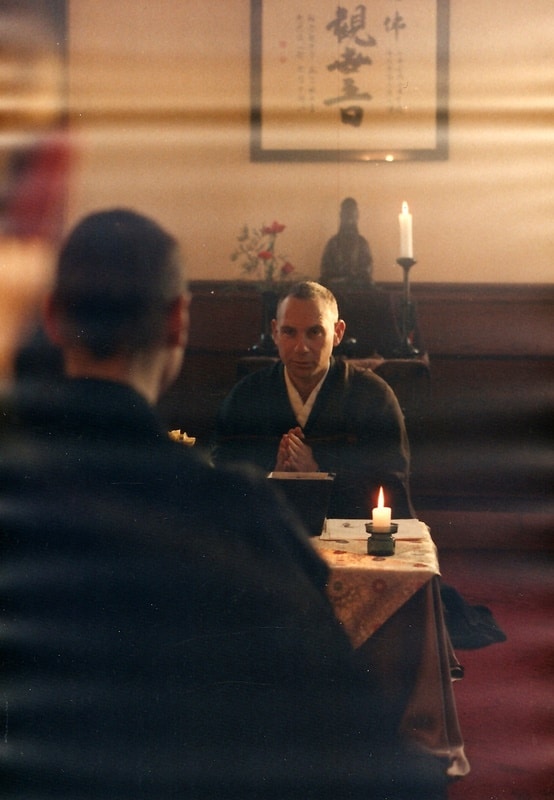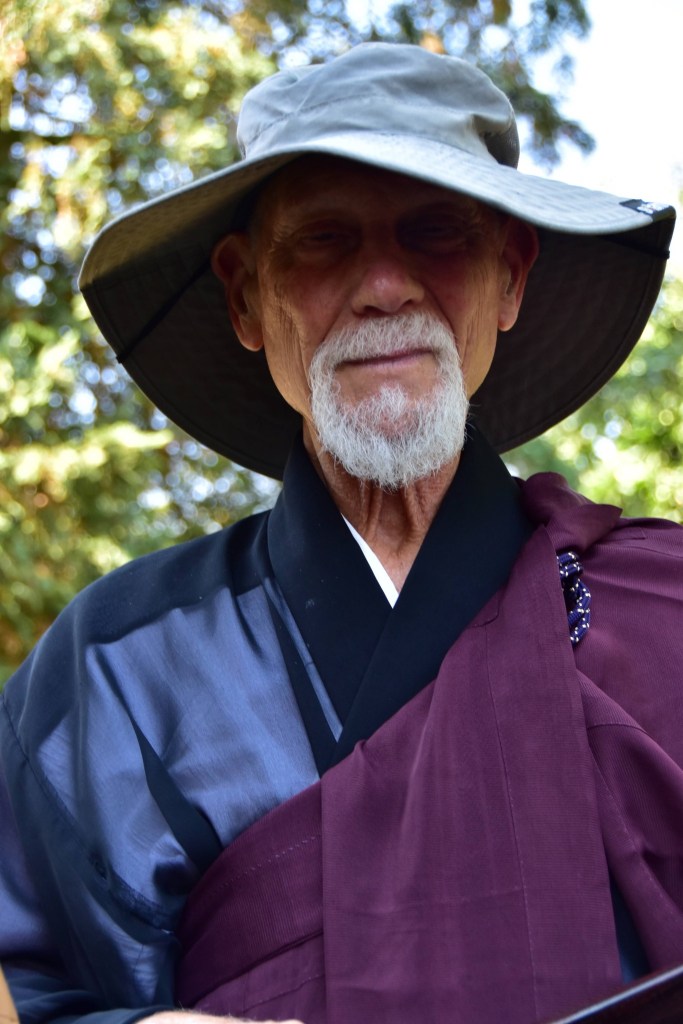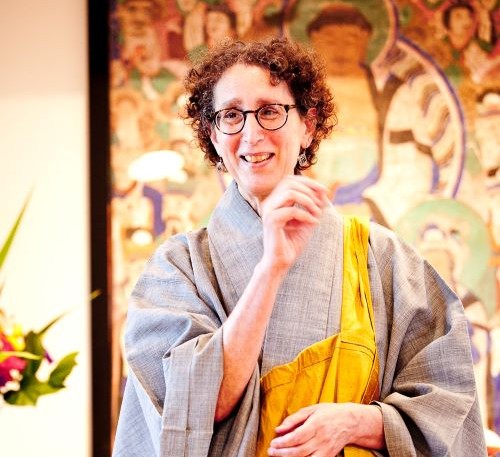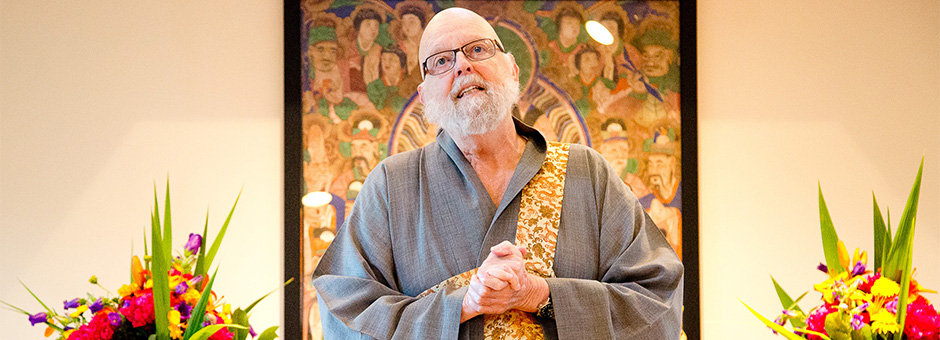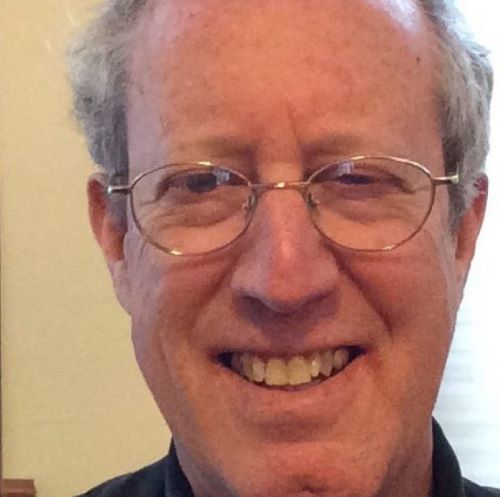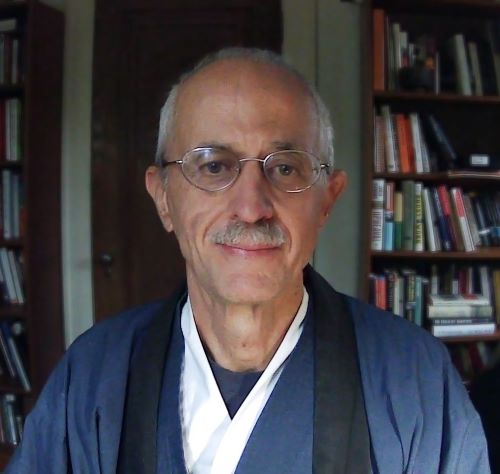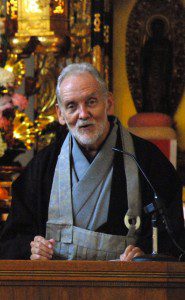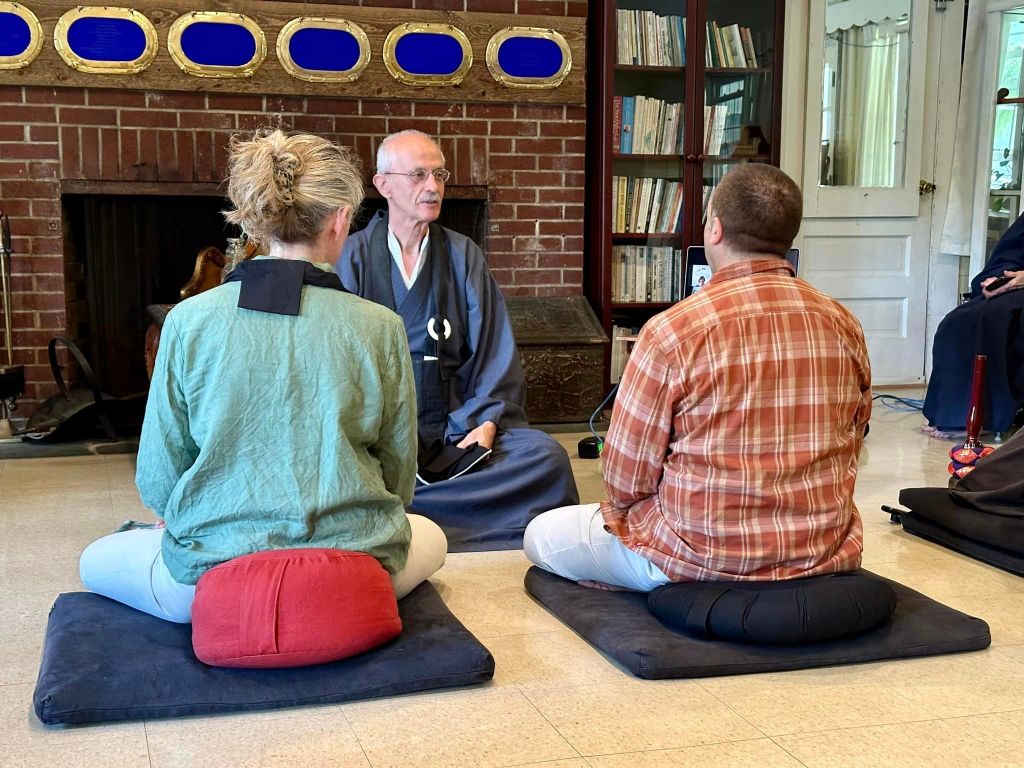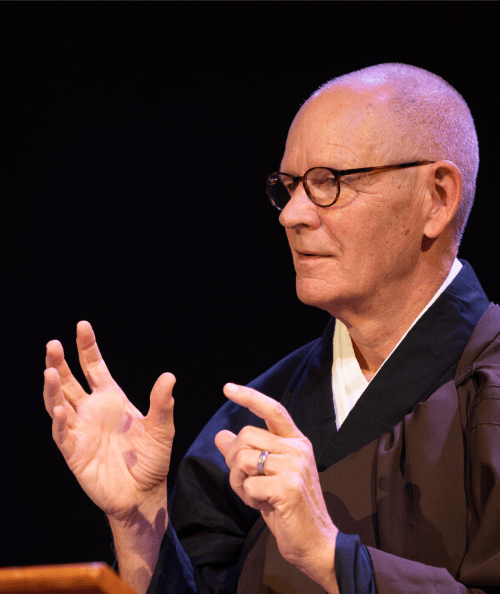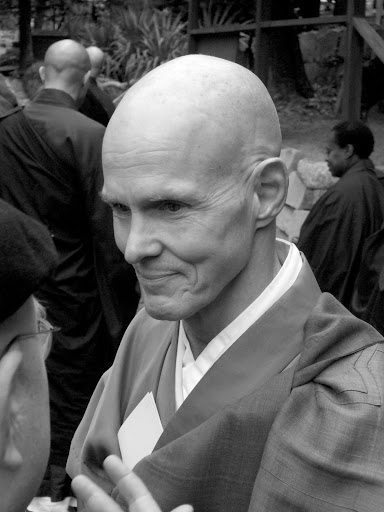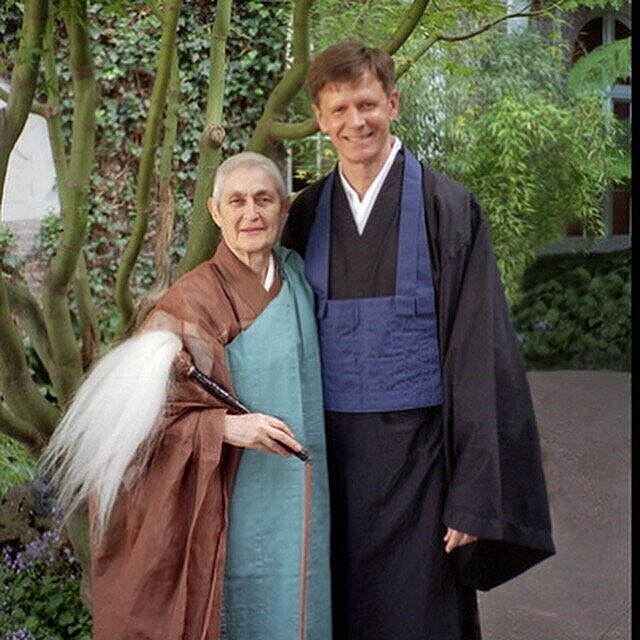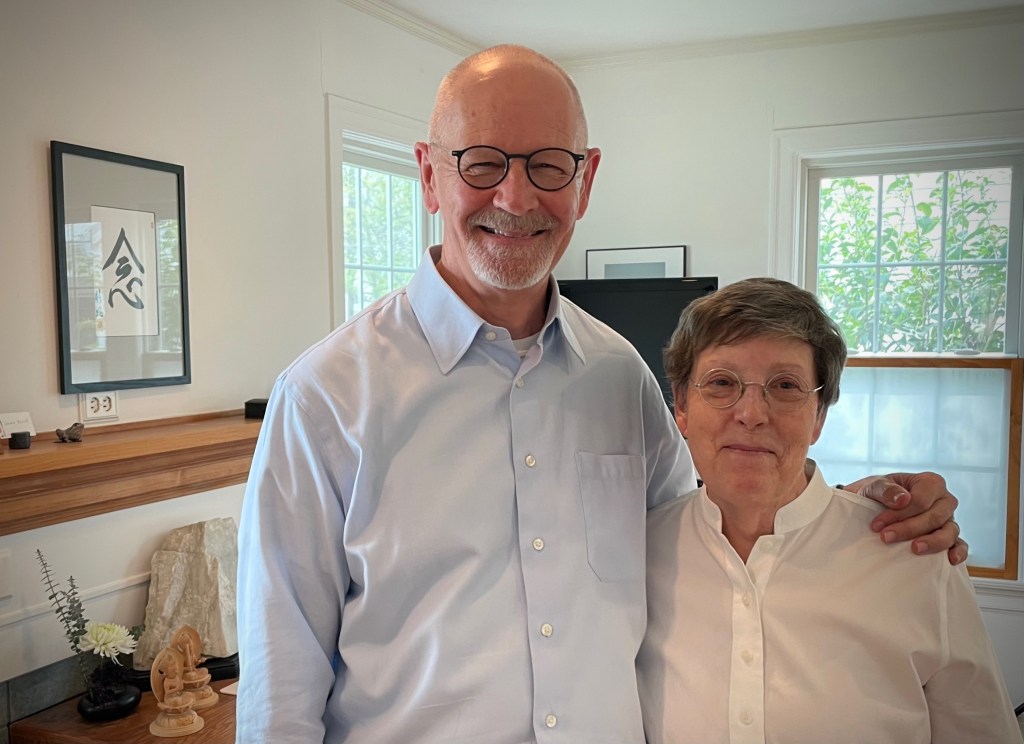
Barry Magid

Ordinary Mind Zendo, New York  –

“Like a lot of people in the 1960s,” Barry Magid tells me, “I encountered Zen through the Beats, in reading Kerouac and Gary Snyder. I found Alan Watts and D. T. Suzuki  and those folks. So at some point I noticed the characters who were still alive – who didn’t drink themselves to death – were the ones who actually began practicing. And by the time I was in medical school, I started to try to find out some way to begin practicing.”

It started when his college approved a three-month course of study at the Associates for Human Resources in Concord, Massachusetts. “It was trying to be Esalen East. Jack Kornfield was on the staff. They did all this Gestalt training and encounter groups, Reichian analysis, and TM. All sorts of stuff like that. They brought in Gregory Bateson and Bucky Fuller. I can’t believe I got medical school credit for it,” he says, laughing. “I think Jack Kornfield taught everybody walking meditation.”

“What prompted you to take that on?” I ask.

“Well, you know, very early on I was interested in mixing up psychoanalysis or psychotherapy and meditation practice. It looked like these were two profound systems of character change, but it didn’t look like they were communicating with each other very well.  I wanted somehow or another to put those two things together. And there were a few things pointing me in that direction. Alan Watts was trying to be psychologically minded. We were reading books like The Freudian Left by Paul Robinson, and so there was a whole counter-cultural mixture of those things. If you were reading Wilhelm Reich you were probably reading Jack Kerouac and reading about Gary Snyder. So it was like, ‘How are you going to put all this stuff together?’”

“I can see the interest as an academic subject of study, but what drew your interest to meditation as a practice?”

“I don’t know. It was probably the spiritual equivalent of, ‘I’ll have what she’s having,’” he suggests with a chuckle. “You know, you read these idealized pictures of Japhy Ryder in Kerouac, and you say, ‘I want to be one of those guys.’ Right?”

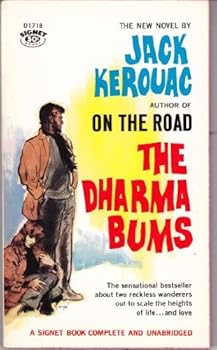
Like his other books, Kerouac’s Dharma Bums is a roman à clef. The central figure, Japhy Ryder, is a thinly veiled portrait of the poet, Gary Snyder. Kerouac’s portrait of Ryder is exuberant and appealing—a Zen practitioner, an outdoorsman and poet; a scholar, in addition to being both sexually accomplished and wise in the ways of the natural world. “He did not look like a Bohemian at all,” the narrator of the novel notes; instead “he was vigorous and athletic.” It was a portrait which would intrigue and inspire many young readers. Barry was in his early 20s when he read the book. It would still be a while, however, before he took up formal Zen practice.

“So maybe towards the end of my residency, ’77/’78. I applied for analytic training. I tried to find an analyst who had some sympathies with Eastern ideas, and I started going to Eido Shimano’s Zen Studies Society three times a week and my analyst three times a week and did my best to get them all mixed up.”   

“Was it a successful mix?”

“Well, I’ve made a career of mixing those two things up ever since,” he says with a laugh.

“In some ways, I was probably precocious as a meditator, and something quickly grabbed me about that. But it was also the case that these were the days of the big scandal with Eido Roshi who was sleeping with his students. You know, at one point somebody took red paint and wrote ‘shame’ on the front door of the place. There was a big exodus of people. It quickly became clear that enlightenment might not be all that it was cracked up to be, that there was clearly character pathology that was not washed away by the enlightenment experience, because the idea at the time was that you just had to have a big enough enlightenment experience, and it would be a sort of a universal solvent for the ego and all its problems. But when you have the teacher being the one having all these unresolved problems, something isn’t computing. So there was a way in which the problem of dissociation was clearly manifesting itself, and that made it all the more important to try to determine what’s the relationship between meditation and western psychology and therapy.”

Barry withdrew from the Zen Studies Society but not from the practice.

“Then Bernie Glassman came to town. People at the time referred to him as the Great White Hope. He was going to be the Westerner who had received Dharma transmission and was going to be an alternative to Eido and having Japanese teachers. So I spent some time in the ’80s with Bernie. Did koans with him for a while.” Barry was also, by then a practicing psychiatrist.

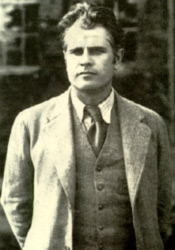
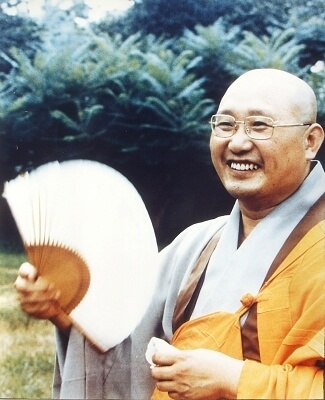
Bernie Glassman

Bernie founded the Zen Community of New York in 1980. Barry tells me. “It was fun. But it was a complicated place. It was running on its own mythologies. But it had an interesting group of people there. Lou Nordstrom was a good friend. Peter Matthiessen. Larry Shainberg (the brother of my analyst at the time, David Shainberg) and Diane Shainberg (a brilliant woman  and one of my instructors during my analytic training and also my analyst’s ex-wife). There were a lot of smart, interesting people hanging around Bernie in the early ’80s. And he started out saying he was going to have this kind of open community with some residents but lots of people coming in. It wasn’t monastic. Although at some point Bernie told me, ‘If you’re really serious, stop being a psychiatrist and come here to practice fulltime.’ That was a non-starter. And then he had the idea of running a bakery, which ended up destroying the community because the work-practice just took over the place. There had been this big community center in Riverdale which they then got rid of, and they just moved up into Yonkers for the bakery, and that whole thing imploded.”

Bernie started the Greyston Bakery two years after the Zen Community. It has been admired by many as an example of social enterprise, but Barry found it problematic.

“That was a real disaster as far as I was concerned. Everything got shifted towards work practice. And  for a lot of people, it was just a lousy low-paying job. It wasn’t practice. The whole center of gravity of the place shifted. And – as Bernie often does – he sort of got in over his head financially and then asked everyone to bail him out. He tended to be somebody who got very enthusiastic about projects, took them a certain length for a few years and then moved onto something else, and a lot of people felt left in the lurch by that.”

It was something Bernie himself was aware of. When I met him in 2013, he told me that he thought of himself more as an entrepreneur than a businessman. “I’m not a great person to run a business, but to start one! I’m not sure what year, but one year I was voted by US News and World Report as the social entrepreneur of the year.”[1]

“He was charismatic and high energy and made things happen,” Barry told me. “But he was not somebody to establish a stable community, and I think that’s much more what I would have wanted.”

Barry does not view the teachers with whom he worked with an uncritical eye. He points out, for example, the tendency for there to be – as he put it – “a dissociation between the psychological life and the spiritual life.”

“What is the difference between them?” I ask.

“Well, there shouldn’t be any but what happened was that it turned out to be a big split in all these characters. Eido and Daido Loori and Bernie would tend to talk about the ‘merely psychological.’ Those were the kinds of problems you should go get cleaned up somewhere else, but we were going to explore some more essential truth. And that, I think, was just very split off. I remember in the Eido Roshi days, I talked to somebody who was one of his Dharma successors; he said, ‘I think of Eido as like a great musician or conductor. He creates this fabulous music, and what he does in his private life should be irrelevant.’ And I just thought that was utter nonsense. I said, ‘What is the music a Zen teacher creates if not an ethical life?’ What is the teacher’s talent for? That you get to answer koans? What does that correlate with if it doesn’t correlate with compassion, if it doesn’t correlate with a sense of personal well-being and how you treat other people? So the idea that there was this kind of beautiful insight that you’d get through meditation and if you’re screwing all the students on the side or you’re getting drunk all the time, well, we can brush that under the rug because there’s this beautiful thing you’re contributing. Well, what the hell is it? What’s that for? That just ended up seeming specious nonsense to me.”

After the focus of Bernie’s group turned to the bakery, Barry was among the participants who withdrew.

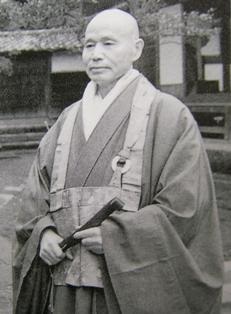
“For a few years we had a sort of a peer sitting group in Manhattan run by a wonderful woman potter named Nora Safran. She’s not alive anymore, but she was a wonderful potter. She had been around in the days with Yasutani Roshi and Soen Nakagawa in New York before me. But she was sort of a fellow refugee. And she had a big loft where she had her studio. Larry Christensen was there at the time. He had been a student of Maezumi’s in LA, and I guess he knew Joko Beck from the LA days, and he had been going out to see her. He persuaded her to come to New York to lead sesshins for us. I remember the way we got her to New York was we got her tickets to the US Open. She was a big tennis fan. That’s how we bribed her to come lead sesshin. So she did that a few times. And I very quickly hit it off with her and started going out to San Diego several times a year doing sesshins with her.”

“You were still resident in New York and commuted to San Diego?”

“Yeah. It was a hell of a thing to do. But, as they say, it seemed like a good idea at the time. It must have been about ten years of that.”

Joko Beck

“I know from personal experience, living 500 miles from Montreal where I worked with Albert Low, that travelling some place for sesshin – even regular sesshin – is different from living there and being part of the sangha,” I say.

“Yep. Yep. That’s right. Although Joko didn’t have a residential place.”

“No, but she had a local community.”

“She had a community there; she had a sangha. But there’s also a way in which Joko liked people to be independent. She didn’t like the idea of people becoming too tied to her. So I think the fact that I could come and go was sort of a plus. It was a funny thing. But that was practice that was much more grounded in emotional honesty than doing koans. She completely repudiated koan practice after her experience with Taizan Maezumi. She felt koans did not engage any of the emotional reality in his life and his student’s life. And she just wanted no part of it, although once in a while I could bug her and ask her about one if I wanted to. But she was really very sour on all that.”

“She was soured on Maezumi in general,” I note.

“Well, he had an affair with her teenage daughter while she was a student there. His behaviour was just unconscionable as far as she was concerned.”

“There are several of these people in the history of American Zen, people who have less than stellar personal lives.”

“That seems to be a theme,” Barry agrees, “And so what I’ve been writing about and trying to teach are all the dissociative pitfalls or curative fantasies that come up in practice. In part, it’s been a kind of acknowledgement that Buddhism – or Zen – is not a timeless, ahistorical revelation or universal truth. It’s a cultural artifact that was devised in a community of celibate, ascetic mendicants, and psychological well-being was not high on the list of things they were trying to achieve. So I don’t feel any fundamentalist allegiance to this ancient truth. I think it’s a method that we’re constantly trying to adapt to a new reality.”

Barry received transmission from Joko in 1998.

“I feel like I’ve inherited a tradition,” he tells me. “I’ve embodied it after my own fashion in the present, and, as a teacher, I have a responsibility to pass it along. But I’m passing it along not unchanged. I think that’s part of what Dharma transmission is. Joko did not pass on unchanged what she got from Maezumi, and I don’t pass on unchanged what I got from Joko. So it’s not this sense, again, of a timeless truth.”

“You pass on what you received from her ‘not unchanged.’ What is it that you received from her?”

“Are you asking, what is the essence of her teaching?”

“The word used is ‘transmission.’ Something is transmitted. So what is the essence of the thing that’s being ‘transmitted’? What are you transmitting to your successors?”

“What I ask for from my successors is a psychologically minded Zen practice. So what I’m interested in is a kind of psychological wholeness where the point of the practice is to be able to own all those parts of yourself that you came to practice to get rid of. Your vulnerability, your anxiety, your anger, your sexuality. There has to be someway in which you can look in the mirror and say, ‘This is me.’ We’re not here to create an idealized version and then push everything aside.”

“That’s what you’re doing, but what I asked was what’s being transmitted?”

“What’s transmitted is, very literally, a practice – a practice of sitting – and of an orientation to sitting that is, again, not about the cultivation of particular states but the owning and acknowledging of all states and of everything that’s coming up.”

“And the value of that is?”

“The value is that basically character-pathology is the result of an endless attempt to fix or extirpate the parts of the self that you think are the source of suffering. But that whole processing/fixing/excluding is the ego that’s causing the problem. So psychoanalysis and Zen and Wittgenstein’s philosophy leave all these things just as they found them. Right?  But that’s the thing we can’t tolerate doing. We don’t know how to leave our self as we find it. That is the dynamic engine of the suffering, that sense that I have to extirpate my anger. I have to extirpate my sexuality or my anxiety.”

I wonder if this doesn’t give an out to people like Eido who, I suggest, could have discerned that being a philanderer is just part of who he was.

“Well, that is not just, ‘This is essentially who I am, like I have brown hair and blue eyes.’ I think these habits have long histories and dynamic forces that generate them. It’s like saying, ‘I’m just angry’ without looking at how your expectations, your need to control, or your emotionally vulnerability leads to anger. You can’t just take anger as a simple given in your personality and say, ‘That’s just who I am. I’ll leave that alone.’ That’s either blind or dishonest. And I think somebody like Eido, his need to seduce and control people and to have that kind of narcissistic gratification is not just a given of his personality. It’s the end point of a whole history that was split off and never engaged with his Zen practice. One of the pernicious byproducts of some realization experiences is that they basically say, ‘Doing this, I can feel really wonderful without dealing with any of that other messy psychological stuff. I can just keep doing this and feel better and better and more and more okay in this one compartment.’ But I’m not dealing with any of the things that make me want to go out and get drunk at night. So there’s a way in which these dissociated parts of the personality don’t get swept into the hopper sufficiently. And that’s what Joko was mostly trying to do, make you engage all of it. Not cultivate one piece of it and split the others off.”

“Earlier you questioned the value of this practice if it doesn’t lead to an ethical life.” He nods his head. “What’s the value of an ethical life?”

“There’s no value outside of that. That’s what value is.”

I wait to see if he will add more to that statement, and, when he doesn’t, I say: “We have already mentioned several teachers who couldn’t have been said to have led particularly ethical lives. There are others of course. Have all these distorted the tradition they’d been entrusted with passing on?”

“No, I think they actually exemplify the tradition. I think the tradition was such that dissociation is not a bug; it’s a feature. That’s why I said I don’t think that traditional practice thought about or was very good at dealing with psychological issues. I think culturally certainly a lot of the Japanese teachers came from a tradition where very explicitly what you do in your private time doesn’t matter – that there’s the daytime personality and then the go-out-drinking-at-night personality – and they’re very comfortable culturally with that kind of split. And I don’t think it was as if there were these wonderfully, psychologically healthy teachers in a previous generation and these guys just fucked it all up. I don’t think it was a practice made to deal with that stuff in the first place, and America exposed that.”

“Regardless of which, you remain loyal to the heritage as it was transmitted to you.”

“It’s like psychoanalysis. I’m not a Freudian but I’m a psychoanalyst. You feel that’s part of what being part of a tradition is. There’s a whole stream that gets you to where you are today, and, of course, the people who came before you were dealing with things in different ways than you’re dealing with them now. But you can still be part of it without feeling like you have to do what they did or feel like what they did had to have been perfect because they’re the forefathers.”

“Why do people take up Zen practice now? A lot of people our age first came to Zen because they read Kerouac or they read Kapleau and they wanted that enlightenment experience which was going to miraculously redirect their lives. But what do people come to Zen for now?”

“Well, I say that almost by definition everybody comes to practice for the wrong reasons because you’re coming with all sorts of self-centered preoccupations. Everybody’s got that, and they are bringing whatever it is to that. These are what I call peoples’ curative fantasies. And I think the people who come to the zendo, and the people who come to my psychoanalytic practice are, a lot of the time, interchangeable. I think the Zen people these days are more likely to come for psychological problems than as kensho seekers. I think there’s less of that in this generation and just more overt looking for some kind of psychological well being.”

“What kind of psychological well being?”

“I’ve talked about these things in different kinds of categories. There are the spiritual anorexics, the ones that are seeking purity and want to shed the parts of themselves they think are greedy or needy or vulnerable. Then you get the people who have taken a vow to save all beings minus one. They’re the compassionate do-gooders who don’t know how to deal with their own needs and often come to practice as a way to escape their own needs into what they think is going to be compassion. And then there are the people who are looking for mastery. That happened more in the Rinzai crowd, where you want to have people that are so tough nothing will ever perturb them again. They will be able to master any situation. I can sit seven-day sesshin, I can handle anything. Right? I’ll be the toughest son-of-a-bitch in the valley. So you could say that, just like in psychoanalysis, people all come trying to perfect their own neurotic solution, take it up a notch.”

“So they come for the wrong reason, and what do they discover if they stick around?”

“Well, we try to make explicit what that wrong reason is and where it comes from. Why do you try to get rid of this aspect of yourself?”

“Okay, suppose one of the people we’ve mentioned woke up one days and thought, ‘The way I’m going, I’m hurting people. I’m harming others. Maybe I better go see somebody, try to get help.’ And they come to you. What is it that you could help them with?”

“Trying to tolerate the vulnerability in themselves that they’re trying to compensate for with this behaviour.”

“And do you expect that behaviour to alter as a result?”

“Yes. That’s what the point of therapy is. You expect some of that to alter if you see that it has a cause, and you can begin to deal with it.”

“You’d said that some people are drawn to take up practice because they identify what they consider greediness or neediness in themselves. Is getting rid of that greed a reasonable end for this process?”

“Joko used to say that the point of practice is to learn to suffer intelligently.”

I hadn’t heard that quote before and smile. “That’s a nice line.”

“I’ve added that it’s also to learn to become dependent intelligently. What is your relationship to others; how are your needs expressed; how are you going about that without putting all the neediness into other people so that you can always feel like you’re the strong one? That’s a very typical teacher syndrome. I’m the one with the answers; I’m not the one with the needs. So we have teachers having affairs with students because this was the one place they finally found someone they themselves could be vulnerable with, and they could be on the receiving end of something. See I remember, certainly in the old days, we were always told about how important it was to be compassionate. Right? But the arrow always went in one direction. I never heard anybody talk about the need to receive compassion, to need love. It was always, ‘You have to give this. You have to give this.’ Teachers – you know – often need to be at the receiving end of it, and, if there’s not a legitimate way to do that, they start doing it illegitimately.”


[1] Interview July 15, 2013

Kurt Spellmeyer

Cold Mountain Sangha, New Jersey

“I’m from a mixed background/heritage, and religion really wasn’t an important part of my upbringing,” Kurt Spellmeyer tells me. “I became interested in all kinds of religious traditions, but it wasn’t part of our family’s experience.”

I ask what the mix was.

“Well, I was really ‘all of the above’ and ‘none of the above.’ Protestant, Catholic, Jewish. But my grandparents on both sides were irreligious, indifferent, or actively opposed. Every once in a while, my mother would become anxious about our well-being and send us some place for a little while, but then my parents didn’t have the follow-through to make sure we kept going. When we lived in Bowie, Maryland, I went for a while to Hebrew class after public school, but I thought it was boring and I asked my mother if I had to go.  She said no and sent sent my bother and me to a Presbyterian church, but my brother got us expelled for making fun of the ‘Tell Me the Story of Jesus’ song. My early experience of religion was eclectic, even incoherent, and I’m actually rather glad about that, that we didn’t have a religious Tradition with the capital T. As an undergraduate at the University of Virginia I double-majored in English and anthropology, and I became fascinated by the anthropology of religion, symbol systems, and so on. My background allowed me to follow my interests without feeling that I was betraying any particular position, and I think that was the best place for me to be. For me, the lack of religious commitments was liberating; I felt free to explore.”

He acquired an undergraduate degree in Virginia and then went on the road. “I grew up reading Jack Kerouac. When I finished my undergraduate degree, I was dying to see more of the country, so I hitchhiked across the United States, from the East Coast to the West, and from Seattle down to New Mexico. I worked periodically—as a carpenter, a housepainter, a cook, and moving furniture for the Mayflower company. And I loved that life. I was a pretty good carpenter, by the way, and I became a member of the union when I was working in the Northwest.”

After a few years he entered the graduate program in English at the University of Washington in Seattle, but it wasn’t an easy transition.

“The demands were stressful. While I was out exploring the world, my academic skills had gotten rusty. I probably hadn’t read a book in three years. Then, abruptly, I was in graduate school, competing with people who had just arrived from Harvard and Stanford. My professor would quote Heidegger, and some of the students would say something back in German! I felt so outclassed and ill-equipped. I was trying to adjust to that environment and beating myself up, which only made things worse. And I was almost always on the edge of broke. Then, my wife somehow heard about a Tibetan center near the university. You remember Chogyam Trungpa? This center was a part of his organization.”

Zazen Kitty

“Shambhala?”

“Shambhala, right. They owned a house on Forty-fifth, and I started going there to sit when it was open in the afternoon. I’d read some books on meditation in college and had done some sitting on my own, and going there definitely helped me cope. Then one day I ran into somebody who said, ‘You know, there’s a Zen master who’s just come from Japan, and he’s holding classes at the University of Washington on Wednesday nights.’ I immediately acted on the tip, and that’s when I met Takabayashi Genki Roshi. And I absolutely fell in love with him, and not only with him but also with Zen. For me, the practice of sitting was like nothing else I’d ever done. Absolutely wonderful.

“The first time I went over to the University looking for the Zen group, I was hoping to meet a ‘Master,’ whom I’d imagined would be something like Master Po in the television show Kung Fu. But when I found the room where the sitting took place, I saw this small, unimpressive Japanese guy mopping the floor. And I said, ‘I’m looking for Genki Roshi.’ And he replied, ‘I am Genki Roshi.’ That was such a wonderful moment. The enlightened teacher is mopping a floor! That was an extraordinary moment for me. I thought, ‘Oh, I’ve just met my teacher.’ I didn’t even know what that actually meant – to ‘meet your teacher’ – but there was just an immediate resonance.  He checked many of the boxes in my unconscious, I guess, when it came to what an awakened person should be.”

“What were you looking for?” I asked.

“I don’t know. I don’t think people ever know. I mean, they can explain or rationalize their cathecting to a certain person as a ‘teacher,’” – I had to look up the meaning of “cathecting” later – “but I don’t think they can really know because so much about this relationship unfolds below the surface of the conscious mind on both sides, the student’s side and teacher’s. There’s a lot of projection on both sides, but those projections in my view come from a deeper place that deserves our respect. I would say that the enlightened mind in me spoke to the enlightened mind in Genki Roshi. In point of fact, I didn’t really know the guy at all, at least not at first, but already there was this subconscious or unconscious resonance that was absolutely clear to me.”

“That’s the way you understand things now,” I remark. “What did you feel then?

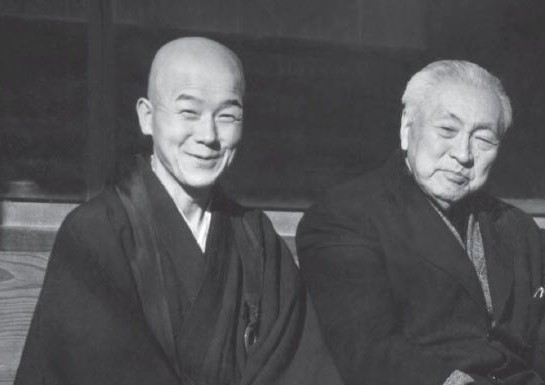
Genki Takabayashi

“Just this trust. Just this rapport. I admired his humility, his unpretentiousness and naturalness. He never struck me as menacing or judgmental. And that mopping-the-floor moment was a wonderful introduction to this person. I’m convinced you can’t know intellectually what the teacher-student relationship involves; it’s a powerful intuition you simply have. At the moment of our first encounter, I saw Genki, but I also saw something beautiful and enlightened in myself. In a way, it’s really not about the teacher.

“At this time, I also had the opportunity to meet Sensei Glenn Webb, who was a professor of art history and the founder of the Zen group.” Kurt would eventually receive transmission from Webb.

He began a regular practice with the Zen group. “I was getting up at 4:00 every morning and going to the Zen Center and sitting for an hour and a half. I often sat in the evenings as well, but, in the meantime, I was taking courses at UW and teaching classes and trying to write my dissertation. That was pretty demanding. Sometimes I was so tired I would just have to keep the radio on beside my desk to prevent me from falling asleep while I tried to grade my papers.”

“It so happens, I also have a Ph. D. in English,” I note, “so I have a sense of what that must have been like. And you’re getting up at 4:00 in the morning, plus doing occasional evening sits. Why? What were you getting out of this?”

“Well, it’s one of those things you don’t need to explain because explanations are beside the point.  Why do people backpack or climb mountains? What really matters, I would say, is the resonance or the character of the energy that arises when you take a certain path. You feel more alive and more connected. The quality or tenor of your life has changed.

“Lots of people tried to dissuade me,” he adds. “One time I went to see my graduate director, and I had my zafu, and he asked, ‘What’s that?’ And I said, ‘I belong to a Zen group here, and I’m just going to do meditation.’ And he said, ‘How often do you do that?’ And I said, ‘I do it every day.’ He was actually angry at me. He said, ‘You know, you’re throwing your career away with this cult.’

“In Zen we talk about your ‘True Nature,’ and I think that when people don’t listen to their True Nature, that’s the worst mistake they can make. I have been very confused in many ways in my life, but when I found that connection, I knew that I needed to act from there. You sit down on the cushion, and you simply know. That’s been the truest thing in my life. I get up every day and do zazen.”

“I’m still curious about how it helped you,” I persist.

“Zen has solved many of my problems. My anxiety problems went away. For some reason, after sitting for a few months, I felt much more confident and grounded. I wasn’t so caught up in my mental loops. I was able to do things that I probably wouldn’t have done without Zen, like completing my Ph. D. and landing a job and getting tenure at a highly competitive research institution. But even if it hadn’t done those things, this is still something I had to do.”

Glenn Webb

There were some tensions in the Seattle group. Genki was identified as the teacher because – Kurt tells me – “Glenn didn’t want to play that role. Webb’s first teacher, his Dharma father, Miyauchi Kanko, had wanted him to stay in Japan and develop an international Zen center at Kankoji, an Obaku Zen temple which is now defunct. But Webb chose to return to the United States, where he started the Seattle Zen Center, which he invited Genki to lead, and Genki Roshi only came to the US because he was disgraced back in Japan. My understanding is that he was initially regarded as a rising star in the world of Rinzai Zen, but he had an affair and then, when the woman became pregnant, he refused to marry her. After that, she went to the Rinzai authorities who called him in and laid down the law: ‘Look, Genki, the way to handle this is for you to marry this woman’ But he categorically refused, and that was the end of his career in Japan. Here, in the United States, I think at first he behaved quite well. But imagine that you’ve just come from Japan. You have all these adoring people around you, and they’re treating you like a god and that includes some very attractive women. Genki had been adopted as a child by Yamamoto Gempo Roshi; his Dharma father was a famous Zen Master who didn’t know anything about how to raise a kid. In fact, Genki was forced to attend sesshin when he was twelve years old, wishing an earthquake would pull the temple down on his head, as he once told me. So, imagine that this is your background and you’re suddenly in the United States with the Sexual Revolution underway. So he had another affair here in the US, and my understanding is this woman also had a child.”

Kurt admits that although he was drawn to Genki almost immediately, his relationship with Glenn took time to build.

“At first he was just the translator and someone who seemed a bit stiff and remote. And when he began to publicly express his disapproval of Genki’s behavior, I felt like punching him. But gradually I saw him in a very different light. I realized that behind the scenes Glenn had been the one who made everything happen. Before we had our own place to hold retreats, Webb was the person who would spend his Saturdays driving around Western Washington looking for sesshin venues, negotiating costs, and settling up with whoever was renting us the facility. He was like Kannon with a thousand helping hands, never getting the bows that the Roshi received but teaching us in a less visible way. Somehow I finally noticed.  

“Glenn was a Congregational minister’s son who got interested in art history and went to the University of Chicago where he received a Ph. D. is Asian art. And he got involved with Zen by accident. He’d gone with the intention of studying several famous Zen paintings, but when he went to the temple where they were kept, and teacher there had told him, ‘I’ll show you the paintings, but you have to do zazen.’ He eventually took priest’s vows, but I think that for most of his life he remained conflicted. He had a deep respect for Buddhism; he lectured in the summers at Bukkyo University, a Pure Land institution, and he even became a tea master who taught at Urasenke. He had studied with Shin’ichi Hasamatu and the Kyoto School. But he also had a deep attachment, I believe, to Protestant Christianity. He often said that both of these traditions enriched each other for him, but I think there were also conflicts there that never got fully worked through.

“At any rate, when Genki had the affair, that crossed a red line for Glenn, and eventually our group split more or loss in two. You know how divisive these events are. Whatever the initial issue might be, it becomes a focal point for other tensions and jealousies. And so it wasn’t just an argument between two people but between different groups within the community.  

“When the split happened, somewhat to my own surprise, I went with Webb. I suppose I went with him because he was a deeply ethical person, thoughtful, kind and sensitive. As you know, Protestants are no more ethical than anybody else, as we can see from the endless scandals in the Protestant world, but sexual ethics are important to Protestants in a way that people from other traditions might not look at in the same way. Webb, coming out of that background, was deeply affronted by Genki’s behavior. For me personally, not so much. I was more troubled, even angered, by his indifference to the woman involved.

“At any rate, after we had our community Civil War, I went to practice with Webb. I was ready to quit Zen altogether, the Civil War was so discouraging. People had to choose sides and were attacking one another, impugning each other’s motives. It was ugly and sad. People who had sat through sesshins side by side were suddenly yelling at each other. It was like a nightmare, and I’d had it. But all the same, Webb was organizing a sesshin. We had built a temple up in the mountains, which we were now about to lose because financial support had dried up, but Webb was going there one last time before we put the place up for sale.  One evening after the meditation, Glenn approached me and asked if I planned to attend. And I wanted to say no, but when I looked at his face, I thought, ‘I can’t do this to him. He’s organized this last sesshin; I can’t say, “No.”’ And when I arrived at the temple, instead of our usual eighteen or twenty people, I think we had five, Webb and four others including me. Arriving at the empty, half-finished temple, I felt sad and lonely, but that was where I had my dai-kensho, my great awakening experience. It was like nothing else ever. I think I cried for seven days, and at first I wasn’t even aware that I was crying. It was the most real, powerful, transcendent experience of my life.  And after that, I changed my plan about quitting Zen and trained with Glenn for another year until he said, ‘You’re done.’

“Around this same time I landed a job here in New Jersey at Rutgers University. I left Seattle, and I came out here to New Jersey where I struggled to get tenure at a really competitive place. Then my father, from whom I had long been estranged, died of cancer – in my arms, in fact – and I went to his funeral. As it happens, he was – who knew? – a member of the Masonic Order. And a contingent of Masons came to his funeral, dressed in black suits and wearing white gloves. It was so weird, and I thought, ‘Who the hell are these guys?’ Then one of them came up to the front of the gathering and read from this little scroll, basically saying, ‘Life is short. Don’t waste time. This death is a warning and a sign!’ The speech just hit me, as they say, like a ton of bricks. I’d forgotten Zen! Of course, I’m very grateful to the profession of English for giving me a place in the world, a job that has meaning. I love teaching and I love literature. But Zen is my life. I couldn’t let it go. Painful as the history of the Seattle Zen Center had become, I had to return to Zen. So I wrote Webb, and I told him that I wanted to get ordained, and he said, ‘Great. Come to Malibu.’ He was living in California at that time, having left the UW for Pepperdine, a Protestant university. And he had created a new community there. So I went, and as soon as I got tenure, I started teaching Zen.”

“How did you get students? Posters on bulletin boards?”

“Yes. I just advertised in the student paper. And little by little people showed up.”

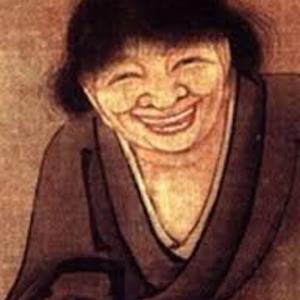
Hanshan

The community is called the Cold Mountain Sangha, referring to the temple in China named after the poet Hanshan – “Cold Mountain” – who probably flourished around 800 CE and to whom Jack Kerouac dedicated The Dharma Bums.

“This lineage goes back to Cold Mountain Temple in Suzhou,” Kurt tells me. “Glenn Webb’s teachers’ lineage goes back to this contingent that came from China in the Ming Dynasty.”

I ask, “What brings people to practice with you?”

“I don’t know.”

When I suggest he probably has some idea, he insists, “No, I really don’t. I don’t know what they’re looking for. I’m not being cagey. I never think about that. I just say, ‘Here’s the practice.’ My job is to make the practice available to them and to practice deeply myself. The only thing I can show these people is my sincerity. So I’ll show them how to sit; I’ll sit with them. If they want to do dokusan, I will help them work on their koans. Right? You know, if they persist, that’s wonderful; if they don’t persist, that’s not my business really, why they stopped. And I don’t think people themselves know why they come to practice. If somebody had asked me when I was 23, ‘Why are you practicing Zen?’ I might have said, ‘Well, I have anxiety.’ But I don’t think I knew why I was practicing Zen. The impulse to practice comes from a deeper place. People don’t – they can’t – understand why they’re there. What I say to my students is this: ‘Something brought you here. Please listen to that voice.’ And I always add, ‘If you listen to that voice, you’ll never be disappointed.’ I’ve said that all my life, and I completely believe it. ‘You don’t know what brought you here. But listen to that voice. Be true to that voice.’”

“Let’s look at it another way. Say someone in your department or some acquaintance discovers you are a Zen teacher, and they ask, ‘What’s the function of Zen?’”

“I would say, ‘Please come and practice with us.’”

“And perhaps I’m open to that. But I’m also one of those people who, before I come and try it out, I’d like to know what its purpose is.”

“You know, I’m not going say. I refuse to say. I’d tell them, ‘There are lots of books on Zen practice; I can recommend some titles to you.’ But I refuse to degrade the practice.”

“Fair enough. And if someone were to say to me, ‘Oh, you talked with Kurt Spellmeyer. What’s he like? What’s his Zen like?’ What should I tell them?”

“‘You just have to practice with him.’” We both chuckle at that for a moment. “Do you know who Clark Strand is?” he asks. “He’s written a number of books on Zen, and in one he talks about hearing, while he was in college, about a Chinese monk who was living nearby. Clark found the monk and started practicing with him. Whenever Clark came to practice, the monk would simply sit there, doing what we would recognize as zazen. But he wouldn’t offer any instruction. For some mysterious reason, Clark kept coming back and didn’t know why, while the monk would just sit with him in silence. Finally, Clark finished college, and he left the monk. He eventually he made his way to Dai Bosatsu Zendo in New York where he spent time with Eido Shimano, another teacher with a troubled history. But Clark Strand said that years later, in retrospect, he could appreciate the depth and purity of the monk’s practice. I agree with that. Of course, when people come to practice with me, I don’t sit there in silence. I’ll give them pointers: ‘Watch your breath. Breathe from the hara. Have a straight back.’ But all the same, Strand was right. The monk taught Strand how to trust the part of himself which says, ‘You need to come to sit.’ Reasons just cloud the issue.”

Flint Sparks

Appamada – Austin, Texas

I begin my conversation with Flint Sparks by asking if that was, indeed, his birthname or perhaps a nickname

“It’s my real name,” he tells me. “I grew up in Texas as my dad did, and he was a real fan of the cowboy novel genre. There was one series he was reading as a young man – Flint Spears, Rodeo Cowboy Contestant – about this character he admired. He read it in 1941. I was born ten years later, but as he read it, he thought, ‘If I ever have a son, I’m going to name him Flint.’ So when I was born, he suggested that I be named Flint, but my maternal grandmother said, ‘You can’t name him that. People are going to make fun of him. Flint Sparks is a full sentence.’ So my first name is actually Thomas and my middle name is Flint. But who’s going to call you ‘Tom’ when you have a name like Flint Sparks?”

I ask what growing up in Texas was like.

“Well, as you might imagine, it was a lot of things. Texas is a very big place, and over the last 73 years it’s been many things for me. I come from an old Texas family. Even though my father was a university professor, he never was very far from the whole cowboy aesthetic which he loved. He was even elected president of the National Intercollegiate Rodeo Association at one point.”

“Did your family belong to a faith tradition?”

“Deeply. My grandfather – my father’s father — was a Baptist minister. I grew up in a Southern Baptist fundamentalist home. My mom came from a family that was not quite so rigid, but the church was the center of their lives. So I was immersed in this Southern Bible Belt upbringing. My parents actually met while they were in a Baptist university. They married while still in school, and I was born before they graduated. But over time, their education and their own maturity led them to leave the church. They were churchless for many, many years until later in their lives. We stepped away from the Baptist Church, and I had my own path of spiritual transformation and transition over time. But my early childhood was church Sunday morning, Sunday evening, Wednesday evening. It was very, very strict. So I’m a recovering Christian although that early training and experience is deeply embedded in me. I told my dad one time, I said, ‘Well, you wanted a nice Christian cowboy, and you got a gay Buddhist.’

“My father died in May of 2020 at the age of 92.  Although it was during the first few months of the pandemic, he didn’t die from COVID. I was not with him when he died, and, like so many people at that time, we met on Zoom. The last words I could understand him saying to me were, ‘I’m so proud of you.’ So we were able to make a good transition over time.

“The church meant a lot to me. I even thought about becoming a pastor just because it was in the family. We had many preachers, and I was called to many faith-related things as a child. This overlaps with my coming to acknowledge my being gay. There was a hymn we would often sing at the end of a Sunday morning church service in which the invitation was for people to come forward, to confess their sins and take Christ as their savior. The hymn was called ‘Just As I Am.’ I was always moved by that song, and I believed the message as a young boy. It wasn’t until I got old enough and had enough experience in the church to realize they didn’t actually want me just as I was. There were rules in the community, some spoken and some not.  The truth slowly dawned; being seen was a bit risky, being accepted was definitely going to be conditional, and being loved ‘just as I am’ finally seemed impossible.

“I guess technically I’m bi-sexual. I had girlfriends. I got married to my high school sweetheart. We were both very smart kids. We clung to each other. We got out of town – a really small town in south Texas –  when I went to John Hopkins graduate school. My wife worked for Goddard Space Flight Center just outside of Washington DC. We were achievement-oriented, bright kids. I suppose most people grow up and get married. We got married and grew up. We separated and divorced after only three years of marriage. We were married so young. Curiously, if we fast forward about forty years I ended up performing the marriage ceremony with her current husband. I said, “I married you twice. Once as the groom and once as the officiant.’ As kids we were really good friends, and our relationship helped us leave home back then.”

“So what I’m hearing,” I say, “is that it was less a matter of a loss of faith in the church than it was a sense of not being included. Is that right?”

“That’s a really good distinction. I didn’t lose faith in God; I lost faith in the church. I didn’t lose faith in what was larger and more true. I had some confidence in spirit or the divine. But the church, the people, I didn’t think they knew what they were talking about. I would later read scripture and find alternative translations and commentaries. A good friend who was in seminary once said to me, ‘You know you can look at that another way. It doesn’t have to be the way you’ve always carried it.’”

His introduction to Eastern spiritualities came through the TM movement in the ’70s.

“I needed help managing the stress of graduate school because I was such a perfectionist coming out of the kind of family I grew up in with the overlay of religious pressure and expectations. So I did TM as a way to meditate and relax.”

His early graduate work was in biology then he earned a second master’s degree and a Ph. D. in Clinical Psychology.

“So I had this psychology/biology background, that took me into behavioral medicine, and because I was fortunate to find positions in research institutes as well as hospital-based cancer treatment programs, I ended up working with a lot of people who were dying. I worked well with the patients and their families. I truly enjoyed the work. I directed hospital-based programs, I consulted at Sloan Kettering and MD Anderson and many cancer centers around the country. However, there were gaps in my skills and knowledge. There were things I couldn’t answer when asked by my patients. They were asking me questions from their soul, if you will. Really deep. Not just existential/psychological questions. And I didn’t want to give them religion. However, I did want to offer them an appropriate response that met the place from which they were asking.”

This led him to explore Buddhism. After all, he realized, “The Buddha only had one question which was what to do about suffering? I thought, ‘Well, I’m apparently in the suffering business.’ Furthermore, Buddhism was not theistic. The whole God idea wasn’t part of this spiritual practice path, and the spiritual technologies were accessible and not esoteric. This was a huge turn.  And I needed a spiritual practice for myself because I was no longer in the church.”

He visited the local Shambhala Center and he engaged with Tibetan Buddhist practice for a bit. Then he went to a workshop at Esalen, a retreat Center in Big Sur that was a major part of the New Age movement of the ’60s. “I was doing psychotherapy training in support of my professional career, and there was a fellow there who was reading Zen Mind, Beginner’s Mind. He told me he had just finished a practice period at the San Francisco Zen Center’s Green Gulch Farm and described what life was like at a residential Zen practice center. I found a copy of the book at the Esalen bookstore, and I began to read it. Even though I could not understand it, I knew there was something there. The voice of Suzuki Roshi  was riveting to me. I was going to return to Esalen for a follow-up retreat about six months later, and I saw that there was a one-day retreat at Green Gulch the weekend before. This was my first immersion into formal Zen practice. I showed up at Green Gulch in the Spring of 1994, and the person in charge of guest practice asked if I could sit for forty minutes. I replied that I could, and he inquired if I could do so nine times in one day? I was young enough and foolish enough to say, ‘Of course, I can.’ That entire day was shockingly unpleasant.”

Reb Anderson

The retreat was led by Reb Anderson, the abbot at SFZC at the time. “His was the first Dharma talk I had ever heard. Honestly, I don’t remember what he talked about, but I do remember the last sentence. He paused for a while, and then he asked, ‘Is it ordinary or is it holy?’ And then he got up and walked out. And so even though it was a very unpleasant experience on an ordinary level, I had been captured by then. I had trouble with language to describe what had happened. I think I said to friends who asked, ‘It was as if I was remembering something. It is all foreign in so many ways, and yet it’s not “new.” It was a strange and deep familiarity.’ I knew I had found my path. This is what I had been looking for.”

He began attending retreats at the San Francisco Zen Center as frequently as he could while maintaining a full-time psychotherapy practice in Austin.

“Once I started going to City Center as a guest-student, I wanted to take the Precepts. On one of my early trips to City Center, we left the zendo after zazen as was the custom, and we went up to the Buddha Hall for morning service. Blanche Hartman was the officiating priest for that service. I was kneeling along with the others in one of the rows of students, and I’m watching her come to the bowing mat. She retrieved her zagu from the left sleeve of the koromo and placed it on the bowing mat, neatly folded. With her jisha, she approached the altar and offered incense. She came to the mat and offered her bows. While I watched her — the way she comported herself with such dignity, and the way she was looking at the altar as she engaged the ritual – I was transported: ‘I don’t know what that is, but I want that.’ I’d had many impressive male mentors, but this woman just bowled me over. I said to myself, ‘That’s my teacher!’ And so we began to develop a relationship.”

Meanwhile, in Austin, a friend who was an attorney found out that Flint sat zazen regularly and asked if he could join him. “I suggested that one morning a week, before he went to his law practice and before I had my first client meetings in my psychotherapy practice, we could meet at my office, set up a little altar, sit for a few minutes, then read one chapter of Zen Mind, Beginner’s Mind. After only a few months my yoga teacher asked if she could join us. We invited her and both people kept coming. Then others found out we were sitting, and they joined in. At some point we needed a place bigger than my group room to meet.”

Flint with Blanche Hartman

They moved to a larger location and eventually to a house. “Over time it seemed as if we had created a small temple, so I suggested it should have a name, and I insisted that we name it after my teacher, Zenkei Blanche Hartman. That is how Zenkei-ji temple was born.”

Eventually Blanche told him, “You’re acting like a priest. What priests do is they take care of communities, minister to them, and that’s what you’re doing. This community has grown up around you. Are you interested in the priest path?”

He was and, in 2001, he was ordained.

When his father’s brother-in-law – “a Baptist minister married to my grandfather’s daughter, my father’s sister” – learned that Flint had taken this step, he sent him a letter. “It was quite mean actually, and I spent a lot of time crafting a response that was not in reaction to his reactivity but invited a dialogue which never came. I explained that I understood his concerns and how this whole thing was probably inconceivable from his point of view. I said that I thought we were in the same business of being attentive to the struggles that people have just by living their difficult human lives. I acknowledged that we had different solutions or different ways of approaching human suffering. I said that if we were to look at what Jesus was suggesting in his teachings, he was saying, ‘Love everyone.’ Find ways to remove the barriers to compassionate care. Through meditation and prayer, wake up to whatever is larger than our small selves. The scripture doesn’t say, ‘Worship me.’ He said, ‘Be this way.’ And so all I’m offering are spiritual technologies to help people do that. Buddhism isn’t about believing anything. You don’t have to believe in anything. I argued that I could still be a Christian and use Buddhist practices, and that’s what I do. But it’s curious, isn’t it? When my grandfather died . . .” He retrieves something from his desk to show me. “We were sorting out things, and we discovered a small Buddha statue carved from ivory which had been brought to him by a missionary friend. He had it on his desk and now it is on my desk.”

“Even though it was an idol,” I remark.

“It was an idol, right. That was one of the things that my uncle railed about. ‘You’re worshipping idols.’ I said, ‘Well, I know it looks like that. But I’m not actually worshipping anything. If you look at those images, they’re representations of something that you’ll find in yourself.’”

“The Psalms,” I say, “‘Be still and know I am God.’”

“Exactly. Additionally I was invited to be on faculty at a place in Austin called Seton Cove which was a spiritual education center associated with a Catholic hospital. I was the Buddhist-guy because I could talk to all the Christians who were interested in Buddhism. And there was a course on Comparative Religions in one of the big Methodist Churches in town, and they asked me to come talk about Buddhism. At the end, I asked, ‘Are there any final questions?’ There was an older man, I would guess about 85 at that point, kind of hunkered down in his chair, who had been very quiet during the entire presentation and discussion, who raised his hand. I anxiously thought, ‘Oh, boy! Here it comes.’ Being polite in the appropriate Southern way, I acknowledged him: ‘Yes, sir?’ He then said, ‘Well, I just want to say, I think I have more in common with this young man than I do with half of all y’all.’”

In 2001, a new practitioner began attending Flint’s Austin Zen Center. Peg Syverson was a student of Joko Beck and maintained a small sitting group in her home. She was looking for a larger community to sit with and came, she tells me, to look upon Flint as her second teacher. The two of them worked well together and after difficulties arose because a teacher sent from SFZC to oversee the Austin Center proved to be a bad fit, Flint left the center he’d founded and joined Peg’s smaller group.

“Our combination was a good one,” he tells me. “Very synergistic. So it developed into a fresh way of practice which eventually became Appamada. Appamada is the last word of the Buddha in the Pali Cannon. It means ‘mindful diligent care.’ The Buddha told his followers as he died, ‘Practice with appamada.’”

The current website for Appamada states: “Our practice follows the tradition of the American Zen teachers Joko Beck and Shunryu Suzuki. In our teaching we draw on the Zen teachings and traditions we were trained in, as well as other Buddhist teachings and contemporary work in psychology, interpersonal neurobiology, language, the sciences of complexity and ecosystems, the arts, community, and philosophy.”

Peg describes it to me as a “relational” practice. “Our understanding is that we wake up in meeting, in encounter – not by sitting and facing a wall and somehow blanking our mind – but in encounter. It might be an encounter with a peach tree; it might be an encounter with a Zen master; it might be an encounter with an old lady at the well. Zen is full of these stories. Right? They’re all about encounter. And that was the big distinction in the pedagogical shift from India to China. So in India, Buddha stands up and gives a talk, and people are either enlightened or they go off into the forests and meditate. But in China someone would stand up in the middle of the talk and challenge the teacher. Or there would be an encounter between two Zen masters, and it’s always about this encounter.”

Flint with Peg Syverson

The formalities involved in authorizing teachers within the Suzuki Roshi lineage are complex, and Joko Beck’s tradition presented its own difficulties, but eventually both Flint and Peg received full Dharma transmission, although by the time they had, the situation at Appamada had changed.

“I moved to Hawaii in 2018,” Flint informs me. “I started coming to Hawaii to lead retreats at a little retreat center in 1999. Over all those many years, I would teach for a week with my friend Donna Martin. Donna was a yoga teacher, and I taught meditation, so we would lead a retreat we called the Heart of Meditation. We did that starting in 1999 and only stopped offering that retreat two years ago. Each year Erin, my partner, and I would just stay in Hawaii for a little vacation, and we enjoyed the islands. Over time it became a special destination. We considered that we might be able to cut back on work as we got older and actually live in Hawaii. In 2016, a house became available. A little house – we were not looking seriously – which was ideal for us and something we actually couldn’t say ‘no’ to. It was a big transition for me not to be at Appamada although Peg was still then. I moved in 2018, and little did we know what was going to happen two years later. We could not have predicted the pandemic and its impact on our little center.”
When the pandemic prevented in-person gatherings, Appamada, like many other Zen Centers, met by Zoom. This allowed Peg to move to Illinois to be closer to family. Today there is both in-person and distance participation at Appamada, and, although neither Flint nor Peg are in Austin, they both retain a relationship with the community.

“We are senior guiding teachers emeritus, but no longer resident teachers,” Flint tells me. “We have three lay-entrusted teachers who care for the sangha.”

In Hawaii, Flint has a small sitting group. “There is a Soto mission on each Hawaiian island, but they’re mainly for the Japanese-Hawaiian communities and not practiced based. The one here was built in 1927, and so in a couple of years it’s going to be a hundred years old. It seemed to go dormant for a number of years, but it’s been revived, and I have begun to offer zazen on a monthly basis just to start.”

“Anybody show up?” I ask

“We have about a dozen people each time. Some haole, white people, and some traditional, local folks who consider the temple their church. I don’t really want any authority. I don’t expect to be elevated to any leadership position. The Bishop of the Soto-shu and two other priests take care of the formalities. But I wanted to offer zazen and some folks have been happy with that. They’re letting me help out, and it’s been a sweet connection. I certainly don’t want to start another center at this age. I’ve done it twice! I’m 73 years old; I don’t need to do that again.”

“What is this all about?” I ask. “What is it that a Zen teacher teaches?”

“Gosh, that’s a hard one, isn’t it? I don’t know that content is taught. Certainly we have content to share, but that is not what we teach. The basic Buddhist philosophy is important as a way to situate our practice and to guide us. The Four Nobel Truths, the Eightfold Path and the Twelvefold Chain and all that is included in what the Buddha left for us. And as a Zen teacher you can call on the old stories – the koans – or you can be the ambassador for Dogen’s unique insights and offer our best understanding of what he taught. I think all of this is useful. The poetry and art of Zen is gorgeous, and it offers something powerful and beyond cognition. But in the end, they are all props. Someone a couple of years ago asked me an interesting question. They said, ‘Look, you’ve been a psychotherapist for forty-five years. You’ve been a Zen student and a teacher of Zen for half of that time. Tell me, what do you really do?’ It was a very interesting and important question. What arose spontaneously without my thinking too much was, ‘I would say my job is to help remove barriers to love.’”

“Are the reasons why people come to psychotherapy very different from the reasons why people come to Zen?”

“No. Not really. People come because they’re suffering in some way. Because they have problems in their lives or questions which they don’t know how to meet in any satisfying way. When I sit with a client in psychotherapy or sit with someone who comes to me in dokusan, they bring the same stuff. They bring their life and the troubles in their life. They bring their body and mind and heart and all that comes with these very human things. The difference is who they meet.”

“You mean the role you assume when meeting them? You wear different hats.”

“Yes. If I were sitting in the role of a psychotherapist, I’d get the history and their symptoms along with whatever it is they want to change. I would consciously enter into the archaic aspects of their conditioning and work with that. All of that is useful and extremely important. But as a Zen teacher, I’m not necessarily going into all personal history looking for problems to solve or behaviors to change. All of this is acknowledged but is not at the heart of practice. We’re looking at what’s here and now, and the ways we are caught in the self-centered dream that causes us to suffer unnecessarily. How can they use each moment of life as the teacher?”

“Can someone come to you in both capacities?”

“They have, yes. And as I sit in my roles as a Zen teacher, I can’t divorce or forget the skills I have as a psychotherapist. So it informs the way I sit with a person certainly. But I’m not taking them on as a client or doing all the archaic work or behavioral work. I do however think I’m more skillful as a Zen teacher because of my experience of many years of psychotherapy.”

“And what is it you hope for those who come to you in either capacity, either as a Zen teacher or as a therapist?”

“My hope is that they would be in a relationship with themselves and the world that is filled with more ease. That they’d have a capacity to accept and meet life as it is without fighting with themselves or with other people or with the realities of this life. The way I talk about inhabiting these two roles is this:  I’ve been a therapist for so many years. I’ve had the great gift of working with so many people who’ve done amazing work. They have transformed their lives and have had an immense amount of insight and awakened awareness as a result. However, I frequently see that often they can end up in an endless cycle of self-identification and self-reflection and self-help because that’s what a therapeutic perspective invites. In my role as a Zen teacher I’ve spent years in temples and monasteries where I’ve seen people study the Dharma, practice well, and demonstrate an amazing understand of the Dharma and a capacity to reflect it in their practice life. But, when they sit in zazen and all their psychological energies move — the unconscious showing us what we often don’t want to see — they often have no idea of what to do with it. But if you put those two things together — the capacity to do the psychological work and the capacity to step beyond the self — then you have what I call the double helix of growing up and waking up. And those two strands inform and support each other in ways that each of them alone cannot.”

Peter Levitt

Salt Spring Zen Circle, British Columbia

In early 1967, at the age of 21, New York-born Peter Levitt and his wife heard something was happening in San Francisco, so they headed west.

“We rented a place in the Mission District that had four apartments, which was a great find,” he tells me. “Rent was $80 a month and right after we moved in with furniture from the Salvation Army down the block, we headed to Golden Gate Park where we had heard lots of good things were happening, and especially free live music. And, just coincidentally, upstairs from our apartment there was a very lovely woman named Hazel, who a few months later started seeing a young guy who was deeply interested in Tibetan Buddhism. Tibetan practice wasn’t a particular interest of mine at the time, but I had already been taught to meditate, so there is a way in which this young man did have my ear. After all, San Francisco in the Sixites was exploding with what, for me, were new ideas, and I was an open shop.”

In New York, one of Peter’s friends showed him how to meditate in Zen style. “It was in the air,” he laughed, “along with Eastern spirituality and philosophy, which interested me from the start.” Also, when he was briefly a third-year music major at NYU, he learned to chant by going to a “storefront temple” run by the Hare Krishna people where there was a lot of delicious, unusual, free food, and other young people having what seemed to be a good time.

“When I got to San Francisco, the rose of eastern spirituality was starting to open out for me because I already liked sitting quietly in meditation and chanting, and I enjoyed talking with the young man from upstairs about Tibetan Buddhism. He also brought to my attention the novel Mount Analogue by Rene Daumal, and Lama Govinda’s The Way of the White Cloud. I thought, ‘This young guy is really well read!’ And there were a few books I’d picked up on my own, plus the nonstop conversations with like-minded friends and people I’d meet in the park.

“Then one day I went to the Salvation Army store just down the block from our apartment, and I saw a book on the used bookshelf called Zen Flesh, Zen Bones, which cost all of ten cents. And as I walked back to our place, I opened it, read a little, and I just started to laugh. ‘This is crazy shit,’ I thought. But it excited me, so I read another page, and thought, ‘I have no idea what’s going on here, but whatever it is, it’s really good.’

“But when I came to a page and read, ‘We know the sound of two hands clapping, but what is the sound of one hand clapping?’ it stopped me cold. Now there’s background to that. When I was 13, I used to save up and buy classical music and comedy records, and one of the records I bought was by Shelley Berman, who recorded comedy routines he did in front of a live audience. In one of his routines he said, ‘We know the sound of two hands clapping, but what is the sound of one hand clapping?’ And the audience burst into laughter, and I did too. But, of course, I didn’t know why we all were laughing, or what he was talking about. It just seemed so absurd. So when I was 21 with my new book in hand I came upon those words again, which of course is the famous koan by Master Hakuin, and it reminded me of the comedian. And all of a sudden I was laughing again, even more than I did as a kid, though I still didn’t know why. But now it was in the context of Zen, which was part of the larger context of all these other new things in my life, things I also didn’t quite understand, but that thrilled me and made me curious to know more.”

“And so once when this young man dating Hazel came downstairs and gave me these Tibetan books to read, I found myself saying, ‘That’s a bit too complicated for me. I like this Zen stuff.’ And he said, ‘Well, what do you like about Zen?’ And I told him, ‘I don’t know, but I like that I don’t know why I like it, and, besides, it seems pretty simple, which appeals to me and adds to the mystery. And call it irony or call it karma – which I’m not sure anyone really understands – but the young man was Sam Bercholz who would go on to found Shambhala Publications, and in later years become one of my publishers.”

Peter heard from friends about an “incredible Zen master from Japan” teaching in San Francisco – Shunryu Suzuki – but Peter tells me he had no interest in going to see him. “There’s a certain irony in that, given that I’ve ended up a teacher in his lineage, but at the time, 21 years old in hippie heaven, I didn’t want any institutional anything. I just wanted to stay with myself and this burgeoning awareness/suspicion that maybe there was a home for me in some way, a spiritual home, without any interruption of that personal investigation from any source at all, even a reputedly great Zen master. Maybe it was my age, or the times, and maybe it was just me nursing this sense of something new that I wanted to explore on my own.

“I have a certain shyness that connects somehow with a love of that internal study and process. It’s like a room inside myself that’s very quiet where I can hear myself. It was the same with poetry as it emerged in my life. And so I stayed away, though increasingly I meditated more, read more books, and let my imagination touch the world at the same time that I was developing a sitting practice and working hard on my writing to figure out, as I thought of it at the time, ‘how to get said what must be said’, which is another way to articulate a major question I had as a young man, namely, in a world that makes little sense to me, how should I live?

“I was writing constantly, and sitting zazen on my own, and in 1969 my wife and I went back east to the university in Buffalo where she wanted to complete her BA. My poetry life really began to flourish there because Buffalo was a poetry hub with many good and even great mid-century poets and writers either visiting for a week at a time or teaching year-round on the faculty. And to my amazement, thanks to the New York poet Ted Berrigan who was there, my poems were starting to be published.

“Then, in ’71, we had a baby, but because she wasn’t able to adjust to the harsh winters, her doctor suggested we head back west to a drier climate. So, in 1973 we packed up ourselves, our baby, our dog, our cats, and drove back to the West Coast. This time landing in LA.

“By then I had become friends with other poets and writers, mostly those I’d met and studied with at Buffalo, including Robert Creeley, Ginsberg, John Logan, and another poet who had become very important to me, Diane di Prima, who became something like an older sister; very present, protective, and supportive of both my life as a young poet and as a Zen practitioner. It was a fortuitous time for me, and in 1979 Creeley graciously wrote the Foreword to Running Grass, my first full poetry collection, which Diane published through Eidolon Editions. And, as for Zen, I continued practicing on a daily basis, full-on, though still in my own reclusive way.

Taizan Maezumi

“Years later, after being settled in LA, I went to Zen Center of Los Angeles and did a sesshin with the Zen master there, Taizan Maezumi Roshi. I have to say, my first dokusan with him was really wonderful. And it was funny, too. The priest there told me that when my turn came and I hear the bell, I have to get up quickly, leave the zendo, run down the hallway despite these long robes I’d never worn before, stop at the door where someone’s going to come out, and then I go into the room, bow at the altar just inside the door, and go in to see the master. I have to laugh because all I could think of was how I was going to run and not trip on my robes and end up falling on my face. When you get inside, they told me, after you bow at the altar, step over and bow to Roshi. And then you’ll have dokusan.

“So, since this was my first meeting with a Zen master I thought, ‘What the hell? If this is Zen, I’ll do it.’ So I did just as they told me, and all of a sudden, I found myself sitting up on my knees in front of Maezumi Roshi with our faces this close.” He holds his hands about a foot apart. “We were so close I could hardly see the outline of his face. But in that quiet little room, with my heart pounding from all the rushing about, suddenly I could hear a kind of soft whisper and noticed his robes begin to move. I was afraid to look down, but I saw some movement and thought, ‘Uh-oh. I read about this. This is where they hit you!’” We both laugh. “And then I saw his hand come up between our two faces, and he went like this.” Peter crooks his finger. “Come closer. But we were knee to knee so there was no way for me to come closer to him. And what I understood was, ‘Just come closer. Not to me. Come closer to everything; to yourself.’ That’s how I understood that crooking finger.

“Then I looked up and saw this big smile on his face. That’s when he said the first words that any Zen Master ever said to me, ‘You’re Jewish!’ And I said, ‘Yes. I am.’ And I knew he was just saying, ‘I recognize that you have a Jewish face.’ Nothing other than that. And then he told me, ‘That’s wonderful. Wonderful. Everybody wants enlightenment.’ And I thought, ‘This guy is great.’

 “After that, we had a wonderful conversation. It turned out we both loved the same Japanese poet, Miyazawa Kenji. So I felt very welcomed, and after he asked if I had any questions about practice, I went back out to the zendo feeling, ‘Okay. I can do this.’

“Later, Maezumi came into the zendo and gave his daily Dharma talk and said, ‘We’re fortunate at this sesshin; we have a real poet with us.’ He didn’t mention me, which would have been embarrassing, but he talked about poetry in a beautiful, erudite manner, and its place in Zen. I was enthralled.

“I was sitting very deeply during that sesshin, and the next day I was invited for dokusan again. This time Maezumi Roshi asked, ‘Do you have any questions about your practice?’ I said, ‘Yes. I don’t know how to say this, really, but while I was sitting this morning, I saw all these golden Buddhas in my mind or imagination, and they were bowing. I’m not saying that they were bowing to me, that would be ridiculous, but this is what I saw.’ And showing no expression on his face, which I was scouring for a clue, he just cleared his throat and said, ‘Um.Things are not so good.’ I was surprised. ‘Really? What was that, then? What was going on?’ ‘It’s just makyo,’ he said. ‘Just delusion; treat it like any other delusion. Ignore these Buddhas and go back and do your practice.’

“Then he rang the bell and sent me back to the zendo. It happened in a flash, and I was thrilled, really, because I had practiced so long by myself, and here this Zen master was teaching me, showing me that Zen is not about Buddhas bowing, or any special-seeming experience; it’s just about, ‘Forget that stuff! Go back and do your practice.’”

As it happens, as close as he felt to Maezumi, Peter continued to practice mostly on his own, though he made visits to ZCLA where, he said, Maezumi Roshi always treated him with great generosity, making time to talk with him whenever Peter asked. Over the succeeding years, Peter became an established and respected poet and translator. One marriage ended, another began, and during the early years of that new relationship Peter heard Jakusho Kwong, dharma heir in the Shunryu Suzuki lineage, speak at an event at the Naropa Institute, which Peter attended with Diane Di Prima.

“As Diane and I found our place to sit, I saw a Chinese man dressed as a priest walk along the side of the crowded hall in what I thought was a fairly modest, almost shy way. Then he stepped up onto the stage and sat down. Diane said, ‘That’s my friend, Bill.’ She knew him from her days practicing with Suzuki Roshi. Bill, as she called him, was Bill Kwong, known at the time as Kwong Sensei, and a few years later, after I became his student, as Kwong Roshi.”

“He bowed with the audience and then gave his talk. I have to say that both his shyness and the talk he gave really appealed to me. It was apparent that he didn’t have lots of fancy words or concepts to convey, but rather he talked about what it was like to wake up early in the morning before zazen and have to find his socks beside his bed in the dark room, and then put them on without knowing where the heel was. That was it, and he acted this out in a way that had all of us laughing with recognition. He didn’t want to wake his wife on the days she wasn’t joining him for zazen – since she had their four kids to care for – and he was careful not to make any noise or turn on a light. So he’d just search in the dark, then make his way from the bed to find the door, where he’d run his hands down the door frame to find the doorknob, all of which he acted out. And then, with a slight pause, he gave what I considered the full dharma talk in one sentence, ‘If you want to go through a door, it’s good to know where the doorknob is,’ which I heard in a completely symbolic way.

“About five years later, around 1983, everything was going well in my life. I was married again. It wasn’t an easy marriage, even in its early years, but there were many elements we shared from the beginning, including a love of poetry, the act of translating poetry from Chinese, and Zen practice. Also my daughter from my first marriage, who lived with me most days of the week, was doing well. So, on the surface, everything seemed pretty good. But despite this, I felt this huge hole right in the center of me. ‘Something’s wrong,’ I said to myself. ‘Something’s just not right.’ But I couldn’t figure out what it might be. As you know, life gives us these quasi-koans from time to time.   

Jakusho Kwong

“So, I called Diane, and told her, ‘Everything’s great here, but there’s this huge hole in the center of me.’ And she said, in her usual quick and knowing way, ‘Oh, honey, it’s time for you to come in out of the cold. You’ve practiced alone long enough. It’s time for you to take Precepts.’ And as soon as she said it, I just wept because I knew that she was right. ‘It’s time for you to take jukai.’ And as soon as she said that an image flashed in my mind and I asked, ‘Do you remember that Chinese Zen priest friend of yours that we saw at Naropa?’ Now, this is interesting because for some reason – maybe because I was talking with Diane – I didn’t think of Maezumi Roshi who I liked so much and had practiced with. I thought of this man that I knew nothing about. But intuitively I felt there was something there, so I went on, ‘I want to take Precepts with him.’”

Peter became Kwong’s student, took jukai, and studied with him for twenty years, during which time Kwong authorized him to establish a Zen sitting group, the Topanga Zen Group, which practiced in a small zendo he built at his home. Kwong later invited him to give “senior student talks” at the Sonoma Mountain Zen Center, and Peter served as shuso leading the summer practice period two years running. However after Peter edited Kwong’s first dharma book, No Beginning, No End, Peter decided to conclude their dharma relationship.

“During these years I was ‘supporting my poetry habit,’ as I called it, and paying the bills by teaching two poetry writing workshops a week. The poets I worked with were a joy and many of them stayed in this little community of poets for about twenty years, with publication increasing as the years passed. And, of course, because we talked in those workshops about every aspect of life, Zen practice was part of the conversation. Students knew I meditated every day, of course, and gradually some of them wanted to learn about meditation, so they came to sit with me at our little zendo. Kwong Roshi came down to initiate it as a place of practice, which I appreciated. Coincidentally, Robert Creeley was staying with me when Roshi came down so here it was; two major aspects of my life meeting in the outer world. My second marriage ended during that time, just as the zendo was being completed, so I had the property to live in with my daughter.”

Ten years later, when his third wife – poet Shirley Graham – became pregnant, they chose to move to Canada where she had family connections going back 200 years. “So we moved to Canada at the turn of the millennium, and I was living on Salt Spring Island. It’s a small community and I had come to know many of the poets and some of the Buddhist practitioners here, but I wasn’t ready to start anything. It was clear to me after moving to the island that I was in a different culture, that Canadian culture was not New York or California, even though there was some familiarity since this was Salt Spring and there was a kind of a hippie culture available. But I’d noticed that people had different ways here – island ways, Canadian ways – and I wanted to find out where I was. So I was staying underground, so to speak, and then the September 11th attack on the World Trade Center happened in 2001.

“After the initial shock, I found myself thinking, ‘I have to do something. I can’t do nothing. There must be something I can offer to help prevent someone’s mind from conjuring things like this again’, though I was keenly aware that the attack was sadly part of the overall continuum of ignorance, hatred and violence that besets our world. So about two weeks after that, I put a piece of paper on a bulletin board in town that said, ‘Introduction to Zen practice.’ I thought, ‘The best thing I have in my toolbox as a response to 9/11 is to teach people to meditate.'”

To Peter’s surprise, 45 people showed up. There were other Buddhist groups, but no one on the island was teaching in the Zen tradition. Before long, a dedicated sangha began to form.

Things were going well, but in 2003, he realized there was something he needed to address. “I was leading a sangha now, which initially had Kwong Roshi’s authorization and support, but I no longer had a direct relationship with him or the Suzuki Roshi lineage. And this disturbed me because I’m not someone who believes you just hang up your shingle and say, ‘Hi. I’m a Zen teacher.’ I believe there needs to be relationship and accountability. But now I had none. And another concern of mine was that some people in the sangha might feel undermined by purposeful or offhand comments if we were unaffiliated. It wasn’t an issue for them, but it was for me.”

Peter discussed this with an old friend, Roshi Egyoku Nakao of ZCLA, and another close friend, Kazuaki Tanahashi, with whom Peter has published dharma books and books in translation. Tanahashi arranged a meeting with Norman Fischer, former abbot of the San Francisco Zen Center and founder of Everyday Zen.

Peter with Norman Fischer

“The meeting with Norman was warm, very intimate and good. We understood each other well, and he understood my somewhat unusual history with Zen. There was some discussion of transmission, but I said, ‘What I really would like for our sangha is an affiliation with Everyday Zen.’ And Norman said, ‘Well, if you’d like that, you and your sangha can be part of the family, but let’s keep the other conversations open.’

“We talked a little about whether or not I wanted to ordain, and I told him I was committed to a lay path, and that our sangha was a rural community of householder practitioners living on a small island, so ordination didn’t seem to fit what I thought of as our sangha’s ecology. I said that no one in our sangha had ever asked me to be a priest – if they had I’d have to consider it – but they seemed content to have me as their teacher, so it didn’t seem to hold much appeal for the real life I was living.”

“A year later, Norman wrote and said, ‘I’m going to be giving “lay entrustment” to certain people, and I would like to give that to you if you would like that.’ In the Suzuki-roshi lineage, lay entrustment authorizes householders to teach and lead sesshin as part of the lineage. So I wrote back and said, ‘Thank you. Since these are things I’m already doing, that seems appropriate for me.’ And he replied, ‘Great. We’ll begin the process, and I’ll give you entrustment. But I don’t know why you don’t want to be a priest; I really don’t understand it. The way you live and look and teach, everybody already thinks you’re a priest. But I’ll happily give you entrustment.’ It made me smile.

Peter paused in speaking and then said, “I’d like to try to explain why I wanted to stay a householder. There are two primary sources of that commitment. I started officially studying my religious tradition as a Jew when I was eight years old. It’s something I wanted very much for reasons I had no way to articulate. But I found the teachings at the synagogue pretty ‘out of the can,’ as they say. Uninspiring, institutional, and without spirit. Spiritual teachings without spirit were not what I wanted. I was hungry for something. But I took it somewhat seriously nonetheless and one day in class – I was eleven years old at the time – I said something about our tradition to the rabbi that I’d been thinking about, something that questioned a major tenet. I wasn’t being a wise guy, so I’ll just cut to the chase; when the rabbi heard what I’d been thinking he was furious, he started screaming at me and kicked me out of class. And later that night, he called and told my parents I could not come back to study. Ever.

“But my desire to learn was undiminished, so my mother asked around and found a woman in the neighbourhood, a survivor, who tutored Jewish children. So it was arranged that after school I’d go to her apartment, very dark and small, which she shared with her daughter, who must have been about nineteen years old, and she’d sit me down at the Formica kitchen table in the kitchen. And there I was given what I’d been searching for. She taught me our history; she helped me improve my reading of Hebrew. She taught me the prayers and then stood me up in a corner of the kitchen to teach me how to pray and move my body in prayer, called ‘davening’. And all of this went on in the late afternoons quite close to the stove where she seemed to always be cooking soup, stirring and tasting and adjusting the flavours as the prayers came out of her mouth. And one day, as I looked from the Formica table into the dark living room, I saw a blond wig with a long braid, which must have been her daughter’s – who I thought of as the beautiful Estelle – hanging from the doorknob to the single bedroom they shared. And beside it, hanging from the same doorknob, was a brassiere.

“Now I was eleven years old, pre-adolescenct, but not entirely naïve, so I knew that a brassiere had something to do with her daughter’s private parts, as we used to say, and the combination of that item and the blond wig made it hard for me to concentrate on the spiritual teachings I was given that day. But here’s the thing. What I l learned there, in that small, dark apartment, with wigs and brassieres on doorknobs and my female teacher – not the unforgiving male rabbi – was that the spiritual life and teachings do not need the antiseptic atmosphere of the approved institution. If you want to encounter the spiritual teachings and practices that you long for and that sustain you, you can find them in the home. And that’s a conviction that’s never left me, though I’ve loved the teaching and training and practice found within the Zen temples where I’ve practiced for half a century. I don’t think I need to make the short leap between that early realization and my commitment to Zen householder practice and life. It’s right there on the surface.”

Peter and Egyoku

“So that’s the first source of my commitment to living as a Buddha-householder. The second source is this: As I see it, Zen is not a two-tier deal. Either we all are Buddha or we are not. I agree with Dogen’s primary teaching on this and say that we are. There is no inherent hierarchy in that understanding, no step ladder with top and bottom. No special golden Buddhas bowing. So I wanted to demonstrate this essential teaching to my sangha to say, “You’re fine just as you are. You are Buddha. Nothing needs to be added, so even if you ordain, you are still just you, just Buddha, exactly as you are. Only practice sincerely, diligently, and well, and find out what that means, what your birthright is.” And let’s face it, as we help to establish Zen in the West, we can inherit the traditional teachings, but not the hierarchy. It’s a choice.”

Peter also points out that – with few exceptions – most ordained Zen people in the West, as in Japan, live lay lives, with houses and mortgages, jobs, families, marriages, divorce. And his commitment has inspired others along the householder path. He is one of the founders of the Lay Zen Teacher’s Association and hopes that the Suzuki-roshi lineage will eventually empower their lay entrusted teachers, among other things, to perform jukai ceremonies for their students. It hasn’t happened yet, though he sees a few promising signs despite some senior lineage priests with very strong opposition.

“After all,” he says, “as entrusted teachers, over a period of years we are the ones who train, teach, and prepare those students who want to commit to the bodhisattva path. We give them their dharma names; in my case, I inscribe, sign and seal the back of their rakusus; my name appears on their lineage papers. It just makes no sense to me that at the ceremony, after all of that, an ordained transmitted teacher must officiate even if they’ve never met the student before. The nature of the intimate student-teacher relationship, the warm hand to warm hand so important in Zen, is interrupted at this important moment by that requirement in the lineage.”

After years of discussion on this topic, Norman Fischer suggested that since Peter retained close relationships with some leaders in Maezumi Roshi’s White Plum Sangha that he bring up the subject with them. In White Plum, both ordained and householders who are accepted to train as Preceptors have the same empowerments. He talked about this with Egyoku, who was recently retired as ZCLA Abbot. After agreeing on a long path of study with her – which Peter refers to as “the most profound and focused study of Dharma” he’d ever undertaken – he received Preceptor Transmission in that lineage and was authorized to give jukai to his students.

“Some people have the mistaken impression that I have moved out of the house where I’ve practiced my whole life; the Suzuki-roshi house. They’ve talked about what they call ‘conversion.’ But that’s mistaken. I haven’t converted from one lineage or house to another. As I said to Norman, I’ve just added a room to the house, and a very important one at that.”

Ted O’Toole

Minnesota Zen Meditation Center  –

Dainin Katagiri

Ted O’Toole is the current Guiding Teacher at the Minnesota Zen Meditation Center in Minneapolis founded by Dainin Katagiri. It was a not an obvious location for a Zen Center in 1972. Dosho Port tells me that Katagiri had not been entirely comfortable with the hippies who were coming to the San Francisco Zen Center where he was assisting Shunryu Suzuki. “But there had been a small group of people who had been sitting in Minneapolis, and they had gone to San Francisco some. So he had some connection with those folks. A story he often told is he was flying from San Francisco to New York with Suzuki Roshi, and they were looking down at this vastness, and he asked Suzuki Roshi, ‘Who’s down there?’ And Suzuki Roshi said, ‘That’s where the real Americans are.’” 

“As opposed to in San Francisco?” I asked

“Right,” Dosho says laughing. “So he was always curious. And his idea of a zendo was a place where plumbers and carpenters and millworkers, housewives and secretaries and teachers like that came rather than these poets and drug addicts and stuff.”

“And was that what he found in Minneapolis?” 

“Ehhhh . . . When I first started there, it seemed like all the men were carpenters with Ph. D.s and all the women were social workers.”

At first blush, Katagiri might have considered Ted a “real American.” He grew up in North Dakota, in what he describes as a very conservative Christian environment. His family, however, were not church goers, and that, he says, “was a little troubling when I was child because I thought decent people went to church and we weren’t decent people, and I had some shame there.”

His first contact with Zen was reading Jack Kerouac’s The Dharma Bums. “When I was young, I did a lot of hitchhiking, and when I came across On the Road, which was about hitchhiking, I really liked it. Then the second book by Kerouac I read was The Dharma Bums, which was the story of Kerouac’s encounters with Gary Snyder. It presented Kerouac’s particular take on Zen Buddhism, and, at the time, I thought, ‘Oh, so that’s what Zen Buddhism is like.’”

“Yab yum orgies and pot?” I ask.

“Well, yeah. Wild, spontaneous, just crazy things going on all the time, and when I first went to a Zen Center, I almost expected a couple of laughing monks to come rolling out the doorway when I opened it up. It was not like that. It was very tightly controlled. So I realized Kerouac had only given me a partial picture of Zen.”

“I’m guessing the book didn’t immediately inspire you to rush out and seek a Zen community.”

“No, it didn’t, but it did sort of start me on a spiritual quest. I had done some spiritual searching, and, when I was about sixteen, I sort of faced the idea of my own death for the first time, as we all do at some point. I had a friend who was a Christian, and he taught me about Christianity, and, for about six weeks, I tried praying and things like that, but it just didn’t take for me. It just wasn’t something I really believed, but when I encountered Zen – and I read other books about Zen; I didn’t stop with Kerouac – it really resonated with me. I thought concepts like ‘no self’ were things I could understand intuitively. And so I signed up for a course on Eastern Religions when I was at Grinnell College in Iowa. I actually dropped out of college a week after that, but I did go ahead and read all of the books for the course which was a survey of Eastern Religions, and Zen was always the one that had the greatest appeal to me.”

Interest in Eastern spiritual traditions was part of the cultural zeitgeist of the times. The Beatles had gone to study Transcendental Meditation with the Maharishi in India, Hare Krishna devotees chanted in airports, and there were a lot of Hindu influences in contemporary art. It was also a period of great political strife in the United States.

“The Viet Nam War, of course, was the big issue. And through ninth grade, I was in favor of the Viet Nam War. Somewhere in the middle of the ninth grade – largely under the influence of my father, I think, who had this kind of revelation, which was pretty rare in North Dakota at the time, that the war was wrong – I started to seriously question the war, and it seemed like once you questioned that, you started to question everything, including all kinds of hierarchy and authority, and it kind of opened up new doors and new ways of thinking.”

“So the culturally conditioned perception of the world you had as a young North Dakotan began to shift?” I ask.

“I think that’s accurate.”

“Okay,” I say, “I can understand how even a young person in North Dakota might get that there isn’t a need to posit something external to creation in order to explain things. That the universe can be self-sustaining without theorizing something outside of it and responsible for it. That seems a relatively easy concept for a kid to pick up on. But you said the idea of ‘no self’ made intuitive sense to you, and that seems a pretty big leap.”

He reflects for a moment before replying. It’s a habit he has. “That’s not so easy to answer. I think that I somehow just had an intuitive sense about how the self is a construct. This is not something intellectual. It’s deeper than that and it’s beyond words. I think it naturally followed from that first time I faced the reality of my own death. Once I fully felt that fear, I began to look more deeply. What is this thing that dies? My thinking about this was pretty jagged, but once I came to Buddhism, these things were named, and I had a sense of recognition. I thought, these are the things that I’ve been vaguely feeling but have not been able to put words to. I learned about the five skandhas. And about impermanence, and the fact that things simply do not exist as continuing or independent entities.” He uses the classic example of a wooden ship. “If you replace a board now and then, and you keep doing that over years and years, eventually you don’t have a single one of the original boards. Is it still the same ship? That’s a pretty good simile to help us understand that what we call a ship is not a real thing. I, Ted, am not a real thing. And yet I’m Ted. That’s the other half of the story.”

He undertook a self-directed meditation practice for a while, but he didn’t actually enter a Zen Center until he was 30 and was attending law school in Ann Arbor, Michigan. I remark that 30 seems a little older than most people are when the begin studying law.

He nods. “Yeah. I dropped out of college. I did a lot of construction work, factory work. Did a lot of hitchhiking. Had a lot of adventures. And then when I was about 30, I got married, had a son, decided it was time to settle down, finish college, get going. It took me 18 years to get my undergraduate degree. And then I kept going and went to law school. And it was very, very difficult for me; it caused kind of a crisis. This is a story I’ve told many times to people here at MZMC. I was having a very difficult time at law school. In particular the public speaking aspect of it was really difficult. And when I was about five months into law school, I thought it was just too much. It was the class performance aspect of it that got to me, and I started having panic attacks in class. And I decided I would drop out. I was living in Married Student Housing, and one night, three nights after I had decided to drop out, I went out back of our house and sat on a hill in the forest, and I had a very deep spiritual opening. I was able to really take the self out of it, let go of my own ego, not think about whether I – Ted – was going to succeed or look like a person who was succeeding, not worry about any of that. And then I was able to go back and get through law school and fulfill my responsibilities. So that was one of the greatest turning points in my spiritual life. And some time after that, I went to the Ann Arbor Zen Center for the first time. That was the first time I’d ever been to a Zen Center or had a relationship with a teacher of any kind. So that was when my formal study began.”

The center was in the Korean Zen tradition.

“I was there for a year, and I loved the practice. I could take my son there because they had a family program. I would occasionally go there early in the morning and do 108 prostrations and a couple of sittings. And we would go there usually every Sunday. And I began a rigorous and dedicated meditation practice of about five minutes a day.” We both laugh. “And I would chant, and it just helped me a great deal. I would not have gotten through law school without it.”

“Helped in what way?”

“It allowed me to let go of the anxiety. When you’re panicky and worried about yourself and how you’re going to do, that’s really all ego, and this helped me to let go of ego and to just be quiet and centered. If I had something stressful coming up, I knew that if I would spend some time in meditation and allow myself to feel my feelings – as opposed to getting up in my head and worrying about it – I would be able to get through just about anything.”

“So you were using it more as a psychological technique than a necessarily spiritual one,” I suggest.

“I think of it more as a healing technique that was consistent with Buddhist practice. But, yes, absolutely, it was more about meeting my own personal needs at that time. My early forays into Buddhism were motivated by a spiritual longing, I would say, but what made me finally get serious about spiritual practice was a personal crisis and a need for help. That pattern is pretty common because – you know – Zen practice, Buddhism, there’s a great healing aspect to it. In a sense we don’t undertake it with goals in mind, but there’s a great healing aspect. After all, the Buddha’s reason for undertaking the practice was to end suffering. And the profound help that it gave me in ending suffering was really significant to me. I realize many people have had much more serious problems than I did having a hard time getting through law school – people have much more serious problems than that – but for me this was a deep crisis. I would have had to move my family back to Nebraska, and it would have upended my life. So it had a profound healing effect on me. But the spiritual quest was still a part of it throughout. Many of us come to Buddhist practice out of need, but then we stay in order to give. We can end up being grateful for our crises, for those were our entry points to the spiritual life.”

Shohaku Okumura

After completing his degree, Ted found work with a legal publishing firm in Minneapolis and came upon the Minnesota Zen Meditation Center. Katagiri Roshi was dead by that time, and the guiding teacher – Ted calls him the interim guiding teacher – was another teacher from Japan, Shohaku Okumura, who would go on to found the Sanshin Zen Community in Bloomington, Indiana.

“I was employed full-time, and I had a family, and I spent as much time at MZMC as I could because the practice was just very important to me,” Ted tells me.

“Important in what way? I mean, let’s say one of your family members back in North Dakota found out that you’d gone off and become a Buddhist. How would you explain to them what it was all about?”

Again, he takes a moment to think about his answer before replying.

“Life is a serious matter, not to be taken lightly, and I think it’s important to do everything we can to see it in its most elemental form and really get to know life, and that means going inside and understanding who we are. And to do that you need to be kind of deliberate and disciplined about it.

“And Zen provides a medium for that kind of deliberate and disciplined reflection?”

“Mm-hmm. It’s a way that people have been practicing for 2500 years, and it’s been refined over that time. I could probably have muddled through myself in some kind of introspection, but it would not have been the same as following this path and learning from the wisdom of others. And being challenged. It’s pretty easy to go off on your own and think you’ve found something and think you’re pretty cool if there’s no one there to challenge you and say, ‘Well, that’s great. But what about now?’ You know? ‘Lovely story of your awakening experience, but are you looking after your shoes?’”

Karen Sunna

Okumura was succeeded by one of Katagiri’s Dharma heirs, Karen Sunna. She was followed by her direct heir, Tim Burkett, who, in turn, would pass transmission onto Ted. During Okumura’s tenure, Ted took jukai, formally declaring himself a Buddhist.

“I gradually began to do more. And then around 2004, I developed this aspiration to be ordained. And that was . . . I mean, it’s an intensely personal thing to reach the point of wanting to do that. As I said, I was afraid of public speaking. I was really quite shut-down emotionally. But some things happened over several years of healing, and I got to the point where I had this moment of clarity where I could say to myself, ‘I could do this. I could become ordained. I could actually do that.’ Before then, I always thought, ‘That’s for other people, not for me.’”

He tells me he worked at the publishing firm for twenty-five years, during which time one marriage ended and a second began. I am curious about the balance of a lay career, family obligations, and practice. “Buddhism was originally a practice for monks, of course,” I say. “What’s its value for householders, for lay persons?”

“That’s a fascinating question. It was originally a monastic practice. We can see those monastic elements still at Zen Center, even though we’re a center which basically is made up of lay people. Even the priests live lay lives here. We’re not a residential center.”

“As I understand it, that was one of Katagiri’s goals in moving there, that he wanted to work with what he thought of as ‘ordinary Americans.’” 

“Yeah, I’ve heard that. So he lived at the center, but everyone he served were living lay lives. I think that’s wonderful. What we are striving to do at MZMC is to help and guide people to live that really vivid lay life. It’s wonderful there are residential centers – we really need those kinds of things; we need full immersion in the forms and everything – but I like the fact that we are a non-residential center. And I like the way we’re able to fit into the life of our neighborhood. One symbol of this is, when we built a new zendo about three years ago, the architect – who was a practicing Zen Buddhist – designed a little window where we could see just a bit of the lake from the zendo. And folks in the sangha said, ‘Could we have a bigger window? How about we make that whole wall a window so we can see the lake?’ And we did that, and it was a great decision. We don’t have a zendo that shuts out the world; we have a zendo that welcomes it in. And I think that’s kind of a symbol of how our practice is here.”

“What did ordination mean to you?” He goes into another of his reflective pauses. “For example,” I continue, “if I become a Catholic priest, there are certain sacramental responsibilities but there are also pastoral duties. What did becoming a Buddhist priest ask of you?”

“I thought of those practical implications, but it was actually deeply personal. Something happened inside me where I realized that I could have a hope of being awakened in this lifetime. And before then I had never had the self-confidence or the self-compassion or the love perhaps to really believe that. So I really think it was a great opening of the heart that allowed me to think that I could do this.”

“Lay people can have that confidence and self-assurance.”

“Well, right. After experiencing such a healing on my own part, I wanted to share it with other people. That’s all I wanted to do. Like, what do we do in this life? We look after our families. We look after the people around us. And we try to bring joy and healing practices to others. What else matters? You could become famous, or you could become rich or something, but that’s a waste of time. What is important? What’s important is to be able to share with others, to bring joy, to end suffering. And I wanted to do that. And I thought, ‘This is a place where I fit.’ I can be my authentic self here. And just by being my authentic self, I can do this job well. So that involves learning to teach, learning about Zen – I have so much to learn – learning how to do things, learning about pastoral care and how to do one-on-one meetings, learning to do ritual. All of it. I just wanted to do it all. And ordination helped with that.”

“What do Zen teachers teach?” It’s one of my standard  questions. A chapter in Further Zen Conversations depicts the range of answers I have received to that question.

“Well,” Ted says, “Zen teachers teach opening up, and that there’s nothing really to be taught and nothing to be learned. And there are not even any words, but it takes a lot of words sometimes to be able to get to that point.” We both chuckle about that for a moment.

“Okay. So you get ordained, you learn how to teach that there’s nothing to be taught, and then eventually you receive transmission from Tim. And it seems that you are looking at it as a ministry. Is that fair?”

“Yeah. I think that’s a good word.”

“Some Soto people go the whole way. They shave their heads and wear Japanese samue when they’re not in robes. They view Soto-style Zen as a denomination with appropriate regalia and so on. Is that the way you see it?” He doesn’t immediately answer the question. “I guess what I’m asking is how strict a Soto Zen Buddhist are you? You’ve got hair, for example.”

Tim Burkett

“I think I’m in the middle. Of course, a big topic for Zen Buddhists everywhere is how strict to be about the forms and how much to alter them. When I came to Zen Center, things were really quite formal as they had been under Katagiri. Tim Burkett preferred a lot less formality. He thought Americans might respond better if there was less formality, were fewer Japanese forms. I happen to like those forms, so I’ve tried to keep them as much as I can.”

“Do you use a Japanese Dharma name?”

“Sometimes I do. It’s Donen. It was given to me by Shohaku Okumura, and it means ‘Way of Mindfulness.’ I usually don’t use my Japanese name at MZMC. I’ve shaved my head a few times, but ordinarily I have hair. The primary reason I usually have hair is that my wife, Kathy – who is incredibly supportive and has endured much with patience – really likes my hair. I’m not gonna put Zen Center ahead of my wife. If I wreck my home life by being a Zen priest, then everything I’m teaching is kind of a lie. Ordinarily I wear samue and my rakusu when I’m at MZMC, or full robes for daily meditation and formal occasions. I love the ritual. If it were up to me personally, I’d have more of the traditional Japanese forms at MZMC, but, as a community. we have struck a balance which has held for a long time and works for everyone, so I’m not going try to change that now.”

“When new people seek the center out, what are they looking for?”

“Wow, there’s a great variety of reasons why people come to MZMC, why they show up for the first time. One really common reason is I think people are looking for self-help. They want to learn to meditate in order to manage stress. And they come to our intro, which is a four-part series, and we show them how to meditate, and often that’s beneficial. And some folks find out, ‘Oh! This is more than just self-help. This is a spiritual thing. This is like a religion.’ They might not stay, but some do. Some people come because they’re in crisis. They need help – like I did – and they have this intuitive sense that in order to get through the crisis they need to confront life in a very deep way. Some people come as a result of a spiritual quest. Some people see this as a big moment in their life. I’ve heard people say so many times, ‘I’ve walked by this place for ten years, and finally I’ve come in. I think it’s time.’ For some people, walking through the door is one of the biggest steps of their lives. They are ready for something really deep. Which is one reason why I don’t think the forms are so off-putting. People coming here often are ready for something really deep and are ready to embrace new ways of being.”

“What’s the role of sangha in all this?”

“Sometimes it feels like sangha is everything. We really can’t practice on our own. Some people can. You know, some people choose the hermit route, and that’s great. It’s appropriate for some people. But for most people you need the support of others in order to do this practice. This is a very subtle practice. You can forget what it is if you’re not around other people who are doing it. It’s an embodied practice.”

“So it’s not enough to attend an introductory lecture, learn how to meditate and set off on my own?”

“Well, I think you could if you want to do it the hard way. I think you can do that; people can do it in a solitary way. But if what we’re trying to do is open up to the rest of the universe and our interconnections with in it, not thrust ourselves forward but allow ourselves to be part of something else, then sangha is going to teach you a lot. You’re going to go into sangha with your ideas of how things could be. And if you’re like me, and in a leadership position, you’re probably going to make the mistake many times of deciding on some change and then finding out later on that you didn’t take into account all of the effects that that change would have. And then you’re going to learn that, ‘I’ve got to yield to sangha. I have to find out what is needed here and help it to happen rather than imposing my will.’ Everyone needs to learn that. When you become part of a sangha, you are eventually going to come up against something where you realize, ‘Oh, even this sangha, which I’ve idealized, is made up of real people, and I’ve just come across a real person here, and they’re upsetting me a lot.’ And at that point they can decide to work with sangha, or they can leave. And some work with sangha, and they grow as a result, and some go on and try to find a perfect sangha elsewhere. Good luck with that. Sangha teaches you. The best example of interconnections and interrelationships I know is MZMC because it’s such a tight place. If you change one little thing over here, it’s going to affect so many other things.”

Calligraphy by Dainin Katagiri

“Is there much left there of Katagiri Roshi’s legacy?” I ask. This prompts such a long pause that I remark, “You needed to give that some thought.” 

“Yeah, I have to think about that. You know, not having known him, it’s maybe a little harder for me to answer this question. I mean, I really feel his presence even though I never met him. I’ve tried very hard to get to know him by asking questions and things like that. I’ve heard so much about him. He had a real liveliness, I think, that drew people to him. I get the idea that when he was here, the sangha had this great lifeforce which I think is continuing. It’s remarkable how much life there is in this sangha. Sundays we may have fifty people listening the dharma talk in the zendo, and another thirty listening online, twenty in the introductory sessions, and a dozen children upstairs. And it’s joyful. That’s Katagiri’s joy.”

“And now that you are in the teaching seat, what are your hopes for the Minnesota Zen Meditation Center?”

“Well, you know, I would hope that it’s still here in a thousand years.”

“Yeah, it seems to me I heard about some dude way back when who kept going on about impermanence. So that’s unlikely.”

Ted smiles. “Well, perhaps you’ll indulge me on that. I would hope that we would continue to adapt the Japanese forms to our culture, and that we do it slowly and respectfully, and that we never lose the heart of Zen. I don’t care so much if the forms change, but we’ve got to keep the heart of Zen, which is just being here in the moment, now, without fixed ideas. We have got to continue that. And I would like to see – because I have a passion for sangha building – I would like to see us reach more and more people in an effective way. And I have an idea about expanding, about having satellite centers and bringing Zen to more places. It’s starting to pop up in some rural Minnesota towns. Having spent large portions of my life in Iowa, Nebraska, and North Dakota, I know what it’s like to feel a little isolated, and if we can bring the practice to rural areas by sending priests out to them – of course we can do some of this virtually now – I would love to see that. So it’s a challenge of maintaining the practice in its total authenticity and integrity and at the same time expanding it out and providing it to a lot of different people. I think we can do both.”

Koun Yamada and Sanbo Zen

A conversation with Ruben Habito

The Sanbo Kyodan school was founded by Yasutani Hakuun in 1954 when he formally cut ties with the Soto Establishment in Japan and promoted a style of Zen based on the work of his teacher, Harada Daiun. The suffix “-un” in both given names means “cloud” and would become common in the Dharma names used in the lineage. The name of the school refers to the Three Treasures of Buddhism: Buddha, Dharma, Sangha.

Harada had entered a Soto monastery at the age of 7 but came to feel the Soto system of training was insufficient and, as a consequence, took up Rinzai training at Shogen-ji in Shizuoka. There he undertook koan practice, which had been discontinued in Soto circles in the 18th century, and achieved a kensho (awakening) experience. Although he went onto become abbot of several Soto temples, contrary to Soto custom he advocated koan practice and worked with lay students.

Yasutani – one of Harada’s fourteen successors – also worked with lay students and had several Western students, notably Philip Kapleau, who would be instrumental in the process of adapting Zen to the West. Yasutani’s immediate successor as Abbot of the Sanbo Kyodan school was Yamada Koun, who may be credited in large part with the substantial success the school achieved internationally during the Zen boom of the 1960s and ’70s.

Ruben Habito

Ruben Habito was a Filipino Jesuit seminarian in Japan when he met Yamada and would go on to become one of his several Western Dharma heirs. His Dharma name is Kei’un-ken, “Grace Cloud.”

“I first met Yamada Koun Roshi in the fall of 1971. I had arrived in Japan the year before to start my language classes to prepare for further education and then ministry in the Catholic Church with the Jesuits in Japan. The first thing we were assigned to do is to learn the language for two years. So I was living in Kamakura where the Jesuit language school was located. And there was a Japanese student at Tokyo University who had asked me to coach him in English and in exchange he was coaching me in Japanese. And this student comes to our lesson one day and said there was a special Zen retreat for students at Engakuji, this Rinzai temple just one railway station from Kamakura where I was. He said for the equivalent of $10 in US – 1000 ¥ – you could get two nights lodging and food for all the meals that you would need and guidance in Zen. So, I felt, ‘Hmm.’ I had heard about Zen from D. T. Suzuki’s  books and so on. I had also been told that to be able to understand Japanese culture, it might be helpful to learn about Zen from a theoretical angle. My then spiritual director at the language school, Father Thomas Hand, was already practicing Zen with Yamada Koun.

“It was a three-day retreat beginning Friday afternoon and ending Sunday noon in a big temple which has a hall that can take more than a hundred sitters at the same time. It was Rinzai so it was on elevated platforms called tans. And those tans were also our living space. That was where we slept. It was the rough Rinzai style. We would be awakened at 3:00 in the morning, and then by 3:20, just twenty minutes rushing to the common washrooms and so on, getting washed up, and then we have to be back on our tan by 3:20, already seated facing one another. And there were easily a hundred or 120 students, male and female. Anyway, I came out of that with aching muscles and aching bones and so on, but with some kind of sense that there was something exhilarating in what I experienced. And so I felt I should have some more of that.

Thomas Hand

“So I went back to the language school, and Father Hand asked me, ‘Would you like to come with me to the zendo, the San’un Zendo, and meet Yamada Roshi?’ And I said, ‘Sure. Of course.’ So I went for orientation. First you have to listen to talks. There were six introductory talks that were given on certain days before the formal introduction to the roshi. So I took those, and after that I was formally introduced to Yamada Roshi in a one-on-one dokusan. And that was my first meeting with him formally. I had, of course, seen him seated among the other sitters, and he would be there and giving talks and so on. But my first one-on-one, person-to-person contact with him was in that dokusan context.”

“How old was he when you met him?” I ask.

“That was in 1971, and he was born – I believe – 1907, so he must have been 63 or 64.”

“Do you remember your initial impression of him?”

“I was awed, frankly. He had a sense of gravitas. And yet at the same time, he had this kindly heart that took you in, and you felt that you had a place in his heart. He didn’t show it in a kind of an oozing way that you might imagine. He was very formal, but you know that he was there, and that he was holding you in his heart and listening to you. That was what really struck me then. So I was totally free in opening my own heart to him.”

The San’un Zendo where Thomas Hand brought Ruben was very different from the elaborate Engakuji temple. Although Yamada Koun was an authorized Zen teacher, he was not – nor had ever been – a monk. He was a lay practitioner and Chairman of the Board of Directors of Kenbikyoin, a large Tokyo clinic in Tokyo, where his wife, Dr. Yamada Kazue, was medical director. He continued in this role until his death, teaching Zen on evenings and weekends, as well as presiding over frequent weeklong sesshin. When Yasutani Hakuun retired in 1969, the Yamadas built the San’un Zendo in their family compound. It was neither a temple nor a monastery, but a small center where lay persons could practice. It would be a model of the type of center which would become common in North America. The name “San’un” meant “Three Clouds” and referred to the first three masters in the lineage, Harada Daiun (Great Cloud), Yasutani Hakuun (White Cloud), and Yamada Koun (Cultivating Cloud). The Center attracted not only Japanese practitioners but Western students as well, including several Catholic priests, seminarians, and Sisters.

Like Yasutani and Harada before him, Yamada had a sense that Zen was floundering in Japan.

“He could be critical,” Ruben tells me, “saying that, ‘Zen in Japan has now become a funeral service. The priests are not really sitting seriously anymore, and they don’t offer opportunities for really going deep into the practice. They have their livelihood; they have to go and visit the families within their area, those that are registered in a temple. So they have become temple functionaries.’ He was known to have made that critique of Zen in Japan, so that’s why he said that ‘We need to revitalize Zen.’ And he saw that the Western students were very zealous and engaged in it, so he saw that maybe there was something there that could really revitalize Zen, and he encouraged us to do so.”

The first Canadian to be authorized to teach Zen was a Roman Catholic nun from my province of New Brunswick, Elaine Macinnes. She told me that Yamada had even expressed hope that Zen as a tradition might find a home within the Catholic church.

Ruben tells me he had heard the same thing. “He had that idea. And this is what he told us at some point; maybe on more than one occasion when there were a good number of us from other countries whom he knew were Christians. So he said, ‘My advice to you is really, go deep into the heart of Zen, that Zen which is beyond words and beyond concepts and really soak yourself in that. Before you think of teaching or anything you can do to help others, first soak yourself in that Zen experience and let it be what sheds light on your own life. And then from there, learn the language to be able to offer pointers and guidelines to people who are within your religious context. So learn your Christian scripture; so learn your theological vocabulary. And let that language and conceptual context be what you offer so that they can go to that place that is beyond words and language, words and concepts.’ So that’s how he encouraged us. And he also told us, ‘I’m a Buddhist, so I can only talk to you and give you guidelines from my Buddhist terminology and from my Buddhist background.’ So he was encouraging Christians to look into the heart of Zen and then use their Christian vocabulary so Zen students can really find a home within their religious organization.”

After Yasutani’s death in 1973, Yamada became the second “abbot” in the Sanbo Kyodan School, although Ruben suggests the term is problematic, because it is derived from Western monasticism.  “‘Abbot’ is really an anglicization. The word in Japanese is kancho. ‘Kan’ means ‘institution,’ and ‘cho’ means ‘head.’ So, ‘Head of the Institution.’ And so just an English way of saying that it’s a religious institution, and so it is like an abbot in a monastery, so they just borrowed that term.”

I ask Ruben what qualities, in his opinion, Yamada had which permitted him to work with North Americans and Europeans so successfully.

“Well, he could somehow understand English, and he could utter a few sentences. But he would always be helped by a translator, of course. When he noticed there were more and more non-Japanese coming to his Zen group, he asked one of those who were bilingual to translate his teishos. So he gave recognition to these non-Japanese practitioners, and he welcomed them. That’s one thing. Another thing is Yasutani Hakuun was known for his very rigid Buddhist understanding of Zen, that Zen is Buddhist and he would tell people who came from other religious positions, ‘You have to check your religion at the door before you enter the Zen hall.’ Especially this sense of God, he said. That’s a distraction, and you have to get rid of that before you can really go into real Zen. That was Yasutani. For Yamada, however, he noticed that those who were coming to him from other countries were not just lay Christians but also priests, nuns, Protestant clergy, and so on. And he didn’t say anything to them. He just welcomed them and gave them basic instruction in Zen and led them in koans. And he noticed that they were also able to come to a deep experiential realization. So in the beginning he would say, ‘If you’re a Christian if you come to Zen you can become a better Christian. If you’re a Buddhist, of course, you will realize what it means to be fully Buddhist when you see your true self as a Buddha. But for Christians, you can be a better Christian.’

“So, that was his way of saying it. He did not say check your Christianity at the door. But you can be a better self. Because he noticed that Christians were also coming to practice and even breaking through and being able to practice with the koans in a way that was not different from the way Buddhists would go through the koans. There you don’t talk about theological concepts at all, but it’s a practical approach of just seeking the here-and-now in the context of the timeless infinite. And so he could see that those who remained Christian could still have that same depth.”

Ruben believes this openness to other cultures was also a factor in the success the Sanbo School achieved outside of Japan.

“It was the open-hearted way of inviting people of any background and cultural or conceptual framework or religious conviction to be able to simply sit, be aware, and go deep into that stillness. So the basic instructions for going into that place beyond words and concepts is the same across traditions. You don’t need to go into theological language to be able to taste what Zen offers. It is this adaptability to different conceptual frameworks that people have. That people are not asked to give up their religion or conceptual framework or understanding of reality before they enter into Zen. They just are invited to sit still based on the instructions that are given, breathe with awareness, and go deep into that stillness. And then the emphasis of Sanbo Zen is that it is an experiential journey. You don’t have to believe in anything as a kind of a faith commitment to be able to practice. It’s an invitation to an experience. So you can be Buddhist, you can be Christian, you can be Muslim, you can be atheist. But the practice is inviting you. So it is precisely that kind of broad appeal to people across different religious traditions that may be one of those attractions that Sanbo Zen has.”

“So,” I suggest, “rather than being a philosophical point of view – which Buddhism is – it is a practice that goes beyond the Buddhist framework and is accessible by people who adhere to other traditions. Is that what you’re saying?”

“Yes. It is a set of guidelines for practice and experience that is accessible to people beyond the Buddhist pale or beyond the Buddhist circle. Now it may be cached or it may be expressed in Buddhist terms, but technically one doesn’t have to be Buddhist to be able to practice Zen. That would be one way you could say it, and, in fact, there are some of the early teachers like Willigis Jäger[1] and Ana María Schlüter[2] who would say, ‘I’m not Buddhist, but I practice Zen to the full.’ Now, I’m not able to say that because I’ve also learned enough from the Buddhist tradition that I feel that I cannot disclaim it from my identities. So what people say of me is that I am both Buddhist and Catholic at the same time.”

Ryoun Yamada

After his death, Yamada was succeeded as Kancho by Kubota Jiun (Compassionate Cloud). Yamada and Kubota had both assisted Philip Kapleau in gathering the material included in The Three Pillars of Zen, and it is still a matter of irritation for some within the Sanbo lineage that they didn’t receive title page acknowledgement for their contributions. The fourth, and current, Kancho of the school is Yamada Koun’s son, Masamichi (Ryoun).

In 2014, the school’s name was changed because the term “Kyodan” had been associated with a terrorist group known as Aum Shinrikyo Kyodan, the Religious Community of the Truth of Aum. “And so,” Ruben explains, “because the last two terms – Kyo-dan – were the same, the leaders of our group said, ‘Let’s drop that name and just call it Sanbo Zen International. Sanbo Zen in Japan, and for those who were now operating abroad, Sanbo Zen International.’”

I note that the reference to the “Three Treasures” was retained and ask how that term is understood by non-Buddhists in the school.

“The Buddha is the awakened one, and you can be awakened. So you have that nature of being awakened; so you are Buddha. The Dharma is the truth that liberates. And Sangha is the community that supports you in your practice.”

“And it does not necessarily have to be a professed Buddhist community?” I ask.

“Correct. It does not have to be specifically Buddhist. But the Awakened One, the teaching toward awakening, and the community that supports living an awakened life would be Buddha, Dharma, and Sangha. Now you can interpret it in a Buddhist way, but even that kind of makes it more generic in terms of the intent of those three words.”

As our conversation draws to an end, I ask Ruben how he hopes Yamada Koun will be remembered.

“He opened Zen to people of different backgrounds and religious commitments that made it possible for them to consider it a path that they can fully take on.”

“Making Zen accessible to a wider swathe of people?” 

“Correct. Without compromising their own religious commitment. Of course, as they do so, then they themselves see the transformation they need. They can’t hold onto this or that concept any longer. They begin to have a new understanding of those concepts. A new understanding of God, for example, a new understanding of the Trinity. For a Zen practitioner it becomes a much more personal, experiential way of living one’s religious life rather than just believing in this concept and so on. So it’s a way of enabling somebody with a specific religious set of commitments to re-understand those from a more experiential point of view. Not just take it as a doctrinal statement that they have to subscribe to.”

Koun Yamada with his wife, Dr. Kazue Yamada

[1] A German Benedictine monk and Zen teacher.

[2] A Spanish professor of Ecumenical Theology.

Soen Nakagawa and Eido Shimano

Abridged from The Third Step East

Although Soen Nakagawa spent only brief periods in the United States, he not only helped Robert Aitken establish the Diamond Sangha in Hawaii, he was also the inspiration behind the International Dai Bosatsu Zendo in the Catskill Mountains, the first Rinzai Monastery to be established in North America. He was a complex person, renowned both for his prowess as a Zen master and a poet; people in Japan who had little interest in Zen admired Nakagawa as one of the most accomplished haiku composers of the 20th century.

Soen Nakagawa

He was born in 1907 on the island of Formosa (now Taiwan), the eldest of three brothers. His given name was Motoi. His father was a physician attached to the armed forces who died while Motoi was still young. A brother died soon after.

His early training was appropriate for one born in the samurai class, but he proved to be more interested in literary – rather than martial – arts and showed early promise as a poet. In 1923, he and a close friend, Koun Yamada, enrolled at the First Academy, equivalent to High School, in Tokyo. They would both have significant impact upon the development of North American Zen.

In high school, Motoi sought something meaningful to which he could dedicate his life. He found his direction after coming upon a passage by the German philosopher, Arthur Schopenhauer: “In the real world, it is impossible to attain true happiness, final and eternal contentment. For these are visionary flowers in the air; mere fantasies. In truth, they can never be actualized. In fact, they must not be actualized. Why?  If such ideals were to be actualized, the search for the real meaning of our existence would cease. If that happened, it would be the spiritual end of our being, and life would seem too foolish to live.”

He began reading books on Zen, which he passed onto Yamada, initiating his friend’s interest in Zen as well. The two attended Tokyo Imperial University; at that time, Motoi resided in a dormitory attached to a Pure Land temple. He studied both classical and religious literature and continued to develop his skill as a poet. His graduation thesis was on the haiku master, Matsuo Basho.

He formed a Zen sitting group at the university, but it was not until after graduation that he determined to become a monk, much to the disappointment of his family who felt he was wasting the education he had received. He took the Precepts at Kogakuji and was given the Buddhist name, Soen. The master at Kogakuji was Keigaku Katsube, and it was under his direction that Nakagawa began his formal Zen training.

Although now ordained, he did not feel at ease in the communal life of the monastery and chose to follow Bassui’s example by going into solitary retreat on Dai Bosatsu Mountain. There he lived an ascetic life, foraging for wild food, practicing zazen, and writing poetry. He published a few poems in a journal dedicated to haiku and, in 1933, released a collection of poems that he had kept in draft form in a small wooden box; he entitled the volume Shigan, or Coffin of Poems. In San Francisco, Nyogen Senzaki’s landlady came across some of Nakagawa’s work in a magazine and showed it to Senzaki. He also admired the haiku and initiated a correspondence with the young poet.

Nakagawa developed a unique personal practice while at Dai Bosatsu. He composed an original mantra – Namu Dai Bosa, “unity with the great Bodhisattva” – which he chanted with fervor for hours. Aware of current global tensions, he dreamed of establishing an International Dai Bosatsu Zendo where people from all nations could come to practice Zen.

Nakagawa and Gempo Yamamoto

In 1935, Nakagawa served as an attendant to Katsube at a sesshin held for students at the Imperial University. When they arrived, they discovered they had forgotten to bring a kyosaku. Katsube directed Nakagawa to go to a nearby temple, Hakusan Dojo, to borrow one. It happened that sesshin was taking place there as well under the direction of a visiting teacher, Gempo Yamamoto of Myoshinji in Kyoto. Nakagawa arrived while Yamamoto was giving a teisho. Nakagawa had heard many teisho before, but none had touched him as this one did.

Not long after, Nakagawa found another opportunity to hear Yamamoto speak. The roshi quoted Mumon’s commentary on the fourth case in the Mumonkan: “If you want to practice Zen, it must be true practice. When you attain realization, it must be true realization.”

Nakagawa was deeply stirred by the statement and sought a private meeting with Yamamoto wherein he expressed his interest in working with him. It was a serious matter to go from one teacher to another, and, when Yamamoto accepted Nakagawa, Katsube is reported to have called him a thief.

Nakagawa and Senzaki

Through their correspondence, Nakagawa and Nyogen Senzaki discovered they shared many opinions, and, although the political situation did not permit Nakagawa to visit Senzaki, they determined that they would meet in spirit. In 1938, Nakagawa wrote to Senzaki proposing that they set aside the 21st day of each month for a shared practice to be known as Spiritual Interrelationship Day. He envisioned a time when people all around the globe with an interest in the Dharma would sit for half an hour in zazen starting at 8:00 p. m. local time, then recite the twenty-fifth chapter of the Lotus Sutra followed by a period of chanting “Namu Dai Bosa.” The evening would culminate with a “joyous gathering.”

During the war years, Nakagawa remained with Yamamoto; however, to the annoyance of many other monks, he persisted in refusing to accommodate himself to the forms of monastic life. Several of them petitioned Yamamoto to expel him. Yamamoto not only refused to do so, he even had a small house built on the temple grounds so Nakagawa’s mother could live near her son.

Once the war was over, Nakagawa was able to travel to San Francisco and meet Senzaki with whom he had been corresponding for fifteen years. He arrived in San Francisco on the 8th of April, the day recognized on the Japanese calendar as the Buddha’s birthday.

He was delighted by the form of Zen practice he found in America, shorn of the stilted formalities of archaic Japanese traditions.

Sochu Suzuki,  Genpo Yamamoto, and Soen Nakagawa

Senzaki had hoped that Nakagawa would remain in the United States and become his heir, but Nakagawa felt obligated to return to Ryutakuji, where he eventually succeeded Yamamoto. Inspired by Senzaki’s example, Nakagawa relaxed many of the formal structures associated with the abbot’s position. He chose not to distinguish himself from other monks, wore the same robes they did, ate with them, and even shared the same bath house. His unconventionality was not admired by the Zen establishment, which saw it as a sign that he had not sufficiently matured into his responsibilities. It was this lack of convention, however, which helped him to play a major role in the spread of the Dharma in North America.

Japanese society tends to be ethnocentric and little accommodation is made for people from other cultures. After the war, soldiers from America as well as from Japan made their way to Ryutakuji looking for a path which would help them deal with the traumas they had suffered. The monastery became known for being accessible to foreign students wanting to learn about Zen. Unconcerned about convention, Nakagawa was not disturbed when students were unfamiliar with the behavioral protocols and matters of etiquette upon which other Zen teachers insisted.

In 1955, Nyogen Senzaki returned to Japan for the first time since his departure fifty years prior. Nakagawa noticed how his friend was aging and was so concerned that he suggested sending his disciple, Tai Shimano, to act as Senzaki’s attendant in Los Angeles. Before Shimano could leave, however, Nakagawa received word that Senzaki had died.

Senzaki had appointed Nakagawa his executor, and Nakagawa went to California to preside at the funeral service. Afterwards, attended by Robert Aitken, he conducted the first formal sesshin to be held in the United States.

Nakagawa’s mother, Kazuko, died in 1962, a year after Gempo Yamamoto’s death. The deaths of Senzaki and then two more people who had played such important roles in his life sent Nakagawa into a depression he struggled to deal with. In 1967, he had a fall on Ryutakuji grounds and lay on the ground, unconscious, for three days before he was found by the monks. He was rushed to hospital, where it was discovered that a sliver of bamboo had pierced his brain. Doctors advised surgery, but he refused it. The fall and his injuries had consequences on his health and personality for the remainder of his life.

He had a number of disciples in the United States, particularly in New York where Shimano had established the Shoboji Zendo. Nakagawa returned there several times between 1968 and 1971 to lead retreats. During the 1968 visit, he stopped in California to lead a sesshin, after which – accompanied by Tai Shimano and Haku’un Yasutani – he visited Shunryu Suzuki at the Tassajara Zen Mountain Center. There Nakagawa scattered a portion of Nyogen Senzaki’s ashes.

In 1973, after having conferred Dharma transmission on Shimano in New York, Nakagawa resigned as abbot of Ryutakuji. He joked that his resignation would now allow him time to act as a midwife to the International Dai Bosatsu Center which Shimano was building. He came back to the US for a while and stayed at the lakeside lodge at Beecher Lake on the Dai Bosatsu grounds. The house was unheated and without electricity, and Nakagawa foraged for wild plants to eat just as he had as a young man on the original Dai Bosatsu. Then he returned to Japan, where he may have expected to be asked to take on various duties at Ryutakuji in his capacity of former abbot; when that invitation did not come, he went into solitary retreat.

Eido Shimano

According to the autobiographical sketch he wrote for a book published by the Zen Studies Society to coincide with the inauguration of Dai Bosatsu monastery, Tai Shimano’s introduction to Buddhism occurred while he was still a schoolboy during the war. A teacher copied out the words of the Heart Sutra on the blackboard and taught the students to recite them. It was enough to stir his interest. After the war, Shimano entered Empukuji in Chichibu, where his family had moved to escape the bombing raids on Tokyo. The teacher there was Kengan Goto, from whom Shimano received his Buddhist name, Eido; it was derived from the first syllable of the names of the two monks who brought Rinzai and Soto Zen to Japan— Eisai and Dogen. After acquiring the basics of monastic training from Goto, Shimano sought entrance to Heirinji outside Tokyo. As tradition required, he spent two days seated at the gate before gaining admittance.

In 1954, Zen Masters and abbots from throughout Japan came to Heirinji to attend the funeral of a former abbot. Shimano was one of the monks assigned to wait on these dignitaries, and, when they first gathered together, he brought them tea. Most accepted their cups without acknowledging the monk serving them. The youngest of the abbots, however, put his hands together in gassho, palm to palm, and bowed his thanks. Surprised to be recognized in this manner, Shimano returned the bow and, later, asked the other servers who the polite master had been. He was informed it was Soen Nakagawa, the recently appointed abbot of Ryutakuji.

Shimano went to Ryutakuji and—after spending another two days waiting at the gate—was accepted as a student.

Shimano proved to be a committed and insightful practitioner, and, over time, master and disciple grew close. Shimano had great respect for Nakagawa and, one summer, made a pilgrimage to Dai Bosatsu Mountain where he located the cottage in which his teacher had stayed.

As he progressed in his training, Shimano was given a number of duties within the monastery. Because of his knowledge of English, he was assigned responsibility for explaining monastery procedures and etiquette to the European and American students who made their way to Ryutakuji. He was known to them by his familiar name, Tai-san. He later wrote that he liked the Westerners he met but recognized that their to approach Zen practice was very different from that of Japanese students. Americans demanded explanations and clarifications and posed questions their Asian counterparts would have considered inappropriate. He also seems to have been attracted to the way in which many of these Western students challenged and flaunted those traditional values and mores which seemed, to them, no longer relevant.

Recognizing Shimano’s ability to interact smoothly with Americans, Nakagawa intended to send him to Los Angeles to act as attendant to the aging Senzaki. When Senzaki died, Nakagawa instead sent him to Hawaii to assist the Aitkens. The Aitkens had met Shimano in Japan and had liked him, so were happy to sponsor his immigration to the US. Shimano arrived at Koko-an in 1958; he was 27 years old.

In 1962, Nakagawa and Haku’un Yasutani were scheduled to lead a number of sesshin in the US. Just prior to departure, however, Nakagawa’s mother fell ill, and he decided to remain with her. He arranged for Shimano to act as Yasutani’s attendant and translator.

Shimano and Yasutani

The first of these sesshin was held at Koko An in Hawaii, and, even though students needed Shimano’s assistance to communicate with Yasutani during dokusan, five were acknowledged to have achieved some degree of kensho. Shimano accompanied Yasutani on other tours and stated that it was from assisting at these retreats that he learned how to work with students.

Over time, relations between Shimano and the Aitkens became strained. The young, polite, deferential monk they had met in Japan proved to be more problematic in Hawaii. While it was clear he was committed to Zen practice, he also insisted on little extravagances, like a motorcycle which he claimed to need in order to get around. Aitken may not have been happy with these requests, but a case could be made that most of them were reasonable. Then, in 1963, two women from Koko An were hospitalized with mental stress. Their social worker informed Aitken that in both cases they had been in sexual relationships with Shimano.

Aitken, uncertain how to proceed, travelled to Japan to discuss the situation with Nakagawa and Yasutani. Both admitted that it was possible that Shimano had had relationships with the women, but in Japan such matters do not carry the same weight as in North America as long as they are handled with discretion. It would not be the last time that Japanese and North American sexual mores would come into conflict.

Aitken was unhappy with the situation but – heeding legal advice he was given – decided to deal with it quietly in order to protect the still nascent Zen community. The day after Aitken returned from Japan, Shimano left Hawaii for New York. Later he would disingenuously tell Nakagawa that he left because “the Hawaiian climate is too good—it is a place for vacationers or retired people, but not for Zazen practice.”

Shimano arrived in New York on the last day of 1964. He was newly married to a Japanese woman who apparently granted him the latitude many Japanese husbands had as far as extra-marital relations were concerned. The following day—the first day of the New Year—he began his new life on the North American continent as a Zen teacher. Later, he would suggest that he attracted his first students by sheer force of personality just walking the streets of Manhattan in his Buddhist robes. In fact, however, a number of New York students who had attended Yasutani’s sesshins provided him a base in the city. Although he had not yet received full transmission, he demonstrated skill as an insightful and inspiring teacher. He could be charming and was a sensitive and supportive friend.  He could also turn stern and forceful if needed, showing little patience with half-hearted efforts in the zendo.

The New York Zendo, as it was called, originally met in the living room of Shimano’s small apartment. There were, as yet, no membership fees, and Shimano earned a small income by going through the Manhattan telephone directory culling Japanese names for a mailing list being compiled by the Bank of Tokyo.

As the number of students increased, programs and activities grew. At first there were only regular sittings at the apartment; then day-long sits were added and even weekend sesshin. When the living room zendo was no longer adequate, the sangha discussed ways in which to raise funds to purchase or rent a larger space. In order to do so, they needed to incorporate as a religious organization and acquire tax-exempt status. The expense associated with that process, however, was beyond their means. According to Shimano’s account, it was for that reason that they approached the Zen Studies Society which had been established in the city some years prior to promote the work of D. T. Suzuki. The society was currently inactive and owned no property although it still existed as a legal entity. It was not in a position to assume responsibility for Shimano’s immigration status, but the secretary of the society, George Yamaoka, assisted Shimano to become a board member, and the Society quietly merged with the New York Zendo. When Suzuki – then living in Japan – learned of the arrangement, he requested that his name be deleted from the Society’s letterhead.

After the merger, fund-raising began in earnest, aided by a generous initial contribution of $10,000 from a Canadian student who was returning to home. Soon the group was able to move into new quarters on 81st Street, where Yasutani led their first sesshin in the summer of 1965. There was a growing interest in Zen practice throughout America, a surge never equaled since, and, before long, people were turned away from the zendo because there was not sufficient room for them.

A number of serendipitous events occurred during this period. On a visit to San Francisco, Shimano happened upon an antique shop where he found a large keisu—a bowl-shaped gong—which had been forged in 1555 for Daitokuji in Kyoto. In another antique shop, in New York City, he found a seated Buddha figure which had originally been made for a branch temple of Enpukuji, where he had begun his own training. Although the zendo was still strapped for cash, money was found to purchase these treasures. Then, in 1968, Chester Carlson—founder of Xerox—donated funds for them to move to more suitable quarters in a former carriage house on East 67th Street. Carlson’s wife, Dorris, was interested in Eastern Spiritualities, and, through her intervention, Carlson anonymously assisted both Shimano and Philip Kapleau in establishing their communities.

That summer Yasutani and Nakagawa were in California to conduct sesshin there, and Shimano joined them. Afterwards, in New York, Nakagawa presided at the ceremony officially inaugurating the New York Zendo Shobo Ji (Temple of True Dharma). He was declared the zendo’s abbot, and Shimano was the teacher-in-residence.

The pioneers who brought Zen to North America were familiar with two models from Japan: the temple and the monastery. Temples served the devotional needs of local communities, as Sokoji served its Japanese congregation in San Francisco. Monasteries had several functions; they were facilities where temple priests were trained, but they were also increasingly—especially, in the Rinzai tradition—centers for the spiritual development of both ordained and lay practitioners. Practice centers, such as Shobo Ji, were a distinctly Western phenomenon. Despite its title, Shobo Ji was not a temple in the usual sense of the term; nor was it a training center. During his visit to California, Shimano had been particularly struck by Tassajara – a remote training center dedicated to practice and formation.

No sooner had Shobo Ji been opened than Shimano and his board began to consider opening an American Rinzai temple and training center with a residential program where traditional Buddhist devotional and training activities could take place. Its primary function would be to serve as a dedicated site for sesshin. Currently, even with Shobo Ji, it was necessary to rent facilities with adequate accommodations for sesshin participants. The necessary physical apparatus – zabutons, zafus, keisus, mokugyos, and so forth – had to be transported to and from the rented site; rooms needed to be rearranged to serve as the zendo and the dokusan chamber.

Shimano envisioned an actual temple, and, because Zen temples in Asia were usually in the mountains, he hoped to find a suitable mountain setting. A Building Committee was established which explored a number of potential sites, each of which proved inappropriate. Then the chair of the committee chanced upon an ad in the New York Times for 1400 acres in the Catskill Mountains. The property had belonged to the family of Harriet Beecher Stowe; the small lake was known as Beecher Lake. There was a handsome fourteen room summer house – referred to as a “lodge” – located there, remote from all other habitations. It was an ideal spot, but the cost was would have been prohibitively expensive had it not been for another generous donation from Dorris Carlson.    

Nakagawa came to New York that summer, and Shimano took him to the site. The older man was entranced. As they walked about the property and along the shore of the lake, Nakagawa told his disciple of his youthful hope of establishing an International Zendo on Mount Dai Bosatsu. Shimano suggested that this new site, in what Nakagawa liked to call the Cut-kill Mountains, be named the Dai Bosatsu Zendo. Nakagawa’s dream would become a reality, not in Japan but in America.

The first sesshin was held in the lodge. A small tent – just large enough for two people to sit face-to-face – was set up to serve as the dokusan room. The New York community energized by the sesshin and its location took on the construction project with enthusiasm. A local architect, Davis Hamerstrom, was hired and traveled to Japan with Shimano to study temple architecture. They visited a number of temples before coming to Tofukuji, the largest Rinzai temple in the country and a designated National Treasure. They were struck by the resemblance of its setting to the Beecher Lake site. The abbot, Ekyo Hayashi, opened a presently unused building where, at one time, as many as a thousand monks had practiced. Hamerstrom and Shimano had found the model they had been seeking.

In September 1972, Nakagawa  formally gave Shimano transmission, making him abbot of both Dai Bosatsu and Shobo Ji. Following the installation, there was a “Mountain Opening” ceremony, dedicating the site to the construction of the proposed temple, and Nakagawa was declared Honorary Founder. A final portion of Nyogen Senzaki’s ashes were interred at the site.

Dai Bosatsu Gate

The following spring, work began on what was, arguably, the most significant Zen construction project to be undertaken in America. Deep in the mountains, approached by a narrow county road and then another two miles of gravel road from the formal entrance gate, a Japanese-style temple of classic design was built.

Its full formal name is Dai Bosatsu Zendo Kongo Ji (Diamond Temple), and it was officially inaugurated on America’s bi-centennial – July 4, 1976. Rinzai dignitaries from Japan came for the occasion; teachers from throughout America were there, including Robert Aitken, Richard Baker, Taizan Maezumi, Philip Kapleau, the Tibetan teacher, Chogyam Trungpa, and the Korean Zen Master, Seung Sahn. American writer, naturalist, and Zen practitioner, Peter Mattiessen, struck the large temple bell beginning the ceremony.

The person conspicuous by his absence was Soen Nakagawa.

After Nakagawa returned to Japan in 1973, he still suffered a great deal of physical pain and sought solace in saki rather than in western medicines, which he distrusted. The drinking only made him more morose. In retrospect, his students would come to realize that he was suffering from depression; he hid his condition so well, however, that his few visitors failed to see the signs. He was always able to feign a pleasant and even merry facade when necessary.

He became increasingly withdrawn with the passing years, remaining in his quarters at Ryutakuji without interacting with the other monks. He allowed his hair and beard to grow. He stopped writing poetry. His relationship with Shimano had ruptured when he learned that Shimano was still involved in serial sexual relationships with his female students. The loss of that friendship added to his unhappiness.

In 1975, he was invited to take part in a ceremony at the prestigious Myoshinji in Kyoto, the primary Rinzai temple in Japan. The ceremony would have made Nakagawa acting abbot for a day, an honor which usually led to permanent appointment. In the history of the temple, Nakagawa was the only individual to turn down this opportunity. He said that, instead, he was preparing to take on the position of abbot at Dai Bosatsu in America. As the date neared for those opening ceremonies, however, Nakagawa put off his departure and, in the end, did not attend.

An American Zen student, Genjo Marinello, happened to be studying at Ryutakuji in 1980, and although he knew Nakagawa was on the grounds, he suspected he would spend his entire time in Japan without having an opportunity to meet him.

Ryutakuji

“During teisho at sesshin at Ryutakuji,” Genjo told me, “because my Japanese wasn’t so fluent, I would go to a little side room during the teisho time and listen to cassette tapes of Soen Roshi. So I’m sitting in zazen, and I’m listening to a cassette tape of Soen Roshi, and he’s so eloquent, and he’s so sweet, and he’s so poetic, and it’s such a treasure, I just felt honored to be listening to him. I knew that he was only feet away from me, from where I was listening, but he was such a recluse, I thought I might be in Japan the whole time and never see him. But I’m sitting in this little anteroom, sitting in zazen and listening to his teisho, and in walks this guy in a white, grubby kimono, somewhat in tatters. Long scraggly white hair and a long white beard. And he sees me, a young American in formal Zen robes listening to a teisho of his. And he had raided the kitchen. That’s what he was doing, was raiding the kitchen and hoping no one would see him because it was teisho time so he didn’t expect to see me there. If he’s startled, he doesn’t look startled. He’s a roshi. So he sees me, and my jaw drops open. Of course, I know who I’m looking at. It’s not a mystery. And then he says, ‘Gassho!’ So I put my hands in gassho, and he walks on by. That was our first encounter.”

After that meeting, Nakagawa frequently asked Marinello to take walks with him around the temple grounds. He shaved his head again, took better care of his appearance, left the hermitage, occasionally sat in the zendo, and once again joined the monks at mealtimes. He also made numerous long distance phone calls much, Marinello remembers, to the abbot’s annoyance.           

Nakagawa made a final visit to the United States in 1982 and, in his last teisho to his American students, said: “There are so many pleasures in life!  Cooking, eating, sleeping, every deed of everyday life is nothing else but This Great Matter. Realize this!  So we extend tender care with a worshipping heart even to such beings as beasts and birds, but not only to beasts, not only to birds, but to insects, too, okay?  Even to grass, to one blade of grass, even to dust, to one speck of dust. Sometimes I bow to the dust.”

Two years later he died at Ryutakuji.

Soen Nakagawa’s ashes were divided into three parts. One third was returned to the Nakagawa family; one third was buried with those of the former abbots of Ryutakji; and one third was buried along with Nyogen Senzaki’s at Dai Bosatsu, where a stupa commemorates both men.

Many of Eido Shimano’s students respected him as an effective and inspiring teacher, and, for some, that alone mattered; for others, his personal life eventually became an embarrassment and impediment to continue working with him.

Aitken had remained silent about what he knew of Shimano’s early sexual improprieties, perhaps hoping the young man would mature out of such behavior. As time passed, however, further stories emerged. The inauguration at Dai Bosatsu was the last time Aitken and Shimano were together. Afterwards, Aitken refused to attend conferences if he knew Shimano would be attending and—according to Buddhist scholar Helen Baroni—he advised other Zen teachers to do so as well.

Shortly before his death, Aitken turned over his personal papers to the University of Hawaii. Included in them were his records regarding Shimano. The release of those papers were part of a series of events which eventually forced Shimano to resign his position as abbot of Dai Bosatsu.
Within a decade of the inauguration of Dai Bosatsu, several of the most prestigious Zen Centers in America would be burdened by issues of teacher misconduct and the discrepancy between enlightened perception and unenlightened behavior.

Matthew Juksan Sullivan

Awakened Meditation Center, Toronto –

Matthew Sullivan is a Zen Master in the Korean Zen (Soen) lineage of Hwasun Yangil Sunim and a Dharma Teacher at the Awakened Meditation Centre in Toronto.

“What I talk about when I’m teaching meditation to new students – what remains true for me – is there is no particularly good reason to go into Zen,” he tells me. “It’s not something you do for a goal. It’s not something that you can accomplish. It’s not something that you do for any collateral benefits. I think I was originally drawn to the suchness of Zen. At the time, it was the one thing in my life that had ‘suchness.’ You do it for its own sake. And that’s a wonderful thing to encounter.”

When he was a child growing up in Southern Ontario, his family “skirted around faith. My mother was a Protestant and would take us to church every once in a while, but my older brother decided very early on that he was an atheist. And he would get into these big arguments with my mother when she would try to take him to church on Easter or Christmas, but they would come to some interesting compromises. One year he allowed himself to be dragged along to an early morning service as long as he could wear a placard over his sweater that said in big letters, ‘I AM AN ATHEIST.’ Another accommodation my parents made with him that I thought was very sweet was because he was a Communist at the time – I mean, he was about eleven – we agreed that we would have borscht for Christmas dinner every year, and that is a tradition we have maintained for the last thirty or forty years. I still have borscht every Christmas.

“My father introduced me to Buddhism because he became very interested in meditation as he got older – he was never particularly religious when I was growing up – as he got older he started meditating a little bit, and – you know – the thing that I think really drew me towards Buddhism as a young person was he had a copy of Thomas Merton’s translations of Daoist poetry.[1]

Matthew’s father had grown up in a small town, an “outport,” in Newfoundland called Brent’s Cove; it’s current statistical information states that it has 119 persons living in 64 dwellings. “It was extremely isolated. And my dad grew up in a very big, very devout Catholic family. They were so isolated they didn’t have a priest on a regular basis, so my grandfather would be the one who would go to church and say the prayers, lead the congregation in . . . What would they say? I guess it was the Hail Mary. My grandfather owned the big town store. I think the Sullivans’ claim to fame is they opened one of the first salmon canneries in Newfoundland. So my father had been brought up Catholic, but, by the time he was an adult, he had shaken it off.”

“Do you know what got him interested in meditation?” I ask.

“I don’t to be honest. I wish I had asked him that. I suspect it was stress both with work and with – without delving too much into my parents’ life – I mean, he had a difficult time with my mother, and so I think meditation gave him some mental space to help deal with that.

“I was about six and somewhat anxious as a child. I remember working myself into this kind of tizzy when Dad started meditating, and I thought, ‘Well, where’s this going to end? He’s going to run off and become a monk. I’m going to be abandoned!’ Much later I learned there is a term for this, ‘the Dharma widow.’ I guess I was afraid I was going to become a Dharma orphan, but my fears were premature, and all he ever did was meditate in a chair for fifteen minutes a couple of times a week.”

After high school – where he was introduced to Tai Chi – Matthew went to the University of British Columbia. “I took Religious Studies at the University of BC. Mainly what I was studying was Christianity, the origins of Christianity and Judaism. Which had a big impact on the way that I would eventually approach Zen.”

“In what way?” I ask.

“Well, when you study religion in university you begin to understand that there are two ways of understanding any religion. There’s the way within the religion, the internal theological approach, and then there is the external, historical, and sociological approach, what at the time we called the phenomenological approach where you just look at the religion as a fact rather than inquiring into whether it’s good or true or useful. And that would play out, for example, when you’re studying Christianity with inquiries like, ‘Who was the historical Jesus?’ Getting beyond the picture that we have from the way the gospels are cobbled together and told as a unified story. What can we ascertain about the historical figure? Did he exist in the first place? If he did exist, how did he understand himself? How did his contemporaries understand him? How did he operate in the context of his society at the time. And also how do you critically read the sources that we do have – like the gospels or Josephus – how do we read those sources critically in order to be able to separate what was later religious or rhetorical accretions from what have been more reliable historical facts. So that dual way of looking at religion has had a big influence on my approach to Zen because I’ve tried to look at Zen both ways. I’ve practised within the religion, but I’ve never been able to remove the lens of looking at it phenomenologically, so I’ve always been interested in how to critically read our ancient texts to understand how they would have been understood at the time. I’ve tried to be always sensitive to what in Religious Studies we call the redaction history of documents, that is to say the way that they are edited over time. You have some kind of an original kernel of a story. A great example is Zen Master Linji’s koan about ‘there is a true man of no rank going in and out of the red portals of your face,’ which climaxes with Linji’s fantastic exclamation of, ‘The true man of no rank, what a piece of shit he is.’ That story has a redaction history that we can trace, where it actually starts out much more simply and less punchy, and over time it’s edited and in someways lengthened and in someways shortened to become this extremely memorable, pungent koan that I think is one of the great treasures of our tradition. But it wasn’t spoken that way by Linji. If it was spoken by him at all, it was a very different thing. So all of that is to say I’ve always had a foot in each side of the divide, and it’s given me this kind of weird 3D glasses half-in/half-out way of approaching the Zen tradition.”
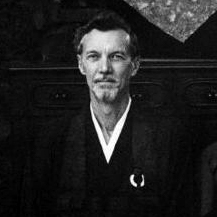
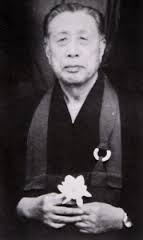
While in university he “borrowed” another book from his father, Lawrence LeShan’s, How to Meditate. “I loved that book,” he tells me, “and I used it to teach myself meditation.”

I ask why.

“Well, I did it because I was very unhappy. I don’t know if I was any more unhappy than most undergraduates, but I was unhappy. And I was lucky enough to find this book and start using it at the same time that I started attending some cognitive therapy sessions through the university. And that was a real life-altering combination for me. I found that the two things worked very well together.”

“Do you mind telling me what prompted you to take up therapy?”

“I mean, I was quite unhappy. I had a tumultuous relationship with my first serious girl friend. That relationship was a proving ground for a lot of emotional literacy for me, and if it prompted me to get into therapy and take up meditation, that is something I’m deeply grateful for because it’s a wonderful combination, and it worked extremely well for me. And it really converted me to the joys of both things. The joys of good, crisp, purpose-oriented therapy and the joys of meditation as a way of understanding your own mind.

“So that made me very curious about Buddhism. And I did a year-exchange program at the University of Glasgow where I continued to study the origins of Christianity and Judaism, but I also started attending regular meditation classes associated with the Friends of the Order of the Western Buddhist. I got to go on my first meditation retreat. I was never tempted to get too deep into that particular organization, but I was grateful for the instruction that I got from them. And the pivotal entry for me was, before I left for Glasgow I married my first girl friend – the one with whom I had the tumultuous relationship – and then, while I was in Glasgow, we broke up. So it didn’t take. But I was very upset about this, and I returned to Vancouver to try and patch together the relationship.”

“She had not gone to Glasgow with you?”

“She had not.”

“And that hadn’t seemed problematic at the time?”

“Yeah, in hindsight it seems so clear. So I went back to Vancouver and was not able to patch together the relationship, but what I was able to do was a friend of mine had found a retreat centre – by chance almost – on Salt Spring Island, which is one of the Gulf Islands off the coast of British Colombia. And when I came back to Vancouver, I thought, ‘Well, I really need somewhere to put my head on straight.’ So I contacted them and asked if I could come just for a couple of days, and it was a life changing experience for me.”

It helped him gain insight into the relationship which allowed it to end well. It also introduced him to the idea that “the Dharma isn’t something that is only carried by people or books. It’s also carried in place. Sometimes places are a teacher in themselves. It was a Tibetan Buddhist retreat center in the Shangpa Kagyu tradition of Kalu Rinpoche. He had founded this retreat center to be one of the first places in North America where western students could complete the enclosed three-year retreat that is necessary if you want to become a lama in that tradition. It’s almost at the top of a pretty small mountain overlooking the water on Salt Spring Island. Very isolated. To get to it, you have to climb up a long logging road. And it has the imprint of decades of devotion. Students have built retreat cabins and retreat spaces up there. All the buildings just have a lot of love in them, and so it was a really special place to find. When I first went there, it was even more special because it didn’t have electricity. If you wanted to see in the dark, you needed oil lamps. And it’s a magical experience to rise in the morning for group meditation and light your oil lamp and go into the shrine room. A wonderful introduction for me. I really fell in love with that place.”

His first visit was only two days long. Then he did a week-long retreat. “And after that week, the lamas invited me to come up for a summer and pay for my stay by working in the kitchen and doing other tasks around the retreat center including being the librarian.” He stayed three months and considered an even longer stay, but he finished his undergraduate work and practicalities took over. He decided to return to Ontario and go to law school at the University of Toronto.

“But I wasn’t very happy in Law School. So I thought what I should do was take a year off and go on retreat back to Salt Spring Island.” The school “with some grace” allowed him to interrupt his studies for a year, and, at the age of 25, he spent a year on retreat. “Cooking. Meditating. I don’t know how well you know the Tibetan tradition, but there’s a long preparatory practice called the ngondro which involved things like doing 100,000 full body prostrations as well as doing visualizations and that sort of thing. So I took the year to do the ngondro and also learned to cook, which was probably more useful.

“But it was an immensely influential year for me. If you read my book,[2] you’ll see that even though I’m writing about Zen Buddhism, a lot of the reflections arise out of things that happened to me during the year, realizations that I had during that year. Perhaps the most important realization I had during that year was I did not want to become a monk, that I was more suited to lay life. But it was a wonderful experience. And I returned to Toronto after it, graduated law school.”

He found work at the Department of Justice where to this day, twenty-two years later, he works as a research lawyer in the Litigation, Extradition and Advisory Division. And he felt the need to find a sangha in Toronto.

“I also realized that as much as I loved the retreat center, and as close a bond as I had with the two teachers who taught there, doing the ngondro showed me that Tantric Buddhism wasn’t my bag. And so I decided to look around to what other kind of teachers I could find in Toronto.”

Yangil Sunim

The teacher he found was Hwasun Yangil Sunim. “He’s a Zen monk born in Korea who immigrated to Canada in the mid-80s and started his own temple. And when I met him, I almost immediately realized, ‘This is my teacher!’ And I have been in and around his temple ever since.”

“What struck you about him?” I ask. “You said you liked the Tibetan teachers you’d met on Salt Spring but didn’t stay with them. What did Yangil Sunim have that they didn’t?”

He reflects a moment before answering. “Sunim[3] is a teacher of great charisma, as many teachers of his generation were, and almost as soon as I met him, I felt like he had something to teach. He had a Dharma, and he had a Dharma that he could transmit.”

“A sense of authenticity?” I suggest.

“It’s more than just authenticity. He has authenticity, but he also has the thing that I now realize is indispensable in Zen, which is you have to have your own take on it. It’s not a generic teaching; it can’t be a generic teaching. It’s only real teaching when it is put inside a vessel of its own shape. And when I met Sunim, I immediately realized this man is a vessel of his own shape, and if I stick around him long enough maybe I will be able to form my own shape.

It was at this point that I asked him what the function of Zen practice was, and he told me that it had none.

I take another tack. “You’re still a lawyer.”

“Part time.”

“So I’m guessing you occasionally come across people who say things like, ‘I hear you meditate; I hear you’re involved with Zen.’ If you’re talking with someone who has some familiarity with the tradition, you might be able to talk about its ‘suchness,’ but how do you explain it to someone who’s just curious?”

“It is you, Rick, who should be the lawyer. You’re doing exactly what a good cross-examiner would, which is pinning me down. And now that I am pinned down, I will absolutely confess Zen practice, attending a temple, studying under a teacher has lots of collateral benefits, and these are all collateral benefits, I admit, that I enjoy. I enjoy the sense of community. I enjoy the collateral benefits of meditation which are being happier, understanding your own mind better. A satisfying sense of transcending the worst parts of day-to-day existence and enjoying the best parts of day-to-day existence. I enjoy Buddhism because it’s changed my whole way of thinking about very important useful things like boredom, like a lack of self-improvement, like embracing your own very faulty nature, all those things I learned through Buddhism. Those are all marvelous collateral benefits. I mean, it’s fun just watching the mind pivot, and this is something that anyone who likes learning understands. But anyone who studies Zen will understand even more. It’s like learning to do yoga exercises that move your mind in ways you didn’t know your mind could move. And merely making those motions is itself a delightful experience. And so those are all collateral benefits that have kept me in Zen, but, counsel, I return to my original point which is that it has no purpose.”

I know a little bit about the Kwan Um School of Zen, and the various stages of authority people who become teachers pass through. Matthew tells me that Yangil Sunim had been influenced by that model but had also modified it. “So, like in their tradition, he would ordain someone as a Dharma Teacher first. I believe I was the first person to be ordained by him as a Dharma Teacher. Lots of people would subsequently be given that designation. And then he would ‘transmit his Dharma’ and designate people as a Zen Master. I believe he did that with me in 2016.”

“Does anyone ever get Dharma transmission and then not use it? Does not go on to teach.”

“Well, his method is very interesting. I mean, he put very few institutional requirements on any of us, I would say. Certainly not official ones; certainly not regular patterns. The strength and the weakness of the Awakened Meditation Center under him is that it is very informal. I love his Dharma partially because it has this lack of stricture. I think it’s one of the reasons why he came to North America and one of the reasons why he stayed. He doesn’t actually have a ton of time for institutionalizing things. And in fact my Zen temple right now is in a bit of a twilight period because last year Sunim announced he was retiring, and he was going to return to Korea and never coming back. His western students – myself included – would take over teaching westerners, and a new Korean monk would come from Korea to attend to the needs of the Korean congregation because his temple had always that kind of dual role. So we said tearful farewell, and then within four months he was back at the temple because he just didn’t like living in a monastery, I think. So he’s largely retired but not exclusively, and so, as I say, we’re in this liminal period where he’s still kind of the boss and yet he’s both just devolving and undevolving responsibilities to us. He has named people Dharma heirs and not everyone who does that teaches. A few people who have received that transmission have gone off on their own and done their own thing, not under the umbrella of the Awakened Meditation Center.”

“As teachers?”

“Yeah. He’s transmitted to about eight people now. Somewhere around that number. And at our temple now are three or four who regularly come who have received transmission, and three of those four take an active teaching role, myself being one of them.”

“What does a Zen teacher teach?”

“That’s an excellent question.”

“Since it has no purpose.”

Matthew laughs. “I think the most important thing we do is teach newcomers the basics of sitting. I love doing that, and it’s nice when they come back. But I just like putting it out into the world, and if I never see them again that’s just fine.”

“I’m guessing that’s most of them.”

“Yeah, but it’s enough to just put it out there.  And then at my temple, we always begin every class with a tea ceremony which has always been a big part of Sunim’s Dharma. In fact, he doesn’t give Dharma talks very often, but the last one he gave at the last retreat we had was about the unity of tea and Zen. So we always have a tea ceremony, and then we give instruction to those who are new. We sit in a group, and then one of the teachers will give a short Dharma talk usually talking about a koan or something like that.”

He explains that the Korean approach to koan introspection differs for the Japanese tradition in certain regards.

“We don’t really graduate through koans. There is no program or curriculum of koans. It would be very normal for someone to have one koan for their entire life. And the koans we use – I think this is also true in the Kwan Um School – the koans we use are often not derived from Zen stories. Often they’re just simple questions like ‘What am I?’ or ‘What is this?’ or ‘Put it down.’ That sort of thing. Someone might use one of those koans for decades.”

“What is the value of koans?” I ask. “I mean the more traditional koans like Gutei’s finger or the turtle-nose snake on the South Mountain. What do they do?”

“I think koans are the great treasure of the Zen tradition, and what they will do for us is give us a new way of reading. Instead of reading in order to gather information or to acquire information, koans are much more like poetry in that the purpose of the koan is to evoke something in you. But unlike poetry which is meant to evoke an emotion or a feeling, koans are more like what we spoke about earlier, the motions that your mind makes in Zen. The point of a koan is that when you read it – I won’t every koan but many koans – the point is that when you read it and you stub your toe on it, you’re frustrated with it. And sometimes that encounter, that hard encounter, is a long grueling ‘What-in-the-name-of-Jesus-H.-Christ-does-this-mean?’ kind of encounter, and sometimes it’s a very short, sharp, instantaneous stubbing of the toe. You know, you read something, and your mind just stops for a moment. But however it happens for the individual, the point is that your mind doesn’t work the same way as you want it to work. The koan has shoved you into a different stream. And our first instinct, of course, certainly before we study Zen – but even for most Zen students – is that you want to get out of that new rut. You want to get back into the world of understanding, or you want to get back to the way of digesting this as some information that you can assimilate into yourself. But what Zen hopefully teaches you is that, no, this getting knocked into a different route is itself precisely the point. That is a motion of your mind. And the more that you get to experience that, the more familiar you get with those kinds of abrupt, strange motions, the more interesting life becomes.”

“Okay. What is ‘awakening’?”

“Overrated,” he says with a laugh.

It’s such a delicious answer, I consider stopping the interview there.

“Coming to the realization that awakening is overrated is central,” he continues. “It’s extremely helpful. In the Blue Cliff Record it says speaking about these things isadding frost to snow. But, of course, awakening is real. It happens. It’s good . . . Until it’s bad. But it’s overrated, and there are other things to do, like sitting or being nice to people.”

This brings us to a discussion of the role of compassion (karuna) in Zen practice, as well as to the role of the Precepts – which are very important in the Kwan Um School – in Yangil Sunim’s tradition.

“That is an excellent question, and, taking a step back, I would say that is one of the great tensions within Zen. It is easy to judge a lack of compassion in Zen practice, and I think it is a mistake because it cuts you off from the great realization that ‘egoless’ and ‘compassion’ are ‘two words the same thing.’ Real compassion – not, like, abstract ‘loving every human being’ – but actual practical compassion is sort of the answer to meditation, to getting high on emptiness and that sort of thing. So it’s a very important tension. In my tradition, I can’t say that we follow the Kwan Um School as closely, which is to say that Precept instruction has never been a big part of Sunim’s teaching. I remember once asking him some question about what to do in an ethical situation, and he said to me, ‘Sometimes your Precepts are open, and sometimes your Precepts are closed. Don’t ask me when your Precepts are open and when they are closed.’ And that was the extent of his teaching on the Precepts. And this is quintessential Yangil Sunim. When he thought you were developing as a student, when he thought you were a serious student, he would also arrange to have a big formal Precept-taking ceremony for you, and everyone would gather, and there were congratulations, and it was a sweet moment. But we never knew what the Precepts we were taking were. And once you looked at the form he would give us – listing the Precepts we’d just agreed to – they would always be things that none of us would do, and he knew we would never do. I’ve sworn a Precept to never use money and never sleep on a bed higher than six inches off the ground. That’s his way. That’s what makes him what he is. And in its own way – I mean it’s wacky – but it also gets at one of the essential truths about the Dharma, which is it’s deceiving. The Dharma is a trickster, and you can’t get too attached to it because, on the one hand, it’s the most important thing in the world, and on the other hand it’s a bundle of lies and chicanery.”

“Oh,” I say, feigning to be scandalized, “are you going to tell me that Shakyamuni didn’t really twirl that flower?”

“Well, what an excellent hook-back to what we were discussing earlier about my early education in the origins of Christianity. One of the things I do in my book is I am very interested in both celebrating and talking about the myths of Buddhism, the essential myths of Zen. The Flower Sermon is one example. It was news to me, but I felt very important, when I discovered that the Flower Sermon wasn’t mentioned I think before the 11th Century.”

“Nope,” I say. “Not in the Pali Canon. It’s like when the Protestants translated Bible into the vernacular and discovered that things like indulgences weren’t in it.”

“Exactly! But unlike Martin Luther, I think we Zen students – mature Zen students – can be flexible about what this means. It doesn’t mean that I don’t teach the Flower Sermon. It doesn’t even mean I don’t revere the Flower Sermon. It just means the Flower Sermon joins just about everything else in that it is both sacred and an invention.”

“In the way most people,” I suggest, “acknowledge that their lineage charts which are supposed to go back to the Flower Transmission and Mahakasyapa aren’t actual historical documents that stretch back with any accuracy much beyond the 9th century.”

“That’s right. But at the same time, I think lineage is extremely important. I mean, I agree with you, and yet I think lineage is important because I think it’s good to know where someone is coming from; I think it’s instructive to know who their teacher was and how they have shaped their teacher’s Dharma into their own Dharma. And it’s useful to know if someone has had approval from a teacher in order to teach themselves. All those things are very useful.”


[1] Thomas Merton, The Way of Chuang Tzu, 1965.

[2] The Garden of Flowers and Weeds. 2021.

[3] “Sunim” is an honorific title for a senior monk.

Jiyu Kennett

Adapted in part from The Story of Zen

The history of the transition of Zen to the West is a tapestry of concepts, personalities, and events. One of the most distinctive elements is the story of a Japanese-trained Englishwoman who appeared in San Francisco in 1969.

“I’ve been trying to reconstruct Jiyu Kennett Roshi’s history,” James Ford told me during the first of our several conversations. “There’s this whole hagiography machine around her at Shasta. There’s what I knew, and then there’s what I learned from secondary sources since. It’s still pretty much my belief that she had a mandate to do something in London, and she had swung by San Francisco in 1969 because it was the first successful outreach to the gaijin.  And you can say many things about Jiyu Kennett – some really good – and among those was, she was real smart. And she arrives in San Francisco. She thinks about London. She decides she’s going to put her business up in California. And she moved into a flat on Potrero Hill, and now she was receiving, and I was her first student. Now there is another fellow who claims he was her first student, but he arrived there on a Thursday, and I was there on a Wednesday.

James Ford

“So I started sitting with her. I mean I had an actual teacher right there I could see every day, and I would spend all my time there. But then her parents had both died while she was in Japan, and she had an estate; not much of one, but there was something to wind up, and she had to go back to London. She brought two students with her, and I was invited to move into the flat on Potrero Hill and pay the rent. With the proviso that I marry my girlfriend. So we got married. And it caused sadness for both of us.” The marriage didn’t last, and James still feels resentment about being forced into it.

“But we moved in. And – you know – I was a residential practitioner from that point on. After Kennett Roshi had been in England – I forget, a couple of months? – she sends a note saying she’s bringing sixteen people. We better move. So we acquired a very large house in Oakland, and I ordained in Oakland. Unsui. Then it really went fast. Acquired the property on Mount Shasta within the year, and I received transmission up in Mount Shasta.”

“How old were you?”

“Twenty . . . I can’t remember now. Twenty-one or twenty-two. Yeah. A child.”

Gyokuko Carlson also received transmission from Kennett in the ’70s. “Roshi Kennett transmitted extremely early,” she tells me. “It boggles my mind how quickly she transmitted people.”

“And this gave you the authority to teach?” I ask.

Gyokuko Carlson

“Which is why it’s staggering that it came on so early. I think it might be influenced by the fact that she was transmitted so early herself, that that early transmission felt kind of normal to her.”

“How old were you?”

“When I got transmission? I’d only been ordained two years.” She calculates the dates in her mind. “Uh . . . 1977 . . .”

“That would have made you 28.”

“Yeah,” she says, echoing James. “A child.” Then a little later, she adds, “You know, when I was ordained by Roshi Kennett, she didn’t know me.”

“Did you think of her as your personal teacher?” I ask.

“What I identified as my teacher was the abbey itself and the schedule. There was a novice master, and I was allowed to talk to him about questions I had. He was a little bit imperious and not super-approachable. You could sneak questions to other seniors as needed, but I almost never had any kind of conversation with Roshi herself. She gave lectures. She would attend teas sometimes. But she was kind of off in the distance. Before I was ordained, a couple of times, she would address me by some other monk’s name. You know, ‘round face girl.’ There are a bunch of them; they can all go by one name.”

I ask her what she meant by saying the abbey and the schedule had been her teacher.

“Well, I felt that I was being immersed and disciplined into a way of life that was structuring my mind. We sometimes say about the meditation posture is that you’re using your body to direct the mind. And I felt that everything in the schedule and the method of being, the deportment, it was all there to direct the mind.”

Peggy Kennett had been born in Britain in 1924 and studied medieval ecclesiastical music at Trinity College. For several years, she was a church organist and admitted later in life that she’d felt drawn to the priesthood; unfortunately, that wasn’t yet an option for women in the Anglican Church. That discrimination caused her to question gender roles both within the church and in society in general. It also provoked a growing dissatisfaction with Christianity as it was currently practiced.

Her father had belonged to Christmas Humphrey’s London Buddhist Society when it was still associated with the Theosophical movement. Kennett joined as well in 1954 and began a correspondence course on Theravada Buddhism through the Young Men’s Buddhist Association in Ceylon. Her interest in Zen began when she met D. T. Suzuki during one of his visits to London. Then, in 1960 the Society asked her to organize the visit of a Soto priest, Keido Chisan Koho. He was pleased with her work on his behalf and invited her to come back with him to Japan. She agreed although it took another two years before she was able to join him at the prestigious Sojiji Temple in Yokohama.

Peggy didn’t have an easy time at Sojiji. There hadn’t been a female student there since the 14th century. More traditional members of the community resented her presence not only as a woman but as a foreigner, and they made her stay difficult. With Chisan Koho’s support, however, she persisted and even achieved kensho. In her biography, she said it came about in part because of the frustration she felt with the way she was being treated. Once she let her sense of self drop, she achieved awakening and felt only gratitude for those who had tormented her.

Chisan Koho gave her Dharma transmission in 1963, and for a period she served as abbess of Unpukuji in Mie Prefecture where she worked with non-Japanese students. Koho expected that she would return to England and sent a letter to the Buddhist Society informing them that Kennett was to be the Soto bishop of London. Humphreys was surprised and wrote back, tactlessly, that they would prefer a “real Zen master.” Koho was angered at having his authority questioned and ordered his secretary to “write to this man in England and tell him he obviously understands nothing whatsoever about true Zen.” Humphries didn’t appreciate the tone of the letter, and Kennett was no longer welcome in the London Buddhist Society.

Chisan Koho

She left Japan after Koho’s death in 1967. Her health wasn’t strong at the time, and the animosity of the conservative Soto community continued. She may have hoped to establish a teaching center in England regardless of the Buddhist Society, but as it happened she undertook a lecture tour in the United States which gave her an opportunity to visit the San Francisco Zen Center in 1969. Impressed by what she saw there, she was inspired to remain in the city. She found an apartment in the Potrero Hill district and began receiving students. Within a year, she and a number of disciples she’d gathered – including James Ford – moved three hundred miles north of the city to the township of Mount Shasta.

Shasta Abbey – as her community became known – could house fifty monks, a term indiscriminately used for both males and females. At times Kennett referred to the members as “he-monks” and “she-monks.” Her experience both with the Anglican Church and in Japan made her determined to ensure that men and women were equally respected in the community. The writer Sandy Boucher noted in her book, Turning the Wheel: American Women Creating the New Buddhism, that in her personal experience – not just as a Buddhist but as an American woman – her visit to Shasta Abbey was the first time she felt she was “in an environment where women were equally visible and equally responsible with men.”

Kennett fell seriously ill in 1975. She consulted a traditional Asian healer who diagnosed that her condition was due to stress. He warned that she would be dead within three years if she didn’t change her lifestyle. So in 1976, she took leave of her position as abbess and went into solitary retreat. Over the next nine months, she claimed to have meditated both on her present and past lives and as a result had a series of forty-three visions comprised of both Christian and Buddhist elements.

It isn’t unusual for people engaged in prolonged meditation to have visions. The Japanese term for these is “makyo,” which essentially means hallucination, and they aren’t generally considered to be more significant than dreams. Kennett, however, considered her visions a form of kensho and believed they were genuine revelations. The fact that she overcame her illness – and lived for almost another twenty years – was, to her mind, evidence of their validity.

In some ways – as the content of the visions demonstrated – Jiyu Kennett never wholly abandoned her emotional ties with the Anglican church. She claimed that Chisan Koho had told her to develop Western forms for Zen practice in order to make it more accessible to Americans and Europeans. Taizan Maezumi had said something similar to his heirs. The controversy with Kennett was the way in which she chose to carry those instructions out. In the early days, the clerics of her order wore Roman collars, were addressed as “Reverend,” and resided in “abbeys” or “priories.” The chants were translations of traditional Soto texts but were sung in Gregorian plainsong with organ accompaniment.

Unlike many Soto teachers, Kennett insisted on the importance of kensho, maintaining that it was fairly easily attained through committed zazen practice provided the student remained focused on the “intuitive understanding which the teacher is always exhibiting.” Stephen Batchelor, writing about Kennett, explained:

“All theories, ideas, concepts and beliefs have to be discarded. In their place one ‘must have absolute faith in the Buddhanature of the teacher.’ Therefore, she concludes, ‘Zen is an intuitive RELIGION and not a philosophy or way of life.’ She deplores how for centuries Buddhism has been denied as a religion: ‘this was because [people] feared saying the Truth lest they set up a god to be worshipped. The Lord is not a god and He is not not a god.’”

Although the initial kensho experience, according to Kennett, was equally accessible to lay and monastic, if one wanted “to go further than that” a deeper commitment was required which was – she later insisted – not consistent with an active sex life. So, in spite of having compelled James Ford to marry earlier, she now asserted, “If you’re married, the singleness of mind, the devotion, the oneness with [the] eternal can’t take place, because you’re dividing it off for a member of the opposite sex or a member of the same sex, or whatever.”

Kyogen

Gyukuko met her future husband, Kyogen, while at Shasta.

“We formed an attachment that roshi was informed about, and she first said, ‘Oh, great. You two are so perfectly suited.’ Later she decided, ‘No. We’re going to be all celibate. You can’t do that.’ She would run hot and cold with us for three years. But the rule at that time was that if you were forming an attachment and wanted to pursue it, you had to leave the abbey for at least three months to get over the hot and heavy part of it. And then you could come back and live separately after that. Well in one of these hot and cold periods with roshi, she told Kyogen, ‘If you want to marry that girl you have to understand you’ll never be abbot of Shasta.’ And he said, ‘I don’t want to be abbot of Shasta.’ I can’t imagine her being speechless, but she didn’t have much of a response to that.”

“I understood that early in her career she, in fact, encouraged students to marry,” I mention. “In at least one case I know of even pressured couples to do so.”

“Yeah. Shuyu and Gyozan Singer, for example, were married by her and ordained at the same time. So, yeah, she was for it. And early in her career she wrote an article saying that any time there is an effort at control from one institution over the small branches of the institution, then religion flies out the window. So she was backtracking on a lot of her original teachings.”

Most Soto priests in Japan are married.

James was the second person to receive transmission from Kennett, the first was Mark Strathern, one of the Englishmen who came to the United States with Kennett after her visit to Britain. Like James, he too eventually left Shasta. In an on-line personal reflection,[1] Strathern points out that when he was first with her, “What Jiyu taught was a very orthodox Soto with some minor adaptations to western needs. She was a powerful and authoritarian figure but had a few personal foibles, a minor paranoia about English and Japanese authorities persecution amongst them. But nothing that got too much in the way of our training which followed the lines of her own training in Sojiji.”

Mark Strathern,

When his visitor’s visa expired, Strathern returned to England, where he eventually founded, with Kennett’s guidance and authorization, Throssel Hole Buddhist Abbey. During a return visit to the US, Strathern noted that in his absence Kennett had become more erratic and autocratic.” She and some of her disciples now claimed to have been able to experience former lives.

“I did not see the relevance of this to Soto Zen, or any Zen for that matter,” Strathern writes. “But, whatever, who was I to know so I threw myself back into things and took the advice I had given to others on a number of occasions – that is to set a time limit at some point in the future and to suspend disbelief and judgement till then and see how I felt at that later time. However as time went on the experiences became more and more outlandish. I believe it was Eko[2] who had been Jesus, others including Jiyu had been, Bodhidharma, St John of the Cross, Teresa of Avila, and any number of inmates and guards from German World War II concentration camps. My touchstone at the time was, ‘Does this lead to the truth?’ and this sure wasn’t leading me on the path to the truth; it was blocking it.”

As her methods and perspective moved further from traditional models, Soto authorities in Japan became less at ease with her and eventually chose not to acknowledge her order or the validity of the transmissions she authorized.

Regardless, she left a legacy. She died in 1996 at the age of 72, but Shasta Abbey continues. As does Throssel Hole Abbey. Although so does the controversy.

“Some years ago,” James tells me, “a former inmate of Shasta Abbey who, when he left, went on to become filthy rich in the computer industry, offered a retreat, a little gathering in Portland for anybody who had received Dharma transmission from Jiyu Kennett and had left. And if you could get to Portland, he’d put you up in a hotel, and there were meetings. It was kind of a lovely event. I still have the ragged remains of a t-shirt which said, ‘I spent blank years at Shasta Abbey and all I got was this lousy t-shirt.’ The other thing I still have, there was a portrait of Jiyu Kennett, some official photograph, cut up and turned into a jigsaw puzzle.”

James fell away from Zen practice for a while after leaving Shasta, then resumed study with John Tarrant from whom he received transmission in 2005. He is now at the head of one of the most significant Zen lineages in North America.  Gyokuko and Kyogen Carlson became the founders of the still vibrant Dharma Rain Zen Center in Portland, Oregon. And both James’ and the Carlsons’ heirs can claim affiliation with the Soto lineage through Jiyu Kennett.


[1] http://obcconnect.forumotion.net/t134-my-experience-and-leaving-mark-daiji-strathern

[2] Eko Little was Kennett’s assistant for many years and succeeded her as abbot. He was later asked by the Shasta Board to resign his position because of matters of personal conduct and he returned to lay life.