A conversation with Shumyo Kojima –
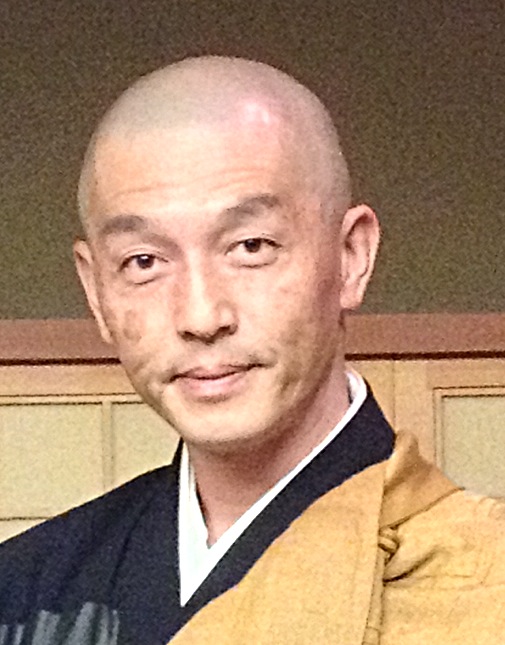
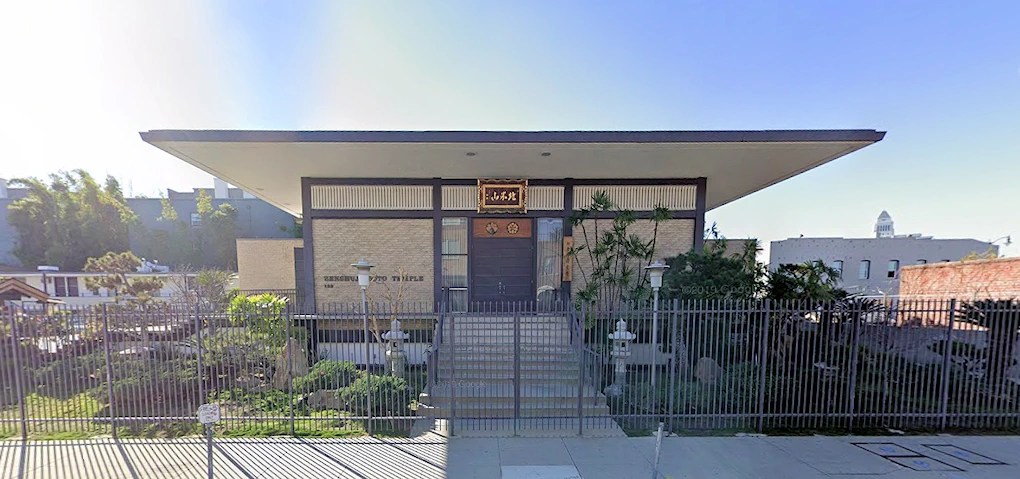
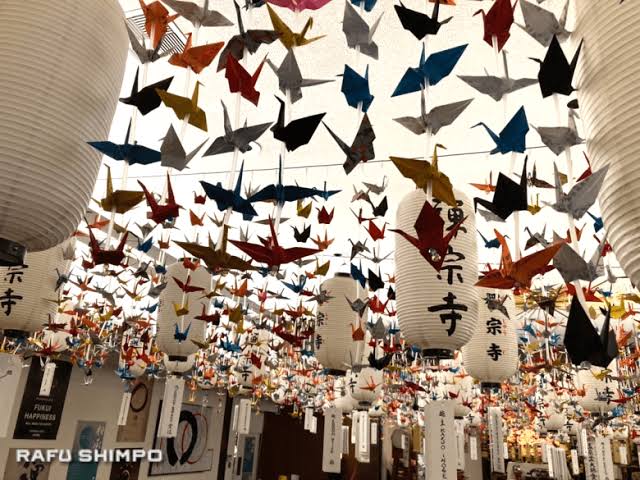
In 1922 – two years before Sokei-an Sasaki began his lectures on Buddhism at the Orientalia Bookstore in New York City, and a full thirty-seven years prior to Shunryu Suzuki’s arrival in San Francisco – the Japanese Soto-shu established the Zenshuji Soto Mission in Los Angeles, the first Zen temple in North America. The temple’s current head priest, Shumyo Kojima, tells me the 100th anniversary celebrations in 2022 were attended by Soto clergy from Japan, Europe, and South America. There were also representatives from the various Soto lineages in the US, including Taizan Maezumi’s White Plum, Dainin Katagiri’s lineage, and the San Francisco Zen Center lineage.
Reverend Kojima was born to a temple family in Japan and came to Los Angeles in 1993. “I was the second son,” he explains.[1] “My older brother would take over my father’s temple, and I was free. I studied Buddhism in college and at the Institute of Soto Zen. I was interested in overseas Zen because Japanese Buddhism had become traditional and stereotyped. So I came to United States to see how Zen is practiced here.”
In addition to his studies, he served as an assistant minister at Zenshuji, which differed in some respects from Soto temples in Japan. For example, he tells me, “Japanese American temples like Zenshuji are a kind of hybrid of individual and family religion. Japanese Buddhism is a family religion. Once you are born in one school or sect of Buddhism, your life is in that sect of religion. Here in the United States, especially in Japanese American community, they have family religions. But there is also some freedom for choosing their own religion.” This hybrid form was something that interested him academically.
When I ask what his duties had been when he first came to Zenshuji, he points out that while people going to North American Zen Centers – such as the Zen Center of Los Angeles – do so to take up meditation practice, there is a range of activities provided by the more traditional temples. “Some people come for ancestor worship; some people come just for zazen. And some people come for activities like flower arrangement, tea ceremony, or community socialization.”
I caught the term “worship” and ask what he meant by it. He explains it is not like worship in the Christian sense. “It means more like ceremonies, like memorial service or some kind of ritual.”
When he came to the US, Zen was well established through centers across North America, but Zenshuji remains what he calls an “ethnic temple,” serving the Japanese community in Los Angeles. He estimates that 80% of the membership “come to the temple because their parents belonged to the temple; the other 20% choose to come to the temple because it meets their interest.”
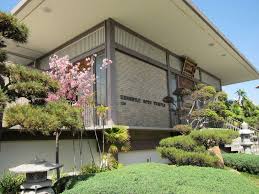
I ask about the significance of the temple to the majority for whom Soto Zen Buddhism remains a “family” practice.
“That is kind of a difference between Western and Japanese culture,” he explains. “Buddhism in daily life did not have much value in Japan thirty years ago. Sometimes they need it for a memorial service or something like that. Very occasionally. But it is not very much attached with daily life. Here there is more connection with members’ daily life, and that’s why I came here. The community feels close to the temple. So they use it for activities like special events and cultural studies not specifically focused on Buddhism. They use it as a community space.”
“So the temple supports Japanese cultural activities and arts?” I ask.
“Kind of, yes. Those activities may not seem not like Buddhist teachings, but we make a relationship with the people and eventually they develop an interest in Buddhism.”
There is also opportunity for meditation – zazen – practice, although Kojima estimates only about 5% of the people who come to Zenshuji do so in order to meditate.
Reverend Kojima and I have very different experiences of Zen. I was introduced to it as a practice in North America focused on meditation and the cultivation of a way of perceiving and relating to the world. In Japan, that kind of practice was generally understood to be a monastic rather than a lay activity. Temples had a broader mandate.
I ask him how it was that Zenshuji first came to be established.
“One of the head priests of Soto-shu came to attend an International Conference in United States,” he explains. “And on the way, he had to stop in Hawaii to visit the Japanese community and the temple built there.” This was the Soto Zen Mission in Hawaii established by Hosen Isobe in 1913. There had been an even earlier temple in Hawaii dating back to 1906. “Then he came to United States and saw the situation in Los Angeles. You know, in 1900 the Japanese population in Los Angeles was 600 people; however by 1920 because of immigration it is over 20,000 Japanese people.
“So there was a huge development in the Japanese community. So when the priest was staying in Los Angeles, many people asked if he could make a Soto Zen temple in Los Angeles. So on the way back to Japan he stopped by Hawaii again and met Hosen Isobe and asked him to please go to Los Angeles to establish the Soto temple there.”
“You said that the people who would have asked for that temple would belong to the Soto tradition by birth,” I say, “by family, but that Buddhism – as you put it – did not have a big impact on daily life. So what were they looking for in the temple? Why did they want it?”
“Actually the priest and temple. Because you know – this is part of the ethnic culture – when people die, they want to have a funeral, and they do not feel comfortable asking other denominations or religions, so that’s why they want their own denomination, priest and temple.”
The temple also became a community center.
“At the time because of discrimination, Japanese people were limited to places to live, limited to places to have a business. So it was really limited. So they have to create their own community. And the priests were kind of community leaders because they had education and were fluent English speakers. This was also the case in Hawaii. The workers couldn’t speak English well and didn’t know about the law, so they could not do anything about legal matters. So the ministers support them by reading the documents or doing kind of negotiations.”
Zenshuji played an important role in the lives of the community in Los Angeles from its inception until 1942, when all Japanese temples were closed during the Second World War and people of Japanese descent – even if they were American citizens – were incarcerated in internment camps. After the war, the temple was reopened and played a significant role in helping the Japanese community reestablish itself. In addition to being a religious institution, the temple was the cultural hub – Kojima’s term – of the community.
I ask how large that community would have been, and he estimates there would have been more than a thousand families. A thousand families would probably have meant between 4000 and 6000 individual members.
Then in the late 1960s, a new group began showing up at the temple. Non-Asian youth who had read Alan Watts and Jack Kerouac’s The Dharma Bums were knocking at the door, looking for Zen Masters who would guide them to enlightenment. At Zenshuji, they flocked to the young minister, Taizan Maezumi. They were not always welcomed by the larger community, however. Kojima tells me he has more research data on the San Francisco temple, Sokoji – also founded by Isobe in 1934 – where the Japanese congregation “saw the hippies doing meditation, but they have a negative feeling because they’re not working to support the community. The Japanese Americans are supporting the temple with volunteer work and also financial contributions, but the hippies are not contributing money and not working, just sitting. But,” he adds, “the Japanese American members don’t study Zen at all, and they don’t sit zazen.”
So while Shunryu Suzuki in San Francisco and Taizan Maezumi in Los Angeles – who had actually been appointed to Zenshuji before Suzuki came to the US – welcomed the interest of these young Americans in Zen practice, the temple communities often found the newcomers disruptive. And there were still resentments carried over from the war years. Hippies were, after all, the descendants of the people who had interred people of Japanese descent, and now they were showing up often acting as if they knew more about Buddhism than their hosts did.
Eventually in both cities, the teachers had to establish separate entities for meditation students and coined the term “Zen Center” to distinguish them from temples.
In the case of Maezumi, at least, Kojima believes there may also have been a financial incentive for separating from Zenshuji. “At the time, young ministers didn’t have salaries. They had no income. They get some money from honorariums by performing memorial funeral services. But it is not enough money to survive. In the case of Maezumi Roshi, he also worked as a gardener and in a canning factory.”
As the general American population became more familiar with Zen as a meditative practice, it was natural for the temple congregations to become interested as well. The abbot at Zenshuji during the 40s and 50s had been Daito Suzuki, whose priority had been rebuilding the Japanese community in Los Angeles. “Especially after the war, it was a difficult time for the community,” Kojima explains. “So the bishop[2] was devoted to community service. You know, lay people in Japan do not do much zazen practice; they are not interested in it. Maezumi Roshi, however, had a deep passion for zazen itself. So he tried to survive on his own and establish the Zen Center with the help of many non-Japanese Americans. But he also continued to serve Japanese American members even after he established the Zen Center. But he is devoted to Zen meditation, and the bishop is not focusing on zazen. That is, I think, a big difference.
“After the passing of Bishop Suzuki in 1959, the next year Reirin Yamada was installed at Zenshuji as the bishop. He was a scholar from Komazawa University and would become president of Komazawa University and also the head priest of Eiheiji, head priest of Soto Zen in Japan. He stressed the importance for zazen for the community and established the Zen Promotion Institute at Zenshuji. Katagiri Roshi was the first student invited to enter the institute. That’s the reason Katagiri Roshi came from Japan.”
“Bishop Yamada promoted sitting zazen?” I ask.
“Not only sitting zazen. Cultivating the fields, cooking, other work is also Zen practice.”
The Zenshuji and the Zen Center of Los Angeles operate separately now, but, Kojima tells me, they have a cooperative relationship. He personally has worked with Wendy Egyoku Nakao.
As it happens, when Sara Siebert began Zen practice it was at Zenshuji rather than ZCLA, simply because Zenshuji was closer to where she lived. But as a result of her training she has a sense of the often unacknowledged debt North American Zen owes to the ethnic temple like Zenshuji and Sokoji. “It is important to recognize how Asian American sanghas are continuing to feed what Zen looks like in the United States. It didn’t just happen in the past or in some specific time period. It’s continuing to be cultivated. We just have so much honoring to do to the Asian American traditions and structures that have supported and continue to support Buddhism.”
Rev. Kojima reminds me, as our conversation comes to an end, that several of the pioneer teachers on this continent began their careers in America at Zenshuji – Taizan Maezumi, Dainin Karagiri, Soyu Matsuoka, and Tozen Akiyama, who founded the Milwaukee Zen Center.
[1] Rev. Kojima has an excellent command of the English language but sometimes struggles with syntax. I have not tried to reproduce his accent and have edited his statements so they accord with common usage.
[2] “Bishop” is not a Japanese term, of course, but it is sometimes used to translate the term “sokan” and refers to a cleric who has authority over other clerics.

