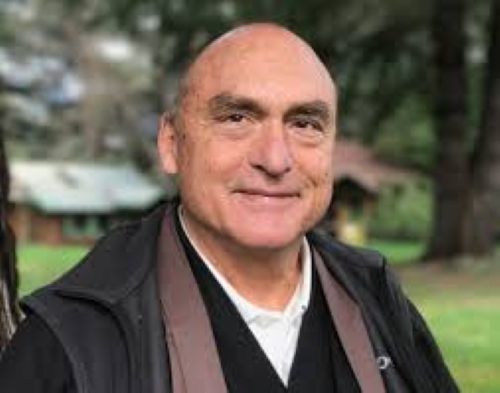
Peaceful Sea Sangha –
When we begin our conversation, Ed Brown tells me that the circumstances of his birth are a significant part of his Zen story. “I was born prematurely, and I was in the incubator for three weeks, and that has come to be a subject of my Zen practice. Because if you’re in an incubator, you’re in your own space, and you don’t touch anybody, and nobody touches you, and nobody talks to you. So is Zen practice years of post-traumatic reenactment? You have your seat; you don’t talk to anybody; you don’t touch anybody, and nobody touches you, and nobody talks to you. Except occasionally you get hit with a stick. So is this post-traumatic reenactment?” he asks, chuckling. “You could say those first three weeks were my first Zen intensive. I was born to be a Zen teacher. I was born to practice Zen, and I got started right away, straight out of the womb.”
His mother died two weeks after his third birthday, and his father placed Ed and his brother in an orphanage in San Anselmo, where he did his second meditation intensive spending his first week sitting all day in a small rocking chair on the porch of the Nursery. He resided there from the age of three until he was seven. His father was acting in what he considered to be the best interests of his sons, but, as a child, Ed naturally felt abandoned and wondered if his father loved him.
“It’s only in the last ten years, some time after the age of 70 – so sixty years later – it occurs to me that I’ve tried now for over sixty years to heal my three-year-old, because when I got to the orphanage what happened was I started having tantrums. My brother was in a different section of the orphanage for older boys; I was in the nursery. I was the smallest and youngest person there. I already had glasses – for extreme far-sightedness – so my eyes were magnified. So the kid looks bug-eyed. And I would have tantrums. So, anyway, I’ve been having emotional issues all my life. What do I do? So at some point – you know – there’s no healing this person. I tried for sixty years. I would think, ‘What’s wrong with me?’ rather than ‘What’s wrong with my three-year-old?’ ‘Why am I so upset?’ I’m not upset; my three-year-old is upset. So I had to put my three-year-old self ‘outside.’ It was one of the hardest things I ever did. ‘How can I possibly do that? Put my precious three-year-old outside my field? Don’t I love my three-year-old? Don’t I care?’ And if I actually love and care for my three-year-old, I’m going to provide it not exactly an orphanage but a sanctuary, a healing place. I’m going to call in Buddhas and Bodhisattvas and healing angels, and I’m gonna have them heal him. Because I’ve spent more than sixty years, and I can’t do it. So I need help.”
It is an intense way to begin a conversation. Decades of meditation have given him ample time to reflect on his own psychology and develop a vocabulary to describe what he discovered.
“So after I had put my three-year-old outside, the next day I realized, ‘My father did love me. My father did not abandon me. My father measured what he could do and what he couldn’t do, what he was capable of and what he wasn’t capable of. And he decided, ‘I don’t have the wherewithal, especially with all the grief I have, I don’t have the wherewithal to raise these two boys. I am going to find an orphanage where it’s close enough I can go visit.’ He would come visit us on Sundays and take us out places. He could have sent us to South Dakota to be raised by our relatives there – my mother’s siblings – but he thought, ‘I won’t see them if they’re in South Dakota.’ So he found someplace local. In other words, he measured; he put a lot of care and thought into it, and it turns out he talked to my birth mother about all of this too before she died, about what to do afterwards.”
In 1952, his father remarried. “It was shortly after my seventh birthday. My birth mother died after my third birthday, and, after my seventh birthday, my father remarried. And she was my mom for over fifty years. And it was one of the most important things that she did in her life. You see, Rick, nobody talks about these things in Zen. But she told me, ‘I adopted you. You’re my son.’ And I look to her as my mother. My older brother, he never did that. But my new mother can remember when we bonded. She said, ‘You got caught in a window from the backyard. You couldn’t get back in climbing in the window. I got you loose. I got you to bed. And you stared at me for the longest time, and you said, “No more brown eyes, but I have you.”’ My birth mother had brown eyes. My adopted mother had hazel or green/grey eyes. And from then on, she was my mother.”
§
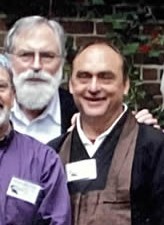
Ed’s brother Dwite began sitting with Shunryu Suzuki’s zazen group before Ed did. “Over the years I was first known as Dwite Brown’s little brother, and then he became known as Ed Brown’s older brother because I started having more pivotal roles including being invited to be the cook at Tassajara.”
One of the things Ed admired about Suzuki was his ability to accept people as they were without judging them. He tells me that Suzuki made him feel reassured and supported. “I felt, my teacher’s there for me.”
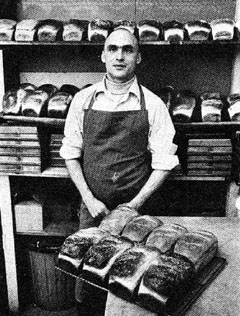
In 1970, Ed gathered his bread recipes into a collection which he published as The Tassajara Bread Book. The advance had only been $100, and he agreed – with some prompting – to donate the proceeds to Zen Center. The book was published by Shambhala and turned out to be their best seller for several years. More than 800,000 copies were sold. As David Chadwick pointed out to me, that made Ed one of the single most generous donors Zen Center had.
After Suzuki died in 1972, the atmosphere at Zen Center changed. Richard Baker was the new abbot, and Ed no longer had the same feeling of being supported and not being judged.
“I told Baker Roshi, in 1978, I said, ‘I have a hard time talking to you.’ And he said, ‘Ed, you’re the only one at Zen Center who has that problem, so it must be your problem and not mine.’ It took me four years to get up the nerve to tell him that I was not the only one. Then I was in exile. Some of us were asked to stop coming to board meetings. Stop coming to counsel meetings. We could have our positions at Zen Center – so I was still the manager of Green’s Restaurant – but no longer invited to counsel meetings or to board meetings. There were about five of us in what we called being in exile under Baker Roshi.
“And in 1982, I told him, ‘I don’t think I’m the only person at Zen Center who has trouble talking with you.’ And he said, ‘Oh, I meant you’re the only one of the senior people who has trouble talking with me.’ And then a year later, I got a phone call at Greens, ‘We’re reconvening the full board. We’re calling back those of you who are in exile. Would you be willing to come?’ And it turned out that all of the senior people had a problem talking to Baker Roshi.”
In 1983, after several meetings with the board, Baker resigned as abbot. Things didn’t immediately improve, and Ed stopped being a resident two years later. He continued to study with Mel Weitsman of the Berkeley Zen Center, who gave him Dharma Transmission in 1996. Eventually Ed moved to Fairfax, California, where he founded the Peaceful Sea Sangha. He also gave occasional teaching sessions at the various SFZC centers until 2018, when Zen Center received a letter complaining about his deportment during a day program at Green Gulch. The author of the letter identified herself as “a queer woman and a survivor of sexual violence.”[1] She acknowledged that Ed may have been trying to be humorous and that he may have been expressing himself clumsily, but some of what he said made her feel uncomfortable. It was not the first time people had expressed concern about Ed’s teaching, and the SFZC leadership decided that he should no longer be allowed to teach at their centers.
In response, Ed’s daughter, Lichen, wrote an open letter to the abbot council and board of directors in which she acknowledged the importance of maintaining environments where participants felt safe. However, she pointed out, the tapes of the talks Ed gave that day did not accord with the accusations leveled at him. Many long-time members of Zen Center came to Ed’s defense, and the board admitted they had not heard the tapes when they made their decision, but they decided to abide by it, telling Ed – in a formal statement which reads like a parody of a corporate HR notification – that his “wish and need to express yourself fully, and the way you choose to do so, is not in alignment with the current needs and conditions of our community and what we wish to offer.” They added, “We thank you for your many years of generosity and continue to hold you in high regard as a gifted teacher in the lineage of Shunryu Suzuki-roshi.”
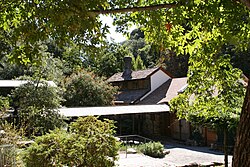
Ed continues to teach at Peaceful Sea. “A lot of it is now done online. Once a month I have a half-day sitting at the zendo here in Fairfax, and my partner, Margot, has sittings two or three times a week.
“You know, it’s all curious. We’re all finding our way. And Suzuki Roshi’s teaching was, ‘Don’t hide your weak point.’ My weak point is being born premature and having my mother die and being bereft and being temperamental. So, on one hand, don’t hide it. But on the other hand, don’t spread it all over the place.” He laughs. “Don’t dump it on anybody. It took me a lot of years to learn that.”
I ask how his way of teaching differs from the way the people he studied with taught.
“You know, for years I couldn’t sit still for years. I would shake. And I would try to hold still. Big mistake, trying to hold still. In retrospect, that’s called post-traumatic reenactment. It’s called releasing your trauma. Releasing the traumatic energy. But who in Zen knows about releasing traumatic energy? But you shake like that to shake off your traumatic energy. So you don’t realize it’s trauma until you realize it’s trauma. In the meantime, you shake.
“So, you can talk about differences; you can talk about sameness. In one of my classes, we’re studying Branching Dreams Flow in the Darkness. It’s a commentary on the sandokai.[2] ‘San’ many; ‘do’ one; ‘kai’ shake hands. Same/many; same/different. Suzuki Roshi said, ‘I will always be with you.’ I say to my students, ‘I will always be with you.’ What ‘I’ is that?” You know? We sit here with everything. We sit here in everything, with everything. And I have my own language. A lot of it is Suzuki Roshi’s language, but I’ve added language for trauma, informed by trauma. In some ways, I have more acknowledgement of body-based practices than most of my teachers. Qi-gong, yoga, hands-on healing. Handwriting change. I know much more about and I share much more about cooking. But I’m not teaching people how to make better dishes. Some of my teachers have tried to teach how you can have better experiences or to realize this or to attain that. But my aim is to teach people how to be a student – I think I’ve learned something about being a student in all these years – and to go on studying and to go on . . . But then – you know – there’s nothing to teach, and then there’s language to teach nothing.”
§
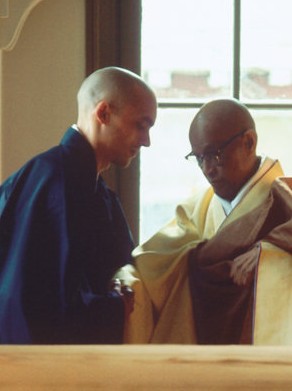
In March 2025, Ed was invited back to the San Francisco Zen Center to give a Dharma talk which was simultaneously live-streamed.
[1] The documents related to this incident are available on David Chadwick’s Cuke.com: https://www.cuke.com/Cucumber-Project/brown-edward/barred-from-sfzc.htm
[2] An eighth century text by Shitou Xiquian chanted daily in Soto temples.


Beautiful! ?? Began big healing after age 70: its never too late for Hope! ?? ….& you definitely still count as middle-aged! ?? V ________________________________
LikeLike