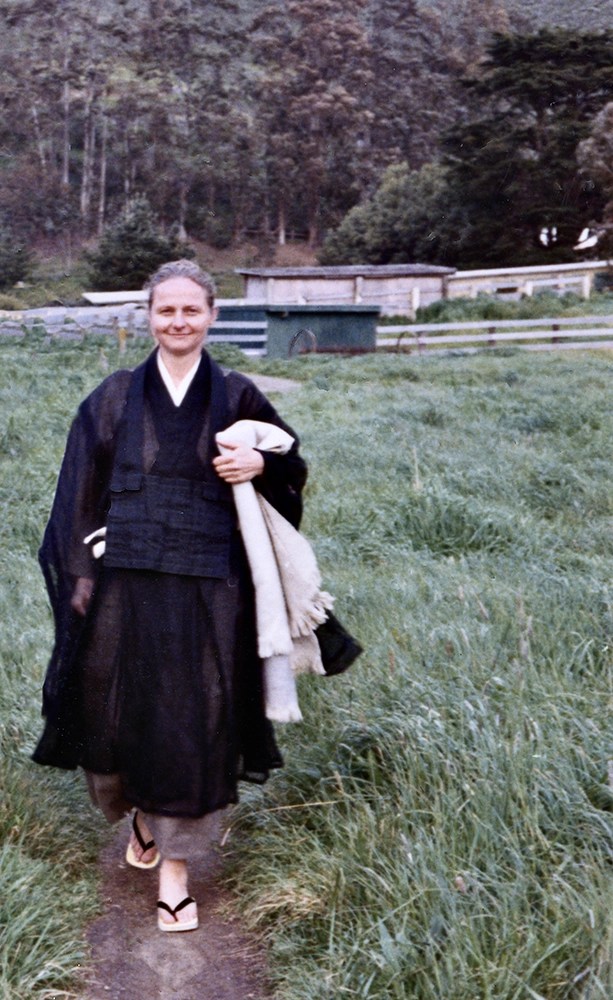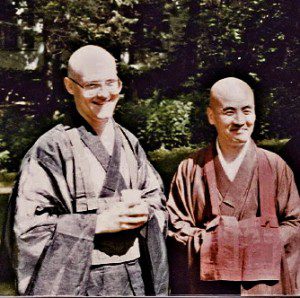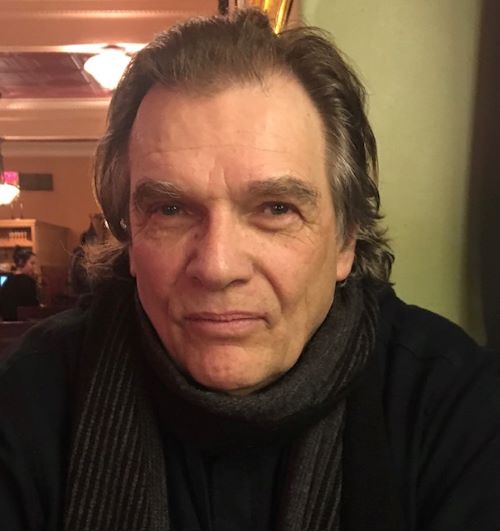
Dainin Katagiri

A conversation with Dosho Port

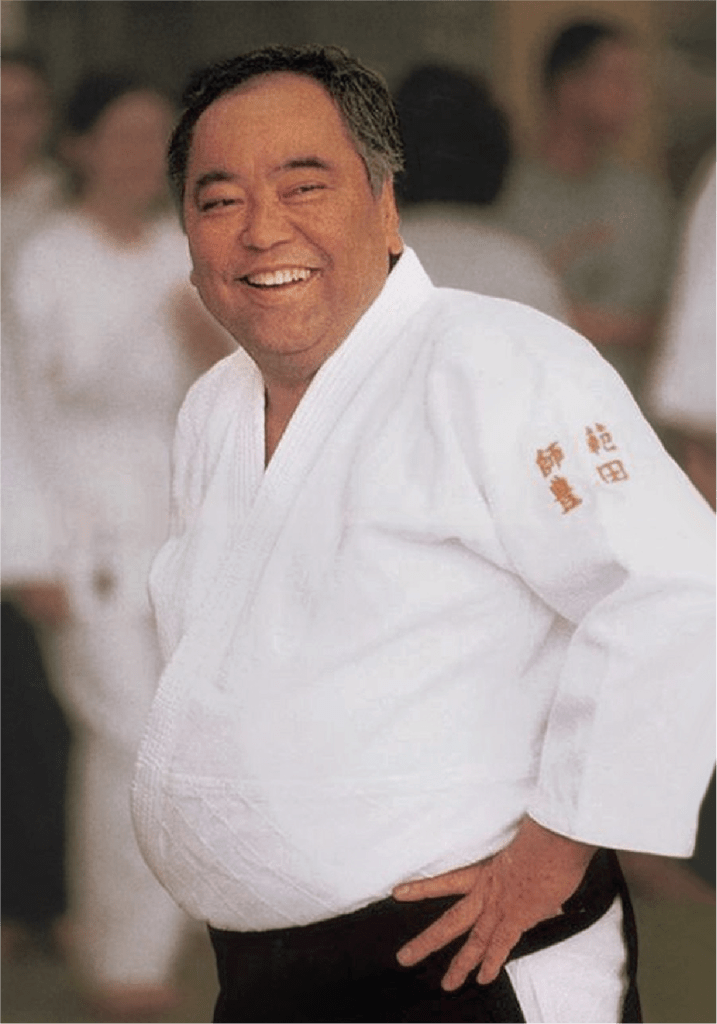
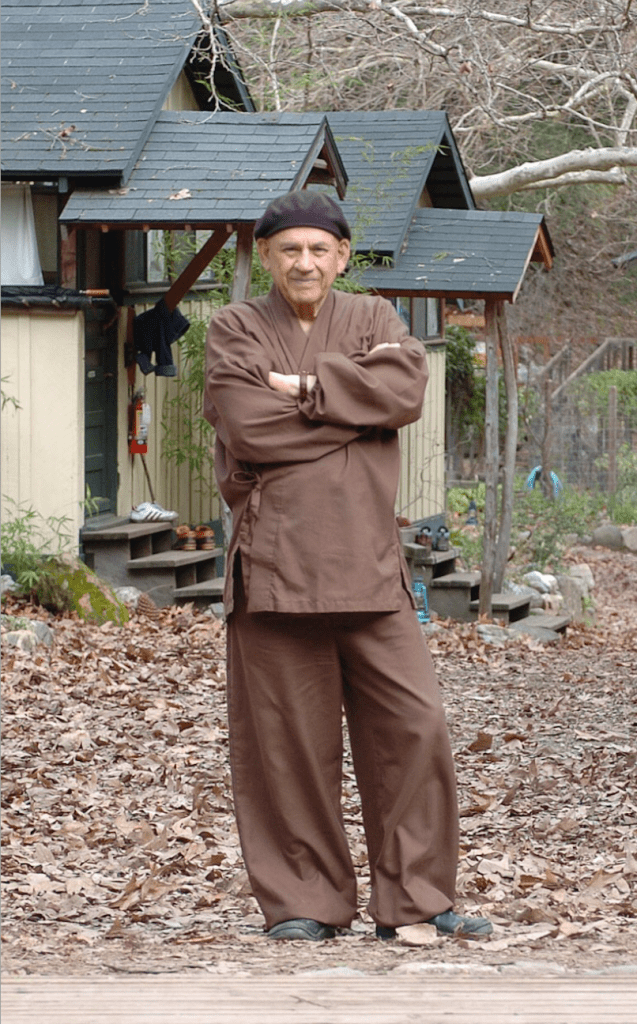
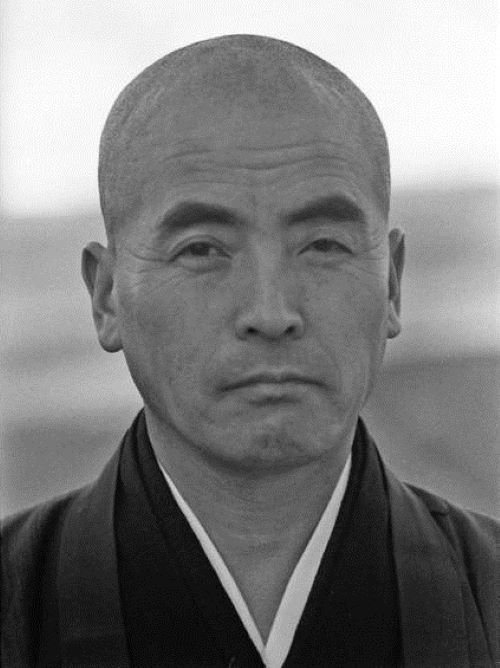
Dainin Katagiri was born in Osaka in 1928. His birth name—Yoshiyuki—means “Good Luck.” He was the last of ten children, and his family believed him to be the reincarnation of an elder sister who had drowned. He apparently shared this belief. Years later, when a student in Minneapolis confessed that he couldn’t accept the idea of reincarnation, Katagiri replied, “Perhaps you will in your next life.” He was surprised when the students thought he was making a joke.

The family were devout Pure Land (Shin) Buddhists who gathered every morning to chant in front of the family shrine before beginning their daily chores. The young Yoshiyuki’s name, however, soon belied him. His mother died when he was fourteen, and two years later he was drafted into the armed forces. 

Like most of his countrymen, Katagiri was devastated by the Japanese surrender. Much of the population – in particular, young people – felt betrayed by leaders who had demanded enormous sacrifices but whose policies had culminated in defeat and occupation. His family’s restaurant business had been destroyed by Allied bombing runs, and they were destitute. Katagiri found work, drawing on his experience as an air force mechanic, but he was depressed and unsure what value or significance his life held.

Everything in Japan changed after the surrender. Some 500 Japanese officers immediately committed ritual suicide following the Emperor’s radio broadcast announcing the end of the war. Hundreds more would be executed as war criminals. American soldiers patrolled the streets and were in control of all national activities. Every major city in the country—except Kyoto which Allied forces had spared because of its religious importance—had been devastated by bombing; the manufacturing industry was in shambles. Poverty was the norm even for families which had been well-off; extreme food shortages would continue for years. 

The only place where things seemed to continue as they had before the war were the Buddhist temples where monks spent their days, as they always had, in meditation and labor, in chanting and performing rituals for the benefit of others. Here there was the illusion of something permanent and stable in a world which—as Buddhism teaches—is characterized by impermanence. Katagiri was drawn to Zen by a yearning for a traditional way of life that would help him find peace and a sense of meaning.

At the age of 18, he sought out his first teacher, Daicho Hayashi, a temple priest in the small fishing village of Mihama, at Taizoin in Fukai Prefecture. Later Katagiri would explain that Hayashi did not so much teach Zen as exemplify it in the way he served the needs of his community not only as a Buddhist priest but as the local soothsayer, community healer, and counselor as well as the presider at Buddhist ceremonies and rites of passage. Katagiri was trained to perform memorial rituals and to chant sutras; he also spent time grooming the grounds and the small cemetery attached to the temple.

In 1946, he received the precepts from Hayashi and was given the Buddhist name Jikai Dainin, Ocean of Compassion, Great Patience.

“Did the name suit him?” I ask Dosho Port, one of Katagiri’s Dharma heirs. I have been working with Dosho since November of 2015, so that puts Katagiri Roshi in my “kechimyaku.” “Did he demonstrate ‘Great Patience’?”

“I think so, sure. I remember when Tenshin Reb Anderson came and gave Katagiri Roshi’s eulogy, he said, ‘And he knew how to shut up.’ And I thought, ‘Well, Reb did know him’ because he really did know how to shut up.”

“What do you mean by that?”   

“I remember Katagiri Roshi saying, ‘When a tin can has only a few stones in it, it makes a lot of noise. But when the can is full,’” – Dosho mimes shaking a can – “‘no noise.’ When the practice is just a little bitty thing dinging around in your can of ego, it makes a lot of noise. So he didn’t have to talk.” 

“One of the first things you told me about him was that he had a ‘world-class frown.’”

Dosho laughs. “Yeah, that’s true. Especially when he was sitting zazen, that was kind of his default expression. Thich Nhat Hanh came once to talk about having a half smile while you’re sitting, and we’re like, ‘Really?’ This was how Katagiri Roshi sat.” Dosho pulls the corners of his mouth down to form an exaggerated frown. “It was also his neutral expression. I mean he could smile and laugh, of course, but his default was just kind of this frown.”

“So how did he come to be in the United States?”

“Well, he didn’t want to do funeral Buddhism. It’s very simple. He could have taken over his teacher’s temple, which was what his teacher wanted, and he was the abbot of his teacher’s temple after he died, but he’d go maybe once every two or three years. He was already in the US when his teacher died. He was in his mid-thirties, and he became the abbot and just continued doing what he was doing here. It was just a small temple, a small town. Beautiful place; looks out on the Japan Sea, quintessential mountain islands out in the bay. But, you know, thirty families in the village or so, and his teacher, my grand-teacher, was basically a hermit. He would sit in the temple, and people would come and ask him questions for, like, daily-life counselling. He was also really into the I Ching and Chinese medicine, so he was kind of the go-to guy if you had a problem in the village, which was the normal role for a priest in a small village. Tomoe Katagiri, Katagiri Roshi’s wife, and their young sons lived with Hiyashi Roshi for a couple of years while Katagiri Roshi was getting established in the US., and she once told me the old teacher would just sit around in the Buddha Hall smoking his pipe all day. Visitors would come by once in a while, but otherwise he would just sit there smoking his pipe.”

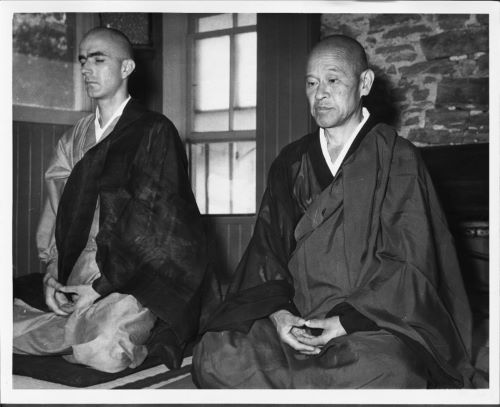
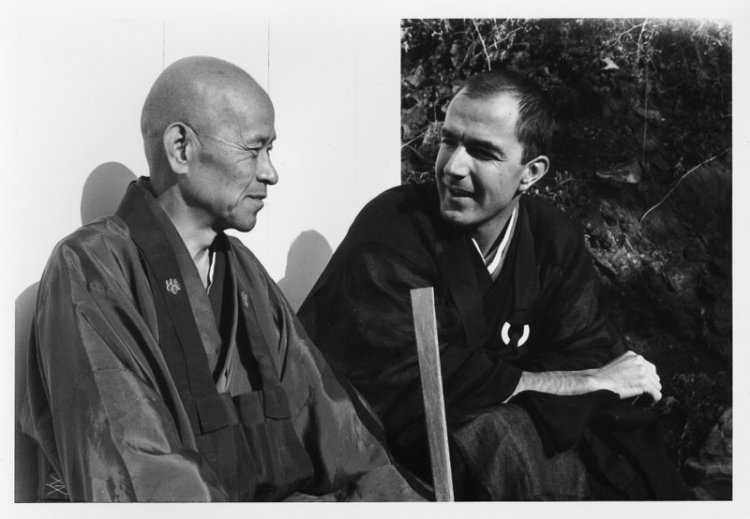
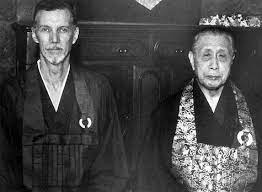
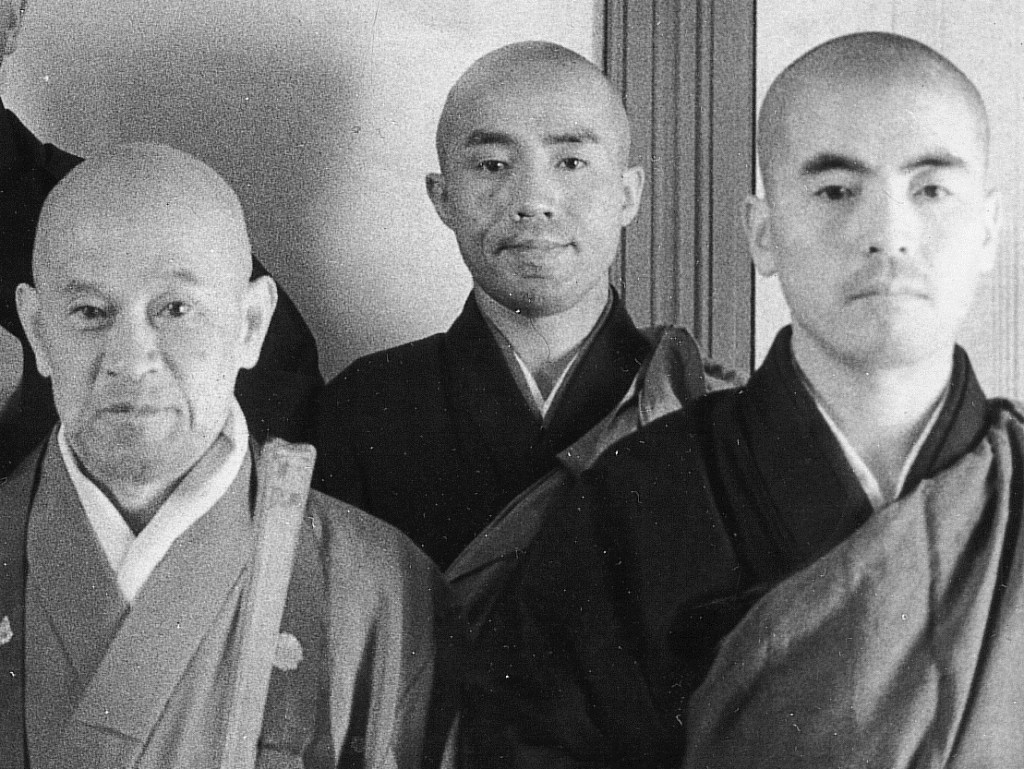
Shunryu Suzuki (left) and Dainin Katagiri with Kobun Chino in back

“And conduct funeral services.”

“And do funerals and memorial services. And Katagiri Roshi wasn’t interested in doing just that. So after he received Dharma transmission, he got a job with the Soto administrative center – the Sotoshu – in Tokyo, and through his connections there, he learned about an assistant priest position at Zenshuji, the Soto temple in Los Angeles, and he applied for it and got it. That’s when he met Maezumi Roshi; he and Maezumi Roshi were roommates for a while because Maezumi Roshi was another assistant priest there. But Katagiri Roshi wasn’t happy there either, so he ran off to Suzuki Roshi in San Francisco. They had studied with the same teacher in Japan, so they knew each other. So he went up to San Francisco. Then Suzuki Roshi called the bishop in LA and said, ‘This Katagiri guy, I asked him to come. He’s here with me now, and he’s going to stay.’”

“Why did Shunryu Suzuki want to hijack him?”

“He needed help. This would have been about the early ’60s – ’62/’63 – and the hippies had found Suzuki Roshi, essentially, and were starting to come. So he needed help with both the Westerners and with the Japanese temple there which was a thriving temple in San Francisco at the time.” 

“You told me once that Katagiri Roshi wasn’t impressed by hippies.”

“I think that’s true. I think he was horrified actually by some aspects of hippie culture. And probably his ‘great patience’ clicked in there because usually that would not be all that clear. But just the wildness and the confusion of the hippie culture was not something that he thought was a healthy thing.” 

“So how seriously did he take the young people who were showing up the San Francisco Zen Center?”

“Well, he had a way of taking each person seriously, and he had a way seeing people’s capacity or something like that that they themselves might not even be aware of. Like, if the group thought something about a person, he didn’t care. He didn’t care at all. He saw people like he saw them, and it was usually in a positive way. He saw their capacity. So like at Minnesota Zen Center, there’d be people he’d put in positions of responsibility, and a lot of us would be going, ‘Roshi, don’t you know this or that about so-and-so?’ And he’d be going, ‘Oh. Fine.’” Dosho imitates Katagiri’s accent. “‘They can do.’ That was impressive to me, that he saw people in a different way than the group did.” 

“What were his duties when he got to San Francisco?”

“He did everything! ’Cause nobody else knew how to do anything. So he did a lot of the teaching. Suzuki Roshi was sick. He wasn’t actually that old, but he didn’t have a lot of energy, so Katagiri Roshi did a lot of the mainline teaching and showing people how to practice. Yvonne Rand was the secretary of San Francisco Zen Center, and she and Katagiri Roshi had desks opposite each other, and she told me he would be so exhausted that he would fall asleep while he was writing. He would fall asleep while he was walking because he was working so hard. He’d just run into the wall. So he threw himself into it. I think that he felt, especially after he left, that he was kind of unappreciated. Because after Suzuki Roshi died Baker Roshi became abbot. And he and Baker Roshi were such different people. You’d be hard pressed to find two more different people than Dick Baker and Dainin Katagiri.” 

“Did they get along?”

“No. They didn’t get along. I think there was some competition between them. That’s my sense. I don’t know what Baker Roshi would say about that now. But I know from Katagiri Roshi’s side that he felt pushed out. Suzuki Roshi asked him to stay and help Dick Baker, and Katagiri Roshi was like, ‘Yeah. I don’t think so.’ But at that time, he thought that Suzuki Roshi was going to live for a while. So then he left and then, when Suzuki Roshi died, he felt bad about that. Like, he probably could have stayed around and helped some.” 

“So he feels pushed out and decides to go somewhere else, and somehow in all the gin halls in all the towns in all the world, he chooses Minneapolis.”

“Well, there had been a small group of people who had been sitting in Minneapolis, and they had gone to San Francisco some. So he had some connection with those folks. And getting back to the thing about hippies, a story he often told is he was flying from San Francisco to New York with Suzuki Roshi, and they were looking down at this vastness, and he asked Suzuki Roshi, ‘Who’s down there?’ And Suzuki Roshi said, ‘That’s where the real Americans are.’” 

“As opposed to in San Francisco?”

“Right,” Dosho says laughing. “So he was always curious. And his idea of a zendo was a place where plumbers and carpenters and millworkers, housewives and secretaries and teachers like that came rather than these poets and drug addicts and stuff.” He’s still laughing.

“And was that what he found in Minneapolis?” 

“Ehhhh . . . When I first started there, it seemed like all the men were carpenters with Ph. D.s and all the women were social workers. Of course, not everyone. But that was a thing. So . . . yeah, more regular people. But the Midwest was difficult for him because he had also seen the incredible success of the San Francisco Zen Center, and he was surprised that it didn’t take off in that way in Minneapolis. I think he would not have known what to do with it if it had. He wasn’t a slick person that way, organizationally or in terms of that kind of thing. He wasn’t oriented in that way.”

“When did you first meet him?”

“October ’77. I went for zazen instruction one cold, windy evening, and I was the only person who showed up. And one of the things that impressed me was that it did not matter at all to him. He just did his thing. He spent an hour-and-a-half/two hours with me teaching me how to do zazen and kinhin and bowing and things like that. Very patient and kind, and there was something about him that was very striking to me.” 

Dosho Port and Dainin Katagiri – 1984

“What motivated you to come back?”

“I think a combination of desperation and being in his presence. That there was some hope. I’d tried drugs, sex, and rock ’n’ roll. It was fun, but in terms of happiness and the meaning of life, those things don’t go very far. So here was somebody who had a certain kind of poise and joy about him that was palpable.” 

“How long had he been in Minneapolis when you arrived?”

“About five years or something like that.”

“What was the community like? Other than having a lot of Ph. D. carpenters.”

“Well, that was kind of it. A lot of folks lived in the neighborhood around the Zen Center and came over for practice. And as we talk, I think that something that’s often kind of lost in present Zen discourse is that Katagiri Roshi and a lot of the early founders – maybe all of the early founders – really practiced their asses off. He sat sesshin every month; he sat with us all the time; he sat at least several hours a day. He really had a very concentrated practice which drew a certain kind of people. There was a dozen to twenty of us who were throwin’ ourselves into it. And it was great. He gave us a really great training combined with the study aspect which was always important to him. He was kind of a scholar monk which was not uncommon in Soto those days. And so he gave us a thorough education in the Buddhadharma. A great foundation. I don’t know if he appreciated what he was doing, and I don’t know how often others appreciated it either. But my view is that he gave us a really great foundation.” 

“Were you one of the people who moved into the neighborhood?”

“Yeah. Probably a few months later, the woman I was living with and I moved into that neighborhood so we could walk over for zazen all the time.”

“You made that commitment early.”

“I did. I mean, it just clicked. It was like, ‘I’m looking for something, and this is it.’ That was clear to me, actually, when I read Three Pillars of Zen. I didn’t know at first how well what Katagiri was offering would  fit this aspiration that I discovered in Three Pillars of Zen, but I found that it did. But it took some time. His was a very different style in some ways. But, I mean, a lot of zazen is a lot of zazen.”

“There’s a focus in Three Pillars on the imperativeness of kensho,” I point out, “where in the Soto tradition, that wasn’t stressed, was it? In fact, didn’t they say that kensho wasn’t a necessary achievement?”

“Well, Kapleau, of course, was in the Soto tradition.” 

We argue about that for a bit. 

“Well, it’s a complicated thing,” Dosho concedes. “But I would say the spirit and the importance of awakening is present in traditional Soto Zen as well as in Rinzai Zen. The method of the post-Hakuin koan introspection that Harada Daiun found through his work with Dokutan Sosan Roshi and that he brought back into the Soto training, that part is different. But the actual imperative of awakening, of course, I mean it’s Buddhism, so, of course, it’s important. There may be criticism about some focus on kensho being a kind of spiritual fascination, which – I think – was what Katagiri Roshi was critical of. Not the importance of awakening. And he says in Returning to Silence, ‘Of course enlightenment is important for us.’ I’m paraphrasing. ‘And enlightenment must digested through our skin, muscle, marrow.’ That’s just Zen. Right? That’s not Soto or Rinzai Zen. What you’re referring to is the post-Meiji Soto orthodoxy which denies the importance of enlightenment and which is essentially not Buddhism. He didn’t so much buy into that. Not every Soto monk buys into that.”

I ask about the size of the community, and Dosho tells me there were seldom more than thirty official members, only a dozen or so of whom showed up regularly for practice. The numbers must have been disappointing to Katagiri. Then in 1983, Richard Baker resigned as abbot in San Francisco, and Katagiri was asked to return. 

“They needed some temporary help,” Dosho explains, “and he did some things. He led at least one practice period at Tassajara, and, by the way, one of the first things he did when he came back to Tassajara is that Baker Roshi, I guess, had set up a new altar in the new zendo. Katagiri Roshi went in and had them turn the altar around because he thought it was facing the wrong direction. He turned the altar around; that was quite metaphorical. And he led ango at Tassajara, and then he had some kind of temporary teacher/abbot position, but they were reluctant to go back to a Japanese teacher. I think the group at the time was reluctant to do that. So they actually went with Reb [Anderson] as abbot.”
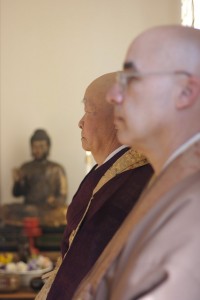
Another factor was that the community retained a fervent loyalty to Shunryu Suzuki Roshi, and while Anderson was in that lineage, Katagiri Roshi was not. Reports from the time suggest that Katagiri Roshi was taken by surprise. He had fully expected to be invited to be abbot. 

“I think that’s true,” Dosho says. “I think he felt – again – kind of pushed out. I think he did want to become abbot of San Francisco Zen Center. I was there in San Francisco during this time for a while. I was president of Minnesota Zen Center, and they brought us out to there to kind of explain to us how they were going to take our teacher. And we tried to work something else out with them where we kind of shared leadership or something. But it was clear to me – I mean, I was a kid; I was 25 or something, 26 – but it was still clear that there were these competing factions. It was hard to tell what was going on. And then Reb wound up being put in the position.
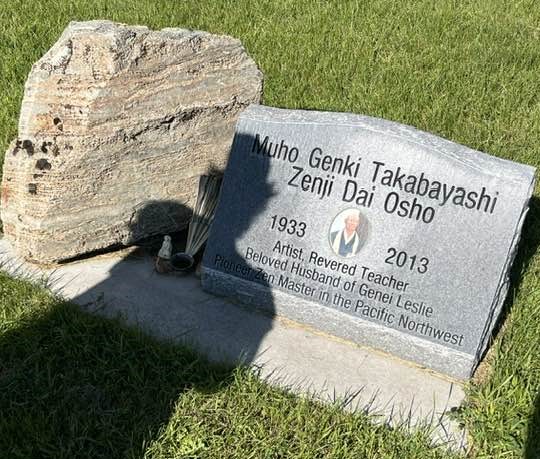
“I think it took Katagiri Roshi a little while to get over the disappointment. And it was hard for him to see how the whole thing in Minnesota could really move forward. And then we started developing this country center. That was also kind of an idealistic step. It was three-and-a-half hours/four hours from Minneapolis. The group had had a choice between a farmhouse in Wisconsin a few minutes away or this plot of undeveloped land in the southeast corner of Minnesota. And – bunch of hippies – they went for the more idealistic choice. And it was very hard to develop and slow. We had to do everything, including build the little footbridge over a creek to get into the area where we could hold sesshin in tents. So everything took a lot of energy. And so I think he kind of floundered in his last years. He wasn’t sure how to go forward. And then he got sick and died.”

“Who was his Number 2 during this time?” I ask.

“Well, for a while, I think I was. But I think whoever you talked to would have a different view on that. It’s an interesting question. It wasn’t like other systems I’ve seen where there was a clear heir apparent. He didn’t nurture the group in that way. I was surprised that he offered Dharma transmission to anybody ’cause I didn’t think he thought any of us were ready for it.” Dosho laughs heartily. “And, you know, I don’t think we were.” 

“It was a fairly large group he ended up offering it to, wasn’t it?”

“Twelve of us. Pretty much everybody that he’d done priest ordination with. Then a few months later he died. And he had said it was up to the group to decide who would be the successor out of this group of twelve. But that was a quagmire because nobody had the respect of the rest of the community in that way. We were all together. Not only the twelve of us that had received Dharma transmission but also the rest of the people in the community. We were totally peers, so there wasn’t a sense that anybody should be the teacher.”

Eventually the community invited another Japanese-born teacher, Shokaku Okumura, to come to Minneapolis. “And he was teacher for – what? – three years? Four years? I can’t remember. But for much of the early ’90s, Shohaku lived in Minneapolis. And then Karen Sunna – one of the twelve – became abbot at that point; she was the first Dharma successor. And that was probably a good thing. To have somebody else in that position for a while first.”

I ask Dosho how Katagiri Roshi differed from some of the later teachers he worked with.

“Well, you know, everybody’s different, so . . . His basic personality style was different. I think I’d say he was quieter and much more willing to be uninvolved and kind of let things unfold.” Dosho smiles fondly at something he remembers. “I mean, he would give instruction, of course, on how to do oryoki, how to do zazen, and stuff like that. But, for example, he asked me to be tenzo at Hokyoji, the place that we were developing, for the first big thing with monks from Japan and all that, and I was into this macrobiotic trip at the time. And I said to the group, ‘Coffee is really bad for you, so I’m not going to use center money to buy coffee.’ I drink coffee now, but at the time I was kind of a zealot. And he didn’t say anything. He didn’t say, ‘No, Dosho. Serve coffee.’ He just let me do it, which, at the time, it didn’t seem so unusual. But it was kind of like the kids were in charge, and he was the kind of parent who just let things go. He just did his thing. He did his practice, which was very intense, and we could look to him or not. Even the decision to buy Hokyoji, he was basically quiet through the whole process, and then at the end of the meeting – before they’re going to vote to buy this property and make this huge commitment with a big balloon payment due in a couple of years – they asked him what he felt, and he said, ‘I’m 60% in favor.’ I mean, what the hell do you do with that? If it was now, I would say, ‘Well, the leader’s gotta be more than 60% sure, so let’s wait. Let’s think about this.’ But that was his style. He didn’t push himself.”

“It was a choice on your part to stay with him,” I suggest. “You did have options.”

“Well, you know, we just had affinity. That’s the truth of it. I could come up with some reasons, but it was just some kind of basic affinity. Part of the reason for our trip to Japan together was – we visited a whole bunch of places – was because he wanted someplace where he could send priests to do Japanese training. So I met a dozen/fifteen teachers, some of the most interesting Soto teachers at the time. And at the end of the trip, I was like, ‘You know? I picked the right guy. I’m good.’ I did want to return to Japan because I wanted to learn that style of practice. But in terms of a teacher, I thought, ‘I don’t have to find another teacher.’ The teachers I met there were really wonderful teachers, but I felt Katagiri Roshi was the teacher for me.”

The Third Step East: 215-30; 136, 212

The Story of Zen:  275-80, 319, 352, 413, 414

David Chadwick

Cuke Archives

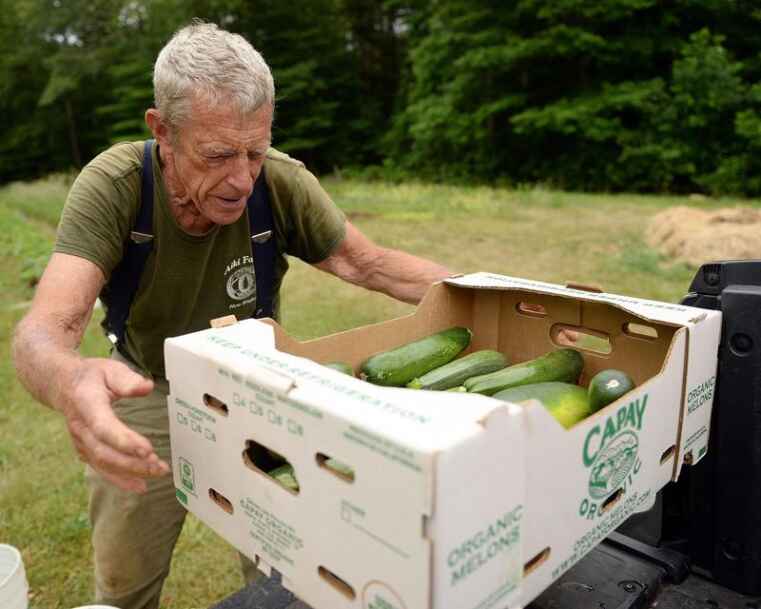
There are a handful of digital archives I refer to regularly in the composition of these profiles. One of the most useful is cuke.com maintained by David Chadwick. David is the author of Crooked Cucumber, generally accepted as the official biography of Shunryu Suzuki. Cuke.com originated as a supplement to the book, which was published in 1999. In the 24 years since, the site expanded and a second site – shunryusuzuki.com – added. The combined archives are so extensive that David compares them to the Winchester Mystery House in San Jose, California. “It’s a big, giant, sprawling mansion where the woman who owned it thought she’d die if she stopped adding to it. So it’s got stairways to nowhere and it’s got all these rooms. Now it’s like a theme park. Well, Cuke Archives, I’d say, is like a Winchester mansion the size of Los Angeles.” That’s a mite overstated, but the sites do contain a lot of material.

David now lives in Bali. There is an eleven-hour time difference between Bali and Atlantic Canada, where I live. He has just finished dinner when our video chat begins; I’m only on my second cup of coffee of the morning.

“When I was very young, my father was a reader in the Christian Science Church,” he tells me. “And when I was maybe six or something, he quit. And being a reader, that’s like being a minister. He quit because he thought it was too dualistic. He thought it elevated Jesus beyond just being a person who’d awakened. So he got into some New Thought Christian writers like Ernest Holmes, William Walter, and Emmet Fox.”

The New Thought Movement – like Christian Science – holds that illness arises from the mind and can be cured by “right thinking.” It developed at the end of the 19th century and maintained that Christianity – rightly understood – was the culmination of a succession of wisdom traditions which included the ancient Greeks, Daoism, Vedanta, and Buddhism.

“Very influenced by Emerson, Thoreau, there was obviously Buddhist influence on it,” David says. “Anyway, it was a great way to be raised. In our home, God was not an outside power. It was mind. It was mind only. So I’m very grateful for it.”

His father died when David was eleven, but he left a strong influence on his son. “He was my first teacher. He was a really good guy, really nice guy, very gentle.”

After graduating high school in 1963, David spent some time in Mississippi and Chicago involved with the political causes of the day. He lived and worked with the staff of Students for a Democratic Society and met people like Tom Hayden and Rennie Davis. He admits, however, that he “was just a pest. I was a crazy kid, and they were all like policy wonks.”

Then he spent over a year in Mexico. “I was going to school, but I also smoked a lot of pot, and I really got into walking around town and talking to people. I played guitar in a whore house and really got into Spanish. Then in Acapulco I had my first LSD trip, which was really great. And then some friends of mine from Mexico said, ‘Hey, it’s happening in San Francisco.’ So I made my way out there and for about half a year I was sort of grooving on the hippie scene. I had a few more acid trips, and that really tied into the stuff my father had taught me. And I felt like I needed to meditate. So I found the San Francisco Zen Center, and I just plunged right into it. I loved it.” He was 21 at the time.

“Why did you feel you had to meditate?”

“Because one can see, if one is observing oneself, that the mind is way too busy and way too petty normally. So what you want to do is slow it down.”

“This is something you were aware of when you were twenty-one?”

“Oh yeah. So slow it down. And the thing is you can bust through with acid, and I took acid like with the Psychedelic Experience, very seriously, meditating, fasting, no talking.”

The Psychedelic Experience was a manual composed by Timothy Leary, Ralph Metzner, and Richard Alpert – who later became the Hindu teacher, Baba Ram Dass. It describes what amounted to a sacramental approach to the use of psychedelics loosely based on the Tibetan Buddhist Book of the Dead.

“So I had really profound experiences, but I didn’t do it a lot. I think I had eight trips in all. And that made me think, ‘All right, that’s not going to do it. That’s just like taking a trip there, getting an idea that there’s mind beyond normal mind.’ What I needed was . . . I think I had an image of the wind and time wearing down mountains rather than just blowing them up. And I stumbled on some books on Zen. I wasn’t a big reader, but I found Zen Flesh, Zen Bones and The Zen Teaching of Huang Po translated by John Blofeld, a really great book. I read and re-read Lin Yutang’s translation of the Dao De Jing.”

Shunryu Suzuki was away when David first knocked on the door of the San Francisco Zen Center, so instead he was introduced to Dainin Katagiri, or Katagiri Sensei as he was called. “And I had a discussion with him and said, ‘I think I need a teacher and to meditate with a group,’ which was the perfect thing to say. That’s what they do. That’s the trip, right? And he said, ‘Well, Suzuki Roshi should be your teacher. And he’s in Japan right now, but he’ll be back soon.’ I said, ‘Well, why can’t you be my teacher?’ He said, ‘Well, I could be your teacher, but here he would be your teacher.’”

David Chadwick standing behind Shunryu Suzuki

Katagiri gave him introductory meditation instruction. And eventually Suzuki returned and became David’s teacher, and David decided to commit to the practice for a year. “And I never thought about it again.”

“They won you over?”

“Yeah.”

“How?”

“For one thing, I wasn’t a true believer. I wasn’t that type. And it wasn’t a true believing place. Nobody tried to convert you although some were encouraging. I got to know some people little by little. I liked them. It was cool. But then I hadn’t been there very long when we hear that we’re going be buying land for a monastery. So I was there at this very exciting time. I had some time there in its smaller form, then we were gearing up to buy land in the woods down south to build a monastery. And so I got involved in that. And then we heard there’s this place near the land we’re trying to buy called Tassajara Springs, and it’s really cool. So when we go there, it’s actually contiguous with Tassajara Springs, the same land. And we can walk there in about an hour. So that was great. And then at the last minute I hear, oh, we’re buying Tassajara now as well. And that doubles the money. We were raising $20,000 as a down payment on $150,000 then all of a sudden we’re raising $300,000. That didn’t mean much to me, but Zen Center’s whole annual budget, I’ve heard different figures, $8,000 a year, $12,000 is the highest I heard. So everybody got in the action, but Dick Baker’s genius came out and his energy.”

Richard Baker was Shunryu Suzuki’s most prominent student and would become his only Dharma heir. He managed a capital campaign which engaged people like Alan Watts, Allen Gingberg, and the Grateful Dead. “But what really did it was Dick and Suzuki going to the East Coast and meeting very wealthy donors. Chester Carlson who invented Xerox, a great philanthropist, wonderful man. He supported a lot of good things. Edward Johnson, not really the founder of Fidelity, but what he took over as Fidelity was not at all what Fidelity became. He made it what it became. So we had the CEO of the biggest investment company in the world helping with the fund.”

I ask David why it was a group of California hippies thought building a monastery was a good idea. To David, it seemed a natural thing to do. “And not all of us had been hippies. I’d called myself a semi-hippie. But Suzuki and his students wanted to have a place where they could practice together and live together and be more focused and not have to go home every day. A place to go for a period of time and have a retreat where it’s not just from five in the morning till nine at night. It’s 24 hours. It’s all the time.”

“And why would people want to do that?” I ask.

“Well, for people who get into meditation that’s pretty much a universal tradition. Now our monastery was not a monastery like any other monastery that had ever been. There were women as well as men, married people, unmarried couples. It was really lay oriented. From the first, there were kids. And Suzuki had never seen anything like that. But he listened to his students and together they put something together, and it worked, and it was great.”

“I’m still not getting the why,” I persist. “What did you think you were going to get from all this effort?”

“Good question. One of the fundamental teachings of Zen from a Soto point of view is not to seek an end, not to seek a goal. That what you are doing is learning how to practice, how to cultivate your self, how to be somebody who awakens and to accept yourself as you are, not to try to be someone else, not to try to be something else. So, the practice of meditation, of living together with others, of working together, these are not unique to Buddhism; they are in Christian monasteries too. Monastics, contemplatives of whatever tradition have a tremendous amount in common. Suzuki especially de-emphasized having any sort of practising with a goal. However, there are two sides to everything. You actually can’t do it without having a goal. So, it’s completely paradoxical, and he’d say if it’s not paradoxical, it’s not true, it’s not Buddhism.”

“Let me put this question this way: Why did you think this was a good use of your time?”

“Oh man, I grooved on it. It was great, I loved it. I loved the meditation; I loved the work. I loved and respected the people I was with. And I didn’t worry about it a lot, I just did it. When you do something and it makes you feel better and it makes you feel like you’re getting to some sort of bigger, wider stage in your life, it’s self-evidently good. And you’re also being encouraged by living with others. You know? Everybody’s getting up at 4.30 to go sit at 5:00. It’s great. A lot of it’s like dancing. If we were a dance company and we were getting together and dancing, people wouldn’t ask, ‘What are you trying to get out of this? What’s your goal? What do you hope to accomplish?’ They’d see that the dance itself was rewarding.”

“And that’s the way you felt?”

“I don’t know how I felt. I just did it. And it was good. I loved it. And one of the purposes of having a period of your life when there’s more focus in a retreat-like way is it can give you discipline. It can dig grooves so that you can continue it in your life. You know, Suzuki said, ‘If you want to learn to concentrate, go to a noisy place. If you want peace of mind, do it in an unpeaceful place.’ It’s easy to do it if you’re in beautiful surroundings. So he said that Tassajara, this is all good, but you can’t live here forever. I mean, some people lived there a long, long time. I was there about seven years.”

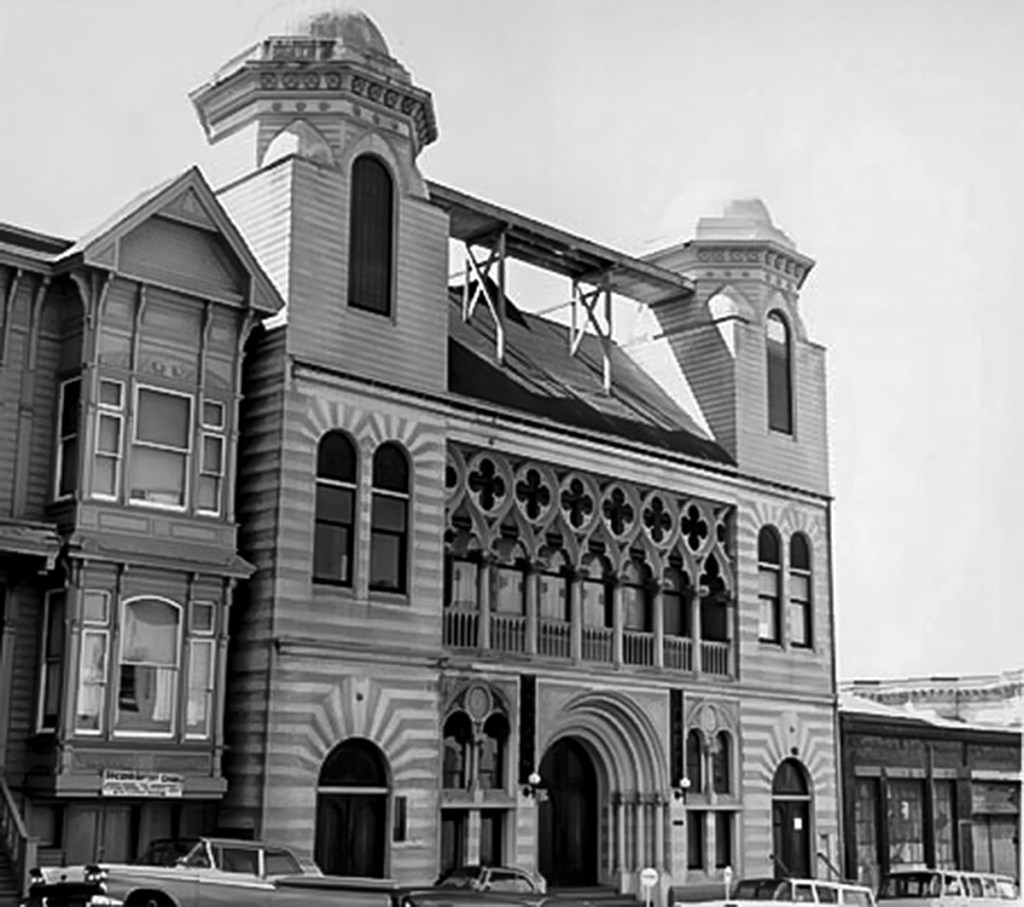
David speaks with great fondness of his time with Suzuki and what he calls the old temple – Sokoji – which had been established in San Francisco by Japanese Soto authorities in 1934.

“It had an intimacy and a practice that could never be recreated again. And one thing you learn is to appreciate what you’ve got at the time, because it’s not going to last no matter what it is.” He chuckles. “I know that living in Bali too. So, at Sokoji we would have two sittings in the morning with a walking kinhin in between. So two 40-minute sittings. And of course, for the first one you’re getting there early, you get there ten minutes early so you’re sitting 50 minutes, ten-minutes walking, another 40-minute period. Then we would chant the Heart Sutra in Sino-Japanese three times, a little faster each time. And that was the most dynamic chanting I have ever experienced. Nothing we did in the future ever compared to it. After that, we’d all walk out, and Suzuki Roshi would stand at the door and individually bow at each one of us. And that was great. There was a 5:00 p.m. sitting too. That was it. And we’d have a one-day sesshin once a month, and he’d be able to meet each of us and talk. But he just emphasized daily meditation. He did not emphasize enlightenment. He talked about enlightenment, but he said practice is enlightenment – you know – the practice, learning the practice and doing it. It was great.”

“You said he was your teacher. It’s a curious term in some ways. What did Suzuki Roshi teach you?”
“He’d say, ‘Well, I really don’t have anything to teach you.’ But he taught us. He was a good example.”

“Is a ‘good example’ the same as being a ‘teacher’?”

“People talk about transmission, mind to mind transmission. He’d say there’s nothing to transmit. So what did he teach? He taught, ‘Be yourself.’ He said, ‘All I have to teach is zazen and practice.’ He said, ‘I’d rather not give talks. We don’t really need that. We just meditate together, work together, eat together. That’s enough. You don’t need more than that. You don’t need any teaching.’ But the other side of that, of course, is there was teaching. He gave lots of talks. So Zen is called the way beyond words and letters, but you don’t have any ‘beyond words and letters’ unless you’ve got something to give up, unless you know the words and letters and get beyond them. You don’t get beyond words and letters by not knowing the words and letters and just not learning anything. So yeah, he was very short on teaching, and it bothered some people. They’d go find other teachers that would give them koans and meet them daily.”
“You said you spent seven years at Tassajara. Was that continuous? Did you ever take a break?

“I had breaks. Sure. We were pretty loose. I mean, if you were there for a three-month practice period, you were not supposed to leave the whole ninety days. You could if you had to see a doctor. Or if you had a job that took you to town shopping. Or later when I was the director or the head monk, there’d be meetings in the city.”

“You were the boss?”

“Yeah. That’s not the boss. When I was director Dick Baker was the boss. There was no other boss!” he says with a laugh. “Dick was the abbot after Suzuki died. When Suzuki died, I was the assistant director of Tassajara. We were all so young. Just amazing. So many of us in our twenties.” He chuckles at the memory, but it’s an important point. What strikes me as I look at the old photos of SFZC or Los Angeles or Rochester is how youthful the faces are. One can almost sense that these people were so young and naïve they didn’t understand how improbable the things they were doing and accomplishing were.

“We did a good job. It was an unusual group. We didn’t have experts telling us what to do. We didn’t pay lawyers exorbitant sums. I’d go visit our Tassajara lawyer and give him bread.”

“And at the end of seven years?”

“Well, it wasn’t quite like that. I was there almost all the time the first five years. And in that time I was gone about half a year studying Japanese intensively in Monterey. But when Suzuki died, then Dick Baker asked me to be the work leader in the city, or the board decided or something. He was only back a couple of months himself from Japan. And so I became the work leader in the city for a year. Year after that, ’73, I was work leader at Green Gulch [Zen Center’s organic farm] and Baker’s jisha [attendant]. He called it MJ, Main Jisha. He had three jishas, one at Green Gulch, one in the city, one at Tassajara. And I was the main one who would go with him off to Tassajara or to City Center or if there’s some event or something. And we got along fine. But I also was work leader there at Green Gulch. I don’t know how I did both, but it wasn’t hard. And then the next year, ’74, I went down to be the head monk. And I was there the whole winter, spring, through the whole guest season, five months. And then in the fall, I became the director. And I was director for a year. And he wanted me to stay. He wanted me to stay and be director because he liked the way I did it. And I said, ‘I can’t stay any longer. I got to get out of here.’”

David Chadwick and Richard Baker

After leaving Tassajara, David held a variety of posts at SFZC. He became the manager of the Green Gulch Green Grocer shop on the corner opposite City Center at Page and Laguna Streets, where Zen Center had moved when they became too large to stay at Sokoji. He also was the host of the center’s vegetarian restaurant, Greens, for a bit. But things were changing.

In 1983 Richard Baker ceased being abbot of the San Francisco Zen Center. Some people maintain he was fired; David tells me that Baker actually resigned because he was unwilling to accept new conditions imposed by the board as a result of his behaviour and leadership style. Reb Anderson, a Dharma heir of Baker, became the new abbot. David remained close to Baker and, in the spring of 1985, moved to Green Gulch Farm where he was a transitional director for year. In 1987, he was on the SFZC board of directors and was instrumental in creating a new multiple abbot system with term limits because of difficulties with the new abbot.

Then, in 1988, his former wife – Daya Goldschlag – moved with their son to Spokane, and David decided to go to Japan for a few years. Katagiri invited him to join him for a while at Shogoji, a Soto Zen training temple in Kyushu. After his time at the temple, David spent another “half a year checking out other practice centres, meeting teachers, visiting Suzuki’s temple and family, seeing friends and friends of friends, and improving my Japanese.”

I ask him how he came to write Crooked Cucumber.

“I had a friend, Michael Katz, who was a very successful literary agent, and he said, ‘Write a book while you’re in Japan.’ I said, ‘I don’t want output there, I want input.’” But in fact he did write letters about what he was experiencing. “And then I’d make copies and send them to friends and family. Michael said, ‘We can make these into a book.’ So he sent me money to buy a laptop and mailed me software including a typing tutor and told me to get to where I could type in the dark. And so I was going to the temple, having sanzen with the abbot, Shodo Harada, doing zazen and teaching English. And I wrote a lot and had many experiences. Michael got me a deal with Penguin and a small advance; that was nice.” The book was entitled Thank You and Ok!: An American Zen Failure in Japan.

“It focused on Katagiri,” he explains, “half about the time I spent with him and other monks at Shogoji and the other half about living with my new wife and going to Sogenji. And it had some about Suzuki, but I started taking all the Suzuki stuff out of it, thinking this should keep the focus on Katagiri. So I had this Suzuki material, and I started collecting more. Michael and I talked about it and thought, well, we should do a book on Suzuki. It just evolved from the one book to the other. It was just something that happened. And then because I wrote the book, I started a website for it, back when websites were just starting. And so I got a nice little short name, cuke.com. And it was just for some material relating to the book. And then people would write things, and I started putting in interviews or something that had to do with the book, and  putting in the Suzuki lectures and just kept doing it, and added shunryusuzuki.com and it just kept growing until the Cuke Archives became like . . . You know the Winchester mansion in San Jose?”

Tassajara – 1967 – Shunryu Suzuki in center (Chadwick above woman in dark sweater in front and below fellow with glasses above)

Bob Rosenbaum

Ordinary Mind Zen, Sacramento, CA

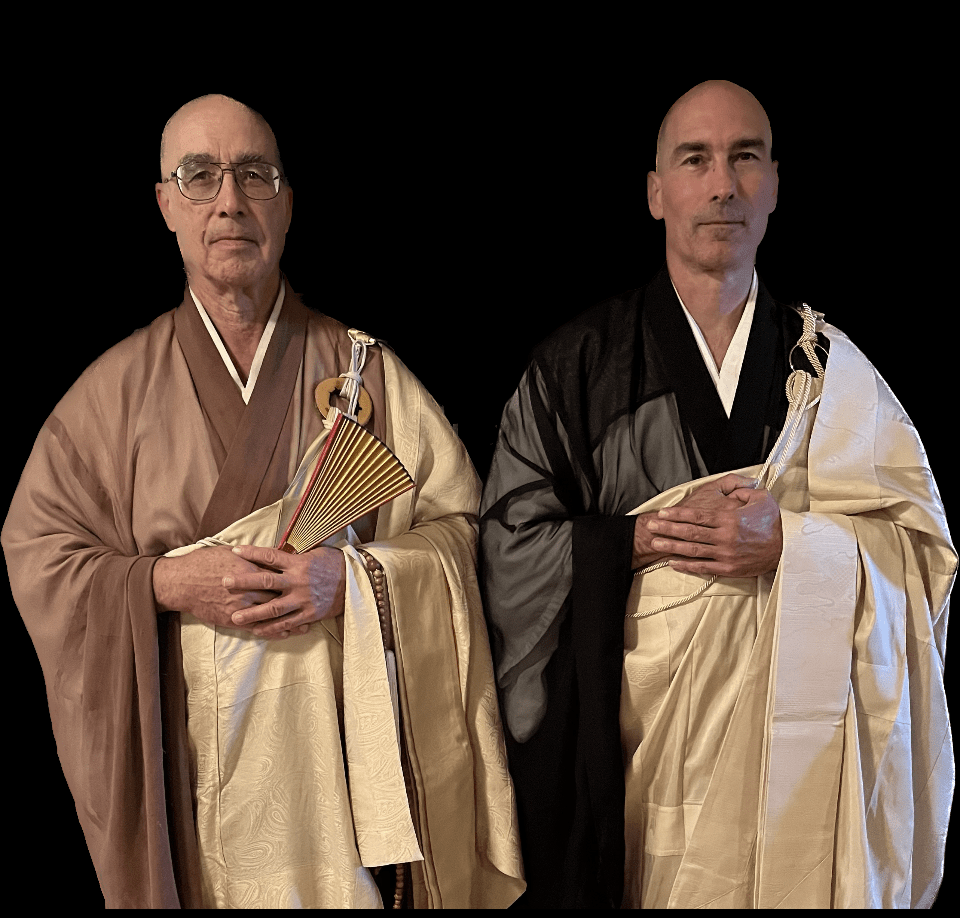
A significant number of the Zen teachers I have interviewed in California grew up in New York City. It’s an interesting migration pattern. Bob Rosenbaum was raised in Mount Vernon, which, he tells me, is an extension of the Bronx.

“I was raised Jewish. My parents did not practice religiously in any way, shape, or form, but they were fiercely loyal to the culture of Judaism, and if you’d asked them if they were religious, they probably would have said something like, ‘The thing about being Jewish is you can be religious just by how you live. You don’t have to do all this other stuff.’ But my mother was raised in a family in upstate New York where her father, who had immigrated from Eastern Europe, had been a scholar and a respected community member, and all he was interested in was religion. But when he got out to Binghamton, New York, he didn’t have a way of earning a living. So he earned a living as a ragman, a junkman, a rag picker, and he raised a family of eight or nine children. So they were poor, and there was a lot of antisemitism in the community. And his wife took in boarders to make ends meet. So the bottom line is, in his family, he was regarded as kind of out-of-it with great love and respect but also anger and bitterness. Both he and his wife lived with us when I was young for a number of years. They were dementing at the time, but I remember his wife and he living in separate rooms on different floors of our house, and his wife would spit at him. So, on the one hand there was a lot of love and respect, but, on the other hand, a lot of dismissal and shame for being different.

“So, my parents sent me to Hebrew school, and it was fairly strict, and I would say, ‘Why aren’t we practising any of this at home?’ And they’d say, ‘Well, we’re religious in our hearts.’ And when I became a teenager, I was very conflicted about my Judaism. And one of the reasons I turned to Zen was I would go into a temple, and I would get depressed just by going in. I had to find a way to integrate it and reconcile with spiritual practice. And I should say the Judaism that I was raised in in the temple, the Hebrew school folk, a lot of shame, a lot of post-Holocaust anger, distrust, suspicion, grief. Very dark. This was the 1950s, and the message was, ‘You can try to assimilate, but they’ll never let you. They will never let you.’ So it was a very mixed bag. Zen was very helpful in this regard, to be able to connect to the genuine spiritual thrust within Judaism. For a time I practised Zen along with Judaism. But it just took too much time,” he adds, laughing, “and I couldn’t do it.”

“Did you personally have a sense that they wouldn’t allow you to assimilate?”

“Well, on the one hand I was surrounded by my family’s friends, all of whom were Jewish and went way back. My father grew up in a town, went to the YMHA – the Young Man’s Hebrew Association – and so these were ‘landsman’ they would say. It was almost like a little village. Very Jewish. The town I was in was about 45% Italian, 45% African American, 10% Jewish. I don’t know if schools closed officially on Jewish holidays, but there were enough people that you’d sing Hanukkah songs along with Christmas songs. On the other hand, the next town over, Bronxville, didn’t allow Jews, and my mom worked there, but it was very clear that you couldn’t live there. And as late as 1977, my wife of the time was working for a small Boston Brahmin family-run business, a very wealthy Boston Brahmin family-run business. She was a secretary, and the company Christmas party caused a problem because it was held at a club which didn’t allow Jews. And the fact that my wife was married to a Jew and there was one other woman who was married to a Jew – my wife was not Jewish, the other woman wasn’t Jewish – but it was, ‘What are we gonna do?’ You know? And they had to sneak us in through the back door. So, on the one hand it was a complete sense of belonging, and, on the other hand, it was always a sense of being a little off and out of it. Really, when I lived in India was the first time I ever experienced being Jewish as, ‘Oh, that’s interesting,’ with no layers of stuff around it. Which was very interesting.”

He first encountered Zen in college.

“In freshmen year I took a sort of a comparative religion course, and it was really well taught. And I became interested in Japanese religion from that course. I was interested in anthropology and other cultures. And I was actually studying music, and I happened to run across the music of the Japanese bamboo flute, the shakuhachi. And that was just, ‘Whoa!’ It was just amazing. There’s a 20th century composer, Arnold Schoenberg, who said, ‘Pitch is colour.’ And if you listen to shakuhachi music, it’s all about how pitch is colour. There’s not much else to it except that pitch is colour. So I heard that, and that interested me. And in the survey course we read Zen Flesh, Zen Bones.”

Zen Flesh, Zen Bones was one of the earliest books on Zen available in the West. It was a collection of stories gathered by Nyogen Senzaki and and translated into English by Paul Reps. Bob was sufficiently intrigued by it to enrol in a course on Japanese religion, and the instructor arranged for Joshu Sasaki Roshi to offer a sesshin at the college. “So I attended the sesshin mostly because I had a crush on one of the women in the course, and I wanted to be in the same room as her for five or six days. And I got hooked. Between shakuhachi and Sasaki Roshi giving a koan. And there was something Sasaki Roshi said towards the end which stayed with me for a good long time. He was speaking through an interpreter. I don’t know how familiar you are with Sasaki Roshi, but he was really” – Bob assumes a fierce facial expression and growls – “‘I am very Zen! You must flare your nostrils when you meditate! You will never become enlightened unless you flare your nostrils!’” It was a pretty good impression, and we both laugh. “So he was certainly a fierce Rinzai Zen teacher. And towards the end of one lecture where he was talking about the absolute and the relative and how you reconcile abundance and lack and all of this other stuff, towards the end he could just see that all these college students are just looking kinda puzzled. He looked at us, and he said,” speaking again in a deep growl, “‘Don’t think of God. Don’t think of Buddha. Just laugh! If you do not laugh, you will become nervous and neurotic.’”

Bob spent his senior year in Japan studying shakuhachi and Zen. A friend in Tokyo introduced him to Omori Sogen, a Rinzai master who also taught martial arts and calligraphy. “So after graduation I lived in Omori Roshi’s little zendo. They were very Rinzai. People would brag about how many koans they had passed, and that felt a little weird to me. And then in very Japanese fashion, they’d have sake parties to send off Omori Roshi on a trip or something, and it was considered, ‘Oh, part of Zen is you go out drinking and then you come back and you just sit and you’re totally there.’ Then my shakuhachi teacher at one point said to me,” speaking with a Japanese accent, “‘Well, Omori Roshi very right-wing.’ And I went, ‘A Zen practitioner can be right-wing?’ He said, ‘Well, yeah. War criminal. Given choice. Go to Zen monastery or go to jail.’ Besides, it was cold in the winter in the zendo, and it was hard, and my shakuhachi teacher invited me to be uchi-deshi in his house.

“Uchi-deshi,” Bob explains, “is when a student – a dedicated student – lives in the teacher’s house. In exchange for lessons, helps out around the house. So I took him up on that, and I was pretty turned-off to Zen at that point although I continued meditating.”

“Because of Omori’s political views?” I ask.

“It was a combination of the bragging about koans, and the general feeling in the zendo was not appealing. I mean, it certainly wasn’t a warm-hearted type of Zen. And meanwhile, I was writing to Sasaki Roshi about staying with the koan that he’d given me, and he just didn’t reply. And at a certain point I just went, ‘Well, Zen is supposed to be outside the scriptures. I’m just not going to read anything about Zen for a while.’ And my Zen was actually my shakuhachi playing.

“Along the way, I fell in love with a woman who was living back in Seattle. And there was a long back-and-forth of, ‘Are you gonna come live with me? Am I gonna go live with you? What’s gonna happen?’ I learned that the only place in America where there was a shakuhachi teacher of the sort that I wanted to study with was in Seattle. And my girl friend was in Seattle. Japan is an amazing place. Beautiful aesthetics. Difficult culture. Beautiful culture to visit, difficult culture to live in if you have to abide by its rules. And the more you’re there, the more you’re expected to conform to the culture. So Seattle sounded kind of interesting. So I went back to Seattle. And – you know – I’m still in my early twenties, trying to figure out, ‘What am I gonna do with my life?’ My original idea was, ‘I’ll learn shakuhachi and make a living from this.’” We both chuckle at that.

“So I spent some trying to figure out, ‘What am I gonna do? And I’d been in psychotherapy because of depression. And I thought, ‘What can I do that’s not going to cause active harm?’ That was my criteria. I wanted to find a job where I could work and at times do music and not do active harm. And there were not that many jobs that satisfied that criteria, but psychotherapy seemed pretty good. So I earned some money and enrolled in a clinical psychology program in Boston.

“So, yeah, I went to Boston. Studied psychology. Had some useful psychological training especially in community clinics, which changed my idea of how psychology can work. And when I did an internship at the Boston VA – which just offered the best pay and whatnot I could find – I lucked into being at a place where the best neuropsychologists in the world were all there at that time, and they introduced me to the idea that the brain actually has some role to play in peoples’ psychology although it’s very different from the way most people think about it. And one of my teaching points that I kind of harp on is the brain is not the mind, and all this stuff about, ‘Oh! You meditate and it changes your brain?’ So? Big deal. You cut your toenails, and it changes the brain. You can sit in a tanning salon and get the same structural brain changes you can get from mindfulness meditation. There’s research on this. And peoples’ idea of what the brain is and how it works is just all wrong, and it’s really a shame. But for good neuroscientists, the brain is dynamic; self is dynamic. Mind and world and body are going like this,” he says, waving his hands and arms about vigorously. “‘Oh, we’ve found the point in the brain that’s the seat of compassion! We’ll meditate, and we’ll grow that part of the brain.’ It doesn’t work that way.”

He returned to the West Coast and was eventually hired by Kaiser Permanente. Things took a radical turn, however, when he received a Fulbright to teach at the National Institute of Mental Health and Neurosciences in India.

“I really like experiencing other cultures. It’s really helpful to see the world through other eyes. So I’m in India, and everything was wonderful. My job didn’t require too much of me but was fascinating. My family was doing well. My kids were flourishing in Indian culture, which is very family centered. Everything was going fine. And I didn’t feel happy. I felt okay . . . but . . . I’m not happy. And what’s it gonna take to feel happy? It took me a while to figure out that happiness is not a feeling, it’s a way of life. And once that became clear, practice became a whole lot more interesting. But I wasn’t there yet.

“So I was in a bookstore in India, and I came across Opening the Hand of Thought. Opening the Hand of Thought: Foundations of a Zen Buddhist Practice by Kosho Uchiyama has become a contemporary classic in Soto circles. “And I read it, and I went, ‘Huh! Shikan taza. Just sitting.’ Well, at this point I was distrustful of any brand of you name it – school of psychotherapy, school of religion – ’cause I figured I could talk myself into anything and then at a certain point, after talking myself into it, I’d get disillusioned. But I thought, ‘Well, to just sit. That doesn’t sound like I’ll talk myself into anything. Why don’t I try that?’ And so I started doing shikan taza.”

“Without instruction?”

“Without instruction.”

“How did you know if what you were doing was actually shikan taza?”

“I still don’t know whether I’m doing shikan taza.” We both laugh. The fact is that when many of the early Western spiritual explorers went to Japan after the Second War to study Zen, their initial instruction often amounted to little more than, “You sit there.”

“Yeah, that’s it pretty much. You know, I’d gone through a koan and had had what I thought were enlightenment experiences way back when though they never got certified by Sasaki Roshi. But they were, ‘Wow! Oh! Hmm! Hey! That makes sense!’ I knew how to do breath counting and all of that Rinzai style. One of my better meditations when I was still looking around – the most helpful one – was I was hiking one day on the West Coast near my home, and I found a nice rock. A beautiful rock. And I thought, ‘Oh. I think I’ll just sit down and sit with this rock.’ So instead of staring at a candle, I stared at a rock. So I did that for a year. And it’s not exactly shikan taza, but it’s somewhat akin to it. So, anyway, I started doing shikan taza, and then when I got back to the Bay area, I started going to the Berkeley Zen Center ’cause they were doing that kind of thing.”

The abbot at the Berkeley Center was Mel Weitsman, one of the three people in the first interview I conducted for this series of conversations ten years ago.

“And after a few months I went to this sesshin, and I’m in my late 30s. I’ve done yoga for twenty years. I’ve meditated kind of on-and-off for twenty years. I’ve had some kensho-type experiences. I’ve had hallucinogens back in the past. I go to this sesshin; I think, ‘Okay. I know what’s what. I mean, I’m an experienced meditator. My yoga’s going really well; everything’s going really well. I’m gonna go to this sesshin, and this should be really nice. Seven days of just . . .’” He smiles and lets out a long relaxed breath. “‘I can just sit there; I’ll feel great.’ You know? Well, you can guess what happened next. I sit down. Agony. Physical agony. Mental agony. Crying. For no reason that I can figure out. ‘Why am I crying? Why am I so sad? Why am I in so much pain? I don’t know how to do this!’ Seven days worth. Non-stop. Couldn’t figure out what’s going on. So at the end of the sesshin we have a Dharma talk. Each student gets up and asks their question in front of everyone else. And it was my turn, and I got up and said to Mel, ‘I came here. I was feeling pretty good. Sat down. I’ve been in pain. I’ve been in agony. I’ve been crying, and I don’t have any reason for crying. I don’t know why this is. What is this!?’ And Mel looked me in the eyes and said, ‘Nirvana.’ And I knew that he was right.

Bob Rosenbaum and Mel Weitsman

“In a way, that was the beginning of my Zen practice. I knew he was right. I didn’t understand it at all. But I also had no doubt. ‘Yep. This is nirvana. It doesn’t feel like nirvana!’” He chuckles. “But, you know, one way I sometimes teach people I say, ‘In our practice we don’t say we meditate in order to be enlightened; we meditate because we’re already enlightened. And when we say, “Nirvana is samsara,” we mean it!’ So one way you can meditate is go, ‘Okay. So this is nirvana. This is nirvana. Ha! This is nirvana? Wait a second!’ And what keeps you from experiencing nirvana? What keeps you from experiencing this as nirvana? Just do that, again and again. It’s a pretty good way of meditating actually, but no one takes me up on it.

“Years later, I went back to Japan to teach some psychology. I went to one of the Soto temples. Unannounced, unplanned. I just had a little extra time. And I went to them, and I said, ‘Oh, could I sit with you for a little bit. I’ve been practising in the States.’ And they said to me, ‘Oh, so do you know how to meditate?’ And I said, ‘No. I’ve just been doing it for thirty years.’ And they looked me like, ‘What?’

“There’s a not very well-known interaction with Joshu which I love where someone says to him, ‘What is meditation?’ And Joshu replies, ‘It is not meditation!’ And the student says? ‘What do you mean? Meditation is not meditation? Well, what is it?’ And Joshu looks at him and says, ‘It’s alive.’” Bob pauses for effect then says, “That’s pretty good. So, people are scared to be alive. And they’re scared to die. And basically our practice is, ‘Don’t be scared to live. And don’t be scared to die.’ It’s really very simple.”

There are some standard questions to which I keep returning, especially when the teachers I speak with are psychotherapists, which happens more and more frequently. I have never been in therapy, so I often begin by asking what draws someone to undertake therapy.

“Well, that really depends on the context of what you’re talking about,” Bob explains. “I was working at a medical centre where a lot of people who came to see me came because their doctors said, ‘You have to go see a therapist.’ And they have no interest whatsoever in seeing a therapist, but a doctor said, ‘Do this.’ Some people came because they had heard that psychotherapy had helped with anxiety and depression. Some people came because they get angry. I saw a lot of families, couples. You know, the standard thing. People would come in saying, ‘We don’t know how to communicate with each other.’ That was the standard thing. And some people come because it’s something to do. ‘My friends are going. They say, “Therapy is great!”’ So it really varies a lot depending upon what environment you’re working in.”

“And why do people seek out a Zen center?”

There is a long pause before he answers. “For all the wrong reasons.” I smile. It’s a good answer.

“Fair enough. And what are the wrong reasons that draw people to Zen?”

“Well, people are suffering and feel, ‘Oh, meditation is supposed to help you feel better.’ Right? That’s a pretty common one. Many people come because they are looking for something, and they don’t quite know what they’re looking for, but Buddhism sounds pretty good.”

“The art’s nice.”

“That’s right. The art’s nice.”

“Let me put the question another way then: How is the way you relate to a patient different from the way you relate to a Zen student?”

“So, when a person comes to me as a client – or a patient – they usually have a specific problem in their life. Now if they have sort of a general existential, ‘What’s it all about?’, I will sometimes say to them, ‘Sorry. I’m a therapist, but I’m also a Zen teacher; you’re with the wrong person here.’ I don’t do psychotherapy for existential stuff. I don’t believe in it. The way I approach a psychotherapy client is, ‘Okay. You’ve encountered a bump in your life, and you’re stuck. Let’s find if we can find a way to get you unstuck so that you can get on with your life.’ So, sometimes it’s, ‘I’m so nervous that I can’t leave the house.’ Sometimes it’s, ‘I’m so depressed I can’t relate to people.’ Sometimes it’s, ‘I have this pain which the doctors can’t understand. They say it’s psychological.’ And my job is to help them figure out a way to get past what’s holding them back at this moment.

“With a Zen student, it’s, ‘Ya think things are gonna get better? Why do you want to do this practice?’ Basically I don’t encourage people to practice Zen unless they can’t find anything else to do. I say, ‘Well, if you want to, that’s fine.’ My sister teaches Mindfulness Based Stress Relief, so we’ve had many discussions about the role of meditation in helping people. And the mindfulness people are, ‘Oh, do mindfulness; it will help your life.’ And when people come to me saying they want to practice Zen, I’ll say, ‘Well, that’s fine, but I have to warn you, you might not like it. Because if you practice, you’ll probably wind-up having to change your life and change how you go about living.’ And that’s true.

“I don’t see how you can practice Zen without practising the Precepts. And it turns out that the more enlightened you become, the more you see and feel how pervasive suffering is. The practice is learning to be like Avalokitesvara, hearing the cries of the world, responding to those cries with whatever is needed, but always with a gentle smile. The smile of compassion is the basis for our response to suffering, and our release from suffering.”

“You don’t see how someone can practice Zen without practising the Precepts.”

“That’s right.”

“Well, let’s consider that for a minute. Joshu Sasaki.”

“Yes. Problem!”

“Maybe not so hot on Precept practice.”

“No! No! He thought that enlightenment sort of exempts you. You can do anything. Well, a lot of Zen teachers – maybe every Zen teacher – finds a way of having it fit their personality. The problem is if you’re using the practice to actualize your ego-centred personal stuff – which you can do in very subtle ways – that’s not what it’s about. The practice is to allow oneself to be a vehicle for the Dharma.”

“Which means?”

“This is a Daoist thing, and I was heavily influenced by Daoism, as much as by Zen. It’s to assist the self-becoming of all Being. So every being is constantly becoming itself even though it already is itself. But how do you assist that? How do you harmonize with the needs of this moment, the call of this moment? And in general, the best way of doing that is to do as little as possible and not get in the way of the Way. And we’re constantly getting in the way of ourselves and in the way of other people. And when you stop getting in the way of yourself and getting in the way of other people, the Way manifests itself. The Universe manifests itself. So how to assist with that? Tricky. Tricky.

“So for me, one of the core koans and realizations is Dongshan’s, ‘I am not it; it actually is me.’ You know the story? Dongshan asks his teacher, ‘When you die, what should I tell other people is your teaching?’ And the teacher is silent for a long time, then he says, ‘Just this.’ And Dongshan didn’t understand, which I love about this story. Well, it sounds good, right? Everyone’s going, ‘Just this! Just this!’ But Dongshan didn’t understand. And we don’t understand, and think we have to do something special to access just this. Then later on Dongshan’s walking along, and he walks over a bridge, and he sees his reflection in the stream. And he goes, ‘Oh! I’m not it; it actually is me.’

“Ah! So we are the expression of everything that runs through us. And we think it’s about me! Sorry! People say, ‘Well, I feel this.’ That’s the ultimate wrong statement. All those feelings are who I am at this moment. ‘Oh! The wind is going through the leaves right now outside my window.’ We’re talking to each other. This is who I am. You are who I am; this conversation is who I am. I just think, ‘Oh, there’s a Bob here doing this.’ You know, there’s that ‘I-mind’ I call it, which thinks that that’s what’s going on, but it’s a little piece of it. It’s everything which has ever happened that comes to bear on this life, that’s who you are at this moment. So how does one carry that forward? Well, each moment you try to figure it out as best you can. You know, ‘Whoops! That was a mistake!’ So you went after the mistake. Good! About this moment? So, we harmonize with the flow, the stream. Doesn’t mean that we’ll like it. But you might as well enjoy it.”

“Taking the Precepts – vowing to live by the Precepts – is usually seen as making a commit to live a Buddhist life. Does one need to be Buddhist to practice Zen?”

“Oh, absolutely not. But a lot of people have practised Buddhism for a long time because they found it helpful. Classically it’s about release from suffering. I like to go a little further, personally, and say, ‘Enjoy your life.’ How can you genuinely enjoy your life in a way which can never be impeded?”

“What is it, as a Zen teacher, that you hope for for the people who practice with you?”

He considers the question for a while before replying. “I’m trying not to put this in jargon . . . That you are, were, and will be enlightened together with all beings.”

“And as a psychotherapist, what is it that you hope for your clients?”

“That you find that you can trust yourself.”

“Are there occasions when Zen students also need to discover that they can trust themselves?”

“Trust is the absolute basis in life. But who is this self that you trust? I often say to people, ‘So what can you really trust in when everything else fails you?’ Because everything else will fail you. Where can you really trust? And I’ve been through a period when I had a stroke in the Himalayas and was really face-to-face with dying. For a year after that I went, ‘Okay, I’ve practised meditation; I’ve tried to be a good person and act according to the Precepts. And I still had a stroke, and I’m still gonna die. So how am I gonna live my life?’ And so I could lie and cheat and try and get as much money as possible, but then I realized I wouldn’t be very good at that. So I said, ‘What’s the basis of my life?’

“And frankly Zen . . . It helped me come to this, but the basis is, number one, to acknowledge as best I can the truth of any situation and the truth of what’s happening to me and what’s going on around me knowing that I’m always going to colour it. I’m a very bad liar. And if I’m not living with the truth as best I can, I’m living with a fantasy, so let’s start with the truth. But people often don’t like the truth. It hurts often, and it’s painful, and it’s difficult. And so the second thing that comes up is somehow when nothing else works, when everything’s awful, compassion arises. I don’t know how, but it happens. And compassion is not something in us; the world is compassion. The air is compassion. The Earth is compassion. So I rely on truth; I rely on compassion. And after a while I see this is all too serious. So I need to have humour and laughter. That’s the third basis for me.  So truth, compassion, laughter. And for a while I knew there was something missing, and a friend of mine said, ‘I know you. You like beauty.’ ‘Oh, yeah. Beauty.’ That’s it! Truth, compassion, laughter, and beauty. That’s my life. I rely on those. I can find those at every moment in anything. Zen is simply a way of helping me find those. But that’s me. You have to find – each person has to find – what’s the basis of your life? What can you really rely on?”

Janet Jiryu Abels

Still Mind Zendo, New York City

During the 1970s and ’80s, as skepticism about Christianity and Western religious traditions was becoming common, there was a corresponding upsurge of interest in Eastern meditation particularly among the young. At the time, Thomas Keating was the Abbot of St. Joseph’s Trappist Abbey in Spencer, Massachusetts – the monastic community to which Kevin Hunt belongs – and, during his abbacy, he invited Joshu Sasaki to make annual visits in order to introduce the monastics to Zen practice and to lead sesshin. The unexpected Western interest in Eastern spiritualities prompted Keating and two members of his community – William Meninger and Basil Pennington – to develop a comparable Christian methodology which they called Centering Prayer. The term came from another Trappist, Thomas Merton, who described contemplation as prayer which is “centered entirely on the presence of God.” Merton wrote: “Monastic prayer begins not so much with ‘considerations’ as with a ‘return to the heart,’ finding one’s deepest center, awakening the profound depths of our being in the presence of God.”

Centering Prayer was based on medieval Christian contemplative practices – such at that described in the 14th Century Cloud of Unknowing – which were similar to Eastern mantra practice. A single word or short phrase is repeated, linked to the breath, as the practitioner seeks to place themselves in the presence of God.

Centering Prayer instruction became popular in many Catholic dioceses in the 1970s, and, when she was already in her 40s, Janet Abels was introduced to the practice by her spiritual director, Sister Keiran Flynn of the Sisters of Mercy in Providence, Rhode Island. Janet was an active Catholic, serious about the practice of her faith, and Sister Flynn encouraged her to train to become a Spiritual Director as well.

I ask Janet what, precisely, a lay spiritual director does. 

“You meet monthly with a person – it’s once a month for about an hour – and they speak about their spiritual life and what they’re doing. And a lot of it, of course, is connected to life issues and problems and how you work with them. And, of course, because I was doing Centering Prayer, I kind of introduced them to that.”

“But what draws somebody to seek out a spiritual director?”

“Well, it’s their own experience, like I was drawn to Keiran. You have an experience, and you want to have more one-to-one discussion with somebody rather than sort of churchy stuff. It was a wonderful training actually, I must say, because I got a lot of background training in terms of working with people. Through Keiran and her team at the Our Lady of Peace Spiritual Life Center I was also introduced to Dr. Eugene Gendlin’s Focusing. Do you know Focusing? It’s a form of being with your feelings, especially unwanted feelings. And I also did some dream work and a lot of training in basic psychology. Through the Spiritual Directors’ Training Program I learned how to relate one on one with people, how to listen and many other useful ‘skillful means.’”

“This is all training that you had before you came to Zen.”

“Yes, before I came to Zen. So I had a lot of background in doing spiritual direction one-on-one. I knew how to talk to people. I knew how to connect and hear about their issues and problems, and – you know – we worked with it in that way. So that was in ’87. And in 1992, I met Robert Kennedy, and my life changed.”

Robert Kennedy is a Jesuit who trained in Zen with Koun Yamada in Japan and later with Taizan Maezumi and Bernie Glassman, from whom he received Dharma transmission.

Janet’s husband Greg was engaged in Centering Prayer as well but was also reading about other spiritual traditions and became intrigued by Zen. “He was open, very open,” Janet explains. “But I was a very cautious person. You know? Like, ‘No. I can’t do that!’ The Eastern stuff was kind of scary to me.”

“Why?”

“Why was it scary? Because it didn’t have the Imprimatur.” An imprimatur is a statement of approval by the official church. Elements in the hierarchy, following the changes that came about with the Second Vatican Council, were taking more conservative stances on a number of issues. Although Centering Prayer was recognized as an orthodox Catholic practice, other attempts to combine Eastern and Western practices – such as the work of Anthony DeMello – were considered suspect.

“You’re going outside of the bounds. But, you know, something drives you that makes you want to go into scary territory. So at St. Francis Xavier, the local Jesuit church, they had a day of workshops for different forms of spirituality. They had yoga and they had Centering Prayer and they had ‘Prayer As Movement,’ and things like that. And they had Zen. And Bob Kennedy had been made a Zen teacher by Bernie Glassman Roshi just ten months before; so he was a brand-new Zen teacher. So he was giving the workshop, and I said, ‘Well, I’ll go to that.’ So I came to the workshop, and we were in a kind of classroom thing, and he was up front. And he was talking and talking. And then he said, ‘You know,’ he said, ‘in Japan, they sit with a spine of steel.’ And I thought, ‘That’s for me. There’s structure, and there’s discipline. That’s what I need.’ With Centering Prayer, you could be sitting anyhow anywhere, there was no structure. So he said, ‘In Japan, they sit with a spine of steel. So let’s do it now. So, sit up straight.’ And then we were there, in the chairs, sitting up straight. We did five minutes of meditation sitting with a spine of steel. You know? The body is what holds you up in the structure. And I can’t remember anything else he said, but, after that, I went to him and said, ‘Can I speak to you more about it?’ And he said, ‘Sure.’ He said, ‘Come out to Jersey City.’” Kennedy, at the time, was on staff in the theology department at St. Peter’s University in Jersey City.

“So he had no sangha then or anything. He was just on his own with a few students, one-on-one in a little room he had there in his residence as a zendo. And so I became his student, and that was 1992. And then after a while I began to feel very itchy to have sitting with other people. I wanted to sit with other people. And so I said, ‘If you would come over to the city – New York City – would you mind being a teacher if I got some people together?’ And I had some spiritual directees who were very interested in meditation, and there were people from that workshop that he was at. So, he said, ‘Sure.’ So I got together some people. And he said, ‘The only night I can come is Tuesday night.’ I said, ‘Fine. It’ll be Tuesdays.’ And Tuesday is still our main sitting night.

“And we sort of moved from church basement to church basement, so to speak. First we sat with the Catholic Center at NYU, in their library. Then when they began to wonder what we were about, we went down the street to the Methodists until the Alcoholics Anonymous meeting downstairs became too much; whenever they do their cheer, like with a new person. So we left them and went to the Lutherans on Christopher Street. And then my husband, Greg – who was in the theatre – formed his own acting studio on 27th Street. And being a member of the sangha, he said, ‘Well, we can sit there for free.’ So we would then sit there, and Bob would come, and we would have teaching and practice zazen. And it started to form, and we became incorporated in 1999. And then in 2000, I received transmission from him as a teacher, and he said, ‘Okay. You’re on your own now,’ and he went back to Jersey. So we were there working at Greg’s studio, and, then when he closed it, we moved to our current place on 17th Street where we’ve been for twenty years now.”

The “current place” on 17th street is the Still Mind Zendo.

“Do you still self-identify as Catholic?” I wonder.

“No. We are Zen Buddhists. In 2006, Greg received transmission from Kennedy And in 2007 our friend and colleague in the White Plum Sangha, Enkyo O’Hara from the Village Zendo, she gave us jukai and Receiving the Precepts.” The White Plum Sangha membership is made up teachers in Taizan Maezumi’s lineage.

“Bob Kennedy retained his affiliation with Catholicism of course,” I point out.

“Yeah.”

“Why did you disaffiliate?”

“Because I wanted the total . . .” – there is a long pause as she searches for the right term – “ . . . emptiness, non-separation if you will, of what Zen opens us to.”

“And you felt you’d be unable to do that if you remained Catholic?”

“Yes, because there’s still a God who is separate from me.”

“Do the students who work with you self-identify as Buddhist?

“I would say 60% of the sangha have received jukai. Some have not, but they’re full Zen practitioners.”

“So people can remain affiliated with another tradition . . .”

“Oh, yeah! Absolutely. We’ve certainly had people like that. For sure. Nobody is made to do jukai. We’re a lay community, and we don’t wear robes or anything because I’ve always felt that those people who are still in different traditions and whatnot – it could be Christianity, Judaism or whatever – have to be included. And if we were there in robes and all that, we’re making them into separate people. We want an inclusive sangha.”

“Do you teach Buddhism as a philosophical system as well presenting Zen as a practice?”

“We present the teachings of the Buddha and Zen ancestors through talks, communal study, one on one meetings – daisan – and through the koan work which we offer. The Eightfold Path, the Heart Sutra and so forth are very much in the forefront of our teaching and practice as well as the teachings of the Chinese and Japanese ancestors. This, of course, in addition to the bedrock of Zen practice, zazen. Perhaps the easiest way to say it is that we all strive to practice the Buddha’s Three Treasures: Buddha (meditation), Dharma (study), Sangha (compassionate living).”

Janet’s husband, Greg, has retired from teaching at the Zendo, and she no longer accepts new students although she has two successors who do. “And I now have a third successor coming along.”  

“And the new people who come,” I ask, “what are they looking for?”

“They’re looking for an escape from their stuff. They are looking for peace of mind, relief from suffering.”

“Enlightenment?” I ask.

“They come seeking enlightenment, and they’re told pretty quickly that no such thing exists. Enlightenment is not a thing. Enlightenment is a noun. Awakening is a verb. We practice a verb.”

“Okay. What do you mean by Awakening? What is one waking to?”

“Awakening is three things. You have to first awaken to the stuff.”

“To the stuff?”

“To the stuff. I’m suffering. I’m dissatisfied. I’m angry. I’m this. You have to be aware that there’s something wrong. There’s something blocking you. Right? That’s the first awakening. That’s what happened to Siddhartha in his palace or wherever he lived. He realized he was not happy. Something was needed. That was his first awakening. So you awaken to that, and you begin to look at that in an objective way. So you begin to step back. That’s the detachment from the mind that the Buddha taught. Detach. And you’re looking at it, and you say, ‘Yeah. This is what’s happening. Is there another way of addressing this?’ And that’s, of course, when you connect to meditation, to the diligent practice of detaching from the never-ending thoughts that arise, slowly discovering that the cause of the suffering and the dissatisfaction is created by your conditioned mind of greed, hatred, and ignorance and not by anyone or anything outside of you. This is following the guidelines of the Fourth Noble Truth which is called the Eightfold Path which I’ve simplified. I’ve made it into a Threefold Path. Right meditation affects Right Thinking, and the two together manifest Right Action or Right Speech. And so Awakening is an on-going journey because the dissatisfactions never end.”

“So ‘awakening to the stuff’ is recognizing – what? – that you are not the stuff going on inside your head?”

“You are and you are not,” she says, then quotes the Heart Sutra. “Form – stuff – is exactly emptiness, emptiness is exactly form.’ And so in order to address the dissatisfactions that we have constantly, we first have to see them. So as I basically see it, we have to notice the dissatisfaction; we have to allow it to exist. If I’m angry, I have to allow myself to be angry. And then I breathe. Breathe into that.The breath detaches you from the thought or feeling and you have an opening into the ‘more than the anger.’ But it’s the allowing – it’s the noticing and the allowing – that’s the difference. As you probably know, we all came to Zen trying to get rid of that stuff. Running away from it and trying to be perfect. But everything is it – including evil – everything is it. You have to include everything. Right?”

“Okay, so it begins with dissatisfaction. People have some sense of dissatisfaction that draws them to practice.”

“That’s the first Noble Truth.”

“What was your dissatisfaction? When you started down this path?” She doesn’t immediately reply. “You were a Catholic spiritual advisor. You took the training. What was it that you were dissatisfied with?”

“I felt that there was more, and I didn’t know what it was. And there is more. Zazen opened me up to the ‘more’ than the sum of my thoughts and feelings.”

“And the mechanics of all this? ‘Zazen,’ after all, just means ‘seated meditation,’ so it’s essentially a practice.”

“Yeah. It’s work.”

“So how does it work? How does ‘meditation’ do what it does?”

“I think what got me into it is the discipline and the structure. We have a structured zendo. On-time and all of that and the posture and the body. But when you make the intent to follow your breath, when you’ve concentrated on your belly, you can’t be thinking. Can’t do two at the same time. So the first things actually that I’ve also cottoned onto the last few years is that we first have to relax the body. So the first thing in zazen is to release all the body tensions, ’cause when you think, you think somewhere with our muscles. Zen is a body practice. It’s not a mind practice. So you release the body, and you follow the breath. You lose it, of course, and you’re back to thinking, and when you think something is tense in you again. So you release again, and you follow the breath. And it’s the moving breath; you keep moving. You keep moving. You don’t – as Pema Chodron famously said – you don’t take the bait of thinking. You keep moving. Keep moving. Keep moving. And then this sort of ‘moreness’ – if you will – the ‘more’ opens up and begins to infiltrate you and begins to affect decisions and how you live your life. And that – to me – is the Threefold Path. Right Meditation affects Right Understanding affects Right Action.”

“Does Zen practice change people?”

“Oh, absolutely. Absolutely. Why do it if it didn’t?”

“In what way?”

“It’s the sense of ‘not two’ and not separated; it’s the connection with everything that is. I allow everything that is to be. Including – you know – people I despise. Let it be. It’s the interconnection. It’s one. The way I see it, Rick, is that it’s no good paying lip homage to this and then not living it in your life. You gotta do it. You gotta live it. You’ve gotta be it.”

“And concretely, how does that impact me? How is the way that I live going to be different if I take up Zen practice?”

“Because it’s going to change your mind. That’s why I think the Threefold Path is helpful. Right Meditation changes your mind; it changes the way that you see things. Your Right Understanding begins to develop. You know, a lot of Zen – this is what I was taught – it’s meditation period. No. It’s meditation – Right Meditation – and Right Thinking both manifesting Right Action.”

“And what do you mean by ‘Right Thinking’?”

“Right Understanding. Allowing others to be as they are, allowing the situation to be as it is, not the way I want it to be, and responding accordingly, which is Right Action. And that’s what I consider the word ‘Tathagata’ to mean. ‘No self-living.’ Striving to live egoless self while being completely alive.”

“And what is it that you – as a teacher – hope for for the people with whom you work?”

“Oh, my hope is that they get to this realization. And we all have to get through it ourselves. You know? I can’t think for other people. Experience for other people. That they realize that Zen is simply your life. Ha! It’s simple. It’s just simple. But in order to do that . . . Ultimately there is no such thing as Zen. You hear that in the koans. ‘The stink of Zen.’ ‘Kill the Buddha!’ ‘Kill Zen!’ There is no Buddha, no Zen, only the reality directly in front of you, as it is, not as it should or could be. All the koans point to this. But you have to practice Zen in order to realize that there’s no such thing. There’s just your life. Just your life. And that’s the paradox.”

Kodo Conover

Heart of Wisdom Zen Temple, Portland, Oregon

Kodo Conover is the “temple manager” of the Heart of Wisdom temple in Portland, Oregon. Originally a Methodist Epsicopal Church, the structure was built in 1891. The Methodists sold the building to a Ukrainian Orthodox congregation in 1959, who installed a three-bar cross on the steeple which still stands. In 1968, it was taken over by the largely African American Church of the Living God, which thrived for a time, but as the congregation dwindled, debts piled up, and the church was slated for public auction. Hogen Bays of the Zen Community of Oregon, learned of the sale and visited it with some board members. He later told a newspaper that when they “first came into the place, all those years of singing and praying had saturated the building. Everybody who walked into the chapel said, ‘Ooh, this feels really good.’ There were 120 years of spiritual practice soaking the walls.” The article went onto note: “The Buddhist community was willing to pay a fair price for the property, $205,000, so the pastor could pay off the church debts and have a little left over for his next ministry. It was an offer in keeping with the concept of karma – that actions have consequences and good actions have good consequences. The Zen community could have waited for the auction and probably spent less to acquire the property, but Bays didn’t want to benefit from another group’s difficult circumstances.”[1]

Kodo, herself, also underwent a slow conversion from Methodism to Buddhism.

“My grandfather was a Methodist minister, and he was quite involved in church architecture. In fact, he was the first Director of Architecture for the World Council of Churches. So we were a family of faith even when we moved to Reno when my dad got a job teaching journalism at the University of Nevada.”

“Was church something you found meaningful?” I ask.

“It was part of the family; it was what we did. When I was a little older and became a member of the church, something fell away, and I didn’t feel connected to it. There wasn’t that connection that I was looking for.”

She was about 12 at the time. I ask what she meant by not having the connection she was looking for.

“I’m not sure at that age, but I thought something would happen when I became a member of the church.” She had been baptized as a baby, but there was a confirmation program for young people, and she thought taking part in it would bring her a sense of being closer to God. “But it didn’t happen. Then I started questioning more and more about God and what this religion was all about. And it was kind of a rift in the family because everybody else was okay with going to church, and I wasn’t.” She chuckles and shrugs.  “But I had to go. I refused to go to the Sunday School part. So they said, okay, I could be in the adult church. So I went to adult church from 12 on; I would just sit with my folks.”

A group of friends at the time began an exploration of alternative religious traditions. “We were interested in different things – I think – as kids. As young adults. You know? I was involved with the Girl Scouts, and there was a lot of outdoor activity. And so I think nature was the entrance for us, of a connection to the Oneness of all things.”

“Is that how you would have expressed it at the time?”

“As a young person, I think we would have expressed it as, ‘This is amazing!’ When I was about 14, I did a star-study. I was able to go the university and look at stars at night with the big telescope. They had the Atmospherium Planetarium, and they had a big telescope. And, you know, you look at a star, but it’s really a galaxy. And that was a mind-blowing experience in a way. So it just opened up this whole world that is much bigger than what we see right here. So I became fascinated with the stars and the universe, and we’re just this little planet of people. This is kind of remarkable.

“I think the girls I hung around with were kind of open to these ideas and larger questions. It was a turbulent time to grow up. There was all this racial inequality going on. There was busing. There was JFK being assassinated, and that was really big. And the day we graduated from high school Robert Kennedy was assassinated. Martin Luther King was assassinated right before that. It was grim for kids too. So you’re seeing this grimness, and then you’re seeing these wonderful and mysterious stars and the world out there. So it’s like, ‘Whoa! How do I fit into this world?’

“When I went to college, this Zen thing, I didn’t know what it was, but it was very interesting. We read Siddhartha; we read On the Road. We were interested in the Beats and Thomas Merton. So like mysterious, mystical – you know – ‘What is this?’”

I am two years older than Kodo, and we share a lot of cultural memory. “Writers like Kerouac were part of the zeitgeist of the times,” I agree. “Was that your entry into Zen?”

“I think it was the connection to nature, to the wilderness. Because we also did a lot of backpacking. We were right there in the Sierras. Lake Tahoe was in our backyard. We were introduced to backpacking at a young age. 11/12 years old.”

She studied Physical Education at Oregon State University. “I was interested in working with kids, especially kids with disabilities. Getting into what was called Adaptive PE at the time. But I couldn’t find any place, any spiritual community that I really fit in.”

“Did you feel a need for one?”

“I was interested in finding a teacher. When I look back at some journals and things, I see I wrote, ‘I’d like a teacher. I’d like to find a teacher. I’d like to learn to meditate.’ And that was kind of a theme for quite a while.”

“What did you think a teacher would do for you?”

“Help me!” she says, laughing. “Help me connect back to this thing of God. This God or whatever. I had this idea that connection was what was missing. Some kind of connection. I felt connected when I was out in the wilderness, in the woods. So why would I feel connected there, and I would not feel connected in the city? That was the question I kept asking.

“Then after college a friend of mine and I travelled all over the United States and Canada for about six months. Nine months. Something like that. Long time. And we stayed with her relatives who were Catholic nuns outside of Boston, and they had a school for multi-handicapped kids. And we would help them. And I thought these women have really got . . . They have some wisdom. I didn’t know any other people like them. We just stayed there for a few weeks. But I kept a correspondence with one of the nuns, and I asked her, ‘How do I find God?’ And she said, ‘Go to a community.’ Like, find a young peoples’ community. She said the Catholics have them, and you might find them here and there. I always thought community wasn’t where I was looking. I wasn’t interested in community particularly. At that time! So, in a way, I just kinda dropped the search for a long time. And went ahead. I got married. I had a career. Spent a lot of time out in the wilderness.”

“So somewhere along the line you met someone to marry,” I remark.

“I met somebody to marry, yes, in college, and then we reconnected. A bunch of us lived together.”

“Were you in a commune?”

“That’s what my parents called it, ‘The Commune.’” She laughs. “But it wasn’t really. Anyway, I worked with developmentally disabled people for a long time, and I had a career as a vocational rehabilitation counsellor.”

“Where was this?”

“In Portland. We moved to Portland, and I got a Master’s in that field, and I worked for the state. And when I started working – and was almost fifty by then – it was really a pretty stressful job. And I kinda went back and, ‘Wow. I never really did find that spiritual practice that I was looking for.’ And so I asked a friend to help me. She had been a Catholic nun for a little while. She was going back to the Catholic church, but then she came in and said, ‘You should go to the Zen place down by your house.’ And I had been pointed to Zen another time. I had a bad sleep-disorder problem and a therapist had me do some psychological evaluations, and he said, ‘You’re okay, but you should go to Zen, ’cause your questions are all Zen questions.’”

She tells me the Zen place was about three-quarters of a mile down the street from her. It was a rented space shared by Kyogen and Gyokuko Carlson’s Dharma Rain program and by Hogen and Chozen Bays’ Zen Community of Oregon.  

“So I finally made it down there, and I walked in, and there was Chozen at the door, greeting people. And Hogan was running around. And they showed me a few things about how to meditate, and I went upstairs, and I go, ‘This is exactly what I’m looking for. I’m home. I haven’t left since.”

“It was that simple?”

“It was that simple.”

 “What was it that made you feel at home?”

“It was sitting in the zendo. It was just sitting in the zendo. It was just the feeling, the place. It was a feeling, I would say, more than anything. It wasn’t like a mental thing; it was a body sensation. Which was exactly what I was looking for.”

“And now you’re a priest.”

“Yeah.”

“So somewhere along the line, you not only decided you were going to take up Zen, you also decided you were going to be ordained.”

“Yes, and, since I didn’t live at the monastery, this took a long time. Things have evolved. So my friend Bansho – Patrick Green – said, ‘I’m going out to talk to Chozen about being ordained.’ And I said, ‘Hey! I want to go with you.’ So we did, and we asked her, and she kinda said, ‘We’ll see.’ In that way, you know?”

“Why did you want to take that step?”

“A lot of people ask that. I just think it adds a level of commitment.”

“Do teachers have to be ordained?”

“No. In our community, you don’t. You can be a teacher; you don’t have to be ordained. And I was actually transmitted as a teacher first.”

“And one assumes that one could be a priest without necessarily being a teacher?” I suggest.

“Yes.”

“So, if I’m a Soto priest in Japan,” I say, “I know what my job is. I’m gonna take over a temple somewhere. It might not even be a job I want. It’s just something I inherited from my dad, and I’m stuck with it whether I’m interested in it or not. I kind of get that. I understand what that is in Japan. What I’m not real clear about is what a Soto priest does in Oregon.”

“Most of them live in a monastery. Actually, we haven’t graduated very many. So three or four who have become priests are now teaching in different places.”

“But we established that teachers don’t need to be priests. So what’s the point of priesthood? If I become a Catholic priest, I know what that means. I lead services – say mass – I administrate the sacraments, do weddings, funerals, provide pastoral care. There’s a job description. What’s the job description for a Soto priest?”

“Well, we carry on a tradition for one thing, and we do the ceremonies like you mentioned. Weddings and funerals and we do some baby blessings.”

“Hospice care?

“We can. I did a program called No One Dies Alone up until the pandemic. So, yeah, some people do that.”

“Is there a certain irony in stopping a program called No One Dies Alone during a pandemic?”

“Yeah. There was. We can’t do it now. It completely fell apart. And some priests, a lot of them do a ministry, so to speak, in prisons or take on someplace else. But we have a temple, and Hogan would always send out this information about what a Temple priest does. Since they couldn’t make me a priest – or wouldn’t – I said I’m just going to do this.”

“This” is being the Temple Manager at Heart of Wisdom.

In 2002, Hogen and Chozen established Great Vow Monastery in the township of Clatskanie. It became their primary place of instruction, but, as Kodo puts it, the people who remained in Portland felt a need for their own place as well and so the former Methodist, Ukrainian Orthodox, and African American community church was purchased.

“But it was falling down, and I was retired, and I said, ‘I’ll manage this place.’ And Chozen and Hogen said, ‘Well, what do you want to be called?’ I said, ‘I don’t know. A temple manager I guess.’ So what I do now is make sure everything works day-to-day. Take care of the property. Take care of the grounds. We have a garden.”

I ask her if one has to be a Buddhist in order to practice Zen. She tells me one doesn’t. So I ask what the benefit of formally becoming a Buddhist is then.

“Well, Buddhism gives you more context for this. Some people can just practice Zen, but it gives you more of the religious kind of side to it. The teachings.”

“And you’re a teacher now.”

“Yes.”

“So what does a Zen teacher teach?”

“Whatever is important to them,” she tells me, chuckling gently.

It is very difficult to get a straight answer to that question.

“Okay, look at it this way,” I try again. “When someone comes to the door for the first time at Heart of Wisdom, what is it that they’re usually looking for? What is it that they expect you to do for them?”

“Well, that’s a good question because everybody comes with a different expectation. But most people want a Zen Buddhist view of how to deal with the world. I mean, I think a lot of people want to make sense of the world or how they can live in the world. They’ve been injured by someone or they got fired or something. So from a Zen Buddhist point, we would say everything that happens, you can take as a learning experience, as a teaching. And you can turn this into something that’s worthwhile for you, instead of holding to the regrets that you didn’t do it a certain way. Or the resentment. Or those other negative things that just bind you up into thinking about tasks over and over again.”

“So they’re coming for psychological reasons?”  

“Well, in a way, but it’s a Buddhist view; how to live in the world. So we always say, the foundation of our practice is the Precepts, is ethical living. So a lot of people come to calm the mind, because their mind is all over the place. Lots and lots of people come for that. Other people come wondering, ‘How do I connect? How do I feel connected? I’m separate. I’m lonely.’”

“And what will Zen do for them?” She doesn’t immediately respond, so I rephrase the question. “You became a priest, you said, because it is a deeper commitment. So I’m guessing one of the things you’re committed to is ensuring the continuance of the tradition. So what is it that you’re offering?”

“Right. What I’m offering you is an experience. Your experience. So, you have to practice. You have to do this.”

“So I take up the practice, and then – what? – somewhere along the line you tell me, ‘Oh, by the way, this is a Buddhist practice.’”

“Yeah. That’s a good way to put it.”

“And do all the people who work with you do it consciously as a Buddhist activity? Or are there people who say, ‘Yeah, that’s nice. You guys do your Buddhist thing; I just want to do the meditation’?”

“Yeah. Sure. And a lot of people who don’t do the Precepts part at all. But we encourage it.”

“Why? Why isn’t the practice itself – the meditation – enough?”

“You could say the practice is enough if you were practising continuously. But we tend to compartmentalize whatever it is we do. We come to the Temple once or twice a week to practice but then immediately get lost in our own thoughts and dialogue when we leave. If you can carry mindfulness with you throughout the day, include ethical living in all your relationships and interactions, expand your heart to be inclusive, kind, generous and patient If you can greet each day with humility and whole-hearted engagement – if you can cultivate wisdom and compassion; if all of these and more are part of what you call practice – then, yes, practice is enough.”


[1] https://www.oregonlive.com/O/2011/06/northeast_portland_church_find.html

Philip Kapleau

The Three Pillars of Zen

Larry Johanson now lives in Ontario but grew up in Kingston, Jamaica. He tells me that when he was a child, violence was pervasive on the streets, in the home, and even in the school system. He was deeply unhappy and leery of the form of Christianity common in the country, so while still very young he began what he calls a Vision Quest, seeking an alternative spiritual tradition. “I read a lot of books and came upon the Bhagavad Gita. I was fascinated by the notion of God as something you could discover within yourself through meditation.” However, the Gita didn’t include instructions on how to meditate.

Philip Kapleau, Larry Johanson, and Bodhin Kjolhede circa 1982

In 1974, when Larry was 16, he came upon Philip Kapleau’s The Three Pillars of Zen. “This was what I had been looking for all my life. This wasn’t an abstract philosophical thing. There’s this guy who went to Japan, who studied and worked with the roshis and came to awakening. And this book is a manual. You want to meditate? You want to see God? You want enlightenment? This is what you do.” He followed the instructions in the book and immediately felt the benefits.

“Because I could meditate, I could study better! I could sit longer. I could read a book and could be so focused that I retained more. And because I could retain more, I did better in school. And because of all of that, my attitudes, my disposition changed a little bit. And I realized, ‘Something fantastic is going on here.’”

He wrote to Kapleau care of the Rochester Zen Center to tell him how inspired he had been by the book. And he received a reply. Kapleau and his daughter were coming to Jamaica on vacation, and they arranged for Larry to meet them at their hotel in Montego Bay.

“His presence stunned me. There was a stillness, a quiet, and a silence to him, an authenticity, an assurity to him, and a serenity. And, of course, as a young person whose whole life was in turmoil – my mind, my emotions, everything – it showed up in sharp relief how I felt and what the possibilities were. I was just in awe.”

He committed himself to attain whatever it was he sensed in Kapleau and eventually found his way to Rochester, New York, where he began a lifelong study and practice of Zen.

Stories about the importance of The Three Pillars of Zen in people’s spiritual development is a common motif in the interviews I’ve conducted.

Philip Kapleau and John Pulleyn

John Pulleyn is currently co-director of the Rochester Zen Center and is a second-generation successor to Kapleau, following Bodhin Kjolhede. Like many others, his interest in Zen came from his reading as a young man. Before Larry’s encounter with Kapleau in Jamaica, a friend gave John a copy of The Three Pillars which he had stolen from the college bookstore (stolen copies of the book is another leitmotif in these interviews). “That was it,” John tells me. “’Cause I’d been looking for how do you meditate. And there was very, very little mention of that. I read all of D. T. Suzuki, and he really wasn’t talking about it. Alan Watts certainly didn’t talk about it.” John was attending Oberlin College in Ohio at the time. “I called the Rochester Zen Center from Oberlin, and I got Roshi Kapleau on the phone. So it was a very small operation when I came. He had three sort of residents living with him. They were in a house on Buckingham Street in Rochester. This was before the move to Arnold Park where the center is now. But, yeah, on the phone Roshi Kapleau said, ‘Well, there are lots of jobs in Rochester. Just come on up.’ So I did that. Took a bus from Toledo to Rochester. Got a room at the YMCA, and then went for my interview with Roshi Kapleau. So I get to the house, and he was just in a sweater. Just seemed to be like a little old man. Very quiet.” He chuckles. “But I couldn’t get a read on him. I wasn’t like immediately, ‘This is it. This is going to be my teacher.’ But I said, ‘This is something I haven’t seen before.’ And a few things from that interview I remember: One is, at some point some issue of money came up – I don’t know why – and he pulled out his wallet, and I thought, ‘Wow! He carries a wallet.’”

“He gave you money?” I ask.

“I don’t remember him doing that, but who knows? And then I was at the Y, and I obviously needed a place to stay. And he said, ‘Well, there are a lot of places you could rent just around here.’ And he took me outside – it was February – and we started walking down the street and just going up to houses, knocking on the door, and when somebody came to the door, he said, ‘This young man has come to study with me, and do you have any rooms to rent?’ And we didn’t find any, but I was just so struck by that, because I was a pretty shy kid, and the idea of just walking up to somebody’s house and asking that was just amazing.”

The importance of The Three Pillars in the transference of Zen to the west can’t be overstated. Prior to its publication, Zen was essentially a concept in North America. After the book’s release, it was clear that Zen was an activity, a practice. Western interest in Zen may well have developed in the 1960s without the book, but it is unlikely it would have been as extensive as it proved to be.

Originally published in Japan, The Three Pillars of Zen consists of translations of a series of introductory lectures given by the Japanese teacher, Hakuun Yasutani, a teisho (formal talk) by Yasutani on the koan Mu,transcriptions of private interviews with students in dokusan – something which had never previously been available in any language – and the personal accounts of eight lay practitioners, Japanese and American, who had achieved kensho. The focus of the book was specifically on zazen. As Kapleau – and Larry Johanson – put it, the book was “nothing less than a manual of self-instruction.”

Hakuun Yasutani and Philip Kapleau

The Three Pillars is not without controversy. The idea of writing a book about actual Zen practice in order to balance the idealized portraits of Zen more commonly available in the West occurred to Kapleau while he was still training in Japan with Yasutani. He worked on it with the assistance of two other of Yasutani’s students, Koun Yamada and Akira Kubota. Kapleau is given title page credit for editing and “writing” the book, but within the Yasutani lineage it is widely believed that Yamada and Kubota – who succeeded Yasutani as the second and third abbots of the Sanbo Zen school – should have received equal credit.

Kapleau had been the Chief Allied Court Reporter at the Nuremburg Trials. In his book, Zen: Merging of East and West, he wrote: “The testimony at the trials was a litany of Nazi betrayal and aggression, a chronicle of unbelievable cruelty and human degradation. Listening day after day to victims of the Nazis describe the atrocities they themselves had been subjected to or had witnessed, one was shocked into numbness, the mind unable to comprehend the enormity of the crimes.     The grim evidence of man’s inhumanity to man, plus the apparent absence of contrition on the part of the mass of Germans, plunged me into the deepest gloom.”

When the trials were drawing to a close, Kapleau prepared to go to Tokyo to cover the war crimes trials there as well. It could hardly, he thought, be worse than it had been in Germany. In fact, he found the atmosphere of the Japanese trials very different. The Japanese, unlike the unrepentant Nazis, seemed to have accepted responsibility for their actions. Kapleau wondered what caused this difference in attitude and was told by acquaintances that it was the result of the Buddhist understanding of karma which held that the current sufferings of the people of Japan were the direct consequence of their behavior during the war.

Kapleau with his wife, deLancey, and daughter

When he returned to the United States, Kapleau searched out books on Buddhism and Zen, attended meetings of the Vedanta Society, and investigated the Bahá’í faith. He audited the lecture series D. T. Suzuki gave at Columbia University, but none of this alleviated the personal difficulties he experienced after the trauma of the court hearings. Eventually a Japanese friend pointed out that Zen was not something that could be learned through books. So in August of 1953, at the age of 41, he sold his few possessions and returned to Japan.

For the next thirteen years, he studied with a series of teachers, Soen Nakagawa, Daiun Harada, and finally with Hakuun Yasutani, who worked with lay people rather than monastics.

In 1965, when he had completed about half of the 800 koans used in the Harada-Yasutani school, Kapleau was ordained a Zen priest by Yasutani and given permission to teach. He did not, however, receive inka, or transmission, defined in the glossary of The Three Pillars as the “formal acknowledgement on the part of the master that his disciple has fully completed his training.” Given the increasing numbers of westerners coming to Japan to study Zen, both Yasutani and Kapleau felt it appropriate that the latter should return to the United States and introduce authentic Zen practice there.

Before he left Japan, Kapleau received a visit from Ralph Chapin, an American who had heard that one of his countrymen was studying Zen and was curious meet him. When he came to Kapleau’s apartment, the galley proofs for The Three Pillars of Zen were spread out on the floor. He read a few paragraphs and asked Kapleau to send him twenty copies once it was in print. When Chapin received them, he passed them out to members of a Vedanta group to which he belonged in Rochester established by Chester and Dorris Carlson. Chester was the inventor of electronic photocopying. The couple were so impressed with the book that they distributed 5000 copies to libraries throughout the country.

Kapleau accepted an invitation from the Carlsons to come to Rochester, which then became his home base in the United States. His first students were members of Dorris’s Vedanta group, consisting largely of women in their forties who were exploring various religious traditions. Kapleau taught them how to sit zazen and set up a regular schedule of sittings. The group, however, did not show up on Sunday mornings because most of them remained regular church attendees.

Then young people who had read The Three Pillars began to make their way to Rochester as well. Almost immediately there was tension between the newcomers and the original Vedanta Group.

One of the three people with Kapleau when John Pulley first visited was Hugh Curran who was my host when I first visited the Morgan Bay Zendo in Maine. Hugh’s family had immigrated from Ireland to Canada when he was young. “Having been raised Catholic,” he tells me, “I had considered entering the seminary after high school. I went on Catholic retreats and, when I came east, went to La Trappe D’Oka, a Trappist monastery in Montreal, to see if I wanted to join their community. I was religiously inclined very early on. I went to college at St Francis Xavier University in Nova Scotia and then became a student at Temple University to finish off a degree there. One of my professors was Bernard Philipps, and Bernard had just come back from Japan.”

Hugh Curran and Philip Kapleau in Kamakura, 1970

“How old were you?” I ask.

“I was in my early twenties, maybe 21 or 22, and Bernard said, ‘You seem very interested in Zen.’ He was teaching a course and told me I should come to this Zen retreat he’d organized, and the retreat happened to be at a Quaker Center less than ten miles from my house. The retreat was with Yasutani Roshi who was, according to Bernard, a well-known Zen master. I had no idea what I was doing and didn’t even know how to sit cross-legged! I went through a seven-day retreat without any background. Bernard Philipps was also the co-founder of the Zen Studies Society in New York, which had become the place where Yasutani Roshi was in residence for six months each year. Eido Shimano came from Hawaii after Bernard helped get it established. After my first retreat I went to four or five seven-day retreats and monthly one day retreats in the Zen Studies Society. And by the second and third retreats, at one of these Yasutani Roshi verified a kensho experience and encouraged me to develop the experience. He brought me through some initial koans and then said, ‘Now, you really have to keep working on this, keep attending retreats.’ Which I did. Those initial experiences were essentially the turning point in my life.”

When he became subject to the draft during the Vietnam War, Hugh returned to Canada. “I went to Toronto where our family had lived for two years after we immigrated from Ireland, and I got a job as a counselor in the Clifton Home for Boys. I joined a little Zen group that was just forming which included some South Africans, some of them had gone on retreat at the Rochester Center and mentioned Philip Kapleau who was looking for an assistant. So in the spring of ’67, I went to Rochester with a small backpack, and sat with his group. After I spent an evening talking with Kapleau about my Zen retreats with Yasutani Roshi, he asked if I would like to join the Center. I told him that I’d like to try it out, so just like that he accepted me and after returning to Toronto – where I resigned my counselling job – I came right back. I had managed to clear up my draft status by that time receiving a 4C classification as someone who had returned to their own country. I became very involved at the Rochester Zen Center, soon becoming the first monastic, the first cook, the first attendant, et cetera. I also looked after the zendo. I was given a lot of responsibilities based on whatever I was able to handle.”

Hugh was acting as Kapleau’s attendant when the break with the Carlsons took place.

Back row from left to right, Ralph and Sanna Chapin, Chester Carlson,; on Yasutani’s left Eido Shimano. And second from right, Doris Carlson. 1966.

“Dorris had a strong personality and could be very abrupt when she made a decision. She and Chester had been impressed by The Three Pillars of Zen and said they were willing to underwrite the costs of the Center as well as give Kapleau a regular stipend. It was a fairly substantial amount at the time, so he was able to send money back to his wife, deLancey, and their daughter in Kamakura. But the breakup made me feel somewhat guilty because I fed his irritation at Dorris by saying, ‘How come we are letting Dorris tell us what to do so much of the time?’ Dorris would leave little notes with big red ink writing on them after most of the weekly sittings that she attended. She might write, ‘These young people who are sitting with us are smelling up the zendo. Tell them they need to take a bath.’ This was the beginning of a surge of young people coming to the Center. Some of the older people, including Dorris, resented them. And gradually Kapleau became more and more resentful of her. He told me he thought he could work with her Vedanta tradition, but it got more nerve-wracking dealing with her. He became edgier and, unfortunately, I fed the fire by saying, ‘Yasutani or Tai-san [Eido Shimano] wouldn’t put up with this.’ At one point he answered the phone when she called to give him more suggestions about what he should do or shouldn’t do, and he burst out in an angry rant. Next thing you know, she wrote a letter and said, ‘We are no longer giving financial support to the Zen Center.’ Kapleau’s response had not been all that unusual since he tended to bottle up his anger and go into periodic tirades. I desperately wanted people my own age to come to the Center since the older crowd were not people I felt wholly comfortable with.”

And there were more than enough of these young people making their way to Rochester: both single individuals and couples, sometimes with young children, from across the United States, Canada, Mexico, and even Europe. They came expecting the training to be rigorous, and it was. In the early years of the Rochester Center, people talked about “boot-camp Zen.”

Sunyana Graef and Philip Kapleau – 1987

Gail (later Sunyana) Graef was one of those youth. Now a Kapleau heir with her own center in Vermont, she told me there was some irony in the approach he took. “Roshi Kapleau had spent thirteen years in Japan, and the interesting thing about him is that when he was at Harada Roshi’s monastery, it was very strict, very samurai, very – you know – the stick was used and shouts and blows and that whole style of Zen. And he didn’t penetrate his koan when he was there. Finally, he went to Yasutani Roshi’s monastery, which was run be a little old lady. It was very small, very lay oriented, completely different atmosphere, and it was there that he had his break-through. When he came to the US, what style did he bring? Harada Roshi’s style! The stick was used fiercely. It was used – I think – inappropriately.”

An energy-charged atmosphere was induced. When the dokusan bell rang, meditators exploded off their cushions in order to get into line because there was never enough time for all of them to meet with the teacher.

Mitra Bishop, another heir, told me that she was older than many of the members of the Center and, during one retreat, had difficulty making her way through the rush to the dokusan line; besides which she didn’t feel she anything to report. So when the bell rang, she remained on her cushion. After a couple of days of that, a monitor pulled her out of the kinhin line and ordered her to dokusan. “I went in, several feet off the floor, assuming I’d had kensho. Kapleau Roshi said, ‘Why haven’t you been to dokusan?’ And I said, ‘I didn’t have anything to say.’ He pulled himself up and roared at me, ‘Don’t you think I might have had something to say to you!’”

Although it was a time when political activism was common among American youth, Sunyana tells me that Kapleau “actually actively discouraged us from social outreach. And that’s definitely not the case now in Rochester. But at that time, it was. And, of course, this was the ’60s, the ’70s, when there was so much activism going on, and he thought we needed to focus our attention within to develop ourselves. We were so immature and so scattered and so undisciplined and so drug-hazed that I think he was probably right about that. It’s just that there were repercussions to that. And the repercussion was that we thought there was nothing more important in the world than enlightenment. And the more deeply enlightened you were, the better you were. You know? Somehow you were more . . . Buddha-ish or something. That had its effect necessarily. It was not a good one. We were conceited as all get-out.”

In spite of his strictness especially during sesshin, Kapleau also sought to adapt Zen practice to North America. He minimized traditional Japanese ritualism and arranged for English translations of the chants, in particular the Heart Sutra. Yasutani wasn’t happy with the changes and took further offence when Kapleau suggested he should not make use of Eido Shimano as a translator during a scheduled tour of the United States. There were rumors that Shimano’s behavior with female students was at times inappropriate, and Kapleau had serious reservations about him. He and Yasutani became estranged, and Yasutani died not long after, precluding a chance for a reconciliation.

“After break with Yasutani,” Hugh reflects, “Kapleau went into a funk and moped around for a while then called me into his office to ask if I wanted to continue to stay at the Zen Center with him. I said yes because I had no other place to go. In addition I had come to love the Center which had become an integral part of my practice. Kapleau used to say to me that the Zen Center was my Zen practice. After that and for the next couple of years we shared a certain camaraderie together. He could be very likeable as a friend and confidant as well as being a mentor. We would go to movies together, old movies at Eastman House, and in the evenings we’d go jogging together and in the morning we would do yoga together.”

Bodhin Kjolhede, 1982 – Dosho Mike Port in background

Later Kapleau would express regret over his intransigence with Yasutani, but the immediate question was his status within the traditional Zen establishment. Because he had not completed koan training or received inka, he was not formally recognized by either the Soto or Sanbo Kyodan hierarchies. On the other hand, before Kapleau had returned to the United States, Yasutani had given him permission to teach and had presented him with a robe and bowl symbolic of that authorization. In a Dharma talk, his immediate successor, Bodhin Kjolhede, noted, “Roshi Kapleau has shown me a certificate to teach that was given to him by Yasutani-roshi. He has also shown me the robe and bowl he received, the traditional symbolic objects given a student who is sanctioned by his teacher to teach.” Kapleau decided that this was adequate endorsement to continue teaching. And when Bodhin was offered transmission in the Soto system – as he explained in the same talk – he declined it. “Since I never worked extensively with any Soto teacher, such certification would, I believe, be a mere formality, and contrary to the spirit of Zen’s ‘mind-to-mind transmission.’ Roshi Kapleau’s seal – and now my twenty years of teaching experience – is more than enough for me.”

Kapleau was careful not to claim to be a transmitted Zen master although – after he learned that Richard Baker in San Francisco was using the term – he, too, adopted the title “roshi,” pointing out, however, that the word only meant “venerable teacher.”

By 1981, Kapleau was confident the Rochester Zen Center was firmly established. He himself was tired of the winters in Rochester, so a group of students was sent to Santa Fe to establish a satellite center – what is now the Mountain Cloud Zen Center – where Kapleau intended to retire. Things did not work out as expected.

Philip Kapleau and Mitra Bishop – 1986

Mitra Bishop was one of those who went to New Mexico. “Seventeen of us came out from the Rochester Zen Center to build the country retreat center that Kapleau Roshi had always wanted to have, and he was going to go into semi-retirement there and just teach senior students. Then I was with Kapleau Roshi when he moved out here to New Mexico, as his secretary and attendant. He only spent a year. I think there were two factors that entered into his leaving after a year. I picked him up at the airport when he moved here. We’d already bought a house for him and renovated it to work for him, but I took him directly to a picnic that the sangha had planned as a welcome for him. At the picnic, one of the sangha members – one of the local sangha members – stood up and said, ‘Roshi, we love having you here. We want to have you here. But we don’t want you to tell us what to do.’ He quietly took it in. And he lived in Santa Fe for a year, almost next door to the center, to the Mountain Cloud Center, to see how things would work out. He came every Sunday to do sitting, teisho, and dokusan, and invited the sangha to his house for Sunday night movies. It was rare that anyone joined him for the movies and most of the sangha was interested in only minimal involvement, though there were a few of us who were more committed to practice. And at the end of the year, partly because he’d fallen and broken his arm again, partly because he hadn’t realized it was so cold in New Mexico, but partly because the sangha, at least beyond a handful of us, just didn’t seem to be very dedicated to practice, he left.”

There was another factor as well. Kapleau had left his senior disciple, Toni Packer, in charge of the Rochester Zen Center. Once she was on her own, Packer found herself increasingly uncomfortable with some of the forms used at the center, in particular the practice of having students prostrate themselves before her. She instituted a number of changes which some senior members believed subverted the taut atmosphere necessary for Zen practice. Then, shortly before Kapleau was scheduled to return to Rochester, Packer met with him and informed him that she could no longer continue to work within the Buddhist tradition. She left the Zen Center and established her own group, which would eventually settle at Springwater, about an hour south of Rochester. Nearly half of the Center’s members went with her.

When he returned, Kapleau supported some of the changes that Packer had implemented, and the samurai atmosphere of the 1960’s and 70’s began to mellow. He found a winter retirement place in Florida where he spent his last days. He developed Parkinson’s Disease in his 80s. He turned his teaching responsibilities over to senior students and maintained two rooms for himself at the Center.

He died in May 2004 in the garden at the Rochester Zen Center, surrounded by grateful students and disciples. When his body, dressed in formal Zen robes, was laid out, students placed a few parting gifts in the coffin, including some of his favorite chocolate bars and a harmonica. He was buried at the country retreat of the Zen Center at Chapin Mill. The grave is marked by the former mill’s large grindstone.

I never met Philip Kapleau, but I did visit Chapin Mill with Bodhin Kjolhede in 2013. While I waited for Bodhin to finish a meeting he was in, I did the Tai Chi form by Kapleau’s grave, then placed a pebble on the mill stone and was glad to have had the opportunity to do so. I, too, was first introduced to Zen by reading The Three Pillars.

The Third Step East: 199-214; 9, 36, 39, 103, 117, 154-55, 158, 159, 161, 185, 224, 244

The Story of Zen: 6, 21, 92, 225, 244, 254, 292, 296-301, 302, 313, 314-17, 355, 359, 386, 424,

Stan Lombardo

Kansas City Zen Center

Stan Lombardo and his wife, Judy Roitman, are the co-founders of the Kansas Zen Center. They are both Dharma heirs of Zen Master Seung Sahn in the Korean Kwan Um school, although Stan is probably better known as a classics scholar and translator.

I note that “Lombardo” sounds Italian.

Sono siciliano,” he says with a laugh. “Yeah. Sicilian, which is Italian, of course. My great-grandfather came from Palermo or Vicino Palermo, as he would say. On my mother’s side I’m French, New Orleans French. Grew up in New Orleans.”

Italian and French background, growing up in New Orleans, I suggest he probably grew up in a Catholic household.

“From kindergarten through a BA degree, I had – in succession – nuns, Christian Brothers, and Jesuit priests educators.”

“Did the church have any significance for you when you were young?” I ask.

“It had a lot of significance until I took a theology course when I was either a junior or a senior at Loyola University in New Orleans. And somehow it all just dissolved in that course. You’d think that it would strengthen it, but I began to see it as a philosophical structure more than I ever had. In fact, I hadn’t at all before. I was still a real practicing Catholic for the first two or three years of university. Nothing like a Jesuit education to make you an atheist. Otherwise, I got a very good education.”

He’s a few years older than I, and, like for many people of our generation, his initial contact with Zen and Buddhism was literary. The first Zen book he read was Eugen Herrigel’s Zen and the Art of Archery.

“So you were disillusioned by Jesuit theology and then just happened to pick up a book on archery?”

“Yeah. Pretty much. We’re talking about the late ’60s – right? – and Zen is already very much in the air, in the cultural air. And that just happened to be the first Zen book that I came across. Then I looked around for people who might be practicing Zen. By the time I started teaching here at the University of Kansas, I had almost given up hope of finding any Zen practice teachers and was resolved that I would have to move out to the East Coast or the West Coast to really encounter this. Nevertheless, I started a little meditation group. I just put up a sign, ‘Anybody want to sit Zen?’ And maybe seven or eight people came into the school of religious studies where I had reserved a room, and one of them was Judy Roitman.”

Judy Roitman and Seung Sahn – 1978

Judy had already told me the story. She had been a student of Seung Sahn in Rhode Island and had taken the Precepts with him. Then she accepted a position in the math department at the University of Kansas. “When I got here Stan was the faculty advisor for a brand-new Zen meditation group. He had never studied with anyone, but he was interested; he was faculty, and they needed an advisor. I don’t know why they needed an advisor because there were no students in it. There was a guy who had sat a few sesshins with Eido Roshi and a guy who had studied with Kobun Chino Otogawa, there was me who’d studied with Zen Master Seung Sahn, there were a couple of other people who had studied with a couple of other teachers. We’d meet together and sort of try to figure out what form we wanted to use and what chants we wanted to use and stuff like that. Then Stan and I decided to get married, and I was out in Berkeley, because I would go out to Berkeley to do mathematics in the summer and Stan wasn’t out there yet. And Zen Master Seung Sahn was out there, and I said, ‘Oh, I’m going to get married. Can you perform the wedding?’ And he said,” – imitating his accent – “‘How close Chicago?’ And I said, ‘Oh, about an hour and a half.’ Meaning by plane. And he thought I meant by car, and he said, ‘Okay.’ So he came out, and none of the other peoples’ teachers came out, so that’s how we became a Kwan Um Zen Center. Because he was the only teacher who came out. And he came out every year for something like a dozen years – ten or twelve years – which is kind of amazing. It’s a tiny town, not many people, but he would come out because we were sincere. And our little center here . . . Of the twenty-seven teachers in North America, five of them originated at Kansas Zen Center. So we’re a little powerhouse. We’re small, but we’re powerful.”

“What’s the purpose of Zen?” I ask Stan.

“The purpose of Zen is to sit here talking to you.”

I’d actually had another Kwan Um teacher say exactly the same thing when I asked her the question, so I tell him I should have seen the answer coming. He laughs. “Yeah, you can be a little more general. To keep a clear mind and always act compassionately. For me it’s always had that strong ethical component. You know? Wake up and help this world.”

“Wake up from what?”

“The dream of life. The dream that we started to dream when we were quite small actually. Really, ‘What is this?’ It’s confusion from the beginning. You’re trying to make sense out of this world if you’re at all reflective. You might never reach that stage, but, if you do, Zen is a good practice for you.”

“Before you took up formal Zen practice you sensed that you weren’t viewing the world accurately?”

“I had a strong sense of that actually.”

“Why do you suppose that was?”

“How did I come about that? I don’t know what led to that disposition. I don’t think that it’s a reaction to the dogmatism of Catholicism, but I wouldn’t completely rule that out. You know, you’re given all the answers, and you memorize them. You might very well have a very strong reaction to that kind of indoctrination – you know? – that I’m not seeing for myself. I’m being fed all the answers. So, a Catholic would say, ‘I rebelled.’” He chuckles and adds, appropriately enough for a Classics scholar, “You know, for me, the crowning touch for leaving Catholicism was when they went to the English mass.”

“And why did you think Zen might help?”

“Zen always seemed to me – from my first encounters with it – to be an ‘open mind.’ Not closed and set. But there was always the question, ‘What is this?’”

“What brings people to Zen now?” I ask. “Is it that kind of existential questioning?”

“People have a lot of different dispositions, different sets of personal problems so there’s no single answer to this. Somehow – and this is much easier now than it used to be – they learn something about Zen; they decide ‘Oh, this sounds interesting.’ I don’t think most of them think, ‘This can really help me.’ They just find it intriguing and interesting. That’s my impression from thirty or forty years of doing this. And they show up at the Zen Center. It’s so much easier now, of course, to find Zen Centers. We’re all over Facebook and websites and whatnot. And they want to practice. They want to have the experience of practicing Zen with other people, and I don’t think that they’re immediately interested in any of the profound questions that we bring up and entertain. They’re simply curious. They think, ‘This might be something that would really fit me. Just let me try.’ And they have this experimental disposition. And, of course, only maybe ten percent of them stay. I don’t know if it’s ten percent or five or forty or whatever. Certainly less than half – way less than half – and, of course, we’re used to that. And so we teach people the fundamentals of Zen practice. How to sit, how to breathe. We do use kung-ans, the Korean term for koans as you know. But the first interviews that we give don’t get on to actual kung-ans. And it’s three or four or five interviews before you might have the first gate. And by that time they know what the practice is like; they see that, ‘Okay. This is something that I can stay with.’ And we’re just very open about that. Don’t feed them anything. Just present the opportunity.”

“Is it a technique that they’re looking for? Is that what you’re suggesting?”

He nods his head and adds, “They’re also looking for a community, I think. A community that has espoused a technique that they’re willing to try.”

“And the technique is seated meditation?”

“Well, seated meditation, and then everything else we do in a Zen Center. Walking meditation. Many of them are attracted to the formality, I think. You know, we wear robes, and we’re quite disciplined at the Kansas Zen Center. Not as much as at other Zen Centers that I’ve encountered or heard of. But, yeah, we run a tight ship, and the people who show up tend to react positively to that. Interviews are every Saturday morning and, of course, on retreats. And – you know – the first interviews are not very encouraging and deliberately so.”

“Are interviews required?”

“You don’t have to come to an interview.”

“So I could show up, think, ‘This seems like a nice place,’ bring my zafu and just sit there without having to ever speak to anyone?”

“You could do that. It would be very awkward for you,” he adds with a laugh. “After Sunday practice especially and also after Saturday morning practice, we have a social hour. That’s not required. You could just leave. But most stay and talk. We get to know them; they get know us in an informal setting.”

“As I remember my conversation with Judy, she suggested there was a strong emphasis on the Precepts in the Kwan Um School. So in addition to providing a technique and a community, you’re also promoting a certain ethical vision.”

“Yes, that’s true. Yeah, ‘find your truth out and help this world’ is how we summarize our practice. And that second part is even more important than the first.”

“So a technique, a community, an ethic.”

“Yes.”

“And does that bring about change? Do the people who come to the Kansas Center have a sense that the practice in some ways changes things for them?”

He’s reluctant to generalize but eventually admits, “Sometimes we do get into discussions about their life, problems that they have, and how Zen practice might help them through life’s difficulties. It can give you the inner strength and stability – even the physical practice of Zen can develop that – to meet difficult situations. And then cognitively you learn through meditation how to deal with various mental and emotional states that you experience and therefore you may be able to help other people as well. And we emphasize the importance of keeping a strong practice. I recommend two practices mostly. One is just the standard counting your breaths along with the mantra on the inhalation ‘What am I?’ and the exhalation, ‘Don’t know.’ The other practice I use is also breath based but it simply uses a mantra, and the mantra that I strongly recommend is ‘Hwa Om Song Jong’ which in Korean translates to, ‘The assembly that heard the Avatamsaka Sutra preached.’ In other words, all the Buddhas and Bodhisattvas from infinite time and space.”

He demonstrates how the mantra is chanted to a rudimentary melody four times on the exhaled breath and four times on the inhalation.

“And what is the actual impact of taking up that kind of practice?” I ask.

“Stability is the first. That if you can maintain it even for one round, you experience what our teacher – in his pidgin English – called a ‘not moving mind,’ which I’m describing as stability. Cognitive and emotional stability. With that kind of stability there’s the possibility of clarity. Without that kind of stability, you’re looking at muddy, swirling water all the time. So that’s how I present it in my teaching. And that kind of meditation practice can really have an effect on your overall disposition towards yourself, towards others.”

A little later he adds, “Being aware of your condition is the first step in understanding what you are. And that’s what Zen practice has as its basic question” – speaking each word distinctly – “‘What. Am. I?’ And then, with some knowledge of that, ‘How can I help?’ In other words, what is my nature, and what is my function? And I can’t get it to be any more elementary than that.”

“How important is for practitioners to be aware of Buddhist theory?”

“I think it’s important to know at least the standard outlines of basic Buddhist teachings because Zen has its place in that larger cultural concept. I can’t imagine anyone who has been practising for a while not being familiar with it. Everyone reads books these days. I haven’t had a single student come to Zen without first reading five books. And we offer a lot of classes. All sorts of classes about every aspect of Buddhism you can imagine. We also put it in a larger historical and social framework. ‘This is where we fit in.’ We’re always teaching one class or another. I tend to like the classes that deal with a particular sutra or a certain kind of practice. That sort of thing. But if you look at our offerings over a period of years, it covers a broad spectrum of Buddhist teaching.”

“And what is it that you hope for the people who show up at the Kansas Zen Center?”

“That they keep coming.” We both laugh at that. “And! And as a result attain some degree of self-knowledge. In other words, awareness of what they really are and how they can help. That’s what we hope for.”

“And when you say ‘how they can help . . .’”

“I mean moment-to-moment in whatever situation you’re in, what is the best response? The best response being the one that is the most helpful. And that’s what we mean by that.”

Peg Syverson

Appamada Zen Center, Austin, TX

Peg Syverson and Flint Sparks are the Senior Teachers at the Appamada Zen Center in Austin, Texas, although Peg lives in a suburb outside Chicago and Flint lives in Hawaii. The nature of Zen Centers has changed since the COVID-19 outbreak, and now many centers do much of their work online, allowing teachers to work with people scattered around the globe. “So we have two Sanghas in England,” Peg tells me, “a sangha in Madison, Wisconsin, a sangha starting up in Minneapolis, and one starting up in Arkansas.

Appamada,” she explains, “was the last word the Buddha spoke. When his followers were gathered around him and said, ‘What should we do? Should we follow this teacher or that teacher?’ he basically said to them, ‘Be an island unto yourselves. Fare forward with appamada.’ Flint and I read an article by David Brazier who explained that the word means ‘mindful, energetic care.’ So when we were looking for a name for our sangha, we were captivated by this concept.”

She first encountered Zen during a course on world religions at university. One of their texts was Philip Kapleau’s Three Pillars of Zen. “And that was it. It was like, ‘Oh! Oh! This is actually something! It’s a path of inquiry, it’s a methodology. It’s not a belief system you’re supposed to believe in.’ And so I basically said, ‘You guys go on ahead. It’s all fairy tales from here; at this point I’m just planting my flag.’”

“And did you immediately get a cushion and try to follow the instructions in the book?” I ask.

“What cushion? I just sat down. I didn’t even know where you’d get a cushion. Where would you get such a thing? And also, of course, it’s pre-internet times, so even if you wanted to look for a Zen Center there was no way to do so. They didn’t advertise in the Yellow Pages. You’d have to sort of stumble on one somehow. There weren’t even any big magazines like Tricycle or Buddhadharma or any of those. It was really quite a challenge; so I muddled along in that way for, like, 23 years. I married a landscape architect. We moved to a small farm in Wisconsin.”

She speaks with great fondness about the man she married. “He was fabulous. Great zest for life. Great sense of humour. Great extrovert. Everybody loved him. Brilliant landscape architect. He’d done the lakefront restoration for the city of Milwaukee. He was such a great man, and it was great to have a supporting role in that. I learned the things he didn’t want to do like estimating. And we were in a very organic environment. We had horses; we had chickens; we had geese; we had dogs and cats. Then there were all the materials we were planting in the landscape business. It was a very organic kind of life. So I got to see how healthy systems function and what kind of things can go awry and throw the system off. I really saw the system as a whole ecosystem in which our work was situated.”

The landscaping was successful until the recession struck in the early 1980s. Then they had to sell the business and the farm and move to San Diego where Peg’s mother lived. Her husband struggled with depression after they left Wisconsin exacerbated by an undiagnosed heart disease, and eventually the marriage ended. “It was heart-breaking. It was crushing. I had ten years of very profound grief where I basically could barely get off the floor. But I had a child to raise, so I went back to graduate school, because it would be on my son’s academic schedule, and I could also get an advanced degree and better our lives.

“I  was living in graduate student housing and working three jobs. I was a full-time graduate student, and I was a single parent. By my second year in graduate school, I realized, ‘I can’t do this without something under me. Some platform under me. I need to have a practice.’ And so I started looking around for Zen Centers in San Diego. Not an easy task because, again, they didn’t advertise, and the web wasn’t available yet. But I managed to find out there were two. I wrote to both of them and asked about their programs. And I got back from one, a six-page single-spaced letter from a teacher talking about how great he was. The second one was a handwritten note from Joko Beck that said, ‘We have orientation on Saturday morning. Why don’t you come and see for yourself?’ That was it. That was the whole note. And so I went.”

Joko Beck was a Dharma heir of Taizan Maezumi, although she eventually broke with him because of his problematic behavior. She founded the San Diego Zen Center in 1983.

Joko Beck

“It was a very unusual experience because her center was a tiny little residential complex. Two houses in front and then two houses behind on a residential street in Pacific Beach. Palm trees. I couldn’t see any sign of it being a Zen Center. I had the address. I’m kind of tentatively walking up the driveway trying to figure out where I am. There’s absolutely nothing. No monks in robes. No big temple. No nothing. Finally this woman comes out. She says, ‘Oh, the orientation is this way.’ She takes me to this little living room with a coffee table and a sofa and plants. We had a little instruction on sitting. Posture, minding the breath, I guess. I don’t even remember much about it because at that point they said they would take us in to see the teacher. Now, I had a picture in my head of a Zen master – a somewhat imposing Japanese male, bald, in black robes – who’d be a kind of formidable presence. So I was really preparing myself. I was ready. And then we were shown into this little tiny bedroom in the back of the house – I mean, it was microscopic – and in it was this little old lady who looked like anybody’s grandmother. There was a little altar on the side. And she was just sitting there in a pink polo shirt and a grey skirt that was tucked up around her knees. And it was the most surprising thing because I felt, immediately, this electric shock. It was just exactly as if I put my bare hands on an electric fence. But I instantly knew. I mean, it was galvanizing.

“I applied for membership and waited to be told if I’d be accepted – which is kind of the academic way –  because they made an announcement at every zazen period, ‘Private interviews, daisan, are available with Joko for any member with a daily sitting practice.’ And I was thinking, ‘I wonder when I’ll know if I’m a member?’ Finally I asked one of the senior students, ‘Do you know when my membership might be approved, because I’d like to see Joko for daisan.’” She laughs gently at the memory. “And it was hilarious because she looked so startled: “Everyone is accepted!” So I went in to see her. And it was such a surprising encounter because she said, ‘This is your first time coming here. Tell me a little bit.’ I said, ‘Well, I’m completely destroyed. I don’t have any identity. I don’t know who I am. I don’t know what I’m doing. I have no idea.’ And said, ‘Well, that’s a perfect place to start.’ So I started to tell her a little bit of my story, and she said, ‘I think this is too long for daisan. Please make an appointment and come see me.’ That was the most startling thing I could ever have heard from her. So I did, and I told her this whole story. I was explaining to her about how badly I felt about how everything had gone. And I had a lot of guilt and remorse about it because I couldn’t hold my family together. I couldn’t keep everything together. And she said to me, ‘Life doesn’t make mistakes.’

“That’s when I started working with her, but, of course, my schedule was very difficult, so I’d go Wednesday evenings basically. And then sometimes my friends would watch my son, and I could have a Saturday morning. It was pretty much the first half of Saturday morning. Or I could go for a five-day sesshin, which was very gratifying.

“She once asked me why I was coming, why I was there, and I said, speaking from the heart, ‘because I want to be a better mother.’ And she said, ‘Well, that’s a story.’ And it was like someone had dumped a pitcher of ice water on me. I was shocked. But she was ringing the bell, so I had to leave. And as I was leaving I was in this altered state of consciousness. ‘What? That’s my raison d’etre. That’s why I’m in graduate school; that’s why I’m doing everything.’ And I realized she was absolutely correct. That I had a story of an ongoing narrative of failed performance of motherhood, that there was some ideal I could not even have described to you of motherhood that I was perpetually falling short of, and a kind of anguish because I had this wonderful child who was so bright and so creative and so engaging and such a wonderful person that he didn’t deserve me. He deserved a real mother. A better mother. And so I realized this story was interfering with my relationship with him, which was characterized by a lot of what I would call ‘tacit apology’ for being the failure that I was. Failing to hold the family together. Failing to be present in the ways that I should be present and all that. Once I could drop that story, then we could have a direct connection, a direct relationship. And it meant everything in terms of my parenting and my relationship with him.”

After Peg graduated, she was offered a position at the University of Texas in Austen.

“When I got my job, I went to Joko and said, ‘I don’t know what to do. I don’t have a sangha. I don’t have a teacher there.’ And she said, ‘Well, you can do phone daisan with me, and you can come back for intensives or sesshins. And you can start a little sitting group there.’ And I said, ‘Don’t be ridiculous. I’m not a teacher.’ She said, ‘Well, you know, you can put out a flyer to start a sitting group and people can work with me if you like.’ I said, ‘I can’t do that! I don’t know anything!’ ‘You know a little bit,’ she said with that Joko twinkle in her eye.  I did come to Austin, and my son got interested in the Unitarian Youth Group ’cause there were some girls he was interested in. And so I started attending this Unitarian Church that was just forming up in the northwest suburbs to wait for him. Because they were so new, they didn’t have a minister. So they asked me if I would give a talk one Sunday about the internet. I said, ‘The internet? How is that a topic of spirituality? How about if I give a talk on Joko’s book, Everyday Zen?’ And they said, ‘Great,’ because they’re Unitarians. If I’d said, ‘Organic tomato farming,’ they probably would have said, ‘Fine.’ So I did do a talk on Joko’s book, and I had the congregation do a five-minute meditation. Afterwards, three of them came up to me and asked if I would start a sitting group. I said, ‘No. You need to work with an actual teacher.’ And they said, ‘But could we just sit in meditation?’ And I said, ‘I’ll tell you what. I’ll ring bells for meditation periods. If you want to come and sit before the service, I’ll ring bells.’”

In the meantime, she began visiting a group that Flint Sparks had begun. “He is in the Shunryu Suzuki Soto lineage and was more interested in the formal aspects of Zen than I was coming out of Joko’s tradition. He was a tall, handsome bald guy. He was doing everything the way it should be done in that Japanese Zen tradition. And yet my schedule . . . I was running the Computer Writing and Research lab at UT, and I had graduate students, and I was too busy to have anything to do with what he was doing. And then 9/11 happened. It was a huge shock to my system – it was a shock to everyone’s system – but it was a life changing shock to my system. I thought, ‘I have to put what’s most important at the centre of my life.’ At that point I had an active and successful academic career, which immediately got put to the side. Instead of being an academic with a bad Zen habit, I became totally committed to Zen and taught at the university to support my practice.

“So I looked around where I could find the most opportunities to sit with people. And the Austen Zen Center, which Flint had founded, had moved into a new space that had recently been vacated by the Quakers. It was a nice big space, and they were sitting in the evenings and in the mornings every single day. So I started doing that in addition to running my little Sunday group, and that’s how I met Flint who became my second teacher and ultimately teaching partner. And it’s funny because we’re sort of like peers, and we’re progressing in parallel. So when I asked him to be my teacher, he said, ‘We’ll teach each other.’ Which is true. That’s what actually happened. We ended up growing each other.”

Flint was ordained but at that point he wasn’t yet a transmitted teacher, and so he recruited a teacher from San Francisco to join the Austin Zen Center.

“At a certain point I said to this teacher, ‘I think I’m on the priest-path.’ Which seemed bizarre to me because I didn’t know anything about priests, and Joko didn’t ordain priests, and I didn’t have any idea of what that would mean, but somehow it just came out of my mouth. It took a couple of years, but I was ordained in 2004. So I was practicing quite seriously there. I was attending every single event. I was spending more hours than either the teacher or Flint, who had a busy psychotherapy practice.”

Flint Sparkes

Peg continued to think of Flint as her “second teacher.” “And at a certain point he told me, ‘I think you should be an entrusted teacher. You should go ahead and give practice discussion [daisan] and be an entrusted teacher.’”

I was unfamiliar with the term “entrusted” teacher.

“It was something they had started at San Francisco Zen Center where they were entrusting lay teachers who were not going to be ordained. At any rate, I told him, ‘I’m not comfortable with that. I think we should talk to Joko. So the next daisan I had with Joko on the phone, I said, ‘You know, Flint thinks I should be teaching.’ She said, ‘Well, of course you should!’ So that was when I was really authorized by Joko. Meanwhile, my little group was still going on, and they were meeting on Sundays at the Austin Zen Center when it wasn’t being used by AZC. But this little Live Oak sangha stolidly refused to merge in with Austen Zen Center, even though I was practising there and was a priest there. And then I wanted to have all the formal training in the Japanese model so that I would understand what was important to preserve, what was important to carry forward, and what was cultural aggregation, so after I was ordained I went off to train at Great Vow Monastery. And the Sunday Live Oak sangha continued to meet; they were very faithful.”

Great Vow Monastery in Clatskanie, Oregon, was founded by Jan Chozen and Hogen Bays.

“It was wonderful. It was like the culmination of a dream. I was now a Zen monk priest living in a Japanese style formal Soto Zen monastery. It was the real deal, and I loved every minute of it. I was working in the kitchen. I was working in the office. I was vacuuming floors. I was doing hospitality for people who were arriving on Sunday mornings. And everything was as I hoped it would be. It was situated in a forest. It was very beautiful. There were organic gardens. And I could easily imagine just settling there and teaching in the elementary school down the road and helping to build the monastery. Then one day I was walking down the hallway, and I had a very vivid sense, ‘This is not your path.’ And that was shocking because for forty-five years, I assumed this would be my ideal path. Right? My son was off to college. I had no further family responsibilities. Perfect. ‘This is not your path.’ And I also realized the Austen Zen Center wasn’t my path. So I thought to myself, ‘You have to be kidding me! This little six-person sitting group is my path?’ It was a shocking recognition. So I came back and talked to Flint about it.”

Flint’s Austen Center was also undergoing changes. Rifts had begun to appear within the community, Ultimately, Peg withdrew from the center. “So now, there I was, without my teaching partner, with my little tiny sitting group, and just thinking, ‘Wow! This is a way to crash and burn.’ Right? All the things I thought I was going to be embodying as an ambassador of the Dharma in my robes – you know? – it was all gone.”

“And what happened with Flint,” I asked.

“Well, he founded Austen Zen Center. He was still there. His psychotherapy office was there in one of the side buildings.”

However, the situation at the Austen Center continued to deteriorate and eventually Flint also felt compelled to withdraw. Peg built a small house in her backyard where Flint relocated his psychotherapy office. “So that was a complete joy and a delight to build. And that was when we took off. Then we were free; we were completely liberated. We started talking about relational Zen, which was something we were very attuned to. That this practice would be relational, that it would be interpersonal.”

“What do you mean by ‘relational’?” I ask.

“Our understanding is that we wake up in meeting, in encounter – not by sitting and facing a wall and somehow blanking our mind – but in encounter. It might be an encounter with a peach tree; it might be an encounter with a Zen master; it might be an encounter with an old woman at the well. Zen is full of these stories. Right? They’re all about encounter. And that was the big distinction in the pedagogical shift from India to China. In India, Buddha would give a talk, and people would either be enlightened or they would go off into the forests and meditate. But in China the culture was very pragmatic. A Zen master would be giving a talk and then someone would stand up in the middle of the talk and challenge the teacher. Or there would be an encounter between two Zen masters, and there always seems to be this encounter; the whole koan collection is a record of encounters. I said to Flint, I think we have something different to offer, something we want to build together. And we’re going to have to raise one another because there’s nobody that can teach us this stuff. He had a lot of experience in group practice and group dynamics, a lot of experience in helping people with those kinds of encounters. His practice was almost all group practice. So I felt confident he knew the psychological side of it and had enough wisdom and experience and training to manage if someone got unhinged by this or upset or distressed.”

“Does that ever happen?” I ask.

“No, it doesn’t actually,” she admits, “but I didn’t know that when we were heading into it. And he said, ‘There’s a book on my shelf that I’ve never been able to read, but I think it might have something to do with what we’re doing.’ It was Liberating Intimacy by Peter Hershock, and this is the book that authorized us, basically, because it is about the sociality of Zen as it emerged in China. It was really about these encounters, about the connections, about relationality. Flint and I started reading it out loud, paragraph by paragraph. And I said, ‘This is exactly it. He’s talking about exactly what we’re doing.’ So then it was about creating activities that included both formal Zen meditation but also relational encounters, relational exchanges. So in a Dharma talk we might put people in groups of two or three, and we might give them some little activity that would help them encounter each other in a new way.”

“For example?”

“Oh, well there’s one exercise where they’re sitting on the floor, and one person sits in front of the other person, like they’re on a train, and the person in back, with permission, puts their hand on the back of the person in front. And the person in front directs the person’s hand to where it feels most nourishing and with as much pressure or as little pressure as they want. And there’s something about that contact that gives both people a sense of support. Mutual support. But it’s embodied practice. It’s not talking about things. We have some other activities that are talking about things too. For example, in groups of three you ask them to remember someone who gave them support in a crucial time, and then they each take turns telling that story.”

“And what is the purpose all these activities?

“It’s building the fabric of sangha.”

“And the value of sangha is?”

“Oh, my gosh! It’s one of the three pillars, of course.”

“Doesn’t really answer the question,” I point out.

She pauses a moment, then tells me: “This is interesting because this – to me – is a cultural thing. In Asian cultures, generally speaking, people are tightly networked socially. Right? So relationships are very well-defined, and there’s a social fabric that’s quite strong or there has been until modern times. So the teachings of Zen have focused on owning your own mind, on spontaneity and individuality. But that’s not our problem here. Everybody thinks they own their own mind; everybody thinks they’re individuals. Our biggest problem here is building a social fabric that’s wholesome, supportive, liberating, conducive to well being. So this is actually much more central here than it would be in many Asian cultures where community is very strong. So my sense of it is, in this world of fragmentation and conflict and technologies that are distractions, this presence – this personal presence – is one of the great treasures. And so to sit together, to have a potluck together, to do a conversation café together, to have a movie night together, to go to brunch after Sunday morning program together, these are all ways that the fabric is restored, and there’s mutual trust and mutual care. So this is what people seem to be longing for. At least that’s been our experience.”

However, when the pandemic broke out, they had to immediately move everything online. “For me, I had twenty-five activities a week that I was participating in, and all of a sudden there was nothing. I was completely isolated. And I was performing Zen in front of a camera in an empty room every single day. Day after day; day after day. Activity after activity. Study groups. Classes. Intensives. Practice discussions. Meditation. And I got exhausted. I got just completely exhausted by the isolation. My sister said, ‘Well, as long as you’re doing everything online, why don’t you move back here to Illinois? You can at least be close to your family.’” She sighs. “I said, ‘Okay. Seems like a good idea.’

“We had entrusted three Dharma teachers in January before COVID hit. They were deeply devoted, experienced practitioners and sangha leaders. But I had the sense that they were not going to be able to step into their roles as long as I was there, because everyone would still perceive me as the resident teacher. Flint had moved to Hawaii, so he wasn’t there, but I was. Ultimately, this actually proved part of an evolving, organic succession plan. So now I work primarily with the leadership. I teach some classes, lead some intensives, practice discussion. But the day-to-day increasingly, these three Dharma Teachers are taking on responsibility for themselves, which is really important if you don’t want to infantilize a sangha.”

Kakumyo Lowe-Charde

Dharma Rain, Portland, Oregon

Kakumyo Lowe-Charde is the Dharma heir of Gyokuko Carlson. After serving as co-abbot of the Dharma Rain Zen Center in Portland, Oregon, with her in 2017 and ’18, he became primary Abbot when she retired in 2019. Dharma Rain itself, he informs me, is currently on a fourteen-acre site which had been a former landfill. My immediate thought is about water issues.

“It sure made it interesting the first couple of years,” Kakumyo admits. “It can go from very, very hard to soup, very quickly – and vice versa – because there’s so little topsoil. But we kind of figured out how to deal with that as we built the storm water system. It’s a very open site. So we have all these little ponds and swales, and now it’s quite workable.”

Then in the next breath he tells me it’s a rough neighbourhood. “We’re three blocks off 82nd, which is one of the real problem areas of the city. There are shootings on a regular basis; we’ve had over 30 homicides within five blocks of the temple in the last two years.”

“But you’re committed to staying there?”

“Oh, yeah. Absolutely. It’s been fantastic. “That’s just suffering happening. I want to show a different way of relating to that.”

He grew up in Upstate New York in a community of less than a thousand people. “It had a stop light that blinks yellow; that’s as big as it gets.”

His parents had been Presbyterian ministers, but, when he was ten years old, they both left the church. I ask if something specific had provoked that.

“I think it was a matter of feeling they weren’t doing the work they wanted to do. They wanted to see more transformation, to help people with that, and folks weren’t interested. That’s not what church was for for the people in the congregation. It was about community, about a sense of belonging, and my parents wanted to work more with the internal stuff. They veered towards therapy basically. For my dad that was fairly diplomatic; for my mom it was fairly acrimonious. And they’ve both taken Precepts in the Zen tradition since.” I make a note to come back to that.

The family moved to California where his parents went to graduate school to study psychology. I ask how the move impacted him.

“Well, it meant we moved. There was no crisis of faith or, ‘Whoa! My reality is shifting!’ It was just that we moved from a rural environment to suburbia, and from New York to California which was a pretty significant lifestyle change in terms of I had been traipsing through the woods and hills every day as a younger kid, and it was just a very built environment when we got to California. That was the big change that I noticed.”

There were social adjustments as well. “A sense of belonging was tough. I was more on the fringes of groups. Some of that was just awkwardness, and some of it was values. Kind of prioritizing things differently than most people did. I read a lot. I was into exploration. I was into trying to understand, ‘How does this thing work?’ I wanted to get it. I wanted to know it. Not for the sake of knowing but to do it better. I had a strong sense that there’s a way to do this or that. And either I’m going to get it right or I’m going to get it wrong, and I really want to get it right.”

It was a feeling he can remember having had from early childhood, although, he explains, it was expressed in different vocabularies and took different forms through the stages of his life.

“By the time I was in college, it manifested as, ‘What am I going to devote myself to? What matters most in life?’ ’Cause I didn’t know what it was. But I knew that when I found what that was, I was going to do it with both hands and feet; I would go all the way in.”

He began with martial arts, then political activism, and eventually neuroscience. “And that’s what got me into Zen. I was working in Finland in a neuroscience lab and doing research on the mechanisms of addiction and using rats.”

There are times when I have the sense that there are large parts of his story missing. For example when, a few minutes later, he mentions casually that he spoke Slovak which turned out to be because he had been a high school exchange student in Slovakia. How, I ask, did he end up in Finland?

“It was pretty random. I’d applied for a couple of different things after graduating from Reed.” At Reed he had been doing behavioural research in what he calls “the psycho-bio end of things. I was interested in the system that dealt with both pain and reward. The way the brain processes suffering basically. And motivation. So addiction taps very much into that. It was a way to work on that problem which I was fascinated by.”

I ask if there had been people in his life with addiction problems or if he himself had had difficulties with addiction.

“Not really. I don’t have that structure. I did a fair amount of experimentation. I was on heroin for a while, but I was able to quit when I decided to. But no one escapes unscathed. Right? There are regrets from that time that still impact me.”

“And after graduation you just came upon a job posting that said, ‘Come experiment on rats in Finland’?”

“Yeah,” he agreed, smiling. “It was a lab. I’d followed their research. I knew who they were. I wrote them a letter, and they said, ‘Come. We’ll pay you.’ I was doing behavioural studies. And that became an ethical question for me. Up to that point, as a student, I was fully into that game. I was, ‘This is what I’m going to do.’ And I didn’t really have time to think about it. But when I was in Finland, I was suddenly quite isolated. It was a job – right? – it wasn’t like a thesis project where I could spend 80 hours a week on it. I was only there for 40 hours a week. And I was isolated linguistically because I’d just arrived, and my life wasn’t full yet. And I did a lot of thinking about it, and I realized, ‘I’m not qualified to make this decision. I don’t trust myself. I don’t have a wisdom tradition that I can rely on.’”

“What decision specifically?” I ask.

“Is it okay for me to be doing research on animals? Is it okay for me to kill for a living in that way. And I realized that I wasn’t okay with it. So I left. I quit. Bounced around in Eastern Europe for a bit. I just did odd jobs. I taught some English. I dug a bunch of ditches. I did some field work. And a lot of qigong, a lot of long walks, and read everything I could that was about religion in English. And what I found was that the Zen stuff resonated. So after six months of that, I moved back to Portland and looked up Zen in the phone book, and I found Dharma Rain.”

He went to the address, and, as chance would have it, the door was unlocked and the temple was empty. “And so I came in and sat, and I thought, ‘Hey! This is right up my alley. I can come here anytime I want and just sit and that’s great.’” He chuckles at the memory. “That’s not how it actually worked, but that was my first impression.”

“And this is the same place you’re at now?” I ask.

“Yes. Different location. We moved but yeah.”

“Got better front door security?”

“Yeah.”

“At any rate you went back.”

“Yeah, and I started going regularly, doing what was offered. At that time there wasn’t a whole lot on the schedule. There were two teachers living there, and one or two residents who were kind of part-timey.”

The year was 1998, and the two teachers were Kyogen and Gyokuko Carlson who had been students of Jiyu Kennett at Shasta Abbey. They founded Dharma Rain in 1986. Kyogen died in 2014.

Kakumyo was studying naturopathic medicine at the time, but he became a regular practitioner at Dharma Rain. “I did retreats. And after a little more than a year, I did a month’s residency. Kind of their first attempt at an ango. And during that was when I really realized that, up until that point, I was trying to add this into my life. Then I realized, it’s the other way around. This is what I’m doing, and I need to orient to that all the way. And so I dropped out of med school, I moved in, and basically said, ‘I’m here. Train me.’ And they said, ‘Well, there are some hoops.’” He chuckles. “So I took a couple of years to jump through those.”

“What drew you to the place?” I ask. “What was the allure?”

“The sense that it works. The sense that this has worked for 2500 years, and there’s all these people for whom it has worked.”

“‘Worked’ in what sense?”

“I certainly didn’t know then. I didn’t have a sense of that, but it was what I was looking for. I wanted to know that there was a method. I wanted to know that there was a reliable way of addressing this difficulty that I was feeling.”

“And the difficulty was what? Not knowing how to live your life?”

“That was an aspect of it. A sense of being disconnected from purpose and wanting to serve. And this offered all that.”

“Do you look at Zen the same way today – as abbot – as you did back then?”

“Oh, no! Back then I was trying to define it, I was trying to fit it in a box, I was trying to ‘know’ it. And now I’m much more comfortable with, like, this vastness. It’s just moving. We are all process, and I don’t want to hinder that process. I want to be responsive to it. I don’t want to package it. I don’t want it to be smaller. I don’t want to put a definition on it.”

“When people knock on the door for the first time at Dharma Rain, what are they looking for?”

Using Buddhist terminology, he suggests that the primary “dukkhas” – manifestations of suffering – which bring people to the centre are: “Being seen, a sense of belonging, a sense of purpose, and a feeling of being disconnected from ‘why.’”

“And if someone comes in saying that they aren’t sure what everything in their life is all about, that they’re struggling, how do you respond?”

“I’d ask, ‘Who are you?’ I would show interest in who they are and let that be a mirror for them to kind of see themselves more and then see where that went. That would be my first step.”

“And how would that differ from going to see a psychologist?”

“I think there might be some kinds of psychology that would look real similar. But, you know, I think the context is key. People are showing up here for a reason. The set and setting are distinctive, and the relationship is a different one. You know, I’m a priest, not a therapist. I think fundamentally I’m here to care about them, not to fix something.”

“Okay, so I come. I get a sense that you’re empathetic, that you’re showing an interest in me. What do you tell me to do?”

“Show up again.” We both laugh at that. “Show up again. And notice. Notice what it’s like, what it’s like to be you. What was that interface when you bumped into the temple like? What calls your name?

Gyokuko Carlson and Kakumyo

“Do you introduce me to certain techniques?”

“You know I’m pretty anarchic. I trust that I’m surrounded by a temple, and that the structures are here and that people will bump into them. So I let that happen. I don’t try to engineer it.”

“Gyokuko,” I mention, “told me that when she was working with Jiyu Kennett, it was less Jiyu who she perceived as her teacher than it was the temple itself – the structure that she was in – which created or presented an environment that she learned from.”

“Yeah. The resonance. I think you’d get different answers from people at that time, but I think that Kyogen and Gyokuko really felt that that was one of Roshi Kennett’s geniuses, was one of the things that she did that really shined. Feeling the mandala of inner connections and how that helped people practice. Dharma Rain really leans into the treasure of sangha, really making the community a place of practice. Some places are more organized around sesshin; we’re more organized around the sense of sangha. I think that there’s such a barrier for many people for coming into this type of environment that it can be very intimidating. So we start off with, ‘You’re welcome here. We’re all humans playing this game together. If you want to play, great.’”

On the other hand, he tells me that if I were to arrive as a first time participant I wouldn’t necessarily be given meditation instruction. “There are greeters to tell people, ‘Oh, your first time here? Here’s how you do stuff.’ They give the essentials of walking in and sitting down. Here’s what you need to know. Basically they’re going to say, ‘It’s okay. You’re gonna make some mistakes, just keep your peripheral vision open and notice, and let people kind of guide you if necessary. No one’s going be offended if you do something wrong.’ That’s the basic message.”

“But no one’s going to give me any instruction about what I’m supposed to do while I’m sitting there?”

“No. If they come for a meditation workshop, sure. But we don’t speak during zazen.”

I am reminded of the stories of the pioneer North Americans who travelled to Japan in the 1950s and ’60s, and whose only instruction amounted to, “You sit there.” Kakumyo doesn’t deny the similarity. “Those places weren’t known for being real welcoming environments,” I point out.

“No.”

“And yet you said that’s what you hoped to be providing. You want people to feel they’re welcome there.”

“So, we have workshops. We have one on stress; we have one on compassion; we have one on Zen meditation; we have one on starting a practice. We’ve got all these introductory ways in that give people that sense of information, that help them feel secure. But that’s not part of it if you just show up on a Sunday morning.”

In fairness, it isn’t all that different from the experience I’d had when I first went to the Montreal Zen Centre. Both Montreal and Dharma Rain assumed that proper meditation instruction can’t be provided in five or ten minutes prior to a formal sitting period.

“The workshop is two hours long, and it talks you through what you do with the body, what you do with the mind. It gives you a twenty-minute trial period, and then we troubleshoot that. And we talk a little bit about integrating it into life.”

“And how would the way you present meditation differ, for example, from that given at the No-Rank Zendo, which is also there in Portland?”

“Well, you know, they’re Rinzai. What I tell people is our basic practice is shikan taza. Which is very true, very deep, and can feed you for the rest of your life in meditation. But it’s also quite subtle, and it can be frustrating because you don’t know if you’re doing it or not.”

“That’s telling me what the practice is going to be like, but it’s not telling me what to do. Let’s say I’m one of those people who needs a diagram.”

“Okay, so the diagram is you notice your experience. If you’re trying to change your experience, then stop trying to change it. You know, thoughts are going to appear – and now I’m describing what it will feel like – but that’s the diagram. That’s it. Notice. If you’re trying to affect it, if you’re trying to change it, if you’re trying to improve it, release that impulse.”

“It’s not that easy,” I remark. “You said, ‘subtle.’ I suspect there are people who feel they can’t do it.”

“Well, they don’t think they can do it. And I would argue that more are doing it than believe it. Like my life changed dramatically long before I could put the mind somewhere and hold it still. Concentration develops, but that’s a much longer process. And transformation isn’t just dependent on concentration.”

“And do you suggest that people develop a home practice, ten/fifteen minutes a day, something like that?”

“I’d say, ‘That sounds great.’ I tell people that I’m more interested that they sit every day than that they – you know – sit for an hour once a week. And that’s primarily because I want the habit in there, and I want those more frequent reminders that there’s something more important than all the fears and hopes and tribulations that make up the identity in daily life. For that fifteen minutes sitting facing a wall, the body recognizes there’s something more important than everything else that defines them. And it doesn’t know what to do with that. But that’s an important reorientation, and to get a dose of that on a regular basis counts.”

The conversation wends its way through a number of topics: the way in which they present the Precepts to students and the way those Precepts are interpreted, the way students prepare for jukai. I even get around to asking how it was that his parents came to take the Precepts.

“I think it’s just because they’re in relation to me. I’m doing this; I’m ordained; I’m happy here. They wanted to know for themselves. So Mom did it first. And then maybe a decade later, Dad did. They aspire to sit, but I don’t think formal meditation is a big part of their life.”

I like the phrase “aspire to sit.”

“So, yeah, it was a way to be in a deeper relationship, understand my world a bit more.

“So if they were asked on a hospital admittance form ‘what religion?’ they’re probably not going to say Buddhist?”

He considers the question a moment. “I think they might. Yeah. I’m not positive. I think my mom probably would. My dad has a little more ambivalence. But I think they both basically identify as Buddhists.”

As we come to the end of our time, we discuss the hierarchy at Dharma Rain. Kakumyo is the abbot, but there are another ten people – some ordained and some not – who are also identified as “teachers.” So I ask, “What does a Zen teacher teach?”

It’s something I frequently ask; one of the chapters of Further Zen Conversations focuses on the range of responses I’ve had to that question. Kakumyo chuckles and starts to reply, then pauses and says, “What are you asking?”

“Well, it’s the term, isn’t it? It’s interesting. You could be called a minister, as your parents were. We could use a more neutral term like ‘facilitator.’ But the term we use is ‘teacher.’ So what does a Zen teacher teach?”

“I feel like the content that I’m offering is less important. I value the teachings, but knowing about the Lotus Sutra or the Shobogenzo or whatever, those aren’t the things that have really changed who I am. It’s transformation. I feel like what’s closest for me – and this isn’t true for all teachers – but what’s closest for me is the transformative process in the people that I’m working with.”

“So, you’re not teaching a theory, not teaching Buddhism as a belief system,” I say. “Are you teaching a practice?”

“I think that’s part of it. Mostly I accompany. I do it and model it, and I’d like you to do it with me. This is something deeply accurate and deeply fulfilling and if you’re around it, there’s a certain kind of osmosis with it if you bring yourself into proximity, and I don’t know what that looks like in your life, but I’m curious to see how you navigate that and am willing to help if it’s useful.”

“And how important are the Asian accoutrements? Your head is shaved, you’re wearing samue. How important is all that?”

“So, I’m a monastic, and that means the way I’m expressing it is this particular form, this particular practice. The lay teachers have a broader scope. They may live off campus, they may have jobs, they may have a family; they may do different things. For me, this is where I live, this is what I do, this is my full-time gig.”

“So the clothing, the hair, this is – what? – a declaration of commitment?”

“Yeah. I mean, if I’m painting, I wear painting clothes, if I’m exercising, I wear shorts, but if I can get away with it, yes, this is what I wear.” 

“And does your temple have an Asian ambience?

“I mean, it’s Americanized. It’s adapted. The main building, the sodo, is built to an American building code and with modern materials, but it is reminiscent of similar buildings in Japan.”

Which brings us to the discussion of the fourteen acres on a former landfill and the challenges of the neighbourhood in which the temple is located.

I end the conversation by asking what, as abbot, he hopes for Dharma Rain. He reflects a moment before replying.

“Well, I’d say there’s layers there. I would say in a deep way, I’d like to see this lineage continue. That’s a very personal mission for me that I feel a real responsibility to time for. I would say – focusing on this decade – I want to see Dharma Rain grow. We’ve grown tremendously in the last decade and gotten much broader and changed how we interact with the community. I want to see that continue. I feel like we’re poised to play a larger role in the broader community – not just in the Buddhist community – and we have a lot of collaborations. We’re just in a lucky spot, and I want to live up to that. I want to see that broader impact happen. We have this open site where people walk. It’s kind of like temples in Japan where it’s a public park. So we get a couple of hundred people a day just walking through here. They’re not here for the Buddhism, but they’re impacted by it. And we’re a place of safety. This is a rough neighbourhood, and people see us as a real support.”

“But you’re committed to staying there?”

“Oh, yeah. Absolutely. It’s been fantastic. “That’s just suffering happening. I want to show a different way of relating to that.”

“How would you define your relationship with the broader community?

“I’m not going to constrain it like that, but I would say that it’s who we are in relation to that that counts. Like, we’ve had someone sleeping in our greenhouse for the last four months; it’s been freezing. Right? So I’m okay with that. How I relate to him, that ripples out. I want to be a temple that sees the world accurately and with a warm heart. And when I say ‘accurately,’ I mean not through the subject/object perspective, that we’re not getting caught up in the sense of ‘other,’ by the sense of ‘separate,’ by the sense of ‘scarcity.’ I feel like that’s valuable.”