Hermitage Heart –
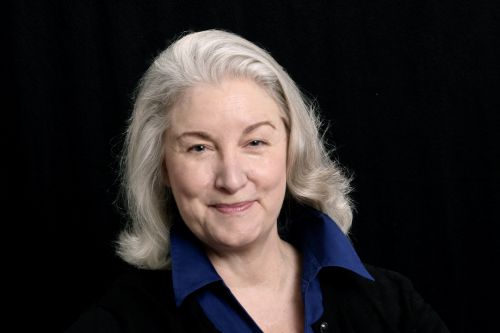
Myotai Treace was John Daido Loori’s first Dharma successor. She served for many years as vice abbess of Zen Mountain Monastery and later as abbess of Fire Lotus Temple in New York City. She is the founder of Hermitage Heart where she now teaches from the mountains of North Carolina.
“I once swore I would never live south of the Mason-Dixon Line again,” she tells me. “But my husband had family in North Carolina, and we kept returning. Little by little, the mountains kind of worked on me. It began to feel like home.”
I ask where she grew up.
“Everywhere. My father was in the Air Force, so we moved constantly—Arizona, Nebraska, England, Texas, Florida. I sometimes joke that my accent never had a chance to settle.
“My parents had little interest in religion. They thought it tended to make intelligent people less intelligent. My brother got into trouble for rock and roll and drugs. I got into trouble because I kept slipping away into churches. I think churches made them angrier than drugs.
“As a kid, I had what I think of as ‘introvert’s disease.’ I loved to be alone. I could stare at the stars or watch a caterpillar crawling for long, people-avoiding hours.
“So I visited churches—Episcopal, Baptist, Pentecostal, snake-handlers, people speaking in tongues, people convinced everything had been determined since the beginning of time. It wasn’t exactly religion I was looking for. I think I was actually just really lonely in a way, looking for some kind of soul contact, if you will. For anyone who could connect with what seemed more real.”
At fifteen, she started a beach prayer group.
“I’d gotten my learner’s permit, which mostly meant I could escape the house. On Sunday mornings I’d drive to the beach and sit quietly. A few people joined me, so I put up handwritten invitations. Within a month there were dozens, and on Easter nearly a hundred. I was horrified. I’d come for silence. Now people needed welcoming, reassurance, some kind of closing remarks. They wanted to talk with me afterward. I kept thinking, ‘Why are you asking me? I don’t know anything.’
“Looking back, it’s funny how quickly my lovely idea of silence turned into needing people skills. In an upside-down way, that was my first introduction to one of the challenges of sangha. I mean, we sit down asking, ‘Who am I?’ and bump into ‘Who are all of you?’”
She went on to college and graduate study, but serious illness interrupted her plans.
“I’d returned from a month-long camping trip when my body suddenly stopped working the way it had. There were questions about Lyme disease, lupus, nerve damage. Mostly there was pain. People sometimes ask whether I’m grateful for the illness. No. I’d gladly have lived without it. But sitting in hospitals, seeing the lives unfolding around me, I began to understand how commonplace profound suffering is. It was, to give it maximum drama, as though someone had quietly placed another heart inside me. That didn’t make suffering good – I think we can get ourselves into trouble trying to make everything that happens into a blessing – but it was the life I had, and it changed me.”
She eventually took a position with a research and development company studying wave motion and early computer simulations.
“I loved the work, especially going out on the boats. We’d skim across the bay, spray in my face, and it would all get so bloody literal: I’d been editing text about bodies moving through water, and here I was, the body moving through water. It was intensely demanding intellectually and also had this sheer beauty. And then the thud of reality came: turns out that our research, though I hadn’t known it, was part of a defense project involving towed bomb systems. Soon afterward I was assigned to lead a documentation project on chemical warfare readiness for the Joint Chiefs of Staff. I completed it because leaving abruptly would have hurt the people working with me. Then I resigned. I’d been doing work I found fascinating, with people I liked, and had to face what it was actually serving. That’s not an entirely comfortable lesson.”
Around that time, someone gave her Alan Watts’ The Book, followed by Ram Dass’s Be Here Now.
“I remember thinking, ‘Someone else knows this territory.’ I began meditating daily, went back to graduate school, studied haiku and Japanese aesthetics. My marriage was coming to an amicable end. One day my husband handed me an advertisement he’d found: ‘Authentic Zen Meditation in a Mountain Setting.’ It was Zen Mountain Monastery. I called, and the introductory weekend had been canceled for lack of interest. A month later they decided three people were enough, so I got on a Greyhound bus in Tallahassee and spent nearly twenty-four hours getting to the Catskills.”
She remembers the bus passengers eating fried chicken from paper bags, seeing New York City for the first time, and the extraordinary green of the mountains after her years in Florida.
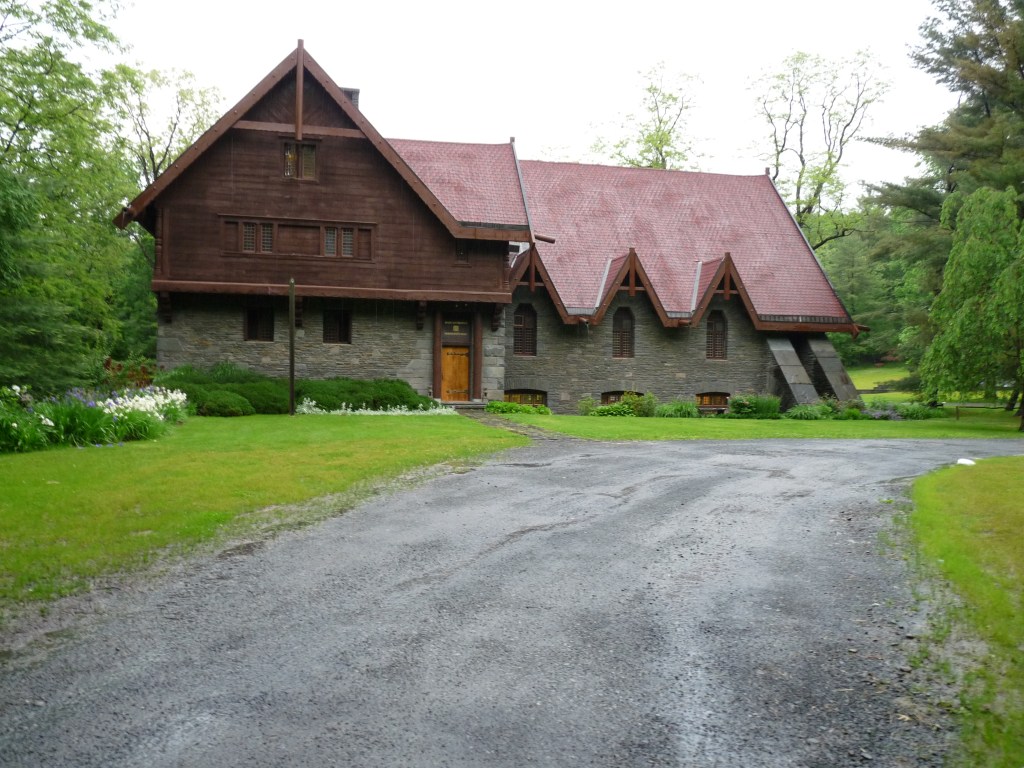
“I walked through the monastery gate and had the strangest sense of familiarity. The building had been made by Norwegian craftsmen, with huge beams and hand-forged hinges shaped like birds and insects. Upstairs I found the zendo, painted pale peach, filled with afternoon light. That evening I heard the Evening Gatha: ‘Take heed. Do not squander your life.’ It cut right through me. And after sitting, I watched people carefully straighten the cushions for whoever would come next. I didn’t know it was someone’s assigned job. I just saw the care. You could say I was pretty enchanted, though that stage would blessedly pass, as it does for everybody.”
She had arrived with serious doubts about whether she could practice at all.
“I was fairly certain the nerve damage would prevent me from doing the highly structured meditation schedule with enforced stillness and monitors who yelled if you moved. To my great surprise, I found I could do it. Maybe my first ‘Zen lesson’ was how unreliable conclusions about oneself can be. I think that’s why ‘thresholds’ became a key word in my teaching. We’re always right at that edge, at a doorway leading we don’t know where. Showing up for that becomes everything. What blew me away was that sitting let me see what I was adding to the pain: the fear, muscle tension, stories that didn’t serve me well. I remember that first sesshin, finally, somehow, just dropping it all. And then the bell ringing. Time stopped making any sense at all right about then!”
She met Daido for the first time in the dining hall without realizing he was the teacher.
“He was friendly, easy to talk with. Then he walked into the zendo to give beginning instruction, and I was astonished. I’d never heard anyone speak quite that way. Warm, strong, direct, from the heart. He made what had seemed mysterious feel completely natural. Almost no big deal.
“I loved the zendo. The dining hall was another matter. It reminded me of junior high school. I never knew where to sit. Zen didn’t magically cure my shyness.”
She became a postulant monk and, for a time, the monastery bookkeeper.
“Strapped as ever, we hadn’t paid the dumpster bill in six months. One afternoon during sesshin I looked out the window and saw a truck backing up to take it away. I ran outside in my robes and begged the driver not to. He couldn’t have cared less about Buddhism. Finally I said, ‘Please. We’re trying so hard to do something good here. Can’t you give us a break?’ He looked away, grunted, and gave us another month. I suppose there’s a teaching somewhere in a Buddhist monk pleading with a garbage collector for mercy. Mostly I remember being enormously relieved that we still had a dumpster.”
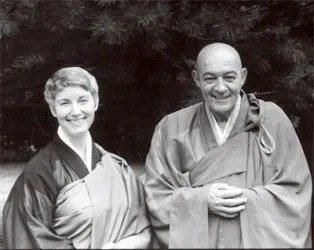
Years passed. She ordained and took on more responsibility at the monastery. She and Daido became a couple for a while.
“I came to understand more deeply what Daido was trying to build, and how difficult it is to build something intended to last. There were extraordinary teachings, tremendous devotion, and also real human difficulty. People I loved came to very different conclusions about what faithfulness required. Everyone senior to me eventually left. I stayed, and that had its own consequences.
“I’ve thought a great deal about what we learn from our teachers. Daido could use wilderness, photography, art, the smallest incident, to open up someone’s practice. He was brilliant at it. But his anger and ego taught, too, sometimes painfully. I don’t think we do ourselves or the Dharma any favors by pretending that painful things were therefore good things. We can learn from something without justifying it. That’s part of making use of the life we actually have.
“As the place grew, the structure of ‘eight areas of training, ten stages of practice,’ with the implication of ‘this is your whole life,’ also created all the sicknesses of extreme hierarchy and ambition. The ‘monastic imperative’ became prideful, too, and a sense of ‘we’re doing it the right way’—and others aren’t—took a toll. I don’t quite know how a teacher gets out of the trap of creating a problem inextricably linked to their solution, only that we need to be diligent. And perhaps kind to one another about the messes we inevitably make.”
Daido eventually asked her to take charge of a small Zen group in Manhattan.
“It was almost entirely men. They’d arrive, change into robes, bow, sit, and leave. Hardly anyone greeted anyone else. They were treating their daily sitting as if it were a silent week-long sesshin. It was just weird. Finally I said, ‘Guys, I love you, but if I walked in here for the first time, you’d scare me to death.’ So we put on a pot of tea. People greeted newcomers, handed them a cup of tea, said goodbye afterward. Nothing elaborate. The group doubled, then doubled again. I’ve often thought the New York Zen Center really began with a pot of tea. We can become so devoted to doing Zen correctly that we forget to notice the people in the room. Bowing to one another is wonderful. Actually meeting one another can be more difficult.”
The group grew into a community, eventually acquiring a building which had been former funeral home in Brooklyn.
“After looking all over Manhattan with a broker, I found an ad in the New York Times: ‘Seven thousand square feet of opportunity.’ It was an optimistic description of a building that needed a tremendous amount of work. Everyone showed up. We painted, scrubbed, carried lumber, dealt with Brooklyn roofers and plumbers. Within weeks we opened the doors. We’d been afraid people wouldn’t follow us across the Brooklyn Bridge. Instead, the community deepened. There was an enormous amount of affection, and a willingness to work hard together.
“I think September 11, when the city was attacked, also helped the sangha form a tremendous bond. We were all so scared, uncertain what was next. During a mondo, with the zendo filled to the brim, someone asked, ‘Do you think we should try to leave New York City?’ I remember taking a breath, looking around, quietly finding the words: ‘How will we get a big enough boat to get everyone to someplace safe? Where is that place?’ So we shifted and started asking again and again how we might help.
“We offered support to firehouses that had lost men, worked with grieving families, accompanied people who had suddenly become targets of suspicion because of their race or religion. And we kept being a sangha. We had a chili cook-off. We celebrated Buddha’s Birthday with horses for the children. We sat sesshin. The life of the community wasn’t separate from what was happening in the city.”
She was eventually installed as abbess of Fire Lotus Temple.
“Those years were among the deepest privileges of my life. But gradually another threshold appeared. Daido had spoken about three broad paths in Zen: monastic, lay, and hermit. I’d always assumed I belonged to the first. Then I began to recognize something else. I’d spent years helping build institutions. Now I wanted to explore what might be possible with fewer structures, a smaller community, more silence. I wasn’t rejecting what I’d learned. I was trying to find out what else it might allow.”
She founded Hermitage Heart, teaching in various rented spaces around the city and Hudson Valley, and then in a nineteenth-century gristmill in Garrison, New York.
“The day I first visited the Mill, unsure if this was the right step, I climbed the stairs to the attic. It was such a mystery of a place, huge old gears, the scent of wet rock from the millstone. I opened the big door that looked out to the stream, and there in the doorsill was an old bird’s nest with a pink ribbon woven into it. I took it as a sign: ‘Welcome, woman.’
“I realized it was also a time in my life to step away from some of the patriarchal structures and language, to find a different aspect of my own voice. My crone period, as they say. I knew I wanted to write more. I became more committed to students making their homes their ‘temples,’ finding ways to deepen the sense of sacredness in daily life. Practice wasn’t something you had to leave home to find or intensify. And I wanted to find every female Zen ancestor’s teachings I could put my hands on.
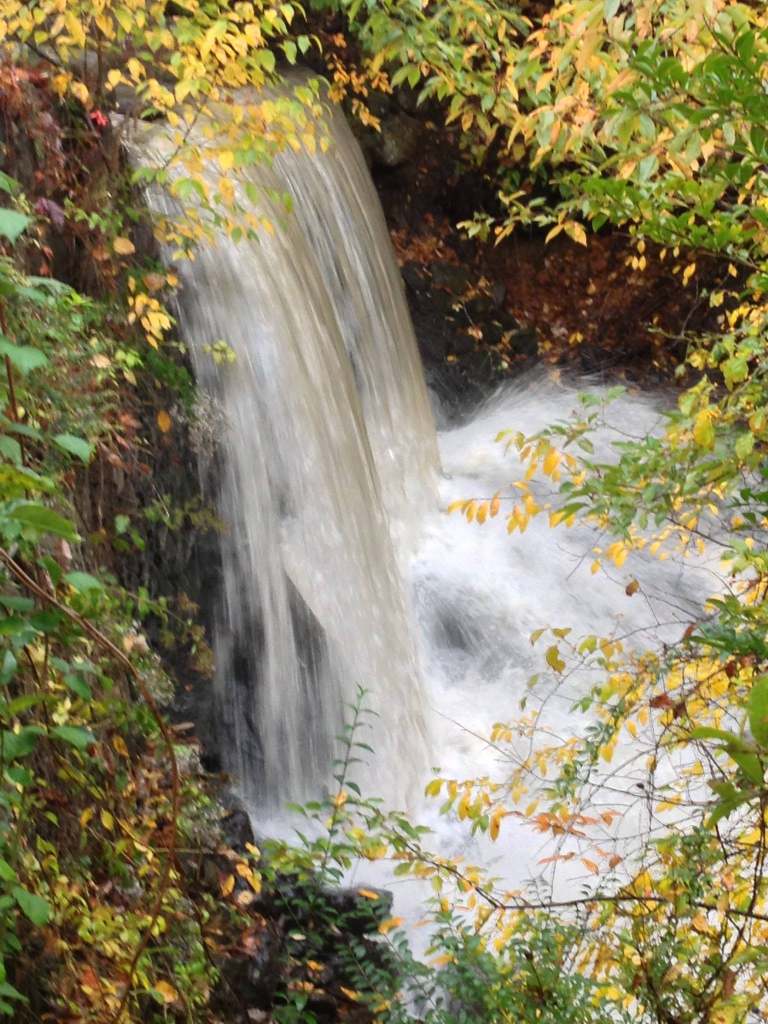
“Maybe because of the waterfall and pond, with the Hudson River right there, I also began increasingly to use water as a teaching. People took vows to water—to studying it, their own watershed, their bodies as water. We developed water practices, liturgies.”
I ask what she most wants students to understand about practice.
“That your life has exactly what you need. It’s not a mistake. I don’t mean everything happens for a reason, or that suffering is secretly a gift. I mean that this life, the one we’re actually living, is where practice happens. We can’t escape ourselves by becoming Zen students.
“I tend to be poetic. I’m also a gimpy old lady these days, whatever that means on any particular Tuesday. Both of those things enter the room when I teach. We have to learn to make compassionate, creative use of what we find in ourselves, including the things we’d rather leave out. I’m also increasingly wary of our ideas about what practice ought to look like. Even the perfectly reasonable insistence that meditation and compassionate action must go together can become another prescription. There are times when you can’t go on marches or deliver medicine by horseback. There are times when meditation comes in five-minute dollops rather than days of sesshin.
“Of course we need to challenge ourselves. But we also need to stay real with our actual lives. Sometimes we discover we can do far more than we imagined. Sometimes far less, or something substantially different is being asked. We don’t know in advance. I don’t want students trying to become some idealized version of a Zen person. I want them to discover what this particular life makes possible, and what it asks of them.
“There was a period when I sent all my students out to study with other sanghas. I’d gotten Lyme disease again and couldn’t have led a retreat if I’d wanted to. Some students took to the idea easily; others balked. Two eventually returned ordained by other teachers. That surprised me to no end.”
These days, Myotai lives in the North Carolina mountains with her husband, a collie, and a cat. She’s written five books, and continues to teach students, though the shape of that teaching is different from her years in the monastery and the city.
“I’ve come a long way from those days of trying to build a Zen center, though I still have a sangha, and a home full of creatures with their own ideas about how the day ought to go.”
She returns to the idea of the threshold.
“I think we’re always at the cusp of the unknown. Practice doesn’t eliminate that. If anything, it makes us more familiar with it, and a little less frightened. And right now, the world is trying to convince us all to be very frightened. Yet we’re here, and there are possibilities we can’t imagine till we’re willing to practice. That is the doorway.”