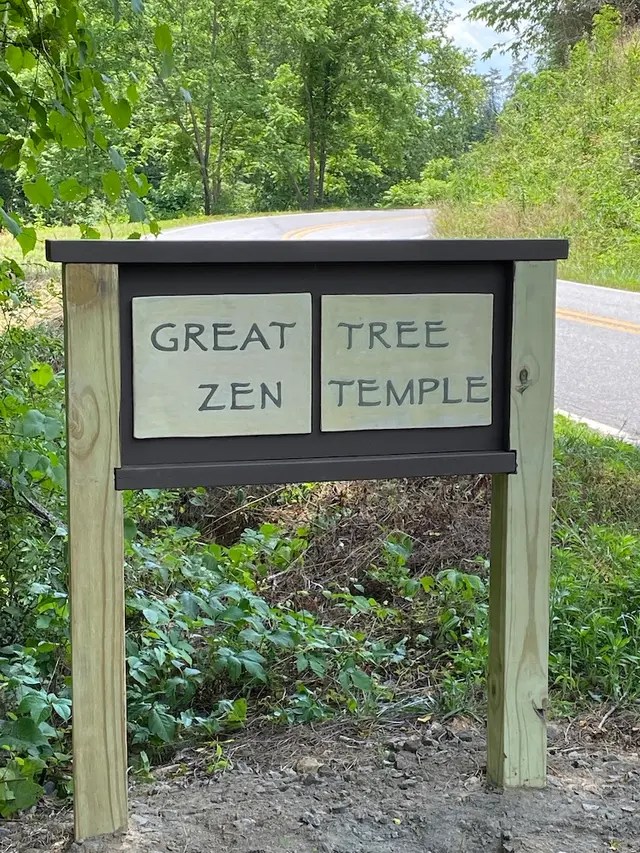
Great Tree Zen Women’s Temple –
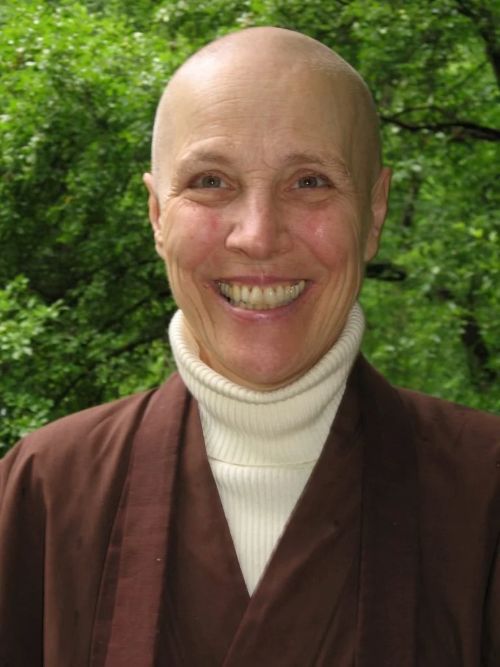
Teijo Munnich is one of Dainin Katagiri’s Dharma heirs and the abbess of Great Tree Zen Women’s Temple near Asheville, North Carolina. She is also a former Catholic nun.
“I went to Catholic schools until I was a junior in college. When I was in kindergarten, the pastor of our parish came to our class and told us about his day. When he finished he said, ‘Does anybody think they’d like to be a priest?’ I was the only one in the class who raised my hand. He, and my teacher, Sister Claremont, smiled and rolled their eyes and Sister Claremont explained, ‘Girls can’t be priests. But you can be a nun.’ So I thought, ‘Okay. I’ll be a nun.’ I kept that wish alive in my heart, and after high school I went to the convent. It was post-Vatican II, and I had been radicalized by the words of Pope John XXIII when he said in 1959, ‘I want to throw open the windows of the Church so that we can see out and the people can see in.’ My main influences were both nuns and lay women who were ahead of their time in trying to bring about changes in the Catholic Church. But some nuns in the convent I went to hadn’t made the leap. So I challenged long-held traditions in the convent, beliefs which probably had not changed much since the convent’s founding in the late 1800’s.”
I ask her what attracted her to the convent.
“I think the simple lifestyle. I think that’s what attracted me to Zen too. When I was a kid, every year we had a food drive for the nuns at our parish convent, and people brought canned goods and other food items that could be stored and used throughout the year. One time I helped transport the food so I went into the kitchen of the convent to drop it off. Everything was so simple and orderly. I remember thinking at that time, ‘That’s why I want to do this.’ But I couldn’t tell people about it, because every time I told someone about it, they’d say, ‘Oh, no. You can’t be a nun. You’re too bubbly; you’re too extroverted!’ But I thought, ‘So what?’ and I stopped telling people.”
Her extroverted personality was, in fact, an issue, and by the time she was 21, she realized she had to leave the convent.
“A lot of things happened. My superior was very old school. She had entered the convent when she was 14, and her aunt had been a Mother Superior. She saw me as kind of a wild person. I don’t think I was as wild as she thought I was, but she accused me of doing things that I really wasn’t doing, and the more I said I wasn’t doing them, the more she thought I was trying to cover up something. That became very difficult. So I left. It was hard because I had no idea what I was going to do next. I never thought of doing anything besides being a nun. But it’s interesting because on the way home, I remember sitting on the airplane thinking, ‘I’m going to start my own convent.’ Then I thought, ‘Oh, no! Don’t even think that. You have no qualifications to do that at all.’ And here I am fifty years later with this Zen women’s center. And another interesting thing is that the same superior who had made my life in the convent so difficult is also the same person who first told me about Zen Meditation.”
She had finished two years of college by the time she left, so she decided to continue her studies and go to university.
“I transferred to the University of Minnesota with the intention of studying psychology, but I didn’t like the approach of psychology as a science. It seemed too fixed. I ended up in theater, which has really helped me. For example, as a theater major, I had to study speech, and now, I give talks about Buddhism; and I studied some Creative Dramatics which I have used a lot when teaching kids about Buddhism. I went through a huge transformation at the University of Minnesota! I hadn’t been in a classroom with males since sixth grade, and I’d never been to a non-Catholic school. The university was an entirely new experience, and it opened my mind. I stopped practicing Catholicism, experimented with drugs. And by the time I was 29, I was confused.
“And then I got rejected by a man I had become very attached to. He was, among other things, very interested in the philosophy of Zen. He had been to Japan and had done some Zen meditation, and he had developed an interest in it and read a lot. Because of him I started doing meditation again, something I’d started doing in the Catholic Church when I was fifteen but stopped after I left the convent. The relationship I had with him was making me crazy, and I had to do something, so I’d sit down and meditate for ten or fifteen minutes at a time to help me cope. When he finally ended it, I decided I needed to do something more. I got more into the study of dance, and when the company took a one-month break, I found myself searching for a spiritual teacher or community. Thinking I’d never find a good teacher in Minneapolis, I felt I would have to go somewhere, and I started to think about where.
“One night I was playing tennis with a friend, and walking home from the park, we went by a tent with gospel music coming from it. I was attracted to the music, so I handed my friend my racquet and went inside. And when they invited people to come up and get saved, I went up and got saved! Then the leader gave an inspiring talk, and at the end he said, ‘Come with us.’ So I thought, ‘I’m going with them.’ And I went home and packed. The next morning I went back, and everything was gone, the tent, the people were gone, it was as if I had dreamed it. But I was packed, so I had the momentum. And I had $200. I decided to get on the bus. And I headed for the Greyhound bus station.
“I had been reading Carlos Castaneda’s The Teachings of Don Juan: A Yaqui Way of Knowledge, and I thought I might maybe meet Don Juan in a bus station like Carlos did. So I packed my backpack with a sleeping bag, and my I Ching. I was wearing overalls, a tank top, and a flannel shirt, and I went to the bus station, and I bought a ticket that allowed me to go anywhere in the continental United States for a month, and I could change my ticket whenever I chose. The ticket cost $175, so I had $25 left. First I went to Colorado and visited two of my convent friends who had also left. And then I headed to California to visit my sister in San Diego.
“After San Diego I was going to San Francisco. On the way I visited another ex-nun friend who lived just North of Los Angeles. I’d spent the last of my money when I was in San Diego, so after a night or two at her home, my friend gave me $25, and a bag of avocados from her tree, and put me back on the bus. I arrived in the San Francisco bus station at midnight. I don’t know what it’s like now, but then it wasn’t a place you wanted to arrive at midnight. I was trying to figure out what to do when I saw an office in the middle of the bus station, and the door was cracked a little and I saw two men in there. I knocked on the door and said, ‘Could you tell me a place that I could stay?’ And I told them I only had $25. They made a phone call, and sent me to a place run by the Holy Order of MANS, which I’d never heard of. It was a kind of refuge for women and children. They had one bed available that night.”
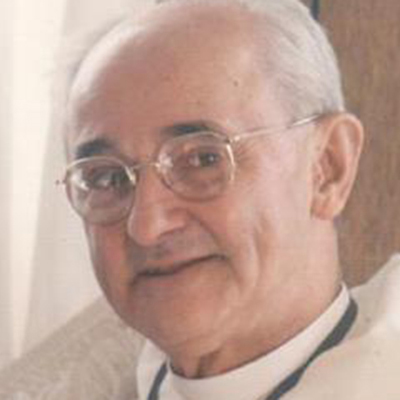
The Holy Order of MANS [Magisterium Artium Naturalium Spiritualium] was a New Age Christian group founded by “Father Paul” – Earl Blighton – which focused on discovering the Divine Self Within.
“So I stayed there for a few nights. And I was drawn to them because it was a very spiritual group. I went to their early morning service, and I thought, ‘Maybe I’ll join this group.’ And they gave us breakfast, then we had to leave the building, and could not come back until supper time. So I started wandering around San Francisco, and I went to the main place of the Holy Order of MANS, and asked a lot of questions. But they kind of blew me off. I’m guessing it was because I was dressed like a hippie, and by 1975 hippies in San Francisco had developed a bad reputation. I continued on. I saw a sign that said, ‘JAPAN.’ It was Japantown in San Francisco. I was a go player at the time. I loved go and had been playing a lot the summer before I left. So I went to the consulate in Japan Town, and I said, ‘Can you tell me where the go club is?’ And the man told me, ‘Well, it used to be at this place. I think it might still be there.’ And he gave me an address and directions. And as I was going out, I looked over my shoulder and asked, ‘Is there a Zen Center here?’ He gave me the address.”
She had first heard about Zen from the Superior at her convent, and the memory of that discussion – as she puts it – “lingered” in her brain.
“So I went to the go club. And I sat outside the door. The sign said, ‘Open in the afternoon.’ It was about 11:30, so I decided to wait. I waited and waited and waited and waited and waited and waited. I waited until 4:00 in the afternoon, and no one came. I was cold and tired of waiting, so I just kept wandering and ended up at San Francisco Zen Center. And I went in, and started reading brochures. Once again I thought, ‘This is something I think I’d like to do.’ But I dismissed it because at that point I didn’t have much money and I couldn’t stay at Holy Order of MANS for an extended period of time, so I had nowhere to stay. All I had was a bus ticket to go where I wanted that was good for another couple of weeks.
“A woman from the office came out and asked if she could help me. And I said, ‘Well, I’d like to stay, but I don’t have any money.’ And she said, ‘Why don’t you get a job?’ And I said, ‘Well, maybe I will.’ And she said, ‘What can you do?’ I said, ‘I can teach, and I can type.’ And she said, ‘Let me make a phone call.’ And she went back into the office. Her sister worked at a place called the Trust for Public Land. And they needed someone to retype their training manual. It was a three-month job. So I did that. I went back to the bulletin board at San Francisco Zen Center and found a place to stay about a block away from San Francisco Zen Center. It was a flat with ten people, Zen people. And I was a woman, and I was a Virgo, so I fit into their need for balance, and they accepted me. Three days later, Katagiri Roshi arrived on a visit from Minnesota.”
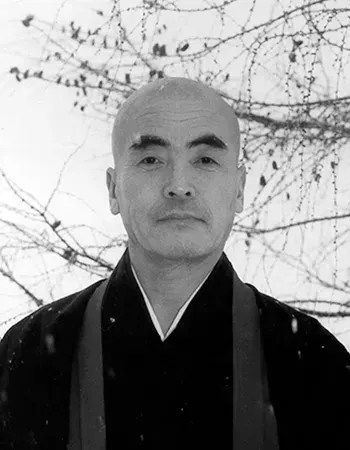
She hadn’t yet begun practicing at the San Francisco Zen Center, but when everyone else in the apartment went to the Green Gulch farm to hear Katagiri speak, she joined them.
“When we arrived at the meditation hall at Green Gulch, I got shuffled to the front of the room, and I heard Katagiri Roshi for the first time. I was very affected by him. I thought, ‘This is a person I want to learn how to meditate from.’ And I finished my temporary job at the Trust for Public Land, and returned to Minneapolis. A few months later I went to the Minnesota Zen Center to learn from Katagiri Roshi.
“At first I just went to Intro Classes taught by Roshi, so I could ‘get it right.’ And at the third class I heard Roshi say, ‘Anyway, just do it. Just sit down and shut up!’ So I began showing up for meditation a few times a week. I quickly realized that I’d been dabbling in different spiritual practices for a while, and I decided it was important for me to stop jumping from one thing to another, and to commit myself to something. I decided to commit myself for three months. After three months I realized I needed more time. I wasn’t thinking, ‘Oh, this is the teacher I’ve been looking for.’ I just thought, ‘I have to keep studying with this teacher because there is a lot I can learn from him.’ So after three months I re-committed myself to another six months. And after six months, I decided I needed another year. One day as I was listening to Roshi giving a Dharma talk, I thought, ‘What he’s saying is something I already know.’ I realized he was awakening something in me, and I said to myself, ‘Oh! This is my teacher! This is the teacher I went on this trip to look for.’
“That’s my story about finding Katagiri Roshi and getting into Zen, and the rest is history. I don’t even know what happened to the next fifteen years until his death in 1990. I just went from one thing to another.”
I ask her to tell me a story about Katagiri, and she talks about coming back to the US after studying in Japan for a period. During the time she had been away, Katagiri had developed an, as yet, undiagnosed medical condition.
“When I returned from Japan, I immediately went to a practice period at Hokyo-ji, the Minnesota Zen Center’s Monastery in Southeastern Minnesota. I wanted to integrate back into American culture because I had been in Japan for almost two and a half years. So I joined the practice period at Hokyo-ji. And I was Shuso (Head Monk) because it was my turn. So I interacted with Roshi every day. I offered incense in his room every morning after breakfast, and on ‘personal days’ I shaved his head and we had coffee. And he told me about his travel schedule after he left the Practice Period. It was very intense. A day or so after he returned to Minneapolis from Hokyo-ji, he was going immediately to LA to give a keynote speech, then to San Francisco to do something there; coming back, spending one night at home, then going to Colorado for an inter-faith conference; returning home for another overnight, and then to North Carolina to lead a retreat, followed by leading a one-month intensive in Japan. This schedule finished at the end of November and he returned to Minneapolis in time for Rohatsu sesshin, a seven-day retreat in early December. He had been sick during most of the practice period at Hokyo-ji and when I became aware of his upcoming schedule I became concerned about his health. One morning at coffee I looked at him, and I said, ‘You’re sick. You need to stop doing so much. You have to cut something out!’ He looked me straight in the eye, and he said, ‘This is the way I want to live.’ There was nothing else I could say.
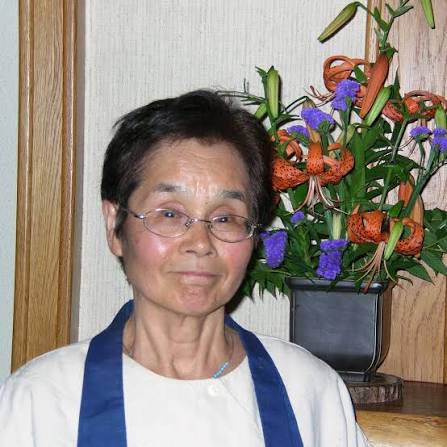
“Anyway, I had an idea to start a women’s center, and I talked about it to the person who was my attendant during this practice period. And she said, ‘Well, I have a house in Kansas. We can do it there. It was an old railroad hotel, used for railroad workers when they were building the railroad across Kansas. It was big and it had lots of rooms, and she had renovated the whole place.’ So, with Katagiri Roshi’s encouragement, I moved to Kansas. This was 1988. I returned to Minneapolis from Kansas at Christmas with my family. While I was there, Roshi’s wife, Tomoe, asked me to accompany him to Massachusetts because a Sangha member who was dying wanted to receive the Precepts. Katagiri Roshi was very sick when we went on this trip, with high fevers and fatigue. We were gone for about a week, and I was relieved that his schedule permitted him to take some time off when we returned to Minneapolis. After New Year’s I went back to Kansas.
“About mid-January I got a call that he had collapsed and was semi-conscious, and I should come right away because he wasn’t responding to medications and he might die. I returned to Minneapolis and went straight to the hospital. He seemed conscious but was unresponsive. The doctor thought he had a recurrence of tuberculosis, which he’d had when he was younger and he started to respond to the drugs they were giving him for that and show some improvement. But it took another month to discover that he had cancer and the reason he was responding to the drugs is that one of them was a drug that is also used for cancer. Because I was sort of available, I ended up being one of his main caregivers, along with his wife, Tomoe. And that was probably the best teaching I ever had, being with him every day, seeing how he dealt with this major illness. He stopped responding to small talk with me. If I said, ‘Oh, nice weather,’ he would just glare at me.
“He thought he was going to get over it. He always called himself a ‘long-distance runner’ because he had a very strong heart. So he thought he would survive this, just do what the doctors say. He showed some progress after a few months of chemotherapy, and we all felt hopeful. Then about six months in, he lost his ability to walk. And we took him to the doctor, and did x-rays, and it turned out that his cancer had spread. He had tumors up and down his spine and in his brain. His oncologist had not found any studies about anybody who lived beyond that stage. Roshi asked me what that meant, and I told him. As it registered there was a moment of panic in his eyes. Then he closed his eyes for about forty minutes, and he snapped out of the panic. Just like zazen. He came to terms with it somehow. This happened several times during the course of his illness. And I often thought, ‘This is the way I want to be, just being able to come to terms with whatever is happening, and process at those moments when I have to face the unknown, the things I fear.’
“One of the things I recognized while I was in the monastery in Japan is that I’m afraid of death. I tried and tried to meditate in the graveyard at night, and I just could not do it, and one night I realized, ‘I get it. I’m afraid of death.’ And I went home, and my teacher was dying, and I had to watch it.”
Katagiri Roshi died on March 1, 1990. While Teijo was helping to care for him, the opportunity in Kansas passed.
“After he died, I was asked to organize some of the logistics of his funeral, finding hotels for visiting Zen priests, arranging rides, meals, and that kind of thing, making sure they were taken care of. During Roshi’s illness, I had been a liaison between the community and the family, the community and the doctors, and the doctors and the family. By the time Roshi’s funeral was over, I was exhausted. And I felt I needed to spend some time grieving, and just processing all that had happened.”
She went back to Japan and stayed at a temple that was being taken care of by Shohaku Okumura, about an hour outside of Kyoto. When she returned to the United States six months later she was invited to be the teacher for a group that was starting in Charlotte, North Carolina. She visited the Charlotte group a few times during the next year, and led some retreats at Southern Dharma Retreat Center in Hot Springs, North Carolina.
“A person I knew from Minnesota Zen Center lived in Asheville, and she came to Southern Dharma whenever I was there and told me how much she loved living in Asheville. The people in Charlotte asked me to move there, but, after visiting Asheville a few times, I began to think Asheville was where I wanted to live. It was only a few hours from Charlotte, and I liked the smallness of it. So I moved to Asheville.
“I had gotten to know the woman who had started Southern Dharma and she had a cabin she had just moved out of on the property adjacent to the retreat center. And when she heard I wanted to move to the area, she offered to let me stay at her cabin. I had wanted to be a hermit, just to spend some time figuring out what I wanted to do next. So I moved into the cabin, and I lived there for a year and a half. After that I found a small apartment in Asheville so I would have a place for them to stay. As soon as I moved into Asheville, people started asking for regular meditation, study groups, family meditation, all-day sittings. And there wasn’t one place to offer these various things, so we had different venues all around Asheville. Then someone who was practicing with us offered us low rent to use a small house she owned. That’s how Zen Center of Asheville got started. Almost all the Zen students practicing with me were men. And I wondered, since I am a woman, why are all the people practicing with me men? I had realized when I was at Tassajara in the early eighties that more balance was needed in the Zen world. So after seven or eight years at Zen Center of Asheville, I decided it was time to start a Zen center that would be more inviting to women.”
I ask why starting a specifically women’s temple was important to her.
“I really felt that the Zen world was very unbalanced. When I first started practicing at Minnesota Zen Center, I remember wondering where all the women were. Over time I realized that many of the women had young children, so their ability to participate was limited. But even single women weren’t coming. And I thought ‘Maybe women think they can’t do Zen, so I’ll just show them that they can.’ There were a few women involved, so it’s not like there were no women. But it was mostly men. And one of the things I observed is the way that women’s insights were dismissed in the Zen world. I had gone to all-girls Catholic schools and my teachers and all my peers were women. And when I shared a deep insight, it would be understood. And I felt frustrated that, in the Zen world, things I said were being ignored. And the worst of it was that, when my insights were not being acknowledged, I noticed that I was dismissing them in my own mind. And one time when that happened, I remember thinking ‘I need to find my voice. I need to be able to recognize my own wisdom and instead of accepting this situation, I need to be able to say, ‘Hey! This is valuable. This is important. Just because you don’t understand it doesn’t mean you shouldn’t hear it.’ I feel like I need to say that. And I think there are other women who have that same dilemma. And I have even seen at Great Tree, there can be a room full of women, and if a man walks in, the man can take over the whole energy in the room. Why is that? Why do we women allow this?”
She founded Great Tree in 2005 as a temple that – as their web page puts it – “seeks to support and encourage all who seek spiritual awareness. Residencies are for women only, all other practice is open to individuals of all genders. The spirit of the temple is to create an inclusive environment where people can deepen their understanding of themselves and their connection to the world around them.”