Everyday Zen Foundation –
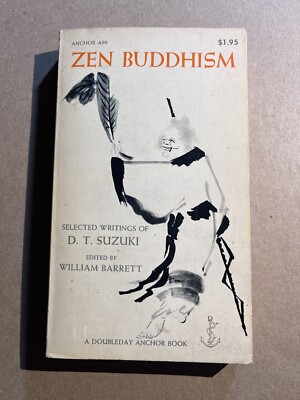
While at college, Norman Fischer came upon an anthology of essays by D. T. Suzuki. “It was introduced by a professor who was an expert on existentialism, and he presented Zen Buddhism in the light of existentialist philosophy, which was very current in the late ’60s. So that was what I had been thinking about, and to see Zen Buddhism in that context, it immediately appealed to me. I thought, ‘This is the answer to everything!’ The way that I put it at the time was, ‘The existentialists say there’s no God, nobody’s in charge, the whole world is absurd, and we’re in despair. And the Zen Buddhists say the whole world doesn’t make sense, nobody’s in charge, and it’s wonderful.’ And I realized if you accept the premise, why decide, ‘I’m in despair’? Why wouldn’t you just as easily say, ‘It’s wonderful’? And I realized Zen Buddhists had it right. They said the world is exactly as the existentialists described it except they made a leap to something wonderful and positive.”
Norman would eventually become an abbot of the San Francisco Zen Center.
He was raised in a Jewish family in Pennsylvania. “I was a religious child prodigy, because all the prayers were in Hebrew and there were specific tunes for chanting, and I mastered all of that, and I would lead the services when I was thirteen years old.” Then puberty struck. “I became obsessed with sports and girls and immediately forgot about the whole thing.”
But some of what he calls the “religious impulse that I had childhood” returned when he went to college and came upon the Suzuki collection. I ask if he immediately began to look for a Zen master.
“Well, yes and no. There was nothing in Suzuki that gave you the idea that Zen was anything other than a philosophy. So I understood it the way I understood every other philosophy. It was something you believed and you pursued and you modeled a life on it. But I didn’t know there was a practice.”
It wasn’t until he was in the writing program at the University of Iowa that he met someone who was engaged in Zen as a practice at the San Francisco Zen Center. This student showed him how to do zazen, and, after graduating from the University of Iowa, Norman moved to San Francisco specifically because of Zen Center. “But I didn’t want to join anything. I just wanted to do the meditation practice. So I moved away from the Bay Area to the north coast, where I lived as a hermit, writing and doing zazen every day.’”
He attended Mel Weitsman’s Berkeley Zen Center. “I would drive to the Bay Area and do all-day sits and stuff like that, but basically I was practicing on my own. I did that for a couple of years.”
Mel and the people ay Berkely told Norman about Zen Center’s mountain retreat at Tassajara.
“You could go visit in the summers, and I went. I had developed a taste for wilderness and mountains, and Tassajara is in the mountains. So I was impressed with that, the remoteness, the quiet. And I was impressed with the practice. There was zazen in the morning, zazen in the afternoon, zazen in the evening. So I decided, ‘I have to be here.’”
He lived at Tassajara from 1976 until 1981.
“I was just a monk, doing whatever anybody needed. People were assigned to work crews, whether you were working in the kitchen or the doan ryo, meaning temple jobs, learning how to do the bells and the whistles and all that. So I did various jobs; I think I was the treasurer at one time. I was the librarian. I was on the stone crew, building stone walls.”
I ask if he ordained, and he said he had. “Okay,” I say, “good Jewish boy from back east, how did you choose to become a Buddhist priest?”
“Well, I didn’t.” It turns out he was married when he came to Tassajara, and he and his wife had twin baby sons. “So most of the time I was a monk, I was sharing childcare with my wife. Richard Baker was the abbot of Zen Center at that time, and everybody who was at the Zen Center was automatically his student. You didn’t have to love him, but if you wanted to be at the Zen Center, you were his student. And that was okay with me. But by this time, I didn’t have enough money to pay for five years of Tassajara, especially when there were two and then four of us.”
The alternative was to ordain. As a priest, he could stay at Tassajara without having to pay. So he became a priest. “You know? It’s not a big deal. All Dharmas are empty, so what?’ And then my wife said, ‘Well, if you’re going to ordain, I am too.’ So we ordained together in January of 1980 with our three-year-old sons attending the ceremony.”
“What,” I ask, “do Zen priests do?”
“Basically Zen priests are doing the practice the way that everybody else does it except that Zen priests put on Buddha’s robe and preside over rituals. And if a Zen priest receives Dharma transmission, then they have the empowerment to offer precepts in ceremonies and to ordain disciples.”
I note that if he’d been a priest in Japan, he would be expected to be attached a temple somewhere and work with a community.
“When I was a student at Zen Center there was no idea of doing that. Everybody was going to stay there. There was lots to do there, and none of us were advanced enough that we could guide anybody else. But as it turned out, of course, now that is what’s going on. People are ordaining as priests and then going forth. Now there are now a bunch of established centers around the country that are in need of priests.”
In 1983, the San Francisco Zen Center was wracked by a set of circumstances which resulted in Richard Baker’s resignation. The story is often portrayed as a sexual scandal, although it was more complex than that. The sexual angle is largely remembered because of a book published in 2001. I ask Norman how fair he thought the book had been.
“That book really pissed me off. Because I was abbot of Zen Center at the time and gave the author access. I called up Baker Roshi, and I said, ‘Somebody’s going to write about this, and I met this author and he seems to be a decent guy.’ So, on my say-so, Zen Center opened its doors to this writer, and Dick Baker opened his doors to him. And I thought that he would tell the story as I thought it actually happened. Which was that a bunch of people who were very sincere and serious were trying to do Zen practice, and they made some mistakes, and there were real problems, but that the community was strong and that what people were trying to do was noble and worthwhile. That’s how I saw the story. Instead . . . I mean, in hindsight, I can see, ‘How naïve could I be?’ Anybody who was gonna write about this was going to write about it sensationally because that’s what you do. A guy leaps in bed with a gorgeous blonde. Everybody is stupidly duped this guy; they’re just following him blindly; they have no idea who he really is, and now the wool is pulled off of their eyes, and they’re all betrayed. I mean, that’s the story that anybody would tell if they’re a novelist or somebody who’s writing investigative journalism. Somehow I thought he would be more generous and see it in a fuller way. So, I don’t like the book because . . . To make the sacrifices that people made and to live as nobly as they did was a fantastic thing. To me, it’s deserving of a lot of credit and a lot of admiration. That we said, ‘Okay. We’re not going to have a career; we’re not going to worry about ourselves; we’re going to give ourselves to this quest for truth no matter what it costs us. We’re going to work hard; we’re going to do the practice with diligence. I mean we really – all of us together collectively – did a tremendous thing to establish Buddhism in the West in a serious way. And we created this institution that is very, very powerful for Buddhism in the West.”
I ask how he came be abbot. He tells me it’s another complicated story.
“So after Dick Baker left the Zen Center . . . And he wasn’t kicked out, he left. He was asked to stop being abbot for a while until we figured out what was going on. But the noise and the upset and the turmoil were so strong that he didn’t feel like he could stick around anymore, and he left. And after that, Zen Center went through a long period of reflection and revision, and one of the things we decided was that what happened to Richard was he had too much responsibility, too much pressure on him, and he basically acted out in order to get out of a situation that he was in that he couldn’t get out of. So let’s not put anybody in that situation again. Let’s not have abbots for life; let’s have abbots that are elected and not appointed by the outgoing abbot, let’s soften the spiritual pressure on an individual. So we created a system where abbots were elected and served terms. Of course nothing is ever unanimous, and there were people who thought, ‘Well, that’s not the way it’s done in Japan. We really need an enlightened teacher to be the abbot, and that person should be the abbot for life.’ So after Baker Roshi left, we invited Katagiri Roshi to come and be our abbot temporarily, to give us some breathing room. And when he came, there was some, ‘Maybe he’ll stay; maybe he’ll be the new Suzuki Roshi.’ Other people said, ‘No. We don’t want a Japanese. Suzuki Roshi wanted this specifically to be an American endeavor.’ So then we elected Reb Anderson, who was the senior person under Dick Baker, to be the abbot. Well, this was controversial too because, ‘Wasn’t he the main follower of Dick Baker?’ Plus Reb is a very pungent personality. Some people loved him to pieces and thought he was the epitome of a Zen Master, and other people felt that he was not at all sound. But he was elected with the idea that he would serve a term and then he would step down. But there were people who said, ‘No. We don’t want that. He’s the abbot; we want him to be the abbot forever.’ So this was very confusing. And then came the famous incident with the gun.”
The incident was every bit as complex as the set of factors which brought down Baker, but essentially Reb was mugged near Zen Center and showed a lack of judgment by taking an unloaded gun and chasing after the muggers. He was arrested for brandishing the weapon in public.
“So that happened, and people asked him to step down for a while. And unlike Dick Baker who was asked to step down and basically ran away, Reb stepped down, stayed put, kept his head down and kept practicing, kept his mouth shut, bided his time. That’s when they decided, ‘Well, we need a second abbot. If Reb is going to come back to be abbot, he needs a partner.’ Especially the people who didn’t trust him to begin with, now they had twice as many reasons not to trust him. Right? And yet the people who loved him wanted him to come back, so the compromise was, ‘Well, he’ll come back, but he’ll come back with a second abbot.’ And Mel Weitsman – who was trusted by everyone in the community and was already the abbot of the Berkeley Zen Center – became the co-abbot of Zen Center also. So now we had two abbots. Well, came the time for Reb’s time to be up – right? – and this was a very heightened moment because half the community said, ‘Good! What a relief! Now that his term is up, we’ll get rid of him.’ The other half of the community said, ‘No. No, his term can’t be up. We need him; he’s our teacher. He’s the leader of the community.’
“I had already made plans to leave the Zen Center. I had trained as a high school teacher; I had a job. But the abbot’s council – which was empowered to choose the abbot – elected me unanimously, indicating that, ‘We think that you can get us through this.’ I didn’t want to do it. But I knew that I could do it because I was on good terms with Reb. I knew that I could be abbot and provide space for him. So I felt like I had to do this at that particular moment. Basically what I said to people is, ‘My job is to prove that an ordinary unenlightened person can be abbot of Zen Center.’ Because Reb was a very special person. Dick Baker was a very special person. These were enlightened people. And Mel was an enlightened person too. But I was not. I was, like, in the ranks. Reb was never in the ranks, and Dick was never in the ranks. They were always above the ranks. But I was just a schmoe like everybody else, but people trusted me because I’m basically more or less trustworthy. So they elected me abbot, and I said, ‘Okay, for a short period of time, if I do this it’s to show that a regular unenlightened person can do this.’”
I ask him what an enlightened teacher is, and his answer may be the best I’ve heard.
“An enlightened teacher is someone other people think is an enlightened teacher.”
“And people didn’t think you were enlightened?”
“No.”
When his term of office came to an end, he was faced with the matter of how to make a living
“The pension for an abbot of Zen Center is that they give you one year after you retire as abbot to still be at the Zen Center. You don’t have too many duties, but you still get paid. After that, you’re on your own. So I had no money in the bank. Nothing. So I said I’ll take this one year to see if I can set up an organization and start doing stuff and putting money in the bank and see if I could survive. A bunch of friends got together and put up the money to establish a non-profit called Everyday Zen, and I began doing everything that I could possibly think of to generate donations. I was really scared that I wouldn’t be able to; it’s very expensive to live around here. So I did a whole bunch of different things thinking that most of them would disappear, but some of them would work. Well, they all worked, so I was very busy for a long time. And it turned out that, yeah, it was not so hard to earn a living. And to this day I am still able to survive economically.
“When I started Everyday Zen, I thought, ‘I’m retired. I’ve spent the last twenty-five years trying to maintain a large organization and I don’t want to do that anymore. I want to have an organization that requires a minimum of administration. In the meantime, I’m a very serious and committed writer. I’ve published maybe thirty books of poetry. But it was a struggle to write when I had children and was fulltime at the Zen Center. And I thought, ‘Now that I’m retired, I want to have more time to write.’ So I set up Everyday Zen on the theory that this will be an organization without any need to administer anything. The only meetings we’re ever gonna have are practice meetings. We’re going to have meetings to talk about the Dharma, to study the Dharma, but we’re not gonna have meetings to administer anything. So we’ll sit every day by ourselves at home; we won’t have a temple. We’ll have a Dharma seminar once a week where we’ll get together and study the Dharma. We’ll have an all-day sitting once a month. We’ll have a sesshin once a year. And that will be it. We won’t try to do anything ambitious. We’ll just try to keep practicing and encourage each other to practice. So Everyday Zen was set up on that basis, and that’s pretty much what it still is.”