
In addition to the Soto missions established for the benefit of the immigrant populations on the West Coast, and the Asian-trained teachers who sought to introduce a new spiritual tradition to the West, there was a third route by which Zen came to North America: Catholic missionaries who returned from their tours of service in Japan enriched by the practices they encountered there.
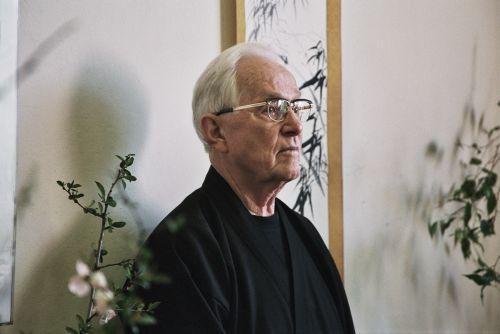
Hugo Lassalle was a German Jesuit who came to Japan as a missionary in 1929. In 1935, he was appointed Mission Superior and stationed in Hiroshima. There, professors at Bunrika University convinced him that to understand the character of the Japanese people he needed to understand Zen Buddhism. He was not particularly familiar with Buddhist theory at the time, but the traditional description of Zen was intriguing:
A special transmission outside the scriptures;
Not dependent on words or letters;
By direct pointing to the mind of man,
Seeing into one’s true nature and attaining Buddhahood.
When war broke out in 1939, Lasalle remained in Japan. He was sympathetic to the populace which endured enormous sufferings during the conflict, and he admired the strength of character that Zen monks and lay practitioners exhibited in the face of those hardships.
In the spring of 1943 Lassalle attended sesshin for the first time at Eimyo-ji outside Hiroshima. It was a significant step in the development of Western Zen. There had been a handful of Zen students in the west already, but they practiced as Buddhists. Lassalle’s unique contribution was to question if Zen were as it claimed “a special transmission outside the scriptures” could it be a practice available to people who did not subscribe to doctrinaire Buddhism?
Lassalle was in Hiroshima when the atom bomb fell on August 6, 1945. 80,000 persons were either killed immediately by the blast or in the firestorm that followed. The priests’ residence was destroyed, and Lassalle was seriously injured. The scope of the devastation wrought by the nuclear explosion, its impact on civilians as well as the military population, deepened Lassalle’s sense of solidarity with the Japanese people and was a factor in his decision to become a naturalized citizen after the war. He did so in 1948, taking the Japanese name Makibi Enomiya. “Enomiya” was the name of a Shinto shrine in Hiroshima, and Kibi no Makibi had been an 8th century Japanese reformer. For the remainder of his life, the Jesuit signed his name “Hugo M. Enomiya-Lassalle.”
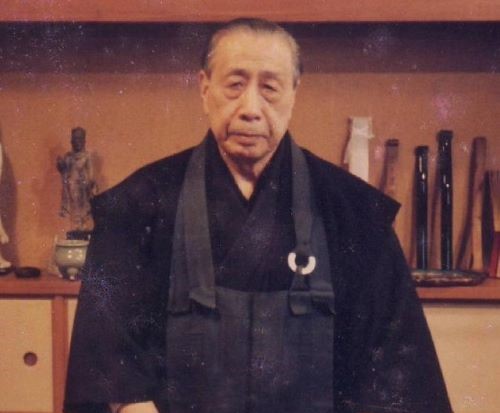
Koun Yamada
After the war, Enomiya-Lassalle continued his Zen practice with Daiun Harada and, later, Hakuun Yasutani, who authorized him to teach Zen to others even though he wasn’t Buddhist. In the 1970s, Yasutani’s heir, Koun Yamada, gave Enomiya-Lassalle full transmission, recognizing him as an awakened Zen teacher and a fully authorized teacher in the Sanbo Kyodan tradition. When Westerners, including priests and nuns, asked Lassalle about Zen, he directed them to Yamada’s zendo. A surprising number of Catholic missionaries did study with Yamada, who routinely told them that he had no intention in converting them to Buddhism but that he believed Zen could make them better Christians. One of those priests was an American Jesuit named Thomas Hand.
§
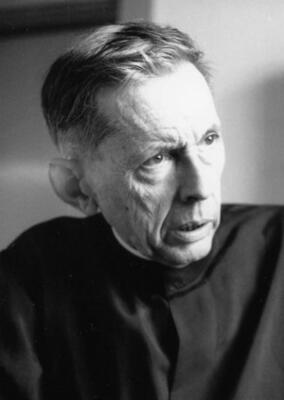
Thomas Hand spent nearly thirty years in Japan beginning in 1953. During that time, he came to view the West’s encounter with Buddhism as a major factor in “the advance and evolutionary revitalization of Christian spirituality.”[1] In this, he went a step further than Enomiya-Lassalle and in later life did not hesitate to call himself a Buddhist-Christian.
He had been raised in rural California and felt drawn to religious life while very young. He had given thought to becoming a Trappist monk while in high school but was unsure how to go about doing that, so instead entered the nearby Jesuit preparatory school – Bellarmine – where some of his elementary school classmates were already enrolled. He admitted that to some extent he had just been following his friends, but it proved to be a good fit.
After ordination he was sent to Japan and was eventually assigned to the Kamakura language school where he was appointed the students’ spiritual director. Japan, he felt, was a country where people not only had different cultural institutions but seemed to have a different consciousness as well. For a long while, however, he had difficulty defining where that difference lay. After reading Enomiya-Lassalle’s Zen: A Way to Enlightenment, he wondered if Zen training might help him get a better feeling for the unique consciousness he sensed. Enomiya-Lassalle’s teacher, Koun Yamada, lived in Kamakura, and Hand sought him out. It was not a rash decision on his part; he had been in Japan for more than fifteen years before he took this step.
When Yamada asked Hand what his aspiration was in taking up Zen practice, and Hand admitted he wasn’t entirely sure. He was, he explained, a Roman Catholic priest and had no intention of becoming Buddhist or changing his vocation. Yamada told him that was quite all right. There were two types of Zen practice, Yamada said. “The first is really strict Buddhist Zen. You have all the statutes and everything else like that; you follow all the Buddhist teaching and everything. And then there is just pure Zen. You will follow that, and that will make you a better Catholic.”
Hand did not find zazen easy. The sitting was painful, he was shy about being in groups, and he didn’t have a strong enough command of the language to always be able to understand what was going on. But he felt it was important, and he persisted. It was not a pleasant experience, but it proved to be rewarding. Whereas the long, careful Jesuit training he had gone through had focused on academic studies – had been, as Hand expressed it, head-oriented – Zen practice brought one down to the gut, to the primacy of physical experience. Hand encouraged students at the language school to consider Zen practice as a means of deepening their spiritual lives.
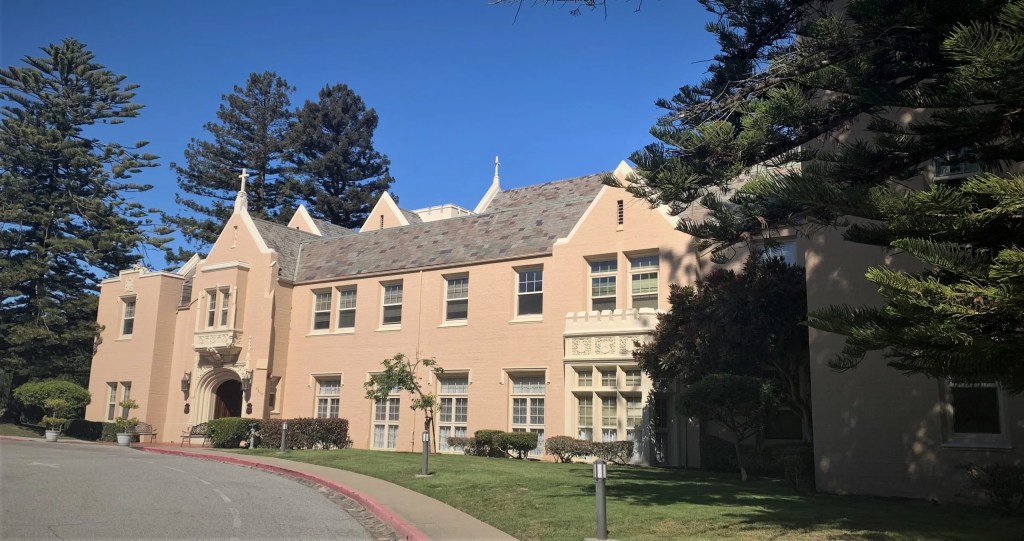
As it turned out, he returned to the United States before completing his Zen training and was never formally authorized as a Zen teacher. In 1984, he joined the staff at the Mercy Center Institute of Contemporary Spirituality in Burlingame, California, where for the next twenty years he served as a retreat director and spiritual guide. He established the East-West Meditation Program there which provided more than meditation instruction. Buddhism speaks of “upayas,” the variety of “skillful means” by which the Dharma can be presented. Zazen – seated meditation – is one upaya, but there are others.
Hand had been fascinated with haiku while in Japan, and, in the language courses he taught, he’d had his Japanese students compose haiku in English as a means of improving their command of the language. In California, he taught his Christian retreatants to compose haiku as a spiritual activity. Traditional Japanese haiku consist of three lines of five, seven, and five syllables respectively. The brevity does not allow for the development of intellectual concepts, but it does allow the poet to present, effectively and often beautifully, a concrete experience. Hand told his students that good haiku were “direct experience directly expressed.”
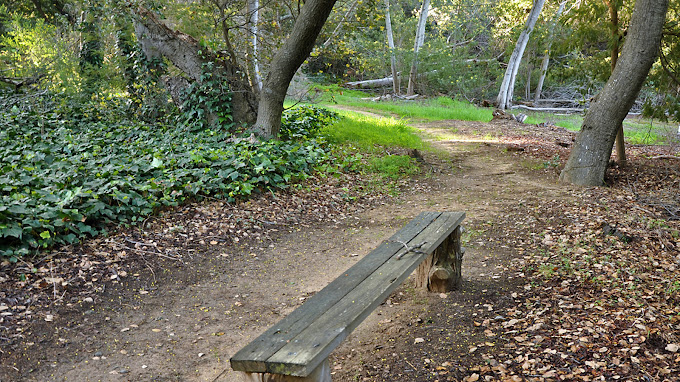
In addition to seated meditation, Zen students do walking meditation, a practice which emphasizes that focused attention is not to be limited to the time spent on the cushion but can and should extend to all activity in which one is engaged. On the grounds of the language school in Kamakura, Hand had cleared a walking trail through a forested region. He designed and cleared trails at the Mercy Center as well.
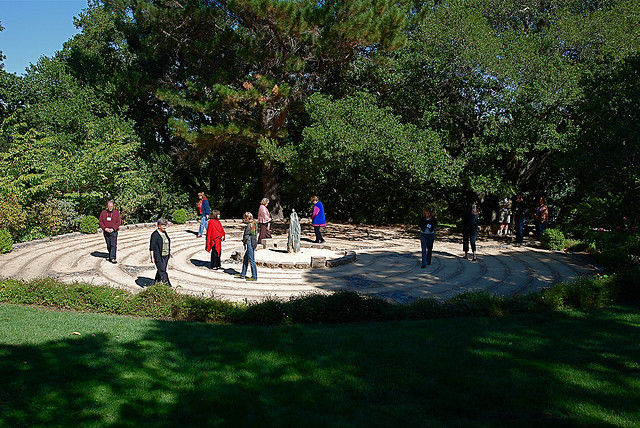
Seated meditation (zazen), walking meditation, and haiku composition were all intended to promote mindfulness. The more mindful one is of one’s activity and surroundings – including those other persons with whom one interacts – the less one is conscious of the personal self. The less that sense of self intrudes, the more one is aware of one’s interconnectedness with the totality of Being. As Hand puts it, “– Zen is primarily concerned with the self/Self. We are to forget the self, come to the Self and ultimately to the self/Self.”
The term “self/Self” is Hand’s awkward attempt to emphasize that the “essential Self” is not just another category opposed to the “individual self.”
If the one Self is just an “other” category, then it is distinct from the phenomenal self, and our separation is only compounded. The Self is not some thing or some one that is in opposition to our self. Each one of us is simply self/Self.
Although the contrast with traditional Christian spirituality is obvious – the focus of western spirituality is on seeking not the Self but God – Hand insists that “it comes to the very same process.”
By the time he returned to the United States, Hand’s time in Japan had transformed his understanding of his Catholic faith. He noted three elements in particular. First, his loyalty to the church was no longer determined by his loyalty to canon law. Second, his loyalty to Christ was not dependent on loyalty to Church dogma. And finally, his understanding of God had so changed that he could no longer think of God as a person in the way God is generally portrayed in Christian doctrine. To identify God as a person, Hand now believed, amounted to limiting God to a particular category of being.
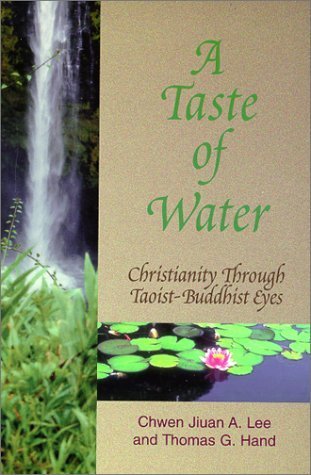
In the late 1980s, he co-wrote a book entitled A Taste of Water with Chwen Jiuan Lee. Lee was a Chinese convert to Catholicism who had become a nun in the order of the Sisters Missionary of the Immaculate Conception, where she was known as Sister Agnes. In the book, Hand recounts a moment after he had begun his Zen training – and “the whole Zen world, which was still so full of enigma to me, had begun its powerful impact on my consciousness” – in which it suddenly occurred to him very powerfully that “God was different,” by which he meant that God was different from whatever one imagined God to be. There is no category which could be applied to God, including the fundamental concept of “other.” Even to consider God as an entity – for lack of a better word – of an entirely different order than the universe was inadequate:
– when we conceive of an actual distinction and relationship between God and creatures, we are in effect putting God into a category separate from the creature category. To separate the formless and forms (its manifestations) into two is to place the formless into a category. True, God’s category is called “infinite” and “absolute,” but nonetheless it is a category. We have given boundaries to the boundless. The east would say that such a conception of God is a product of relational experience. That it does not spring from the ultimate experience of the actual God. The real God is different from all such categorization. In the final experience of God there is no question of separation, distinction or relationship. The distinguishing intellect is useless and gives way to that intuitive seeing which is best described as being . . .
– in the western spiritual traditions, especially in their popular form, there is a strong tendency to conceptualize God. These concepts become dogmas and take on paramount importance. It is the opinion of most eastern masters that this conceptualizing, dogmatizing tendency, although somewhat helpful, is actually dangerous and can easily create real obstacles to the experience of God.
For Hand and Sister Agnes, God is not “a separate reality ‘out there.’ Rather . . . God [is] the absolute commonality found in all relationship, person to person, person to thing, thing to thing.” In this understanding, individual persons – in Sister Agnes’s words – are “manifestation[s] of unrestricted being” which is the true or essential Self one is unaware of because of one’s sense of being an individual.
Thomas Hand died in 2005, shortly before what would have been his 85th birthday. The East-West Meditation Program has since been maintained at the Mercy Center under the direction of Greg Mayers and his Dharma heirs.
[1] Chwen Jiuan A. Lee and Thomas Hand, A Taste of Water (New York: Paulist Press, 1990), p. 67. Cf., the suggestion of the British historian, Arnold Toynbee, that “The coming of Buddhism to the West may well prove to be the most important event of the twentieth century.”

