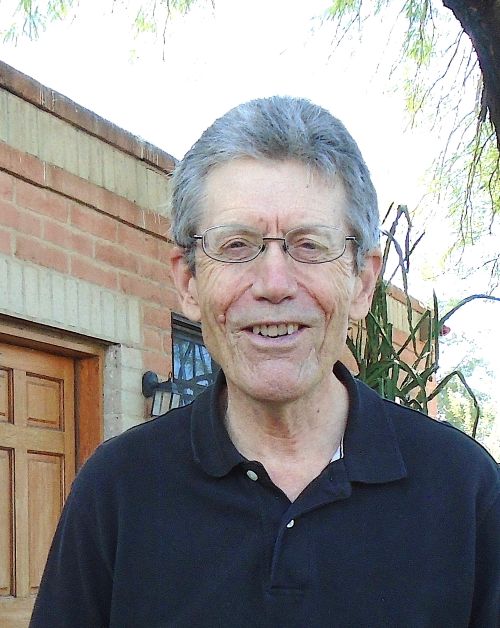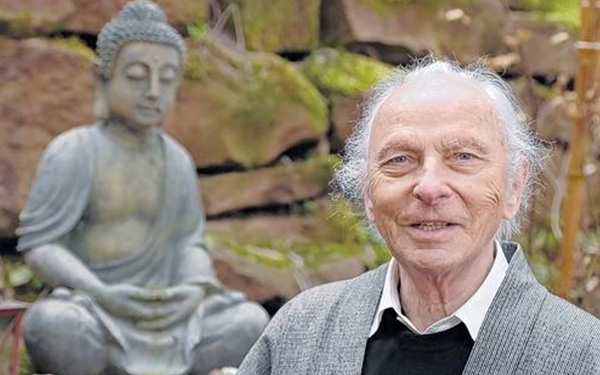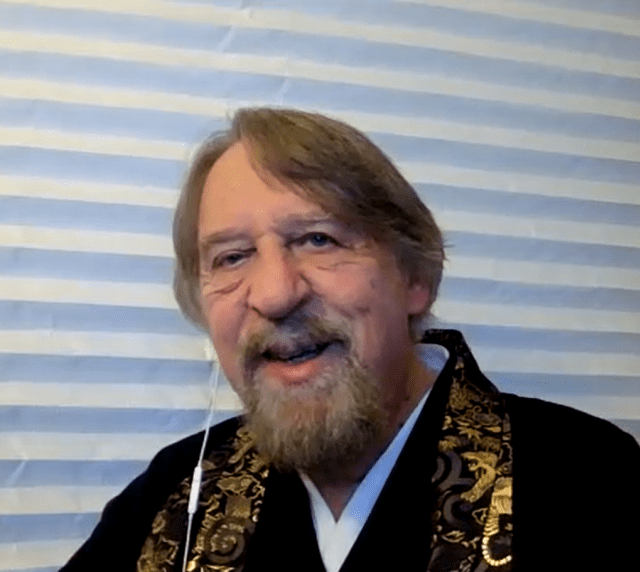
Don Stoddard

Memories of Robert Aitken –

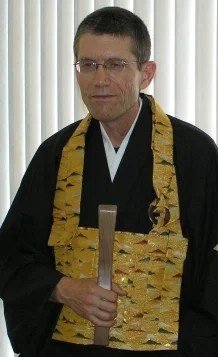
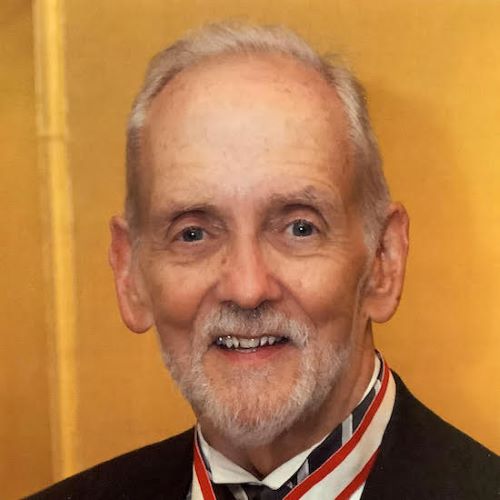
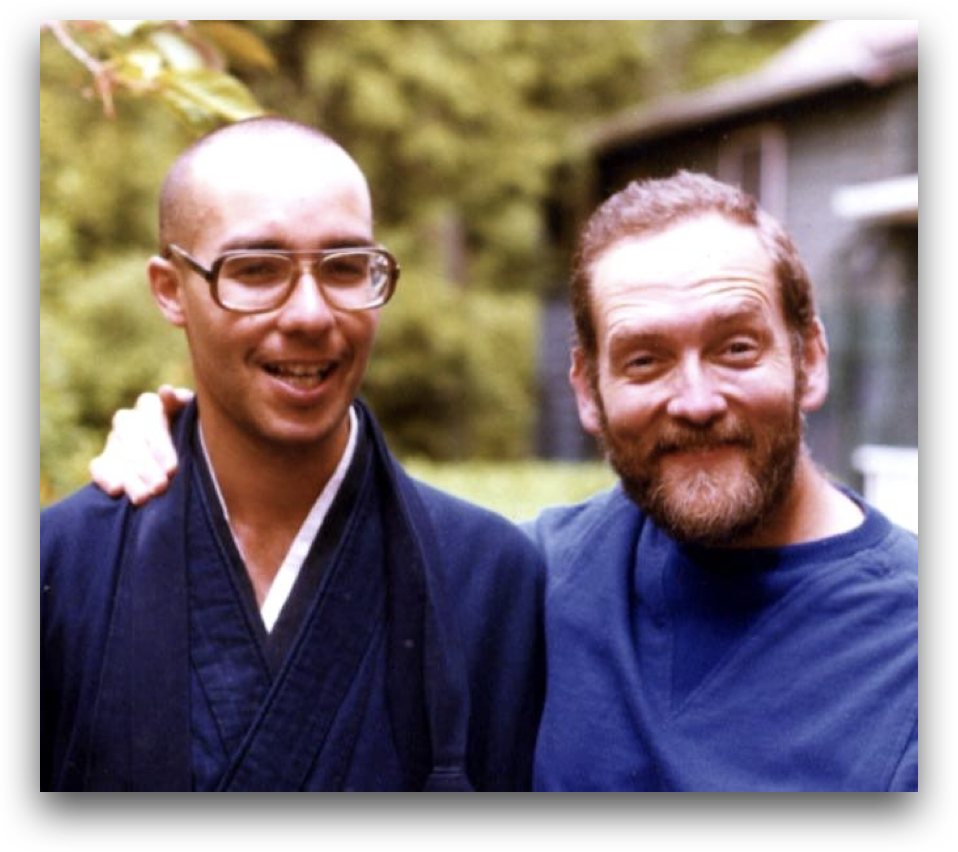
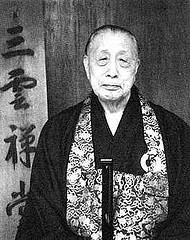
“I’ve been a member of the Diamond Sangha since 1966 when the term referred only to the group practicing in Honolulu,” Don Stoddard tells me. “Now the term embraces groups in many places around the World.” He had also been personally involved with much of the construction work that took place over the years both on Oahu and Maui.

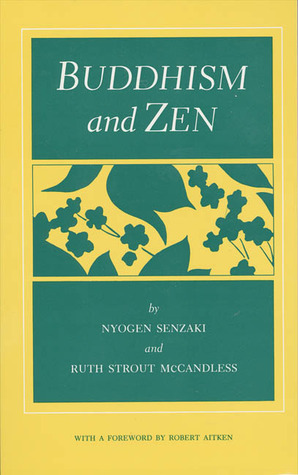
Don was born in 1937 – a decade earlier than me – and first learned about Zen in the 1950s. “When I graduated from high school a friend of the family gave me a copy of a small, hardbound book called, Buddhism and Zen which was a collection of pieces translated, compiled, and edited by Nyogen Senzaki and Ruth Strout McCandless. It was originally published in 1953 by the Philosophical Library and reissued in a paperback with a foreword by Aitken Roshi a few years ago. So, this was given to me in 1955. I read it through, and it was my first taste – you might say – arousing an interest in Zen. Then, when I was between my sophomore and junior years in college, a collection of D. T. Suzuki’s essays came out in a Viking paperback edited by Bill Barrett.”

In 1960, he was in graduate school but decided, “I’d had enough years of going to school. In those days eligible males faced the possibility of being drafted if they were not in school. The military obligation was ten years. There were various ways of dealing with it, but, for me, the most appealing way was to join the Navy, go to OCS, become an officer, do three years of active duty, and then the seven remaining years would be in the reserve. It happened I had a choice in what type of ship I would be assigned to and what home port. So, I called my wife, who was still in North Carolina where I’d been in school, and asked, ‘Where would you like to go?’ And we decided on Hawaii.

“When I completed my active duty, I stayed in Hawaii. I was already practicing Zen a little bit on my own based on my reading. One day at a Honolulu bookstore there was a copy of Philip Kapleau’s Three Pillars of Zen. I bought it and read it through and thought, ‘There must be other people here engaged in this practice.’ I checked a couple of the established Zen Buddhist Temples, but there was no sign of an active zazen practice going on. I wrote to Philip Kapleau care of his publisher telling him my situation. Very quickly I got back a postcard and it said, ‘Contact Robert and Anne Aitken. They’re in Honolulu.’ With a phone number. I called the number right away. Anne answered. I told her what I was looking for, that I had been sitting on my own, and was looking for a group to practice with. She said, ‘Well, we’re sitting tonight. Why don’t you come up early and speak to Bob, my husband, and he’ll talk to you and show you what the forms and procedures are.’

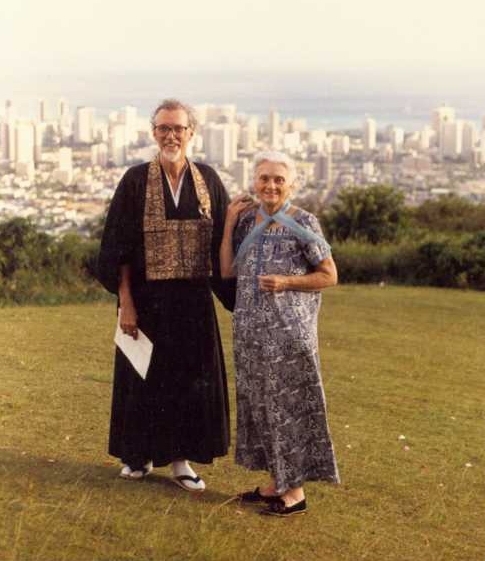
Bob and Anne Aitken

“Koko-an, the Aitken’s home in Manoa valley, was about a fifteen-minute walk from where I was living. I went early, met Bob, told him I’d already been doing a self-assigned Mu as a practice, and he said that was fine. At that time there were public practice meetings on Sunday and Wednesday evenings. However, every weekday morning the front door would be open at 6 a.m.” Don got into the habit of joining the Aitkens and a few others for those morning sits before heading out to the boatyard where he worked.

“Bob and I got along well, but he was twenty years older, and his formative experiences were quite different from mine. He’d been a prisoner in Kobi during the war, seeing Japanese families with their belongings on their backs escaping from the bombing and the destruction of everything in their lives left a lasting impact on him. His pacifism was very deep, very serious. He counselled people who were resisting the draft during the late sixties. There was a close connection with the Quaker community in Honolulu. One of the main reasons the Aitkens bought this old farm building that became the first Maui Zendo was because of his sympathy for the many young people kind of – what do you want to say? – drifting, seeking, looking for something. So, for Bob, the move to Maui was partly to set up a kind of environment, a kind of community, a kind of support for people who were seeking, who were open. And one of the things many of them were interested in – or at least had heard about – was this meditation practice, this Zen.”

There were two branches of the Zen group practicing now, an older one still associated with Koko-an in Honolulu and the newer Maui community.

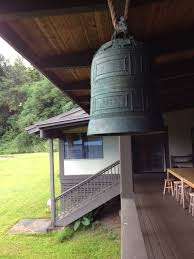
“I had been involved in the planning for the move to Maui as a Board member of the official organization that was being set up to facilitate the legal aspects. Making use of a book put out many years earlier on how to grow vegetables in Hawaii, I drew up a planting plan that was used on a portion of the new property. I made a suggested daily schedule of activities. For some reason, at the time, I thought it was important to have the wakeup bell while it was still dark at all seasons. I collected information on various ‘craft’ projects that might be produced by residents for income. And when the Aitkens moved there in the fall of 1969, I purchased land a few miles away and began to build a home.”

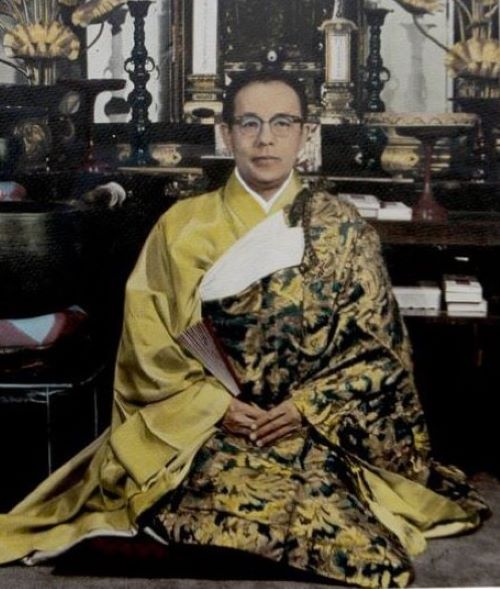
Koun Yamada

He continued to work in Oahu, however, and travelled back and forth, so he was not present for all of the changes that took place once the Maui Center was established. Chief among these was that Aitken – who had seen as a “elder brother” in the practice until this point – was given authorization to teach by Koun Yamada in 1974.

“Part of the intention in moving to Maui was to provide a supportive residential setting for these young people who were searching for something. Eventually the Maui Zendo developed a reputation for being a particularly – and I will use a word they might use – ‘spiritual’ place. I met all kinds because in those days on Maui you gave people rides when you could. So I’d be giving people rides, and they would tell me stories about how they came there. Sometimes they would have heard of the Maui Zendo and want a ride there. And then they would often ask what my ‘sign’ was. And I’d make up a sign, and they’d say, ‘Of course, I would have known you’d be such-and-such.’ You know? And then they’d explain why you’d demonstrated all these characteristics associated with that sign.

“Then that period began to die down, and there weren’t so many people that were coming and going on the road. Between 1972 and 1977 my contacts with the goings on at the Maui Zendo were episodic. I might get a call from Roshi or his wife, Anne, to help with some practical matters. But I was often on the Big Island or in Honolulu doing boat designing or building.

“The next major change came when there was an opportunity to buy a large house on a hill about one mile from the original Maui Center. It was rumored to have been a brothel during World War II. There was a large room that would serve well as a zendo, a number of small rooms in a row for residents, and a large kitchen. There was a large, covered porch. Parts of the structure were unfinished. One wing still had dirt floors in the rooms. Roshi asked me, because of my building experience, if I would do a survey and see if it was structurally sound or if they would be buying major problems. So, I did, and the purchase was made. That building then became the Maui Zendo and the older one became the Aitkens’ home.

“There were many jobs to do on the new Zendo and there were many sangha members who came to help as we poured concrete over the dirt to make solid floors, put a new roof over the large porch, replaced much of the water piping, replaced some rotten structural framing. There were always people in residence, but quite a few of the members now were at an age when marriage, or education for a career, or starting a career were beginning to affect the time that they could devote to sangha matters. Some had set up their own households and came for practice and workdays but were no longer in residence when a lot of maintenance had to get done.

“Meanwhile, the Honolulu sitters at Koko-an had grown and solidified around a group of dedicated students. When Aitken Roshi began to lead sesshin he would, in addition to holding them in Maui, go to Honolulu and provide practice opportunities there. There was a multi-year transition period where the group in Honolulu was becoming more active. People would come there to practice including some that may have begun on Maui but moved to Honolulu for educational or work opportunities. Roshi would go back and forth to lead events in Honolulu and lead events in Maui. He and Anne were still going to Japan regularly to continue practice with Yamada Roshi.”

The Aitkens eventually moved back to Honolulu, but they were also getting older. “Koko-an was being used as the practice center. It was still their home though for many years they had been donating a percentage of the property to the Diamond Sangha. But the overall layout made it less suitable for an older couple to share with an ongoing residential practice program.”

The Aitkens eventually rented a house “– that was just around the corner from Koko-an. Roshi could walk over for zazen. It was less than half a block. That seemed ideal. They were there for a while, and then that owner decided there was enough room – if he dug out from under the building, in the crawl space – that he could fit in another whole rental unit. Some of these old houses were built up on posts kind of high. So they came in with their excavating equipment and started digging. The house where the Aitkens were living kept changing shape. Anne might, one morning, go into the kitchen to open a cupboard door, and it wouldn’t open anymore because the house was settling. And the next day she’d go to shut the front door, and the door wouldn’t stay closed. At the same time, dust was coming up, and Roshi had had asthma and lung trouble of one kind or another since he was young. It became a terrible place for them to live.

“Eventually, a group of us said, ‘Look, this is wrong.’ Anne was seven years older than Roshi, so by now she is in her mid 70’s. We said, ‘This is just not right. Let’s find another place we can purchase so there will be no more moving around.’ I suggested, and others agreed, we look for a piece of property, and we’ll just build something. That way we can build something that had always been a dream of Roshi’s from an earlier time of having a place where he and Anne could live and other people, including families, could come and live too. He had this image from somewhere. I knew what he meant because in New England – where I grew up – there were these summer campgrounds, often religiously associated. They’d have a little church, and then they’d have cabins spread around. And church members would come, and they’d live in the cabins for the whole summer or part of the summer. An arrangement like that for Zen practitioners.”

Don found the appropriate location by accident. He was driving around the area “and I found a realtor sign that had fallen in the weeds. It was a 13 acre parcel a group of investors had tried and failed to develop for multiple houses. It was one valley over from Manoa, Palolo Valley. The investors had been blocked in their building plans because the water pressure in the nearest hydrant was too low for the fire department to be able to provide protection. If they built a reservoir for a million or more gallons on the property, then the fire department would sign off on their plans, but that requirement made the project uneconomical. I went to the fire department and asked, ‘If I put in an approved sprinkler system will that satisfy you folks?’ They said, ‘Yeah, sure. A sprinkler system’s fine.’ So, we bought the property.

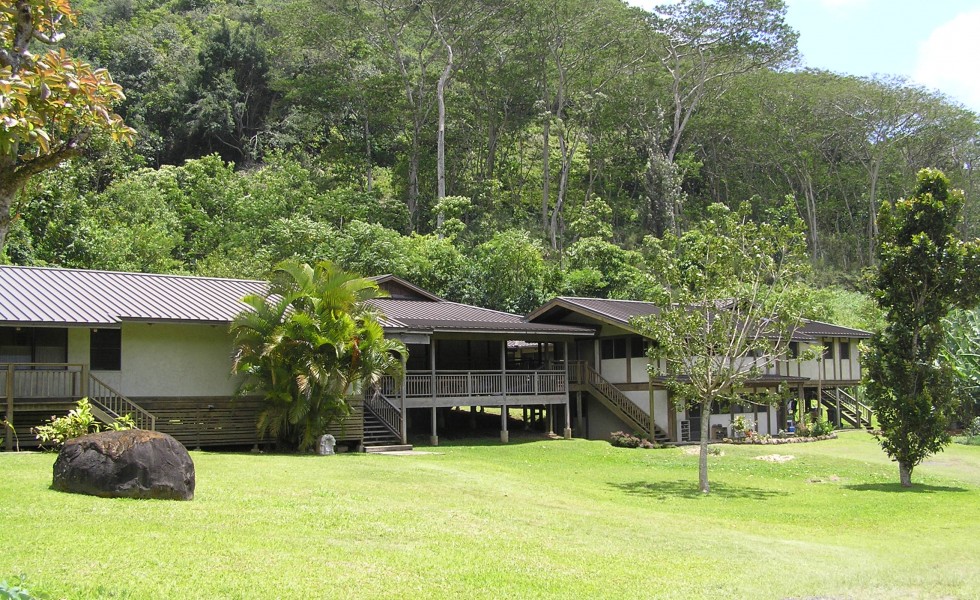
“There were a few other hoops to jump through on zoning and some things with the water department, but we settled all that, and over a period of six years built the Palolo Zen Center, which is still the home of the Honolulu Diamond Sangha.”

Anne died in 1994, and Bob retired a year later. With Don’s help, he located a property near his son’s house on Kaimu Bay.

“His son, Tom, was a public-school teacher, and his mother, Roshi’s first wife, who was bed-ridden, lived with him. Then Tom decided to move back to Honolulu. Roshi at this point had an attendant to help manage things, but he had had some health challenges in recent years. Though a group of us would drive out to sit on Sunday morning, being there in Kaimu he was sort of isolated for most of the week. When he decided to sell and move back to Honolulu a sequence of events occurred. He slipped and had a fall. He probably had had a small stroke, as it turned out, and at that point he was in a wheelchair.”

Aitken had to move into assisted living for a while

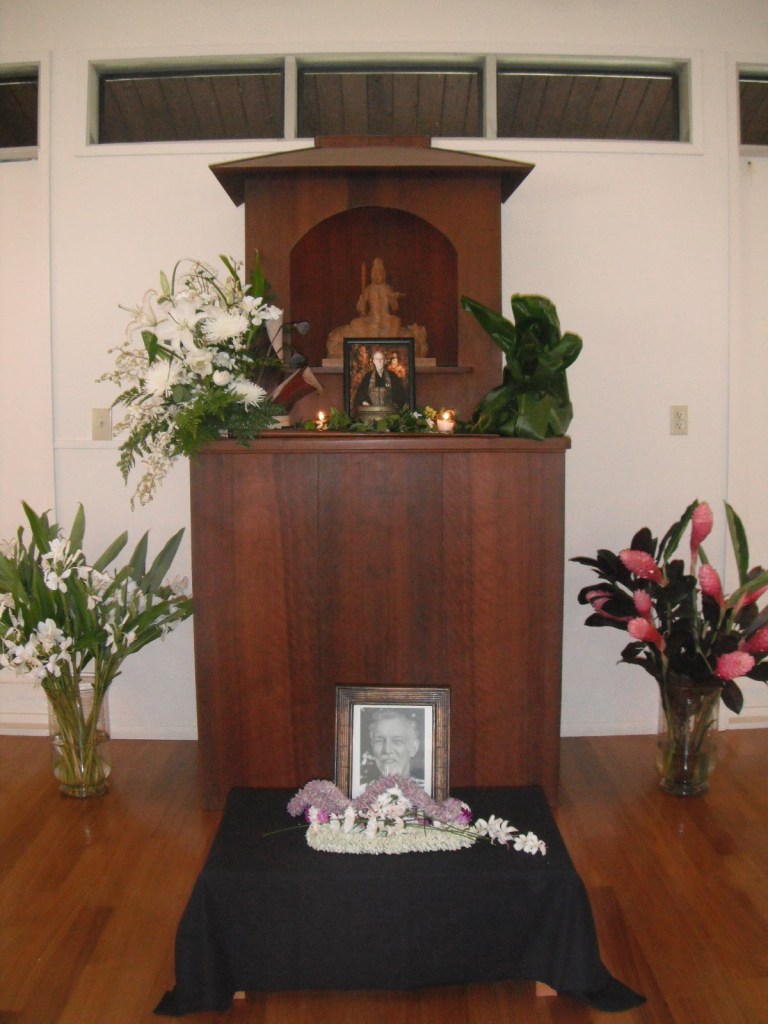
“The place he stayed when he went back to Honolulu was a very nice location with different levels of assisted living. But there were problems that may have been related to his recurrent lung infections. I really don’t know any details. I was in Hilo and got irregular reports. But I felt, as did others, why isn’t there a way that he can live back in the residence we’d built for him and Anne at Palolo? Participating in practice, surrounded by friends and Zen students. Eventually things were worked out and with three Tongan woman as aides to help him with his daily activities he was able to remain there except for some hospitalizations due to lung infections, the last of which ended his life.”

Robert Aitken died in 2010.

Don is still active with the Diamond Sangha. He is a member of the Diamond Sangha Teachers Circle and a practice guide with the Hilo Zen Circle.

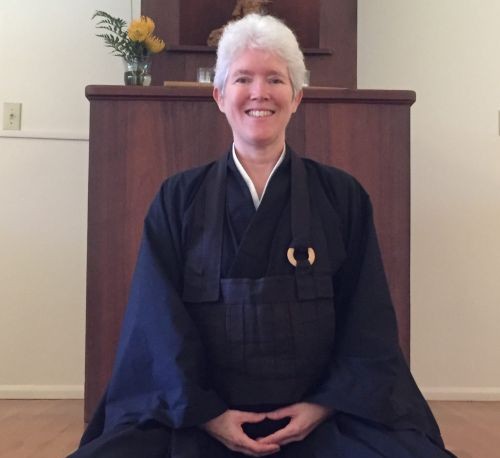
Kathy Ratliffe

Honolulu Diamond Sangha –

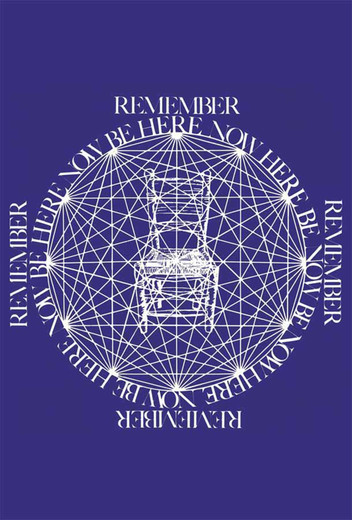
“I was one of those people who in adolescence started looking for truth,” Kathy Ratliffe tells me. “Read Be Here Now.

Be Here Now had been written by Baba Ram Dass – formerly Richard Alpert – who, along with Timothy Leary, had pioneered the use of psychedelics as a means to attain spiritual awakening and had been fired from Harvard for doing so. The primary section of the book consisted of a series of complexly illustrated pages describing the process of spiritual transformation. A friend and I developed our own posters of those pages for a public presentation when I was in college.

“Yeah,” Kathy continues. “It opened my eyes to the fact that there was possibly something there somewhere that I needed to know or find out about or discover.” She attended Oberlin College where she studied Religion. “They made us study all the religions, Western religions as well as Eastern religions. I minored in East Asian Studies and got to study Japanese language and history and Chinese language and history, which was great. But then I realized when I graduated that I didn’t want to teach religion, I wanted to figure out what it meant. So, I kept looking.”

She also took up aikido and was teaching it by the time she graduated. A friend taught aikido in Rochester, New York, and after graduation Kathy moved there to continue her practice.

In Rochester she met Mrs. March. “I never knew her first name. She ran the Rochester Folk Art Guild and was the leader of this group that was based on the ideas of Gurdjieff.”

George Ivanovich Gurdjieff was an Armenian spiritual teacher who had died in 1949, but whose work became popular again in the 1960s.

“Mrs. March was very kind, and I went down there and explored it for a while. And basically what she said was, ‘If you believe what we tell you, you can join our community.’ And I said, ‘No, thank you. I’m not interested in anything that anybody can tell me. I need to find out for myself.’”

The friend she had been staying with in Rochester attended an orientation session at Philip Kapleau’s Zen Center. “So I went to an orientation there, and they literally said, ‘Don’t believe anything that we have to tell you. Here’s a way for you to find out for yourself.’”

She arrived as Kapleau was preparing to leave Rochester and retire in Santa Fe.

“He made Toni Packer the new teacher there, and all of the new students – of which I was one – went to Toni instead of to Kapleau for teaching. So I started practicing with Toni and doing sesshin with her. And I thought she was great. I was working on koans with her, but then she decided that she didn’t really want to work on koans anymore, or in the same way. She didn’t want to teach in a Buddhist context. So she moved out of the Zen Center, and there really wasn’t a teacher at that point so I went with her. She started teaching out of a Girl Scout camp, and we were holding retreats there. And I got more and more uncomfortable with working with her because she wasn’t using koans in the way that I was used to.”

Her personal circumstances were also changing. “My husband and I decided that I needed to develop a profession and work on my career, work on who I wanted to be. And neither of us were comfortable working with Toni in the way that she was working. We both loved Toni as a person, but . . . So we decided to wend our way to Hawaii and see what Aitken Roshi had to offer.”

That seemed a pretty big jump, so I ask if we could back up and fill in some gaps.

“First of all,” I say, “What was Philip Kapleau like?”

“I didn’t know him well.”

“But you had some sense of him.”

“Yeah. He was kind of a curmudgeon. I went to dokusan with him once, and he asked me what my practice was, and I told him, and he said, [in gruff tone] ‘Who gave you that?’”

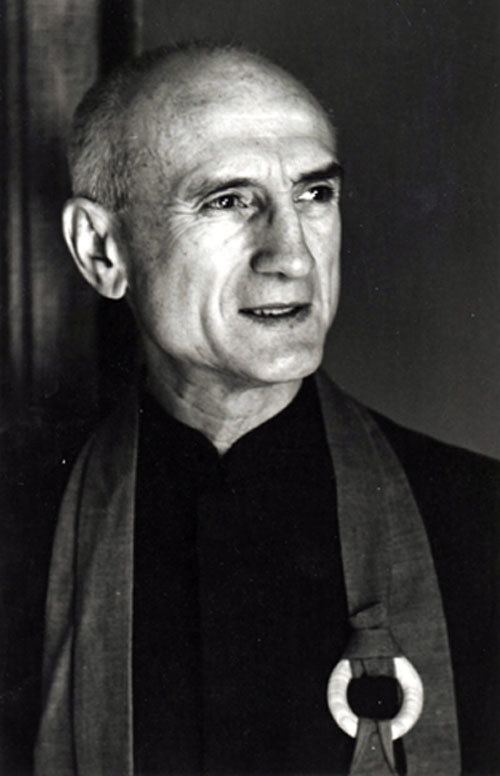
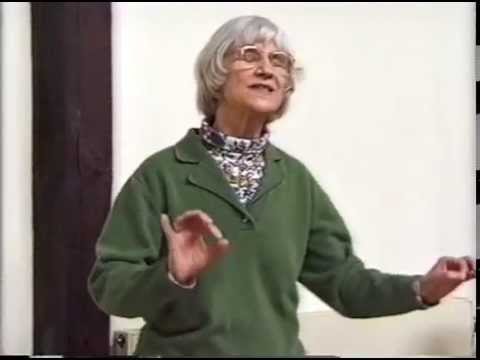
Toni Packer

“And you said you and your husband loved Toni.”

“We did. She was very sweet. She was supportive and kind and really present. She was an excellent first teacher for me.”

Kathy began her koan work with Toni.

“And it was because she changed her approach to koans that you became uncomfortable?” I ask. “Can you explain what the change was?”

She pauses for a while. It is a characteristic I had noted with teachers who continued in Toni’s wake, to consider a question carefully before responding.

“My sense was she was more interested in how people applied insights to their lives rather than through a more traditional Zen perspective which is seeing clearly into the point and being able to express that. So I just . . . I wasn’t sure that I’d really gotten the point. And I was quite young, afraid to ask questions, so I just accepted whatever she told me without questioning her about it. That was uncomfortable.”

“Then you said you and your husband decided you needed to develop a profession.”

“Right. My husband’s a nurse, and I thought, ‘I need to find something to do.’ I had been working in a tofu shop with some members of the Rochester sangha. I loved working there, but I decided it was time for me to look at what I really wanted to do. I decided to become a physical therapist.”

They had read Robert Aitken’s book, Taking the Path of Zen, and were aware of his sangha in Hawaii, so she chose a college that would bring them closer to him. She was accepted at Stanford.

I ask if they’d thought about the San Francisco Zen Center, which would have been less than an hour away.

“San Francisco is in the Soto tradition, so we weren’t tempted. We did visit there when we were living in Palo Alto, but we wanted to do koan training. And Robert Aitken was in the same lineage as Kapleau, so we thought, ‘Okay. That’s a decent fit.’”

I ask what Robert Aitken was like. She chuckles softly but doesn’t say anything. I mention I’d been told that he could also be a bit curmudgeonly from time to time.

“He wasn’t as much a curmudgeon as he was a bit socially awkward. He was very kind and sweet. But he was a little bit . . . He tried really hard to control showing what he felt in meetings and things, but he was always making facial expressions about how he felt about what was being discussed, and we would all kind of chuckle. But he tried very hard not to influence us as a group, but he couldn’t help it.”

Michael Kieran said almost the same thing, that Aitken Roshi was committed to collaborative decision making, he just wasn’t very good at it.”

“Yes! Exactly.”

She has fond memories of him. “One time I was hospitalized for an acute illness, and Roshi and his wife Anne came to visit me in the hospital. He used to give us books to read, Zen books, when he was finished with them. He was a generous man. He and Anne threw a baby shower for me when I was pregnant. We were still living hand to mouth at that time, and they generously gave us a car seat for the baby. It meant a lot to us. He cared a lot about sangha members and relied on his wife to know how to express that.”

I ask how similar Aitken’s Diamond Center was to Rochester prior to when Toni Packer disrupted things.

“It was quite different. It surprised us how different it was. There were structural differences. In Rochester we had 35-minute rounds, and at the Diamond Sangha there were 25-minute rounds. And so, of course, we thought, ‘Oh, these people must not be as serious!’ Then we realized there’s just as much zazen, just timed differently. Of course, we were practicing at Koko An then, which was a house in Manoa – a three-bedroom house – and we were sitting in the living room/dining room area, and you could only fit twenty people max. So it was a smaller sangha. And when we had sesshin, we had only two bathrooms in the house. So the women all shared one bathroom in the early morning, and we would all just lineup in front of the toilet, waiting for our turn. Line up in front of the sink, waiting for our turn. That’s just the way it was. The men all shared the downstairs bathroom. So – you know – it was very intimate. And there were only three bedrooms in the house, so we laid futons all next to each other. A lot of the guys slept in the zendo. So, yeah, it was very intimate and intense in that way. And there was a little cottage outside where Roshi and Anne stayed, and that’s where the dokusan room was.”
“Those are physical differences,” I point out. “Was the atmosphere or teaching environment different?”

“Well, Roshi Aitken was a different person than Kapleau, and in Rochester at that time – I think it’s changed a lot now – the kyosaku was used without you asking for it, whereas at Koko An, you always had to ask for it. There was a lot more emphasis on kensho and recognizing people who had had kensho in Rochester. There was a ceremony they went through only after they’d finished all of the Miscellaneous Koans, and then they received a rakusu. So anybody wearing a rakusu, you know they’d finished the Miscellaneous Koans.”

One difference I’d been aware of was that Kapleau discouraged political activity. He wanted his students to focus on their practice rather than on social issues, whereas Robert Aitken was very socially involved.

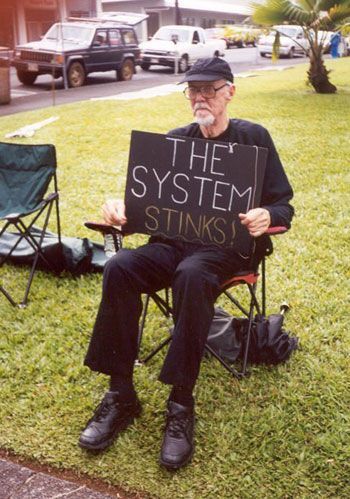
“He was,” Kathy says. “But he divorced it from his teaching. He invited us to do sit-ins with him and whatever, but he didn’t judge us either way, whether we went or not, and he always went. So he was out there sitting with his sign on the side of the road even with his wheelchair to the end. ‘The system stinks,’ and I was there next to him.”

“You joined him?”

“I did. I joined him a number of times. Protesting against the Iraq War, just standing on the side of the road with signs.  It was an interesting experience. He put himself out there. ‘This is what I believe.’ And – you know – he didn’t pay taxes for a long time because he refused to allow his money to support the military. He put the money into a special account, and I think he later had to pay it all. But he had strong convictions.”

“What was it that attracted you to all of this?” I ask. “You moved all the way from New England across the continent to Hawaii. What were you getting from it? What was it doing for you?”

“I just needed to know. From the time I was a teenager, I just knew there was something that I wasn’t seeing.”

“And Zen helped you address that issue?”

“It has. Yes.”

“How?”

Once again she reflects for a while before answering. “It’s my way of pursuing, trying to figure out for myself what life is about.”

“So a way to address certain questions you had, but how did it do that?”

“It was a way of looking at this, my life – what this is – in a different way through doing zazen that I couldn’t do any other way. I could see more clearly. Zazen helped me see more clearly.”

The Diamond Sangha is a lay group – “We don’t do ordination” – and she is currently a “Dharma Guide.” “It’s the equivalent of what other groups call an apprentice teacher.”

I ask how that came about.

“Well, I just kept practicing,” she says with a chuckle. “I practiced with Aitken Roshi when he was alive from about 1985 ’til he retired in 1996. And then Nelson Foster became our teacher, but he only came about three times a year because he was based in California. Then after about ten years, he invited Michael Kieran to be teacher, so I switched over to Michael. He’s my fourth teacher now. I’ve been working with Michael since 2005, and he invited me to be a Dharma Guide.”

Kathy with Michael Kieran

“How is Michael different from the other three? What makes him unique?”

There is another long, reflective pause. “The practice is pretty similar in the dokusan room. Michael is carrying this lineage with integrity and vigor. Nothing has been lost; there’s no watering down of the practice. Like Aitken Roshi and Nelson, Michael is fully committed to this teaching and to the Way. He is particular and exacting. I trust him. And he has gotten very involved in the sangha, looking at how everything we do supports our practice. In one example, he’s helped us develop a strong work practice – samu – in keeping up the place, making sure the place is clean and that the toilets are cleaned and the lawn is mowed. And it takes quite a lot of work. We have a large facility. And not only did it need to be done, but it is good practice. And it has worked very well. Not only has it helped our facility become a better physical place, it has helped our sangha come together and our practice come together. So that’s an emphasis that he has made. Not that the others didn’t do it, but Michael’s done it with some focus.”

The sangha members range in age from early 20s to those in their 70s.

“The aging hippies,” I suggest with a laugh.

“Yeah. But we really do span the range, and we are getting more younger folks. We have an orientation to practice that we offer once a month. During COVID we actually had to offer it twice a month because we had many, many more people interested in learning how to sit. But of the ten people who come to an orientation, maybe one will come back once or twice. And out of those, one of those will come back once or twice. Maybe one will come back and sit with us for a while. And out of those, only one will become a long-term member of the sangha. Only one percent.”

“It’s like that about everywhere,” I point out. “And I suspect it’s at least in part because they get what they want at that first orientation. They’re shown how to meditate, and that’s what they wanted. They don’t think they need to join a group to do that.”

“I think that’s right, and we emphasize Buddha, Dharma, Sangha in our orientations. I think the main reason people don’t come back is that practicing entails a lifestyle change. A change in your life. You’ve got to commit yourself to come at least once a week to sit with the group. And you’ve got to do longer-term sittings. You’ve got to do a zazenkai or sesshin to really practice. And it is a rare person who’s interested in changing their life to do that.”

I ask what she believes people look to her for now that she’s a Dharma Guide.

“Well, there’s a range, depending on where people are in their practice. Those who are working on advanced koans just want support working on their koan. Those who are new to the practice are looking for guidance. Guidance in their practice and also in their lives. Which aren’t that different. How do I deal with not knowing what to do in my life next? Or how do I deal with interpersonal difficulties? What do I do with all these emotions I’m feeling? They also are looking for guidance in how to practice. How do I stop getting carried away by these thoughts?”

“So they might come to you for the type of things somebody else might turn to a therapist for?”

“Right. The difference is that I try to provide a Dharma perspective to support them rather than a psychological perspective. The purpose of psychology is different than that of Zen practice.”

“And you? What is it that you hope for the people who work with you?”

“I hope that people will gain more insight into their own lives and be able to deal with the ups and downs of their lives. You know, I overheard Kapleau telling a story once in a gathering. It happened after Toni decided to leave, and he had come back. And there was a gathering. I think it was at the Ox Cart, Rafe Martin’s bookstore. I was standing next to Kapleau, and somebody asked, ‘How do you weather these difficulties? I mean, this is major what happened.’ And he said, ‘You just keep facing into the waves. Just like a boat. If you face into the waves, you can cut through the waves and not have quite as rough a time. If you go broad beam to the waves, you’re going to get tossed over.’ It really impressed me. I thought, ‘Oh, that’s an appropriate metaphor.’ So I hope people will learn skills to keep facing into the waves because life is going to continue to throw us waves. And if you let yourself be thrown by your emotions and all your thoughts and all the other things that assail you about change, it’s going to be very difficult for you. Whereas if you just face what’s there, that’s what is needed.”

“Has there been a continuation of Aitken Roshi’s political activism in the Sangha? Are there remnants of that legacy?”

“There is not. Although I think people feel very strongly politically individually. We are trying to address how people can include everyone and not get so one-sided in this divided world. Michael, I, and others are very interested in looking at Hawaiian culture, what we can learn from them. We have what we call a Dharma Studies series every year –the Robert Baker Aitken Roshi Memorial Dharma Study Series – it’s funded by royalties from Roshi’s books. And for the last couple of years we’ve invited native Hawaiian people who are very active in their culture and their community to share with us about the place where we are, Palolo Valley, and also about the Hawaiian culture. And it’s been fascinating.”

An implied question running through our conversation is to what degree Zen remains relevant for contemporary North Americans. As we come to the end, she tells me: “I think that people – especially people who are caught up in a lot of the online stuff today – need more grounding so they can see what’s important and what’s not important. And I think that Zen practice is a way to see through to who we are and how we can better operate in the world. By ‘better’ I mean how we can decrease anguish, sadness, our conflict with how we think things should be and how they are.”

It’s as good a reason to maintain the tradition as any I can think of.

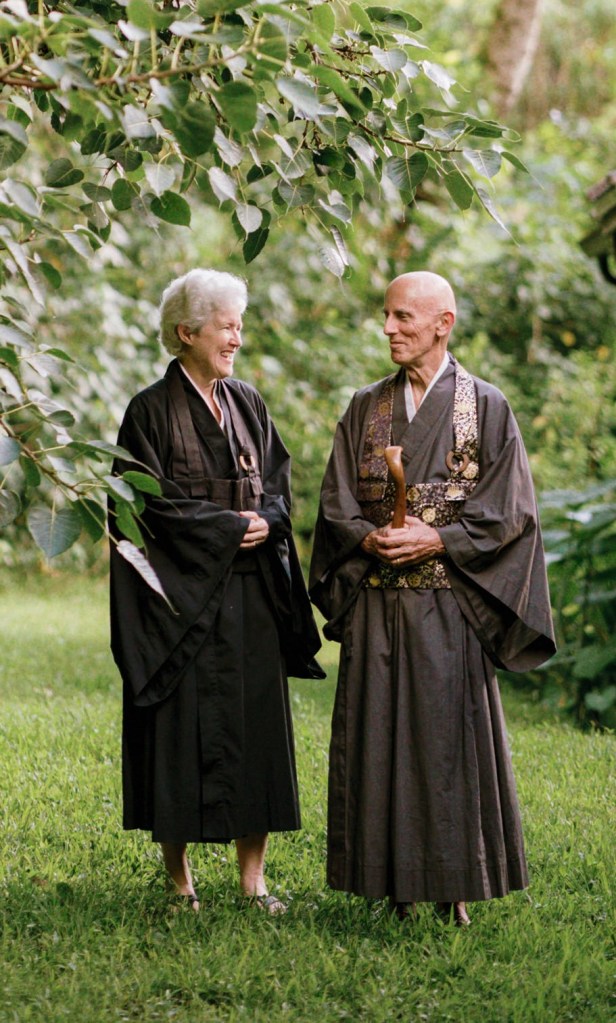
Robert and Anne Aitken

The Diamond Sangha

The day after the attack on Pearl Harbor, Japanese warships encircled the island of Guam. American military personnel posted there were outnumbered and surrendered without a fight. Robert Aitken, who had been working construction on the island, was among the civilians detained and transported to Japan as non-combatant internees.

R. H. Blyth

He was first incarcerated in the old British Seaman’s Mission in Kobe which had a library to which the detainees were allowed access. Aitken decided to make the best use he could of his imprisonment by improving his general literacy. The book that redirected his life, however, did not come from the library but was loaned to him by one of the guards. It was Zen in English Literature and Oriental Classics by Reginald Horace Blyth, who had taught English at the high school the guard had attended before the war.

Blyth’s Zen was literary. He didn’t practice zazen but valued Zen insight, which he believed was universal. In his book, he sought to demonstrate that Zen themes—such as the quest for enlightenment—were common throughout world literature. Zen, as he understood it, was found not only in China and Japan but as well “in Christ; in Eckehart [sic], and in the music of Bach; in Shakespeare and Wordsworth.”

It was an unorthodox approach to the subject but an ideal introduction for Aitken, who already admired Japanese haiku poetry. He reread the book so often that the guard, fearing the binding would break, took it back.

Coincidentally, Blyth was not far away in another camp for civilian prisoners where, in spite of his Japanese wife, he was detained as an “enemy alien.” In 1944, the prison camps in the area were combined, and Blyth and Aitken were housed together in the same complex. They met, and Blyth introduced Aitken to D. T. Suzuki’s Essays in Zen Buddhism.

Nelson Foster

Nelson Foster is one of Aitkens Dharma heirs and was his immediate successor as teacher at the Honolulu Diamond Sangha and its sister group on Maui. He tells me that, in a peculiar way, Aitken’s time as a prisoner of war was a period of personal growth. “He was fascinated by Blyth. Bob was a guy who’d flunked out of college. This exposure to literature through the super well-read and linguistically talented Mr. Blyth lit him up intellectually, and when he got back to the United States, he finished his bachelor’s degree, then went on to a master’s degree in Japanese literature. So in many ways, that time in Japan ignited Bob Aitken, turning him from a college drop-out to a fellow who found his feet in the world and really got started.”

After the war, Aitken earned an English degree from the University of Honolulu in 1947, following which he and his first wife, Mary, left for California where he planned to do graduate studies at UC-Berkeley. He remained interested in Zen, and when he heard about Nyogen Senzaki in Los Angeles, he and Mary relocated there, transferring his graduate study to UCLA.

His first meetings with Senzaki were discussions about philosophy and literature. Eventually, drawn by Senzaki’s personal manner, Aitken realized that what he wanted was not information about Zen but a way to develop the insight which animated Senzaki. The Aitkens joined Senzaki’s meditation group, and Senzaki assigned him, as a koan, Meister Eckhart’s statement that “the eye with which I see God is the same eye with which God sees me.”

In 1950, the Aitkens returned to Honolulu, where he completed his master’s degree at the University of Hawaii. When Aitken expressed an interest in returning to Japan in order to pursue further Zen training, D. T. Suzuki helped help him obtain a fellowship to do so. Mary had recently given birth to their son, Thomas, and remained in Hawaii.

Aitken took part in a week-long sesshin at Engakuji under the direction of Asahina Sogen. This was Aitken’s first experience of extended zazen. Although he was thirty-three years old and not very flexible, he was expected to sit in the traditional cross-legged posture for ten to twelve hours a day. There was no formal instruction given to the participants, although the monk seated beside Aitken in the zendo had responsibility for showing him zendo protocols. When they were introduced, the monk said, “How do you do? The world is very broad, don’t you think?” Aitken admitted later that he had no idea what the monk meant but was, nevertheless, charmed.

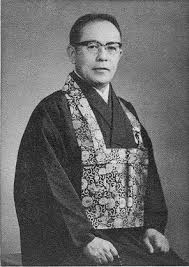
Asahina Sogen

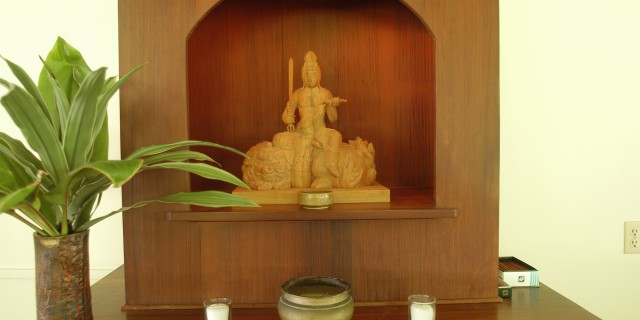
As the sesshin began, Aitken enthusiastically took his place on the tan (platform) where the monks were seated. The atmosphere in the zendo was all he had imagined it would be – incense burning, black-robed monks steeling themselves for the ordeal ahead, the sounds of the various clackers, drums, and bells, even the staccato chanting of the opening ceremonies – then the teacher got down from the tan and prostrated himself before the altar and the image of Manjusri, the Bodhisattva who oversees sesshin. Nine times, Asahina Roshi lowered himself to his knees and bent forward until his forehead touched the floor. Aitken was appalled to realize that he, too, was expected to prostrate himself before the statue. His western sense of dignity and a cultural aversion to idol worship rose up in protest. He had not fully comprehended until that moment that Zen was more than a psychological practice; it was a religion.

In the private interview called dokusan, he informed Asahina that Senzaki had assigned him the Eckhart statement as a koan, and Asahina told him, instead, to meditate on Huineng’s “Original Face” which, he explained, had the same intent. The koan demands that the student “show his face before his parents’ birth.” It was difficult to remain focused on it, however, because Aitken struggled both with the pain in his legs and rising doubts about the ritual elements of the sesshin.

He persisted, however, and, in December, returned to Engakuji to take part in the Rohatsu sesshin. Still unused to cross-legged sitting postures, Aitken found the ordeal even more excruciating than the November sesshin had been and, in desperation, thought to search elsewhere.

Soen Nakagawa and Nyogen Senzaki

Nyogen Senzaki had spoken of his friendship with the Zen monk and poet Soen Nakagawa. Aitken wrote to Nakagawa and received an invitation to visit Ryutakuji. The men shared an interest in haiku among other things and got along well. Nakagawa explained that it was not unusual for Zen students to attend sesshin at a number of temples and with different teachers until they found the one best suited to them. He suggested Aitken take part in the January sesshin at Ryutakuji.

The teacher at Ryutakuji, Gempo Yamamoto, felt that Aitken’s approach to “Original Face” was too intellectual, so he assigned the American Joshu’s Mu, which allows no room for rational analysis.

Gempo Yamamoto

Aitken later wrote: “I felt a little resistance to this change, but on returning to my cushions, I discovered what zazen really is. No longer was I aware that the cracks in the tile floor formed a weird pattern. I could sink at last beneath the surface of my mind.”

Once back in Hawaii, he needed to focus on earning a living and supporting a family; however, things did not work out well. His marriage unravelled and, after his divorce, he returned to Los Angeles in order to continue study with Nyogen Senzaki.

In 1956, another of Senzaki’s students told Aitken that the Krishnamurti School in Ojai was in need of an English teacher. Aitken applied for the position and was interviewed by and hired by the school’s assistant director, Anne Hopkins. Within a year the two married. It proved to be an auspicious union.

Their wedding trip to Japan was not, however, what most newlyweds would have considered a honeymoon. The day after their arrival, Aitken went to attend sesshin at Ryutakuji, where Nakagawa had been installed as abbot. Anne supported her new husband’s desire to take part in the sesshin but had no intention herself of spending seven days sitting immobile with aching knees. Nakagawa made one of the monastery’s guest rooms available to her.

Later, in August, they went with Nakagawa to a small temple outside Tokyo where Nakagawa—although a Rinzai Zen Master in own right—was attending a sesshin and serving as assistant to a teacher from the Soto tradition, Hakuun Yasutani.

Again Anne had not intended to take part in the sesshin but was inspired to do so by the example of an elderly woman in the house where she was staying. Yasutani provided her a western-style straight-back chair and invited her to attend dokusan if she wished. It was those private meetings with Yasutani that washed away her resistance to zazen, and by the end of the sesshin she was making a serious effort.

Hakuun Yasutani

Two of the participants in the sesshin attained kensho, and, while Aitken had not done so himself, he was convinced, in a way he had not been before, that awakening was achievable.

That May, Nyogen Senzaki died, and Soen Nakagawa went to Los Angeles to perform the funeral rites and hold a memorial sesshin in Senzaki’s honor. It was the first full seven-day sesshin to be conducted on the US mainland. Both the Aitkens participated.

They then moved to Honolulu so Aitken could be nearer his son. “They opened a bookstore in the Chinatown area,” Don Stoddard tells me. Don began studying with Aitken in 1968, four years earlier than Nelson had. “And they had a section in the bookstore labeled ‘occult’ that would contain the theosophical titles and also Buddhist and Indian philosophy. They kept track of people who bought books out of the occult section to create a mailing list. So, when they were going to have their first sitting at their house, they invited people on the list to come and do zazen. And one couple came,” he adds, laughing. “So that’s how it began. Didn’t have a name yet. Then Soen Roshi came for the first sesshin that was held there. It is a very nice location, kind of an upper-class area still in Honolulu. It’s on the ocean, looks south-southwest, and it’s near a prominent feature that’s called Koko Head. When Soen asked what the name of that was, they told him, ‘It’s called Koko Head.’ So, he decided that the place should be called Koko An, which in Japanese means, ‘The little temple right here.’ When the Aitkens later moved to another house in Manoa Valley, close to the university, that also became Koko An.”

In 1961, Nakagawa led a sesshin at Koko An which Aitken approached with determination. He put as much vigor into his sitting as he was able to muster and continued late into the night after the formal meditation periods had ended. Then, on the fifth day of the sesshin, Aitken writes, “—Nakagawa Roshi gave a great [shout] in the zendo,and I found my voice uniting with his, ‘Aaaah!’ In the next dokusan, he asked me . . . a checking question. I could not answer, and he simply terminated the interview. In a later dokusan, he said that I had experienced a little bit of light and that I should be very careful.”

Between 1962 and 1969, Yasutani made a series of regular visits to the United States and conducted sesshin in Hawaii, Los Angeles, and on the East Coast. Aitken took part in as many of these as he could and was now considered a senior student.

In 1967, Aitken turned 50. Anne was 56, and they began to think about their eventual retirement. They fully intended to continue their Zen activities, however, and to that end purchased an old farmhouse at 220 Kaupakalua Road on Maui. In 1969, the Maui Zendo was formally established there. It had a quasi-monastic program with daily zazen, gardening and other manual labor, frequent day-long sits – zazenkai – and sesshin.

With the Aitkens in residence, Don tells me that “a fairly stable group of residents and community members were practicing together.” It ranged from young social “dropouts” to retired couples. After one sesshin, seven attendees were confirmed to have achieved kensho.

Don had been stationed in Hawaii while in the Navy, and he remained there after his tour of duty ended. When he was younger, he had read a few books on Zen which he enjoyed, and, in 1966, he came upon a copy of Philip Kapleau’s newly published The Three Pillars of Zen. “I’d been sitting by myself, and at that point I thought, ‘You know, there must be groups around.’ I tried in Honolulu. I’d gone to the Soto temple, I’d gone to other places, but there was no active sitting going on in those local Buddhist organizations. So, I wrote to Kapleau in care of his publisher, got back a postcard, and it said, ‘Contact Robert and Anne Aitken. They’re in Honolulu.’ With a phone number. I called up. Anne answered. I told her I had been sitting and was looking for a group to practice with. She said, ‘Well, we’re sitting tonight. Why don’t you come up early and speak to Bob, my husband, and he’ll talk to you and show you what the forms and procedures are.’”

“I met Robert Aitken first as a disembodied voice,” Nelson Foster tells me. “It was 1972, the summer between my junior and senior years of college. I stumbled suddenly into Zen practice at Koko An Zendo, in Honolulu, where my family lived. And on Wednesday or Sunday night after zazen we would have tea and listen to a tape made by Bob Aitken. He was not Aitken Roshi at that time; he was Bob. He and Anne were spending an extended period – two or three months – in Kamakura in order to do intensive study with Yamada Roshi, and every week or so he’d send us a cassette tape recording in which he recounted interesting events and observations.”

Nelson met him in person at the end of the summer. “We were told to think of him as our elder brother in the Dharma. He hadn’t yet received a formal appointment to teach but was in a sort of apprentice capacity to Yamada Roshi. He had a little bit of an austere aspect. A tall, thin man, rather reserved in his manner. Friendly but reserved.

“Koko An was never large,” Nelson says. “It was a nice old home in a pleasant urban district of Honolulu; the living and dining rooms had been converted into the zendo. It probably seated twenty-two or so, something like that. On a Wednesday night, as I recall, we’d usually occupy just the living room, so a dozen people or thereabouts. There were a few old-timers both in age and in terms of their tenure as members of the sangha.”

The following year, Nelson joined the community on Maui and discovered there was a difference in character between the two communities.

“Maui was mostly a gathering of the younger slice of the sangha. There were a couple of seniors who had retired to Maui, but almost all of us were young, in our twenties. Some younger but very few older. There was much more of a back-to-the-land, hippie – if you will – and questioning spirit to the group on Maui. They were members of the generation that was rejecting the war in Indochina, questioning existing authority, trying marijuana and other substances, and looking for a new way to be in the world. Koko An had started earlier and had a base of practitioners with more years of practice. And it was more mature in the age spectrum as well. A couple of years before, when the Aitkens moved over to Maui to start the Maui Zendo, they rented out Koko An, and by 1972, the people who lived there, mostly in their twenties, were required to participate in zazen five days a week, but the scene was pretty loose by Zen standards. The senior occupant was a practitioner of biofeedback who’d actually sit there during zazen plugged into his biofeedback device. It was a group finding its way, by no means homogenous. Actually the president of the sangha at that time was a Korean doctor, a man with grown children, whose wife also was a member. It’s hard to make any tidy generalizations about the group. The atmosphere was welcoming, though.”

Koun Yamada and Robert Aitken

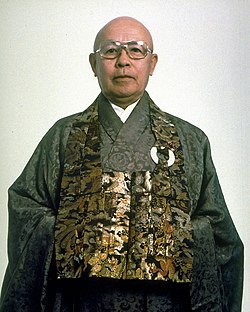
After Yasutani retired, his successor, Yamada Koun Roshi, came in his stead to Hawaii to lead sesshin, and it was Yamada Roshi who authorized Aitken to teach in 1974, making him the first North American to receive transmission in the Sanbo Kyodan tradition.

Don tells me, “Yasutani Roshi came in 1969, led sesshin in Honolulu and Maui. That was the last time he came. And then the transition was made to Yamada Roshi, who was his successor. A couple of years later, we started to call Bob ‘Aitken Roshi,’ although he later expressed regrets about that because when he was still ‘Bob,’ if the gang was going to get together and get into somebody’s VW bus and go down to the beach and have a good time, well, Bob would go along. But when he became Roshi, the invitations didn’t come. He had liked the intimacy of just being ‘Bob’ with the other folks.”

In addition to his work as a pioneer Zen teacher in the West, Aitken was actively involved in a number of social justice issues including opposition to the US military intervention in Vietnam.

Nelson continued, “I would say that, when I got to know him, it was a pacifist orientation that was first and foremost for him, but his politics were progressive across the board.” Aitken’s internment increased rather than diminished his anti-war sentiments. “His direct experience of seeing Japanese families with their belongs on their backs escaping from the [U.S.] bombing and the destruction of all of their life left a lasting impact,” Don explains. “His pacifism was very deep, very serious.”

I ask Nelson if the sangha members in general were equally concerned about these matters.

“Some members were, and some members weren’t. That was important to him too, that he didn’t insist on anybody sharing his politics. While I was living on Maui, the Aitkens and I and others founded the Buddhist Peace Fellowship. He and I became members of its initial board of directors, but others in the Maui sangha never joined it.”

“At his retirement gathering,” Don tells me, “I gave a welcoming speech, and I said I’m sure that he was disappointed over the years that many of the people that he was practicing with for long periods of time didn’t join him in these activities. But then I made the point that, in the dokusan room, it never made any difference. He did not favor or disfavor people along this particular dimension.”

I ask Nelson, “How would you like him to be remembered?”

“I’d hope people would remember Aitken Roshi as a man who loved the Dharma, who loved the tradition and did his utmost to convey it in a vigorous and true way that was thoroughly consistent with ethical living. He was an upright guy. He felt it was extremely important to live rightly in one’s economic relations, political relations, social relations, in all aspects of one’s life. That was deeply stitched into his character. When the painful, painful news came out not just about [the sexually inappropriate behavior of] Eido Shimano but the scandals surrounding Richard Baker Roshi and Taizan Maezumi Roshi, he felt confirmed in his concerns about such things, and he ratcheted up his own emphasis on what he considered the implicit ethics of practice and realization. There’s no question that the collapse of dichotomous thinking implies, for example, right relationships with non-human beings of all kinds. So the environmental movement was a natural for him. The women’s movement was a natural for him. Those concerns all came in addition to his longstanding concern about war and peace, honesty, fairness.”

Robert and Anne Aitken

Throughout the conversations, both Nelson and Don emphasized that Anne’s role in the development of the Diamond Sangha was nearly as important as her husband’s.

“She was a generous donor,” Nelson says. “A gracious and motherly presence. A very dedicated practitioner herself. A sweet, lovely person dedicated to Aitken Roshi and a source of tremendous support, in ways ranging from domestic to financial to in-house critic of his work, first reader of things that he was going to publish eventually.”

“I’ve heard from others that she may also have shared some of Aitken Roshi’s anti-establishment views,” I mention.

“Well, he was sort of a black sheep of his family, and, in many respects, she was a black sheep of hers. She came from a wealthy San Francisco family but was artistically inclined and married a fellow who was never going to make it big in business, who eventually became a Zen teacher, of all things!”

“Anne was a wonderful person,” Don says. “Warm, welcoming, supportive in all respects.” He describes her looking after the younger members of the Maui community. “A lot of the young people that came to Maui were the so-called hippies of the time. And so, when Anne got up each morning, when it was residential, she had to make sure that the people who needed to take pills had taken their pills so that they didn’t spiral down. She was foundational to the success of the community. If you contact any of the female members of the sangha from the early days, you will find out just how important she was. She would find ways – if they didn’t have much money or any at all – she would create jobs, whether it was sewing or mending clothing, or she used to sometimes bring out broken crockery on a tray and they could spend time putting it back together Japanese-style.”

Anne died in 1994 at the age of 83. Robert retired a year later. He lived another fifteen years, and by the time of his death in 2010, he was recognized – as Helen Tworkov put it – as the “unofficial American dean of Zen.” It can be argued that Zen as a discipline that would come to draw hundreds of practitioners, rather than a largely literary phenomenon, started in 1959 with the arrival of Shunryu Suzuki in San Francisco and the establishment of the Diamond Sangha in Hawaii.

Susan Moon

Every Day Zen Sangha  –

Susan Moon begins our conversation by telling me she came to California from Cambridge, Massachusetts, in the 1960s, as “a kind of wandering hippie with my then husband.

“My parents were WASP agnostics,” she says. “God was never mentioned in the house. That worried me as a child, and I thought, ‘What if there is a God? I better check it out! He might be mad at me if I don’t believe in him.’ But they were very progressive, and I am very grateful for the values I got from them. And then they and I became interested in the Friends, the Cambridge Friends Meeting. My grandmother was a Quaker, and she was my first spiritual teacher. She was a very spiritual person, interested in Zen, and she taught me about Zen even as a child and told me about it and the adventures she’d had when she visited Zen monasteries in Japan herself. So I was always a bit of a seeker independently of my parents who didn’t have much interest in that. They weren’t upset, I guess, when I went to the Episcopal Church as a teenager and joined the teenage group. But then that lasted only a couple of weeks because I thought it was very unspiritual. So it was when I was living in Berkeley already . . .”

I hold up my hand and interrupt her, “Let’s take a step back. What took you to Berkeley?”

“Well, my husband was a writer. He’s a very smart Harvard dropout visionary type, and very active with the Civil Rights movement and a radical person. And he wanted to go to Texas – Corpus Cristi, Texas, where he’d gone as a child with his grandparents – to finish a novel he was working on. And we went there with our baby and lived in a sort of motel cottage on the beach in Corpus Cristi, Texas, which in winter there’s nobody there. We were sort of the only occupants. It was terrible! Weird and lonely. Then he had a couple of psychotic breakdowns as a result of who-knows-what, combination of drugs and kind of crazy mother. Whatever. And I was there with him in Corpus Cristi, Texas. And he was completely paranoid, and I didn’t know what to do. So I called our good friend, Adam Hochschild, who became the founder of Mother Jones Magazine later and is a wonderful writer, and I said, ‘Help! What can I do?’ And he said, ‘Come out here, and I’ll help you.’ And we came and landed in Berkeley, and he got us appointments with a psychiatrist, and we stayed with him, and he was just incredibly kind and helped us, and then we ended up staying in Berkeley and separating and divorcing a few years later.”

It was 1969 when they arrived in Berkeley, the period when a lot of young people were making their way not only to California in general but to the San Francisco area in particular, many of them paying at  a visit to the San Francisco Zen Center along the way. Zen was literally in the air in Berkeley, with Alan Watts’ talks on KPFA radio. Susan remembers hearing him in 1973, and then a friend told her, “‘Oh, there’s this incredibly hip place in the mountains. It’s so hip, and there are these people there who are being Buddhist monks in this remote valley, and they make the most amazing bread! And you can go visit there.’

“So I went there as a guest one weekend in the early days of Tassajara when it was kind of informal, and I just loved it. And this was right after my husband and I split up, and I thought, ‘Gosh, if I was not a single-mother, I would come here and be a monk.’ And then somebody said, ‘Well, if you like this here, there’s a Zen Center in Berkeley.’ Which I didn’t know. So then I came home and started going to the Berkeley Zen Center.”

Mel Weitsman

The resident teacher at Berkely was Mel Weitsman. I tell Susan that Mel was one of the three people who took part in the very first interview I conducted in this series.

“Wow! Well, he was great. He was like my grandpa or something.”

I ask her to tell me about him.

“Well, he was very . . . stolid and kind of practical in a way. And he wasn’t really what I expected a Zen teacher to be. He was sort of disappointing to me at the beginning because he wasn’t wild and poetic and flamboyant in any way, and he didn’t seem like he was going inspire me to have a great awakening. But my respect for him grew a lot over the years, and I’m very, very grateful to him for his ‘thereness,’ his ability to be completely present and supportive and really selfless. He was really so unnarcissistic. His lack of charisma was a very generous thing in a way. He wasn’t trying to be something to everybody or be a star or anything.

“But I also continued to want a little more intellectual stimulation or a certain kind of understanding of my own deep existential suffering and longing which was so intense. I was always having this terrible longing that was not satisfied. And I always felt, ‘What . . . what . . . what is it? I can’t get it. I’m never going to get it. What is it?’ And I felt like he didn’t get that, although he probably did get it much more than I give him credit for. Whatever I said, he would always just say, ‘Well, just sit zazen and it will drift away.’ And that isn’t what would happen. I would sit down in sesshin, and my mind tortures would get all the more intense. It was sort of like the perfect opportunity for these different tracks dug in my brain. I’d talk to myself about how I couldn’t get it. How it was so hard, and how did everybody else get what was the meaning of life, and I didn’t? Anyway, it got worse, and I would just have to flee from the zendo, go out for a walk or something which led me to study with other teachers as well, that longing.”

I ask who the other teachers were.

Robert Aitken

“Joko Beck was very helpful to me. She used to come up to Berkeley and do retreats which I would go to, and I went down to Pacifica a few times to do retreats with her. I also really loved Maurine Stuart, but she was far away in Cambridge. She came to San Francisco Zen Center and Green Gulch a couple of times, and I sat with her there. She was really wonderful. And also Robert Aitken I loved, and he came to Berkeley sometimes to talk, and also – but that was sort of later – the Buddhist Peace Fellowship was very important to me, and that connected me with Robert Aitken. He was a really helpful teacher. And then there were two more that would be worth mentioning, Reb Anderson at San Francisco Zen Center.” Reb was Richard Baker’s successor as abbot of the San Francisco Zen Center. When co-abbots were introduced and term limits imposed on abbots, Reb served as co-abbot with Mel.

“I had wanted to go to Tassajara ever since that first time long ago. I vowed to go to Tassajara and do a practice period there before I was fifty. So when I was 49, I went to Tassajara, and I did a practice period led by Reb Anderson. And I hadn’t practised with him before, and Mel and Reb were kind of alternating leading practice periods at that time, and I chose one that Reb was leading on purpose because I wanted to connect with a different teacher. And we had a good connection, and I felt Reb did see this kind of angst and existential crisis, and he responded to it. And he was almost like the opposite of Mel in various ways. He was very charismatic, and I think there was some trouble with that. So he was my teacher, my main teacher for a while. I went to Green Gulch to be in a group with him, and he helped me, and he was generous. And I was shuso[1] with him at Green Gulch for a practice period in 1996, but I also had some trouble with the adulation that his students had for him, and the sort of feeling that you had to ask him if you were going to change the type of toothpaste you were going to use. He said that one time. He said, ‘Well, if you’re practicing with me, you should talk to me before you change your kind of toothpaste you use.’ I mean, he was joking about it, but I didn’t like that way of being. And all this time, I continued to live in Berkeley and go to Berkeley Zen Center. And I would go every Saturday to the talk, and I would continue to be with Mel and really appreciated the sangha in Berkeley, and Mel, and his steadiness, and his teaching. That never changed.

Norman Fischer.

“And I knew Norman Fischer.” Fischer was Mel’s heir and served as co-abbot of SFZC3 with Mel when Reb’s term came to an end. “I knew Norman as a friend because I knew people in the poetry scene. My brother-in-law, Bob Perelman – who is not at all a Buddhist – is a close friend of Norman’s and part of that poetry crowd. I had a little publishing thing years ago called Open Books, and I published books about the Peace Movement, and I published Norman’s first book of poetry, which nobody knows about anymore, which was a little small-press thing called, Like a Walk Through a Park. So I knew Norman as a friend and as a poet, and then there he was at Green Gulch teaching, and he was a wonderful teacher, and I thought, ‘Well, maybe Norman could be my teacher.’ And then I thought, ‘No! No! He couldn’t be my teacher. He’s my friend.’”

She talked about her quandary to some Zen people who assured it wasn’t a problem. “So, anyway, Norman became my teacher as well as my friend. And then, about a year later, he left Green Gulch and started Every Day Zen. So I was part of Every Day Zen from the beginning in 2000. So now Every Day Zen and Berkeley Zen Center are both my main sanghas. Berkeley Zen Center is sort of the place in a way. I’m just so grateful that it’s there. That’s made a huge difference in my life, and it’s a wonderful sangha. And I worked with Alan Senauke for many years at the Buddhist Peace Fellowship when he was Executive Director and I was editing the magazine there. So I feel like that’s my family, and it’s there, and I can go to this place, and there’s something happening there. And Every Day Zen isn’t a place. We rent a room in a church to have our meetings, but it is a sangha. It’s a wonderful sangha, and Norman is great, and it’s really enlivened my practice a lot and helped me a lot and most of the teaching I do is in Every Day Zen Sangha. Not all, but a lot.”

Although Aitken and some of the other people she studied were koan teachers, Susan tells me that she did not take up koan practice. “I did a little bit of Mu with Joko and Aitken Roshi, but I don’t think I scratched the surface. I didn’t feel like I was really doing much.”

“Sometimes it’s that sense of angst and not necessarily knowing what that angst is based in that drives people to koan practice,” I note.

“You could be right,” she says, laughing. “I could have missed my true calling because I didn’t stay with any of them as a very long-term discipline. They influenced me a lot and encouraged me a lot. Well Maurine was too far away, but I just loved her, though, I think, as a woman. That was another important thing for me to see, because in the early days there were few women teachers. And then both Joko and Maurine were very encouraging to me as a woman practitioner. And Robert Aitken was very encouraging to me as a person concerned about social justice and political activism. When I first started sitting at Berkeley there was a kind of a divide. It was the ’70s, and Mel had a very strong belief that we shouldn’t say anything political, because he wanted everybody to feel free to come there. Which I think is a very reasonable point of view now, but, at the time, I was outraged. And I was the editor of the Berkeley Zen Center newsletter for a couple of years, which came out once a month or something, and I had a kind of a battle with Mel when I tried to put in an announcement about a meeting of a group of Buddhists who wanted to come together to meet about blockading Livermore Weapons Lab or something. This separation was a painful thing for me because I had activist friends – I was an activist before I was a Buddhist – and they kind of had the feeling, ‘Why do you want to be a Buddhist? Those people just want to contemplate their navels and think about themselves all the time.’ And the Buddhists thought, ‘Why do you want to be an activist? Those people are just angry all the time; they’re lost in their anger.’ Of course, I’m totally exaggerating about what those people thought, and neither was true probably. But I felt this divide, and I was so, so grateful when the Buddhist Peace Fellowship – thanks basically to Robert Aitken and others – formed, and then those two worlds came together. And then better yet, I got a job working there, editing this magazine, so my Buddhism, my activism, and my love of writing and words and editing all came together in one job, which was very perfect for me.”

“You said Mel didn’t want people talking about political issues because he wanted everyone to feel free to attend there. What was the Berkeley community like in the early days?”

“Young, for one thing. We were a lot younger. In fact, young people are coming to the Berkeley sangha again, but at one time, nobody new seemed to be coming; we just kept getting old. Anyway, everything felt sort of homemade, and we were always having bake sales for this or that. Going up to the Sonoma Mountain Zen Center – Bill Kwong’s place – for the grape harvest, ’cause when they first bought that land it was a muscatel grape vineyard, and they continued to harvest the grapes for a few years.” Bill Kwong was another teacher associated with the San Francisco Zen Center. “So all comers were welcome to go to the grape harvest. We did sort of funky weird things like that. And the people in Berkeley were kind of Berkeley types, sort of a raggedy bunch or something. Auto mechanics and gardeners, seamstresses. And people just very enthusiastic about sitting down and staying still.”

Another teacher was Ed Brown, who was the author of very successful Tassajara Bread Book. Susan remembers a talk he gave at Tassajara about Shunryu Suzuki Roshi. “‘Buddha taught that life is suffering. And Suzuki Roshi taught that too, and we’re suffering all the time. Even when we don’t know it, we’re suffering. Even when we think we’re having a good time we’re suffering.’ And then everybody burst out laughing. I liked that paradoxical viewpoint. And later when I wrote my first book, The Life and Letters of Tofu Roshi, it’s about an imaginary Zen master named Tofu Roshi – who was slightly modeled on Mel – and Tofu Roshi’s teaching was that even when we’re suffering, we’re actually having a good time

“But people at Berkeley Zen Center, there was a lot of sweeping and gardening and baking. And sometimes we would have classes. And Mel taught us about taking care of what’s in front of you, about the chop-wood/carry-water aspect of Zen practice. And we would clean the zendo and the community room on Monday mornings, and sometimes I got the job of washing the leaves of the big rubber plant with a solution of water and milk with a sponge. I mean who would think that was part of Zen practice! Or waxing the floor.”

She didn’t attend the San Francisco Zen Center very often but her impression was that it was “more dour,” which causes us both to laugh. “Everybody was in black. It was after Suzuki Roshi had died. So when I first was going there it was Baker Roshi’s territory, and people were wearing all their robes and everything all the time. And people were famous for not being friendly. It was a very famous place for not being friendly. You would knock on the door, and somebody would stick their nose out and say, ‘What do you want?’ So I wasn’t drawn to City Center, but I was drawn to Green Gulch which was so beautiful and sort of still newish and to Tassajara, of course.”

As our conversation draws to a close, I ask her how she would describe her approach to Zen as a teacher.

“Well, I would say my practice and my offering as a teacher – insofar as I am a teacher, which is a different way of being a teacher – is really to be my authentic self, to sort of model the teaching that we’re already enlightened, and our job is just to know that and rediscover that. We’re already enlightened. That’s the thing that I need to remind myself, that I’ve been reminding myself and that I try to help others with and what that looks like. I help people see that, ‘You’re not the only person that thinks you don’t know how to sit zazen. You’re not the only person who can’t overcome your greed or self-clinging or whatever.’ So I reveal myself in my vulnerability not to get people’s attention or something. I’m just talking about how it is to be a human being. And I do this in my writing, and I know from the responses I get that one of the things people appreciate is that they see that I – who has some credibility as a long-term Zen practitioner – am also a person who might get up in the middle of the night and go raid the ice box and eat the rest of the ice cream with a spoon standing at the freezer. Or I might still be beset by longing at 3:00 in the morning and think, ‘Oh, no! What’s wrong with me?’ That might still happen to me. And . . . and I have faith nonetheless in the Dharma. The word ‘faith’ means something to me. I have faith in the Dharma, that it’s there for us.”


[1] “Head seat.” The head student in a practice activity.

Genpo Merzel

Kanzeon Big Mind Zen

Dennis Genpo Merzel is the founder and abbot of the international Kanzeon Big Mind Sangha. He was the second person – after Bernie Glassman – to whom Taizan Maezumi gave Dharma transmission. Susan Myoyu Andersen was the tenth.

“Well, Genpo is complex,” she tells me. “But one thing that I will say about him, he always seemed to understand and care about my concerns and my issues. If I had a grievance at Zen Center, he would always listen. I called him a World Class Carer. He really cared about people. For all of his challenges and issues and problems – which are very real – he also really cares about people.”

I haven’t met Genpo in person. My conversation with him took place over Skype. But one gets the impression of a strong personality. He is witty and charming. I suspect he’s an easy person to like. He’s also a guy who was asked in an open letter signed by sixty-six teachers – affiliated “with all of the major schools of Zen in the west” – to no longer “represent” himself as a Zen teacher, although one of those who signed the letter admitted to me that if he were asked to do so now he would decline.

It’s complex.

“I first heard of Zen around 1969, from a man named Fred Ancheta, when I went to buy some marijuana and LSD,” Genpo tells me. He’s also a good storyteller. “I go to an unfamiliar house to pick up this stuff, and he opens the door, and I go, ‘Oh, my God! My old friend, Fred!’ We had gone to Junior High School and Junior College together. So we sat down and smoked a joint, and he sold me these hits of acid. On the way out, I notice two books lying on the floor. The Way of Zen by Alan Watts and Zen Buddhism by D. T. Suzuki. I asked him, ‘What’s Zen?’ Fred said, ‘Well, I’ve been studying Zen, and I think it’s where everything in the West is leading – Western Philosophy, Western spirituality, Western psychology, Western science – everything is leading towards Zen.’ And that was it. I left.

“Two years later, I’m out in the Mojave Desert. I was having a difficult time in a new relationship that had only been going on for about a year. And I had been divorced already. I was 26. I’d gotten divorced at 25, and I found the same pattern going on. I felt confined, restricted, and was having a difficult time, so I needed some space. So I told my partner, ‘I’m going to go to the desert, and I’m going to invite my friend, Kurt, and we’ll camp for a few days, and I’ll be back on Monday.’ So I invited my friend Kurt, and he brought along his new girlfriend, and the three of us went out to a place in the Red Rocks called Jawbone Canyon. They decided to hike off alone, and I decided to go to the top of the nearest mountain, and I climbed up the mountain.

“I sit down, and I ask myself two questions. The first question was how could I have screwed up my life so badly? I’m only 26 years old, and I’m already divorced. I’d had the expectation of being much more stable than that, living a long life with my first wife, and I’m already divorced. And I’m in a relationship with the same patterns. How could I do this to myself?

“The second question came up when I looked out and saw my VW camper where we were going to be for the next three days. I look out there, and I say, ‘Well that’s home.’ Then, ‘Wait a minute. That’s not home. Home is back in Long Beach where I live across the street from the ocean, on Ocean Boulevard.’  

“Then something happened. Body and mind dropped off. I became one with the universe, one with the interconnectedness of all things, the oneness of the universe. I am that. In other words, God, Love, the Universe, the Whole. The universe opened up, and I realized not only am I always home, it’s unconditional. There is no other place but here, now, this. I’m always here/now, and it’s always home.

“It was profound. To this day it’s probably the most influential experience of my entire life. I’ve had bigger experiences, but not one that was so influential. It changed my life. Now, my friend Kurt had a PhD in Psychology from the University of California Santa Barbara, and he said, ‘You know, the way you were talking when we got reconnected that evening, you sound very Zen. I think you had a Zen experience. They call it a kensho.’ 

“Now, if he had said, as a psychologist, ‘You sound insane, you sound really screwed up, you need to go to a mental hospital,’ I would have had a very different life. He saved my life. And for that, I’m forever grateful. He changed my life by saying those words, ‘You had a Zen experience.’ Because he could have taken the perspective that my mother did. She said, ‘Dennis you have gone insane.’ ‘No mom,’ I said, ‘I have gone sane!’

“Kurt gave me a copy of Hermann Hesse’s Siddhartha when we got back, and I read it. It was very powerful for me, and I started to study about Buddhism, all kinds of Buddhism, Tibetan Buddhism, Zen Buddhism and Hinduism. I began to study Carl Jung and Freud, Maslow and all the other great therapists and philosophers at that time. I studied, and I studied, and I studied all about this kind of transformation. I was trying to find out what happened to me – you know? – trying to grasp what happened.

“But I was most at home with Zen and the koans and the Zen Masters. And those were all Chinese. I didn’t study the Japanese, only a few like Dogen Zenji and Hakuin. It was all these Chinese. You know, Huang Po and the Sixth Patriarch, all of those great ones. But I’m not an avid reader. So I didn’t really read all of each book; I just read parts of them.

“I was teaching school, at the time. I gave notice and said in June, when the school year’s up, I’m taking my pension, and retiring. So in June, I hit the road in that VW camper. I went all over the northwest, up into Canada. I sold my camper in Montana, and I hiked up through Glacier National Park, fifty miles on my own over glaciers in Adidas tennis shoes no socks.

“I met two guys and hung out with them. I didn’t have any food. I just saw a sign, it said ‘Fifty miles to Waterton Canada,’ and I just took it. 26 years old, kind of young, dumb, and all that. I met these two men the first night, and I had a plastic bag of brown rice, and a little cooking pot with me. So I cooked this brown rice and offered to share it with them. It was all my food for a week. Then they shared their food, and they had plenty. So we became best buddies. Spent five more days together hiking. On the third day, I hiked up this mountain to where I could look down on fifty mountain peaks. It was extraordinary. On that peak I realized my destiny, I realized I was to be a Zen Master, that was my destiny. I believe that set the rest of my life in a certain direction. On the fourth night, we were visited by a grizzly. We covered our heads under our sleeping bags, and he eventually left. It was one scary moment. On the fifth day, we arrived at where they had a camper waiting, and we drove together around a few National Parks, Vancouver Island, down to Seattle, and then we split up.

“Then I spent a year in a mountain cabin owned by a man I met hitchhiking. He had a cabin five miles from town on a road that went into and through a great ranch called the Santa Margarita Ranch, one of the largest in Californian history. So after this journey, I come back and join him there. He invites me because he had been robbed three times. He was a musician, so he had guitars. He had a piano which, of course, wasn’t stolen, but he had these guitars, he had a sitar and other musical instruments, and some sleeping bags. They stole everything. Wiped him out. I said, ‘Listen. I don’t have a home. I’m a Zen person.’ A Zen monk, I called myself. ‘You let me stay here, and I’ll take care of it. I’ll look after the place for you. I’ll make sure nobody robs you.’ He said, ‘Deal!’ So I said, ‘How long?’ He said, ‘Indefinitely.’ But it became problematic ten months later in May when my former girlfriend joined me. He needed to have privacy when he came with his wife and his kids, and we were on the property, so he asked us to leave in June.

“So I was there from September to June. I believe that year alone in the mountain cabin really was the groundwork for the rest of my life. I spent it chopping wood and carrying water, alone with my own thoughts and mind which gave me an understanding of who I am. So at Christmas I decide to go spend some time with my mother. So I go down there, and in the meantime I buy an old jeep.

“So now I went down to San Luis Obispo occasionally for a few hours – you know – hanging out there. I put a sign up in the local health food store, and I invite people to come out and sit Zen with me. So in February, people started to come out and sit with me. We had a little circle, maybe twenty people, and I’m teaching them Zen. One of them happened to know yoga, so he taught us yoga. Another one was an astrologist, so he did all of our charts for us. So we had this little group of people hanging out, and once or twice a week they’d come out to my place, and I’d teach them how to sit and we’d read Suzuki Roshi’s Zen Mind, Beginner’s Mind.

“One day an older gentleman, probably in his 70’s – a man named Earl Eddy – comes driving up in a black Cadillac. He’s wearing all black, and he brings out this black round cushion which I later learned was a zafu. He sets it down, and he brings out this bell, and these clappers, and he says, ‘Do you mind if I organize this a little bit?’ Because he looked out and saw twenty hippies sitting in a circle on bathmats and blankets and sleeping bags. He wants us sitting more formally.

“When it was over, he said, ‘Let’s talk.’ And I said, ‘Sure.’ And he says, ‘It’s time for you to meet a teacher. You need to meet a Zen Master. I’ve been studying with this young master named Maezumi Sensei, and he has a teacher, an older man, my age coming to visit and spending some time. His name is Koryu Osaka Roshi. And they’re going to be holding this sesshin’ – this was mid-March of ’72 – ‘they’re going to be holding this sesshin beginning the third week of March. If we get out to a place where I can make a phone call, I’ll call Maezumi Sensei and ask if you can attend this sesshin.

“It was very interesting because several days before Earl arrived at the cabin, I had a very powerful experience. I was sitting, and I realized that I needed to meet a true living Buddha, a Zen Master who embodied the lineage.  I knew that I needed to be crushed, ground to dust, that my ego had become so big, so inflated, because I realized I am The Buddha. However, even though I felt I did not need any affirmation of this, it was important to be face-to-face with a living Buddha Patriarch.

Koryu Osaka

“So we go to a local store, phone Maezumi Roshi, and Maezumi Roshi says, ‘Bring him on.’ So that Wednesday, I hop a freight train and ride it down to Los Angeles. Then I come over to the Zen Center, and I meet Maezumi Roshi, I meet Koryu Roshi, I meet Bernie Glassman, I meet Bob Lee, I meet Sydney Musai Walter, Charlotte Joko Beck, so many future Zen Masters, I don’t know how many. All eventually became Zen Masters, but, at that time, there was only one, Koryu Roshi.

“At the end of that sesshin, Maezumi Roshi received Inka, final seal of approval, from Koryu Roshi. And from then he was also known as Roshi. I didn’t immediately have a warm feeling with him. But I felt love for Koryu Roshi. I came into interview with him, and he said to me, ‘I want you to count your breaths.’ I did that, and I came back a few days later. He said, ‘How is it going? Can you count to 10 without losing count?’  I told him, ‘Yes.’ He said, ‘You’re ready for Mu.’ He asked me, ‘What is Mu?’  

“I went out. I sat down. I came back in. I said, ‘I’m done with koan study. I know them all. It’s all me. It’s all my life. All the koans have the same answer. It’s me. Nothing else. Just this,’” Genjo says, patting his own chest. “He rings me out. And then I come back in, probably later that day, and I say, ‘Okay. What do you want me to do?’ He said, ‘I want you to do koan study.’ I said, ‘Okay. Where do I start?’ He says, ‘What is Mu?’ So that began that. Then Maezumi Roshi starts doing koans as dokusan after that. But that was my initial experience with Koryu Roshi.

“So I love Koryu Roshi. He’s so warm, so intimate. Available, open, receptive. And the most powerful human being I ever met. Enormous power. He had such energy and such equanimity and such power. And he was very personal. He really touched our hearts.

“With Maezumi . . .  I was assigned to work with him. At that time I was doing a lot of bodybuilding, so I was able to bench press nearly 400 pounds. We’re moving boulders. He’s doing a rock garden, and I was assigned to move the boulders for him. So these heavy boulders, I’m lifting them up and putting them down, and he says, ‘Nah, nah, nah. Put it over there.’ I put it over there. ‘Oh, no, no! Move it back to where it was.’ This went on for days.

Maezumi and Genpo

“But at some point we’re doing this rock garden, and he said, ‘Who’s your teacher?’ I say, ‘I don’t have a teacher.’ He says, ‘Well, what’s your Zen experience?’ ‘I’ve read D. T. Suzuki; I’ve read Alan Watts.’ He says, ‘Alan Watts! He’s not Zen. Okay,’ he says to me,” – Genpo speaks with a gruff Japanese accent – “‘What is Zen?!’ I took the spade that I had in my hand, and I shoved it down in the ground and said, ‘Just this! He said, ‘Your Zen eye is only partially open. You need deeper study.’ So, okay, I was a little hurt because I felt he didn’t see me. But I accepted it. And I said, ‘By the way I’m leaving this sesshin.’ He said, ‘Why are you leaving?’ I said, ‘This is not Zen.’ He said, ‘What are you talking about?’ I said, ‘This is full of rituals and bowing. Zen is not about bowing to idols! Who are we bowing to? Aren’t we bowing to ourselves, the Buddha?’ He said, ‘Wow! You are the most arrogant young man I have ever met.’ He said, ‘I want you to come and visit me after lunch.’ I said, ‘Okay. I’ll come. I’ll wait till then.’ Because I was going to leave right after the work period.

“So I sit the next three periods, whatever it was. I come up to him, and he starts questioning me. Who have I studied with, where did I study, what have I done? I said, ‘I live in the mountains five miles from any other human being, and I sit six/seven hours a day on this picnic table, because there’s rattlesnakes all over the place, and the only way I can get away from them is to sit on top of this table. And I said, ‘I just sit, and I chop wood, and I carry water.’ I had no electricity. I had no stove. I had an old Coleman, a little camping stove. And that’s how I survived. So I said, ‘I’m going back home.’ He said, ‘Well, at least spend the next four days with us and finish the sesshin.’ I say, ‘Okay. I can do that. I’ll complete it. I’m not a quitter.’ So I stayed, and that’s when I had the dokusan with Koryu Roshi and so on.

“Well, I went back to my cabin until June, and I had some correspondence with Maezumi Roshi. He wrote me a few times. And I apologized for my arrogance and for the way I talked to him.

“So, when I went back down to Los Angeles several months later, Roshi allowed me to park my old van in the back yard. During that time, Roshi was having a hard time. He had been divorced from a woman who was a Buddhist nun. And his back was hurting him greatly, and he had to lie flat on his back. He was a young man, only 42 years old. But he was hurting, lying a futon on the floor in the middle of the living room. I sat in lotus posture next to him, and we got acquainted. Maybe he saw something in me. I don’t know, but we got very close and very intimate.

“We sat there for many hours and for many days just in . . .” His voice chokes up, and his eyes tear. “It makes me cry. It was a very intimate time. He was so vulnerable. There was no hierarchy. The patriarch wasn’t there. He was just an ordinary, confused man whose back was killing him and didn’t know how to be a normal human being. He was trained in a monastery, became a monk at 13 or something like that. At 18 he goes to a temple and lives with Koryu Roshi. At 22 he finishes Kanazawa University, then two years at Sojiji Zen Monastery, and then he is sent to Los Angeles as a young priest of 24. He knows how to be a temple monk. He doesn’t know anything about the world and America and relationships. So he was a confused young man in some ways, and it touched my heart. That’s when he truly touched my heart.

“Maezumi Roshi was, in my opinion, as arrogant as I was. There was a story about when he met Suzuki Roshi for the first time in San Francisco, and Jakusho Kwong Roshi was there, who told me the story. He said after Maezumi left Suzuki Roshi said, ‘That’s the most arrogant young man I’ve ever met in my entire life.’ That is exactly what Roshi said about me. ‘You are the most arrogant young man I’ve met in my entire life.” Ditto! Two of a kind. 

“Then he got married. I don’t know, things change. He became this hierarchical Maezumi the Roshi, never taking off the hat of the master. I think maybe four or five times in my entire life after that first year did he put aside that role. In 2009 or ’10, I was teaching a workshop and his wife, Ekyo, was there, and I made that statement, and she says, ‘Wow! For me, six or seven times.’”

Genpo studied with Maezumi for nearly twenty-four years.  

“I went out on my own in ’84, started sanghas throughout Europe. France, Poland, Germany, England, the Netherlands. And in ’95, Roshi dies and in ’99 I had this notion from way back in ’73 when I was living in Santa Barbara how in China Daoism and Buddhism became Zen. Before that it was just Buddhism. I felt that in the West the marriage was not going to be with Daoism but with Western psychotherapy.”

After Maezumi died, Genpo worked with Hal Stone on the Jungian concept of “shadows.” Stone is the founder of “Voice Dialogue.” Genpo describes calls him “my mentor – not teacher, mentor – after Maezumi died.”

Hal Stone

“I had shadows like the rest of us. So many shadows, oh, my God! Everything we think is Zen, as enlightened and as right, we disowned their opposites. So I felt very spiritual, very awakened. I believed I was not competitive; that was a shadow. I was not greedy, another shadow. I was not hurtful and not mean. I was not un-loving.  Those were all shadows. We believe we are enlightened so we disown all that we believe is not what an enlightened person would be, and all these aspects of our self that we disown come back as saboteurs. They undermine our lives and the lives of others.

“One time Hal was working with Maezumi Roshi, and he asked Maezumi, ‘May I speak to the voice of anger?’ And Roshi said, ‘I don’t get angry.’ Which we all knew was bullshit. Hal said, ‘We all have a voice that’s called “anger.” Can I speak to it?’ And Maezumi said, ‘I don’t get angry!’ That’s a shadow. We all have shadows. It has been my lifelong project since then to reveal my shadows and bring them to light. Because otherwise we are really unhealthy, we are harmful to ourselves and others. We all have shadows. Nobody gets away without shadows. And if we’re willing to look at those shadows, that’s one thing. If we’re ashamed of those shadows, if we deny that we have shadows, if we disown that we have shadows, we’re really kind of screwed. And if Zen is to take root in this Western world, those shadows must be revealed to us. We must look at and recognize them, we must look into ourselves. We must do what Dogen Zenji says, which is ‘To study the Buddha Way is to study the self.’”

I ask how he believes his teaching differs from Maezumi’s.

“Many, many, many, ways. The root is the same. The core realization is one. But the way that we manifest it, the way we teach it, the way that we approach it is completely different. That was his beauty, the uniqueness of every one of his twelve successors manifested differently.

“The difference? I’m really interested in shadows; Roshi wouldn’t even know what that term means. I’m interested in where we’re stuck. Roshi’s interest was if we’re stuck, we didn’t sit enough. His answer to everything was, ‘Sit more.’ My answer is, ‘Work on yourself. Look at where you’re stuck.’”

“And when people come to you as a teacher,” I ask, “what are they looking for?”

“I don’t know. Everybody comes for different reasons. Some come because they want to become a Roshi.”

“That’s a career goal people have?”

“Some of them probably do. They come because the want to become a Roshi or an enlightened being. Or some come because they’re all screwed up. Some come because they’re hurting and in pain. They all come for different reasons. I can’t say why they come to me. But when people do come, they’re all looking for something, and I take each one as they are, who they are, and I try to work with them from that place. Not necessarily to give them what they want but eventually so that they can have what they want. Which I think, in the end, is to be free, at peace, happy, and joyful. I find very few Buddhists are free, at peace, joyful and happy. The Buddhist world is – in my opinion – often miserable and unhappy. Clinging to a lot of ideas and notions of what it means to be a Buddhist monk or a Buddhist. Buddhism is hurting in the West, and we need to recognize the elephant in the room if we want to breathe life back into it.”

“What’s killing it?”

“Ideas and notions, our Western notions and ideas. We’re very different than the Chinese or the Japanese or the Indians or the Koreans. We have lots of notions about what is right and wrong, or moral or immoral, or what’s good or bad. That was not the same in Asian cultures. They had Confucianism. They had Daoism. They had Mencius. They had a form of Zen that wasn’t conditioned by Western psychology or Western Christianity or Western Judaism.”

“Okay,” I say. “I wasn’t sure I was going to go here, but it looks like we got there anyway. You’ve got a reputation. 

“I have a reputation.”

In the late ’80s, Genpo was the abbot of a Zen community in Bar Harbor, Maine, which dissolved in part because of an affair he had with one of the members. Again, in 2011, while abbot of the Kanzeon Zen Center in Salt Lake City, he admitted to a number of extra-marital relationships, and – responding to calls for his resignation – announced he would disrobe as a Buddhist priest and withdraw from teaching. A few months, however, later he reversed his decision, arguing that too many people depended upon him spiritually for him to be able to do so. That led to the letter with the sixty-six signatures.

“Why do you think the things you’ve done bother people so much?”

“I really can’t answer that question. I’m sure it came to a head in January 2011 and has to do with my infidelity up to then.  It may also have to do with who I am, my personality, and of course who they are. However, I am grateful to those people who gave me a good reason to take a long insightful look at myself and my own shadows. Because of my past catching up with me, my karma, and they being upset with me, I saw I had allowed myself to become intoxicated with my own power, and I got stuck there. And in doing so I harmed and hurt people, people I love, people I care about, and my Dharma successors.  I certainly am not proud of my behavior and my immaturity thirteen-fourteen years ago. It has caused a split among my successors, which I would love to heal if possible. It has forced me to look deeply into myself, to take responsibility for my past actions, and to live and act with integrity and honesty, which I was not doing prior to January 2011. And I am very grateful for that.”

“Are things different now?” I ask.

“Very different. I feel very free from the Soto Zen School and from organized religion. I feel free, happy and grateful for the Zen lineage I come from. I live as a monk, not as a monastic monk or priest but as a hermit monk. I live here with my wife on the largest active volcano in the world, on the Big Island of Hawaii. Sometimes she’s here and sometimes she’s at our home in Oregon near my daughter, son-in-law and granddaughter in Newport. So I live here alone about half the time, and half the time with my wife.

“I’m a very private person in a way. I don’t have many friends on the island. I have some acquaintances, a few friends, but mostly I’m alone or with my wife and doggie, Kaya. And I teach in the mornings over Facetime or Zoom, and I have – I don’t know – about fifty personal students that I spend a lot of time with on video. They come and visit me here. Spend a week with me. We study together. Sometimes they come in groups, and we study as a group. The rest of the time, once a year we do a sesshin on the mainland. I still have several hundred students who are not as active, but a lot of people call me for help or follow me online.”

Anita Feng (Zen Master Jeong Ji)

Albuquerque Zen Center –

When the founding abbot of the Albuquerque Zen Center – Seiju Mammoser – let it be known that he was contemplating retirement, the board of directors began looking for someone to succeed him. Seiju had been a disciple of Joshu Sasaki in the Japanese Rinzai tradition. The search process – according to one member of the hiring committee – lasted more than three years. Approaches were made to form alliances with other Zen sanghas, and letters were sent. They told the American Zen Teachers’ Association that they did not care what lineage or heritage the teacher represented, but they wanted someone who was the equivalent of a roshi, who would agree to live in Albuquerque, and who was authorized to meet with students in private interviews. The teacher they finally found was a Zen Master in the Korean Seon tradition.

Anita Feng – Zen Master Jeong Ji – grew up in a Jewish neighbourhood33 in Detroit. Her grandparents had been immigrants from Eastern Europe.  She tells me the family was culturally Jewish and “broadly speaking spiritually too but not in any organized way. I think that of everyone in my family, I was probably the most spiritually oriented. My first interest was in Hasidic Judaism. But growing up in the ’60s, it seemed untenable with the liberating forces of the ’60s.”

I ask how she first learned about Zen.

“I was playing in a Balkan band in Maine where I was living at the time in my early 20’s. A member of our band showed me the book by Suzuki Roshi, Zen Mind, Beginner’s Mind. And that was it. The teachings made perfect sense. I had never subscribed to any kind of movement particularly, and I was never much of a joiner. But after reading that book, within six months I sold my house, got rid of all my belongings, and left to study with the nearest Zen master, who happened to be Zen Master Seung Sahn in Providence.”

The people I’ve been interviewing often have intriguing backstories. I want to ask about Balkan bands and how she got to Maine but stick to the main story-line and ask what it was about the Suzuki book that had grabbed her attention.

“Oh, I think a couple of things grabbed me right off the bat. One was the title, Zen Mind, Beginner’s Mind. I loved that. I was already a poet and worked as a ceramic artist. The concept of a beginner’s mind was always something that was really important to me as a creative type. The poetry in Suzuki Roshi’s teaching resonated with me very deeply. There’s a phrase in his book that roughly goes: ‘The reason the whole world is so beautiful is because the world is constantly losing its balance against a background of perfect balance.’ That image touched me. The other thing I admired about the book was that it had instructions. So I followed them. Even though it was the very first time I sat down to try meditation, somehow, after I got up from that first sitting, the grass looked more sparkly and the experience of walking down the street seemed more vibrant. I had always wanted to live as completely as possible, and this first experience of meditation gave me a pathway that I could trust.”

I do ask about the ceramic art. She tells me that by her mid-20s she had “established a career of making musical instruments out of mud, out of clay.” 

“You made clay flutes?”

“And clay drums, clay horns. It was my livelihood for many years, until I switched to making Buddhas out of clay fifteen years ago.”

“Tell me about meeting Seung Sahn.”

Seung Sahn

“Well, meeting him was a bit unusual from the beginning. Actually my first meeting with him was at the Cambridge Zen Center because that was a little closer to where I was living at the time. I came down to do a retreat for the first time at the Cambridge Zen Center, and I was very nervous. I was pacing around in the parking lot, hesitant to go in. Finally I got up the courage to open the back door and at that very moment Zen Master Seung Sahn was coming out, and we practically butted heads. There we were, entangling eyebrows from the beginning.[1] Aside from that first encounter, my lasting impression of him was his complete presence, his way of being in the world inspired me deeply.”

Several people I’ve interviewed – including Bobby Rhodes and Richard Shrobe – were practising there at the time.

“In retrospect, it may have been the golden age of that center because there were more than forty people living there at the time. The Zen Center was full. There were people who bought houses, rented houses in the area. We were all new. The Dharma was new. We were there to do hard training and wake up. New teachers appeared. People were working, starting families. All of us were trying to behave like monks and nuns. But nobody had figured out yet how you could live in a community and do hard training and work and have relationships. It was untenable,” she adds, laughing.

“I remember Chozen Bays telling me, that the atmosphere at ZCLA when she was there was a mix of hippie commune and Buddhist monastery, and that it wasn’t a particularly workable mix.” 

“That sounds pretty accurate to me,” Jeong Ji agrees. “With all of us being in our 20s and 30s we had a lot to learn. I think one of the main lessons we learned from Seung Sahn in the early days was simply how to behave. There was also the fact that as young Americans, we just idolized Asian teachers. And while we struggled with learning how to behave appropriately, these Asian teachers were struggling with the same thing. But because of their unquestioned authority, they could almost get away with just about anything.”

“They got away with a lot.” 

“They did,” she admits. “Zen Master Seung Sahn felt that our behaviour was a little too wild. So he encouraged everybody to get married, and he even arranged marriages. And none of them worked. Not a single one lasted. So that was a rocky time. It was a golden era in terms of the number of people who were interested in doing hard training in Zen, but it was also a dark time in terms of Asian masters getting lured in by the freedom of American culture. There were a lot of boundaries crossed.

“Another thing that I saw was that everyone was talking like Seung Sahn in pidgin English. But we were, for the most part, all Americans!  I was a poet and writer, and it was unbearable to me to hear this kind of mimicry. It could be funny, but if you’re living in a community, and people are doing this kind of ‘Zen speak’ day-in and day-out, I thought, ‘This is not the Zen that I want to live with. I want to live in a world where Zen has no flavour. A Zen that can go anywhere and speak in any language.’” 

After living in the community for three years, she left.

“It’s kind of a complicated story. Zen Master Seung Sahn really liked the fact that I had my pottery studio there and that I had taken on apprentices from the community, so he – and I also – thought this could be a very nice cottage industry for the Zen Center. In retrospect, it was a ridiculous idea. I mean, what did I do? I made musical instruments out of clay. This was never going to be a big business. Nevertheless I went as far as to buy two tons of bricks to build a big wood-fired kiln on the premises, and I just couldn’t bring myself to build it. I even got a huge load of wood to use. I’m very much of a doer kind of person – not a hesitator – but on that I hesitated quite a bit.  And then I married the head monk of the school. And since this was from a celibate tradition, it was kind of big news. Zen Master Seung Sahn, when he realized he couldn’t talk us out of it, married us at the Zen Center. And then my husband and I felt like it was time to live a kind of normal life, start a family, not in the Zen Center. So we moved away. I went for a fifteen-year period not being involved with a Zen Center.”

“Did you continue to practice?”

“Yes. I had my practice, but I was on my own. No sangha. No contact with any sangha. Not until many years later.”

“And what brought you back?”

“After that first marriage ended, years later when I was married to my current husband, living in Seattle with our three children, I was writing a book, and I wanted to draw from my experience of living at the Zen Center all those years ago. So, for research purposes, I looked up the nearest Kwan Um Zen Center, which was right there in Seattle. When I attended the first session, as soon as I heard the Heart Sutra and the Great Dharani being chanted, the tears just started to come down my face. I was deeply moved. And even though I didn’t know any of these people, I immediately felt that I had come home in a new way, and that was it. I had rejoined sangha.”

Ji Bong

The teacher in Seattle was Bob Moore, Zen Master Ji Bong.  

“He was one of the first Zen Masters given final transmission by Zen Master Seung Sahn along with Bobbie Rhodes, George Bowman, and Richard Shrobe. There may have been others. But Bob Moore was in that group. And I’ve been his student ever since. With Ji Bong as my teacher I felt I could be who I was and not have to be anybody different. He was also very independent-minded and well-spoken, a professor of music. So he clarified a lot of these basic teachings for me that had originally come from Zen Master Seung Sahn with his limited English.

“For example, when I studied with Zen Master Seung Sahn, I couldn’t have cared less about koans, but I did the koan training with him because all his students did. The koans’ wisdom didn’t really sink in until many years later with Zen Master Ji Bong. In some ways, koans are like poetry which I already had a lot of appreciation for. And also I was older and more mature and could see the wisdom of their teaching better.”

Ji Bong, however, was located in Los Angeles and only visited Seattle on occasion. The Kwan Um School eventually assigned a teacher to the community, but – from Jeong Ji’s perspective – it wasn’t a “good fit. So I ended up quitting the Kwan Um School again. I think my independent nature felt confined by certain teaching routines. In part the way the koan training was becoming systematized. And, again, I was rebelling against this propensity to imitate or mimic others that we admire.  Do you know the story of Gutei’s finger?[2] It’s kind of like that. Gutei had his awakening experience when his teacher raised a finger, and his mind opened. So then for the rest of his life, as a teacher himself, Gutei raised his finger. But he had this problem with a disciple. Do you remember the story?”

“Mm-hmm. So he cuts the kid’s finger off.” 

“Yes. The student figured he understood this teaching and could easily transmit it. It was very straightforward! So a visitor came by one day, asking to see the master when the master wasn’t at home, and the disciple said, ‘Oh, I’ll tell you what the teaching is.’ And he raised his finger. What this suggests to me is that if a student or a new teacher just follows the teaching of his teacher – like Fa-yen said – he diminishes that teaching by half. There’s no energy left. No vitality. We have to show up as ourselves and teach as who we are. Accordingly, for my own practice, I have sought to express this in my creative work, asking the question, freshly, ‘What is Buddha?’”

She began sculpting Buddhas which, as she puts it, “reflect who we are now, in all our diversity. Bottom line – if Zen becomes too systematized, becomes a corporate Zen, if you will – then it doesn’t grow, it doesn’t evolve. So I left the Kwan Um School again.”

A few years later, Ji Bong left as well.

“It was easy for me because I wasn’t anybody special, but for him to leave was a big deal. And one of the most important things for him – and later on for me as well – is that if someone has the title and the authority of a Zen Master then they need to have some independence. Of course there are risks involved, but in terms of developing one’s teaching and relationship with one’s sangha – both of which are entirely unique – there has to be some autonomy in how that’s carried out. So he left. The sangha split apart. I came back to rejoin the Seattle Sangha that remained. And a little while after that – maybe a few years – I became a Ji Do Poep Sa. That was in 2008, and in 2015 I received final transmission and became a Zen Master.”

Her transmission comes through Ji Bong, but there is a process “we kept from Zen Master Seung Sahn which is that prospective Zen Masters need to be tested by other Zen Masters of other schools in other traditions. I met with Wendy Egyoku at the Zen Center of Los Angeles which was really wonderful. Ji Bong left it up to me to pick who I wanted to study with, and I wanted to study with a woman teacher. American born. So I went to see her, and it was very humbling and inspiring and encouraging. I think it’s a wonderful thing to get out of your zone, get out of the Zen culture that you’re familiar with and throw yourself into something that’s completely different. It inspired a richness and depth to my practice and to my thoughts about what it means to be a sangha, to be a teacher, to be a student. I also met with two other Zen teachers—Jack Duffy, from Aitken Roshi’s lineage, and Steve Hagen, from Katagiri Roshi’s lineage. I enjoyed this aspect of my training a lot.”

Eight years later, Jeong Ji gave transmission to two of her students. “In Seattle I could see that we had a number of wonderful teachers-in-training. It was a good time for me to step back. Again, I feel it’s important that the way the teaching is transmitted is unique, that it come through different voices. That’s just the nature of change and growth and vitality. So I’d been thinking, ‘I’m going to pull back and give these new teachers time and space to discover their own voices.’”

She wasn’t entirely sure what she would take on next. “I didn’t know if I was going to be doing more pottery, write a book or just take up knitting. One day I received word from the American Zen Teachers Association that there was a position open for a new guiding teacher at the Albuquerque Zen Center. And as it happens, I had been to Albuquerque twice that year because my older daughter, Katrina, moved here. I loved the weather, the sunshine. I loved the arts community which I thought was vibrant and welcoming.”

A decade earlier, the community had survived the turmoil of the revelations regarding Joshu Sasaki’s behaviour and the departure of members who began smaller sitting groups. It persisted and was determined to find someone to take over from Seiju.

Seiju and Jeong Ji

I ask her about the community.

“Well, people in general are appreciative and hungry for the teaching. The facility and grounds are beautiful. Retreats hadn’t been done for quite a while, so we started that up a couple of months ago. Just one-day retreats, and they’ve been completely full. The sangha seems to be growing steadily. A number of young people are involved, due in part to the fact that the Zen center is close to the university of New Mexico.”

“And you’re happy there.”

“I am. I like it very much. I like to throw myself into something radically new. It’s something I’ve done throughout my life periodically. I just like to shake everything up and begin again. I think one of the interesting and creative aspects of this transition is to give the process plenty of time, plenty of space, for all of us to evolve as it seems natural, as seems fitting.”

“What do you think the community is looking to you for?”

“I think that the overwhelming thing that I’ve heard from the sangha is they’re looking for guidance and teaching.”

“Guidance to what end? To what are they being guided?”

“Oh, meditation. Presence of body, heart, and mind. Though it is very simple on paper, very straightforward in its instructions, for each person there is a unique challenge. And by meeting with students one-on-one or giving talks, I strive to provide guidance for that.”

“What does a Zen teacher teach?”

It’s one of my standard questions, and Jeong Ji takes a moment to think about it before replying.

“On the face of it, it doesn’t look like much. I think – going back to my first impression of Zen Master Seung Sahn – it’s more about presence than anything else.”


[1] Mumon comments on the koan Mu: “If you pass through it, you will not only see Jõshû face to face, but you will also go hand in hand with the successive patriarchs, entangling your eyebrows with theirs, seeing with the same eyes, hearing with the same ears.”

[2] The third case in the Mumonkan.

Susan Myoyu Andersen

Great Plains Zen Center, Monroe, Wisconsin –

Susan Myoyu Andersen was the tenth person to whom Taizan Maezumi gave Dharma transmission. She later received full authorization – inka – from Dennis Genpo Merzel. Currently she is the resident teacher at Great Plains Zen Center in Wisconsin. She is also a good old-fashioned activist. After a career in social development work, I am glad to see that the flames haven’t gone out. She is a member of the Wisconsin Poor People’s Campaign Coordinating Committee, NAACP, Justice Overcoming Borders, and is active in advocating for the rights of formerly incarcerated people through WISDOM Wisconsin and other organizations. The Great Plains Zen Center has an active Racial Justice Circle and maintains an anti-racism resource list initially created by a group of White Plum Asanga members.

“As a kid I was pretty interested in Hinduism. I did a lot of reading about Hinduism, and Buddhism always sounded kind of scary to me.”

I ask where the interest in Hinduism had come from.

“I read the autobiography of Paramahansa Yogananda. My older brother and sister read a lot of interesting stuff, so that’s probably how I first came in touch with it. Clearly I was kind of a seeker, although I never would have described myself that way. I just thought, ‘Well, this is interesting, so I’ll read this.’”

“What else were you reading?”

“It was pretty much inner exploration of the self, the ‘who am I?’ question. When I went to Oberlin College, there was actually a Buddhist sitting group, but I thought it sounded really dumb and didn’t want anything to do with it. But then when I went to grad school, at UC San Diego, I needed a clarinet player for a piece I had written and ended up with a woman named Joan George who was a practitioner at Zen Center of Los Angeles, and she talked to me about ZCLA. We were in San Diego, a couple of hours from Los Angeles, and it sounded interesting, so I thought, ‘I’ll give it a try.’ When I first met Maezumi Roshi, I was surprised because I had thought he would appear special and holy, and he seemed kind of ordinary. I later came to appreciate that his power was actually in his ordinariness. After that, I returned every Saturday for the morning program with sitting and work and lunch. Soon, I went to sesshin and then began looking at how I could move there. I was still a graduate student in music. So I finished my master’s thesis while I was living in Los Angeles ’cause I thought, ‘I want to do Zen now, but I really should finish my music degree.’ And for a while I was part of a group of composers putting on concerts, and I taught music at a community college, but meanwhile I was just getting more and more involved at the Zen Center.”

“What was the allure?” I ask.

“What was the allure? I just knew it was what I should be doing with my life. I just knew this was an important thing to do.”

“Important in what way?”

“I guess I was looking for a way to appreciate life in a deeper way, and this seemed to offer the way to do it. In our lives we’re busy with what we’re supposed to do, what our roles are, who we are – blah, blah, blah – but it rarely occurs to us, apart from these roles, apart from these names, who am I? What is this? Who is this? And that is the question that began to grab me, and, of course, Maezumi Roshi – being the very clear, straight-forward teacher that he was – immediately connected with me in that way, and it was clear that this is where I belonged.

“So Zen is a practice that might seem extreme to people, and yet what it does is to focus us on that question of who are we really and what is really most important. That’s what it’s done for me. And what I’ve found is that one of the things that’s really important in my life is compassion and connection with other people. So when I learn about the suffering of other people, I can’t just say, ‘Oh, that’s too bad. That’s their problem.’ I realize I need to pay attention to that and address that because when they hurt, I hurt too.”

“And how did Zen help you accomplish all this?”

“I think Zen helped me see that I can’t just live my own separate little life and everybody else will manage the best they can. I think sometimes, not always, with other religious traditions, we may do charitable things but there is a sense of doing what we can when it’s convenient for us. Or we help from a sense of what we think is best for someone instead of really serving that person with what they need and ask for. Compassion in Buddhist practice is more like walking beside them and carrying some of their pain along with them. Not necessarily having all the answers, just being there with them and their suffering. My Dharma brother, Bernie Glassman Roshi, had a way of saying it that I think is really helpful. It’s like supposing my toe hurts. I can’t just say, ‘Oh, good. It’s just my toe. It’s not me.’ When my toe hurts, I hurt. So as I’ve gotten more and more into practice, when I am aware of injustice and disparity and the suffering of others I respond, and ask how I could be of service to them.”

“I’m still not clear about the ‘how.’ How does Zen bring that kind of perspective about?”

She reflects for a moment before responding.

“Okay. So basically Zen has three aspects, all of which are important. The first aspect that many people are familiar with is meditation. We don’t call it meditation, though, we call it sitting. When we’re sitting, we’re not meditating on something like a separate object. We are like a pail of water that’s not being sloshed around anymore. The surface of the water becomes very still. We can’t force the water to settle down; we can only put the pail down, stop stirring it around and let the water naturally settle. So when I’m sitting, my mind begins to just calm down and settle down, and I begin to see things more clearly. And I begin to see that this idea that I’m this person who’s independent of other people and I can do what I want and it doesn’t necessarily impact other people, I begin to see, ‘Whoa! That’s not actually true!’ When I breathe my carbon dioxide out, somebody else breathes it in. Or a tree breathes it in and breathes out oxygen for me. So, I begin to see my connectedness, and I begin to see that the source of my suffering is actually thinking and acting as though I am separate. And in particular my suffering comes from seeing only myself, what I need, and what I want, and not seeing the larger picture, not seeing myself as part of a community, as part of a family, as part of a world, as part of an interconnectedness with other things. As I begin to become aware of this, I begin to feel a lot more at peace, and at the same time I also begin to feel more of a sense of a larger responsibility toward the family, the community.

“So the meditation or the concentration that allows the mind to settle is one part of it. And then another part of it is Precepts which are very important in Zen because Precepts are a lens, a way of looking at things. For example, when I was younger, I was vegetarian, but I began eating meat again because a health professional told me I should probably eat meat for various reasons. But then living here in Wisconsin, I remember driving by these little white, plastic containers on farms and finding out that farmers put calves in there and that’s how they raise calves for veal. By putting the calves in there, making them live their lives in these little white boxes, the meat is very tender because they don’t develop muscles, and it’s just a horrible way for a calf to live. And after I saw that, I said, ‘I’m not eating veal again.’ And later on, I learned how cows are slaughtered for meat, and I decided that I did not want animals to go through that on my behalf and stopped eating animal meat. I realized it’s not really possible for me to avoid animal products altogether, but I could minimize the harm I caused at least a little by not eating animal meat.

“That’s just one example of how the Buddhist Precepts work. As we become aware of the consequences of our actions, we can choose not to do some things that cause unnecessary harm. Another example is becoming aware of not taking more than we need and thoroughly using what we do have. This is reflected in how we do our gardening, composting and our regenerative agriculture practices here at the Zen Center. Precepts are not like the Ten Commandments or a fixed set of rules – do this, don’t do this – they’re a lens to help you see that your actions have consequences, and that you can adjust what you do and how you do it.

“And then the third is the wisdom of waking up, just being awake and clearly seeing our life together as it is, not our ideas or concepts about it. When I’m awake, I can make better choices, be more fully present and see the inherent wholeness in everything and everyone, despite our flaws and weaknesses. They are part of our wholeness, too.”

I bring the conversation back to her biography and ask when it was that she moved to Los Angeles.

“So that was 1973 and I was 23. I was a second-year graduate student. I’ve come to understand that in many ways I was really immature, and I pretty much grew up at Zen Center of Los Angeles.”

Chozen Bays told me ZCLA around that time was something ‘part monastery and part hippie commune.’”

“Yes. It was really the product of an era and a time; I think that’s what she means by ‘part hippie commune.’ I lived in a walk-in closet, and I got $25 a month as a stipend when I was on staff. I pretty much owned nothing, a few Zen books, a few clothes and robes. That was it. And I don’t think most people these days – even people coming to a monastery to practice as a monk – would live in that way. It was an era, and I don’t know if it was good or bad; I know it is not something I can reproduce at Great Plains Zen Center. Nor should I. Practice needs to adjust according to the time, place and circumstances. At the time, though, it produced an atmosphere where people could go deep into their practice. But – you know – there were personal consequences for me that I’ve often thought about. While I was there, totally enmeshed and deep in the practice, yes, it was very effective. On the other hand, I really wasn’t paying attention to my birth family very much. For example, I had a nephew who lost his father. He is bi-racial, and he’s told me he was subject to a lot of racism. I wasn’t there for him. And that was a consequence of my putting everything else in my life aside and being at that monastery. Other folks had different experiences. For me, it was an invaluable experience, but somewhat imbalanced in that, with such an intense focus on one aspect of my life, I was neglecting others. I’m still working on how to create the practice environment at GPZC where people can experience both intensely focused practice and bring all aspects of their life – family, work, everything else – into the practice arena as well.”

“Did you have an outside job, or were you a full-time monk?”

“I was full-time for quite a while, and I held so many different positions. I was involved with our in-house publishing company. I did a lot of work with liturgical positions for our services, gardening, and eventually cooking for retreats. And later on, the Zen Center could not support so many staff and it seemed like a good idea for people to have outside jobs and sources of income. I had learned accounting while I was at the Zen Center, so I did some work for an accounting temp agency. I wasn’t doing my music career anymore because that was something that would have required a lot of time and involvement to maintain. I had really switched careers to becoming clergy. It was hard to give up my music career, but I never regretted my choices, and music still finds its way into my life.”

“And somewhere along the line you got on the path to become a teacher.”

“So,” she says smiling, “something happened before that. I actually got married and had a child while I was at Zen Center. Which is interesting because I thought I would never have children. And then somehow my biological clock decided otherwise. So my son was born in 1987 while I was living at the Zen Center, and I can remember doing a seven-day sesshin when I was nine months pregnant wearing a nun’s robe.” She laughs softly at the memory. “This must have been very difficult for Maezumi Roshi because here I was, his picture-perfect nun who was supposed to live a celibate life, and suddenly I wasn’t doing that anymore. And to be honest with you, having children was one of the best things that ever happened to me. If you yourself have children, you know of what I speak. I mean, there’s nothing like the depth of love I have for my children and the joy they still bring.”

I tell her that I’m a great-grandfather.

“Wow. And I’m a grand-mom, and hopefully I’ll live to be a great-grandmother too. So that is the heart of my life in many ways. But the other thing was, as I say, I came to ZCLA when I was pretty young and immature, and I had difficulty seeing things from other peoples’ points of view sometimes. Especially the parents at the Zen Center I thought, ‘They have a spouse. Why can’t the spouse just watch the children and they come to sesshin?’ I was a little hard-nosed about it. I think having children helped me have much more empathy and compassion not just for other parents, but for people in all different situations. It also helped me learn how to serve others. As parents, especially of babies, we give up any hope of being able to do what we want when we want to do it.”

“Did you have a partner at this time?”

“I did, and he shared the responsibility, absolutely. In fact, he went to work which helped me to be the kind of mom that I wanted to be, which was to be there with our infant son all the time. And for the first time ever at the Zen Center of Los Angeles I wasn’t at everything always. It was a very different thing for me. I was a mom; I was with our baby a lot. And I think, too, I was a different parent than I would have been if I hadn’t been a Zen practitioner. There’s just no comparison. I wasn’t abused or anything like that as a child. It’s just that I had no idea about parenting, I had no idea how strong and deep the connection between parents and their children could be. I think I learned a lot just living at Zen Center of Los Angeles, watching various people have babies and parent their children. I got a whole different idea of how you could be a parent. So getting back to how I got to be a teacher: At that point, I was really pretty far along in koan studies. I was on the Precepts koans, which are the last part of koan study. Then, my husband and I decided we did not want to raise our children in Los Angeles. And at that point there was no internet; there was no Zoom, of course. So I continued koan study with Maezumi Roshi via snail mail.”

This was in 1987, after what she calls the “blow up,” when Maezumi confessed his alcoholism and his sexual affairs with students and went into treatment. “So the Zen Center was much smaller. It was a very different place than in its heyday when we had seventy staff members.”

“Why didn’t you want to raise a child in Los Angeles?”

“There were several reasons. First, the town seemed dominated by a larger-than-life Hollywood mentality. Didn’t feel like home. The other reason is that my husband’s mom was ill, and we wanted her to get to know her grandson. We wanted to spend some time with her in Chicago, which is how I ended up in the Midwest. And then Maezumi Roshi at a certain point contacted me and said, ‘I’d like you to come out, and I’d like you to have Dharma Transmission.’ I was living in Chicago at the time, and I had been leading a sitting group in the Chicago area, the Northwest Chicago Zen Group. We didn’t have property so we had to rent retreat facilities which was a lot of work because we had to bring all the equipment each time. So that’s kind of where I was. So I came out to Zen Mountain Center, where Maezumi Roshi was living, and did the week-long kegyo practice, which is a week when the person receiving Dharma transmission copies the sacred documents of transmission, does a lot of services and ceremonies and at the end, receives Dharma Transmission. That was in 1994.

“After that, I returned to Chicago and continued leading the Zen group at a Unitarian church in Palatine, a Chicago suburb. Eventually, the group decided that we really needed to have our own space, our own property. The property around Chicago was too expensive, so I began looking at property in Green County, Wisconsin, which was about two hours away from where we were, and we bought the property where we are presently. At that time, I also became interested in land where we could practice regenerative agriculture, restore prairie, and model good ecological practices as an expression of the Buddhist precepts. Which is what we are doing. And we were looking for a new name for the group now that we spanned two different states. It was actually James Ford who suggested ‘Great Plains Zen Center.’”

“You mentioned the importance of the Precepts in your understanding of Zen.” She nods her head. “You’ve worked with some men who had some difficulties in that area.”

“Very much so. Of course Genpo is one of them. I appreciated some things about him but also want to be clear that none of his positive qualities excuse his sexual misconduct and spiritual power abuse in my view.”

“How do you reconcile that?” I ask. “These are people, after all, who were responsible for passing on the tradition, for embodying the tradition. And, of course, it wasn’t just Maezumi and Genpo. When I began this series of interviews back in 2013, CNN – CNN! – was reporting on Joshu Sasaki’s sexual exploits. Maybe this is really a question about male biology, but there seems to be this gap between the centrality of the Precepts in the theory of Zen and the actual lived practice of Zen. Nor is just sexual misconduct. There have been financial problems as well.”

“You’re absolutely right about that. So, first of all, I don’t condone the misconduct. It’s spiritual abuse and a violation of the Buddhist precepts. Period. But at ZCLA, we were unprepared for dealing with the misconduct by Maezumi Roshi, Genpo, and others. We really struggled with how to handle it. We needed outside help. To that end, Chozen contacted the FaithTrust Institute which specialized in education and investigation around spiritual power abuse and misconduct by clergy. Some of us at ZCLA attended their trainings and eventually we realized it would be good to have a Buddhist-specific training around power dynamics and pitfalls in the Sangha. Several of us put together a Buddhist-specific Healthy Boundaries Course and we shared the teaching responsibility. I learned a tremendous amount from helping to teach that. I require it of my Dharma successors. Most of us did not receive that kind of training at the temples where we trained. At ZCLA, we grew up in a sort of dysfunctional Zen family and did not necessarily recognize that or know how to deal with the crisis that emerged when all of it came out into the open. ZCLA provided an unparalleled opportunity for training in some regards, but it was also very dysfunctional in terms of basic ethics and awareness of power dynamics that can occur in a spiritual community and how to keep people safe in a spiritual community.

“It all comes down to power abuse which can manifest as sexual misconduct, financial misconduct, bullying or any number of other ways. We have to start by admitting we have a problem and taking responsibility for it. I’m not sure the majority of Zen Centers are actually doing that even now. Responsibility includes recognizing the ways in which Zen practice as we’ve inherited it can easily lead teachers with certain personality types to take advantage of the adoration of their students to get their own personal, often unexamined shadow needs met. It also includes recognizing and naming abuse when it occurs, fully acknowledging and bearing witness to the harm that has been caused, making amends and creating better structures, education, and safeguards to prevent it from happening in the future. And I think Zen, right now, is finally beginning a very important reckoning with this and how to conduct ourselves and teach people – both teachers and sanghas – in a way that these abuses of power don’t happen. We have a long way to go, though. Still, I think within the teaching of Zen, it’s possible for teachers to rethink the teacher/student relationship in a way that doesn’t allow this to happen.”

“As a teacher, what is it you hope for for the people who study with you?”

“That they grow in those three areas, in wisdom, in precepts, and in concentration, that they grow and realize their own Buddha nature; that they awaken to who they truly are.”

“And what do they hope for from you?”

“I think what they’re hoping from me is someone who has experience walking the path, maybe has more experience than they have, and who can see when they’re veering off and help bring them back. Because we all have blind spots and places where we’re stuck and places that we don’t see clearly. And maybe I can be a bit of a mirror to hold up to people where they’re getting stuck and where they’re getting confused. I can’t open their eyes to who they truly are. Only they can do that. I can encourage them to keep on going, to stay with it. And that’s sometimes one of the most important things people hope for from a teacher. Maezumi Roshi used to say to me, ‘Just to keep on going.’ So sometimes people need encouragement, sometimes they need to be challenged, sometimes they need to be reminded of their vows. People also want help with following the Precepts, recognizing when they have drifted away and help getting back to them. As I talked about, the Precepts are a living, moving, creating thing. They are a lens. They are not a set of rules that we follow. And people really appreciate that. People really want to look at their life more clearly through the Precepts.”

Michael Kieran

Palolo Zen Center, Hawaii

The Zen boom of the 1960s and ’70s was largely a youth phenomenon. It’s said that one of the reasons Dainin Katagiri established his Zen Center in Minneapolis was because he had not been at ease with the counter-culture young people who flooded the San Francisco Zen Center. He wanted his Zen to reach what he considered “ordinary Americans.” Hawaii in the ’60s had no lack of hippies who found their way to the door of Robert Aitken’s Diamond Sangha, but the membership also included skilled tradesmen, a marine design consultant, and even a long-haired refrigeration engineer.

Michael Kieran is the primary teacher at the Palolo Zen Center in Hawaii. He is a second-generation Aitken heir who grew up in California and went to college in Sacramento where he studied engineering.

“One of the courses I had to take was called ‘Survey of Engineering,’ and the fellow who taught it was a registered mechanical engineer, and he also taught this program on refrigeration technology. And I thought, ‘I think I’m going to do that.’ Before I even finished the program, I had a job offer from a large supermarket refrigeration equipment manufacturer in Southern California. I moved down there and worked as an assistant to a fella who was 70 years old and had done this work for fifty years, and his joy in life was teaching it to somebody else. So that’s how I’ve earned my living.”

After working as an assistant engineer for a year and a half, Michael went back to college. “I just started taking courses that seemed of interest and ended up liking philosophy courses.” One of the courses was called Chinese Humanities. “It was actually a course on various schools of Chinese philosophy. When we got to the section on Zen – or Chan – Buddhism, I was blown away. I thought I’d really love to know more about this.” The course instructor told him that if he wanted to learn more about Zen he should consider going to Hawaii.

“I had no idea there was any living practice of Zen, but I had hair halfway down my back at that point and a VW van which I shipped to Hawaii.” He flew to the islands a few weeks later. “I walked from the airport to the dock and picked up my van and lived in it for a couple of weeks before I had to register for school. One of the first courses I took at University of Hawaii was on Chan Buddhism taught by a fellow named Chung-Yuan Chang. Really a wonderful man. And in that class I met somebody who attended the Zen Center here and told me about it. That was 1973. In 1974, Robert Aitken was authorized by Yamada Koun as an independent master. So my first sesshin at the Koko An Zendo was his first sesshin as a teacher, and I’ve just stayed with it through the years. I continued to work in commercial refrigeration. I was able to make a good living doing that and enjoyed it a lot, but it wasn’t . . . You know, for some people their work is their life. I enjoyed my work, but it wasn’t my life completely.”

“What was the draw to Zen?” I ask. “What had you read that made you want to learn more about it?”

“I think the prospect of awakening.”

“So you get to Koko An and now it’s a practice rather than a study.”

“And the practice is very simple and direct and a kind of a nice contrast to the philosophy, and yet the connection was clear. You know, rather than the Six of This and the Eight of That that you find in early Buddhist teachings, you have Mazu shouting or kicking some guy in the chest, and his waking up. This is phenomenal! There was a practice and people and a whole tradition through Japan that I really didn’t know about, and then meeting Robert Aitken, someone actually practicing these teachings, and being authorized by the tradition to teach it to others, it really fleshed it out for me. Here’s a man who’s lived in Hawaii most of his life, has practiced Zen in Japan, and he’s bringing the tradition to us as he’s learned it from his Japanese teachers. And so now there was a real bloodline to the tradition in my mind and in my body and practice.”

I ask Michael to tell me about Aitken.

Robert Aitken

“Where do I start? He feels like an old dear friend. He was of another generation, and a remarkably spirited person. I don’t mean spiritual. I mean just willing to do whatever needed to be done. In being of another generation, he seemed to me to be a little stiff, a little bit more in his head, and yet the spirit and the energy he brought to the practice was just this raw kind of wild energy. Just a ‘go for it’ kind of thing that spoke to me and a lot of young people. I think times have changed, but at that time – in the early ’70s – many of us had ingested various substances, had experiences that were . . . uh . . . of interest, and yet not an end in themselves. And it seemed that the Eastern religions had some kind of a method and a way of tapping into this other element of life that was beyond what the culture and the society seemed to be about.”

I wonder, given his straight job, if he felt at home with the hippies at the Zendo.

“That’s where my heart was, so I felt very at home with like-minded people and all that. It was a little more of a mismatch for me out in the world in a way. But not so much. I kind of felt at home there too. Two things about it, just being a long-haired haole from the mainland . . . Haole, do you know that word?”

“It means not native-Hawaiian, right?”

“Yeah. It’s not necessarily derogatory as some people take it. It’s just factual. These white people come from over there, and they have a completely different way of thinking and acting, and they’re haoles. And I was certainly one of them. But the local people really took me in. I loved working with them. Most of my time was in the office doing engineering. You know, they’re putting in a store. They need walk-in coolers or they need display cases; you kind of figure out what they need, and you have to put various components together to make a system, and that’s what I did. Sometimes I would go out and work with the installers, which was a lot of fun. I didn’t feel a need to talk about Zen to people I worked with; they seemed fine the way they were. And maybe that’s part of Zen as it is as well.

Koun Yamada

“He wanted people to be able to do dokusan, so I started doing dokusan with people at the Koko An Zendo in Honolulu. We didn’t call it dokusan, and there was no talk of transmission. He couldn’t give transmission at that point, but he authorized me to work with people in the dokusan room, and I did that for about four years. I got married in 1979 to a lovely woman that I’d met through the Zen Center; she’d been living on Maui. And we had a child in ’82. And by ’84, my daughter is two years old, I have my own refrigeration business, contracting company. I hadn’t had a paycheck in probably three months. We were living off my savings, just getting by. And one evening I was charging off to the zendo on a Wednesday evening to practice with the sangha, give dokusan, and . . . And I just looked at my life and said, ‘You know what? This is not working. You’re going broke. You’ve got a young child. Your business isn’t working. And you’re spending most of your time at the Zen Center.’ So that was kind of a turning point for me, and I told Roshi I needed to step back from my involvement at Koko-an. So from the mid-’80s to the mid-’90s, I stepped away, and I devoted my energy to my company and my family, and it was just what I needed to do. During that time I was not involved formally at the zendo. I continued my practice with my wife and would come to different ceremonies from time to time. I was asked to give a talk here and there. It didn’t feel separate at all, but I just couldn’t put the kind of time in, and I allowed myself to just let that go. Then in the mid-’90s, Aitken Roshi announced his retirement. He was going to move to Kaimu, and he was going to give one more Rohatsu sesshin, and I just knew that I wanted to be at that sesshin. So I signed up, and during the course of that sesshin, I realized, ‘Well, I’m back!’”

He smiles and laughs gently.

“I had really missed formal practice with the sangha, but during those ten years I was able to get my company really going and started to have employees and started to get more work, and it could roll along by itself a little better. And it was at that point that Nelson Foster became the teacher and Roshi retired to the big island although he continued teaching on a much smaller scale. So I started with Nelson who’s my old friend. We actually shared a home together for many years. We lived in the same house together when my daughter was born. Anyway, he was a very close friend, but it turned out that he was a wonderful teacher for me. Very encouraging, and I was learning things. In 1999 he authorized me as an apprentice teacher, and in 2004 as a Dharma successor. So I was Nelson’s first Dharma successor.”

Nelson Foster

I ask him to tell me about Nelson.

“He’s my teacher, he’s a dear friend, someone I trust and work with. Maybe that’s the thing that stands out for me, that we work together, and we confide in each other and inspire each other and prod each other. And also have a kind of shared history before working together in Zen teaching, having just been students together under Aitken Roshi. Dharma brothers. Yeah. He’s someone I trust very deeply.”

“How did you come to share a house with him?”

“As Koko An sangha members. Back in those days, it seemed like a number of sangha members shared houses in the Honolulu community. We had a house, and we had a room for rent, and he wanted to rent it. So, one of the things I think of there is just the practice of the household and how we conducted ourselves within our own house. One of the things that naturally happens when people live together, there are various frictions, and things come up. A tradition that continues for both of us, sitting around the dining table and talking about something that was bothering us that was happening in the house or this or that, and one of the ways that we would encourage each other to get into it and ‘tell us what’s really going on with you about this’ was to say, ‘Come on, Nelson. Get down! Get down into this, and what’s this about?’”

“Did your wife take part in these discussions as well”

“She absolutely did. She was one of the main prodders,” he says laughing, “and another of my great teachers. Yeah. But we would do it for each other. Listen. Just shut up and listen and make space for one another. It felt like, ‘Let’s be real here. There’s no reason to withhold things. This is it.’ So, yeah, that was that. So even now in working with sangha members and encouraging the sangha to be a sangha, we both encourage what we call the ‘good stuff conversations.’ Let’s get into the good stuff here and talk about where you felt hurt or what’s buggin’ you. And to do that with one another, and to listen to each other. So that becomes a really important part of our practice and teaching.”

“So,” I reflect, “back when you and I started in this practice, what people were looking for – maybe because of the prevalence of psychedelics – was awakening. We probably called it enlightenment. That isn’t a driving force any longer, is it?”

“Not nearly as much. Mindfulness has taken over. It’s all about mindfulness. And it’s a good thing. And you know LSD has . . . Well, maybe it will make a comeback. But that culture kind of ran its course. Certainly that search for awakening was why people came, and I think, of course, of Three Pillars of Zen which was instrumental for me in recognizing that there was a living tradition of awakening and a way to practice and a way to work with it. A way to open it up when you did have some kind of insight or experience. It wasn’t just the be-all and end-all; it was just actually the beginning. Not the end. And so all of that was very inspiring to me. And, yeah, times change.”

“When a new person shows up today, what are they looking for?”

“It varies, but it feels more psychological. Victor Hori has said that in Western Zen there’s definitely the Buddha and the Dharma, but the Sangha jewel has become psychology. So rather than a sangha context – because people don’t live together and they don’t experience the kind of rock-tumbler of having to get along together like they did in the old days or like people living together in a monastery do – then it becomes a kind of psychological framework.”

He means, of course, that there isn’t a “sangha” in the traditional sense of a community of monastics who have “left home” and retreated from the world. I ask if there isn’t a sense of community at Palolo.

“Yes, as a community. That’s very important to me. People sometimes come because they seek community, but they come, often, just to settle their minds. It’s hard to say to what degree anymore people actually come with the sense that some kind of awakening might be possible for them. There are those who come who think they are already awakened, and that’s interesting. Nevertheless many new people are still coming and are looking for something. But, boy, it’s not the same. We continue the practice of orientation talks which was started by Harada Roshi and has continued in our stream of Zen down through the years. It’s very different now, but once a month we have an orientation program for new people, and we almost always have ten to twenty people. And out of those ten to twenty, maybe one comes back. Maybe one or two will come back once or twice. Or maybe three times. But over a course of a year, it might be one or two people might stick.”

“So you’re saying they come to the center for essentially psychological reasons, which is pretty much what I’m hearing from other places as well. People are looking to reduce anxiety or whatever. And what, specifically, do they expect from you?”

“Well, that ends up being a kind of discovery. One of the things I always ask them is, ‘Why are you here? What do you hope to gain?’ So when you ask me what are they there for, that’s what I’m speaking from, my experience in asking that question. Because how I work with them is based on what they’re there for. That does change over time. Often people who come today and stick with it are pretty diffused. I think part of it is cyber-culture, just a lack of ability to focus. Riding off on their horse in ten directions at once. But people seem to have a way-finder, and their understanding of what brings them to the Zen Center is usually a few steps behind their actual feet and their actually showing up. But something speaks to them through the orientation and practice that doesn’t go away. They may go away for a while, but then it comes back again and again. And then it’s a matter of trying to fit it into your life in a way, to set up your life in such a way that you can sit every day, come sit with a group at least once a week. And that ends up being pretty standard for people.

I point out that during my career in community based social development in southern countries, I had the opportunity to observe many consensus-based meetings, but it was my experience that there was usually what I came to refer to as “the guy,” someone whose contributions carried more weight in the discussions than those of the other participants. I suggest to Michael that Aitken would have been “the guy” and that probably Michael is “the guy” at Palolo now.

 “Yeah. Whether I want to be or not.”

Nelson Foster, Michael Kieran, Robert Aitken

“Isn’t that the thing about consensus?” I suggest. “Everyone wants a chance to have their point of view heard, even if they know its not going to necessarily carry the day. They want to be heard and respected, but people also generally have a feeling that there’s got to be that guy who finally decides how it’s going to play out.”

“Yeah. That seems natural in a way. There are differences in people, but that person – if they are listening to the community – should then reflect what is said. I think ideally if you have a good facilitator, they will keep collecting and feeding back to the group what they’re hearing in the group. And so it’s an on-going practice – for us anyway, growing up as voters – to try to listen to the group, and what is the group wanting, what is it saying? And what are the concerns? So as we try to make a decision together, one of the things the facilitator is always asking is, ‘So it sounds like this is the proposal that’s being put forward and it’s modified as such. What concerns and objections are there in the group?’ So we’re always trying to pull out the concerns and objections and get those on the table. And almost always they lead to a better proposal. So there’s something in working together on an issue that is, to me, the one way that we can work together and experience sangha, experience something that’s collective. We do that at our board level, and we do that as a sangha for sangha decisions. Uh . . . It works better sometimes than others, but to me that is one of the key elements of lay Zen practice and maybe Western Zen practice where we get to realize the sangha as a treasure. The real treasure of the sangha as a sangha. It’s not just a collection of individuals who come to realize Buddha and to study the Dharma. It’s its own jewel. It’s not just a derivative of the other two. And yet you can’t have a sangha without the other two – you know? – that’s a club or something else. I don’t know what that is – and it’s fine – but it’s not a sangha.”

Katherine Ratliffe and Michael Kieran

I ask if he has identified a Dharma heir, and he tells me he has an “apprentice” – Kathy Ratliffe – who he hopes will become an heir.

“So you’re ‘the guy,’” I say. “You’re the person who has the responsibility to ensure the tradition continues. What is that you would hope for the people and the community with which you work?”

“I certainly don’t want to lose the importance of the awakening experience.”

“Even though awakening is not necessarily what draws people to practice, you still want to maintain it as a central element?”

“Yes. I want people to be aware that there is such a thing. That it’s possible for them, and that it’s a way, not a destination. The way of awakening. People are interested in destinations. They want to get somewhere. And the way of awakening which leaves you nowhere to stand and is only a way, no parking allowed, that – to me – is what has to be preserved if Zen is going to stay alive. And I think our tradition has a very interesting way of doing that in koan study, which can certainly become formalized and dead. But it doesn’t need to. There’s nothing inherent in it that needs to do that. So that – to me – is a gift that I feel I’ve been given and that I want to give away. I don’t want any of it to stay with me.”

“You feel a responsibility to maintain the tradition.”

“I do. And keep it alive. ‘Maintaining’ means to go beyond your teacher. To keep it alive. To keep it fresh and new. And yet to be informed by the tradition and to know the tradition.”

Barry Magid

Ordinary Mind Zendo, New York  –

“Like a lot of people in the 1960s,” Barry Magid tells me, “I encountered Zen through the Beats, in reading Kerouac and Gary Snyder. I found Alan Watts and D. T. Suzuki  and those folks. So at some point I noticed the characters who were still alive – who didn’t drink themselves to death – were the ones who actually began practicing. And by the time I was in medical school, I started to try to find out some way to begin practicing.”

It started when his college approved a three-month course of study at the Associates for Human Resources in Concord, Massachusetts. “It was trying to be Esalen East. Jack Kornfield was on the staff. They did all this Gestalt training and encounter groups, Reichian analysis, and TM. All sorts of stuff like that. They brought in Gregory Bateson and Bucky Fuller. I can’t believe I got medical school credit for it,” he says, laughing. “I think Jack Kornfield taught everybody walking meditation.”

“What prompted you to take that on?” I ask.

“Well, you know, very early on I was interested in mixing up psychoanalysis or psychotherapy and meditation practice. It looked like these were two profound systems of character change, but it didn’t look like they were communicating with each other very well.  I wanted somehow or another to put those two things together. And there were a few things pointing me in that direction. Alan Watts was trying to be psychologically minded. We were reading books like The Freudian Left by Paul Robinson, and so there was a whole counter-cultural mixture of those things. If you were reading Wilhelm Reich you were probably reading Jack Kerouac and reading about Gary Snyder. So it was like, ‘How are you going to put all this stuff together?’”

“I can see the interest as an academic subject of study, but what drew your interest to meditation as a practice?”

“I don’t know. It was probably the spiritual equivalent of, ‘I’ll have what she’s having,’” he suggests with a chuckle. “You know, you read these idealized pictures of Japhy Ryder in Kerouac, and you say, ‘I want to be one of those guys.’ Right?”

Like his other books, Kerouac’s Dharma Bums is a roman à clef. The central figure, Japhy Ryder, is a thinly veiled portrait of the poet, Gary Snyder. Kerouac’s portrait of Ryder is exuberant and appealing—a Zen practitioner, an outdoorsman and poet; a scholar, in addition to being both sexually accomplished and wise in the ways of the natural world. “He did not look like a Bohemian at all,” the narrator of the novel notes; instead “he was vigorous and athletic.” It was a portrait which would intrigue and inspire many young readers. Barry was in his early 20s when he read the book. It would still be a while, however, before he took up formal Zen practice.

“So maybe towards the end of my residency, ’77/’78. I applied for analytic training. I tried to find an analyst who had some sympathies with Eastern ideas, and I started going to Eido Shimano’s Zen Studies Society three times a week and my analyst three times a week and did my best to get them all mixed up.”   

“Was it a successful mix?”

“Well, I’ve made a career of mixing those two things up ever since,” he says with a laugh.

“In some ways, I was probably precocious as a meditator, and something quickly grabbed me about that. But it was also the case that these were the days of the big scandal with Eido Roshi who was sleeping with his students. You know, at one point somebody took red paint and wrote ‘shame’ on the front door of the place. There was a big exodus of people. It quickly became clear that enlightenment might not be all that it was cracked up to be, that there was clearly character pathology that was not washed away by the enlightenment experience, because the idea at the time was that you just had to have a big enough enlightenment experience, and it would be a sort of a universal solvent for the ego and all its problems. But when you have the teacher being the one having all these unresolved problems, something isn’t computing. So there was a way in which the problem of dissociation was clearly manifesting itself, and that made it all the more important to try to determine what’s the relationship between meditation and western psychology and therapy.”

Barry withdrew from the Zen Studies Society but not from the practice.

“Then Bernie Glassman came to town. People at the time referred to him as the Great White Hope. He was going to be the Westerner who had received Dharma transmission and was going to be an alternative to Eido and having Japanese teachers. So I spent some time in the ’80s with Bernie. Did koans with him for a while.” Barry was also, by then a practicing psychiatrist.

Bernie Glassman

Bernie founded the Zen Community of New York in 1980. Barry tells me. “It was fun. But it was a complicated place. It was running on its own mythologies. But it had an interesting group of people there. Lou Nordstrom was a good friend. Peter Matthiessen. Larry Shainberg (the brother of my analyst at the time, David Shainberg) and Diane Shainberg (a brilliant woman  and one of my instructors during my analytic training and also my analyst’s ex-wife). There were a lot of smart, interesting people hanging around Bernie in the early ’80s. And he started out saying he was going to have this kind of open community with some residents but lots of people coming in. It wasn’t monastic. Although at some point Bernie told me, ‘If you’re really serious, stop being a psychiatrist and come here to practice fulltime.’ That was a non-starter. And then he had the idea of running a bakery, which ended up destroying the community because the work-practice just took over the place. There had been this big community center in Riverdale which they then got rid of, and they just moved up into Yonkers for the bakery, and that whole thing imploded.”

Bernie started the Greyston Bakery two years after the Zen Community. It has been admired by many as an example of social enterprise, but Barry found it problematic.

“That was a real disaster as far as I was concerned. Everything got shifted towards work practice. And  for a lot of people, it was just a lousy low-paying job. It wasn’t practice. The whole center of gravity of the place shifted. And – as Bernie often does – he sort of got in over his head financially and then asked everyone to bail him out. He tended to be somebody who got very enthusiastic about projects, took them a certain length for a few years and then moved onto something else, and a lot of people felt left in the lurch by that.”

It was something Bernie himself was aware of. When I met him in 2013, he told me that he thought of himself more as an entrepreneur than a businessman. “I’m not a great person to run a business, but to start one! I’m not sure what year, but one year I was voted by US News and World Report as the social entrepreneur of the year.”[1]

“He was charismatic and high energy and made things happen,” Barry told me. “But he was not somebody to establish a stable community, and I think that’s much more what I would have wanted.”

Barry does not view the teachers with whom he worked with an uncritical eye. He points out, for example, the tendency for there to be – as he put it – “a dissociation between the psychological life and the spiritual life.”

“What is the difference between them?” I ask.

“Well, there shouldn’t be any but what happened was that it turned out to be a big split in all these characters. Eido and Daido Loori and Bernie would tend to talk about the ‘merely psychological.’ Those were the kinds of problems you should go get cleaned up somewhere else, but we were going to explore some more essential truth. And that, I think, was just very split off. I remember in the Eido Roshi days, I talked to somebody who was one of his Dharma successors; he said, ‘I think of Eido as like a great musician or conductor. He creates this fabulous music, and what he does in his private life should be irrelevant.’ And I just thought that was utter nonsense. I said, ‘What is the music a Zen teacher creates if not an ethical life?’ What is the teacher’s talent for? That you get to answer koans? What does that correlate with if it doesn’t correlate with compassion, if it doesn’t correlate with a sense of personal well-being and how you treat other people? So the idea that there was this kind of beautiful insight that you’d get through meditation and if you’re screwing all the students on the side or you’re getting drunk all the time, well, we can brush that under the rug because there’s this beautiful thing you’re contributing. Well, what the hell is it? What’s that for? That just ended up seeming specious nonsense to me.”

After the focus of Bernie’s group turned to the bakery, Barry was among the participants who withdrew.

“For a few years we had a sort of a peer sitting group in Manhattan run by a wonderful woman potter named Nora Safran. She’s not alive anymore, but she was a wonderful potter. She had been around in the days with Yasutani Roshi and Soen Nakagawa in New York before me. But she was sort of a fellow refugee. And she had a big loft where she had her studio. Larry Christensen was there at the time. He had been a student of Maezumi’s in LA, and I guess he knew Joko Beck from the LA days, and he had been going out to see her. He persuaded her to come to New York to lead sesshins for us. I remember the way we got her to New York was we got her tickets to the US Open. She was a big tennis fan. That’s how we bribed her to come lead sesshin. So she did that a few times. And I very quickly hit it off with her and started going out to San Diego several times a year doing sesshins with her.”

“You were still resident in New York and commuted to San Diego?”

“Yeah. It was a hell of a thing to do. But, as they say, it seemed like a good idea at the time. It must have been about ten years of that.”

Joko Beck

“I know from personal experience, living 500 miles from Montreal where I worked with Albert Low, that travelling some place for sesshin – even regular sesshin – is different from living there and being part of the sangha,” I say.

“Yep. Yep. That’s right. Although Joko didn’t have a residential place.”

“No, but she had a local community.”

“She had a community there; she had a sangha. But there’s also a way in which Joko liked people to be independent. She didn’t like the idea of people becoming too tied to her. So I think the fact that I could come and go was sort of a plus. It was a funny thing. But that was practice that was much more grounded in emotional honesty than doing koans. She completely repudiated koan practice after her experience with Taizan Maezumi. She felt koans did not engage any of the emotional reality in his life and his student’s life. And she just wanted no part of it, although once in a while I could bug her and ask her about one if I wanted to. But she was really very sour on all that.”

“She was soured on Maezumi in general,” I note.

“Well, he had an affair with her teenage daughter while she was a student there. His behaviour was just unconscionable as far as she was concerned.”

“There are several of these people in the history of American Zen, people who have less than stellar personal lives.”

“That seems to be a theme,” Barry agrees, “And so what I’ve been writing about and trying to teach are all the dissociative pitfalls or curative fantasies that come up in practice. In part, it’s been a kind of acknowledgement that Buddhism – or Zen – is not a timeless, ahistorical revelation or universal truth. It’s a cultural artifact that was devised in a community of celibate, ascetic mendicants, and psychological well-being was not high on the list of things they were trying to achieve. So I don’t feel any fundamentalist allegiance to this ancient truth. I think it’s a method that we’re constantly trying to adapt to a new reality.”

Barry received transmission from Joko in 1998.

“I feel like I’ve inherited a tradition,” he tells me. “I’ve embodied it after my own fashion in the present, and, as a teacher, I have a responsibility to pass it along. But I’m passing it along not unchanged. I think that’s part of what Dharma transmission is. Joko did not pass on unchanged what she got from Maezumi, and I don’t pass on unchanged what I got from Joko. So it’s not this sense, again, of a timeless truth.”

“You pass on what you received from her ‘not unchanged.’ What is it that you received from her?”

“Are you asking, what is the essence of her teaching?”

“The word used is ‘transmission.’ Something is transmitted. So what is the essence of the thing that’s being ‘transmitted’? What are you transmitting to your successors?”

“What I ask for from my successors is a psychologically minded Zen practice. So what I’m interested in is a kind of psychological wholeness where the point of the practice is to be able to own all those parts of yourself that you came to practice to get rid of. Your vulnerability, your anxiety, your anger, your sexuality. There has to be someway in which you can look in the mirror and say, ‘This is me.’ We’re not here to create an idealized version and then push everything aside.”

“That’s what you’re doing, but what I asked was what’s being transmitted?”

“What’s transmitted is, very literally, a practice – a practice of sitting – and of an orientation to sitting that is, again, not about the cultivation of particular states but the owning and acknowledging of all states and of everything that’s coming up.”

“And the value of that is?”

“The value is that basically character-pathology is the result of an endless attempt to fix or extirpate the parts of the self that you think are the source of suffering. But that whole processing/fixing/excluding is the ego that’s causing the problem. So psychoanalysis and Zen and Wittgenstein’s philosophy leave all these things just as they found them. Right?  But that’s the thing we can’t tolerate doing. We don’t know how to leave our self as we find it. That is the dynamic engine of the suffering, that sense that I have to extirpate my anger. I have to extirpate my sexuality or my anxiety.”

I wonder if this doesn’t give an out to people like Eido who, I suggest, could have discerned that being a philanderer is just part of who he was.

“Well, that is not just, ‘This is essentially who I am, like I have brown hair and blue eyes.’ I think these habits have long histories and dynamic forces that generate them. It’s like saying, ‘I’m just angry’ without looking at how your expectations, your need to control, or your emotionally vulnerability leads to anger. You can’t just take anger as a simple given in your personality and say, ‘That’s just who I am. I’ll leave that alone.’ That’s either blind or dishonest. And I think somebody like Eido, his need to seduce and control people and to have that kind of narcissistic gratification is not just a given of his personality. It’s the end point of a whole history that was split off and never engaged with his Zen practice. One of the pernicious byproducts of some realization experiences is that they basically say, ‘Doing this, I can feel really wonderful without dealing with any of that other messy psychological stuff. I can just keep doing this and feel better and better and more and more okay in this one compartment.’ But I’m not dealing with any of the things that make me want to go out and get drunk at night. So there’s a way in which these dissociated parts of the personality don’t get swept into the hopper sufficiently. And that’s what Joko was mostly trying to do, make you engage all of it. Not cultivate one piece of it and split the others off.”

“Earlier you questioned the value of this practice if it doesn’t lead to an ethical life.” He nods his head. “What’s the value of an ethical life?”

“There’s no value outside of that. That’s what value is.”

I wait to see if he will add more to that statement, and, when he doesn’t, I say: “We have already mentioned several teachers who couldn’t have been said to have led particularly ethical lives. There are others of course. Have all these distorted the tradition they’d been entrusted with passing on?”

“No, I think they actually exemplify the tradition. I think the tradition was such that dissociation is not a bug; it’s a feature. That’s why I said I don’t think that traditional practice thought about or was very good at dealing with psychological issues. I think culturally certainly a lot of the Japanese teachers came from a tradition where very explicitly what you do in your private time doesn’t matter – that there’s the daytime personality and then the go-out-drinking-at-night personality – and they’re very comfortable culturally with that kind of split. And I don’t think it was as if there were these wonderfully, psychologically healthy teachers in a previous generation and these guys just fucked it all up. I don’t think it was a practice made to deal with that stuff in the first place, and America exposed that.”

“Regardless of which, you remain loyal to the heritage as it was transmitted to you.”

“It’s like psychoanalysis. I’m not a Freudian but I’m a psychoanalyst. You feel that’s part of what being part of a tradition is. There’s a whole stream that gets you to where you are today, and, of course, the people who came before you were dealing with things in different ways than you’re dealing with them now. But you can still be part of it without feeling like you have to do what they did or feel like what they did had to have been perfect because they’re the forefathers.”

“Why do people take up Zen practice now? A lot of people our age first came to Zen because they read Kerouac or they read Kapleau and they wanted that enlightenment experience which was going to miraculously redirect their lives. But what do people come to Zen for now?”

“Well, I say that almost by definition everybody comes to practice for the wrong reasons because you’re coming with all sorts of self-centered preoccupations. Everybody’s got that, and they are bringing whatever it is to that. These are what I call peoples’ curative fantasies. And I think the people who come to the zendo, and the people who come to my psychoanalytic practice are, a lot of the time, interchangeable. I think the Zen people these days are more likely to come for psychological problems than as kensho seekers. I think there’s less of that in this generation and just more overt looking for some kind of psychological well being.”

“What kind of psychological well being?”

“I’ve talked about these things in different kinds of categories. There are the spiritual anorexics, the ones that are seeking purity and want to shed the parts of themselves they think are greedy or needy or vulnerable. Then you get the people who have taken a vow to save all beings minus one. They’re the compassionate do-gooders who don’t know how to deal with their own needs and often come to practice as a way to escape their own needs into what they think is going to be compassion. And then there are the people who are looking for mastery. That happened more in the Rinzai crowd, where you want to have people that are so tough nothing will ever perturb them again. They will be able to master any situation. I can sit seven-day sesshin, I can handle anything. Right? I’ll be the toughest son-of-a-bitch in the valley. So you could say that, just like in psychoanalysis, people all come trying to perfect their own neurotic solution, take it up a notch.”

“So they come for the wrong reason, and what do they discover if they stick around?”

“Well, we try to make explicit what that wrong reason is and where it comes from. Why do you try to get rid of this aspect of yourself?”

“Okay, suppose one of the people we’ve mentioned woke up one days and thought, ‘The way I’m going, I’m hurting people. I’m harming others. Maybe I better go see somebody, try to get help.’ And they come to you. What is it that you could help them with?”

“Trying to tolerate the vulnerability in themselves that they’re trying to compensate for with this behaviour.”

“And do you expect that behaviour to alter as a result?”

“Yes. That’s what the point of therapy is. You expect some of that to alter if you see that it has a cause, and you can begin to deal with it.”

“You’d said that some people are drawn to take up practice because they identify what they consider greediness or neediness in themselves. Is getting rid of that greed a reasonable end for this process?”

“Joko used to say that the point of practice is to learn to suffer intelligently.”

I hadn’t heard that quote before and smile. “That’s a nice line.”

“I’ve added that it’s also to learn to become dependent intelligently. What is your relationship to others; how are your needs expressed; how are you going about that without putting all the neediness into other people so that you can always feel like you’re the strong one? That’s a very typical teacher syndrome. I’m the one with the answers; I’m not the one with the needs. So we have teachers having affairs with students because this was the one place they finally found someone they themselves could be vulnerable with, and they could be on the receiving end of something. See I remember, certainly in the old days, we were always told about how important it was to be compassionate. Right? But the arrow always went in one direction. I never heard anybody talk about the need to receive compassion, to need love. It was always, ‘You have to give this. You have to give this.’ Teachers – you know – often need to be at the receiving end of it, and, if there’s not a legitimate way to do that, they start doing it illegitimately.”


[1] Interview July 15, 2013