I have not interviewed Lou Nordstrom. This profile is gleaned, in part, from his book, Memoirs of an American Zen Pioneer.[1] My only communication with him was through a student who replied to my request to quote material from that book. The student wrote back: “Lou says of course it’s okay for you to use his quotes. He said you have good taste.”
Shinge Chayar
I first heard of Lou when I interviewed his former wife, Shinge Sherry Chayat, who – at the time I met her – was abbot of the remarkable Dai Bosatsu Zendo Kongo-ji monastery outside Livingston Manor, New York.
I visited Dai Bosatsu in June 2013. I had only been conducting interviews for three months at the time, and it was the 14th stop I made. I have admitted elsewhere that Dae Bosatsu was the only place I visited in those first few months where I did not immediately feel at ease. I suspect I would be less uncomfortable were I to return there now that I have completed 300 interviews and gained a clearer understanding of the breadth of practice on this continent.
I was received graciously and warmly. Shinge herself was easy to talk with; she was relaxed and forthcoming. But my feeling while I was at Dai Bosatsu was of people play-acting; another teacher would call it “cosplay” in a later interview with me.
About fifty miles away from [Zen Mountain Monastery], on the other side of the Catskills, is Dai Bosatsu Zendo Kongo-ji, the first Rinzai monastery to be built outside of Asia and arguably the most significant architectural accomplishment of North American Zen. It’s not an easy place to get to. One travels along a narrow county road and then up a gravel lane which was partially eroded by the rain at the time of my visit. I had thought that Zen Mountain Monastery, with its 235 acres, was large, but the front gate of Dai Bosatsu is still two miles from the main buildings. This 1400 acre property includes Beecher Lake—the highest lake in the Catskills—and what is now the guest house had been the hunting lodge of Harriet Beecher Stowe’s brother. It is a two-storey L-shaped structure with a steeply sloped roof and is pretty much what one would expect a wealthy 19th century family to have built as a private mountain getaway, although one marvels at the effort it must have taken to construct it here. Across the lake, there is a large bronze Buddha seated on a boulder gazing serenely across the water.
But any sense of wonder at finding the Beecher family’s lodge hidden back here is quelled when one notices the monastery building itself. A local architect, Davis Hamerstrom, had traveled to Japan to study Zen architecture in Kyoto and, using imported craftsmen when necessary, had recreated a traditional Japanese temple complete with classic tiled roof, tatami mats on oak floors, and sliding shoji screens (inside storm windows). There are stone lanterns on the grounds, a huge bronze bell—sounded by a log suspended from chains beside it—and, within, there are antique Asian treasures. The whole is a work of art.
From the moment I was met at the door by a young, robed monk, I felt challenged by Dai Bosatsu. It did not help that the monk’s first words to me were a warning to be careful while walking back to my car because the ticks carried Lyme Disease.
Dai Bosatsu is unquestionably beautiful; architecturally, it is magnificent. But it is also—as the man at the diner [who had directed me here] had said—Japanese. The monk who greeted me is not, but, when I call to him after he shows me my room, he turns and responds with a sharp, “Hai!” At lunch, a Japanese woman seated opposite me wordlessly demonstrates how to use the three nested jihatsu bowls, precisely where to place the chop sticks, how to unfold the napkin. Nor am I used to having someone kowtow before me after serving tea.
I recognize that to some degree it is a matter of taste. The very elements which make me slightly ill at ease might give others a sense of the authenticity of the practice here, a feeling of being immersed in a tradition with a vibrant cultural and aesthetic—as well as spiritual—heritage. And then, of course, is not part of Zen surrendering what Shinge refers to as “agency,” those personal preferences we cling to so tenaciously?
It is a style of Zen practice that Lou would come to eschew, although he and Shinge were both instrumental in establishing this marvel.
They came upon Zen almost by accident. They met in New York. “He was doing a Ph. D. in Western religions, writing a book on Plato. Columbia,” Shinge tells me. “And when we decided to get married I asked him, ‘Can we have a Zen wedding?’ he was in love and said, ‘Okay.’”
In Lou’s rendition of the story, the suggestion occurred while on LSD. It isn’t a trivial detail. Psychedelics played a significant role in the Zen boom of the 1960s and ’70s.
They looked in the phone book under Z and found that the Zen Studies Society was only four blocks away. They walked over. “I was wearing my little mini-dress,” Shinge continues, “and Lou’s hair was probably a huge Afro. He was white, a white Afro. Part Cherokee, part Norwegian. So we probably looked like a very un-Zenlike couple.”
Eido Shimano answered the door. “He looked us over. And we told him what we wanted, and he said” – she imitates his accent – “‘Mmm. Well, come in for tea.’ So we did. Had a cup of tea. And I gather he felt our sincerity was enough that he would do it. And when we went back to discuss details, he said, ‘You’re very fortunate, this karma. Yasutani Roshi is coming. He will be here September 2nd, wedding date, he will conduct your wedding.’ Okay. Fine. We had our circle of friends. I remember telling them, beforehand, ‘You cannot get high before this! You have to come straight! This is a Zen temple!’ So . . . who knows? But they were there, and we had a wonderful wedding ceremony that no one could understand. And we lived on Riverside Drive and—you know—started sitting. It was kind of funny. This is what I’d been searching for. I had to get married to find it!”
Eido Shimano and Lou
Lou describes them as a “Zen couple,” which he acknowledges was both a strength and a weakness. Although they eventually separated, they were together for a long while and even after their paths diverged, they both remained engaged in Zen practice.
In his memoir, Lou describes the psychological baggage he carried which Zen would help him deal with. The opening essay, taken from a teisho he gave in 2021, is entitled “Zazen Saved My Life.” His mother abandoned him when he was only three years old, and he was raised by his father’s parents, whom he describes as senile and hating one another.
He was academically gifted and earned a Ph. D. from Columbia. He was teaching at Marymount College in Tarrytown, New York, when he attended his third sesshin with the Zen Studies Society, during which he had an experience of – using Zen language – “body and mind dropping off.”
“There was an incredible explosion of light, coming from inside and outside simultaneously, and everything disappeared into that light. I felt completely suffused by this light, which seemed ‘joyous,’ and swooned into a condition of absolute non-entity for an indeterminate lengths of time.”[2] The tense atmosphere of sustained practice in Rinzai sesshin can be conducive of such events, and the initial goal of that practice is specifically the attainment of what is called “kensho.” Ken [見] “seeing,” sho [性] “true nature.” But without someone to identify the experience as kensho, one wouldn’t necessarily realize that was what it was. In fact, Lou at first suspected it was a psychotic break. He continued the practice seeking an enlightenment he had already experienced.
He would later point out that the Soto school of Zen faults Rinzai for equating kensho with enlightenment. For Soto practitioners, enlightenment is “a transformed perception of . . . reality, along with transformed action and thinking.” In Soto Zen, “traces of the enlightenment experience must be eliminated by ‘actualizing’ it, by fully integrating experience into the fabric of one’s life.”[3] That understanding was still in the future, however.
Shinge and Lou became active members of the ZSS community and were on the board when the decision was made to purchase the Beecher Lake property. In 1974, just before construction started, they came up for the summer as co-directors. In her conversation with me, Shinge describes the time as a great adventure.
“Lou was teaching at Marymount College in Tarrytown, and I was working there as publications designer in the PR department, and, when the end of the summer came, we didn’t want to leave. So Lou gave up a tenured position, and we stayed on. And that year, construction of this building began. We lived with five other people in the original building down the road. It was extremely cold. We had no heat, and it was a really hard winter. We would have to go out in a little pickup truck and throw down shovelfuls of salt and sand so the construction vehicles could keep coming up. And—as you know—the road is not an easy one to come up even when it’s in fairly good shape. It was not a good road then. It was an exciting time. We were real pioneers. No one knew what this would be like. Eido Roshi had a vision. We started with great idealism, and, in a way, everything was kind of up for grabs. How we were going to form this community, and how much it would find its shape in the Rinzai container of Japan and China. How much it would find its own shape. It grew organically.”
Lou’s description of living on the site as the temple was under construction is less sanguine. The rigidity of Rinzai practice, the hard labour involved, and the natural proclivity of the young Zen students to treat the experience as a form of summer vacation did not mix well together. He was in the position of “foreman,” and so the object of complaints when the demands made of the students were too strenuous. “The heavy formality of Japanese Zen tradition and the light informality of American life attempted unsuccessfully to co-exist peacefully.”[4]
He was also engaged in editing the papers of Nyogen Senzaki, who had died in 1958. Lou describes falling in love with Senzaki’s writing, in particular the emphasis he put on deinstitutionalizing Zen. The irony that Lou himself was actually engaged in the founding of an institution in the Catskills was not lost on him.
Soen Nakagawa
Then during Rohatsu sesshin in New York with Soen Nakagawa, he discovered during dokusan that his experience from the earlier sesshin was the sought-for kensho. Soen confronted Eido to ask why this had not been acknowledged. The fact that one could have had kensho without realizing it led Lou to realize that Rinzai practice was – as he put it – “no longer suitable.” But by this time he was already ordained a Rinzai monk.
Eido Shimano claimed to have built Dae Bosatsu in honor of Nakagawa, his teacher, but when Nakagawa visited, he felt it was unnecessarily luxurious. In his journals of this period, Peter Matthiessen expressed doubt about the necessity of using exotic materials – like Tasmanian Oak – in the construction of the monastery. Lou served as Nakagawa’s “assistant,” and heard him say that no true student of the Dharma would come there.
Eventually it was the revelation of Eido’s inappropriate sexual relationships with students that caused the community to come apart. Both Shinge and Lou left, although he admits it wasn’t just the sex scandal that led him to leave. “I left also because I wanted to leave.” Shinge later was convinced – inaccurately as it turned out – that Shimano’s behaviour had changed, and she returned. Lou did not. He went back to college teaching.
After leaving Dai Bosatsu, he received a letter from Taizan Maezumi inviting him to come to California and serve as Executive Director of the Zen Center of Los Angeles. He declined the offer. Later he was teaching a course at the Naropa Institute in which he identified the elements of Zen practice with which he quarrelled. Maezumi was one of the attendees and met with him afterwards to commend him on it. He said he’d like to make Lou one of his heirs. The first step, however – he explained – would be to help Bernie Glassman establish the Zen Community of New York in Riverdale and begin koan practice with him. After that, he could come to LA to complete the transmission process.
“How strange! Just when I was thinking that I’d left Zen practice – temporarily at least – here I was being offered Dharma transmission. It was an offer I couldn’t very well refuse.”[5]
Lou with Bernie Glassman
His marriage to Shinge ended. He moved to New York and worked with Glassman. He ceased to be a Rinzai monk and eventually ordained as a Soto monk.
The people who were attracted to Glassman were very different from the people Lou had previously been with. He describes them as “an impressive group of sophisticated intellectual professional people from New York. Not the young dropouts I’d been used to.”[6]
When the situation in Los Angeles was rocked by the revelation of Maezumi’s alcoholism and serial affairs, Lou was disappointed and had no intention of going through that again, so took Glassman as his primary teacher instead. That, too, would prove to be a doomed relationship.
Bernie eventually decided to turn the community into a social enterprise and started Greystone Bakery. It would be written up later as a prime example of how social enterprise can work, but it ruptured the community. “Bernie had the idea of running a bakery,” Barry Magid told me, “which ended up destroying the community because the work-practice just took over the place. There had been this big community centre in Riverdale which they then got rid of, and they just moved up into Yonkers for the bakery, and that whole thing imploded.” Lou describes the condition of the students as “cheap slave-labor working in an oppressive sweat-shop atmosphere . . . [Bernie] single-handedly destroyed what we’d worked so lovingly to create.”[7]
Lou had now been disappointed by all of his teachers, Eido Shimano, Taizan Maezumi, and Bernie Glassman. Zazen may have saved his life – he writes – but it also broke his heart.
The memoir, he admits, was an attempt to define the relationship between Zen and his personal life.
I’ve abandoned my life in favor of a Zen-practice life, and I’ve abandoned my Zen-practice life in an attempt to find “my life.” And then this morning I realized something wonderful: I’m no longer in a relationship to or with Zen – I AM IT! IT IS I! This isn’t meant to be boastful; it is the point of the practice. TO BE ZEN. To embody it so that there’s no longer an “it.” Embodying it doesn’t mean being the exemplar of some ideal state of affairs. It means IN YOUR BODY, BEING IT! “This very body is the body of the Buddha.” And I realized that, miraculously enough, I no longer experience my life and my Zen-practice as separate. They are not-one and not-two. There is the lonely old man hoping to fall in love again; there is the old man “SITTING ALONE,” all-one. Not lonely, just BEING ONE. Loneliness and aloneness are not separate. Zen as the loved-one was after all a phantasm, to whose courtship I devoted much of my life. The phantasm has been revealed as a phantasm, and therefore the story of my relationship to Zen has also been revealed as being the tale of my pursuit of a phantasm.[8]
He had informal authorization from Maezumi to teach, and on the basis of that began to lead retreats. “I decided that I would just be a maverick, anti-institutional Zen teacher who would honestly declare that he didn’t have the Sensei title.”[9]
As it happens, after accidentally running in Bernie on the street in New York, the two were reconciled and in 1998 Bernie gave him transmission, making Lou a formally authorized Zen teacher, who taught in North Carolina and Florida until his health prevented him from continuing to doing so.
Zenki Salad has cycled through a number of careers. He was a New York cab driver, he was a teacher of the deaf, he taught English in Japan, he held a number of adminstrative posts both in hospitals – including the Cedars-Sinai hospital in Los Angeles – and with the enterntainment group, Viacom, he became a lawyer, and eventually a therapist. He is now in his seventies and is beginning formal training to become a Zen Buddhist priest. He is also the chief administrator of the American Zen Facebook page.
He grew up in Brooklyn but tells me he moved to Los Angeles the day he graduated from college. “And out there in Los Angeles there was this bookstore called the Bodhi Tree that had many different rooms, and each room is dedicated to another thing. And when I went into the Buddhism room, I was kind of drawn into that room. And I started just picking out a few books on Buddhism. Just basics of Buddhism. I was starting to read these books and really feeling that, ‘Oh, wow! This is actually showing a very valid way to live if you can live by these principles.’ But I was a very young man; I had a whole head of hair; I was attractive. It was hippie time with lots of sex, drugs, and rock ’n’ roll, and when I was reading in Buddhism about ‘letting go of your ego,’ and ‘letting go of the self,’ I was like, ‘No. I don’t want to do that. I’m too young. I just want to go out and party and have fun. I don’t want to let go of my “self.”’ You know? My ego was a cool thing. So I told myself, ‘I’m going to put this Buddhism in my back pocket.’ Which is exactly what I did. I just always kept it in my mind, and I never really did anything about it. I never said I was a Buddhist or anything, but I guess I was meditating at that point. I was doing, like, transcendental meditation. I took a course in that.”
In California he worked in a school for the deaf and later took up secretarial work in health care. He even spent a year teaching English in Japan. “I have this total Japan-fixation. The only way I can explain this – and I don’t really believe in this – but I must have been Japanese in a former life. This Japanese woman opened up a store on Flatbush Avenue when I was a kid, and it was the weirdest thing. She was in full kimono. She had come from Japan, and she had opened up, like, a curio shop. And I would go there everyday to hang out with her as a kid.”
Japan 1985
He lived in Japan for a year. “But I was not a Zen Buddhist then. So that realm didn’t touch me at that point. Then I came back to California, ’cause the year was up, and I was working in a hospital as a nursing administration manager, and both my parents got really ill. My dad got cancer, and my mom’s kidneys failed, and she needed a transplant. So they needed me to be there. My father was just lookin’ at me, like, ‘Please. I don’t have anybody else.’ And so I moved back to New York to take care of them.”
He was forty at the time and a long while had passed since he’d browsed the volumes at the Bodhi Tree bookstore.
He took a job in the financial department of Viacom but had difficultly with one of the men he was supposed to assist. The situation became so difficult that one day the idea came to him that he needed to “detach” himself from this individual. “I started hearing this word, ‘Detach.’ You need to detach from him. You have to detach from this situation.’ And I kept hearing that, and I wondered, ‘What is that?’ Then I realized, ‘That’s Buddhism talking.’ And so I said, I have to get back to that; I have to explore that and figure this out. So I was living on the upper east side of Manhattan at the time, and I used to walk by this place all the time. It was this beautiful carriage house front; it had a plaque on it, and it had Japanese writing on it. And I would think, ‘Isn’t that pretty?’ And I’d walk by. But one day it caught my eye, and it said something like Zen Something Institute.[1] Something like that. And I said, ‘That’s Buddhist.’ And so when I got home, I looked it up in the phone book and called them up, and they said, ‘You can come here and we’ll do beginning instruction.’ I had yet to be trained how to sit. So I went. And there was a handful of us, and this guy with a brown robe came in, and it turned out to be Eido Shimano’s place, which is still going. And this guy – not Eido Roshi – was so nice and peaceful, and he showed us how to sit. To do zazen. You know, how to count your breath.”
Zenki tells me he took to the sitting “like a duck to water. I was just, ‘Wow! This is amazing! It’s calming me down. It’s getting my mind still so I start to make some decisions about this guy at work. I just really liked it; I liked meditating every day in that kind of situation. But I also felt that that particular place at that particular time was a little bit colder. It was very chilly in there. I don’t mean the temperature; I mean the atmosphere of the individuals. It just seemed I wasn’t really welcomed there as much as tolerated. Like, ‘You beginner meditators, you go sit in the back.’ So I practiced with them for about three months, and then I went back to the phone book. Looked up Zen Buddhism, and, sure enough, there was another place on the west side called Fire Lotus Temple which was a satellite temple in New York City of Daido Roshi’s Zen Mountain Monastery in Mount Tremper in the Catskills in New York.”
Myotai
It can take a few tries before finding the sangha in which one feels at home. This group was run by Myotai Treace, with whom Zenki immediately felt at ease. “I am still in contact with Myotai; I love her dearly, and I am eternally – eternally – grateful to her and Daido for giving me the best foundation in Zen practice. So lucky!”
However when Myotai and Daido ceased being romantic partners, the community was fractured. “I wound up practicing informally with Pat Enkyo O’Hara at the Village Zendo. And she was lovely. She was kind of like a sister Dharma person. And so I went to the Village Zendo and practiced there for about three years, until I left New York. But informal. I did not take her as a teacher, and – you know – I went there when I felt like it.”
He didn’t, however, leave New York before getting a law degree by attending night school classes.
“While I was in law school, they had this program where you could go to a foreign country for a semester and practice or study the law in that country. So I went back to Japan. And the program was in Kyoto, and as fate would have it, the American guy that was running the program found out that I was a Zen Buddhist, and he said, ‘That’s incredible. I am too.’ And he said, ‘Do you want to practice at a temple here?’ He didn’t say it at the time, but it was the temple Ruth Sasaki started, and it was in Daitoku-ji, which is the gigantic mass temple complex; it was this little temple on those grounds.”
The abbot was of leery about taking Zenki on until he demonstrated he was able to sit properly and then he was welcomed. “Before I went to school, I would ride my bike there every day and sit with him. He was the nicest, most wonderful person. He died of cancer just a couple of years ago. But he let me sit with him. What an experience to sit in that temple! I’ve been very fortunate how Zen has touched my life in terms of people that I was able to practice with.
“Then I came back from there, graduated, and then I practiced law for a while in New York, but – corporate law – but I didn’t really like it all that well, and the last job I had there was pretty awful. And I got sick of being in New York. It was not holding its allure for me anymore. My parents were dead, and there was nothing there for me that I needed to be there about. And I wanted to get back to the California kind of lifestyle, but I couldn’t afford it. California had become so expensive. So I started to explore Florida.”
He landed on the gulf coast of Florida and eventually found the Tampa Zen Center.
“It was run by an old, old hippie student of Suzuki Roshi from the San Francisco Zen Center. She had been a student of his in the ’70s. So she opened up this little place, Tampa Zen Center, and I kinda liked it because it was very grassroots. And I liked her at first, and I was interested in this Suzuki Roshi, and I was interested in this San Francisco Zen Center. So I started reading about him; I read his book, Zen Mind, Beginner’s Mind and really liked it, really was enjoying getting to know this Soto group because my background was White Plum. And I said, ‘Soto is nice. It’s more relaxed, and it seems a little lighter. It’s like White Plum Lite.’ And at one point they had a Branching Streams meeting in San Francisco, and we represented Tampa in the Branching Streams meeting, and I fell in love with that place like there was no tomorrow.”
The first San Francisco Zen Teacher he worked with was Reb Anderson, then, when that didn’t quite work out, he met Blanche Hartman. “I asked her to be my teacher, and she accepted readily. Told me to just come on out – I was living in St. Petersburg – and take jukai with her. I became her student in 2008 and then went back there to take jukai in 2009. Blanche was the greatest human being I ever met. She accepted me unconditionally. I was to sew a rakusu for jukai, so went there and had a personal session with her. When the others went to the zendo for meditation, I sat with her in her sewing room and sewed my rakusu during that week, after which we had the jukai ceremony. It was definitely a highlight of my life and one of the most meaningful ceremonies I’d ever been through. I remained her student until her death in 2016.
“After her death, I realized there are no Zen teachers down here in Southern Florida at all. Nothing that’s viable, or nothing that’s even worthy of attention. There are other Buddhist organizations but not Zen.”
So he practiced online for a while. “I proved you can practice online. I did zazenkai, sesshin, dokusan, koan work. I did everything online. So you can do it, you can practice it, it’s just a real discipline you have to develop. But I wanted something closer to home, I said, ‘I really need to study with somebody.’ So I saw this Atlanta Zen Center and Michael Elliston, and he was like, ‘Yeah, sure. I’ll be your teacher.’ So I started practicing with him. He’s a remarkable individual. He reminds of Blanche, who I adore still to this day. Anyway, I studied with him for about a year, and I was on the priest track with him. And so something happened where I felt a call to practice solo for a while.”
And then it turns out that I influenced Zenki’s decision to contact Michael again. “I got in touch with him because you sent me your profile of him, and I published it. And so I went back to him, and I said, ‘Hey. I hope you’re well. I haven’t spoken to you in a while, but your interview is up if you want to read it. And, thank you, and goodbye.’ And so he wrote me back.”
He had decided to pursue ordination with Michael – “If Blanche were still alive, I’d already be ordained” – and made arrangements to spend a month in Atlanta to complete the training. “And then I’ll be ordained. And then I can come back here and open up a Zen sitting group here in Fort Lauderdale which is what I’ve been wanting to do for a long time. The situation here seems ideal. There’s nothing. I think, particularly for the gay community here, that would be a needed – sorely needed – and a successful operation. I’m hoping. But I wanted to do that after I was ordained; I didn’t want to do that just opening something up, because I – for one – want to have the credentials behind me to offer it as a more formal way of getting into Zen practice. So we’ll see how that goes. But, yeah, I’m on that track now, and it seems finally that this will be it.”
I ask him how the “American Zen” Facebook page came about.
“I think it was 2009 when I joined Facebook, and, of course, I looked up Zen groups and Zen this and Zen that, and I found this one that I was fascinated by called ‘American Zen.’ Because I’m extremely fascinated by American Zen and how it’s manifesting in this country and the culture around it. I love it. That’s why I love all these interviews and stuff about these notable American Zen people, because I feel like – hopefully – I’m contributing to that in a good way, in a positive way. Someway. I hope I am. So I saw this American Zen page and I recognized Suzuki Roshi was on top of the banner, but I didn’t know who the other guy – Soyu Matsuoka – was. So I got in touch with the guy that started American Zen, Jyozen Anjyu out in California. He’s a Zen priest out there who is a student of Watanabe Osho. He’s Matsuoka’s Dharma grandson. And so it was his page. I started to communicate with him. He told me who Matsuoka Roshi was, and I looked him up. And I started communicating with him, and I started helping him ’cause he was having a hard time. At that time, the page was little. And he had many other Facebook pages. He’s also into aikido and some other things, and I think he was kind of having a problem keeping up with the American Zen page. So I said, ‘Let me help you.’ I did that more and more, and, after a while, I just took over the page. He moved into the background and let me just do it.”
I ask what he sees the intention of the page to be.
“Well, for one thing, I’m hoping that the page is a respected repository for Zen material, info on Zen, how to live a Zen life. Or what tenets – you know – are being put forward or what sages should be looked at. All that information is contained in the American Zen page, I’m hoping. And the other thing that I’m hoping is it’s a repository of notable people in American Zen that you can look them up and see if you want to go and study with them or not, or what they have to offer to the culture of American Zen. That’s what I want the page to be. A place you can really rely on for information on Zen in America. I’m hoping that that’s what it is.”
Rebecca Li is a second-generation Dharma heir of Chan Master Sheng Yen, whose Dharma Drum Foundation now has affiliate centers in fourteen countries.
“The first time I met Master Shen Yen in person,” she tells me, “was when I was in grad school, and he visited Los Angeles. It was very rare for him to make it over there at that time. I was already part of a weekly meditation group led by a student of his, and that’s how I heard of the visit and that he was going to be in LA to give a public lecture and give the Three Refuges. I wanted to be there because I wanted to take the refuges with him.”
“How did you first learn about him?” I ask.
“When I met my now husband, he was already practicing with this group, and he kept talking about this Master Sheng Yen. So I started borrowing books from a library run by a temple in the Monterey Park area, east of LA, a big Chinese community. I picked up a couple of Master Sheng Yen’s books on Buddhism. I think they are books he wrote during his six-year solitary retreat, and that was my first exposure to someone talking systematically about the teachings, and that really resonated with me. And I felt, ‘Yeah. I think this is the right person for me to study with.’”
Sheng Yim had been traveling to New York since the 1970s, Rebecca met him in 1995. I ask if she knows what first brought him to America.
“He came to North America after he finished his graduate studies in Japan, after he did his six-year solitary retreat in Taiwan. So after the solitary retreat practice, he realized that he had to go and get more education because he believed what was needed to reinvigorate Buddhism in Taiwan was to have a more educated sangha, monastic sangha. And he felt he should do that so he would be qualified to train others and whatever was needed. But when he was done with the education in Japan, there wasn’t a place for him in Taiwan at that time. But he was invited to teach as a Buddhist monk at the Temple of the Great Enlightenment in the Bronx by one of his main benefactors, Shen Chia-Theng, a very devoted lay Buddhist who built this temple in the Bronx. I don’t know much about this temple, but Master Sheng Yin was invited to go there, and I think he actually became the abbot there. And that’s where he started teaching meditation because he found there were a lot of Westerners in the ’70s who were interested in learning kung fu or something like that, and he thought this was a way to get people interested in Chan practice. So that’s where he started to teach. And actually when he was in the Temple of the Great Enlightenment, he started leading seven-day intensive Chan retreats. If you look at historical photographs, it was a quite small group. They borrowed a villa owned by this benefactor, Shen Chia-Theng, on Long Island to run these retreats. That’s when Master Sheng Yen started running seven-day residential meditation retreats. He wasn’t doing that prior to that.”
“The early Japanese teachers on the west coast usually had two communities they worked with,” I point out. “There was the cultural community, which basically wanted a temple and had little interest in meditation, and then there was the non-Asian community who had no interest in the temple activities but wanted to learn how to meditate. Did Master Sheng Yen find himself in similar circumstances?”
“The way it developed was a little bit different because Sheng Yen was familiar with Suzuki Roshi’s story. And because Master Sheng Yen was not brought here in that same way, he wanted to develop mainly a Western sangha. He believed his mission was to bring Chan practice to the West. To bring the Dharma, to the West. But what happened was, he was doing that, leading these retreats while he was based in the Temple of the Great Enlightenment, then his master in Taiwan passed away in 1988, so he had to go back to Taiwan where he inherited a Buddhist Cultural Institute that his master had established, and he needed to take care of what his master left behind in terms of a congregation, and I think some publishing affairs. And he was there for a long time, and by the time he returned to the US the Temple of Great Enlightenment had a new abbot because they needed to continue to operate in his absence. So when he returned he was no longer the abbot, and he decided he had to find some other way to develop a sangha in the US.
“So he started to divide his time between Taiwan and the US. Some lay practitioners helped him find a location in Queens – not the current location, but close to it – to establish the Chan meditation center in Queens. At the same time he was also developing what his master left behind in Taipei, the Nung Chan monastery in Taipei. My understanding is because he had students in the US, in Taiwan they started seeing him as like an important Chan master and so people were attracted to follow him. That was also the beginning of people immigrating to the US from Taiwan, and so his center in Queens also started to have a larger number of people who were originally from Taiwan whether they were recent immigrants or not and who had established a life in the US. I have been told in the beginning most of his students were Westerners and then the proportion began to change because of his popularity in Taiwan.
“By the time I first went to it, the center was mostly bi-lingual programs. And Master Sheng Yen has always been giving these open house talks, and he spoke in Mandrin Chinese and somebody would translate it in English. So always bi-lingual, and the retreats were always bi-lingual. So of course there are people who only understand Mandarin, and then there are some people who don’t understand Mandarin, so they needed their translations. So really three groups of people – Mandarin-speaking only, bi-lingual, English-speaking only – are all practicing under the same roof. Then when I turned up in the late ’90s and moved to the East Coast, I was asked to join the teacher-training program because it involved people giving presentations. So there’s the Mandarin-speaking side and the English-speaking side; I was very much part of the English-speaking side.”
I reminded her of an earlier conversation we had had in which she’d said that one of the things that had led Sheng Yen to teach in the west was a belief that by doing so he would be strengthening the Dharma as a whole.
She nodded her head and said, “Yes. In the 1970s, there was a feeling that there was this vibrancy in the West. And so that would be a good place to bring the Dharma and breathe some fresh life into it. Not just Master Sheng Yen, many teachers felt this way. And so I think that’s exactly what happened. Buddhism before the first part of the 20th century largely had been taught in these very homogeneous cultures. And so they developed in this mode and largely they did do well in accommodating a particular set of characteristics in certain cultures. But that means that if you live in those cultures and you don’t have those characteristics, you won’t find the Dharma very accessible because of the way it was institutionalized in those times. But when the Dharma came to the United States, the marvelous thing about here – especially the development in the last couple of decades – is the cultural diversity here meant that teachers had to teach in a way that’s not speaking to one culture. I also think the recent years’ discussion on identity explicitly – it’s always been around – and the effort to push Dharma centers to pay more attention to that is really healthy for the development of Buddhadharma.”
Rebecca Li and Master Sheng Yen
“Do Westerners respond to the Dharma differently than Asians?” I ask.
“Master Sheng Yen has been asked this question before, so I will convey his answer to you. He said that, in his experience, Westerners – actually, I like to call it Western-educated people – respond to teaching very differently. He said traditionally educated Chinese people, you could tell them go do something, they just go do it. They don’t ask any question. Now that does not mean that they actually understand what they’re supposed to do. They just go do it. Whereas the Western educated people, ask a lot of questions, like, ‘How does it work?’ ‘How long will it take?’ All that stuff. We need to understand the ins-and-outs of how the whole thing works. And when you’re convinced of that, then, ‘Ah, okay, I understand it,’ then you will start doing it. And he always said his Western students tend to be much more serious when they actually practice.”
“Okay, I’m a Western-educated person. How would Master Sheng Yen – or you or another teacher in his lineage – explain what Chan was about?”
“It is to help us understand how our mind works so that we can understand clearly why we do what we do.”
“And how does it do that?”
“So, with Chan practice one important aspect, engaging some sort of meditative practice – whatever type of meditative practice you use – is to have you settle your mind so that it is possible for us to begin to see the subtle actions of the mind. A lot of the time we don’t actually know the thoughts and the feelings behind our actions. If we’re alert, we might be aware that we said something, otherwise we may only be aware of what we said by the effect of it. Like, we just got someone really upset, and ‘Oh! Did I say something?’ So you’re aware that someone’s upset. Some people are completely oblivious. So when the mind is settled and clear enough then we can actually see what’s coming through the mind in response to what’s happening. And there are different ways that we can respond to it. Like, most of the time we are compelled to blurt out something or just react in a certain way. So seeing how mind works, we see how we are being controlled by certain habitual way of perceiving the world because of certain habitual ways of believing how things work. And even though, in the moment, there may be some part of you seeing that, like, maybe that’s not a good idea, you act anyway. I call all that ‘layers,’ layers of very subtle thought, mental habits. But being able to see that, then you have a chance of breaking out of unhelpful habits.
“So in Chan practice, what we’re doing is recognizing that these layers are there. If we’re not aware of them, that’s how they take over. By cultivating more clear awareness you become very familiar with how they show up, how they work. Because any kind of habit is our reaction to what’s going on, but it’s thought after thought after thought. So to engage in meditative practice, the mind is still and clear so that we can see these very subtle thoughts coming up in very rapid succession. Then we can say, ‘Oh. Okay. It’s this chain.’ But they’re not on autopilot. It feels like they’re on autopilot because of the habitual tendency. But actually every thought that arises we can stop. We don’t have to add to it. We don’t have to pick this next moment and take that step. So instead of taking the next step, you can say, ‘Okay. I’m standing here.’”
“What is the most significant thing people who practice Chan or Zen should know about Master Sheng Yen?” I ask as our conversation draws to a close.
“I think two things. One is the dedication and commitment that he exemplified through his own lifelong work engaging in the practice, really actualizing the vows, the Great Vows. So that’s one very important thing. The other is the importance of bringing together the Dharma study with meditation practice. That Chan practice is not only about the meditation. It’s also very important to engage in theory and study, sutras, various Buddhist philosophies, to understand what it is that we are doing, to come to the Right View. Because it’s easy often to have your own idea about what this is about. And so to study, to recognize the persistence of various erroneous understandings. So those two would be, I would say, the most important. And something I think that has not been mentioned was his Dharma successors.
“One other important element – I could add it as a third part of his legacy – is how Master Sheng Yin gave full Dharma transmission to several lay practitioners in the west, giving them the responsibility and, of course, the authority to pass on the lineage in the west. So my understanding was when he did that it was relatively ground-breaking because at that time people understood those were things that only happened to monastics. So in ’89 he gave transmission to John Crook,[1] an Englishman who had started practice Chan in Hong Kong in the ’50s. But basically they were of a similar age. John Crook also studied Tibetan Buddhism. He actually established a retreat place using his farmhouse in Wales and was teaching. Then he discovered Master Sheng Yen and started attending retreats with him in New York and really followed Master Sheng Yen. So Master Sheng Yen basically saw that he would be someone who would really be instrumental in helping him bring Chan practice to the west and so he gave him transmission in ’89 designating him as his senior Dharma heir to provide guidance to the later Dharma heirs. Simon Child was his second lay Dharma heir who received transmission from Master Sheng Yen in 2000. Simon Child is actually my current teacher, I received Dharma transmission from him.”
“And all of these heirs – including you – are lay?”
“Yes. And they are creating their own sangha in their home territory. This is a very important way in which he brought Chan practice to the west.”
Nelson Foster begins our conversation by telling me, bluntly: “As I’ve said to you before – fair warning – I really think this is a story of Zen communities and organizations, sanghas. Teachers come and go, but the Dharma stays with the Sangha. I see a focus on individual teachers as a reflection of the individualism of our society, which I don’t think has much to do with a tradition such as ours.”
It’s a fair point. But it’s also true that his engagement with Zen came at a significant point in its development in North America, so I kind of twisted his arm to do an interview he was reluctant to do.
Robert Aitken
He is one of Robert Aitken’s heirs and has been – since 1988 – the resident teacher at Ring of Bone Zendo in the foothills of the Sierra Nevada. He succeeded Aitken as teacher in Honolulu and on Maui in 1997, commuting to and from the islands for the next nine years. Today he continues to work with the East Rock Sangha in New England as well as the community at Ring of Bone.
Nelson grew up in Hawaii, so it was that when he first sought to explore Zen there was a local community to which he could turn. Robert and Anne Aitken’s Diamond Sangha had been established in 1959. Koko An Zendo was in the middle-class Manoa neighborhood of Honolulu, and its membership included people associated with the university, New Agers, professionals, and inquirers like himself.
The history of North American Zen is often presented as if it started with the youth movement of the ’60s and ’70s. But it didn’t. Students – including Gary Snyder and Walter Nowick – who attended Ruth Fuller Sasaki’s First Zen Institute in the early 1950s sat zazen wearing suit jackets and ties. Philip Kapleau’s first students were members of Dorris Carlson’s Vedanta study group who also attended church services on Sunday mornings. Even in San Francisco, Shunryu Suzuki’s initial students weren’t flower children but rather mature women and men who found out about him through the American Academy of Asian Studies.
By the time Nelson showed up at Koko An in 1972, the Aitkens had founded a second community on the island of Maui which was made up largely of folk who, besides being interested in Zen, had also chosen to try out a rural and more “alternative” way of life. Zen – as Nelson puts it – was “in the air.” Suddenly a surprising number of young people (many inspired by their use of psychedelics) were questioning the significance of their lives and were exploring a variety of mostly Asian spiritual traditions they felt might help them resolve the questions they had.
After a summer of intensive practice at Koko An, Nelson completed his bachelor’s degree at Harvard, then joined the residential program at the Maui Zendo. In many ways, he fit right in with the people there, but in others, he was, he tells me, something of a “fish out of water.” He had long hair and a beard and, like most of the Maui sangha members, saw himself as part of a diffuse countercultural movement — appalled by the war in Indochina, supportive of civil rights and feminism, down on consumer habits, feeling largely at odds with the prevailing culture. But during his first full day at Maui Zendo, after quizzing him about his background and interest in Zen, a fellow resident told him, “You’re the first person to come here who didn’t come because of a drug experience.” Nelson chuckles as he recalls this revelation. He also didn’t share the fringier interests of some other residents — fruitarianism, fletcherizing, belief in the lost continents of Lemuria and Atlantis – and other exotica.
The more fastidious Japanese teachers of the time – Dainin Katagiri and Soyu Matsuoka, for example – struggled to conceal how uncomfortable they were with the unwashed youth who showed up at their doors. Matsuoka passed out clean socks to the young people who came to his zendo before allowing them to enter; Robert Aitken did tell Joseph Bobrow to wear a t-shirt that covered his shoulders when he was attending formal zazen but was generally more lenient about such things.
As Aitken became known as a significant figure in the burgeoning American Zen movement, “straighter” students sought him out, and some of the younger enthusiasts dropped away. Others continued their practice but resumed their education, married, had kids, launched careers. Nelson himself, after a stint as personal secretary to Aitken — by then Aitken Roshi — spent his last three years on Maui working as an English teacher. During those years, he joined the Aitkens and a few others in founding the Buddhist Peace Fellowship (BPF) and served as a volunteer to get it up and running.
Gary Snyder
After moving back to Honolulu in 1979 , he joined the staff of the American Friends Service Committee, continuing his activist career, and in 1981, Aitken asked him to help conduct a sesshin at Ring of Bone. There Nelson discovered a rural Zen community that was, in some ways, very different from the one he’d belonged to on Maui. Most of the sesshin attendees were settled in the area, living with their families on homesteads in the forest, part of an intentional back-to-the-land movement motivated by concern about human impact on the environment and determined to ameliorate the injustices and inequities of mainstream society. Gary Snyder, a leading voice in that movement, was the founder of Ring of Bone and a fellow member of the BPF board. Nelson describes it as a community that lived off the grid “both literally and figuratively,” cooperating out of a shared sense of purpose and with a degree of cohesion that had been missing on Maui.
Nelson would visit Ring of Bone many times over the next seven years, either to assist Aitken in sesshin or, later, to lead sesshin himself. His teaching actually had its awkward beginnings there after a sesshin with Aitken, when two women representing the Zen Desert Sangha invited him to work with their group in Tucson, Arizona. That community – which at the time met in a mobile home – was made up of people who had been associated with Taizan Maezumi’s Zen Center of Los Angeles. As the history on their website puts it: “We had no teacher, little money and it might have appeared from outside that we were unlikely to survive for long. Yet, our hearts were simply open to each other and to the practice.”
Nelson answered that he was flattered to be asked but that he wasn’t a teacher, whereupon the women informed him that Aitken had specifically suggested they speak to him. “That was the first I knew that he thought that I might serve as a teacher,” Nelson tells me. “It was not only extremely informal but really backwards — talking to them before he spoke to me. Bless his heart. That was our man.”
When people at Ring of Bone learned that he’d begun teaching in Tucson, they asked him to work with them as well, and as he succinctly puts it, “One thing led to another.” By 1988, he and his then-fiancée, since wife, had purchased land and an unfinished house adjoining the Ring of Bone property. He has been there now for thirty-eight years.
Nelson expressed gratitude for these decades in their quiet forest home. “Living rurally, off grid makes many demands on your time and attention, but that’s good training in itself, and it makes other things possible. I owe it to this place that I’ve been able to study Chan and Zen tradition in far greater depth than I had previously. It’s not a hideout or a hermitage by any means, but it’s had some of the same advantages.” In his recent book, Storehouse of Treasures, Nelson tells the story of discovering “how thin my knowledge” of his beloved tradition really was. “Chastened by my own ignorance,” he says now, “I kind of started over. Not in my practice, of course, but in the sort of study so evident in the writings and records of our predecessors.” He was at liberty to do so thanks, in good part, to living far from town.
Teaching at Ring of Bone has also brought a dose of what Chan has historically called xingjiao, literally travel on foot, usually translated as “pilgrimage.” The first weeklong sesshin the sangha asked Nelson to lead was what they call a Mountains and Rivers Sesshin, a wilderness event that couples four hours of daily zazen with middays spent walking — backpacking — in silence. Gary Snyder led prototypes of this sesshin form in the late 1970s, and the sangha now schedules two of them annually. “I loved this form from the start,” Nelson says, and he transplanted it to Hawaii during his years teaching there. “I’ve found these sesshin fruitful both as a way of Zen training and as a sangha binder. Leaving behind the safety and comforts of home promotes ‘dropping off’ of other kinds.”
There have been many changes at Ring of Bone during Nelson’s tenure, one of the most significant being a simple result of the passage of time. Some of the people who originally formed the community have moved on, grown too infirm to participate actively, or come to the end of their lives, and leadership has passed to a second generation. A few members are descendants of the original membership and some, but hardly all, live nearby; others attend events from distant parts of California or out of state.
I wonder if what draws people to Ring of Bone today – in the era of MAGA – is similar to what drew people to Zen practice when Nelson had been a young man. “In a certain sense, yeah,” he agrees. “The similarity is that people feel alienated from the majority populace in terms of its values, in terms of its politics, in terms of its respect — its lack of respect — for other beings, for places, for the climate. They feel out of step with its aggressive busyness and are instinctively reaching out for something different, something pointing in a direction that seems to them maybe healthier, maybe more hopeful, maybe better grounded, maybe more satisfying in terms of their own profound questions. I would say it’s a mix of things. Some are people who have bounced around among Zen groups or Buddhist traditions and non-Buddhist traditions. It’s not all back-to-the-landers or a new generation of flower children, that’s for sure. So in that sense it’s rather different from the group that I started out with.”
Each of the groups with which Nelson has been involved has reflected the distinctive character of the communities that formed them. One of the points I have made in my books is that Zen is not a uniform phenomenon in North America but encompasses a range of practices and institutional forms. Ring of Bone, for example, doesn’t have a board of directors, and Nelson does not have an executive position in the community. Elsewhere a resident teacher might carry absolute authority, whereas at Ring of Bone decisions are made through a process akin to consensus which they call coming to “One Mind.” Nelson notes that arriving at this structure and process “took a couple of decades” and fulfills an aspiration that “Aitken Roshi often expressed but never was able to realize” with his own sangha.
There are formal communities where the Asian cultural elements remain strong. There are less formal communities. There are communities – like Morgan Bay – which choose not to have a resident teacher. There are communities which thrived for a while but were unable to survive the passing of their founding members. The communities which continue to thrive, however, are the ones which have the capacity to meet the needs of the communities they serve. So in that sense, Zen is – as Nelson put it – “a story of groups and places. Teachers come and go, but the Dharma stays with the Sangha.”
“There was a psychic at Tassajara that I visited with my best friend, Bob, and my sister,” David Chadwick tells me. David is Shunryu Suzuki’s biographer and chronicler of the San Francisco Zen Center. “He was a very powerful psychic, and we’d each gotten readings which were kind of cool. And then we just started asking him about people – you know? – Bob would say, ‘What do you think about so-and-so.’ He didn’t know anything about these people, but he’d go, ‘Boy, is this guy ambitious. He oughta get a motorcycle and ride up mountains.’ But Dick Baker, he said – now, this is 1969 – he said, ‘Here’s a guy who can be knocked down three times and get up each time.’ He said, ‘Most people can’t do that. So he’s a survivor.’ And I tell him he hadn’t really been knocked down, and he said, ‘Well, he will be.’ And that’s what I’ve seen. I’ve seen Dick getting knocked down and always getting up.”
Richard Baker is a central figure in the development of Zen in North America. Elsewhere I compare his role at the San Francisco Zen Center to that of St. Paul in the development of Christianity. His story is often told as something akin to a Shakespearean tragedy: at the age of only 35 becoming abbot of the most prestigious Zen institution in America and then being pressured to resign a dozen years later because of inherent character weaknesses. On the other hand, it can also be seen – as David suggests – as a story of resilience and commitment.
Richard tells me he first encountered Buddhism through his reading, and he developed a romanticidea “of meeting a Chinese Zen Master, but it seemed rather farfetched. I imagined the Zen Master would have a large crowd around him and I would be on the outer fringe of the crowd where I could listen to him and feel his presence. At the same time, I imagined he would only speak Chinese.”
He was in a bookshop in San Francisco with a friend, and the store owner overheard them talking about a samurai movie they were going to see, and he told them they should visit “Suzuki Sensei” on Page Street who was giving a talk that night. They dropped in on their way to the movie.
“I was completely entranced from that moment on. He was great, unfathomable, present, and also beyond – beyond something I knew anything about. I decided almost right away, if he did take students, I would stay with him as long as he lived.”
Richard is 89 when we speak and is recovering from a stroke. He has aphasia and occasionally struggles with proper nouns. His Dharma heir, Nicole Baden, is with him and assists him from time to time.
I ask what it was about Suzuki Roshi that struck him so powerfully.
He tells me about a person he’d met while in Iran, where he’d gone with the Merchant Marine after spending three years at Harvard. “Maybe he was a Sufi, I don’t know. He must have been in his mid-30s or so. He was just a totally fine person. I was 20 years old or so, and I always kept in mind that here was somebody who clearly was the way human beings ought to be – compassionate, present, accessible. So when I met Suzuki Roshi, he felt a little like the person I had met in the Near East. But Suzuki Roshi had a whole other level. He was a teacher. He had something to teach. He was a person committed to life. An ideal person, he was genuine and humble. He did not come to teach Zen Buddhism in the USA. I would say he came to teach what Zen Buddhism gave to him. It was a way in which it gave him life. I think that is what he taught.
“From the very first, there was a quality about Suzuki Roshi. There was nothing like it. It was an ordinary humility, just being present. No nonsense. Yet every possibility was present. He was ready with everything. It felt like his presence penetrated all aspects of my life. He seemed informed and ready. Within one day, or the next few days, I decided, ‘This is the most important person I’ve ever met. I will just give my life to him. I will simply do what this person says.’ So every time I did dokusan with him, I said, ‘Whatever you want me to do, I will do.’ Buddhism was very important to me. Zen was very important to me. But Suzuki Roshi was more important than both.”
Shunryu Suzuki and Richard Baker
Suzuki recognized Baker’s commitment and his organizational talents. Nicole stresses that while “Suzuki Roshi’s presence, his particular presence, had a kind of magnetism that created a movement, it took somebody who created the institutional framework to show other Americans of that generation what it is like to follow this person whole-heartedly. So I think Baker Roshi brought a framework that allowed others to follow Suzuki Roshi.”
“Maybe so,” Richard demurs. “But Suzuki Roshi was, for many people, mind-boggling. They’d come to meet him, and right away, ‘This is a sage. This is a person who’s from another transmission. Another way that appeared.’ So, that’s how I felt, and I just stayed with him ’til the day he died. I even feel I am still staying with him today.”
Through Richard’s activity, Zen Center’s growth was staggering. He found the Tassajara site and managed to finance it. He developed the organic farm at Green Gulch. It was inevitable that as Suzuki came to the end of his life and was giving thought to how Zen Center would continue after his death that he should see Richard as his heir and the future abbot. It was, to some extent, a pragmatic decision. According to David there had been other people that he would have given transmission to as well had he been in better health, but in the end it was only Richard who received formal transmission.
The transition, however, turned out to be more difficult than Suzuki could have imagined. As a result of a book about the history of Zen Center published in 2001, a distorted understanding of what happened has emerged. The book implied that Baker was sexually promiscuous with students. To some extent it is a matter of how one defines “promiscuous,” but David – who, in addition to having been Baker’s jisha for a long while, has been conducting interviews with Zen Center members for decades – denies it.
“During my 12-year tenure as the Abbot of SFZC,” Richard admits, “I had three extramarital relationships. These have sometimes been portrayed as dozens; that’s not true. But the number isn’t the point. What I’ve come to understand very clearly is that these relationships were completely inappropriate because of my role regardless of the genuine emotional connection that existed. If I’d been an artist or a poet, it wouldn’t have been such a big deal. But I was an abbot.”
David points out that the more significant issue was Richard’s management style, noting that he was “resented and criticized by his fellow students even before he was abbot.” Richard agrees that there were other reasons people “didn’t like him.”
It was an emotionally fraught period. Soon after leaving Zen Center, Richard visited Taizan Maezumi’s center in Los Angeles. Maezumi was away at the time, and it was Chozen Bays who received him. “Maezumi Roshi and Genpo and Tetsugen [Bernie Glassman] and all the guys happened to be gone,” she recalls, “and it was just us girls running the Zen Center, and so we received Baker Roshi. And I remember very distinctly sitting down with him, me and a couple of other women, and we just had this very down-to-earth conversation. And he said the most interesting thing. He said, talking about the empire he had built and that we had built, and he said something like, ‘You know, everything is impermanent, and it may all come crashing down one day.’ Well, in retrospect, he had left San Francisco Zen Center and was on his way to Tassajara, and everything was coming crashing down, but we didn’t know that. But he said it with such poignancy and emotional depth.”
“Looking back now,” Richard tells me, “if I’d been the person I am today, many of the injuries I caused would not have happened. I had a kind of insecurity and self-importance that I didn’t see at the time. I deeply regret that lack of awareness. It was bad for community dynamics. My behavior caused people to lose their trust in Zen practice. For that, I carry a huge responsibility. For that, I offer my sincerest apologies.”
Although he resigned as abbot of Zen Center, he remained committed to practice and to teaching. At first, he met with a small group of people who remained loyal to him in the Potrero area of San Francisco, then he moved to Santa Fe.
“So,” I ask, “you still felt – what? – an obligation to Suzuki Roshi to keep teaching?”
“There was no question at all. Things happened; everything happened. But even when everything fell apart, the one thing I was clear about was continuing to practice Zen. I wanted to stay with what I received from Suzuki Roshi. This is all I have ever really cared about.”
He maintained the group in Santa Fe for five years, during which time he was also attending meetings of the Lindisfarne Association at their retreat center in Crestone, Colorado. Lindisfarne was a collective of scientists, religious thinkers, and artists who were developing the idea of a new “planetary culture.”
“The people at Crestone couldn’t make it work as a community. They offered it to me in ’83, and I turned it down. Then they offered it again in ’86, and I took it. Lawrence Rockefeller helped me build the Zendo and the Guest House in Crestone. For a while I tried to keep both places going – Santa Fe and Crestone – but eventually I gave the Santa Fe center to Joan Halifax and concentrated on Crestone. One could say I have always been incredibly lucky with people supporting me and with real estate. Crestone is one of the most spectacular sites in the US, ideal, really, for monastic training.”
At the same, he was invited to participate in conferences in Europe.
Nicole Baden
“Europe in the ’80s was redoing America in the ’60s,” is the way Nicole puts it. “There was a whole circuit. Fritjof Capra, Ralph Metzner, Francisco Varella, Bill Thompson, Baker Roshi and others were part of it. Some of the people from those conferences, like Gerald and Gisela Weischede, came to Santa Fe to practice with Baker Roshi. Later they became Directors at Crestone, and then they started our Johanneshof center in Germany.”
The two communities form what is now called the Dharma Sangha.
“In Germany there are hundreds of people,” Richard says. “In Crestone there are usually five to ten residents: and there are seminars, practice periods, and sesshins twice a year. People come from Santa Fe, Boulder, all over.”
“He’s just talking about residents,” Nicole clarifies. “There’s a larger community around both centers. In order to hold this geographically dispersed community together and also in order to be more active in how to bring contemplative teachings into the world, we started an online platform, the Dharma Academy. At first, we were suspicious of connecting online with people. But as David Chadwick said about Zoom, ‘It ain’t going away, so, you better learn how to work with it.’ That’s the attitude we took.”
Richard is now retired, and Nicole is the current abbot of both Crestone and the community in Germany. But – as David points out – Richard remains active, “He’s full of energy. He has more energy than me. Vision. Indefatigable. Never stops. Right now, he’s not abbot, but he’s still thinking how to keep Crestone going. How to keep Johanneshof going.”
Johanneshof
I ask Richard what the role of a Zen teacher is.
“To be fully present with each person. To have a feeling for the movements in them – from their past, their present, and their potentials in the future. And, once in a while, to say, or to do something, which makes people feel themselves in a new context. A context where they can decide what to do with their life. Buddhist meditation changes our mental space. It changes the dimensions of consciousness, changes the loci of self. And through meditation, teacher and disciple discover together a kind of interior consciousness that is not part of our usual way of being.
“At first, meditation is like discovering a window that looks within and without. We can’t really see through the window. We can’t see past the endless forms of self trying to come into better balance. However, we feel something through the window, and meditating keeps this window open. At some point, the student begins to feel that the teacher is beside them, looking through the same window.
“Sometimes the teacher is on the other side of it, planting seeds in a new kind of garden. It takes faith in practice – and in the teacher – before it becomes our shared garden, the student’s garden, the teacher’s garden, and everyone’s garden too, where we plant and cultivate together. That’s my job. To be beside a person at the window. And eventually, to garden together.”
“And the people who come to one of these centers, what draws them?”
“People come for many reasons. Some come because of an emotional crisis or loss. Some come because a friend introduced them and they found they liked meditative sitting. But often, I’ve observed over nearly sixty years, people look for something like Zen practice because they have lost their cultural story. They’ve had experiences – sometimes non-normative, sometimes what you might call paranormal – that their culture couldn’t explain. Sometimes such experiences are locked away. Sometimes they make one crazy. Sometimes they are held in the background, awaiting hints of confirmation. And sometimes that confirmation arrives in the simple act of not-moving in meditation.
“There are also practical reasons. Zen practice gives you a chance to observe, accept, develop, and intervene within your emotional habits and psychological patterns. If your mind becomes freer, more open, more flexible, and more integrated in its functioning, then our deepest intentions and emotions have a wider field in which to play and evolve and change us into the person we feel most satisfied being.
“And then – this is harder to explain – joy returns to ordinary things. Perceiving and thinking return to their roots in appreciation. We often lose touch with such simple things as ease, rest, caring, the sound of birds, a leaf, another person, the shine of water, the sound of rain, the wideness of this spacious earth.
“Growing up, I had grown away from much of the joy I had known as a child. Meditation brought joy back, first as a taste, then as a presence that has become the basis of living. There is a feeling of connectedness with people even when first meeting them, familiarity with situations even when situations are new. You feel you belong in and to this world. You feel at home. This is a direct experience of interdependence, and it is the foundation of compassion.”
Crestone
At the end of our conversation, he talks about the process of reconciliation now taking place with the San Francisco Zen Center. “It took forty years,” he notes. “But now it seems like it was waiting to happen.
“Nicole initiated the process. She reached out first to the people directly involved, then to the leadership at San Francisco Zen Center. She wanted to understand the whole story before accepting the responsibility of continuing my work.
“And then there has been a generational shift. The current leadership is no longer the generation of the conflict. The new leaders have different intentions. They knew it wasn’t good for either sangha to keep functioning in the shadow of an unresolved conflict. What moved me was the feeling I got from the younger generation: I felt that they expected their teachers to figure this out, to resolve these conflicts, to learn from the past, and to heal wounds that were inflicted. And they were right. If we as practitioners are not able to clean up our conflicts and the harm we create, to learn from our mistakes, to become better human beings, who is? That’s the whole point of practice. If Zen doesn’t help us do that, what is it for?”
“So I am very grateful. I feel there is a realistic understanding of the past. When I had my stroke, it happened at the San Francisco Zen Center, Green Gulch. The people there saved my life. They nurtured me back to health in San Francisco, in the same little apartment where I had accompanied Suzuki Roshi in dying. It’s actually the Abbot’s apartment! So, it was a big honor that Abbot Mako Voelkel of City Center and Central Abbot David Zimmerman allowed me and Nicole to stay in this apartment for two weeks. That’s where I came back to life after my stroke. That time resolved many things. Now it’s a mutual relationship, a real bond. The Sangha at Zen Center treats me and the students from our community like family.”
“There are still people who think your story ended in 1983, when you left Zen Center,” I point out. “What is it that you’d like people to know who are only familiar with that part of the story?”
“Well, I wish they’d know the Dharma Sangha Centers! I don’t care much about my personal story, but I do care about the continuation of the lineage. The main thing to know is my commitment – to Suzuki Roshi and to continuing the Dharma. That never changed. That’s the only story there is, really.”
I was a member of an amateur bluegrass group while in university, so am charmed by the idea that there is Bluegrass Zen community in Lexington, Kentucky. It’s resident teacher, David Parks, was born in Phoenix, Arizona but grew up in Kentucky.
Swami Akhilananda
“When I was born, my father was a doctor with the Bureau of Indian Affairs on the Tohono O’odham reservation. Shortly after I was born, he went back to Boston to do a psychiatric residency. Dad was a spiritual sort of guy and fell in with the Vedanta Society at BU. Swami Akhilananda was the Swami there at the time. I look at Swami Akhilananda as my spiritual grandfather. My father wanted to become a Vedanta monk or a Hindu monk. And Swami Akhilananda said, ‘No, no, no, no, no. You’re Western; you’re a Christian, and maybe you should go to seminary instead of getting the saffron robes.’ And he considered that, but then he became the psychiatrist for the divinity students up at Harvard Divinity School. So, the spiritual search was important to my dad, and my mother too. They meditated before it was a thing. I grew up with people who were meditating every day. I look at that as an important formative thing. It was the norm rather than, ‘Oh, this is something cool we’re gonna try.’”
David’s father was a friend of Walter Pahnke who organized the Good Friday experiment in 1962 during which divinity students were given psilocybin to see if it were able to induce mystical experience. The test was supervised by the psychedelic pioneers, Timothy Leary and Richard Alpert (later Baba Ram Dass).
Walter Pahnke
“So my dad was part of the early psychedelic thing before it was illegal. He was on the cutting edge of psychospiritual exploration. He became a leader in the United States in psychosynthesis, a transpersonal psychology not unlike Jung and positing a transpersonal self that linked everybody together. In the house where I grew up people were meditating, talking about spiritual growth, pondering what it is like to be human. Sometimes my dad would wander a bit far into the margins. My mother was always there to anchor him, ground him in his explorations. All that’s background. My upbringing was really eclectic spiritually and – this is important – based in experience. That was at home. At the same time, here in Kentucky, the religious environment is based on belief about right and wrong, heaven and hell – more or less a morality rather than a spirituality – and I grew up with all my friends around me convinced I was gonna go to Hell ’cause I hadn’t been baptized.”
“Was that environment meaningful to you?” I ask.
“It was meaningful, and it was certainly unique. I became a minister later; it was certainly unique among my minister colleagues. And somewhat unique among the Zen people that I’ve come across. As Zen has come into this country, Zen folks have a mystical/spiritual thing going on, to be sure, but often it’s through a psychological lens, and mine actually wasn’t like that. Even though my father was a psychiatrist, I felt myself tending more in the direction of the religious. The question for me has been, ‘What is this universe and how do I fit in?’ That seems to me to be a religious question. And most likely because of the religious environment I was in, that question moved me towards God, but not God as someone to believe in or someone at all, but as an experience of the wonder and mystery.”
His ministry was in the United Church of Christ, which – he tells me – is “a non-doctrinal, non-creedal liberal protestant church in the US.”
He explains that he felt drawn to the ministry while in college.
“I went to this small college in Kentucky – Centre College – and I met two professors there. You know, I’d been sort of in this conservative theological environment, and I got to Centre, and I thought, ‘Oh! People can think and be Christians too! So I hit the religion courses hard, World Religions, Bible, Native American Religions, Indian Philosophy. And I’d been meditating on a regular basis since I was 15 years old. That was still a part of my life. After college I thought, ‘What am I gonna do?’ And I said, ‘Oh, I’ll go to seminary.’ It was almost that simple. I wanted to study religion, so I decided to go to Yale. And I was there for four years; receiving two degrees, a Master of Divinity and a Master of Arts in Religion.
“Yale is an interdenominational seminary, but it was Christian. And given my background, my family and the sort of things I was interested in, it was bit conservative. Perseverance furthers and I graduated. And though I had spent four years in a professional school training ministers, I did not have a strong sense that I was going to enter the ministry. We have a koan that goes, ‘The great Way is not difficult, simply avoid picking and choosing.’ Well, I guess that is what I did. Without strong preference, a life-long desire, or even a ‘call,’ I eventually decided, ‘I’ll go ahead and be a minister.’ And I served for ten years in rural Pennsylvania. It was a fairly fundamentalist environment in terms of theology, but I knew the mind-set, being from Kentucky. And it was ten good years with the people of Pennsylvania. I’d married my last year of seminary, and we went there together serving half-time in a hospital chaplaincy and half-time in a parish. After Pennsylvania I was ten years in Massachusetts and then seventeen years in California.”
I wonder if the faith of the people he ministered to was the same as his own belief.
“Well, see that’s why I finally left the ministry in 2016. There were many reasons, but at root it came down to belief. I felt like part of the minister’s job was carrying everybody’s belief for them, whether they had that belief or not. But more importantly, I was carrying beliefs that I didn’t have for myself. And there were expectations of me to believe a certain way and act a certain way. And I said, ‘I can’t do that anymore.’”
One of his postings had been at the First Congregational Church of Santa Rosa, California, where he served for fourteen years. He had already practiced for a bit with the Korean Zen teacher, Seung Sahn, during a posting in New England, but then became – as he puts it – “unattached to the Zen side of things for a while, but later it became important for me to find a sangha and a teacher. Along came Pacific Zen and John Tarrant right there in Santa Rosa.
“I found John very human, and most importantly, interested and available. John had time for me as I explored my life in dialogue with the koans. Whenever you go into the room for an interview with John, somebody had just been in before you, and you go in and he looks up from whatever he is involved with in the moment, and then he’s just totally there for you. I had gone through a rough patch in the early 2010’s, and I had weekly meetings with John. I’d bring him coffee and we’d sit together as I spun that week’s tale of woe. He was patient with me. The discovery was always to be my own. But he called the bullshit, the ways that I would get away with myself, attaching to whatever demons might show up. That was hard but I appreciate John’s unwavering alliance with my awakening. He can be hard, but he was uncompromising in the Dharma. But, as I look at it, whatever seemed hard, this path, it was because it was hard in my own heart, not because of the difficulty I was having with John. And that’s one thing I’ve found in my teaching is I’m here for the student even when the student’s not here for themselves in the deepest way.”
The Pacific Zen Institute focuses on koan work in a fairly informal fashion. David tells me that he found koans sometimes easy but at other times rather daunting.
“So I would pass them, and there was kind of a thrill, and, ‘I’m good at this.’ So right away there was the self image, ‘I am good at this.’ But something more subtle was going on, something that is hard to put in words. Something like a grammar of the heart, a vocabulary beyond the words of the koans, a vocabulary of spirit, if you will, was forming. The koans give you a pathway, a way of relating the vastness of things, an approach to my questioning, ‘What is this and how do I fit in?’ Koans are a relationship that always opens. They are trustworthy like that, and bottomless. I never fully exhaust what they have to offer. Because of this, when I work with students now it’s like – God! – I learn so much from what they say. The koan’s just limitless in terms of what it can offer. And so my relationship with you becomes my relationship with the koan becomes my relationship with myself. On the other hand, I’d sorta mastered the Christian thing, and I was doing pretty well with it. But it didn’t . . . You could see in the Bible and in the person of Jesus, even Paul, you could see, ‘Oh, he’s got something.’ But the gateways weren’t there.”
I ask how it was he returned to Kentucky.
“My father was sick, and my marriage was ending. And my church . . . I was beginning to think I was carrying things for them that I didn’t believe myself, and I was uncomfortable doing that anymore. Things were in transition, reaching an end. In 2016, my father’s second wife got a brain tumor and died. I was back and forth from California for much of that. After she died, my dad said, ‘Now my wife’s gone, what am I gonna do?’ I said, ‘Well, I could move here.’” He smiles at the memory. “Those words were a surprise to me. My life, as I knew it, had sort of disappeared. So I ended up back here in Kentucky. And I don’t regret it at all. It feels more like home.”
I ask if he still self-identified as a Christian minister when he made the move.
“That is a question that comes up again and again. People look for a label to hang on me. ‘Are you a Buddhist or a Christian?’ I usually stick out my hand as to shake and say, ‘Hi, my name is David.’ When I arrived here I had already been teaching. John had made a sensei, and I had a small meditation group at the church in Santa Rosa. Interestingly, while I felt committed to that small group, I did not feel a strong connection to my work at the church anymore. There wasn’t much for me to hold onto there. So I drifted away. The Unitarian Church in Lexington allowed me to run a Zen group, and that’s how Bluegrass Zen started. I knew there was a tradition of that, Zen groups finding a home beneath UU roofs. And so I went and asked them, and they said, ‘Sure.’ And eventually the minister became a student of mine. So I had a place, and then they sort of embraced it.”
“Why did you want to do that? Get a group started?”
“Oh, a couple of reasons, in no specific order. When I moved into Christian ministry, I said there was not a deep sense of call. Well, here there was. In retirement I needed something to do and there is something about the heart, when it is open it wants to reach people. If not that, what is all this for?”
“So you establish this group in Kentucky. What do you see your role as?”
“I see the teacher/student relationship as a mutual relationship. We each can live into the relationship as it opens to the heart of things. In our meetings, however, this mutual relationship is for the one, the student. I do not look to students for my spiritual growth. I have a role inside that group of people. I’ve experienced and studied. My whole life I have been oriented towards spirit. Either in person or on Zoom, I meet people in individual interviews, using the koans as a gateway for the conversation. Together we explore how deeply we can dive into the relationship as it opens into Life’s vastness or – as the Daoist might say – Way. This is a profound meeting beyond the reach of self-image or personality or any defining characteristic. My effort in this exploration, again, is for the student. I do carry a certain ‘authority’ culturally and personally for the student. Sometimes that might interfere as hearts open. But it becomes grist for the mill and then a gate for further discovery as we continue on the path to an open heart.”
“What is it that you hope for for the people who come to you?”’
“That they can touch grace. That they can touch love. That they can be present to their own lives.”
“You admit that you carry a certain authority both culturally and personally for the student. I’m guessing that’s because you’ve got the label ‘roshi’ now tacked onto your name.”
“There are assumptions that live in the culture about Zen and about teachers. Sometimes people think I have something that I can give them. There’s one guy who finally got disillusioned and said I wasn’t enlightened enough and quit. And so I guess he had some expectation of a perfectly enlightened being who could pass along whatever. What I hope that I can do is live an authentic life. It’s like you hear those stories of Suzuki Roshi where he’s just one of the gang laying the rocks in a wall or whatever. I’d like to be that sort of person. And I’d like to be the person that you can come to, and we can talk about the deeper things, and that we can enter into a koan together and see what it can do for us.”
“And what about the people there in Lexington who come to you. What are they looking for?”
“Well, enlightenment.” We both chuckle at that. “Nah, let’s be honest about it. They’re looking for peace. And the culture tells them, ‘Oh, yes, you meditate, and you don’t have thoughts, and you don’t get mad. You don’t do this; you don’t do that.’ They’re looking for that when they show up. And I say, ‘Well, that’s nice. You will have experiences in meditation where it feels like that’s the case. But then you go back into your life. What I’m interested in is helping you move into that life.’”
“I’m guessing at least some of the people who come to you still self-identify as Christian. What can Christians get out of Zen?”
“So there’s a place for Zen as a contemplative tradition in Western culture. I think it’s headed to the same place John of the Cross went with The Dark Night, going the same place that the anonymous author went with The Cloud of Unknowing. So there is a contemplative tradition within our western heritage, largely available to monastics, as it was in China and Japan. What I think Zen adds to the equation for us is its emphasis on practice. You can believe what you want, that’s fine. Only you’ve got to practice. I have found meditation and koan practice effective in my life, and I think – in our current Christian climate with its emphasis on belief and morality – it can be so for others. Zen provides a practice that is effective and one that can be transformative for religion in America. Currently Bluegrass Zen meets in a sanctuary of a Unitarian Church in Lexington. Musing one day with my Unitarian minister friend, I said ‘This is a practice for Unitarians. In Zen we don’t ask you to believe anything. We offer no certainties. Instead, we point you into the not known, the uncertain dark. Pagans will ask you to believe something; Christians do. But we don’t ask you to believe anything.’ There is the rich potential of that, and the nature of this world is that it always is coming towards us. Always coming. Calling to us to open our hearts. A phrase that I often use from the gospels is that part in the gospel of John where Jesus says, ‘I came that they may have life and have it abundantly.’ Taking the ego of Jesus out of that statement – which I believe it is safe to do – you can say that ‘the abundant life’ wants to be experienced. And as I live life, I find that I am a part of all this . . . uh . . . It’s even deeper than being a part of it, because that still denotes some kind of separation. There is no separation. When Dongshan was about to go on pilgrimage, he asked his teacher Yunyan what he should tell others about his teaching, Yunyan said, ‘Just this is it.’
“And koans . . . God, what a rich literary tradition! It’s like they’re really alive. You know, you’re walkin’ through a day and then all of a sudden one comes to you. And it’s like, ‘Okay. Thank you.’ And that’s what I like about the curriculum. It’s not like you go through it one time. The first time is like an introduction to a whole new set of friends. Three hundred friends, if you will. And you’re going to have a lifetime relationship with those friends. And they will change your heart. They will change your life. John uses the metaphor that they are like being with a dog. You know? The koans are just with you, following you around. When you’re with your dog, it’s a different life than when you’re not with your dog. When you’re with your koan, it’s a different life. And the wonder of it is what you discover in relationship with that koan. That dog? It is really just a relationship with yourself. It’s your life, and as you get out of the way, life opens. And as Bob Dylan said, ‘It’s life and life only.’ Only life, just this is it.”
Guy Gaudry is the director of the London Zen Center in Ontario. He grew up in a small town in British Columbia – Hope – where he was introduced to Buddhism in a pharmacy.
“In Hope, our only source of information was the local drug store. It was a very small and remote town in the mountains of BC. The drug store had a big comic book and paperback section. My friends and I would go there in the evenings to hang out. They would read the comic books, but I always liked to browse the paperback section. It was there that I came across some of T. Lobsang Rampa’s Tibetan Buddhism books, which I found fascinating. They were so different from anything I had ever read before, but I felt a strong resonance with them. I had dreams afterwards about me living a long time ago in a Tibetan Monastery high up on the mountains in a small room with windows that had no glass in them, with millions of stars shining through, illuminating my stone room. Later, I came across a book by D. T. Suzuki – I forget which – but I read it, and I was hooked. And after that, I read every Zen book I could find.”
When he learned about Shasta Abbey in Northern California, he wrote to them. “And said, ‘Hey! I want to become a monk.’ I was so young, keen, and naïve. And I got a nice letter back, and it said, ‘Well, have you talked to your parents about this?’ Right?” We’re both laughing as he tells the story. “‘Well, actually no, I hadn’t’. So I never really pursued it.”
Then life unfolded as it does. He attended the Ivey Business School at the University of Western Ontario, after which he remained in Ontario and set up a software licencing business.
“One day it just occurred to me, ‘I wonder if there’s a Zen Center in Toronto.’ So, I just called up Directory Assistance, and I said, ‘Toronto Zen Center.’ I didn’t even know if the place existed. And they said, ‘One moment please.’ And they gave me a number. I followed up, and I went to my first Zen workshop.”
The Toronto Center was a satellite of Philip Kapleau’s center in Rochester.
Sunyana Graef
“Then I started going to Rochester for a bit. They had workshops and week-long training periods and stuff like that where I’d go and stay for a week or so. And that’s where I first started to do sesshins. And then I started doing some sesshins in Toronto when Sunyana Graef took it over. Then I started doing more sesshins in Toronto, at her place in Vermont and in San Jose in Costa Rica. I basically traveled to every sesshin she held.”
She introduced him to koan study. “And after five years, I finally got through my first koan, Mu, and I started to go through the curriculum, and then I quit.”
I ask why.
“I was a young guy, I was married, I had a company, I was putting my all my time into my company, and, if I wasn’t working at my company, I was traveling to every sesshin I could. In a dokusan at sesshin Sunyana was asking me some checking questions about Mu, and I was just responding before she even finished. And she said, ‘Okay. That’s it. Why don’t you go onto the next koan.’ And I just stopped for a second, and I said, ‘Oh, no, no. I was expecting much more. I was expecting way more.’ She said, ‘Okay, okay, we’ll keep working on this.’ But during the rest of the sesshin, as I sat, I thought, ‘There are all those koans waiting for me.’ So, I started working on the next koans, I got up to number seven, ‘Wash Your Bowls.’”
The seventh case in the Mumonkan tells of a monk who comes to Zhaozhou and informs him that he had just entered the monastery. Zhaozhou asks, “Have you had your breakfast?” The monk says he had. Zhaozhou tells him, “Wash your bowls.”
“Anyway,” Guy goes on, “the rest of my life had started falling apart, and I went to Sunyana and told her this, and I quit Zen. I had become disillusioned with koan work and needed to focus on the other parts of my life. I stayed away from Zen for about five-years. What I got from Sunyana, however, was a bit of her amazing work ethic.“
“So, essentially you quit Zen, and things get better,” I joke.
Joko Beck
He laughs. “Yeah. I stopped Zen, and I just started paying attention to work and relationships. I said, ‘My head’s too much in this Zen stuff, I have to look after my life.’ Eventually I came across Joko Beck’s book, Everyday Zen, and – whew! – what a completely different approach to Zen from what I had been doing. I fell in love with her just by reading her books. So, I went down to see her, and I worked with her for a very, very brief period of time. And I told her my story, and she said, ‘The type of Zen you were practicing is harmful.’ I felt I was talking to a wise mother. She said, ‘That’s not a healthy practice for you. You have to focus on your life, your actual life experiences.’”
However, when he told her that he would like to work with her more formally, she demurred. “I said, ‘I want to work with you. I get what Zen’s supposed to be now, or at least I have a better understanding.’ She said, ‘Well, I’m in San Diego, and you’re in Toronto.’ She said, ‘That’s a long way to fly all the time. Why don’t you go see Steven Hagen in Minneapolis. He’s the real deal, and he’s closer to you.’ So, I said, ‘Okay’ and went and saw Steve. And he was an exact opposite of my previous teacher. He’s a big Norwegian guy and had a traditional Soto practice. His teacher was Dainin Katagiri. It was a very quiet, peaceful and warm practice. I think he comes from a family that includes a long line of Lutheran ministers. The first time I saw him in dokusan, after introducing myself, he said, ‘Guy, it’s so nice to meet you.’ And I felt that was sincere. I felt the warmness of his heart. It was genuinely warm. It was a very different feeling for me in Zen. So, I stayed and sat with Steve for another five/six years. And after a while Steve said I should start doing some teaching, and I started a Zen sitting group back in London.”
Although he’d passed Mu and other koans with Sunyana, he still had not had the type of experience he had been expecting.
“’Cause you’d read the book,” I suggest. “You’d read The Three Pillars of Zen.”
Guy with Steve Hagen
He laughs heartily. “I’d read the Three Pillars enlightenment stories. And my experience wasn’t quite at that level of intensity. I had talked to Joko about that. Joko didn’t put much emphasis on those types of experiences. She put more emphasis on daily practice, and realization in the moment. Steve also was very solid. He said, ‘Don’t worry about the flashing lights and bells. Just keep sitting.’ So that’s when my life started getting really better. I sat with Steve for around five years. Stopped all the koan work; I was just sitting, doing shikan-taza. There were many long, painful sesshins, just dealing with myself and no koans.”
“Psychologically painful?”
“Yes, psychologically painful but they were also physically tough too. When you had the meals at Steve’s sesshins, you didn’t get a break from sitting. They just served the meals on a little tray they put in front of your cushion. Hard on the legs! But I settled down. My life started settling down. I was getting back into focus. My whole life had settled.
“One of the last sesshins I did with Steve was led by Shohaku Okumura, a Dogen scholar. He was very Japanese. I remember when I first saw him in sesshin, and as he walked by me it was like he was floating above the ground. I hadn’t seen anything like that before. He talked about the Shobogenzo during his teishos. It was a five-day Dogen sesshin. Near the end of this sesshin, a quote in one of Steve’s books – ‘If you could just realize there’s no connection between your senses and the exterior world, you’d be enlightened on the spot’ – arose in my mind. I was, ‘What’s that really mean?’ So, while Shohaku was talking about Dogen, I just held that quote as a koan, since I knew how to work with koans. I held it very intensely; time disappeared. On the last day of sesshin, this koan opened up for me. I was enlightened on the spot, Kapleau-style plus. Now I was satisfied! Every single koan I had ever read became super clear to me. I could easily answer any koan. It was all so clear! I went and saw Steve, but I could tell he didn’t know what to do with me because he was not used to working with koans in this way.
John Tarrant
“Months later, the next time I saw Steve, I said, ‘I’m going to go finish my koan work with John Tarrant. This is unfinished business for me.’ And he said, ‘Yes. I think you should do that. I don’t work with koans in that way, but you’re in a place where that would be helpful.’ I did a couple more sesshins with Steve and then headed to PZI.”
Then he adds, “One thing I skipped over, during that time I was working with Steve, I went through Jungian analysis. There was a great, brilliant guy here in London who I worked with. After that, I started doing some Jungian training at the Toronto institute; And also, the other thing was that during my time with Steve, I went to Art School. My business was doing well, and I had some free time, so I went back and got a fine arts diploma at Sheridan College in Oakville. I started writing, painting, and learning photography art; I was deep into art. I loved art, I loved Jungian psychology, and I loved Zen. And I then found John Tarrant: Art, Zen, Jungian psychology. Wow! This guy is made for me.”
I ask him to tell me a John Tarrant story.
“Well, while one time in my early days at PZI, I was sitting in sesshin, and dokusan was going on. I wasn’t in dokusan, but I could hear people going in and out of dokusan room. Then I heard a big kafuffle coming out of the dokusan room, which was followed by someone stomping away. I whispered to the person next to me, ‘What the hell was that?’ And she says, ‘That’s just John’s dokusan.’” He laughs. “I knew he had a different approach and saw, or heard, firsthand that he moves in deeper places than most teachers.
“Another time we were in a teacher’s meeting, and it came up that I had broken protocol as Head of Practice because I had bowed to a woman during my morning greeting who wasn’t working as a leader in that sesshin. I thought I might be in trouble, but then John said, ‘That’s why I like Guy; he’s not afraid to break protocol.’”
John made him a sensei and his group in London began to develop. For a while, the London group worked with koans in the way that John’s Pacific Zen Institute do.
“So the koan groups became quite popular in London. People were coming. Then I developed a koan group for psychiatrists in Toronto. One of the psychiatrists who had come to one my workshops asked if I would host a koan group for her colleagues in Toronto. I did that for two years and it was a lot of fun. I think they found the Zen and Jungian mix very appealing.
“I kept doing sesshins and worked closely with John. I had started teaching at PZI, started hosting dokusans at PZI sesshins, and I worked with David Weinstein a lot. The Center in London continued growing; I had John come to London for workshops which people really liked. Then John gave me Dharma Transmission and I became a Roshi. John came up here for the Dharma Transmission ceremony in London. I remember it was February. It was freezing cold. The ladies at our Centre made ice candles and placed them all around the porch at the centre. John and I were guided into to the Center by ice candles on that dark and cold winter night in Ontario. The ceremony was very warm. And then afterwards we drank Japanese whiskey late into the night.”
“So now you’re a roshi,” I say.
“Yeah. Yeah.”
“You enlightened yet?”
“Well,” he laughs, “I have a different idea of what enlightenment is now, but I do know of that place they talk about. But more often than not I am stuck at the bottom of a well. That’s the way it goes. That’s the practice part of Zen, stepping out of holes. I learned that from Joko. She didn’t really care if you were enlightened as long as you were constantly moving back towards the place of awakening.”
Guy no longer uses the PZI “koan salon” approach.
“You can get a lot of low-hanging fruit with group koan work. You can get people to have small little glimpses. But I watched people who had done these koan groups, and I could tell they weren’t getting any lasting or deep insights. They were getting small little hits, little bits of insight and openings, but they weren’t really developing as a human being in the Zen sense. So, I think people in other lineages saw this and said, ‘This is an abuse of the koan process. Because those other lineages don’t introduce koans until you’ve been sitting for a long time and have developed some discipline, some insight, and some stability, and then they move into koan work. So that’s why some other Zen lineages didn’t like the koan salon approach. They thought it was an abuse of the process. It was like offering low-hanging fruit at the expense of a greater integration.”
On the other hand, he points out, “Not everyone’s going to do Zen work. Not everyone’s going to have the discipline or the drive or the ability or the gumption to sit down and do some serious Zen work, learn to sit for a while and build some discipline. So, the koan groups are going to reach people who are not going to do that. At least we can give them something.”
I ask about the approach he currently takes to teaching.
“Well, we do traditional Zen – zazen meditation – so . . . We actually sit more than PZI does. So, you’re gonna do some zazen. Some structured sitting. You’re going to have an opportunity to work with a teacher, one-on-one.”
I ask what is the purpose or value of the sitting?
“That’s how we can start to grow and clarify who we are. If you do want to develop in terms of human growth – as a human being – you have to do some work. If you are feeling bad or anxious or afraid or disjointed or alienated, and if you truly want out of that, a drug or a quick fix isn’t going to help. You’ll have to do some work, and that’s what we do here.”
“So it’s a matter of human development?”
“Human development. Personal development. Which is the hardest thing. A famous Harvard psychologist said, ‘The hardest thing in the world is adult human development.’”
“So what good will it do me? What am I gonna get out of it?”
“If you want to experience the world differently and respond to the world differently, then Zen might help you. A lot of people come here because they want help or to be enlightened or whatever, but they go running out twice as fast because they realize its hard work. If you’re feeling anxious, you’re going to have to sit with anxiety for a while. Or if you’re feeling alienation or darkness you have to learn to sit with that for a while, and then we can start exploring a path out together.”
I ask how he sees his role as a teacher in this process
“I’m still trying to figure that out. I think I’m becoming more of a confidant to people who are deep into this work, people who are walking deeply on the Zen path, and who want to explore what it’s like to live an awakened life. That’s one thing the koan curriculum does, you get to explore this awakened world from all different angles and learn how to move in it.”
Tess Beasley, although located in Connecticut on the East Coast, is the current board president of the Pacific Zen Institute on the West. And she grew up far from either ocean in Utah.
“Neither of my parents were Mormon. They ended up there by just strange karmic circumstances and decided to stay. It’s an odd place to grow up if you’re not Mormon. The whole social sphere revolves around the church. As a kid that meant no one could play on Sundays.”
I ask if her family was perhaps associated with a different faith tradition.
“Not really. When I was about five, my mom tried to go to a couple of different community churches, but they were just not quite what we were looking for. She did have some friends who were convert Sikhs, so the first religious sort of memory I have is in their living room. They had a dedicated prayer space, so white sheets would hang down, and they wore turbans and all sorts of things. And I remember being very curious about what happened in that sheet space.”
When I ask what it was like to grow up in that kind of environment, she reflects a moment before replying.
“You know, it was interesting because my dad was a marriage and family therapist and was a person who had had a very difficult childhood, so he tended to work with pretty intense issues. I say that because a lot of his clients were Mormon people, and I learned that there’s the presentation side of what happens, and then there’s the shadow side of everything that’s hidden. I guess I was always very aware of the complexity of all that, and there was a certain frustration because I always wanted people to include more of their actual lives and not just be ‘good.’ I guess that’s just an aspect of many religions, I suppose. People want to be a good Zen student or a good Catholic. They want to be a good whatever, but between my dad’s world and the fact that my mom was also a social worker, mostly for teenage foster kids at that time, I was just always so aware of the other side of all the ‘good.’”
She attended Weber State University on a scholarship but felt out of sync with other students. “The Mormon students were mostly married or looking to be, which made it even more . . . uh . . . insular. I tried a couple of other schools. I tried going to Salt Lake. I had been working with a veterinarian – ’cause I thought I wanted to go into veterinarian medicine – and through a kind of synchronicity surrounding Siamese cats, I met a woman who became a mentor of mine. Growing up in the household I did, I’d developed a very strong resistance to the pathological orientation of helping people – meaning I was really just tired of the DSM4 and with everything that went along with that – and this mentor began to open me up to the larger psycho/spiritual terrain of human development. All that to say that I studied something called Integral Coaching for a while, which drew together Zen, hermeneutics, phenomenology, the Enneagram, psychology, many traditions.”
I note that she had included Zen in the list and ask if that were her first introduction.
Daniel Doen Silberberg
“Yes. Because the Integral Coaching Program was very strongly shaped by a student of Reb Anderson’s, Pam Weiss. I believe she did receive transmission but then went over to Vipassana after a while. She was a very strong shaping force in this Integral Coaching Program, so we started going to the Zen Center in Salt Lake, which was Genpo Roshi’s scene. My first real teacher was Daniel Doen Silberberg.”
“What made the Zen part of all that interesting?”
She pauses for a moment again.
“I did a lot of martial arts when I was young – Tae Kwon Do mostly – so the notion of having a practice, and being part of a community of practice, was very strong for that reason. I guess what I was most interested in at that time was that there was a whole way of beginning to understand consciousness and what’s happening about being human that didn’t have to do with pathology.”
“Which you associated with what your parents were engaged with.”
“Yeah, particularly my dad. He tended to wield that language even on people he loved, and so there was always a sense of ‘something’s wrong with you.’ You couldn’t just have a bad day, that meant you might be depressed. Or you couldn’t be excited, you must be manic. Everything took on that connotation, which I think gave him a sense of control over the world or understanding it. But when I met the Enneagram, I liked the idea that you have a range of consciousness, of awakening I guess, as it’s really a range of being free from your habitual patterns and ego structure. It’s just ways of being free or not. That was a relief, really.”
She was invited to work for New Ventures West, the Integral Coaching School in San Francisco. “Basically as the person who would enroll people in programs. Then I started doing a little bit of teaching for them, serving on their certification committees, just started holding aspects of the process.”
Pam Weiss
She also started sitting regularly with Pam Weiss.
“Early on, she did a workshop on the Bodhisattva Vows, and she had us write our own versions, which opened something in me. And its funny as it’s an echo to PZI’s whole refuge ceremony process, which does an expanded version of the same thing as a kind of initiation path. Anyway, at the time, beginning to deepen into my feeling and experience of what the Bodhisattva path might be was something that really spoke to me.
“I worked at New Ventures for about two years, during which time I was only . . . Gosh, I think I was 22? My dad got diagnosed with pancreatic cancer and died within about three months. I was very confused about my sexual orientation. I was living in a big city or at least what was to me a big city at the time, coming from Utah. It was both a very revolutionary and opening time, but it was entirely, completely overwhelming. And so I was there about two years and then got the chance to go back to Utah and work for my original mentor. She had a leadership development business, and also a family product business, so I really just got to learn, ‘How do you make your way in the world?’ She was very good to me during that time. I was her companion in all these things, and she kind of nurtured my interests and pushed me and exposed me to the world. At that time, also, Doen was starting to make his break from Genpo and started a group that was Zen at heart but wove in a lot of Gurdjieff and Fourth Way stuff that I thought was strange and interesting too.”
As it happened, she still hadn’t finished college.
“And I had guilted myself a lot about that. But the truth was, all the things I was studying outside of college were phenomenally more interesting, and my career was moving along, and so although I kept trying to drag myself back to study, I didn’t find anything that stuck. And then when I was about 27, I moved to Seattle. I never wanted to stay in Utah, but it was very good for me to come back and grow up a little bit, integrate all that had happened. So I went to work for a non-profit in Seattle. I tried a few places to sit around there but was less intimately connected to a teacher or a practice at that time. And I stayed there for a couple of years and then went back to California for another opportunity. What I suppose is most significant about that time is that right around my 30th birthday, I went into a very deep depression – like a true what Jung would call an encounter with the unconscious. I was clearly at the end of something . . . a certain way of being in relationships, a certain way of conducting myself in the world . . . and clearly had had a number of things happen that I had never really grieved including the death of my father. When I moved back to California, I slept on the floor in a basement room for about six months, because something – this is where John Tarrant’s notion of the soul will come in – I was in some kind of deep descent. And even more interesting about that time was that given the whole pathology orientation, being depressed would have been something that would have been very frightening to admit, but there was something freeing about realizing, ‘Oh! I’m depressed. What is this? What’s happening?’”
I point out that she’s smiling as she says that.
“Well, depression is a far underrated experience. I personally think it’s vital to transformation if you know how to work with it and you have a proper guide of some kind. And nothing that I had studied – including Zen – at that time could touch where I was, because they all involved trying to get out of it in some way or get through it. Doen was a very good teacher, and I had started studying with him again when I had moved to California, but I think his base orientation is if you’re anxious or you’re sad or you can’t get out of bed, you just don’t be that way. You just work with your mind, or don’t get snared in your material. And he’s got a point from the perspective of emptiness, but I could tell that wasn’t gonna do it for where I was. So I worked at my job, thankfully mostly from home, and I would walk by the bay and just cry for three or four hours a day. And I would read really intense books about grief and devastation and loss. And after a while, I could feel almost like an invisible hand, something holding me down, and I started to learn to trust that hand; that whatever was happening, I started to learn to respect it as a process. And right at the end of it, as I could feel it beginning to lift – a very dear friend of mine was killed in a freak accident, one of Genpo’s monks – and I could feel, ‘Oh, wherever I’ve been is in the same territory as this.’
“So all these things converged, and I became very interested in trying to understand what had happened to me. Part of what was very obvious when I was going through it all was that I could immediately tell if someone had been there themselves or not. And it was so comforting to me when I could tell that they had, but it was rare. Most people seemed to be outright avoiding it. And also when I made it through this passage, it was clear that it was a gateway into a whole new life that began to open. New career. New partner. The complete flowering of everything that had been so decimated and constrained. And so that process of death and renewal then became something that I really wanted to learn more about. I just didn’t know how.
“I somehow ended up falling in love with a luxury fashion executive, which is its own crazy story. But I kept trying to find some way of understanding what I had been through. I tried shamanic journeying. I tried eco-psychology. I tried all these different things. ‘Ahh! Yes! This is some part of it! But it doesn’t quite . . .’ And then this same mentor who had been in my life, said, ‘You know, I’ve been talking to this guy, John Tarrant. Maybe you should just chat with him.’ And John agreed to talk to me, and he had such an intimate and real understanding of the territory that I was just like a fish in water and haven’t really looked back.”
“When you first met him,” I say, “when your mentor tells you, ‘Hey, there’s this guy you should meet,’ what was your initial impression?”
“You know, we have a joke now that we call ourselves the ‘Pirate Ship’ because during COVID when our organization went through such a radical change, we were talking about it and there was one person who was expecting us to follow the rules or something, and John said, ‘Don’t you know we’re all fucking pirates here?’ Something like that. And I laughed, and I said, ‘Yeah. We’re pirates.’ So I could feel that when I met him, that he’s more interested in what’s alive and true than what is conventionally acceptable, which given all I said about growing up in Utah and the shadow of always trying to be ‘good,’ was a relief. Apparently he got into an argument with someone once, where they said something like, ‘Well, we’re in the morality business . . .’ And he said, ‘I’m not in the morality business. I’m in the awakening business.’ And so I could feel that freedom in him, and I could also feel that he really knew where I had been. And I had had such a hard time finding anybody who really knew where I had been, so there was a comfort and an intrigue with that.”
She had been working on koans with Doen, but Tarrant took time to try – as she puts – “to just feel what’s my psyche like, what’s my practice like, what’s my mind like. He gave me the Original Face koan, and I really loved that. Such an amazing koan, and then I went very quickly after that to what PZI calls an ‘Open Mind Retreat.’”
Tess with John Tarrant
I ask what an Open Mind Retreat is.
“So much of what John Tarrant started doing back in the day – this was before I joined – much of his interest was the intersection between Jungian and archetypal psychology and Zen, and poetry and Zen, Western poetry and Zen; obviously there’s Eastern poetry and Zen, too. The Open Mind retreats really began as a way of exploring those intersections explicitly. And particularly because early on most people John knew thought, ‘This doesn’t belong in Zen.’ But if you spend time with these traditions – particularly what Jung was up to – if you follow the activity of the psyche all the way down, and you have a practice, and you enter images, and learn to enter images very deeply which is what koan study is – you get to many of the same experiences and realizations. In Zen I think the inclination is to see the emptiness the feeling and figures and emotions that arise, and to sort of transcend the difficult material, but I think John saw, ‘Oh. We’re gonna have to work with some of this because otherwise it’s going to come out sideways.’ Which I would also say is why you get a lot of scandals. Everyone just wants better rules and accountability, but it’s clearly deeper than that. I remember when I first started Zen – long before I met John – and someone said to me, ‘You can have a lot of people who have had kenshos and are still assholes.’ And it’s true. So the Open Mind approach was a way of looking at, well what is it to be a Westerner and actually try to have a transformation process happen. It recognized that Zen does that a lot but that there are things that it doesn’t address as well, and there are traditions that are compatible with Zen and koans that are worth investigating.”
PZI’s approach to koan work is often considered controversial, and I ask Tess how she would describe the difference between their way of working with koans and the more traditional approach taken by other schools.
“I think the biggest difference is back in the day when John and then with Joan Sutherland started doing what they call the ‘in your life’ koan method. It wasn’t meant to replace the Hakuin response which is more traditional – that you just enter the room with a teacher, and you see what appears, which is an amazing, alive thing – but they really started looking more poetically and psychologically, that if I take, say, The Ghost or Being Stuck Down a Well or Being Lost in the Middle of the Night,[1] if I take that out into my larger life in the world, what kind of material will collect around it? What might I see? John and Joan noticed profound effects in terms of openings and the practice extending further into people’s lives. In this same vein, we also have formats like koan salons, where we explore them psychologically and conversationally. I think there’s real value to both ways of engaging koans, but the ‘in your life’ approach fosters an openness that goes beyond just, ‘Have I passed the koan or not?’ and allows awakening to permeate your life. And you may have a very big experience, and we still encourage that; we still try to provoke that with these deep retreats, and with dokusan and with different things. But there are a lot of people who may not have a big experience, and yet the teachings and the insights just start to brighten everything slowly.”
I point out that people who become interested in Zen today have multiple choices. “And I suspect if they choose PZI they do so recognizing that it has certain unique characteristics. So the people who do choose you, what is it they’re looking for when they first come to the door or first search you out online?”
“I’ve heard people call it warm-hearted Zen. I’m sure a lot of other Zen schools would say, ‘Nah, come on!’ So maybe the thing to say is we have these wild musicians who improv what feel like teishos on their instruments; we use a lot of poetry, have a lot of conversations. We’re creative; we’re strange.”
“Are there people who come and see what’s going on and decide, ‘Oh, my God! I can’t do this!’ and rush off somewhere else?”
“Oh sure. During one of our Sundays, we have this incredible musician – Jordan McConnell – who, in addition to being a guitar-maker, plays the bagpipesand other things, and we’ve had him play the bagpipes, and someone wrote in the chat, ‘Is that a bagpipe?! This is Zen!’ Or something like that, and they left, and we said, ‘Yes, it’s bagpipe Zen.’ So in one sense we’re less traditional, but if you look back on the wildness of the tradition, I might venture that in many ways we’re more traditional.”
As my conversations with these teachers are wont to do recently, it eventually turns to the political situation in the United States, and we talk about how that is impacting what people look for in their practice.
“A teacher that I used to know,” she tells me, “has just become so full of despair and rage. And it’s interesting because there’s plenty to be concerned about but insisting the world should be different is not quite what these teachings are; they’re not trying to make the world a certain way. And that’s where this vision of kindness or equality or something, like my initial impression of the bodhisattva path, is actually trying to impose a better world view, and that’s not the real path. The original Chan is very familiar with persecution and instability. The story is the rakusu came about in large part because people had gotten kicked out of their temples and weren’t allowed to practice, so they made this small robe that could go under their clothes. And then there were periods where, ‘Okay, well, the emperor is funding us again, and we can go back. Oh, no, we’re all under persecution again.’ So there’s an intrinsic inclusion or curiosity about times that are difficult. There’s that great Zhaozhou line where someone asks him, ‘When difficult times come, how should we greet them?’ And he says, ‘Welcome!’ And I think so much of what we have tried to provide is a place where people are neither running from the world nor overly despairing about it. That we can just have what it really is – beauty and terror – and realize that there are real dangers and that we want to not be naïve about that, but we don’t want to drown in it all either. And the responsiveness of Chan is knowing ‘what’s possible here.’”
I tell her I find it interesting that she is talking about the earlier Chinese form of Chan rather the later Japanese.
“I think that’s where the real ethos of it started in a sense. Zen’s been reinvented so many times. Buddhism in general, but Zen especially. The Japanese, for a while, couldn’t get good translations, so they just started making koans up with the teachers that they had on hand. And then it evolved with haiku and samurai culture, and there are things the Japanese have brought to it and shaped it to be. And now we’re sort of having our hand at it, and we can include all the Japanese discovered, but not try to be Japanese ourselves. And the Chinese sensibility was just . . . a little more on that pirate side perhaps. You get flares of that in Japan with Ikkyu and Hakuin and other people who would reinvigorate things from time to time and try to mop up all the fox slobber, but that original interest in uncertainty and the Dao, I guess, I like that.”
[1] Koans from the so-called Miscellaneous Collection usually undertaken before moving onto classical texts like the Mumonkan.
Joko Beck died in 2011, before I began doing these interviews. I never met her but have spoken with several people who knew her. Peg Syverson was one of the most informative of these.
Joko was the founder of the Ordinary Mind School of Zen and became one of the most influential Zen teachers to arise after the first generation of teachers had established the practice in North America, and yet she didn’t take up the practice until late in life.
Peg Syverson
“I think she was in her late 40s,” Peg tells me. Peg is one of the senior teachers with the Appamada Zen Sangha and was first authorized to teach by Joko. “She had been married in Michigan to a professor who developed schizophrenia – they had four children – he had to be institutionalized. She moved to California and ended up being the administrator for the Chemistry Department at UC San Diego. She was a brilliant administrator for a department with a lot of very renowned chemists. She said, ‘They would wait until my boss was outside the room, and then they would come and ask me questions.’ Even before she had any Buddhist practice she was already kind of a resource for people.
“What she told me was that she went to a talk by a roshi – I don’t remember who, it might have been Soen Nakagawa – that she was completely struck by, and so she began to find out more. She signed up for a sesshin with Soen Roshi, and she told me she went in to have dokusan with him and told him she was ready for enlightenment. So he put her to work in the kitchen. For that entire intensive, she only worked in the kitchen. She never got out! She was cleaning every square inch of it. They took shelves apart. They cleaned things with toothpicks. She was cleaning, cleaning, cleaning all day. She never even got to sit in the zendo. But, she said, something shifted in her; it moved something in her. She has a talk about this. I don’t know if you have access to any of the recordings of her talks, but they give a great sense of her personality. She was tart and funny and pragmatic, a very witty and mischievous kind of person sometimes. After that, she started a regular practice, going back and forth to the Zen Center of Los Angeles from San Diego.”
“Did she choose ZCLA because of its proximity to San Diego?”
“Soen Roshi was going back to Japan, and he told her to work with Maezumi Roshi. And she said, ‘I was so naïve, I just thought a roshi was a roshi.’ So she was going back and forth to LA. Her daughter, Brenda, had a huge opening when she was fourteen. I’m not sure about the timelines of all this because Joko gave me these stories in pieces. But she got involved with ZCLA and ultimately took early retirement from the university – they gave her some kind of golden parachute – and she went into residence up there.
In 1978, Joko became the third person – after Bernie Glassman and Genpo Merzel – to whom Maezumi gave Dharma transmission.
“She told me, laughing, that, ‘He had to give me transmission because people were waiting in lines outside my cabin.’ And he kept asking them, ‘What is she doing in there?’ So he gave her Dharma transmission, but she told me it split the sangha, I believe it was A) because she was a woman, and B) because she was an American.”
“Maezumi had at least four female American heirs, didn’t he? Chozen, Joko, Susan Andersen, and I’m pretty sure there’s another.”[1]
“Yeah, after Joko. So he had transmitted Chozen, and that was famously controversial.”
“Because of their affair. But Joko’s transmission was controversial because she was a woman and an American?”
Taizan Maezumi and Joko Beck
“I think that was maybe because up to that point Dharma transmission was not yet well established here. Transmitted teachers came from Japan, but they had been transmitted in Japan. So it was one thing when they started ordaining priests in America; it was another thing when they started giving Dharma transmission.”
In 1983, Joko went to San Diego with the intention of founding a center there.
“Her daughter, Brenda, was with her.” Maezumi had said that Brenda was the foremost expert on Soto ritual in North America. “Then Brenda went to medical school, and when she came back to visit, she said, ‘Mom, mom, mom, this isn’t working at all. These people aren’t trained; they don’t know what they are doing.’”
“She meant Joko’s students in San Diego?”
“Yes. Brenda said, ‘They’re fumbling around. They need to be trained in the roles, or you have to strip down to just what is essential.’ Joko told me, ‘Everybody thinks I’m opposed to the forms. I’m not opposed to the forms. When they are properly done, they’re beautiful. But,’ she said, ‘we couldn’t carry them out properly with a householder sangha coming and going, coming and going.’ It’s not like when you have priests or residents. When you have residents, they learn the roles. ‘So,’ she said, ‘I did what Brenda suggested. I pared it down to just what essential.’
“What I learned at her center was a very spare form of Zen, where there were three bells to start zazen, two bells to end it if there was going to be kinhin, a little talk, not much chanting. I never saw a ceremony the whole time I was there. Not a single ceremony. It was very simple. Very basic, but very deep. I’ve learned since then that there are different models of sangha. There’s the monastic model; there’s the residential model with householders who come and go; there’s a straight-up householder sangha. And they each have their own set of challenges to deal with. One of the challenges for Joko, I think, was she was not sangha-minded. She was individual-minded. So she had individual practice discussion, individual daisan with students, but there wasn’t anything organized – other than sesshins – that brought people together in an intimate way or connected them with each other. Yes, friendships formed, and people would go off to lunch together; they’d recognize one another from being in multiple sesshins or everyday practice, and there was a board that worked together. There were some people who were regulars, but there wasn’t a sense of a bonded sangha, in my view anyway, maybe because people were travelling pretty far distances. You know, even in San Diego, you get on the expressway for forty-five minutes to get anywhere. So when Saturday morning program would end, everybody would just go home. Usually a couple of people would go out to lunch together. Maybe, with my limited schedule, I just wasn’t aware of deeper bonds of sangha among members.
“Still, everybody was devoted to Joko, and I call this the hub-and-spoke model, where everyone has a relationship with the teacher but not so many relationships with each other. But I think it was a very beautiful environment to be learning in in a certain kind of way, because it was very peaceful, and from what I saw, there wasn’t a lot of drama. At least until the end. There wasn’t gossip and backbiting and that kind of thing going on. It was just very peaceful. It was exactly what I needed. My marriage had blown up; I was in graduate school fulltime; I was working three jobs; I was a single parent. So I really, really needed that peaceful environment for at least an hour or two a week. I could only go to Wednesday evenings, and, occasionally, friends would look after my son, and I could go to sesshin. Yet Joko and I formed a really strong, deep bond right away, from the moment I met her. And I think she always appreciated what we were doing at Appamada.”
Peg and Joko
“What do you think was the basis of that bond?”
“Well, she had been a single parent struggling to make ends meet with four kids, and she had found her way to a devout practice, and that was where I was headed. So . . . I don’t know. When I first met her, it was like putting my bare hands on an electric fence. I couldn’t understand why the other people in the room, their hair wasn’t standing on end. It was like a bolt of lightning right into me. So it’s one of those kinds of experiences I’ve never had with another person until I met Flint, of course.” (Flint Sparks is her teaching partner at Appamada.) “It was more like a recognition than anything else.”
“You said Maezumi had to give her transmission because people were already treating her like a teacher. Why? What drew people to her?”
“I think it’s almost impossible to describe those qualities. She had a deep, deep, profound love of her students. But she was not sentimental. You wouldn’t say she was tender-hearted. She was more like the Sword of Manjusri, but there was so much clarity in it and so much care in it that you could tell she was seeing something you were not able to see about your own life that sort of righted things somehow. She had such immense clarity it was quite astonishing. And watching her working with people when they asked questions was always so profound. Like one of these young guys after a sesshin during the questions-and-answers asked her, ‘Are you enlightened?’ She immediately said, ‘I hope I should never have such a thought.’ I mean, just imagine that lightning response. It was just like people were drawn to her unique perspective, I think, and her depth of understanding. One of her German students, Claudia Willke, did a documentary of her life,[2] and it gives you such a sense of her personality. It’s so clear. She says in it, ‘Zen is not therapy. But I have students who need therapy. They really need a therapeutic response. And so,’ she said, ‘for those students I take a therapeutic approach.’ I think she felt that the psychological element had been lacking in her training and in her experience with the traditional center.”
“It was generally lacking in Japanese Zen,” I note.
“Yes, or any other understanding of the significance of emotions in practice. Not just having emotions, but the powerful effect of our emotional response to practice. She was very understanding about that. She was very interested in psychological perspectives.”
“You said, ‘There wasn’t much drama until the end.’”
The drama had to do with two of Joko’s transmitted heirs who felt that she was showing signs of dementia. As a result, the board met and changed the by-laws so that the center was no longer established to foster Joko’s teaching, and her role was now that of an employee of the center. Eventually Joko left San Diego, severed her ties with the center, and rescinded the Dharma transmission she had given the two perpetrators. She moved to Prescott, Arizona, with her daughter, where she began a new center. Peg and Flint visited her there, and Peg asked Flint – who was a psychotherapist – if he say any sign of mental deterioration in Joko. He said he didn’t, and that she was “as sharp as a tack.”
Toward the end of Joko’s life, Peg received a call from “one of Joko’s senior students, Barb, who told me, ‘Joko wants to start a new school that’s headed by you and Flint and me.’ Joko at that point was too old to really head up that new endeavor. Still, I was so touched by that, because I thought she really . . . You know, all I ever wanted in my practice was that bond with her. Just that sense that she saw me and that she approved of what I was doing. When I would take her pictures of Appamada, she was so pleased. Towards the end, when Flint and I visited her in Prescott, we knew it was probably for the last time; I was weeping in daisan, and the last thing she said to me, with such love in her eyes, was ‘Look what’s become of you.’ She was so proud. Her approval meant so much to me. It touched me so much.”
“What’s the most important thing I should know about her?”
“Her deep, deep love for her students, that deep, abiding love for her students. I think her book, Everyday Zen, was a reason people outside the sangha came to know of her. One of her students had edited her talks and put it together. It was a real labor of love. And for a while it was the best-selling book on Zen in English. It had a broad reach. It was so approachable. It was so down-to-earth. People could really relate to it, and I think that was a big part of its success. So those were the pair, Zen Mind, Beginner’s Mind and Everyday Zen that we always gave people who were new. It was a great combination. A great American woman teacher with her practical down-to-earth approach and the beloved traditional Japanese Zen master Suzuki Roshi. A good combo.”
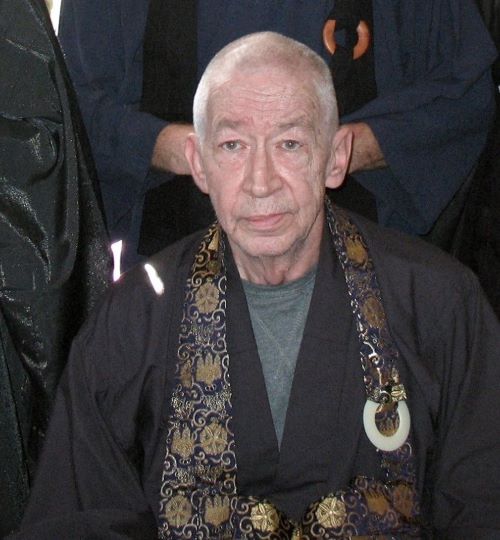
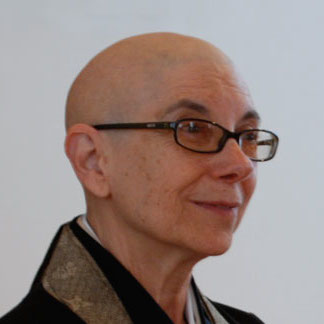
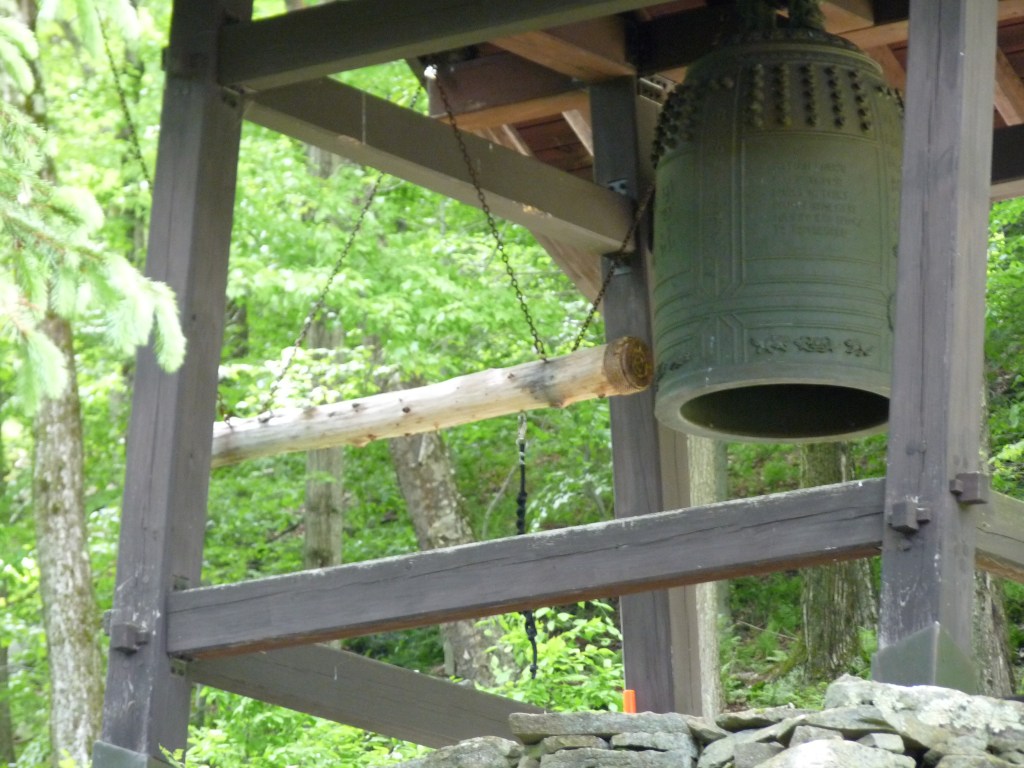
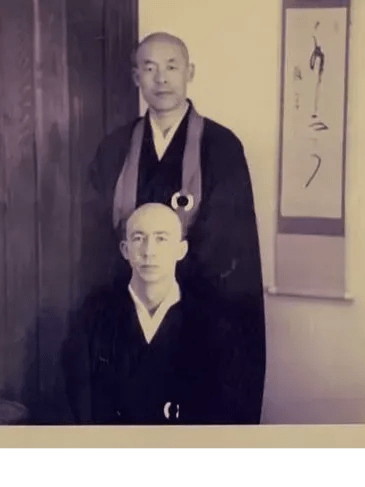
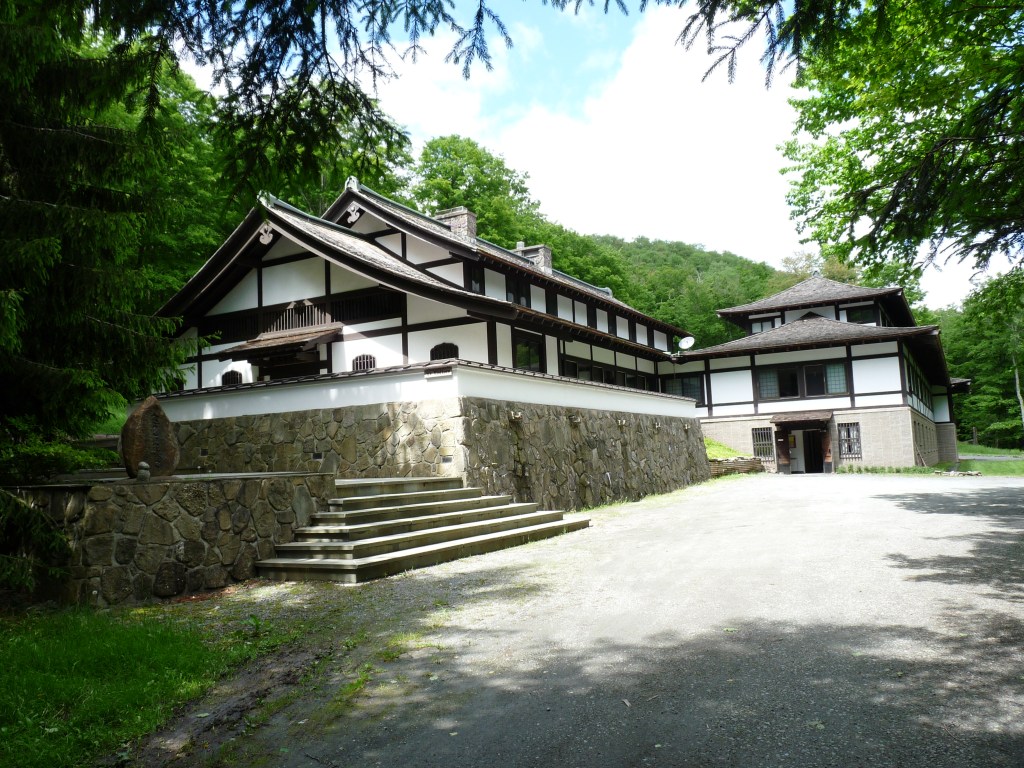
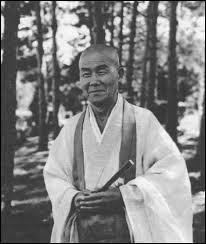
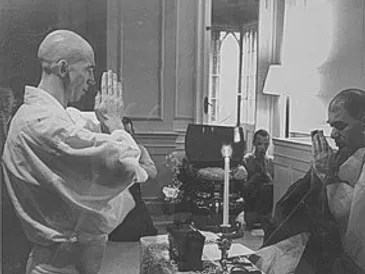
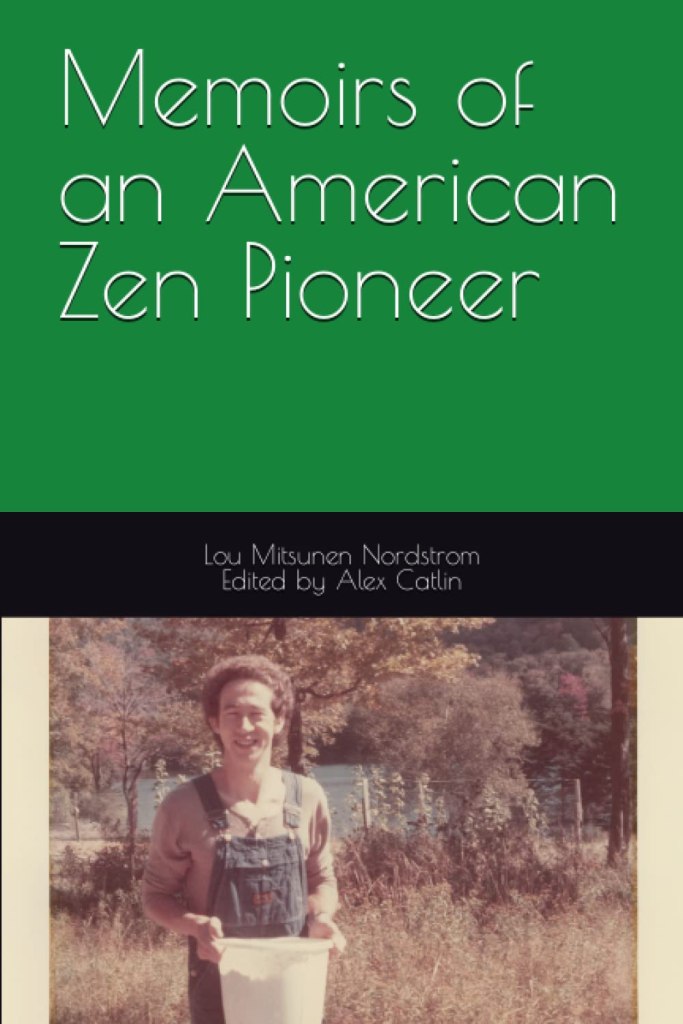
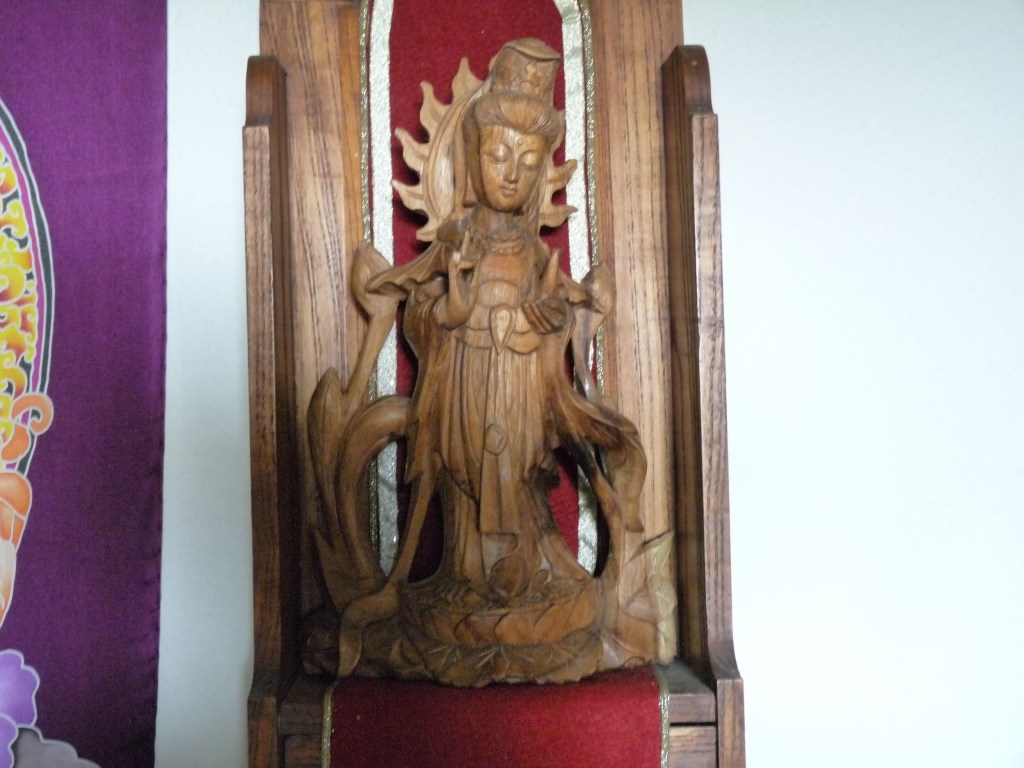
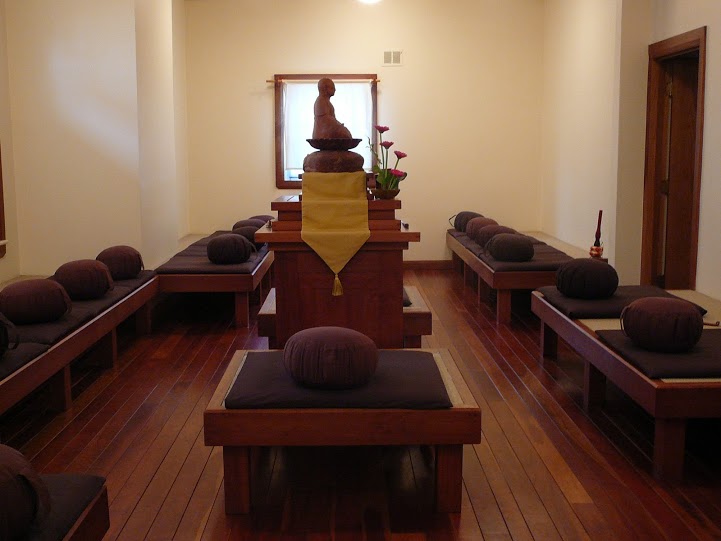
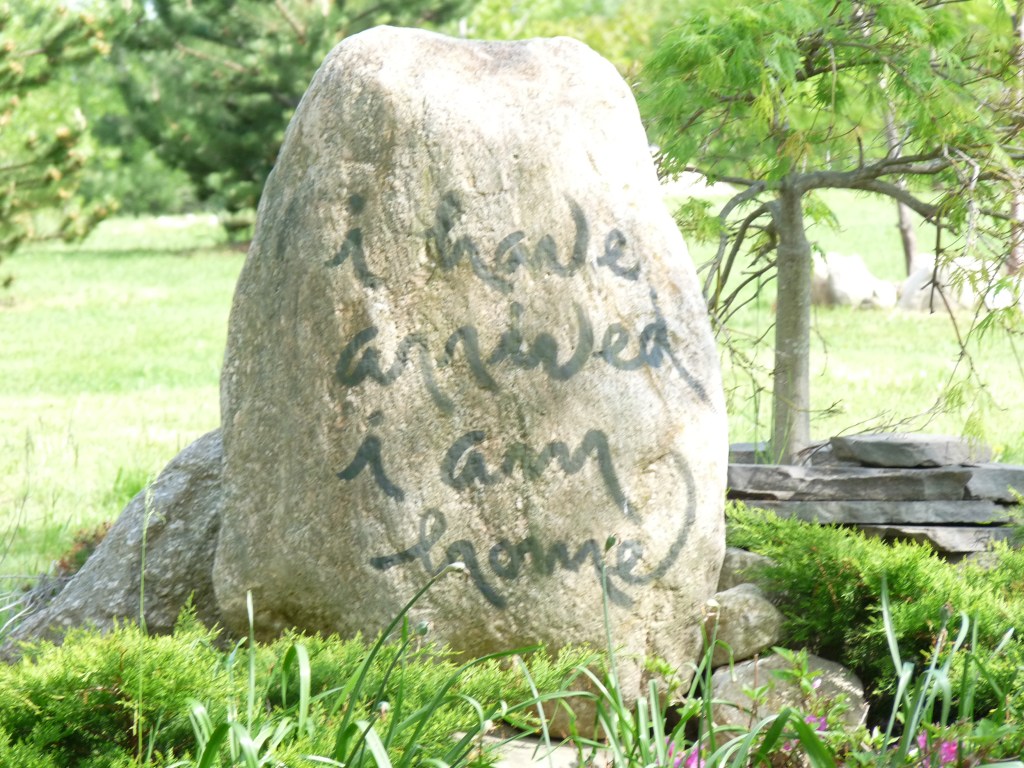
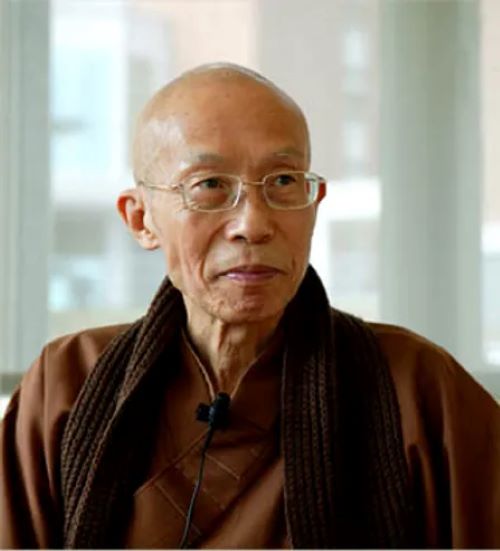
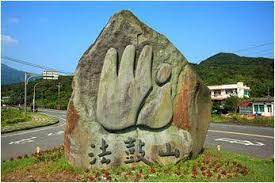
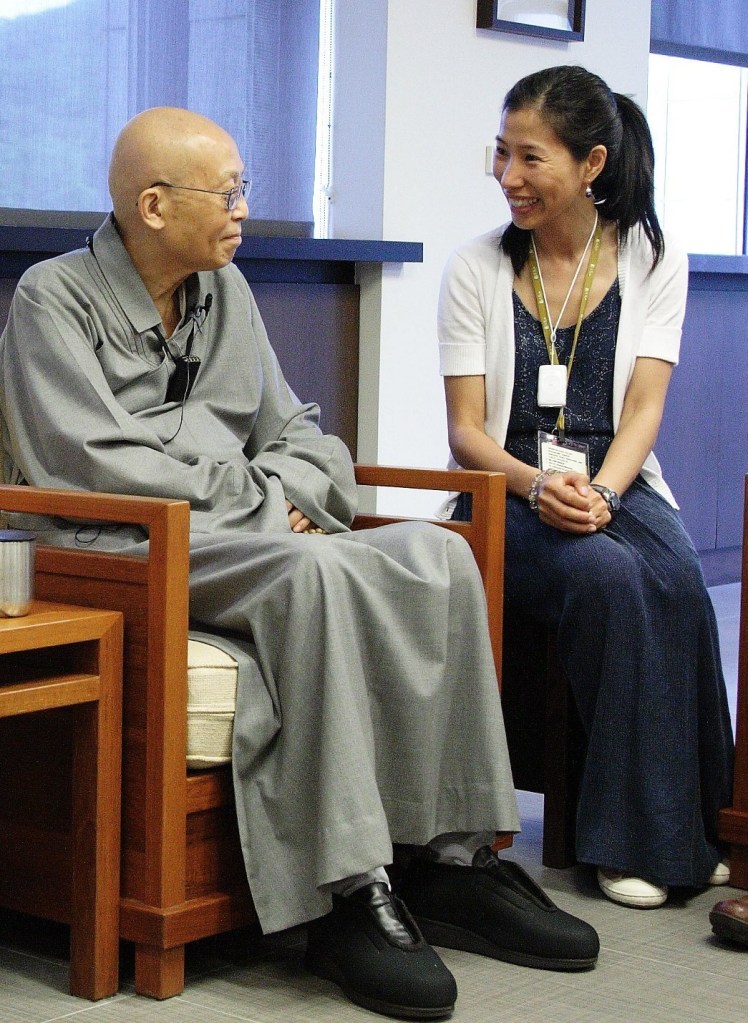
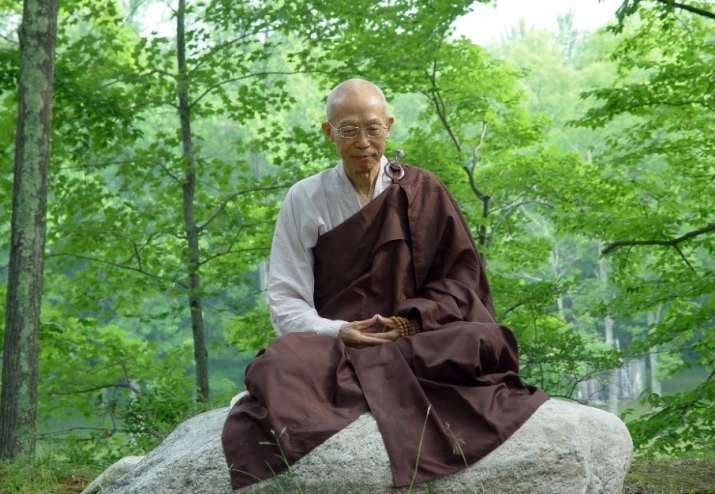
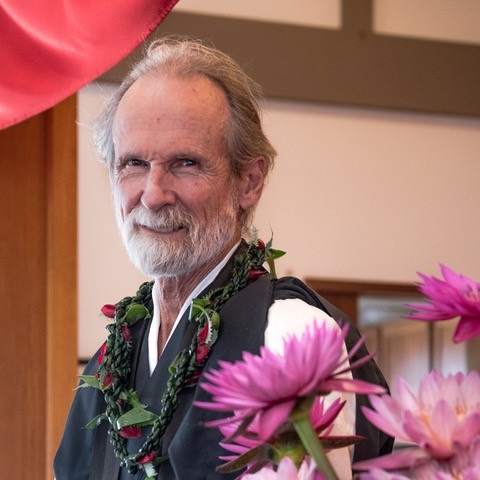
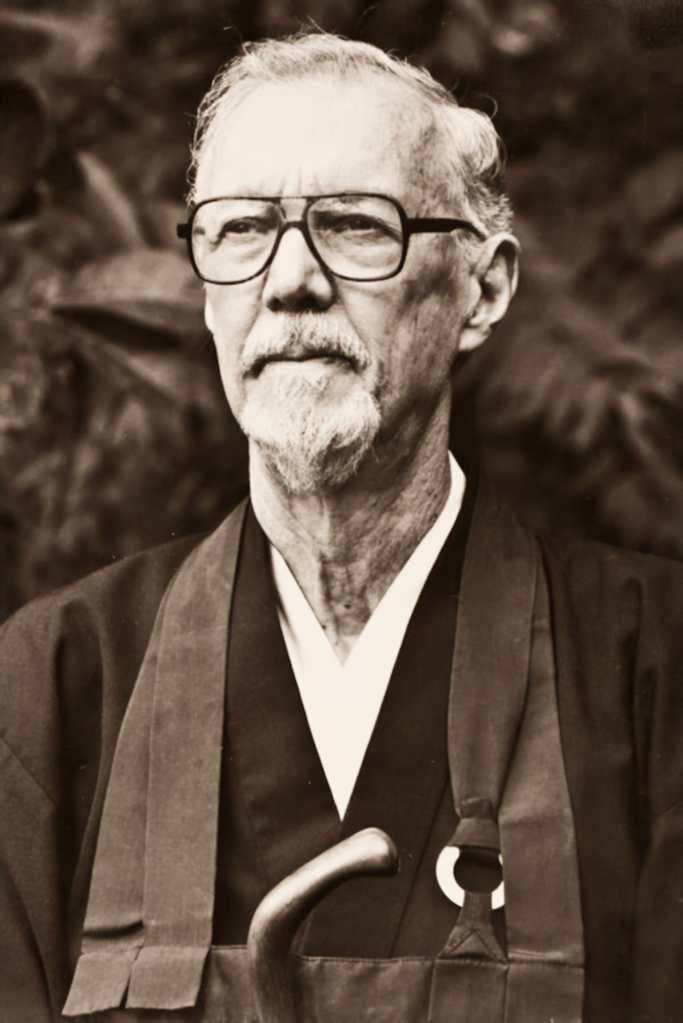
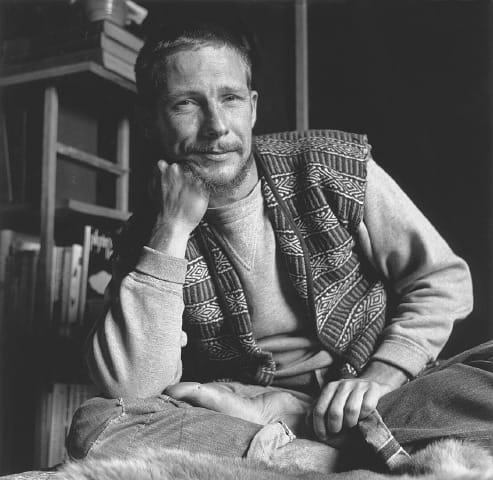
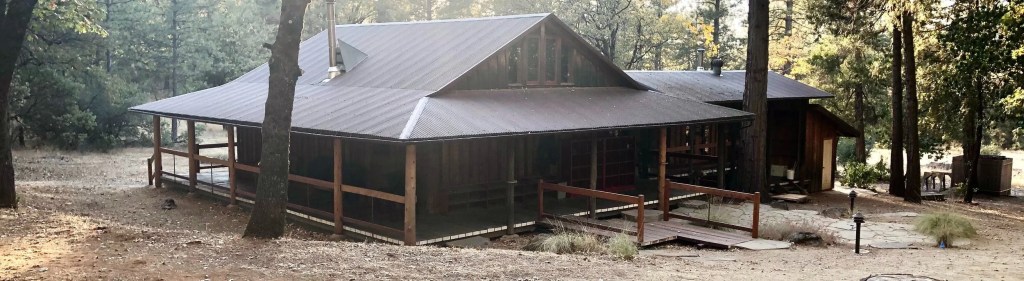
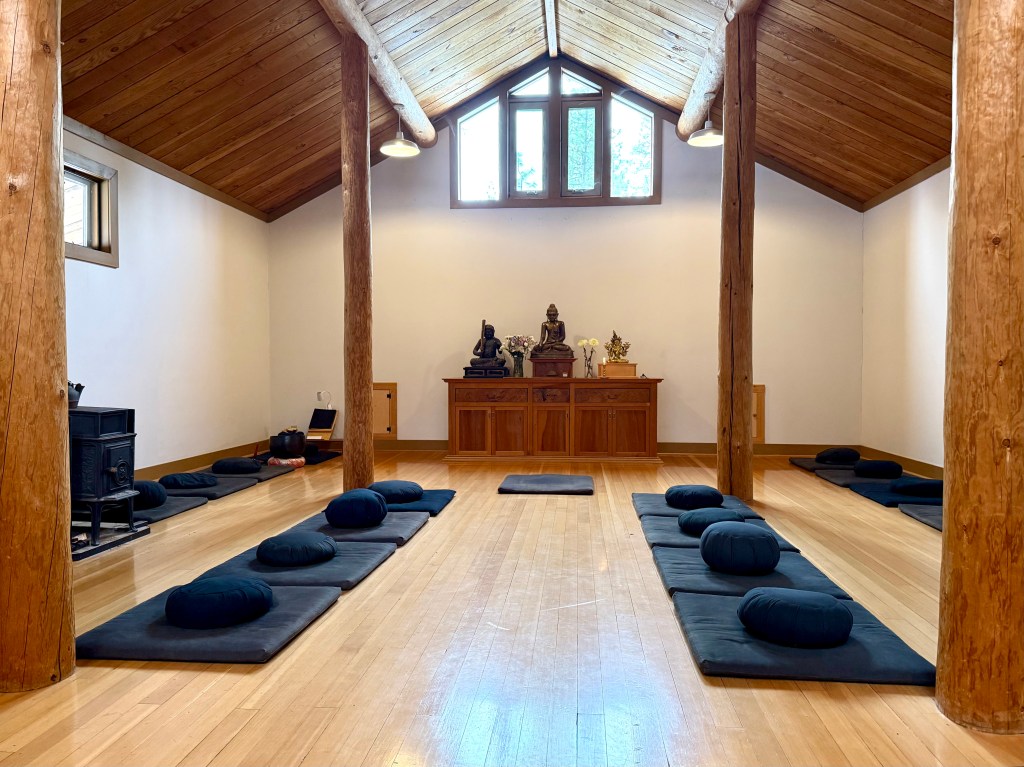
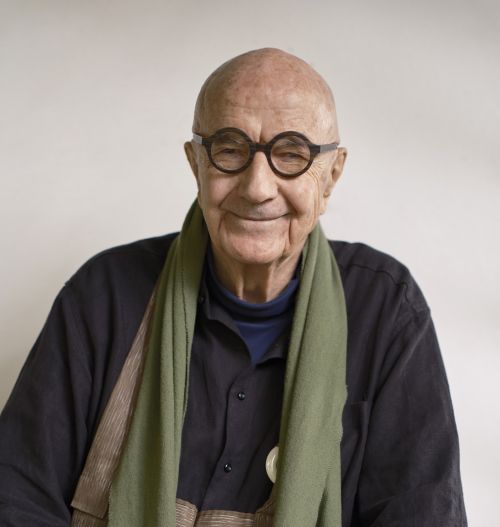
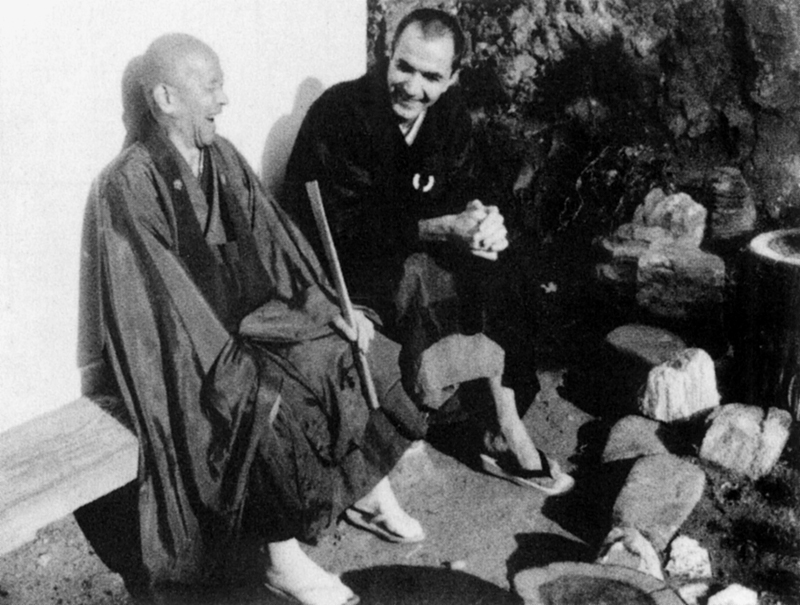
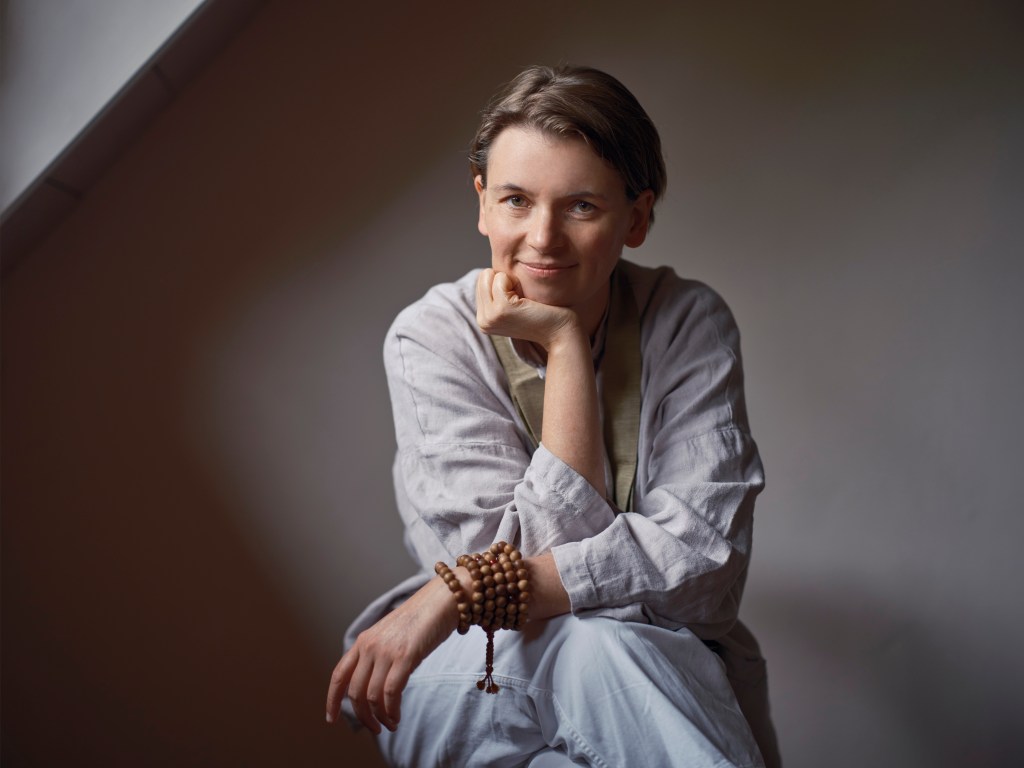
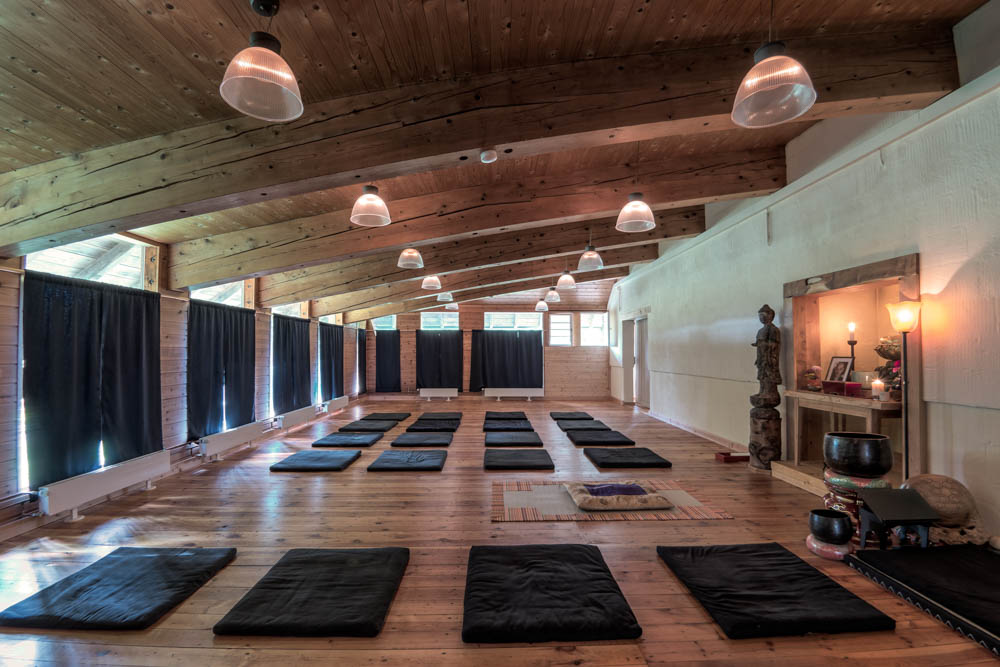
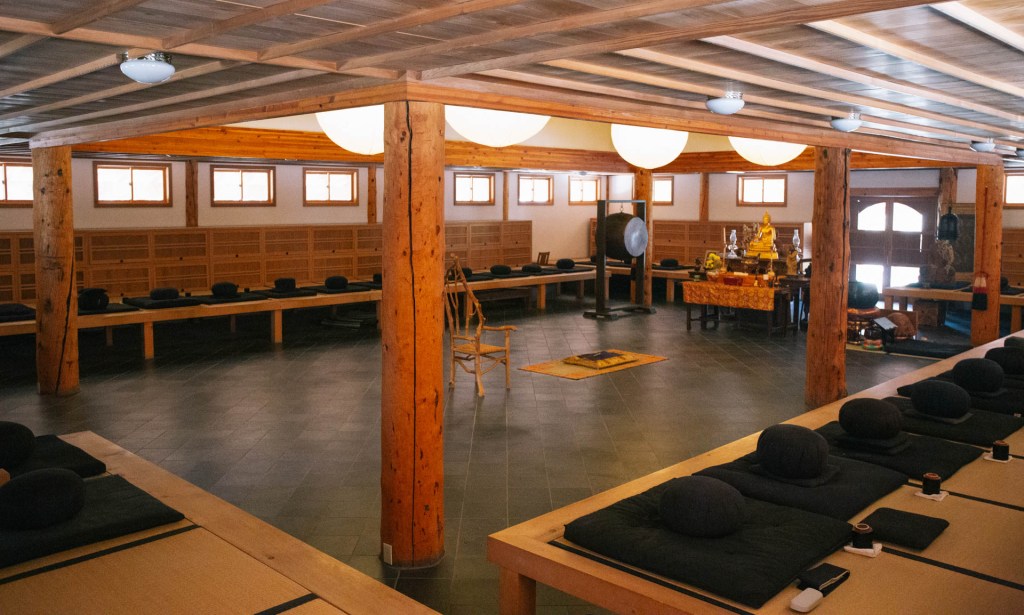
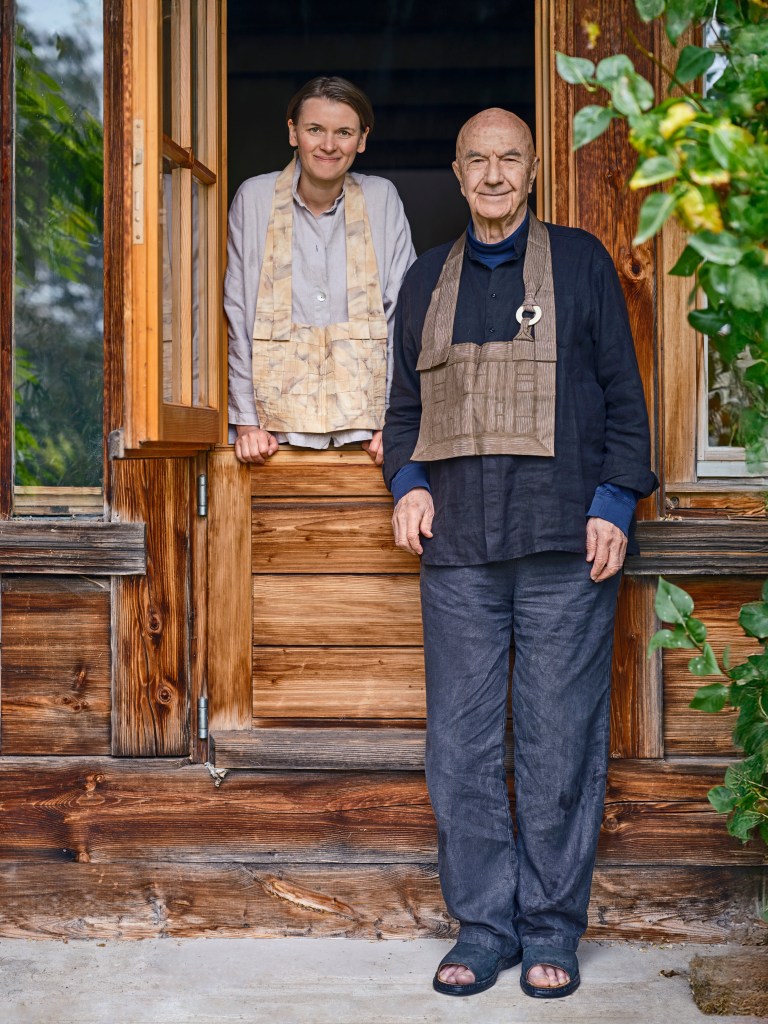
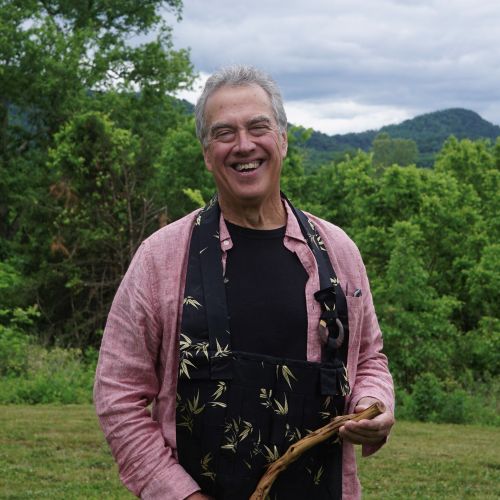
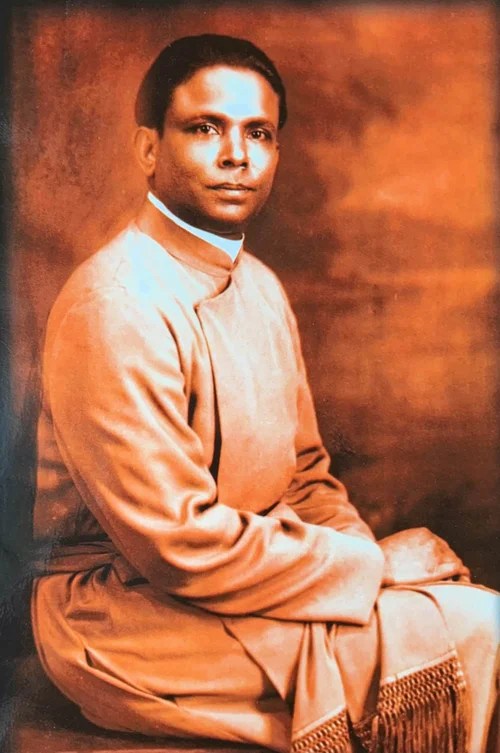
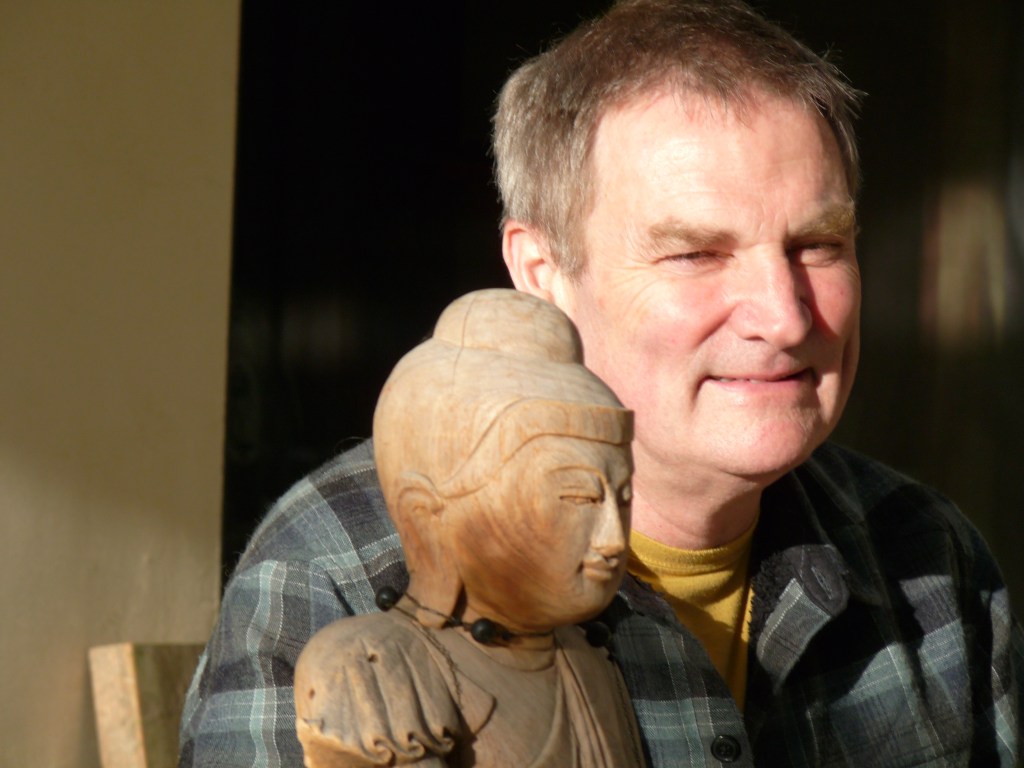
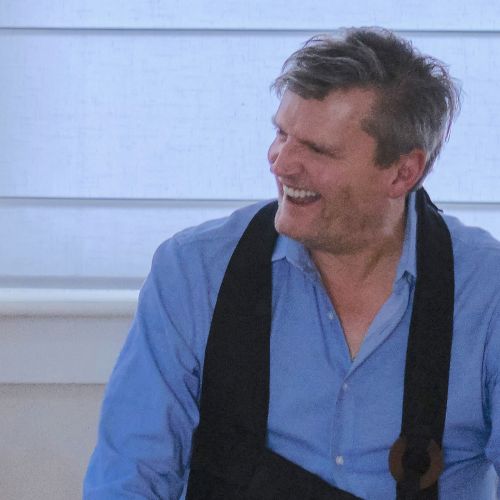
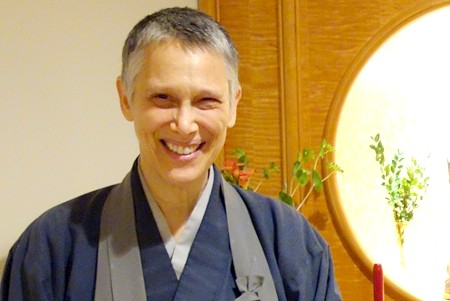
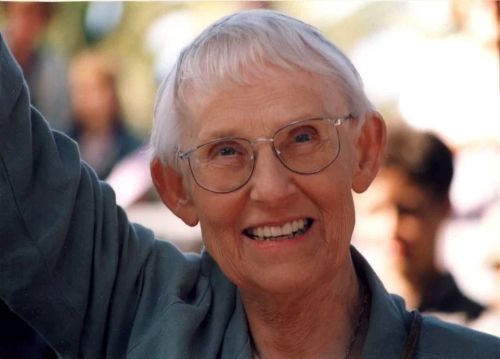
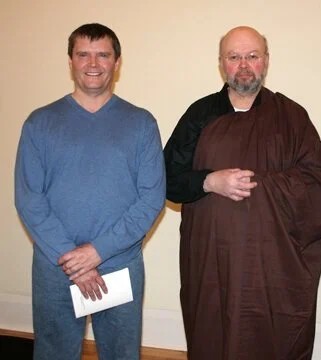
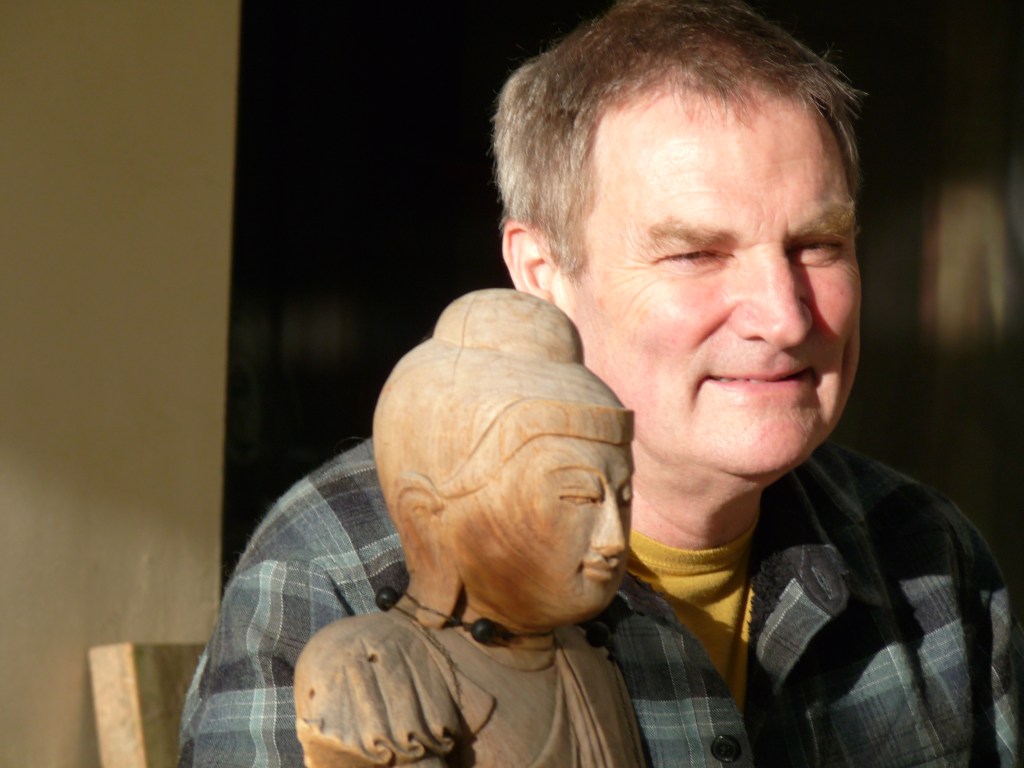
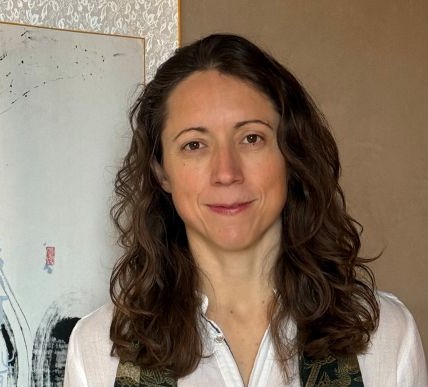
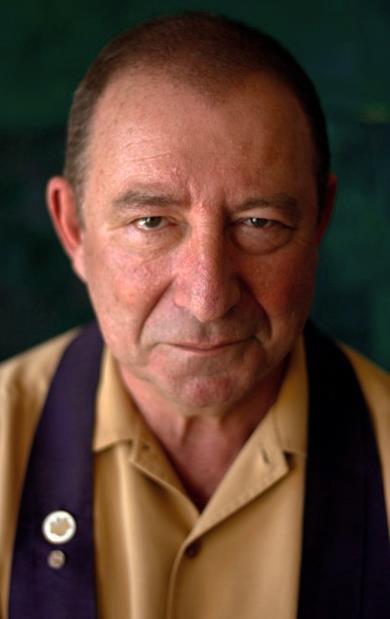
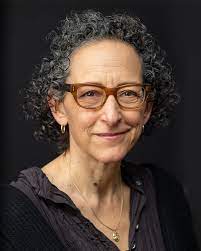

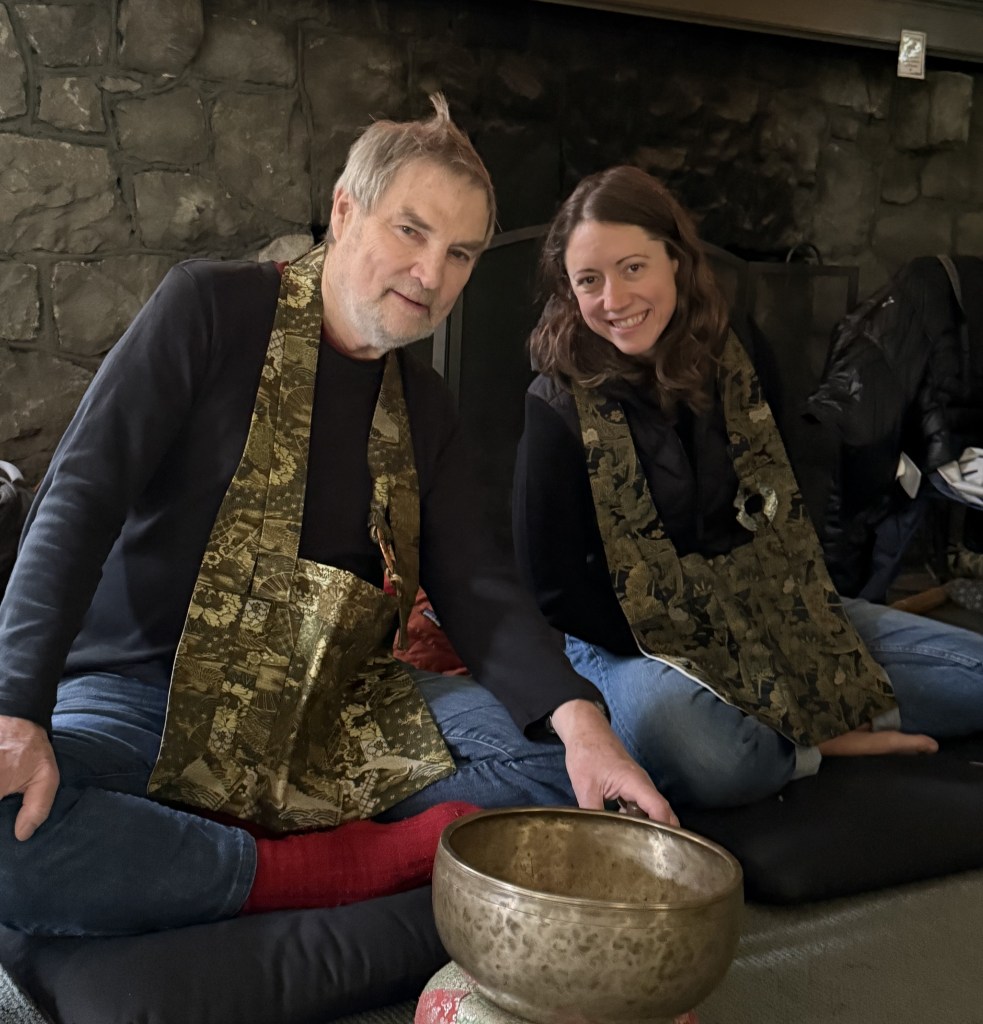
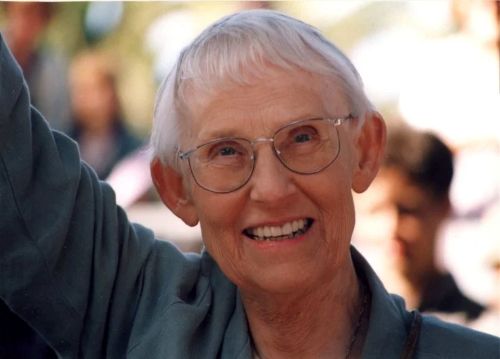
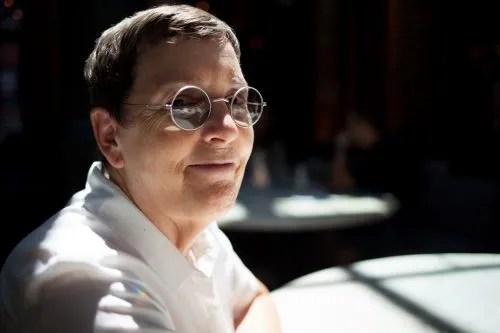
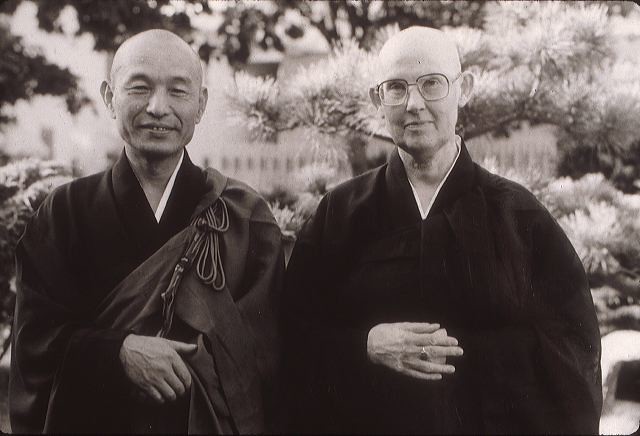
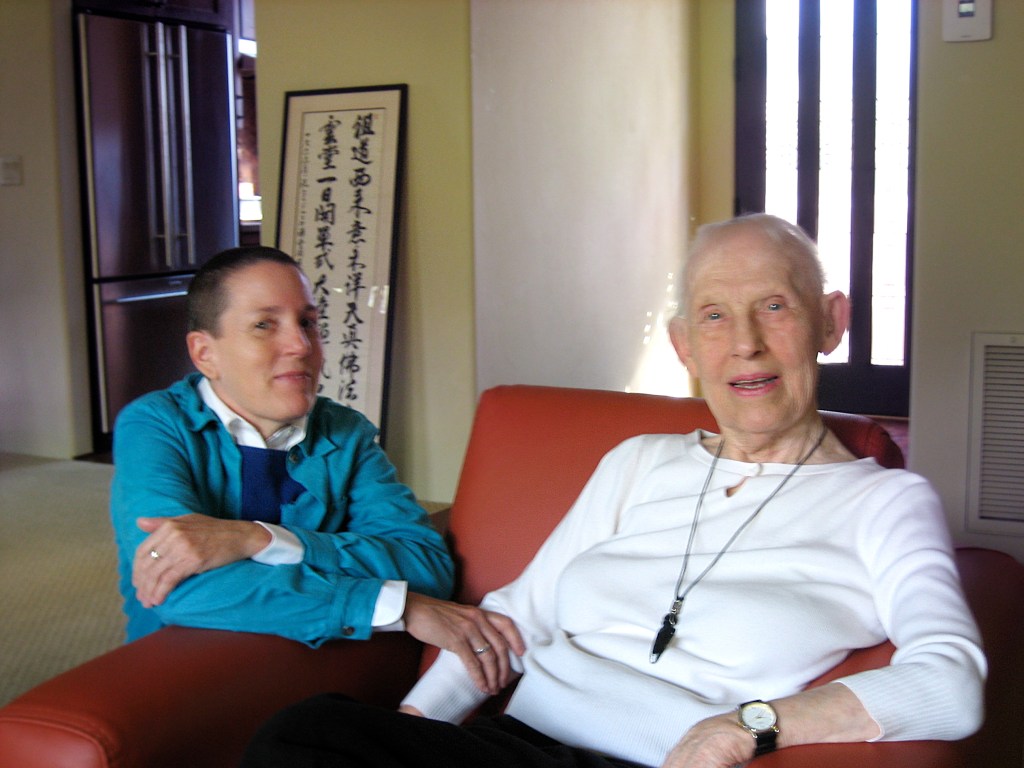
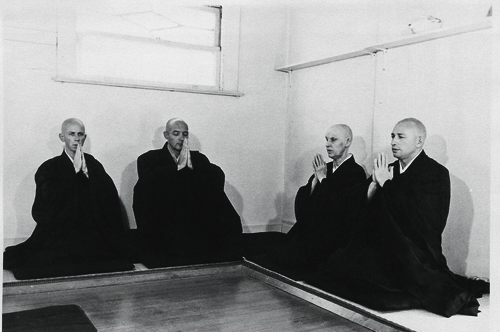
 Richard Bryan McDaniel