Moonspring Hermitage –

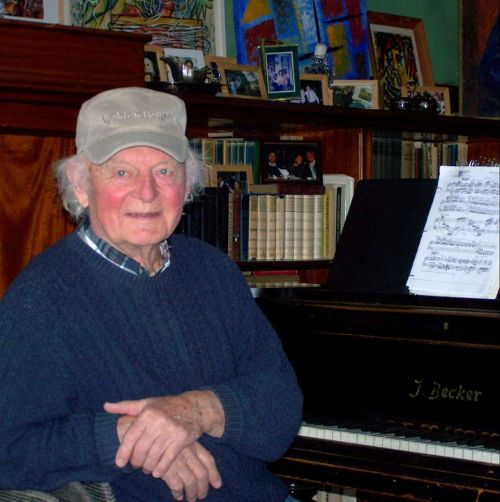
Walter Nowick was one of seven children born to Russian immigrants who were potato farmers on Long Island. It was a cultured family. Walter’s mother insisted that her children take piano lessons. A local teacher came to the farm every Saturday from 9:00 in the morning until 6:00 in the evening to provide individual instruction to each of the children. Walter, who started his lessons at the age of four and proved to have perfect pitch, showed the most talent, and the teacher encouraged him to apply to Juilliard while still in high school. He was accepted in 1940 at the age of fourteen.
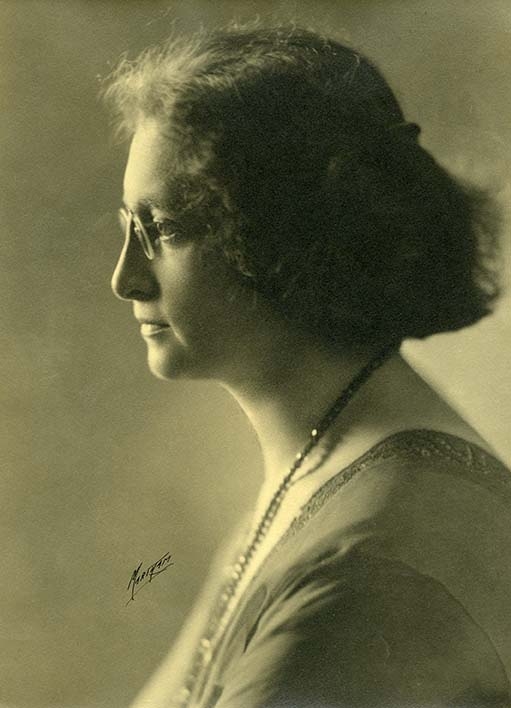
Henriette Michelson, a woman he would revere throughout his life, was his piano coach at Julliard. Henriette spent her summers in Maine, where she taught at the Kneisel Hall Chamber Music Program. Each year, she brought some of her New York students with her, and Walter was invited to be among them. While in Maine, he lodged at the farmhouse of Leverett and Addie Morgan in Surry.
He was drafted into the armed forces as soon as he finished high school and was sent to the Pacific Theater where he was engaged in the “mopping up” campaign on Okinawa. The brutality Walter witnessed there affected him profoundly.
After the war, Michelson, who was a friend of Ruth Fuller Sasaki, was instrumental in introducing Walter to Zen. He returned to Juilliard after demobilization, and, one day in her waiting room, he found a booklet of translations that Sokei-an Sasaki had made of the Zenrin Kushu, a 17th century Rinzai text. The sensibility expressed in one verse, in particular, struck Walter:
Bamboo shadows sweep the stairs, yet not a speck of dust is stirred;
Moonlight penetrates the bottom of the lake, yet not a trace remaind.
He began to accompany Henriette to zazen at the First Zen Institute. After he completed his music degree, Ruth suggested that he consider traveling to Japan to study with the teacher with whom she had been working – Zuigan Goto at Daitoku-ji. Ruth provided an introduction and used her influence to help Walter acquire the necessary documents to travel to Japan, then still occupied by US forces. He went to Kyoto in 1950.
Daitoku-ji was a training center for young men preparing to become temple priests. At 24, Walter was older than most of his fellow students, but, because he was the most recent person to come to the temple, they were all considered his superiors. The training was rigorous. Depending on the time of year, the day began at either 3:00 or 4:00 a.m. with two hours of meditation and a chanting service; there were another four hours of meditation in the evening, which did not end until 10:00 p.m. During the day, the monks were engaged in various maintenance tasks. Once a day, each student met with Goto to report on their koan practice. As at other Zen Centers, all activities – whether meditation, chanting, preparing vegetables, or working on the grounds – were to be undertaken with full-attention. The monks slept in quarters which had paper walls and only small space heaters to ease the chill of winter. Toilet facilities were primitive by American standards. There was never enough to eat; monastic fare was modest to begin with, but there were still food shortages in Japan at the time and meals were sparse. During sesshin, the schedule and conditions were even more arduous.
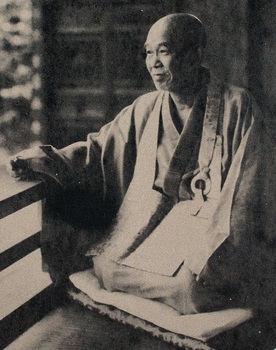
After a period as a resident student at Daitoku-ji, Walter moved out of the temple and continued as a lay student. There was a great deal of interest in western classical music in Japan at the time, and he earned a living by performing as well as teaching at the Kyoto Women’s University and the Kyoto Music School.
In all, Walter spent sixteen years in Japan. He took the precepts from Goto and was given the Buddhist name Gessen, which translates as “Source of the Moon” or Moonspring. Apparently the name was chosen because Goto was fond of Beethoven’s Moonlight Sonata. Walter remained a lay person. It had never been his, or his teacher’s, intention that he become a priest.
He made several visits back to the United States during his time in Japan, and, when the Morgans died, his family bought the farm on the Morgan Bay Road for him, possibly as an incentive for him to return home. He did not do so, however, until Goto died in 1965. And when he did return to Maine, he brought one third of his teacher’s cremated ashes with him.
It would later become an issue of some controversy what type of authority – if any – Walter had to teach. The fact that he had been entrusted with a portion of Goto’s ashes indicates a close relationship between the two. But it is likely that Goto did not foresee the unlikely emergence of institutional Zen in North America, so the matter of giving formal transmission – in the sense of authority to continue a particular teaching lineage – is not something that would have occurred to him.

The sculptor, Lenore Straus, had met Walter in Japan when she had been supervising the installation of an exhibit there. He gave her her first zazen instruction during that visit, and, when she returned to the US, she attended sesshin with Hakuun Yasutani when she was able to. She resolved the koan Mu during a retreat at Pendle Hill, Pennsylvania, and her awakening experience is one of the eight “enlightenment” stories in Philip Kapleau’s The Three Pillars of Zen. She wanted to maintain and deepen her practice, and, when she learned that Nowick was back in the United States, she made her way to Surry to ask him to be her teacher. Zuigan Goto had told him to wait ten years before teaching and that period of time had not yet passed, but Walter found it difficult to refuse her. She became his first American student. Other students were referred to him by the First Zen Institute. Still others found their way to Maine on their own.
In 1968, with some reluctance, Walter agreed to work with a small number of students he felt were sincere enough to commit themselves to practice. He established a board of directors, consisting of Lenore, himself, and a third member, and they incorporated “Moonspring Hermitage.”
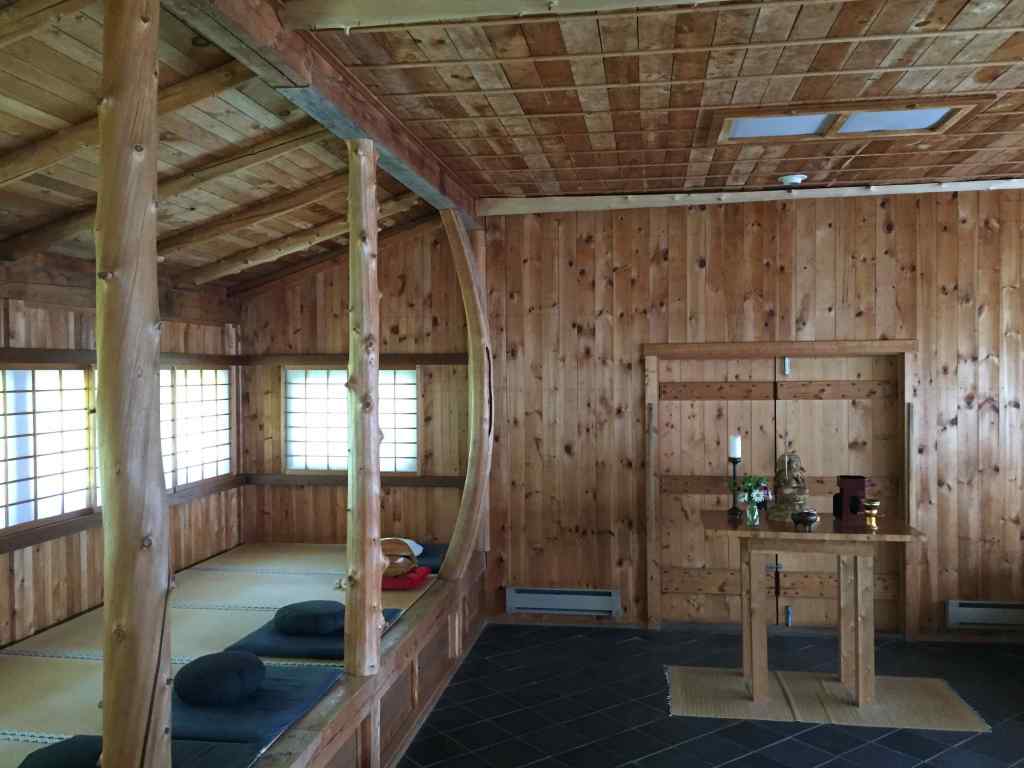
Walter developed a teaching environment based on what he was familiar with from Daitoku-ji. A woodshed was converted into a small zendo, and a sanzen room for private interviews was improvised in Walter’s living quarters on the second floor of the farmhouse.
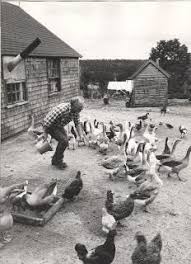
Ever since the eighth century Chinese Zen Master, Baizhang Huaihai, had declared that “a day of no work is a day of no food,” manual labor has been a traditional part of formal Zen training. So Walter, guided by his experience working on his father’s potato farm, revived the Morgan farm in order to provide work and income for the community. In addition to crops and extensive vegetable gardens, there were dairy cattle, hogs, and poultry. Walter was not a vegetarian and took charge of slaughtering the poultry.
This emphasis on physical work and personal contact was not unique, but it was distinctive. For Walter, Zen was never an end in itself. Moonspring Hermitage didn’t have the type of competitive atmosphere found in places like Rochester, where – as one of Philip Kapleau’s students put it – students vied with one another to demonstrate who could be the most “Buddha-ish.” It was a practice which – by focussing on the things in which they were involved – students could be led to greater self-awareness and a sense of harmony with the world.
Unlike other Zen pioneers to the Americas, Walter deliberately stayed under the radar. An article in Tricycle Magazine in 2009 put it this way:
Back in the late sixties and seventies, when gurus, yogis, and roshis were in particularly high demand, Nowick had avoided the limelight, choosing instead a life of quiet practice. Even after the Dutch novelist Janwillem van de Wetering published an entire book about Nowick’s group, A Glimpse of Nothingness: Experiences in an American Zen Community, in 1975, they managed to stay off the radar, thanks to Nowick’s stipulation that his friend Janwillem (who later moved to Surry to live near Nowick) not use his real name or say where he was. And while other roshis lectured in multimillion-dollar facilities, Nowick ran a sawmill and lived in a shack.[1]
For those who did find him, and who he allowed to stay, he could be very generous, selling one-acre parcels of land for $1 on which students could build homes.
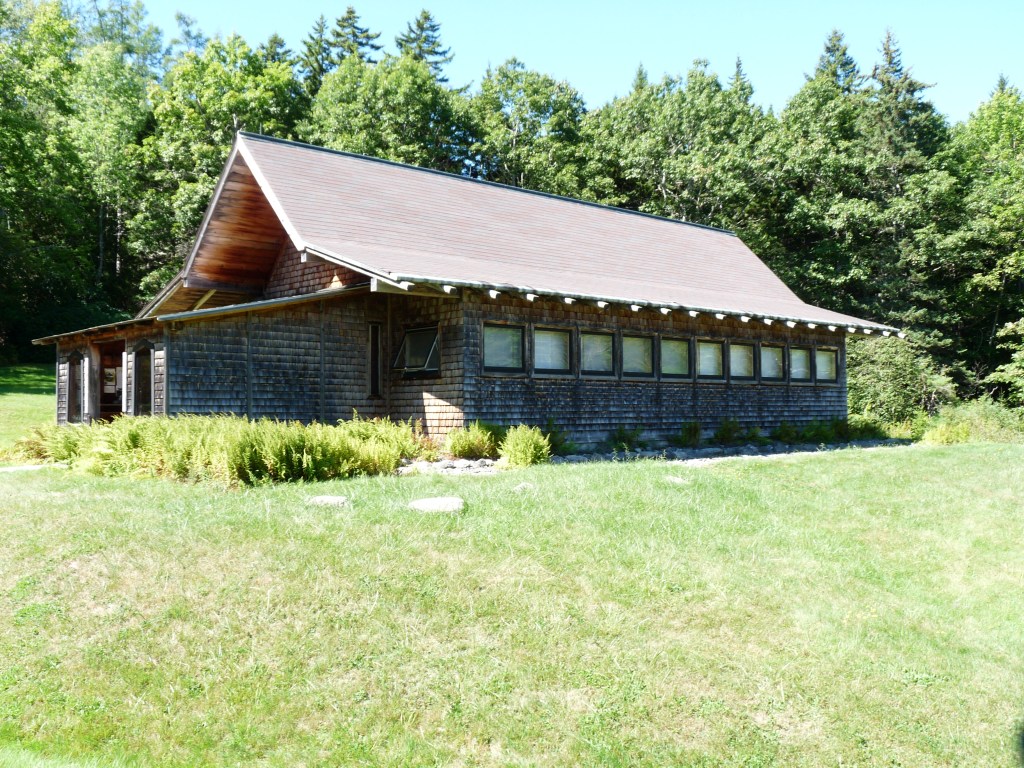
In spite of the isolated location and the challenges of winters in Maine, students continued to arrive, and by 1969 it was necessary to build a larger zendo to accommodate them. Walter had a sawmill on the farm, and the lumber was milled on site from trees harvested on the property. After allowing the boards to dry for a year, the community—under the supervision of a student, Ken Weinberg, who had worked on set-designs for motion pictures – completed the construction of the new zendo in 1971. A pond was designed near the zendo and paths cut in the wood. One led to a glacial rock known as the “Roshi Stone” where, three years prior, Nowick had interred the ashes of his teacher. A plaque, marking the spot, reads: “Here lie some of the ashes of the Japanese Zen Master Goto Zuigan, my teacher. They were placed here in October 1968, with hope that his teaching will continue.”
In 1984, while the Cold War between the US and the Soviet Union was still simmering, Walter saw a television program, The Day After, about the probable after-effects of a nuclear war. The program stunned him. A student, who was with him at the time, reports: “He said, ‘I actually realized everything could come to an end: Mozart, Beethoven, Zen, Buddhism, everybody could stop.’” He felt it particularly strongly because of his Russian heritage.
“When Walter saw ‘The Day After,’” another student tells me, “it deeply affected him. And I suspect in part it goes back to his experience in World War Two and seeing the devastation in Japan. But he would go for months, never leaving the farm. He was really centered and focused on practice and his students there. He would play the piano on a Sunday evening in the summer. Music was always there; it was a huge love of his but not something he could spend time on. After he saw that film, he decided to play all of the Beethoven sonatas in Ellsworth, to give the money to Ground Zero.[2] And for him to go away from the farm to go to Ellsworth to perform was just unheard of. He didn’t put time into music. He didn’t practice. He certainly didn’t go off the farm. It was a change of focus. And it wasn’t really music that brought him off the farm, it was his concern about the larger issues. And wanting to engage in them in some way. He said, ‘What I can hold up, personally, is music, and that’s what I’m going to hold up. This is something we should not lose. The world should not lose Beethoven. I can hold that up, and I can give the money from it to Ground Zero.’”
That same year, he formed the Surry Opera Company. While in Japan, he had been the accompanist for a choral performance of Verdi’s Aida. He followed the format of that production for renditions of both Aida and Mozart’s Magic Flute. Launching the Opera Company with non-professional singers – made up of (as one description put it) sangha members, lobster fishermen, pulpwood cutters, and homemakers – was just as improbable an endeavor as establishing a zendo in rural Maine, but within a year of its inception, the Company was invited to perform at Wolf Trap near Washington DC. The following year they performed Mussorgsky’s Boris Godunov in Russian and, in 1986, made the first of several trips to the Soviet Union, inaugurating more than two decades of musical collaboration between Walter’s Company and musicians from Russia, Japan, France, and elsewhere.
Several Moonspring students were members of the chorus, but others felt that Nowick was spending too much time with music and not enough time teaching. They wrote him a letter in which they expressed their concerns. He responded with a brief hand-written reply:
It has become distinctly clear to me that I have fully involved myself in music and that it has taken me from my work with you as a teacher. Because of this situation, I wish to inform you without further delay of my decision to resign from Moonspring as teacher. I will help in any way I can to support its growth. I hope you will accept this decision along with me as the wisest one for all of us concerned.
A handful of students formed a board in order to maintain the zendo, and Nowick turned Moonspring Hermitage over to them in 1993 with the stipulation that the name – which had been derived from his Dharma name – be changed. They reincorporated as the Morgan Bay Zendo and evolved into a center for meditation practice unaffiliated with any particular school of Buddhism.
Walter continued to reside at the farm, and, for the remainder of his life, his energy was focused on music. As Cold War tensions eased after the collapse of the Soviet Union, the Surry Opera Company gradually faded, but Walter still gave piano recitals in the barn as well as in Russia and Japan. Russian musicians continued to come each summer.
Walter maintained his personal Zen practice, but, although he visited occasionally, he remained separate from the operations of the zendo and did not resume formal teaching.
He suffered a stroke in 2012 and went into care at the Maine Veteran’s Home in Bangor but eventually chose to leave and return to Surry where he spent his last day.
Walter Nowick died on February 6, 2013, three months before I began the visits to Zen communities throughout North America that are the basis of these profiles. That April, a memorial service was held at the zendo where friends and former students – many of whom had taken turns at his bedside during the last weeks of his life – shared stories. The following November, a portion his ashes were buried at the Roshi Stone alongside those of his teacher, Zuigan Goto Roshi. Another portion were flown to Japan and scattered near the plot where the remainder of Goto’s ashes had been interred.
[1] https://tricycle.org/magazine/down-east-roshi/
[2] A charitable organization of the time that sought to reduce the threat of nuclear war
 Richard Bryan McDaniel
You might want to add that he was actually asked to resign as teacher after his involvement in sexual scandals.
LikeLike