Albuquerque Zen Center –
When the founding abbot of the Albuquerque Zen Center – Seiju Mammoser – let it be known that he was contemplating retirement, the board of directors began looking for someone to succeed him. Seiju had been a disciple of Joshu Sasaki in the Japanese Rinzai tradition. The search process – according to one member of the hiring committee – lasted more than three years. Approaches were made to form alliances with other Zen sanghas, and letters were sent. They told the American Zen Teachers’ Association that they did not care what lineage or heritage the teacher represented, but they wanted someone who was the equivalent of a roshi, who would agree to live in Albuquerque, and who was authorized to meet with students in private interviews. The teacher they finally found was a Zen Master in the Korean Seon tradition.
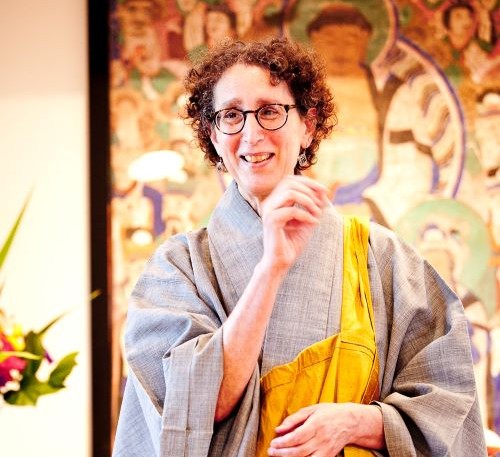
Anita Feng – Zen Master Jeong Ji – grew up in a Jewish neighbourhood33 in Detroit. Her grandparents had been immigrants from Eastern Europe. She tells me the family was culturally Jewish and “broadly speaking spiritually too but not in any organized way. I think that of everyone in my family, I was probably the most spiritually oriented. My first interest was in Hasidic Judaism. But growing up in the ’60s, it seemed untenable with the liberating forces of the ’60s.”
I ask how she first learned about Zen.
“I was playing in a Balkan band in Maine where I was living at the time in my early 20’s. A member of our band showed me the book by Suzuki Roshi, Zen Mind, Beginner’s Mind. And that was it. The teachings made perfect sense. I had never subscribed to any kind of movement particularly, and I was never much of a joiner. But after reading that book, within six months I sold my house, got rid of all my belongings, and left to study with the nearest Zen master, who happened to be Zen Master Seung Sahn in Providence.”
The people I’ve been interviewing often have intriguing backstories. I want to ask about Balkan bands and how she got to Maine but stick to the main story-line and ask what it was about the Suzuki book that had grabbed her attention.
“Oh, I think a couple of things grabbed me right off the bat. One was the title, Zen Mind, Beginner’s Mind. I loved that. I was already a poet and worked as a ceramic artist. The concept of a beginner’s mind was always something that was really important to me as a creative type. The poetry in Suzuki Roshi’s teaching resonated with me very deeply. There’s a phrase in his book that roughly goes: ‘The reason the whole world is so beautiful is because the world is constantly losing its balance against a background of perfect balance.’ That image touched me. The other thing I admired about the book was that it had instructions. So I followed them. Even though it was the very first time I sat down to try meditation, somehow, after I got up from that first sitting, the grass looked more sparkly and the experience of walking down the street seemed more vibrant. I had always wanted to live as completely as possible, and this first experience of meditation gave me a pathway that I could trust.”
I do ask about the ceramic art. She tells me that by her mid-20s she had “established a career of making musical instruments out of mud, out of clay.”
“You made clay flutes?”
“And clay drums, clay horns. It was my livelihood for many years, until I switched to making Buddhas out of clay fifteen years ago.”
“Tell me about meeting Seung Sahn.”
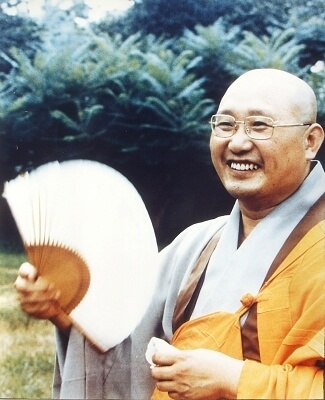
“Well, meeting him was a bit unusual from the beginning. Actually my first meeting with him was at the Cambridge Zen Center because that was a little closer to where I was living at the time. I came down to do a retreat for the first time at the Cambridge Zen Center, and I was very nervous. I was pacing around in the parking lot, hesitant to go in. Finally I got up the courage to open the back door and at that very moment Zen Master Seung Sahn was coming out, and we practically butted heads. There we were, entangling eyebrows from the beginning.[1] Aside from that first encounter, my lasting impression of him was his complete presence, his way of being in the world inspired me deeply.”
Several people I’ve interviewed – including Bobby Rhodes and Richard Shrobe – were practising there at the time.
“In retrospect, it may have been the golden age of that center because there were more than forty people living there at the time. The Zen Center was full. There were people who bought houses, rented houses in the area. We were all new. The Dharma was new. We were there to do hard training and wake up. New teachers appeared. People were working, starting families. All of us were trying to behave like monks and nuns. But nobody had figured out yet how you could live in a community and do hard training and work and have relationships. It was untenable,” she adds, laughing.
“I remember Chozen Bays telling me, that the atmosphere at ZCLA when she was there was a mix of hippie commune and Buddhist monastery, and that it wasn’t a particularly workable mix.”
“That sounds pretty accurate to me,” Jeong Ji agrees. “With all of us being in our 20s and 30s we had a lot to learn. I think one of the main lessons we learned from Seung Sahn in the early days was simply how to behave. There was also the fact that as young Americans, we just idolized Asian teachers. And while we struggled with learning how to behave appropriately, these Asian teachers were struggling with the same thing. But because of their unquestioned authority, they could almost get away with just about anything.”
“They got away with a lot.”
“They did,” she admits. “Zen Master Seung Sahn felt that our behaviour was a little too wild. So he encouraged everybody to get married, and he even arranged marriages. And none of them worked. Not a single one lasted. So that was a rocky time. It was a golden era in terms of the number of people who were interested in doing hard training in Zen, but it was also a dark time in terms of Asian masters getting lured in by the freedom of American culture. There were a lot of boundaries crossed.
“Another thing that I saw was that everyone was talking like Seung Sahn in pidgin English. But we were, for the most part, all Americans! I was a poet and writer, and it was unbearable to me to hear this kind of mimicry. It could be funny, but if you’re living in a community, and people are doing this kind of ‘Zen speak’ day-in and day-out, I thought, ‘This is not the Zen that I want to live with. I want to live in a world where Zen has no flavour. A Zen that can go anywhere and speak in any language.’”
After living in the community for three years, she left.
“It’s kind of a complicated story. Zen Master Seung Sahn really liked the fact that I had my pottery studio there and that I had taken on apprentices from the community, so he – and I also – thought this could be a very nice cottage industry for the Zen Center. In retrospect, it was a ridiculous idea. I mean, what did I do? I made musical instruments out of clay. This was never going to be a big business. Nevertheless I went as far as to buy two tons of bricks to build a big wood-fired kiln on the premises, and I just couldn’t bring myself to build it. I even got a huge load of wood to use. I’m very much of a doer kind of person – not a hesitator – but on that I hesitated quite a bit. And then I married the head monk of the school. And since this was from a celibate tradition, it was kind of big news. Zen Master Seung Sahn, when he realized he couldn’t talk us out of it, married us at the Zen Center. And then my husband and I felt like it was time to live a kind of normal life, start a family, not in the Zen Center. So we moved away. I went for a fifteen-year period not being involved with a Zen Center.”
“Did you continue to practice?”
“Yes. I had my practice, but I was on my own. No sangha. No contact with any sangha. Not until many years later.”
“And what brought you back?”
“After that first marriage ended, years later when I was married to my current husband, living in Seattle with our three children, I was writing a book, and I wanted to draw from my experience of living at the Zen Center all those years ago. So, for research purposes, I looked up the nearest Kwan Um Zen Center, which was right there in Seattle. When I attended the first session, as soon as I heard the Heart Sutra and the Great Dharani being chanted, the tears just started to come down my face. I was deeply moved. And even though I didn’t know any of these people, I immediately felt that I had come home in a new way, and that was it. I had rejoined sangha.”
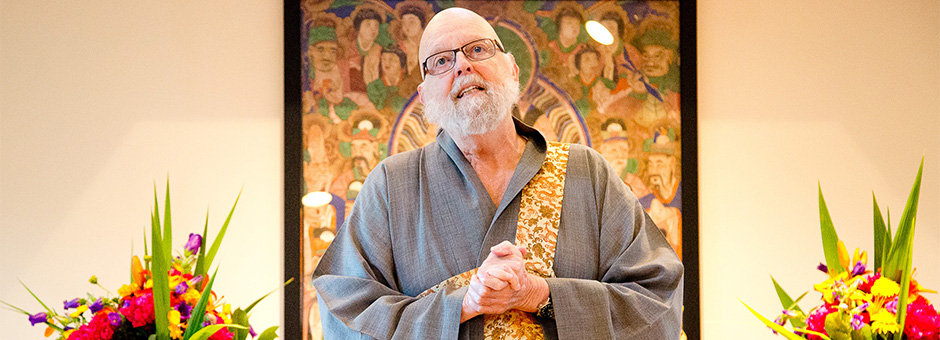
The teacher in Seattle was Bob Moore, Zen Master Ji Bong.
“He was one of the first Zen Masters given final transmission by Zen Master Seung Sahn along with Bobbie Rhodes, George Bowman, and Richard Shrobe. There may have been others. But Bob Moore was in that group. And I’ve been his student ever since. With Ji Bong as my teacher I felt I could be who I was and not have to be anybody different. He was also very independent-minded and well-spoken, a professor of music. So he clarified a lot of these basic teachings for me that had originally come from Zen Master Seung Sahn with his limited English.
“For example, when I studied with Zen Master Seung Sahn, I couldn’t have cared less about koans, but I did the koan training with him because all his students did. The koans’ wisdom didn’t really sink in until many years later with Zen Master Ji Bong. In some ways, koans are like poetry which I already had a lot of appreciation for. And also I was older and more mature and could see the wisdom of their teaching better.”
Ji Bong, however, was located in Los Angeles and only visited Seattle on occasion. The Kwan Um School eventually assigned a teacher to the community, but – from Jeong Ji’s perspective – it wasn’t a “good fit. So I ended up quitting the Kwan Um School again. I think my independent nature felt confined by certain teaching routines. In part the way the koan training was becoming systematized. And, again, I was rebelling against this propensity to imitate or mimic others that we admire. Do you know the story of Gutei’s finger?[2] It’s kind of like that. Gutei had his awakening experience when his teacher raised a finger, and his mind opened. So then for the rest of his life, as a teacher himself, Gutei raised his finger. But he had this problem with a disciple. Do you remember the story?”
“Mm-hmm. So he cuts the kid’s finger off.”
“Yes. The student figured he understood this teaching and could easily transmit it. It was very straightforward! So a visitor came by one day, asking to see the master when the master wasn’t at home, and the disciple said, ‘Oh, I’ll tell you what the teaching is.’ And he raised his finger. What this suggests to me is that if a student or a new teacher just follows the teaching of his teacher – like Fa-yen said – he diminishes that teaching by half. There’s no energy left. No vitality. We have to show up as ourselves and teach as who we are. Accordingly, for my own practice, I have sought to express this in my creative work, asking the question, freshly, ‘What is Buddha?’”
She began sculpting Buddhas which, as she puts it, “reflect who we are now, in all our diversity. Bottom line – if Zen becomes too systematized, becomes a corporate Zen, if you will – then it doesn’t grow, it doesn’t evolve. So I left the Kwan Um School again.”
A few years later, Ji Bong left as well.
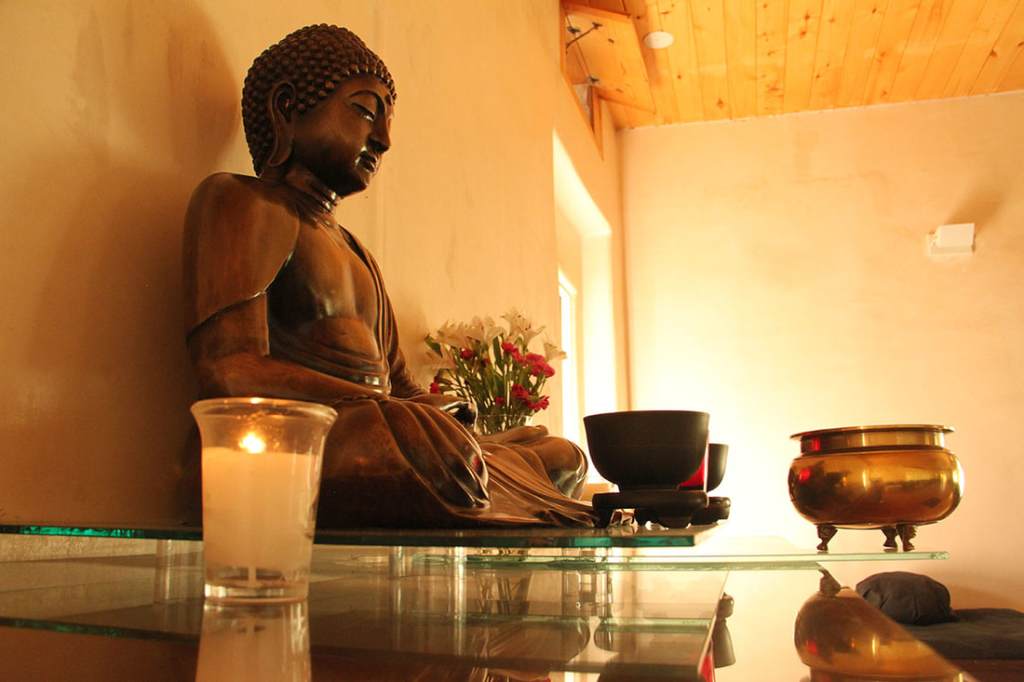
“It was easy for me because I wasn’t anybody special, but for him to leave was a big deal. And one of the most important things for him – and later on for me as well – is that if someone has the title and the authority of a Zen Master then they need to have some independence. Of course there are risks involved, but in terms of developing one’s teaching and relationship with one’s sangha – both of which are entirely unique – there has to be some autonomy in how that’s carried out. So he left. The sangha split apart. I came back to rejoin the Seattle Sangha that remained. And a little while after that – maybe a few years – I became a Ji Do Poep Sa. That was in 2008, and in 2015 I received final transmission and became a Zen Master.”
Her transmission comes through Ji Bong, but there is a process “we kept from Zen Master Seung Sahn which is that prospective Zen Masters need to be tested by other Zen Masters of other schools in other traditions. I met with Wendy Egyoku at the Zen Center of Los Angeles which was really wonderful. Ji Bong left it up to me to pick who I wanted to study with, and I wanted to study with a woman teacher. American born. So I went to see her, and it was very humbling and inspiring and encouraging. I think it’s a wonderful thing to get out of your zone, get out of the Zen culture that you’re familiar with and throw yourself into something that’s completely different. It inspired a richness and depth to my practice and to my thoughts about what it means to be a sangha, to be a teacher, to be a student. I also met with two other Zen teachers—Jack Duffy, from Aitken Roshi’s lineage, and Steve Hagen, from Katagiri Roshi’s lineage. I enjoyed this aspect of my training a lot.”
Eight years later, Jeong Ji gave transmission to two of her students. “In Seattle I could see that we had a number of wonderful teachers-in-training. It was a good time for me to step back. Again, I feel it’s important that the way the teaching is transmitted is unique, that it come through different voices. That’s just the nature of change and growth and vitality. So I’d been thinking, ‘I’m going to pull back and give these new teachers time and space to discover their own voices.’”
She wasn’t entirely sure what she would take on next. “I didn’t know if I was going to be doing more pottery, write a book or just take up knitting. One day I received word from the American Zen Teachers Association that there was a position open for a new guiding teacher at the Albuquerque Zen Center. And as it happens, I had been to Albuquerque twice that year because my older daughter, Katrina, moved here. I loved the weather, the sunshine. I loved the arts community which I thought was vibrant and welcoming.”
A decade earlier, the community had survived the turmoil of the revelations regarding Joshu Sasaki’s behaviour and the departure of members who began smaller sitting groups. It persisted and was determined to find someone to take over from Seiju.
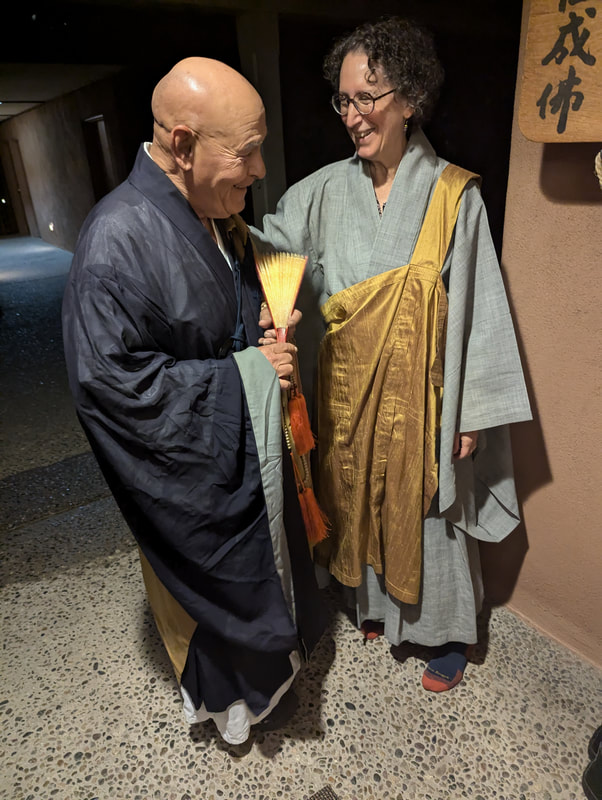
I ask her about the community.
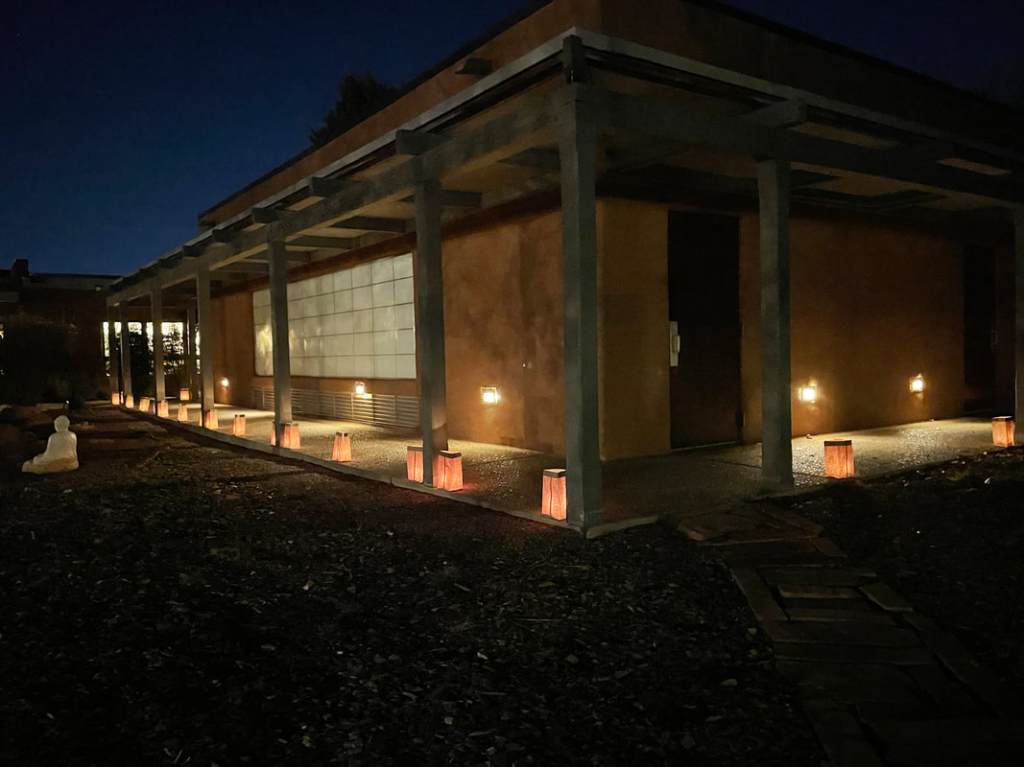
“Well, people in general are appreciative and hungry for the teaching. The facility and grounds are beautiful. Retreats hadn’t been done for quite a while, so we started that up a couple of months ago. Just one-day retreats, and they’ve been completely full. The sangha seems to be growing steadily. A number of young people are involved, due in part to the fact that the Zen center is close to the university of New Mexico.”
“And you’re happy there.”
“I am. I like it very much. I like to throw myself into something radically new. It’s something I’ve done throughout my life periodically. I just like to shake everything up and begin again. I think one of the interesting and creative aspects of this transition is to give the process plenty of time, plenty of space, for all of us to evolve as it seems natural, as seems fitting.”
“What do you think the community is looking to you for?”
“I think that the overwhelming thing that I’ve heard from the sangha is they’re looking for guidance and teaching.”
“Guidance to what end? To what are they being guided?”
“Oh, meditation. Presence of body, heart, and mind. Though it is very simple on paper, very straightforward in its instructions, for each person there is a unique challenge. And by meeting with students one-on-one or giving talks, I strive to provide guidance for that.”
“What does a Zen teacher teach?”
It’s one of my standard questions, and Jeong Ji takes a moment to think about it before replying.
“On the face of it, it doesn’t look like much. I think – going back to my first impression of Zen Master Seung Sahn – it’s more about presence than anything else.”
[1] Mumon comments on the koan Mu: “If you pass through it, you will not only see Jõshû face to face, but you will also go hand in hand with the successive patriarchs, entangling your eyebrows with theirs, seeing with the same eyes, hearing with the same ears.”
[2] The third case in the Mumonkan.
 Richard Bryan McDaniel