
Ordinary Mind Zen, Sacramento, CA
A significant number of the Zen teachers I have interviewed in California grew up in New York City. It’s an interesting migration pattern. Bob Rosenbaum was raised in Mount Vernon, which, he tells me, is an extension of the Bronx.
“I was raised Jewish. My parents did not practice religiously in any way, shape, or form, but they were fiercely loyal to the culture of Judaism, and if you’d asked them if they were religious, they probably would have said something like, ‘The thing about being Jewish is you can be religious just by how you live. You don’t have to do all this other stuff.’ But my mother was raised in a family in upstate New York where her father, who had immigrated from Eastern Europe, had been a scholar and a respected community member, and all he was interested in was religion. But when he got out to Binghamton, New York, he didn’t have a way of earning a living. So he earned a living as a ragman, a junkman, a rag picker, and he raised a family of eight or nine children. So they were poor, and there was a lot of antisemitism in the community. And his wife took in boarders to make ends meet. So the bottom line is, in his family, he was regarded as kind of out-of-it with great love and respect but also anger and bitterness. Both he and his wife lived with us when I was young for a number of years. They were dementing at the time, but I remember his wife and he living in separate rooms on different floors of our house, and his wife would spit at him. So, on the one hand there was a lot of love and respect, but, on the other hand, a lot of dismissal and shame for being different.
“So, my parents sent me to Hebrew school, and it was fairly strict, and I would say, ‘Why aren’t we practising any of this at home?’ And they’d say, ‘Well, we’re religious in our hearts.’ And when I became a teenager, I was very conflicted about my Judaism. And one of the reasons I turned to Zen was I would go into a temple, and I would get depressed just by going in. I had to find a way to integrate it and reconcile with spiritual practice. And I should say the Judaism that I was raised in in the temple, the Hebrew school folk, a lot of shame, a lot of post-Holocaust anger, distrust, suspicion, grief. Very dark. This was the 1950s, and the message was, ‘You can try to assimilate, but they’ll never let you. They will never let you.’ So it was a very mixed bag. Zen was very helpful in this regard, to be able to connect to the genuine spiritual thrust within Judaism. For a time I practised Zen along with Judaism. But it just took too much time,” he adds, laughing, “and I couldn’t do it.”
“Did you personally have a sense that they wouldn’t allow you to assimilate?”
“Well, on the one hand I was surrounded by my family’s friends, all of whom were Jewish and went way back. My father grew up in a town, went to the YMHA – the Young Man’s Hebrew Association – and so these were ‘landsman’ they would say. It was almost like a little village. Very Jewish. The town I was in was about 45% Italian, 45% African American, 10% Jewish. I don’t know if schools closed officially on Jewish holidays, but there were enough people that you’d sing Hanukkah songs along with Christmas songs. On the other hand, the next town over, Bronxville, didn’t allow Jews, and my mom worked there, but it was very clear that you couldn’t live there. And as late as 1977, my wife of the time was working for a small Boston Brahmin family-run business, a very wealthy Boston Brahmin family-run business. She was a secretary, and the company Christmas party caused a problem because it was held at a club which didn’t allow Jews. And the fact that my wife was married to a Jew and there was one other woman who was married to a Jew – my wife was not Jewish, the other woman wasn’t Jewish – but it was, ‘What are we gonna do?’ You know? And they had to sneak us in through the back door. So, on the one hand it was a complete sense of belonging, and, on the other hand, it was always a sense of being a little off and out of it. Really, when I lived in India was the first time I ever experienced being Jewish as, ‘Oh, that’s interesting,’ with no layers of stuff around it. Which was very interesting.”
He first encountered Zen in college.
“In freshmen year I took a sort of a comparative religion course, and it was really well taught. And I became interested in Japanese religion from that course. I was interested in anthropology and other cultures. And I was actually studying music, and I happened to run across the music of the Japanese bamboo flute, the shakuhachi. And that was just, ‘Whoa!’ It was just amazing. There’s a 20th century composer, Arnold Schoenberg, who said, ‘Pitch is colour.’ And if you listen to shakuhachi music, it’s all about how pitch is colour. There’s not much else to it except that pitch is colour. So I heard that, and that interested me. And in the survey course we read Zen Flesh, Zen Bones.”
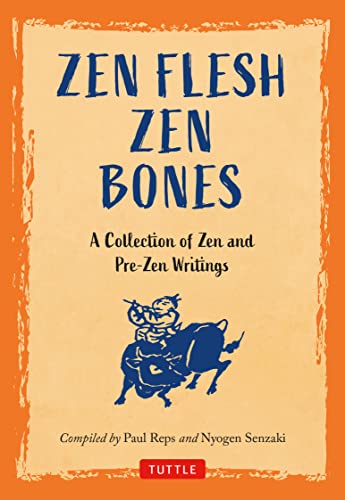
Zen Flesh, Zen Bones was one of the earliest books on Zen available in the West. It was a collection of stories gathered by Nyogen Senzaki and and translated into English by Paul Reps. Bob was sufficiently intrigued by it to enrol in a course on Japanese religion, and the instructor arranged for Joshu Sasaki Roshi to offer a sesshin at the college. “So I attended the sesshin mostly because I had a crush on one of the women in the course, and I wanted to be in the same room as her for five or six days. And I got hooked. Between shakuhachi and Sasaki Roshi giving a koan. And there was something Sasaki Roshi said towards the end which stayed with me for a good long time. He was speaking through an interpreter. I don’t know how familiar you are with Sasaki Roshi, but he was really” – Bob assumes a fierce facial expression and growls – “‘I am very Zen! You must flare your nostrils when you meditate! You will never become enlightened unless you flare your nostrils!’” It was a pretty good impression, and we both laugh. “So he was certainly a fierce Rinzai Zen teacher. And towards the end of one lecture where he was talking about the absolute and the relative and how you reconcile abundance and lack and all of this other stuff, towards the end he could just see that all these college students are just looking kinda puzzled. He looked at us, and he said,” speaking again in a deep growl, “‘Don’t think of God. Don’t think of Buddha. Just laugh! If you do not laugh, you will become nervous and neurotic.’”
Bob spent his senior year in Japan studying shakuhachi and Zen. A friend in Tokyo introduced him to Omori Sogen, a Rinzai master who also taught martial arts and calligraphy. “So after graduation I lived in Omori Roshi’s little zendo. They were very Rinzai. People would brag about how many koans they had passed, and that felt a little weird to me. And then in very Japanese fashion, they’d have sake parties to send off Omori Roshi on a trip or something, and it was considered, ‘Oh, part of Zen is you go out drinking and then you come back and you just sit and you’re totally there.’ Then my shakuhachi teacher at one point said to me,” speaking with a Japanese accent, “‘Well, Omori Roshi very right-wing.’ And I went, ‘A Zen practitioner can be right-wing?’ He said, ‘Well, yeah. War criminal. Given choice. Go to Zen monastery or go to jail.’ Besides, it was cold in the winter in the zendo, and it was hard, and my shakuhachi teacher invited me to be uchi-deshi in his house.
“Uchi-deshi,” Bob explains, “is when a student – a dedicated student – lives in the teacher’s house. In exchange for lessons, helps out around the house. So I took him up on that, and I was pretty turned-off to Zen at that point although I continued meditating.”
“Because of Omori’s political views?” I ask.
“It was a combination of the bragging about koans, and the general feeling in the zendo was not appealing. I mean, it certainly wasn’t a warm-hearted type of Zen. And meanwhile, I was writing to Sasaki Roshi about staying with the koan that he’d given me, and he just didn’t reply. And at a certain point I just went, ‘Well, Zen is supposed to be outside the scriptures. I’m just not going to read anything about Zen for a while.’ And my Zen was actually my shakuhachi playing.
“Along the way, I fell in love with a woman who was living back in Seattle. And there was a long back-and-forth of, ‘Are you gonna come live with me? Am I gonna go live with you? What’s gonna happen?’ I learned that the only place in America where there was a shakuhachi teacher of the sort that I wanted to study with was in Seattle. And my girl friend was in Seattle. Japan is an amazing place. Beautiful aesthetics. Difficult culture. Beautiful culture to visit, difficult culture to live in if you have to abide by its rules. And the more you’re there, the more you’re expected to conform to the culture. So Seattle sounded kind of interesting. So I went back to Seattle. And – you know – I’m still in my early twenties, trying to figure out, ‘What am I gonna do with my life?’ My original idea was, ‘I’ll learn shakuhachi and make a living from this.’” We both chuckle at that.
“So I spent some trying to figure out, ‘What am I gonna do? And I’d been in psychotherapy because of depression. And I thought, ‘What can I do that’s not going to cause active harm?’ That was my criteria. I wanted to find a job where I could work and at times do music and not do active harm. And there were not that many jobs that satisfied that criteria, but psychotherapy seemed pretty good. So I earned some money and enrolled in a clinical psychology program in Boston.
“So, yeah, I went to Boston. Studied psychology. Had some useful psychological training especially in community clinics, which changed my idea of how psychology can work. And when I did an internship at the Boston VA – which just offered the best pay and whatnot I could find – I lucked into being at a place where the best neuropsychologists in the world were all there at that time, and they introduced me to the idea that the brain actually has some role to play in peoples’ psychology although it’s very different from the way most people think about it. And one of my teaching points that I kind of harp on is the brain is not the mind, and all this stuff about, ‘Oh! You meditate and it changes your brain?’ So? Big deal. You cut your toenails, and it changes the brain. You can sit in a tanning salon and get the same structural brain changes you can get from mindfulness meditation. There’s research on this. And peoples’ idea of what the brain is and how it works is just all wrong, and it’s really a shame. But for good neuroscientists, the brain is dynamic; self is dynamic. Mind and world and body are going like this,” he says, waving his hands and arms about vigorously. “‘Oh, we’ve found the point in the brain that’s the seat of compassion! We’ll meditate, and we’ll grow that part of the brain.’ It doesn’t work that way.”

He returned to the West Coast and was eventually hired by Kaiser Permanente. Things took a radical turn, however, when he received a Fulbright to teach at the National Institute of Mental Health and Neurosciences in India.
“I really like experiencing other cultures. It’s really helpful to see the world through other eyes. So I’m in India, and everything was wonderful. My job didn’t require too much of me but was fascinating. My family was doing well. My kids were flourishing in Indian culture, which is very family centered. Everything was going fine. And I didn’t feel happy. I felt okay . . . but . . . I’m not happy. And what’s it gonna take to feel happy? It took me a while to figure out that happiness is not a feeling, it’s a way of life. And once that became clear, practice became a whole lot more interesting. But I wasn’t there yet.
“So I was in a bookstore in India, and I came across Opening the Hand of Thought.” Opening the Hand of Thought: Foundations of a Zen Buddhist Practice by Kosho Uchiyama has become a contemporary classic in Soto circles. “And I read it, and I went, ‘Huh! Shikan taza. Just sitting.’ Well, at this point I was distrustful of any brand of you name it – school of psychotherapy, school of religion – ’cause I figured I could talk myself into anything and then at a certain point, after talking myself into it, I’d get disillusioned. But I thought, ‘Well, to just sit. That doesn’t sound like I’ll talk myself into anything. Why don’t I try that?’ And so I started doing shikan taza.”
“Without instruction?”
“Without instruction.”
“How did you know if what you were doing was actually shikan taza?”
“I still don’t know whether I’m doing shikan taza.” We both laugh. The fact is that when many of the early Western spiritual explorers went to Japan after the Second War to study Zen, their initial instruction often amounted to little more than, “You sit there.”
“Yeah, that’s it pretty much. You know, I’d gone through a koan and had had what I thought were enlightenment experiences way back when though they never got certified by Sasaki Roshi. But they were, ‘Wow! Oh! Hmm! Hey! That makes sense!’ I knew how to do breath counting and all of that Rinzai style. One of my better meditations when I was still looking around – the most helpful one – was I was hiking one day on the West Coast near my home, and I found a nice rock. A beautiful rock. And I thought, ‘Oh. I think I’ll just sit down and sit with this rock.’ So instead of staring at a candle, I stared at a rock. So I did that for a year. And it’s not exactly shikan taza, but it’s somewhat akin to it. So, anyway, I started doing shikan taza, and then when I got back to the Bay area, I started going to the Berkeley Zen Center ’cause they were doing that kind of thing.”
The abbot at the Berkeley Center was Mel Weitsman, one of the three people in the first interview I conducted for this series of conversations ten years ago.
“And after a few months I went to this sesshin, and I’m in my late 30s. I’ve done yoga for twenty years. I’ve meditated kind of on-and-off for twenty years. I’ve had some kensho-type experiences. I’ve had hallucinogens back in the past. I go to this sesshin; I think, ‘Okay. I know what’s what. I mean, I’m an experienced meditator. My yoga’s going really well; everything’s going really well. I’m gonna go to this sesshin, and this should be really nice. Seven days of just . . .’” He smiles and lets out a long relaxed breath. “‘I can just sit there; I’ll feel great.’ You know? Well, you can guess what happened next. I sit down. Agony. Physical agony. Mental agony. Crying. For no reason that I can figure out. ‘Why am I crying? Why am I so sad? Why am I in so much pain? I don’t know how to do this!’ Seven days worth. Non-stop. Couldn’t figure out what’s going on. So at the end of the sesshin we have a Dharma talk. Each student gets up and asks their question in front of everyone else. And it was my turn, and I got up and said to Mel, ‘I came here. I was feeling pretty good. Sat down. I’ve been in pain. I’ve been in agony. I’ve been crying, and I don’t have any reason for crying. I don’t know why this is. What is this!?’ And Mel looked me in the eyes and said, ‘Nirvana.’ And I knew that he was right.

“In a way, that was the beginning of my Zen practice. I knew he was right. I didn’t understand it at all. But I also had no doubt. ‘Yep. This is nirvana. It doesn’t feel like nirvana!’” He chuckles. “But, you know, one way I sometimes teach people I say, ‘In our practice we don’t say we meditate in order to be enlightened; we meditate because we’re already enlightened. And when we say, “Nirvana is samsara,” we mean it!’ So one way you can meditate is go, ‘Okay. So this is nirvana. This is nirvana. Ha! This is nirvana? Wait a second!’ And what keeps you from experiencing nirvana? What keeps you from experiencing this as nirvana? Just do that, again and again. It’s a pretty good way of meditating actually, but no one takes me up on it.
“Years later, I went back to Japan to teach some psychology. I went to one of the Soto temples. Unannounced, unplanned. I just had a little extra time. And I went to them, and I said, ‘Oh, could I sit with you for a little bit. I’ve been practising in the States.’ And they said to me, ‘Oh, so do you know how to meditate?’ And I said, ‘No. I’ve just been doing it for thirty years.’ And they looked me like, ‘What?’
“There’s a not very well-known interaction with Joshu which I love where someone says to him, ‘What is meditation?’ And Joshu replies, ‘It is not meditation!’ And the student says? ‘What do you mean? Meditation is not meditation? Well, what is it?’ And Joshu looks at him and says, ‘It’s alive.’” Bob pauses for effect then says, “That’s pretty good. So, people are scared to be alive. And they’re scared to die. And basically our practice is, ‘Don’t be scared to live. And don’t be scared to die.’ It’s really very simple.”
There are some standard questions to which I keep returning, especially when the teachers I speak with are psychotherapists, which happens more and more frequently. I have never been in therapy, so I often begin by asking what draws someone to undertake therapy.
“Well, that really depends on the context of what you’re talking about,” Bob explains. “I was working at a medical centre where a lot of people who came to see me came because their doctors said, ‘You have to go see a therapist.’ And they have no interest whatsoever in seeing a therapist, but a doctor said, ‘Do this.’ Some people came because they had heard that psychotherapy had helped with anxiety and depression. Some people came because they get angry. I saw a lot of families, couples. You know, the standard thing. People would come in saying, ‘We don’t know how to communicate with each other.’ That was the standard thing. And some people come because it’s something to do. ‘My friends are going. They say, “Therapy is great!”’ So it really varies a lot depending upon what environment you’re working in.”
“And why do people seek out a Zen center?”
There is a long pause before he answers. “For all the wrong reasons.” I smile. It’s a good answer.
“Fair enough. And what are the wrong reasons that draw people to Zen?”
“Well, people are suffering and feel, ‘Oh, meditation is supposed to help you feel better.’ Right? That’s a pretty common one. Many people come because they are looking for something, and they don’t quite know what they’re looking for, but Buddhism sounds pretty good.”
“The art’s nice.”
“That’s right. The art’s nice.”
“Let me put the question another way then: How is the way you relate to a patient different from the way you relate to a Zen student?”
“So, when a person comes to me as a client – or a patient – they usually have a specific problem in their life. Now if they have sort of a general existential, ‘What’s it all about?’, I will sometimes say to them, ‘Sorry. I’m a therapist, but I’m also a Zen teacher; you’re with the wrong person here.’ I don’t do psychotherapy for existential stuff. I don’t believe in it. The way I approach a psychotherapy client is, ‘Okay. You’ve encountered a bump in your life, and you’re stuck. Let’s find if we can find a way to get you unstuck so that you can get on with your life.’ So, sometimes it’s, ‘I’m so nervous that I can’t leave the house.’ Sometimes it’s, ‘I’m so depressed I can’t relate to people.’ Sometimes it’s, ‘I have this pain which the doctors can’t understand. They say it’s psychological.’ And my job is to help them figure out a way to get past what’s holding them back at this moment.
“With a Zen student, it’s, ‘Ya think things are gonna get better? Why do you want to do this practice?’ Basically I don’t encourage people to practice Zen unless they can’t find anything else to do. I say, ‘Well, if you want to, that’s fine.’ My sister teaches Mindfulness Based Stress Relief, so we’ve had many discussions about the role of meditation in helping people. And the mindfulness people are, ‘Oh, do mindfulness; it will help your life.’ And when people come to me saying they want to practice Zen, I’ll say, ‘Well, that’s fine, but I have to warn you, you might not like it. Because if you practice, you’ll probably wind-up having to change your life and change how you go about living.’ And that’s true.
“I don’t see how you can practice Zen without practising the Precepts. And it turns out that the more enlightened you become, the more you see and feel how pervasive suffering is. The practice is learning to be like Avalokitesvara, hearing the cries of the world, responding to those cries with whatever is needed, but always with a gentle smile. The smile of compassion is the basis for our response to suffering, and our release from suffering.”
“You don’t see how someone can practice Zen without practising the Precepts.”
“That’s right.”
“Well, let’s consider that for a minute. Joshu Sasaki.”
“Yes. Problem!”
“Maybe not so hot on Precept practice.”
“No! No! He thought that enlightenment sort of exempts you. You can do anything. Well, a lot of Zen teachers – maybe every Zen teacher – finds a way of having it fit their personality. The problem is if you’re using the practice to actualize your ego-centred personal stuff – which you can do in very subtle ways – that’s not what it’s about. The practice is to allow oneself to be a vehicle for the Dharma.”
“Which means?”

“This is a Daoist thing, and I was heavily influenced by Daoism, as much as by Zen. It’s to assist the self-becoming of all Being. So every being is constantly becoming itself even though it already is itself. But how do you assist that? How do you harmonize with the needs of this moment, the call of this moment? And in general, the best way of doing that is to do as little as possible and not get in the way of the Way. And we’re constantly getting in the way of ourselves and in the way of other people. And when you stop getting in the way of yourself and getting in the way of other people, the Way manifests itself. The Universe manifests itself. So how to assist with that? Tricky. Tricky.
“So for me, one of the core koans and realizations is Dongshan’s, ‘I am not it; it actually is me.’ You know the story? Dongshan asks his teacher, ‘When you die, what should I tell other people is your teaching?’ And the teacher is silent for a long time, then he says, ‘Just this.’ And Dongshan didn’t understand, which I love about this story. Well, it sounds good, right? Everyone’s going, ‘Just this! Just this!’ But Dongshan didn’t understand. And we don’t understand, and think we have to do something special to access just this. Then later on Dongshan’s walking along, and he walks over a bridge, and he sees his reflection in the stream. And he goes, ‘Oh! I’m not it; it actually is me.’
“Ah! So we are the expression of everything that runs through us. And we think it’s about me! Sorry! People say, ‘Well, I feel this.’ That’s the ultimate wrong statement. All those feelings are who I am at this moment. ‘Oh! The wind is going through the leaves right now outside my window.’ We’re talking to each other. This is who I am. You are who I am; this conversation is who I am. I just think, ‘Oh, there’s a Bob here doing this.’ You know, there’s that ‘I-mind’ I call it, which thinks that that’s what’s going on, but it’s a little piece of it. It’s everything which has ever happened that comes to bear on this life, that’s who you are at this moment. So how does one carry that forward? Well, each moment you try to figure it out as best you can. You know, ‘Whoops! That was a mistake!’ So you went after the mistake. Good! About this moment? So, we harmonize with the flow, the stream. Doesn’t mean that we’ll like it. But you might as well enjoy it.”
“Taking the Precepts – vowing to live by the Precepts – is usually seen as making a commit to live a Buddhist life. Does one need to be Buddhist to practice Zen?”
“Oh, absolutely not. But a lot of people have practised Buddhism for a long time because they found it helpful. Classically it’s about release from suffering. I like to go a little further, personally, and say, ‘Enjoy your life.’ How can you genuinely enjoy your life in a way which can never be impeded?”
“What is it, as a Zen teacher, that you hope for for the people who practice with you?”
He considers the question for a while before replying. “I’m trying not to put this in jargon . . . That you are, were, and will be enlightened together with all beings.”
“And as a psychotherapist, what is it that you hope for your clients?”
“That you find that you can trust yourself.”
“Are there occasions when Zen students also need to discover that they can trust themselves?”
“Trust is the absolute basis in life. But who is this self that you trust? I often say to people, ‘So what can you really trust in when everything else fails you?’ Because everything else will fail you. Where can you really trust? And I’ve been through a period when I had a stroke in the Himalayas and was really face-to-face with dying. For a year after that I went, ‘Okay, I’ve practised meditation; I’ve tried to be a good person and act according to the Precepts. And I still had a stroke, and I’m still gonna die. So how am I gonna live my life?’ And so I could lie and cheat and try and get as much money as possible, but then I realized I wouldn’t be very good at that. So I said, ‘What’s the basis of my life?’
“And frankly Zen . . . It helped me come to this, but the basis is, number one, to acknowledge as best I can the truth of any situation and the truth of what’s happening to me and what’s going on around me knowing that I’m always going to colour it. I’m a very bad liar. And if I’m not living with the truth as best I can, I’m living with a fantasy, so let’s start with the truth. But people often don’t like the truth. It hurts often, and it’s painful, and it’s difficult. And so the second thing that comes up is somehow when nothing else works, when everything’s awful, compassion arises. I don’t know how, but it happens. And compassion is not something in us; the world is compassion. The air is compassion. The Earth is compassion. So I rely on truth; I rely on compassion. And after a while I see this is all too serious. So I need to have humour and laughter. That’s the third basis for me. So truth, compassion, laughter. And for a while I knew there was something missing, and a friend of mine said, ‘I know you. You like beauty.’ ‘Oh, yeah. Beauty.’ That’s it! Truth, compassion, laughter, and beauty. That’s my life. I rely on those. I can find those at every moment in anything. Zen is simply a way of helping me find those. But that’s me. You have to find – each person has to find – what’s the basis of your life? What can you really rely on?”



Great Article, as usual.
LikeLike