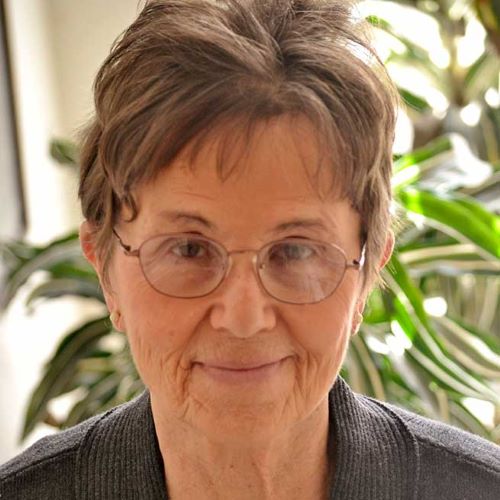
Still Mind Zendo, New York City
During the 1970s and ’80s, as skepticism about Christianity and Western religious traditions was becoming common, there was a corresponding upsurge of interest in Eastern meditation particularly among the young. At the time, Thomas Keating was the Abbot of St. Joseph’s Trappist Abbey in Spencer, Massachusetts – the monastic community to which Kevin Hunt belongs – and, during his abbacy, he invited Joshu Sasaki to make annual visits in order to introduce the monastics to Zen practice and to lead sesshin. The unexpected Western interest in Eastern spiritualities prompted Keating and two members of his community – William Meninger and Basil Pennington – to develop a comparable Christian methodology which they called Centering Prayer. The term came from another Trappist, Thomas Merton, who described contemplation as prayer which is “centered entirely on the presence of God.” Merton wrote: “Monastic prayer begins not so much with ‘considerations’ as with a ‘return to the heart,’ finding one’s deepest center, awakening the profound depths of our being in the presence of God.”
Centering Prayer was based on medieval Christian contemplative practices – such at that described in the 14th Century Cloud of Unknowing – which were similar to Eastern mantra practice. A single word or short phrase is repeated, linked to the breath, as the practitioner seeks to place themselves in the presence of God.
Centering Prayer instruction became popular in many Catholic dioceses in the 1970s, and, when she was already in her 40s, Janet Abels was introduced to the practice by her spiritual director, Sister Keiran Flynn of the Sisters of Mercy in Providence, Rhode Island. Janet was an active Catholic, serious about the practice of her faith, and Sister Flynn encouraged her to train to become a Spiritual Director as well.
I ask Janet what, precisely, a lay spiritual director does.
“You meet monthly with a person – it’s once a month for about an hour – and they speak about their spiritual life and what they’re doing. And a lot of it, of course, is connected to life issues and problems and how you work with them. And, of course, because I was doing Centering Prayer, I kind of introduced them to that.”
“But what draws somebody to seek out a spiritual director?”
“Well, it’s their own experience, like I was drawn to Keiran. You have an experience, and you want to have more one-to-one discussion with somebody rather than sort of churchy stuff. It was a wonderful training actually, I must say, because I got a lot of background training in terms of working with people. Through Keiran and her team at the Our Lady of Peace Spiritual Life Center I was also introduced to Dr. Eugene Gendlin’s Focusing. Do you know Focusing? It’s a form of being with your feelings, especially unwanted feelings. And I also did some dream work and a lot of training in basic psychology. Through the Spiritual Directors’ Training Program I learned how to relate one on one with people, how to listen and many other useful ‘skillful means.’”
“This is all training that you had before you came to Zen.”
“Yes, before I came to Zen. So I had a lot of background in doing spiritual direction one-on-one. I knew how to talk to people. I knew how to connect and hear about their issues and problems, and – you know – we worked with it in that way. So that was in ’87. And in 1992, I met Robert Kennedy, and my life changed.”
Robert Kennedy is a Jesuit who trained in Zen with Koun Yamada in Japan and later with Taizan Maezumi and Bernie Glassman, from whom he received Dharma transmission.
Janet’s husband Greg was engaged in Centering Prayer as well but was also reading about other spiritual traditions and became intrigued by Zen. “He was open, very open,” Janet explains. “But I was a very cautious person. You know? Like, ‘No. I can’t do that!’ The Eastern stuff was kind of scary to me.”
“Why?”
“Why was it scary? Because it didn’t have the Imprimatur.” An imprimatur is a statement of approval by the official church. Elements in the hierarchy, following the changes that came about with the Second Vatican Council, were taking more conservative stances on a number of issues. Although Centering Prayer was recognized as an orthodox Catholic practice, other attempts to combine Eastern and Western practices – such as the work of Anthony DeMello – were considered suspect.
“You’re going outside of the bounds. But, you know, something drives you that makes you want to go into scary territory. So at St. Francis Xavier, the local Jesuit church, they had a day of workshops for different forms of spirituality. They had yoga and they had Centering Prayer and they had ‘Prayer As Movement,’ and things like that. And they had Zen. And Bob Kennedy had been made a Zen teacher by Bernie Glassman Roshi just ten months before; so he was a brand-new Zen teacher. So he was giving the workshop, and I said, ‘Well, I’ll go to that.’ So I came to the workshop, and we were in a kind of classroom thing, and he was up front. And he was talking and talking. And then he said, ‘You know,’ he said, ‘in Japan, they sit with a spine of steel.’ And I thought, ‘That’s for me. There’s structure, and there’s discipline. That’s what I need.’ With Centering Prayer, you could be sitting anyhow anywhere, there was no structure. So he said, ‘In Japan, they sit with a spine of steel. So let’s do it now. So, sit up straight.’ And then we were there, in the chairs, sitting up straight. We did five minutes of meditation sitting with a spine of steel. You know? The body is what holds you up in the structure. And I can’t remember anything else he said, but, after that, I went to him and said, ‘Can I speak to you more about it?’ And he said, ‘Sure.’ He said, ‘Come out to Jersey City.’” Kennedy, at the time, was on staff in the theology department at St. Peter’s University in Jersey City.
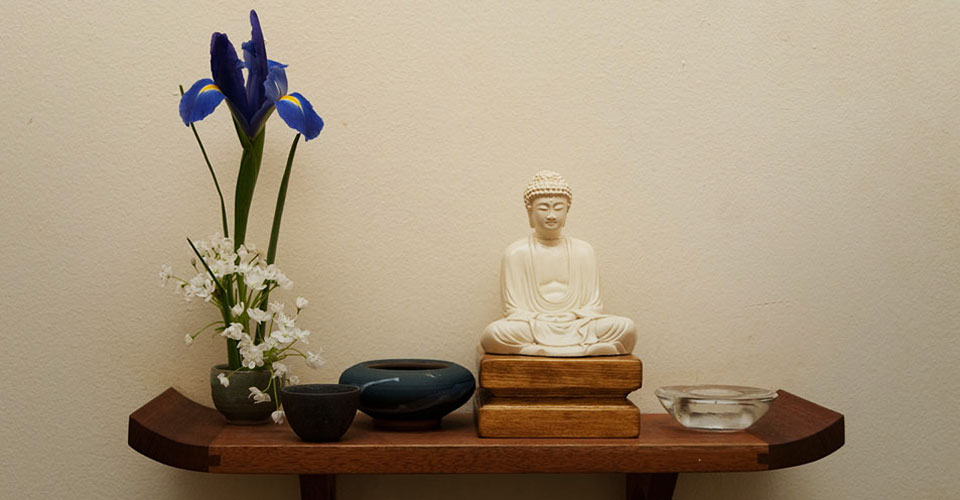
“So he had no sangha then or anything. He was just on his own with a few students, one-on-one in a little room he had there in his residence as a zendo. And so I became his student, and that was 1992. And then after a while I began to feel very itchy to have sitting with other people. I wanted to sit with other people. And so I said, ‘If you would come over to the city – New York City – would you mind being a teacher if I got some people together?’ And I had some spiritual directees who were very interested in meditation, and there were people from that workshop that he was at. So, he said, ‘Sure.’ So I got together some people. And he said, ‘The only night I can come is Tuesday night.’ I said, ‘Fine. It’ll be Tuesdays.’ And Tuesday is still our main sitting night.
“And we sort of moved from church basement to church basement, so to speak. First we sat with the Catholic Center at NYU, in their library. Then when they began to wonder what we were about, we went down the street to the Methodists until the Alcoholics Anonymous meeting downstairs became too much; whenever they do their cheer, like with a new person. So we left them and went to the Lutherans on Christopher Street. And then my husband, Greg – who was in the theatre – formed his own acting studio on 27th Street. And being a member of the sangha, he said, ‘Well, we can sit there for free.’ So we would then sit there, and Bob would come, and we would have teaching and practice zazen. And it started to form, and we became incorporated in 1999. And then in 2000, I received transmission from him as a teacher, and he said, ‘Okay. You’re on your own now,’ and he went back to Jersey. So we were there working at Greg’s studio, and, then when he closed it, we moved to our current place on 17th Street where we’ve been for twenty years now.”
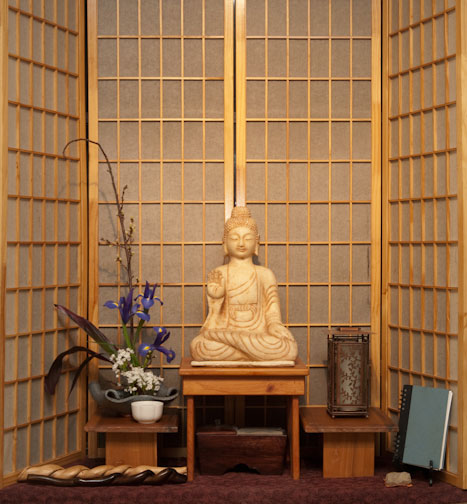
The “current place” on 17th street is the Still Mind Zendo.
“Do you still self-identify as Catholic?” I wonder.
“No. We are Zen Buddhists. In 2006, Greg received transmission from Kennedy And in 2007 our friend and colleague in the White Plum Sangha, Enkyo O’Hara from the Village Zendo, she gave us jukai and Receiving the Precepts.” The White Plum Sangha membership is made up teachers in Taizan Maezumi’s lineage.
“Bob Kennedy retained his affiliation with Catholicism of course,” I point out.
“Yeah.”
“Why did you disaffiliate?”
“Because I wanted the total . . .” – there is a long pause as she searches for the right term – “ . . . emptiness, non-separation if you will, of what Zen opens us to.”
“And you felt you’d be unable to do that if you remained Catholic?”
“Yes, because there’s still a God who is separate from me.”
“Do the students who work with you self-identify as Buddhist?
“I would say 60% of the sangha have received jukai. Some have not, but they’re full Zen practitioners.”
“So people can remain affiliated with another tradition . . .”
“Oh, yeah! Absolutely. We’ve certainly had people like that. For sure. Nobody is made to do jukai. We’re a lay community, and we don’t wear robes or anything because I’ve always felt that those people who are still in different traditions and whatnot – it could be Christianity, Judaism or whatever – have to be included. And if we were there in robes and all that, we’re making them into separate people. We want an inclusive sangha.”
“Do you teach Buddhism as a philosophical system as well presenting Zen as a practice?”
“We present the teachings of the Buddha and Zen ancestors through talks, communal study, one on one meetings – daisan – and through the koan work which we offer. The Eightfold Path, the Heart Sutra and so forth are very much in the forefront of our teaching and practice as well as the teachings of the Chinese and Japanese ancestors. This, of course, in addition to the bedrock of Zen practice, zazen. Perhaps the easiest way to say it is that we all strive to practice the Buddha’s Three Treasures: Buddha (meditation), Dharma (study), Sangha (compassionate living).”
Janet’s husband, Greg, has retired from teaching at the Zendo, and she no longer accepts new students although she has two successors who do. “And I now have a third successor coming along.”
“And the new people who come,” I ask, “what are they looking for?”
“They’re looking for an escape from their stuff. They are looking for peace of mind, relief from suffering.”
“Enlightenment?” I ask.
“They come seeking enlightenment, and they’re told pretty quickly that no such thing exists. Enlightenment is not a thing. Enlightenment is a noun. Awakening is a verb. We practice a verb.”
“Okay. What do you mean by Awakening? What is one waking to?”
“Awakening is three things. You have to first awaken to the stuff.”
“To the stuff?”
“To the stuff. I’m suffering. I’m dissatisfied. I’m angry. I’m this. You have to be aware that there’s something wrong. There’s something blocking you. Right? That’s the first awakening. That’s what happened to Siddhartha in his palace or wherever he lived. He realized he was not happy. Something was needed. That was his first awakening. So you awaken to that, and you begin to look at that in an objective way. So you begin to step back. That’s the detachment from the mind that the Buddha taught. Detach. And you’re looking at it, and you say, ‘Yeah. This is what’s happening. Is there another way of addressing this?’ And that’s, of course, when you connect to meditation, to the diligent practice of detaching from the never-ending thoughts that arise, slowly discovering that the cause of the suffering and the dissatisfaction is created by your conditioned mind of greed, hatred, and ignorance and not by anyone or anything outside of you. This is following the guidelines of the Fourth Noble Truth which is called the Eightfold Path which I’ve simplified. I’ve made it into a Threefold Path. Right meditation affects Right Thinking, and the two together manifest Right Action or Right Speech. And so Awakening is an on-going journey because the dissatisfactions never end.”
“So ‘awakening to the stuff’ is recognizing – what? – that you are not the stuff going on inside your head?”
“You are and you are not,” she says, then quotes the Heart Sutra. “Form – stuff – is exactly emptiness, emptiness is exactly form.’ And so in order to address the dissatisfactions that we have constantly, we first have to see them. So as I basically see it, we have to notice the dissatisfaction; we have to allow it to exist. If I’m angry, I have to allow myself to be angry. And then I breathe. Breathe into that.The breath detaches you from the thought or feeling and you have an opening into the ‘more than the anger.’ But it’s the allowing – it’s the noticing and the allowing – that’s the difference. As you probably know, we all came to Zen trying to get rid of that stuff. Running away from it and trying to be perfect. But everything is it – including evil – everything is it. You have to include everything. Right?”
“Okay, so it begins with dissatisfaction. People have some sense of dissatisfaction that draws them to practice.”
“That’s the first Noble Truth.”
“What was your dissatisfaction? When you started down this path?” She doesn’t immediately reply. “You were a Catholic spiritual advisor. You took the training. What was it that you were dissatisfied with?”
“I felt that there was more, and I didn’t know what it was. And there is more. Zazen opened me up to the ‘more’ than the sum of my thoughts and feelings.”
“And the mechanics of all this? ‘Zazen,’ after all, just means ‘seated meditation,’ so it’s essentially a practice.”
“Yeah. It’s work.”
“So how does it work? How does ‘meditation’ do what it does?”
“I think what got me into it is the discipline and the structure. We have a structured zendo. On-time and all of that and the posture and the body. But when you make the intent to follow your breath, when you’ve concentrated on your belly, you can’t be thinking. Can’t do two at the same time. So the first things actually that I’ve also cottoned onto the last few years is that we first have to relax the body. So the first thing in zazen is to release all the body tensions, ’cause when you think, you think somewhere with our muscles. Zen is a body practice. It’s not a mind practice. So you release the body, and you follow the breath. You lose it, of course, and you’re back to thinking, and when you think something is tense in you again. So you release again, and you follow the breath. And it’s the moving breath; you keep moving. You keep moving. You don’t – as Pema Chodron famously said – you don’t take the bait of thinking. You keep moving. Keep moving. Keep moving. And then this sort of ‘moreness’ – if you will – the ‘more’ opens up and begins to infiltrate you and begins to affect decisions and how you live your life. And that – to me – is the Threefold Path. Right Meditation affects Right Understanding affects Right Action.”
“Does Zen practice change people?”
“Oh, absolutely. Absolutely. Why do it if it didn’t?”
“In what way?”
“It’s the sense of ‘not two’ and not separated; it’s the connection with everything that is. I allow everything that is to be. Including – you know – people I despise. Let it be. It’s the interconnection. It’s one. The way I see it, Rick, is that it’s no good paying lip homage to this and then not living it in your life. You gotta do it. You gotta live it. You’ve gotta be it.”
“And concretely, how does that impact me? How is the way that I live going to be different if I take up Zen practice?”
“Because it’s going to change your mind. That’s why I think the Threefold Path is helpful. Right Meditation changes your mind; it changes the way that you see things. Your Right Understanding begins to develop. You know, a lot of Zen – this is what I was taught – it’s meditation period. No. It’s meditation – Right Meditation – and Right Thinking both manifesting Right Action.”
“And what do you mean by ‘Right Thinking’?”
“Right Understanding. Allowing others to be as they are, allowing the situation to be as it is, not the way I want it to be, and responding accordingly, which is Right Action. And that’s what I consider the word ‘Tathagata’ to mean. ‘No self-living.’ Striving to live egoless self while being completely alive.”
“And what is it that you – as a teacher – hope for for the people with whom you work?”
“Oh, my hope is that they get to this realization. And we all have to get through it ourselves. You know? I can’t think for other people. Experience for other people. That they realize that Zen is simply your life. Ha! It’s simple. It’s just simple. But in order to do that . . . Ultimately there is no such thing as Zen. You hear that in the koans. ‘The stink of Zen.’ ‘Kill the Buddha!’ ‘Kill Zen!’ There is no Buddha, no Zen, only the reality directly in front of you, as it is, not as it should or could be. All the koans point to this. But you have to practice Zen in order to realize that there’s no such thing. There’s just your life. Just your life. And that’s the paradox.”
 Richard Bryan McDaniel
Thank you for this. An excellent interview. I’m reading her book at the moment, and very much enjoy the way she brings the ‘ancestors’ to life.
(And yes, I’d also like to know a little more about this question you asked… “What was your dissatisfaction? When you started down this path?” She doesn’t immediately reply.)
LikeLike