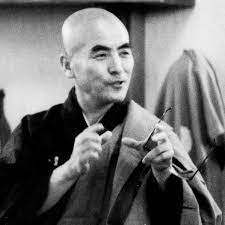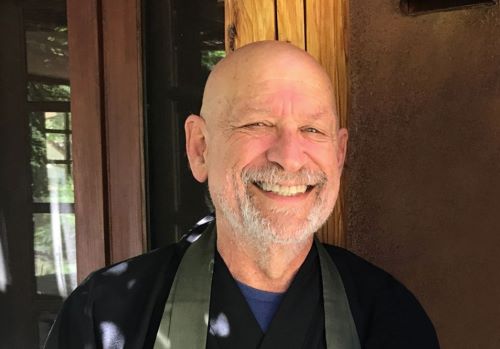
Alice Cabotaje

Empty Cloud Zen, California –

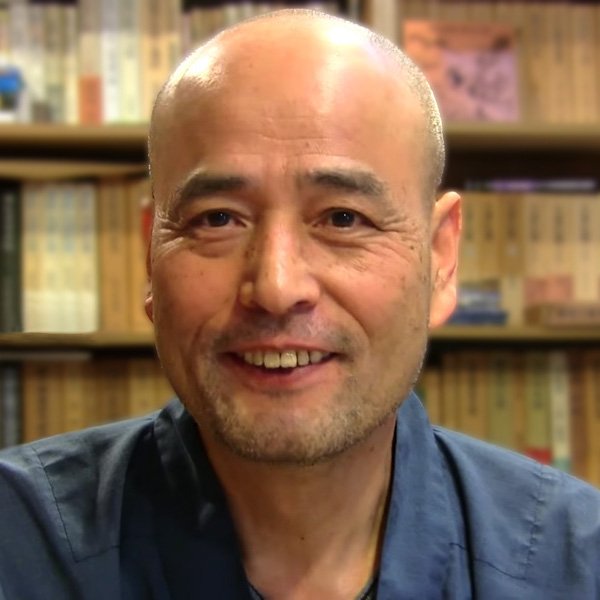
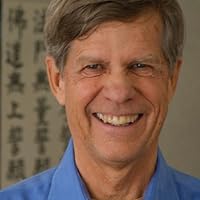
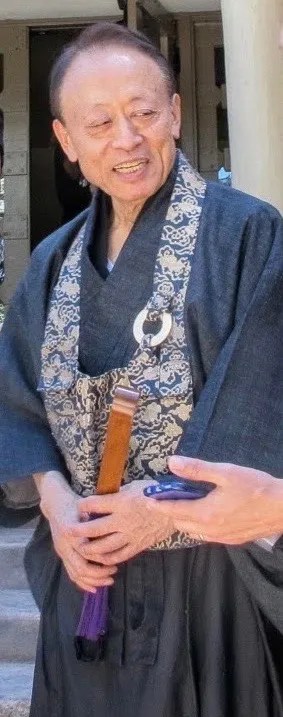
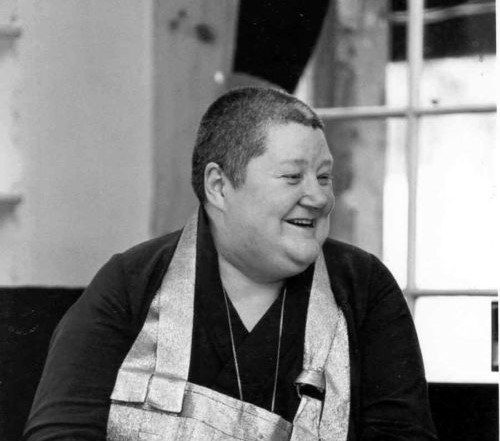
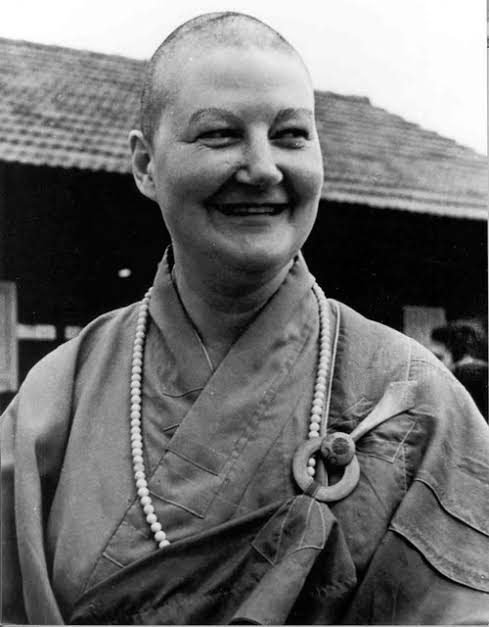
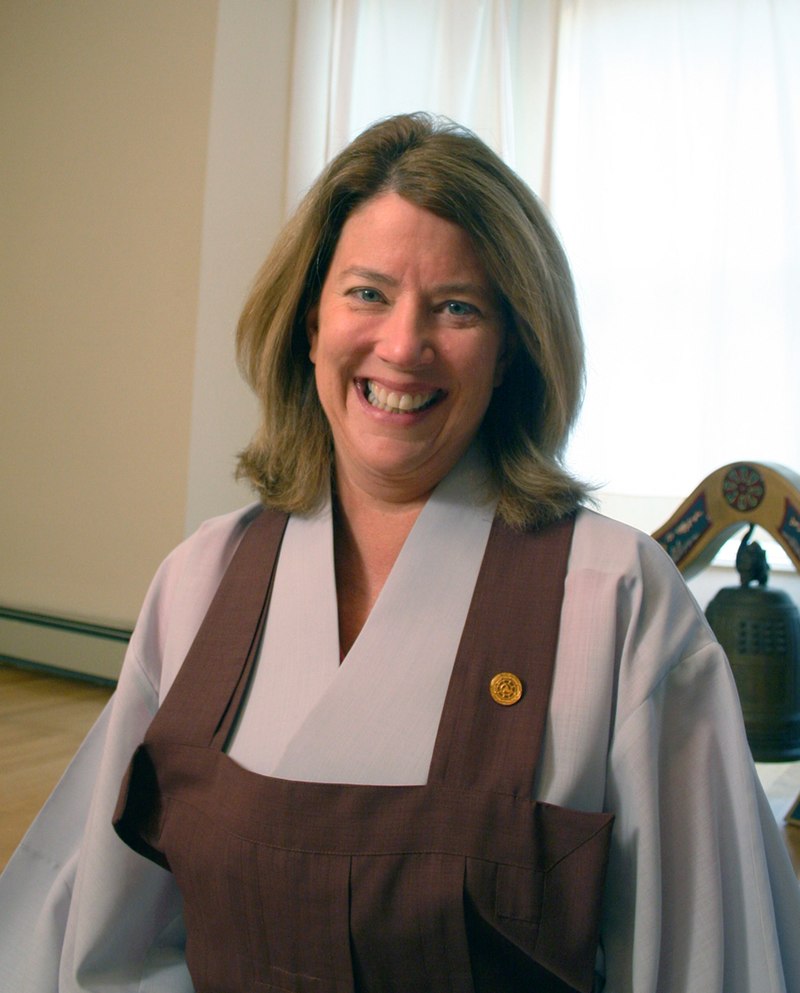
Alice Cabotaje is Director of Spiritual Care Services at Stanford University in California. She is also an ordained Protestant minister in the Metropolitan Community Church, which (on its website) describes itself as “a diverse group of people with different perspectives and opinions.

“Many people within Metropolitan Community Churches,” the article continues, “consider us to be a Protestant Christian denomination.  We also consider ourselves to be a spiritual movement . . .  We have many straight people who are part of MCC, and they are important and cherished members, leaders, and clergy of MCC.  Most of our members, however, are from the LGBTQ+ community.  In fact, we are unique among all Christian denominations because we’re the only denomination that is primarily made up of LGBTQ+ people, has a focus on LGBTQ+ and Queer understandings, and this has been true of us for over fifty years.”

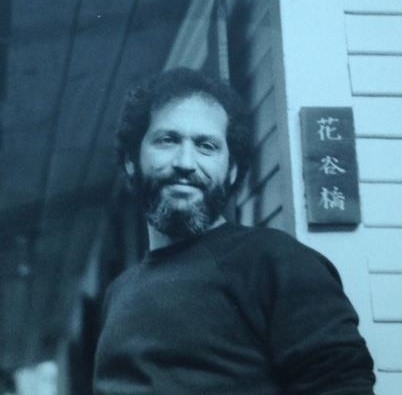
Alice is also a Zen teacher and Dharma heir of Father Greg Mayers.

She was born in the Philippines and lived there until she was in her 30s. Her father, a physician, belonged to the Methodist Church; her mother was engaged with an evangelical group. The image of God she derived from her religious education was that of a being who “was constantly looking over my shoulder.” She had a sense that the God who was addressed as “Father” actually fell short compared to her own father. And while on the one hand, she had what she describes as a desire to “merge” – a feeling that arose, for example, as she stared at the night sky as a child – she also had a profound sense of separation from God. “There was a deep pain, not only in my heart but in my soul.” In part it was due to that fact that very early on she realized she wasn’t heterosexual. “I had crushes on the girls and not the boys.”

While only 13 years old, she came upon Thomas Merton’s Raids on the Unspeakable in the school library. “There was a paragraph that said something like ‘to have an identity one has to be awake, and to be awake one has to know vulnerability and death – not for its own sake; not out of stoicism or despair – but one has to know the invulnerability of one’s vulnerable self.’”

She pondered what it meant to be vulnerable in this way, and what it meant to die. And then, in the normal course of things, members of her extended family did die. These reflections came to a head when, at the age of 16, she was on a bus which almost crashed into a ravine. At the time, she was surprised to find that her reaction was not as she might have supposed it would be. “Everything stopped, and everything just became clear. All of a sudden, I was not afraid of death. It was just this clarity, this stillness, and I felt like, ‘Okay.’”

After that experience, she felt a need for a spiritual practice which was more than “the usual Protestant services. Something that was akin to silence. I had no idea what that was.”

At university she majored in philosophy and found Chinese Chan [Zen] interesting but could make little sense of it. She also came upon literature that suggested her homo-erotic tendencies “would pass” as she matured, so at 18 she tried having a boyfriend. It didn’t work. “So I had a conversation with God, and I told God, ‘Let’s assume that this is the only life I have to live, I want to live it in a way that I am true to myself. And if you are going to send me to Hell for it, I’ll take it.’ So I severed my relationship with God at that point.”

A few years later, some friends introduced her to yogic practice and meditation. She attended a lecture by a feminist instructor who said, “In the end the only way to really transform a person is to have a change in consciousness. And the only way to change one’s consciousness is through the practice of meditation.” Although her Protestant background made her leery of meditation, she was “initiated” into the practice and given a mantra. Through the practice, the pain she had felt as a result of severing her relationship with God seemed to lessen.

She stayed with the practice for eighteen years and tells me that it helped lay the groundwork for her eventual Zen practice. “That really set for me the foundation for sitting in the Zen tradition. In the yogic tradition I would sit an hour twice a day. So that created the discipline that I needed for Zen.”

Her parents, however, were worried about her apparent interest in Hinduism as well as her sexuality, and – when she was in her 20s – they had an uncle lay hands on her to rid her of these tendencies. “In order to drive away the evil spirits. Nothing happened.”

She spent some time in India and then worked as financial journalist in Hong Kong. Eventually she and her partner relocated to San Francisco. Throughout all of this, she tells me, she found herself returning to the questions she’s first had as a small child looking up at the night stars – “wondering who am I, what am I here for?” And then one morning, when she was 39, she woke up feeling, “There is no God.” “I was dumbfounded. I fell into a deep abyss. Never-ending darkness and depression. And I thought, ‘If there is no God, what is life for?’”

She considered suicide. “Fortunately my partner had an acquaintance who talked about this Zen-Christian group over at the Mercy Center in Burlingame. It was a group led by Father Thomas Hand.”

Thomas Hand was a Jesuit who had studied Zen in Japan and introduced North Americans, especially Catholics, to the practice after he returned to the US. Alice and her partner attended a weekend retreat, and, at it, “A part of me healed a bit.”

Hand provided her an example of how one could practice both Christianity and an Eastern meditative tradition. She and her partner also began attending the Metropolitan Community Church.

During a later Zen retreat, she had an “experience of everything exploding. I just felt there was no ‘I.’  At the same time whatever exploded was also ‘I’. I was also everything.”

While other meditators went to breakfast, she stayed behind doing prostrations in gratitude. “And also asking forgiveness for all the pain and suffering I had caused.”

The next retreat she attended was facilitated by Greg Mayers, who confirmed that her experience had been kensho. He recommended that she begin koan practice in order to integrate that insight in her life. He became her official teacher in 2004 and fifteen years later he recognized her as a teacher and gave her transmission.

Catholics like Thomas Hand and Greg Mayers have found ways of retaining their Christian practice and priesthood at the same time as they are engaged in Zen, in fact they found that Zen enhanced their understanding of Christianity.[1] Alice – in spite of the fact that she is now a Metropolitan Community Church minister – readily admits to me that she isn’t a theist. I ask how she is able to reconcile a lack of theism with her role as a Protestant minister.

“There are contemplatives in the Christian tradition,” she tells me, “like the mystics who have reached the point where the concepts and even the form of God has just gone. Although when I speak within the Christian tradition, I address God as God – the Divine – I use that language in order to be understood and in order to be able to connect.”

“Are you suggesting that God is a metaphor for something else?” I ask. She seems unsure what I’m asking. “You say that you use the term to be understood, so is how you understand the term ‘God’ different from the way the members of your congregation might understand it?”

“Yes. It’s possible that they may have an image of an anthropomorphic God or however they understand God to be. People have different experiences, different understandings, use different names. They may call the Divine the ‘Creator.’ And it takes time – depending on their practice; depending on their motivation – to further go beyond that if they wish.”

“Is there something you personally identify as ‘Divine’?”

“Everything.”

“That’s a good Zen answer,” I say chuckling.

“Because it is,” she insists. “I cannot separate what is sacred from what is ordinary or what is the physical from the essential.”

We talk about the functions of Zen and Christianity. She tells me that the intent of Zen practice is assist one encounter one’s true or essential nature. When I ask about the purpose of Christianity, she tells me, “More and more, I think it is to truly understand the example and the teachings of Jesus outside institutional interpretations. I see Jesus as a wisdom teacher. And to me, I won’t say it is the invitation to ‘love your enemies,’ but the invitation to know what it is to truly love. That to me is so profound and demanding.”

She doesn’t have a congregation as such but receives frequent invitations to speak at churches. Just before our conversation, she had given the Ash Wednesday homily at the Stanford Memorial Church.

“Because it was around Ash Wednesday, one draws on the scriptures or the readings in terms of developing one’s message. But my goal both with my Christian colleagues or members of a Christian church and my Zen students is for me to be able to share with them my understanding and realization of what Ultimate Reality is. It is to live a life that honors the sacredness in one another, honors the essential nature I see in them. That’s what I try to do when I preach and when I give teishos.”

I ask if there is much difference between preaching and giving Zen teishos.

“It depends on the context. If it’s a very Christian – like over at Stanford, it’s an ecumenical service – I would lean more in citing scripture or staying within the Christian theme. But then I would still bring in concepts that are generally understood outside the Christian tradition. A Zen colleague of mine, for example, recognized I was coming from my experience in Zen. It’s just the words. But if I’m leading a Holy Week retreat over at Mercy Center, I know there will be some Christian attendees. So I will bring in both scripture and some koans maybe. I may refer to a Zen koan along with scripture. And then if it were like a Zen retreat, then I would just stick to koans or expounding on a Buddhist principle.”

“You said that Greg Mayers told you that in order to integrate the kensho insight into your life you needed to do koans. Do you believe that’s the case?”

“I do. For me, koans were the next step. My awakening experience came from my sitting practice and doing shikan taza. But koans helped me integrate that experience into daily life. They deepen my appreciation and my understanding. When I started with Mu, I could see how concepts arose, how my thinking came up, and I came to that space where everything just breaks down, falls away, and there’s nothing else. The sudden understanding or ah-ha! moment of the koan. And then each koan that I go through provides another lens or another perspective or another way of appreciating or expanding that awakening experience. For me the practice of koans is not just a question of getting through each koan. When I quote/unquote ‘get’ the koan, I sit with it. I marinate in it. I see how, ‘Okay, what does it mean?’ And I sit with it for at least another week or two before I move on and sit with another.”

She has a group of students with whom she meets online and at retreats facilitated at the Mercy Center,  all of whom work with koans. “It has to be koan work not just sitting.”

“So if they weren’t interested in doing koan work, you wouldn’t be a good fit for them? There are, for example, some Soto people who are hostile to the idea of working with koans.”

“I’m more in the Rinzai School because I have experienced and seen the growth I’ve had as a practitioner through koan study.”

“People engaged in Soto practice will sometimes argue that koan work simply creates a ‘gaining’ mind.”

“Well, I see koans more like a tool. You know? It’s another way of experiencing. It’s another way of breaking habits of perceiving or thinking or experiencing . There’s something about koans for me that when one quote/unquote gets it, or gains it – whatever language one wants to use – the fact is it opens. It’s a paradox. One may be trying to work to get it, but when it finally opens, you’re, ‘Oh, wow!’ You realize that there was nothing to gain. And so they say, ‘There is no achievement. There’s nothing to gain.’ And yet it requires effort as well. It requires dedication; it requires discipline. It even requires a desire or a motivation to gain. That’s just the paradox of the practice.”

“What do we mean by ‘transmission’?” I ask. “When we talk, for example, about you receiving transmission from Father Greg, what is it that’s transmitted?”

“Well, my experience with Father Greg when he made me his Dharma heir, it really got to a point where we recognized that his mind and my mind were . . . We were of one mind.”

“Do you mean you felt you perceived or understood or intuited things as he did?”

“Yes. Him and others. When I hear about the old Zen masters whether through koans stories, it’s like, ‘Yes! Yes!’ Or realizing through the koans, ‘Oh, yeah! I know what that person meant when he talked about that.’”

“The koan tradition doesn’t really date back all that far in the history of Buddhism,” I point out. “The stories themselves are Chinese, not Indian, and the actual practice as we’re familiar with it only goes back about 900 years or so to Japan. And yet we’ve got these transmission documents which go all the way back to the Buddha himself who passed something onto Mahakasyapa who passed it onto Ananda who passed it onto somebody else, and eventually it wound its way to Greg Mayers who passed it onto you. How realistic is that?”

“The term ‘passing on,’ for me, is a misnomer. Because there’s nothing to pass on. There really is nothing. I think for me it’s more of a recognition. Like, let’s say, when the Buddha twirled that flower and Mahakasyapa smiled. It was like he exactly saw what the Buddha saw. He saw or realized he was seeing the same thing.”

“Are you suggesting there has been a consistency of perception – a uniformity of perception – over these 2600 years?”

“The same level of realization? I don’t think so. I think over the centuries there has been in some cases a watered-down transmission. Even if we go back to Joshu. Did he really have a Dharma heir? I mean, I think his standards were so high that he would not just make someone a Dharma heir. So I think it really depends on the teacher. In my case, I think about it. I have five students; one of them has received transmission in the Soto Zen. And when I think, ‘Will I have a Dharma heir?’ The person would have to be outstanding, even better, exceeding me.”

“Since the Meiji era, it has been a matter of Soto policy that awakening – kensho – isn’t a requirement for transmission.”

“Yes. Which to me is sad. Japanese priests who have temples in Japan, they may inherit the practice but have not necessarily had a realization about their essential natures. And realizing or experiencing one’s essential nature can be just a glimpse. It’s a lifelong, daily, moment to moment practice. For me, when I had that experience at the Mercy Center, that was when I felt that the real work began. That’s when the hard work began.”

As our conversation draws to a close, we talk about the special focus that the Metropolitan Community Church has working with LGBTQ individuals. Given the intolerance still prevalent in certain Christian communities, I understand the importance of a denomination which specifically addresses this matter. But I have also recently encountered LGBTQ Zen chat groups. I ask Alice how important these are for Zen practitioners who may not identify with normative culture.

“For me,” she tells me, “Zen is a practice that encourages a smashing, a letting go of concepts of how things should be. So I would say, it would be a very attractive place for people who feel they don’t belong anywhere else.”

“That’s my question. If that’s something Zen practices provides as a matter of course, then is there a reason why, within that practice, there still need to be opportunities for people who don’t necessarily identify, for example, as heteronormative to come together?”

“From the practice itself and from an essential point of view there really are no distinctions. And yet we are expressions, unique expressions of Essential Nature. And in our uniqueness there are feelings of wanting to belong, feelings of wanting to be understood, feelings of wanting to be on the same wavelength. This is something that one desires. So for me, yes, I would feel very comfortable being part of – I may not necessarily seek it – but I would be comfortable being part of an LBGTQ group because there were be certain . . . either from language, from engagement certain things that would require less explanation. That’s one. Secondly, there is a sense of safety and comfort. A feeling of belonging. As a person of color, I feel more comfortable being with other people of color. There’s a level of understanding of the pressure we go through, the discrimination. At the same time, there are certain values that we share that don’t have to be constantly verbally articulated. There’s an intuitive understanding.”

She goes onto say, “There’s a sense of freedom that comes from the practice of Zen. There’s a sense of a lack of fear.”

“Freedom from?”

“From expectations. In other words, I can truly be myself in the unique creation that I am. So, in other words, both the essential and the formal come together. Being able to live my life that way is so liberating! It means I am able to fully accept who I am and others as well. And with that, I believe, comes true understanding, compassion, and kindness towards the other. I don’t want to use the word ‘love,’ because – you know – it’s overused. But at least in terms of one’s behavior, a true embrace of the other.”

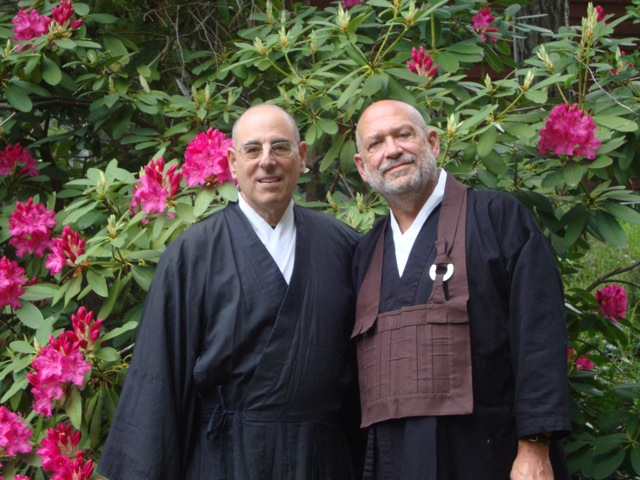
Greg Mayers (seated) with Nona Strong, Tony Tackitt, and Alice Cabotaje

[1] The number of “Christian Zen teachers” has began significant. James Ford provides a partial list on his “Monkey Mind” blog: https://www.patheos.com/blogs/monkeymind/2022/10/christian-zen-teachers-a-list-in-progress.html 

Barry Briggs [Zen Master Hye Mun]

Cochise Zen Center, Bisbee, Arizona –

Barry Briggs – Kwan Um Zen Master Hye Mun – first encountered Buddhism through a girlfriend. “She practiced in the Tibetan Buddhist tradition with Sogyal Rinpoche, who died several years ago.” Barry was studying the Philosophy of Religion at the time at university. “I’m interested in human behavior and what motivates it. And at least in the 1970s, there was a lot of interesting philosophical work to be done in the field of religion and belief. So that attracted me. I worked a lot on the ‘problem of evil,’ how to reconcile the existence of evil with an all-powerful, all-good, all-knowing deity.

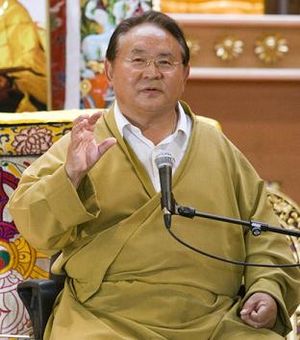
Sogyal Rinpoche

“In the early 1980s I practiced with Sogyal Rinpoche – ‘practiced’ in a loose sense – for five years. When he came to Seattle, I would go to a weekend retreat. My recollection – perhaps not to be trusted – is that he would talk a lot for two days. I remember being fascinated by it, how he would describe human mind, how mind functioned. And then, at the end of the two days, he would say, ‘Now go home and practice.’ And, of course, I didn’t. Or not for very long,” he adds with a chuckle.

“What did he mean by ‘practice’?” I ask.

“He would teach meditation over the weekend, but these were not meditation retreats as I understand it now. Perhaps it would be more accurate to say that these were ‘Dharma retreats.’ And at the end he would say, ‘Now go home and practice this meditation that I taught you.’”

“And you didn’t.”

“Well, for a few days. Maybe. You get a little bit of Dharma gasoline, and you can go for a short distance. And then you run out of gas. Then a couple of years later, my best friend invited me to go to a Zen retreat with him. And that was almost like the inverse of Rinpoche’s retreats. Very little talking and a lot of practice. A lot.”

The retreat was in the Korean Soen tradition.

“There was a Korean nun who had a hermitage in the foothills of the Cascade Mountains outside of Seattle, and we went there in January. I remember very clearly that she didn’t heat the place. There was snow on the ground. It was bone-chilling cold, and all we did was practice: bowing, chanting, and sitting. And I found out that I loved practice. Not talking about practice but actually doing it. It’s what I wanted.”

“What was it about it that you found appealing?”

“It was embodied. Although I was a philosophy student and – for a time – quite intellectual, I’ve always been somebody who has used my body a lot. I’m old now, so it’s different, but in my 20s and 30s I was a rock climber, a cyclist, a professional modern dancer, and just physically very active. People might not think of sitting in meditation as physical activity, but for me it was physically very active. Plus, in the Kwan Um School tradition, we do 108 prostrations every day and lots of chanting. Very physical practices.”

“It takes energy to sit still,” I point out.

“It does, and I loved it. I wasn’t looking for a spiritual practice, but when I went to that Zen retreat, I said ‘Oh, I want to do this. This is something I understand.’ There was a small sitting group in Seattle – a Kwan Um School sitting group in Seattle – at that time. Maybe ten people. Of the ten, maybe three were interested in Kwan Um School style. Some were Glenn Webb’s students or had been his students. Most of those ten eventually wandered off to various Japanese forms of practice available in Seattle at that time. So really it was just a few of us. Then it started growing. We moved around from place to place.”

Glenn Webb was a professor of art history at the University of Washington who had trained in the Obaku school of Zen in Japan and introduced many Western students – including Genjo Marinello – to formal practice.

Bob Moore

The group was small and not formally organized. “We had a set schedule, and we just showed up. Our guiding teacher was a man named Bob Moore, now known as Zen Master Ji Bong, who lived in Southern California. He would visit several times a year, along with other Kwan Um School teachers.”

“And if someone at the time had asked you what you were getting out of this practice, what would you have told them?” I ask.

“Hmm. I would have made up a fairy tale about becoming more calm and centered, blah, blah, blah. Like that. I would have invented a story because, particularly in the first ten or twenty years, how could one possibly know? Obviously, training has impact on peoples’ lives, but any attempt to describe a benefit most often just leads to a fairy tale. At least in my experience. The Zen tradition has enough fantasy wrapped around it, at least in the West. So perhaps it’s best to keep one’s mouth closed and encourage others to find out for themselves.”

And so those ten or twenty years passed. He remained faithful to the practice and worked in the software industry. “I retired in 2005. Then I was asked to become a teacher in 2012 and that happened in 2013.”

“Who asked you?”

“In the Kwan Um School, when a practitioner seems ready, a committee is formed to assess that person. My primary teacher at the time was Timothy Lerch Ji Do Poep Sa Nim and my sponsoring teacher was Zen Master Bon Haeng, Mark Houghton, who lives in Massachusetts. If the committee agrees, then the individual receives inka, teaching authorization. For me that was in 2013.”

In 2015, he was invited to leave Seattle and move to the Cambridge Zen Center in Massachusetts.

“They asked me to be their resident teacher. It’s a wonderful Zen Center, an incredible Zen Center. It’s one of the oldest and largest residential centers in the United States, founded in 1974, I believe. And at any given time, thirty or so people live there, right in the heart of Cambridge. The Kwan Um School has quite a few Zen centers within two hours of Cambridge so there was a lot of teaching to be done.”

He was the Resident Teacher and later Co-Guiding Teacher with Jane Dobsiz, Zen Master Bon Yeon.

Jane Dobsiz

I ask what his responsibilities had been.

“The Zen center has formal practice every morning and every evening, seven days a week. I showed up every morning and every evening, six and half days a week. I took Sunday evenings off. On a regular basis I offered kong-an interviews, talks, and workshops. I met informally with residents and members of the non-residential community. But the primary responsibility I took upon myself was to show up for practice every morning and every evening six and a half days a week.”

Also during that time, he traveled extensively, teaching in central Europe, Russia, South Africa, Malaysia, Singapore, Hong Kong, Korea, and throughout the United States.

On the other hand, as much as he loved the Cambridge Center, he didn’t feel at home in New England.

“I still have good relationships with people in Cambridge, but New England was not my home. I really missed the west. In the winter of 2016-17, I said to myself, ‘I’m going to rent an Airbnb in Southern Arizona and be warm. And do a kind of loose retreat.’ Sit in the mornings and the evenings. Walk in the mountains during the day. And as I was scheming that out, a friend in Seattle wrote and said, ‘What are your plans?’ I told her and she said, ‘I own a house in Bisbee Arizona. You could use my house.’ So, okay. I’d never been to Bisbee, but – as happens to many people who come to Bisbee – I came here, and I liked it. So, I hatched a plan to move here. As it turned out, there was already a Zen center in Bisbee. It had been here for fifteen years but had never had a teacher or a formal affiliation. It was simply organized and operated by local people who wanted to practice.”

“And did they welcome you with open arms?”

“Almost everyone was happy to have somebody who had an actual credential,” he says, chuckling. “Some of the people who welcomed me with open arms maybe weren’t so welcoming later as they realized I was an ordinary person.”

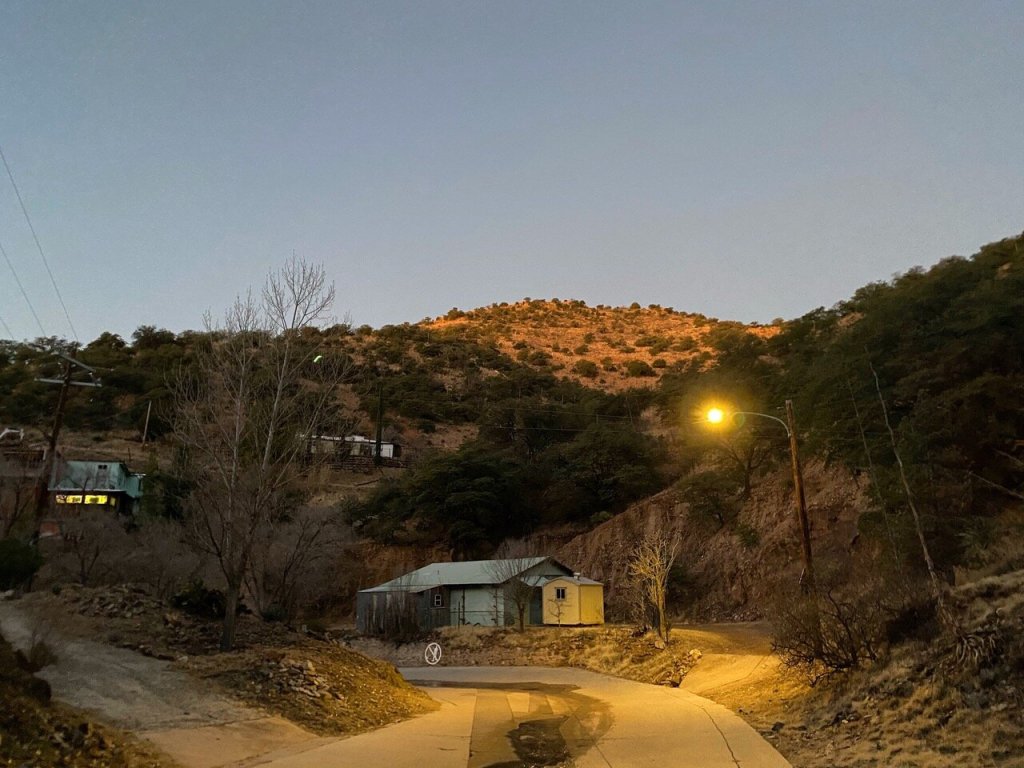
Bisbee is a small community, with a population of less than 5000 people, and yet the Zen Center has twenty-five active participants. In Zen circles, this is huge.

“I’m astonished, to be honest with you,” Barry tells me. “I’m astonished. It’s amazing. We’re the only organized meditation group for a hundred miles, so if somebody wants to practice, they come to us. For this reason, I try to keep the community very spacious in welcoming people regardless of affiliation or background. We’ve had Transcendental Meditation practitioners, somatic body work people, Tibetan practitioners, and lots of non-Buddhist types practicing with us. We welcome them all. Of course, I wear formal Zen robes and speak from my tradition when I give talks. I’m only authorized to do what I do, and so that’s all I do. I can’t pretend to be a different kind of person. But because of our unique situation, I hold the forms very loosely. When I was at Cambridge Zen Center, there was a Buddhist Center about every other block or so. If somebody didn’t like our center, they could go to Insight Meditation which is literally about six blocks away. It’s no problem. But here in Bisbee, that’s not an option for people. For this reason, I keep the forms loose. And if somebody’s not following the forms, I usually keep my mouth shut. I want everyone to feel like this is their practice home.”

Seung Sahn

There may be substantive differences between Japanese Zen and Korean Soen, but Barry is reluctant to address the issue. “I don’t know that I can speak to that with authority because I don’t have direct experience with Japanese Zen.” He is, however, willing to outline his understanding of the Korean tradition as it was organized and taught by Zen Master Seung Sahn.

“I’ve heard that when he came to America in 1972, he was a very high-ranking teacher in Korea. And according to the story, in the Korean version of Life or Look magazine, he read about hippies in America and said, ‘Oh, I can teach those people.’ So, he moved here, not speaking any English. I wasn’t around in those days, but apparently his original idea was that he would create a monastic order in the West. But Western people didn’t go along with that idea. ‘Monastic order’ in the Korean Buddhism means the traditional 250 or so precepts. I’ve heard the words ‘monk’ and ‘nun’ are used in a certain way in Japanese Buddhism; sometimes ‘priests’ is used also. These terms have a different meaning in the Korean tradition where they refer to celibate monks and nuns who live very restricted lives. So when Zen Master Seung Sahn came to America, most of his American students were not willing to follow in that path.”

“He wasn’t able to follow that path himself when he got here,” I point out.

“That’s my understanding,” he agrees. “But I wasn’t around when that behaviour occurred, so I don’t really have anything to add to what you’ve probably already heard. But despite those issues, he interpreted his Korean heritage in a way that seemed to make sense in the West and built a lasting framework for practice. And those are the same elements of our practice today. Recently I talked with someone at a Rinzai center, and they said, ‘You know, the view we have in our center is that the Kwan Um School is “Zen-lite” because you don’t do a lot of sitting.’ And I said, ‘Oh, that’s interesting. How long is your longest intensive retreat?’ He said, ‘Seven days.’ I said, ‘Well, take that seven-day retreat and do it for twelve weeks consecutively as a silent meditation retreat. That’s what we do every winter at centers around the world. And if you go to Korea, we do it every winter and every summer. Monks and nuns in Korea are in intensive meditation retreat for six months a year. Maybe that’s Zen-lite. I don’t know.’ So, we sit a lot. We chant a lot. We do 108 prostrations every day, although my body is old, and I can’t do full prostrations any longer. And we work with kong-ans. So those are the four elements of our practice.

“But underneath all of that is what I call ‘vow.’ Why do you practice every day? Only to get a good feeling? Or to have some calmness? Is that the only reason you practice? That’s what I ask. Zen Master Seung Sahn used to say, ‘Why do you eat every day? Why did you get out of bed this morning? Because your body is hungry? Or your alarm went off. Is this why you got up?’ Underneath everything we do is ‘vow.’ Why do you have a human body? What are you going to do with your human body? If that’s clear, you don’t need to practice. These are the elements of our tradition as I understand and teach them.”

I ask if he’s ordained.

“No, I’m not an ordained monk. In the Kwan Um School – I know this sometimes can be confusing for those trained in Japanese traditions – in the Kwan Um School the precepts path and the teaching path are independent. Somebody can have 250 precepts as a fully ordained monk or nun but never become a teacher. They’re just completely different paths.”

“So what’s the function of the precepts path?”

He answers without hesitation: “Living an upright life and helping this world. Serving as a model for helping this world. The function of the basic Five Precepts is to bring yourself upright. The next five precept are about community relationships, how to function harmoniously in community.”

As they were explained to me by Judy Roitman [Zen Master Bon Hae], the First Five Precepts in the Kwan Um School are: 1) to abstain from taking life; 2 to abstain from taking things not given; 3) to abstain from misconduct done in lust; 4) to abstain from lying; 5) to abstain from taking intoxicants to induce heedlessness.

These are followed by: 6) vowing not to talk about the faults of others; 7) vowing not to praise oneself and put down others; 8) vowing not to be covetous and to be generous; 9) vowing not to give way to anger and to be harmonious; 10) vowing not to slander the three jewels (Buddha, Dharma, Sangha).

I ask Barry if any of the students with whom he works in Bisbee have taken the Precepts.

“Yeah. When I came here, of course, they never had a teacher or formal affiliation, so it’s taken a while to migrate the community to the Kwan Um School tradition. Now we have . . .” he pauses to reflect a moment “. . . seven or eight people who have taken the first Five Precepts, and then three long-time practitioners in the Kwan Um School who are part of our community who have taken the Ten Precepts. We call these folks Dharma teachers; not Dharma teachers in the way that you and I might use that term outside the Kwan Um School, but they have taken on the responsibility of leading practice, giving instruction – meditation instruction – and generally being of service to the community. They’re not teachers in the way I’m authorized to be a teacher.”

“What’s the function of all of this?” I ask. “You said, ‘to lead an upright life.’”

“The function is liberation.”

“From?”

“It’s a good question and if you and I were talking less formally and you knew nothing about Buddhism, I would frame the question in terms of the ordinary challenges we have as human being. Problems with our partner; problems with our children; problems with our parents; problems at work. Like that.”
“You’re going to liberate me from all that?”

“No. You’re going to liberate yourself from that,” he says with a laugh. “I’m not going to do anything.”

“And how is this practice going to help me liberate myself from all these problems I’ve got?”

“You have to find that for yourself. And there’s no way of sugar-coating that if somebody’s honest. You’re the only one who can find that out. If I were going to give a nice explanation about it, I would talk about it in terms of awareness and mindfulness and watching the feelings and emotions and perceptions and impulses arise in the mind and making skillful choices about them. That’s a nice explanation. But you’re the only one that can find it. You’re the only one who can find out what it means for yourself.”

One of the issues I’ve been fascinated about as I conduct these interviews is the way what draws people to Zen practice has changed over the decades. It isn’t an exaggeration to say that a majority of those seeking out teachers in the 1960s and ’70s were on a quest for enlightenment. It was in part driven by insights often acquired through psychedelic drug use, but the search was largely for enlightenment, kensho, satori.

Barry admits that these are not words “in favor these days in the Western Buddhist world. I talk about it, but I tend to use the word ‘awakening’ – or ‘awaken’ – rather than ‘enlightenment.’ It’s a word that’s a little less loaded. When most Western people – in my experience – think about ‘enlightenment,’ they’re thinking about pixie-dust falling out of the sky. People and objects glowing with auras. But ‘awakened’ just means being awake. And there are good metaphors that connect with this. One I use is that at night, when you’re sleeping, you have no awareness of your body even though your body’s always present. And even if you’re dreaming about your body, it’s not your actual body; it’s a dream body. But the minute you wake up in the morning, you’re not confused. There’s your body saying, ‘Let’s go pee.’ You get up and you pee. You’re not confused. You’re awake. Your awakened nature – your enlightened nature – is always available, but we don’t know that because we’re dreaming. All we have to do is wake up to what’s always there.

“In Diamond Sutra,the Buddha says in various ways, over and over, that when he got enlightenment he didn’t get anything. If he’d gotten something it wouldn’t have been enlightenment. So each of us already has it. We just need to wake up to it.”

“Regardless,” I persist, “I suspect when people come to the door for the first time, they don’t say ‘I want to be awakened.’”

“Rarely.”

“So, what do they say?”

“Oh, I hardly ever ask that question. If they need instruction, I give them some instruction. And then they practice and either stay or don’t stay. You know, a lot of people don’t come back a second time.”

“Still, you have some sense of what drew them.”

“Yeah, they’ve usually got a life problem. Maybe their spouse is not cooperating or maybe their body is not cooperating. Bisbee is a town of mostly older people, and so we have a lot of loss in our sangha. People are dealing with that. Most members of our community are right up against some of the hardest things in human life. And I think that’s one of the reasons we have a large community in a small town. People have no time to waste. Just this last year we lost our board president at age 85. We lost the person who ran our weeknight practice for over a decade. He was 81. We’re all there right up against it. I’m 77. So, local people are hungry for a community and practice which helps them investigate what their life is actually about.”

“Are you saying one of the things that draws them is a desire for a community?”

He nods. “When people come to the Zen center, they’re joining a community. That’s a very important function of a Zen center, to provide community. To provide support.”

“The traditional Three Treasures,” I suggest.

“Yeah, a cornerstone of the Three Treasures. Exactly. And this last year I’ve found myself more than ever sitting with people who are dying. Or sitting with those whose partners or friends have died. This work is a little beyond my training but, really, all you have to do is show up. It’s just like practice; you just have to show up. That’s the main thing.”

There are young people in the community as well, who he encourages to take part in longer Kwan Um practice retreats at the Providence Zen Center in Rhode Island. These retreats – called “kyol che” – can be up to three months long. “‘Kyol che’ is Korean term that means ‘tight Dharma.’ If people are young and able to engage in that kind of practice, I suggest it. But I don’t encourage somebody who is 75 or 80 years old to do that kind of practice. Not that they can’t – maybe they can – but they have different concerns, most of them.”

“What is it that the people at the Cochise Center look to you for?”

“The first thing is I show up. We only practice twice a week, so I show up twice a week. I’m always there, except for the rare occasions I’m out of town. People depend on the consistency, although less than I might think that they do. To be honest. I think people are quite self-sufficient now in the community.”

“There’s more than one key to the door?”

“There are many keys to the door. Last October I was in Korea for a few weeks, and people came in, turned on the computers, ran practice. Everybody came. Nothing changed. But in some ways, they depend on me to show up. They depend on a model of the practice and the practice life. They ask me to create a safe place for people to practice. Physically safe. Emotionally safe. Spiritually safe. They depend on me to give talks that speak to real human needs and provide some clarity about what it is to be a human being.”

“And what is your hope for the center?

“The center stayed together for fifteen years before I showed up. It will continue after I die. It will grow or shrink. I can’t control that. All I can do is pour my love and commitment into the community as best as I can. Lately I’m investing a lot of energy in the younger practitioners. They’re working on kung-ans; they’re working on personal life issues. It’s not that I’m turning away from the older people at all – there’s a lot to do there as well – but I’m really encouraging the younger people to step forward. And they are.”

Barry believes that it has been a benefit to the center to be formally affiliated with the Kwan Um School.

“When I first moved here, of course, nobody knew about the Kwan Um School. Among the various Western Zen traditions, we’re perhaps less well-known than some. People knew that I practiced in a Korean ancestral tradition, and that was okay with almost everybody. They were willing to adapt the forms.

“When the pandemic started, we closed down physical operations and moved everything to Zoom. And I had the idea that rather than me giving the Dharma talk every Sunday, we would invite teachers from the worldwide Kwan Um School community and have them give talks and answer questions. And it was a real eye-opener to the community in Bisbee to realize that there were all these different people around the world teaching the same bone of Zen but with their own personal way of expressing it. People in Asia, people in Europe, people in America all teaching from the same tradition. This has had a big impact on people. Because the Kwan Um School has an online sangha, local people who practice here also practice via Zoom at Empty Gate Zen Center in Berkeley or with our center in Fairbanks, Alaska, or Boise, Idaho. It’s been a surprise to people. It’s been a surprise to me how much people have taken advantage of that network.

“It’s one of the great gifts of the Kwan Um School. We’re a school; we’re not a loose tradition in the same way that some of the Japanese lineages are. And part of Zen Master Seung Sahn’s gift is that we encourage practitioners to study with many different teachers. We say in the Kwan Um School that Zen Centers have guiding teachers, but students don’t have guiding teachers. Students can study with whoever they want, and we encourage that. As a result people develop a very broad view of the Buddhadharma, as it comes through our lineage. And I think that’s been a great gift to the people here in Bisbee and around the world as well.”

Joshu Sasaki

Adapted from The Story of Zen

In his history of American Buddhism – How the Swans Came to the Lake – Rick Fields recounts the story of the time Rinzai master, Joshu Sasaki, gave a talk at the Berkeley campus of the University of California. One of the people in attendance asked if there were a place in the San Francisco area where one could get Zen training. Sasaki appeared to give the question a moment’s thought then said he wasn’t aware of any and suggested that if the inquirer were serious he should arrange to visit Sasaki’s center in Los Angeles.

There was a surprised, audible reaction from the audience, many of whom were students and friends of Suzuki-roshi’s San Francisco Zen Center, which by then had more than one branch in the Bay area, and Sasaki’s translator, a Japanese-American doctor, hastened to add, “The roshi means that there is nowhere else where one can study his particular line of Zen.” [Rick Fields, How the Swans Came to the Lake (Boston: Shambhala, 1992), p. 247.]

It is possible that Sasaki was making a distinction between Soto and Rinzai Zen; the Zen community in the United States, even in its earliest days, was divided along sectarian lines. It is also true, as Fields adds, that “it certainly appeared – to some at least – that the roshi had rather enjoyed the stir his blunt answer had caused.”

Sasaki is sometimes identified as the fourth of four Japanese missionaries – following Suzuki, Taizan Maezumi, and Eido Shimano – who helped establish Zen practice in America. He was two decades older than Maezumi and Shimano, although they came to the US before him, and only a few years younger than Suzuki. He had been born in 1907, was ordained a monk at the age of fourteen, and became an osho – or priest – seven years later. He spent several years at Myoshin-ji in Kyoto, which remains one of the principal teaching centers for Rinzai Zen. In 1947, at the age of 40, he was given Dharma Transmission and became abbot of a small temple in Nagano Prefecture.

According to an interview Sasaki gave in 1969, he’d had no idea of coming to the United States until two American aspirants, Dr. Robert Harmon and Gladys Weisberg,wrote to Myoshin-ji requesting that an authorized teacher be sent to Los Angeles.

Up until that time, I had no dreams whatever of coming to the United States and furthermore the temple I belonged to was so poor that they couldn’t entertain any such ideas. However, Myoshin-ji said that I would be very useful in the United States so suggested I come here. [sasakiarchive.com/PDFs/19691220_Sasaki_Interview.pdf.]

He arrived in America, reputedly, with only the robes he was wearing, a Japanese/English dictionary, a Bible, and a small valise. He didn’t waste time but began receiving students almost at once in a one-bedroom house in a Los Angeles suburb. Within five years, the group moved to new quarters in what had once been a luxurious residence on the corner of Cimarron and 25th streets. The neighborhood had deteriorated, and the building itself had been condemned by the city as unsafe for occupancy. Sasaki’s students, however, refurbished it, and it was officially opened on April 21, 1968 – Sasaki’s 61st birthday – as the Cimarron Zen Center. Later the name would be changed to Rinzai-ji. 200 students took part in the opening ceremonies.

Three years later the community had sufficient funds to purchase another property in the San Gabriel Mountains east of the city. This became the Mount Baldy Zen Center. A third center – the Bodhi Manda Zen Center in Jemez Springs, New Mexico – was established in 1973. The three centers quickly acquired reputations as rigorous and austere practice centers. In a talk given at Bodhi Manda, Sasaki said: “The standpoint of this Zen Center is our own practice of Dharma Activity. Therefore we accept those who want to study Dharma Activity. Those who are not interested in Dharma Activity should leave immediately.” The training provided wasn’t easy nor for the faint of heart. Sasaki’s type of Zen has been described as Samurai. Those who couldn’t cut it were invited to “leave immediately.”

Many did. More to the point, there were others who remained and flourished. Within a few years, senior students established affiliate centers elsewhere in the United States, Canada, and Europe. Sasaki received invitations to facilitate sesshin at locations throughout North America including St. Joseph’s Roman Catholic Trappist Monastery in Spencer, Massachusetts.

His students worked with koans but instead of being chosen from classical collections these were often adapted to the condition of the particular student. One might be asked how he realized Buddha nature while driving an automobile. To the monks at St. Joseph’s, he assigned the question, “How do you realize God when making the sign of the cross?”

Leonard Cohen and Joshu Sasaki

Sasaki never acquired a very good command of English and had to make use of translators throughout his time in America, even so it was the impact of his personality which his admirers most frequently reference when talking about him. The Canadian songwriter, Leonard Cohen – who spent a period of residency at Mount Baldy in the 1990s – said that Sasaki was such an inspiring figure that were he to have been a Heidelberg physicist, Cohen would have learned German and studied physics. Cohen also admitted that he and other Sasaki students “were gravitating to teachers who were quite flawed as human beings, but that’s what we cherished. We wanted to see the dark side made bright.”

Seiju Bob Mammoser was at one time thought to be in line to become abbot of Rinzai-ji after Sasaki retired, although this never came about. When I spoke with him in 2013, I was struck by how reserved and even cautious he was when speaking except when talking about Sasaki, whom he always described in superlatives. He was “amazing” and “an utterly remarkable, unique man.” I asked in what way, and he told me, “You meet somebody who inspires you. Motivates you and moves you and demonstrates – in front of you, in his manifestation – exactly what he’s talking about. I hadn’t really met other teachers. I’d read books. I’d read Zen Mind, Beginner’s Mind. That was a beautiful book. But he was the first living teacher I’d met. He was sufficient. I didn’t have to go see somebody else. I knew what I was dealing with.”

Father Kevin Hunt, a member of the Trappist Community at Spencer and an authorized Zen teacher, was equally fulsome in his praise of Sasaki. “We had him in choir, and he had a room in the monastery itself. So he participated; he ate in our dining room. He gave a couple of talks to the community. There was quite a lot of interest in what he said. Basically he spoke of his experience in meditation and the Zen way of doing meditation. And, you know, a novice master had once said to me, ‘If there’s any rule in prayer it is that it will always become more simple. Less verbal.’ And so he addressed that aspect, that in Zen there’s no talking. That to speak a word in Zen is already a betrayal. And that was something that we could identify with because we had a rule of silence, and silence is very, very important in our practice. And he loved it, so somebody said to him something about coming back sometime and giving a weekend sesshin. And so he said, ‘Yes. I come back next year.’”

In fact he came back ten years in succession to lead retreats at St. Joseph’s.

Myokyo

He did not coddle his students. When I asked Zengetsu Myokyo Judith McLean  of the Enpuku-ji center in Montreal what Sasaki Roshi was like as a teacher, her immediate answer surprised me:

“He was cruel. He was strong. He was . . .”

I interrupted to ask what she meant by “cruel” and why that was the first thing she said. She explained that she hadn’t meant it as a criticism. “I was talking with a student here yesterday, and, it seems to me, it was a very effective tool for dissolving the ego.

“The strongest teaching he gave me,” she went on a bit later, “was that he gave me a lot of responsibility.” She had been head monk of Rinzai-ji in Los Angeles in 1992 during the Rodney King riots. Sasaki, himself, was away at the time. “That was a lot of responsibility, because we were hemmed in. There were fires all around us and so on. And never any comment about ‘job well done’ or how bad it was.

“And while I was at Rinzai-ji, there was a very, very difficult older nun. She was an alcoholic. Very difficult. She used to drive people away from the Zen Center. So I was in charge of her there, and I dealt with her in an okay way. Then the Roshi turned the tables on us, and he made her the head monk. And things went kind of crazy. Like really crazy. So that was a cruel situation. And he watched and watched and no comment. He watched to see how I dealt with that. So at the time, that seemed cruel to me. But he’s just cutting off any kind of attempt to grandify oneself or to even feel competent. Because we all had something more to learn in the sense of dissolving our self.

“His methods are very effective. I mean, when your whole world falls apart, then you learn from that. And if that keeps on happening, then you keep on learning. And so if I had someone who was just kind and helped me along a little bit, that wasn’t so interesting. So I think it’s a very particular kind of character that would study with a teacher like that. I was very stubborn, but there was never a doubt in my mind that this was the person I wanted to study with, that I was glad to be studying with. No doubt. Even when it was difficult and I felt he should really give me a break once in a while, still there was no doubt in my mind.”

Others have described him as “playful,” charming, and as having an infectious laugh. He advised his students – whom he accused at times of being too serious and humorless – to practice laughing as a spiritual practice.


When you wake up tomorrow morning, first thing, stand up, put your hands on your hips, and laugh five or ten times, and that will cure you of much of your illness. This exercise is even better than a long period of meditative sitting. As a beginner in meditation, instead of suffering a long period of cramped legs, it would be better for you every morning as soon as you get up to immediately stand in this position and laugh about ten times. This is really the best beginning of Zen. If during that time you are doing this exercise and laughing vigorously, I were to ask you “Where was God at that time?“ How would you answer? Then immediately your logic and your consciousness starts to work. That is what is bad. That is time and space learning. That is not Zen. Just simply laugh and you will begin to realize. [https://terebess.hu/zen/mesterek/Joshu-Sasaki-Roshi-About-Zazen.pdf]

Myokyo’s was the ninth interview I conducted when I began this series of conversations in 2013. I had particularly wanted to interview one of Sasaki’s osho – preferably a female osho – at the time because he had made headlines in the mainstream media as a result of reports about his sexual interference with female students that had been going on for decades.

As he drew media attention, his history was examined with greater scrutiny, and it was discovered that his claim to have come to America at the request of two students in California left out a number of significant details.

In 1944, he had been the fusu – or business manager – of Zuiryuji in the Prefecture of Toyama. Eight years later, it came to light that during his time in office he had embezzled funds intended for temple renovations in order to pay for what the judge trying the criminal case against him called “a pleasure spree inappropriate for a religious figure.” Sasaki took responsibility for his actions, telling police that no one else was involved. He also confessed that “with regard to women, this is my distress as a human being.” The guards who had charge of him during his detention before trial were impressed by his demeanour, particularly the way he sat for hours in full lotus posture on his hard bed. One even obtained a zafu for him to make the posture more comfortable. He was found guilty in 1954 and served an eight-month sentence.

When he returned to his monastery, his “distress” with women didn’t abate, and it was later reported that he had fathered at least two children for whom he assumed no responsibility. When the request came from America for a Rinzai teacher, the officials at Myoshinji may well have viewed this as an opportunity to rid themselves of a monk who continued to be an embarrassment. In Sasaki’s version of the story, he performed the ceremony for permanent departure from Japan because he intended to stay in America until he had brought Rinzai Zen to the country. Another interpretation of events is that he was sent into exile.

Yoshin

He was, however, an effective teacher, and students were drawn to him. Leonard Cohen and Seiju Mammoser were not alone in praising him. David Yoshin Radin   of the Ithaca Zen Center in New York told me that he had “had an immediate and very powerful bond to Sasaki Roshi as my teacher. His silence and poise were majestic. And his ability to teach that the self – my ‘self’ – was not identical to my body was direct and powerful. I had never seen anything like that before. Of course I’d studied the teachings, but it’s different when you get it live than when you get it from a book. It has the power to break through your own mental states. And that’s why all this kafuffle is of no interest to me. I mean, he gave me such a profound gift that everything else is dwarfed.”

By “kafuffle” he meant the controversies around Sasaki’s treatment of women, which hadn’t improved after his move to the US.

Complaints surfaced early and were dismissed on the grounds that Sasaki was an enlightened Zen Master and anything he did with his students was actually teaching. One of the chroniclers of Sasaki’s exploits reported that when

– a young woman who was Sasaki’s assistant (inji) at the time complained about Sasaki’s constant sexual advances, one monk replied that “sexualizing is teaching for particular women.” The monk’s theory, widespread in Sasaki’s circle, was that such physicality could check a “woman’s overly strong ego.” Sasaki claimed his sexual advances were in fact teaching non-attachment and emptiness, core Zen values.  [https://buddhism-controversy-blog.com/2017/07/16/ready-to-mine-zens-legitimating-mythology-and-cultish-behavior/#_ftnref16]


When male students did try to intervene on behalf of the women, Sasaki threatened to stop teaching if they questioned his methods. He also noted that having sex with young women helped him remain youthful.

Sasaki’s tendencies – although they were successfully concealed from the general public for a long while – became well known within Zen circles, and women who chose to study with him were often aware of the stories. Myokyo told me that she had been aware of the situation before she began her practice, and it hadn’t discouraged her from seeking to study with him. Even women who later complained about his behaviour often continued to admire him as a teacher.  One of the women who wrote to the Witnessing Council established in response to the “Sasaki Affair” stated that she

– stayed with Roshi because my experience largely was that he was a great and gifted Zen and koan teacher, and I believe I received great benefit from the other sanzen meetings – those unburdened by his sexual interests. I had met with other Roshis and teachers, but I felt he was absolutely the deepest and best teacher.

As the number of incidents grew, even some of Sasaki’s most ardent supporters came to have doubts. In 1992, one of his senior students – Gentei Sandy Steward – disaffiliated his North Carolina Zen Center from Rinzai-ji specifically because “of my objection to the sexual behaviour and sexual teaching techniques of the Head Abbot” and “my disapproval of the lack of action by the Head Abbot, board of directors or ordained persons of Rinzai-ji to help those who have suffered on account of this behaviour.”

Eshu

Things finally attracted attention outside the Zen community when in 2012 a former Rinzai-ji priest, Eshu Martin, published an open letter on the Sweeping Zen website which explicitly described the state of affairs in the community:

Joshu Sasaki Roshi, the founder and Abbot of Rinzai-ji is now 105 years old, and he has engaged in many forms of inappropriate sexual relationship with those who have come to him as students since his arrival here more than 50 years ago. His career of misconduct has run the gamut from frequent and repeated non-consensual groping of female students during interview, to sexually coercive after hours “tea” meetings, to affairs and sexual interference in the marriages and relationships of his students. Many individuals that have confronted Sasaki and Rinzai-ji about this behaviour have been alienated and eventually excommunicated, or have resigned in frustration when nothing changed; or worst of all, have simply fallen silent and capitulated. For decades, Joshu Roshi’s behaviour has been ignored, hushed up, downplayed, justified, and defended by the monks and students that remain loyal to him.

The letter spread through the internet, and its content was discussed on hard news sources like CNN and the New York Times. Seiju Mammoser spoke on behalf of the Rinzai-ji Osho Council in the New York Times article, admitting that he had been aware of the allegations against Sasaki since the 1980s and that there had “been efforts in the past to address this with him. Basically, they haven’t been able to go anywhere.” Seiju added:

What’s important and is overlooked is that, besides this aspect, Roshi was a commanding and inspiring figure using Buddhist practice to help thousands find more peace, clarity and happiness in their own lives. It seems to be the kind of thing that, you get the person as a whole, good and bad, just like you marry somebody and you get their strengths and wonderful qualities as well as their weaknesses.


In November 2012, Rinzai-ji cooperated with an Independent Witnessing Council made up of Zen leaders not associated with Sasaki or his centers. The council collected information from 25 individuals, half of whom experienced actual or attempted sexual contact with Sasaki. The findings were substantial and damning.

Seiju

This was all a matter of public record when I met Seiju in 2013, regardless of which he remained loyal.

“A  lot of people, in taking in all this stuff, have resolved it in their various ways,” Seiju told me. “What I found most difficult is that the propensity to get to a mind of judgment impedes understanding. Once I make a decision—‘That’s right; that’s wrong; this or that’—then I line up behind my judgment and act. I haven’t found a mind of judgment to be particularly helpful for a mind of practice. But the emotional urge to get to judgment, because there’s a lot of unpleasant stuff that has been talked about—and I can understand that—that would make people unsettled. But I’ve been on the inside for so long, I appreciate a great value that’s comes from studying with Sasaki Roshi. He’s a full-bore person. He completely does what he does. And in the human scope of things, everything becomes a thing. Things are entities. So Sasaki Roshi is a person. All right? You’re a person. That’s a dog. You know? This is a person. That kind of thinking. Very common. Very understandable. Very human. You know? That’s not what Buddhism teaches us. Everything is activity. Sometimes I manifest skilful activities; sometimes I manifest foolish activity. And sometimes I manifest selfish activity. I can be a loving parent, and I can be a terrible co-worker. And I can be both of those and all of those in the same day. And anything else. And in my experience around Sasaki Roshi, he’s been a remarkable, deeply committed teacher. Highly intense and highly demanding of his students. And also he can be very intense in these other areas. He’s completely consistent with his character, in terms of complete activity. And it seems that, at those times, we weren’t dealing with Joshu Sasaki Roshi; we were dealing with Joshu Sasaki, a Japanese man. And he could manifest both of those qualities. People presume that if you’re quote ‘enlightened’ end quote—whatever that means—or ‘awake’ or anything else, you can’t possibly do this other stuff. And I mean, I don’t know the answer to that. But it’s pretty obvious to me that the one person that I’ve spent time with who seems to come closest to what a lot of people would think of as an ‘awake’ person has also done these other things. And that, to me, is just skilful activity and unskillful activity. Which, again, we all do in our lives.”

Joshu Sasaki died on July 27, 2014, at the age of 107, without having named a successor. Rinzai-ji and Bodhi Manda and other centers associated with Sasaki continue to be maintained, according to the Bodhi Manda website, “by ordained Zen teachers (oshos), monks, nuns, and numerous lay practitioners.”

Myokyo was not surprised. “The tradition is that you must exceed your teacher in understanding in order to be named a successor. And I think for a lot of us, there was no one coming anywhere near that.”
When I began this series of interviews – when the news reports about Sasaki and others were casting a pall over the tradition – centre after centre I visited were struggling with the revelations and often reflecting on difficulties in their own pasts. These are issues I continue to discuss with those with whom I speak. The matter is often expressed in terms of the contrast between, on the one hand, the vows we chant – for example, to care for all beings without number – and the Precepts and, on the other, the behaviour at times of those who guide the community. Debra Seido Martin’s reflection stayed with me long after my conversation with her on this topic:

“Time to grow up, everybody. We can leave the naïve romantic chapter of Zen and become adults together. My teacher – Kyogen Carlson – was very humble about the expectations when I confronted him about the failings of [so many teachers]. As a woman new to practice, I was especially shocked when I first heard of male teachers’ sexual abuse of their female students. As an incredibly trusting new student, that I could be taken advantage of by someone in authority I trusted seemed awful. We have had much time to learn from this first generation and can now we can be adults. We can take responsibility for our own discernment and call out transgression when we see it. I wouldn’t say that teachers who transgressed had no respect for the Precepts, I think they were blind to their own shadow sides and left unchecked by an undeveloped institution around them. Kyogen said there were no guarantees as to the outcome of this practice for anyone. He was humble and said, ‘You know what? I’ve come to find out after thirty years of teaching, Zen inclines us towards wisdom, and it inclines toward compassion. That’s it. For everybody.”

On the Matter of “Transmission”

Conversations with James Ford –

James Ford was among the first twelve interviews I did in 2013 when I began this tour of teachers and centers. Our most recent conversation, ten years later, was the 231st I’ve conducted. James has transmission in both the Soto tradition – through Jiyu Kennett Roshi – and the Harada-Yasutani lineage through John Tarrant. In addition, he is a retired Unitarian minister. All of which places him in an especially good position to reflect on the matters of transmission and authorization.

Formal authorization is a matter of importance in the Zen tradition. Teachers are not self-proclaimed – or shouldn’t be self-proclaimed – but are identified and certified by predecessors who themselves have received recognition in lines of descent which are traced back in formal documents – kechimyakus – to the Buddha himself, although James estimates that the historicity of the lineages probably don’t go back further than the 7th or 8th centuries CE.

The concept of transmission implies not only an unbroken orthodox teaching lineage proceeding from the Buddha to the present, but – at least in its original iteration – a unbroken succession of insight. An 11th Century Chinese story recorded as the 6th Case in the Mumonkan gives the legendary background:

When the World Honored One was at Spirit Mountain with the assembly, he twirled a flower in front of them. Everyone was silent. Only Mahakasyapa broke into a little smile.

The World Honored One said, “I have the treasury of the true Dharma eye, the wonderful mind of Nirvana, the true form of no form and the subtle gate of the teaching. I now entrust this to Mahakasyapa.”

Mahakasyapa didn’t receive information or knowledge in this entrustment; rather, he was recognized as sharing the same insight into the nature of reality that the Buddha had. This can be called satori or enlightenment. More cautiously it is more likely to be called “awakening” today. The moment of realization – the moment of Mahakasyapa’s smile – can be called “kensho.”

While the primacy of an “awakening” is still maintained in koan traditions, it is no longer a requisite in Soto teaching. I didn’t realize that when I began this tour. I set out naïvely and erroneously assuming most Zen centers would be similar to the Montreal Center where I practiced. It was Mitra Bishop – the 14th interview I conducted – who explained to me that in order to ensure an adequate number of priests to serve the elaborate temple system it had established, the Soto sect “officially dispensed with the need for kensho in order to be able to teach early in the 20th century.” So James’s authorizations appear to be to differing ends.

They took place decades apart and were, he tells me, very different experiences.

Ordination with Jiyu Kennett in 1969 (James is on the left end of the middle row: “The kid with the ears”).

He had been a teenage high school drop-out when he met Kennett. During our first conversation, he described a workshop at the San Francisco Zen Center he attended. “Went in. Got a little talk. Then got formal instruction in how to do zazen. and then off to a formal interview, and my first formal interview was with Dainin Katagiri. ‘Sensei’ in those days. And, if I recall the conversation correctly, he says, ‘How long have you been sitting?’ And I said, ‘Five minutes?’ He said, ‘Good. Keep that mind.’” James chuckles at the memory. “And, yeah, that’s good advice.”

He didn’t stay at SFZC, however. “I wanted to ordain. They had expectations. I thought that was stupid.”

Then, as he puts it, “Jiyu Kennett blew into town.” Kennett was a British-born, Japanese-trained Soto priest who came to California in 1969 on a lecture tour. “I was her first student. Now another fellow claims he was her first student, but he arrived there on a Thursday, and I was there on a Wednesday.

“I was very young, and I really had no idea what was going on. I mean, I thought I had ideas, but they weren’t very congruent with any measure of reality. But I believed in a mystical transmission. I believed in enlightenment. I had some experiences that were proved to be authentic, but – as I think I have said consistently – if people came and reported my encounters to me as theirs, I would have been encouraging, but I would not have confirmed them in any manner.”

Unlike many in the Soto tradition, Kennett valued kensho. “A little floaty about what that precisely meant. But her official teacher was Chisan Koho, and he was one of the Soto people who had done extensive koan training. Though as I cast my memory back on those days, I don’t think she had a real grasp of koan work. But she was definitely interested in experiences. And I had experiences. But it was very cultish, and eventually the dime dropped even for me, and I left.”

Before he left, however, he received transmission from her, authorization to teach. He didn’t pursue it however and, in fact, fell away from Buddhist practice for a while. “I was casting about. I thought I was done with Zen. I liked the sitting. I continued sitting for a while, though it gradually fell away. And I looked around. So I went to the local Episcopal Church, I danced with New Age Sufis. Then I found the Unitarian Church. It was a great home. It had all the community stuff. It was light on the spiritual practice, but it had good community and a way to act in the world, a social-conscience thing that resonated deeply with my view of the world. And very soon after that, I resumed sitting.”

He doubted he would persist if he practiced on his own, so he started a sitting group. After all, he was authorized to do so. One of the members had some koan training, which intrigued James. “I badgered him even though he said he wasn’t authorized to teach. We worked with koans for a little bit. We did that for maybe a year, until he decided he didn’t want to do it anymore. It was beyond what he felt he might be useful for.”

By this time, James had returned to school and was working in a bookstore. In spite of his credentials, he still felt the need to identify a teacher for himself. “I checked out the local Soto guy on the hill, and there was no juice. And so I wrote this long letter to Robert Aitken. And the day I mailed it, this guy walks into the bookstore with a woman, and he says, ‘Do you have anything unusual in Orientalia?’ And I said, ‘Ha! We have a Lafcadio Herne ghost story with hand-colored plates.’ He said, ‘Let me see it.’ We went over, unlocked the thing. He said, ‘How much is it?’ I said, ‘It’s a hundred bucks.’ And this is thirty-five years ago. And he says, ‘I’ll take it.’ I said, ‘Oh! For yourself?’ ‘No,’ he said. ‘For a gift.’ ‘Who’s the gift for?’ As you can tell, I’m a pushy personality. ‘For my teacher.’ ‘Teacher of what?’ He said, ‘Zen.’” The book buyer was John Tarrant, who was the subject of the second interview I conducted in this series. “And he’s a student of Robert Aitken and he’s just come over to finish his doctorate. He had been doing this mixed extended and residential program. And – you know – we had a couple of meetings, and he’s a year younger than me. You could just smell the whiff of scandal in his aura.”

Receiving inka from John Tarrant, 2005

James eventually received transmission from Tarrant as well, although only after twenty years of training.

“It was a whole different set of circumstances. With Jiyu Kennett, I had the rudiments of monastic formation in the Soto style. It was, at best, only three years with her. With John, when I began I was already young-middle-aged at that point, and, with him, it lasted over twenty years. And with him, I was interested in a specific technology, koan introspection. It took me a little while to find out what that actually meant, and I thought it really worked for me. I was enormously grateful, and he gave me a lot more time than other people got. And it was blended with other things. I had to make a living. I was studying other things. About a quarter of the way in, I got an undergraduate degree. I went on to go to seminary and had all of that stuff going on at the same time. I would say that although I have had multiple mentors and teachers, John gave me the spiritual practice that continues to be the most important thing in my life. But I always consider myself responsible for my own practice even with him. And the process of acknowledgement of that was rather different and, to my mind, more real than with Kennett Roshi. I’ve come to believe transmission itself is myth and history. It is something. It’s several things. On the path of awakening, it is an acknowledgment someone has seen into the deep matter. That is, we, as ordinary caught-up-in-the-play-of-cause-and-effect humans, in this body, in this place, also see our at-one-ment, our wild boundless nature. At the same time. I believe John recognized I understood this down to my bones. And he authorized me from that place. Transmission, of course, in pure Soto at this point is simply a bureaucratic rank and has nothing necessarily to do with awakening. There is something real in monastic formation, but any actual insight and realization pops up because I think the forms incline people to realization. Realization just comes or it doesn’t come. What the Soto monastic system does do is it makes competent priests. Of course even for John, what I believe he could authorize was his sense that I had some critical insights, that I had seen into who I am, and that I had some facility with our tools, koans, et cetera.”

James continued his training as a Unitarian Minister while working with Tarrant. His first posting was to Milwaukee, “And when we moved to Milwaukee, John said it was okay to start a group. To give talks. Somewhere along the line, then, he authorized me to teach. It’s a system; kind of spins out of Robert Aitken. First there’s this kind of short-tether teaching permission where I could do koan work and such but I couldn’t give transmission. In 1990 or 1991 he presented me with a kotsu as a symbol of a Zen teacher and said to use the title ‘sensei.’ And in 2005, he gave me Inka Shomei, full authorization as a koan teacher within our lineage.”

When I first met James in 2013, he had already identified a number of successors who, through him, inherited transmission in both the Soto and Harada-Yasutani lineages. Ten years later, he had thirteen heirs, although one had given back his robes and resigned from teaching.

“Because of this blending of transmission lines,” he explains, “and reflecting the trend in North America and the West to give a two-tier transmission, I’ve come to offer three steps in Dharma transmission: denkai, denbo, and inka.  ‘Denkai’ means I think there’s something there. And, sure, try on spiritual direction, but we’re continuing, and you don’t have the authorization to identify someone else as a teacher.”

I interrupt him. “Is it just a matter of them having the potential to do spiritual direction or that they’ve attained some degree of insight?”

“It says that I believe they’ve had some insights. They’ve had kensho experiences. They’re moving in the direction that means I think they’re probably spiritual directors in the making.”

“And denbo?”

“‘Denbo,’ the way I do it, is, ‘You’re a teacher. You’re independent of me.’ I don’t make any harder claims on this, but I recommend you meet with people to deepen your practice. ‘Inka’ is they’ve been doing it for some years – and, for me, that ‘some years’ keeps getting longer – and in my best estimation, you’re a teacher. Good luck.”

Melissa Blacker (inka 2010) and David Rynick (inka 2011)

When I ask about numbers, he tells me, “I’ve given denkai to five people, denbo to four, and inka to four people. Most but not all of my Dharma successors have also chosen to ordain as Zen priests within the Japanese Soto transmission I received from Jiyu Kennett.” 

“Would you,” I ask, “give these ranks to someone you knew, right off the bat, was never going to be a teacher?”

“Um . . .” he muses. “There might be a reason to do that.”
“But you haven’t done that.”
“Everybody I’ve given denkai to, I’ve given denkai because I believe they’re in the chute, and their karma is to teach.”

“Okay. So authorization to teach. What does a Zen teacher teach?”

“I think the primary function of the Zen path and, therefore, the task of the Zen teacher is the project of awakening. And awakening, I believe, is a relatively narrowly defined thing. It is our direct, visceral insight into our wild openness, its manifestation within a wild interdependence, and its expression in each little temporary thing that arises including you and me.”

“Which doesn’t answer the question because you can’t teach awakening.”

“Well, you can’t. No. So the better teachers understand that. I do notice that people say they can or such. Zen teachers can teach specific disciplines that are associated with awakening. Zazen, shikan taza, koan introspection. I’m aware other people put a lot of emphasis on breath practices and similar concentration disciplines that, putatively, are going to put us in the way of our fundamental encounters.”

“There are, of course, various ways in which one can be a ‘teacher,’” I suggest. “One can teach a technique, so – as you said – teaching how to sit zazen or do some kind of breath practice. That’s teaching a technique, I guess like a guitar teacher teaching someone how to form a G chord. Or one can teach theory. Tibetans are big on that for example. Is it the role of the Zen teacher to teach theory, the philosophy – if you will – of Buddhism? Explain what a klesha is?”

“It is an interesting question. People who are authorized to teach often don’t seem to know a lot. And sometimes that’s okay because they have big hearts, and they have some taste of the intimate and maybe they can guide people with that and maybe no. But I do believe the Buddhadharma does require some – some – technical knowledge.”

He also tells me he prefers the term “spiritual director” to teacher, which perhaps more accurately conveys what someone with transmission is engaged in.

“I think the word ‘teacher’ pops up in our language because it’s a straight translation of ‘sensei.’ Or an acceptable translation of ‘sensei.’”

“And what qualifications do someone who is authorized as a spiritual director in Zen require?”

“I think the real problem in the institution of Zen at this point is that the purpose of the practice is that’s it’s associated with our awakening. And our awakening is itself incomplete. I’ve come to have this little slogan: ‘There’s waking up, and there’s growing up.’ And these two things need each other, but they’re not the same project. And a boatload of Zen in the west is unconcerned with the whole part of growing up. And I think we’ve seen that.”
“A large portion of the Zen community fails to take maturing as seriously as they should. Is that what you just said?”

“That is my view.”
“And the term ‘transmission’? What does it mean? What is being “transmitted”?

“So that’s kind of a delightful question. In China, transmission was this thing. It had nothing to do with ordination. It was conferred upon monks, nuns, and householders. Monks and nuns tended to own the franchise, but there are dramatic historical examples that this ‘thing’ happens. The rhetoric is grand. It speaks to the mind-to-mind transmission, the sense that there is something to apprehend, and people do it. So it becomes somebody claiming that somebody else has achieved that level of insight – that kind of insight – and it implies the ability to share that, to guide others in that direction as well. As you know, in Japan, particularly in the Soto school, there’s conflation of ordination and transmission which becomes a very low level on the ordination path. I’ve come to believe that transmission is a signifier that somebody within a lineage has confidence that somebody else has some depth of insight and believes that individual can share that with others. Clearly that’s flawed and people get transmission for all sorts of different reasons. But that remains the hope as I see it.”
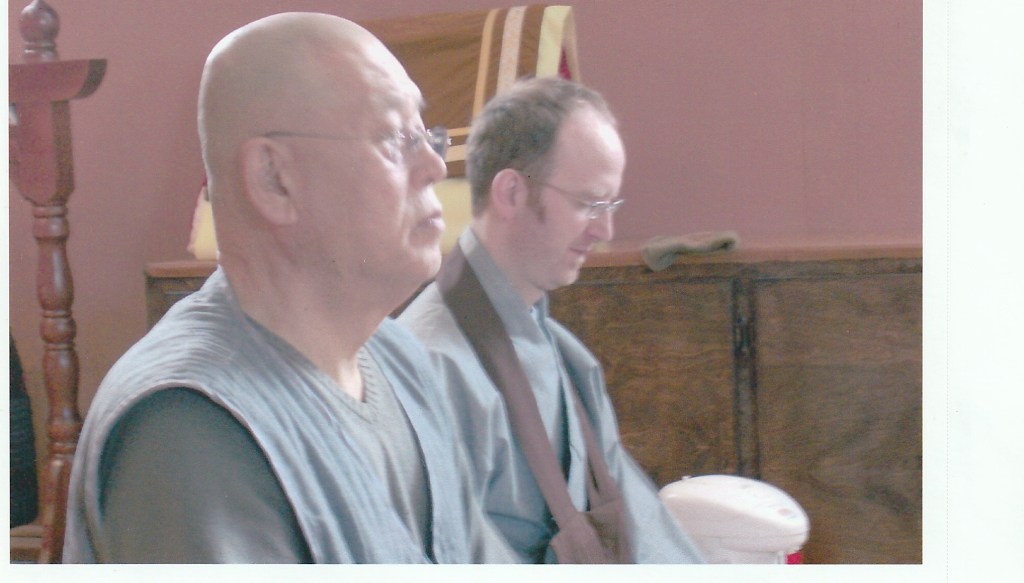
“Calling it ‘mind-to-mind’ implies a sense of continuity, does it not?” I ask. “Which is what lineage chants claim. The Buddha passed it on to Mahakasyapa who passed it onto Ananda who conferred it to someone else who passed it on to Robert Aitken, who passed it on to John Tarrant, who passed it on to James Ford.”

“It does. And it’s a wonderful symbol, and I believe it points to some true things. And anybody who pays attention to the history of it knows that it’s a blending of history and mythology. It used to be more important than it is at the moment, I think. In my first twenty years on the Zen way, transmission was important if for no other reason it sorted out frauds and poseurs and people who just wanted some kind of authority over other people. Now that there are so many people with transmission and the quality and the expectations of what you need to receive it that I think it has become so diffuse we’re back to square one. I think it’s a necessary but not sufficient condition for somebody who’s aspiring to find the aspirations of the Zen way for themselves. One thing that the curricular koan system offers is at least one quasi-objective standard.”

Dosho Port, Inka 2015

The koan myth is that there is a continuous line of transmission going back to Buddhism’s roots in India 2500 years ago. The reality is that “transmission,” as currently understood, has a much shorter history.

“I’m not sure there was a transmission as we understand the word in India 2500 years ago,” James muses. “I think transmission, as we understand it, is a Chinese phenomenon.”

“So after Buddhism’s contact with Daoism.”

“Yeah. I know currently the tendency is to minimize the Daoist influence – Zen is definitely a Buddhist school – but there are Chinese influences there, and the influences are Daoist and Confucian. I think lineage is a Confucianist thing.”

“Is what is being transmitted now in North America the same as what was being transmitted in 19th century Japan?” I ask.

“I’m pretty sure that what Daiun Harada[1] transmitted, I received.”

“Cultural differences not withstanding? Or the fact that Daiun Harada was a Japanese imperialist?”

“Which opens that whole other question . . . Awakening is a very narrow thing, and it is not sufficient. That’s something that I was oblivious to as I threw myself into the project in the late 1960s, early ’70s. And I don’t know when the dime dropped, but today I would hope somebody would have a more holistic view. I’m interested more and more in what householder practice looks like. We live in a bourgeois democracy . . . well, an oligarchic democracy, but it’s more than pretentions currently, and I think citizens have an obligation to be involved. Earlier iterations of Zen occurred in very authoritarian cultures, and citizen participation was not welcome nor in fact invited. And you adapt to the culture that you’re in, but I believe that the insights that I have been gifted with and my obligations to family, community, and larger networks of humanity and the world have consequence. They’re not the same thing, but they intertwine.”

“And, of course,” I point out, “there have been numerous examples of people who had full inka transmission and yet still had troubled lives. So to what extent is the bequeathing of transmission not only a recognition of the experiential attainment of some level of insight as well as a recognition of one’s ability to elicit that insight in others, but also, perhaps, a call to be a kind of – I’m not sure of the term – role model? Something like the Protestant ministers you told me had been so influential on you during your childhood.”

“Well, you know, I think it’s a work-in-progress. As I said, I believe there are two separate but intertwining things I call the ‘process of waking up’ and the ‘process of growing up.’ And I kind of think they’re separated naturally because ‘waking up’ has been dominated by monastics who, in my experience, frequently have arrested growing up issues. So it’s all about this fundamental encounter with emptiness and our absolute identity with it, and what that looks like. Nothing about how to relate to other people. And it’s only in modernity and it’s only in the West that we’ve come to realize that, ‘Well, there’s this bigger world’ and it includes how to relate to each other in the ordinary course of things.”

“You’re saying these issues are a Western rather than an Asian concern?”

“At the moment it is mainly a Western thing. It has some Asian beginnings. There were two or three individuals in the early 20th century – late 19th century or beginning of the 20th century – two or three teachers in the Soto and Rinzai lines in the Japanese tradition who despaired of the monastic communities as simply funnels into temples and not about awakening. And once they turned towards working with householders, then instantly you have to deal with the fact that there is more to this than just the project of insight. There’s marriage; there’s work; there’s all this other stuff. So there’s a nascent beginning in Japan, but – you know – it’s here in North America and Europe where this has become the dominant form of Zen practice.”

Throughout my conversations with James it becomes increasingly clear that transmission is always transmission in a particular line of descent. And there is not necessarily recognition across lineages. As James told me on a different occasion, “There’s nobody who’s a teacher in the American Zen Teachers Association who would be qualified to be a teacher in every other group.”

Daiun Harada and Hakuun Yasutani were examples of people in the Soto school who despaired of monasteries and turned to householders. And one line of descent from them – which James calls the Mothership but in which he is not authorized – became the Sanbo Zen School. The analogy, it strikes me, is less with an academic degree – which, wherever it is obtained, authorizes one to teach in other academic institutions – than it is with Christian sectarian ordination wherein having authorization as a Lutheran pastor – or a Unitarian minister – still does not authorize one to administer Catholic sacraments

.
Rinsen Weik Inka, 2019

Rinsen Weik in Toledo is one of James’s heirs. “My view on this,” he tells me, “is that I have an experience, and my teacher had the confidence in me – all the way up to inka – saying your experience is worth sharing and trustable. And so I see my job not to say what’s true and what’s right but to share publicly my practice and how I view things. And there are other ways to practice, and I bow to them. Like lay teachers. I’m absolutely convinced that it can be, and I would have no idea of how to do that because I’ve been teaching as a priest. So I hold veneration for all paths that are worthy. I’m sure my approach has shadow sides and trouble spots like they all do, but if I am going to be authentic and honest and actually teach what I have, then my experience is the only guide I have.”

I ask him, in that case, what is it that distinguishes Zen from other Buddhist traditions? His answer is much what I would expect from one of James’s heirs: “The disciplines and rigors of sesshin, and the reality of kensho and awakening and satori as encountered and matured through the koan system. I mean, that is a completely unique thing. That’s not happening – you know – in the Tibetan and the Vipassana and stuff.”

“You also just blew off most of the Soto school,” I suggest.

“Kinda,” he laughs. “But not really, no. The forms we use are Soto. I like Dogen, and I hold the Soto line in the lineage of Jiyu Kennett Roshi. But, again, for me, I gotta teach according to my experience. For my entire training experience, I practiced with teachers who hold the Harada-Yasutani koan system either from Maezumi Roshi’s successors or my transmitting teacher, James Ford Roshi, and some of his successors.  So I think that if someone has Soto monastic training, thirty years living in the same space, breathing the same air, eating the same food as the roshi – yeah – I think that shikan taza coupled with a rigorous monastic life can produce a beautiful result, and I’ll never know what that is because that’s not been my trajectory. What I know is a full contact worldly life with a marriage, a child, a career and other interests and a mortgage mixed with kensho and sesshin and koans to refine and work with my life within a Bodhisattva’s Vow base. So that’s how I teach. That’s what I see, and that’s what I know.”

There are, in other words, real differences between lineages. And transmission may not mean the same thing to them. And, yes, they may not all be heading in precisely the same direction, but they are all ways of manifesting a common heritage, and – as James puts it – “People have got to accept each other’s lineage. We’ve got to stop pretending there’s only one true way. We’ve just got to bow to each other a little bit more.”

January 5, 2014 – Rinsen Weik and James Ford

[1] 1871-1961

Patricia Wolff

Monterey Bay Zen Center, California –

Patricia Wolff is a lay member of the teaching council at the Monterey Bay Zen Center. The other three members are ordained. She is also a chiropractor, a homeopathic physician, and a psychotherapist.

“I feel like I’m the eccentric aunt in the sangha. As a teacher, it is important to me to share how my Zen practice is not just on the cushion but is how I live my life, how I use this practice to bear the unbearable or to deal with difficult emotions. I’m kind of the same in my Dharma talks as I am with my patients, as I am with my children, as I am with my friends.”

She tells me she grew up in a family which was culturally Jewish. “We were the Jews that came out of the woodwork for the High Holidays.”

“Did it mean anything to you as a child?” I ask.

“What it meant for me as a child was I couldn’t understand the liturgy. I couldn’t understand why if God was all-knowing we had to keep telling him how great he was. It made no sense to me. I just didn’t get it. I was talking to my brother about it, and he said, ‘It’s like, “Hey, God! You’re lookin’ good; you been workin’ out?”’ So, yeah, Judaism was really cultural. It wasn’t until I was in college that I realized not everyone thought the Jews were the Chosen People; that only Jews thought that Jews were the Chosen People.”

“You hadn’t encountered any form of negativity growing up?”

“Well, yeah, but I always thought it was because everyone was jealous because we were the Chosen People.” We both laugh. “Maybe a little bit,” she continues more seriously, “but not much.”

She first encountered Buddhism in her senior year at Cornell College. “I needed an art class to graduate, and the only thing that fit into my schedule was Asian Art History. And I read Alan Watts, and we studied the Southern Sung landscapes which were these giant scrolls of mountains and gorges with the human beings as these insignificant little ants. And reading Alan Watts changed me.”

“In what way?”

“The whole concept that humans are just one part of the fabric of the universe, and God not being something out there that we worshipped but this collective . . . not deity, but just that God was in each one of us. It wasn’t something ‘out there’; it was part of us. In addition to not understanding the Jewish liturgy, another of the things that boggled my imagination was the notion of infinity. I would try to grasp infinity, and it would just bring me to tears because I couldn’t get it. I couldn’t understand it. And I think there was something about Alan Watts that helped me shift my relationship with the great unknown. As a child I thought that God and Mother Nature were married. That was kind of my creation myth. God and Mother Nature were married.”

It would be a while before she actually began a meditation practice.

She earned a degree in psychotherapy which helped her realize there was still some personal work she needed to do. A woman she worked with as a client told her about TM and a Tibetan practice she was engaged in. That planted some seeds. Then she went on what she calls an odyssey. “I went through Mexico down to Guatemala and Belize. I was on a sailboat for a month with people that I met on the coast of Belize. Got hepatitis and came back to California, because I had an old boyfriend that was there who had moved back to California when we broke up. And I ended up staying in California to become a chiropractor because I wanted to do mind/body medicine. And it wasn’t until I was in practice four years later that I had a patient who said, ‘You have to meet my gynecologist. You’d love each other.’ And she was from Zen Center of Los Angeles. And she had a sitting group for women. I never had anything to do with Zen Center of Los Angeles, but that was my first sitting practice.”

The woman, Renee Potik, was a lay teacher. “She was loving and accepting. And I became aware of my internal self-judgment. She kind of showed me a different way of being with my humanness. And then she moved away.”

Patricia and her partner had a son, and when the child was a year old, they realized they wanted to leave LA. That led to another odyssey which brought them, eventually, to Carmel Valley. And there Patricia met a friend who frequented the San Francisco Zen Center’s wilderness retreat at Tassajara.

Katherine Thanas

“She talked about Tassajara all the time. So once we settled there, I went to Tassajara for the first time. At the dining room, sat next to Katherine Thanas, who I didn’t know, and I said, ‘Oh, I just moved to the area. I’m looking for a sitting group.’ And she said, ‘Well, I just started a sitting group.’ So that’s how I ended up with Soto Zen. I don’t think I would have chosen Soto Zen if I hadn’t sat next to Katherine Thanas at Tassajara. I loved her. I always had an ambivalent relationship with the form, the patriarchy, the chanting in foreign language.”

“So what did you like about it?”

“The notion of facing myself and my life squarely. Really the Four Noble Truths. Also facing my restlessness as a meditator. How judgmental I was as a meditator trying to do it ‘right’.”

She describes her time sitting on the cushion as “torture,” so I’m still unclear what the appeal was.

She considers her reply before answering, speaking slowly and with care. “Because I felt that in the suffering I encountered tremendous self-knowledge and self-compassion. A few years into my practice, I discovered non-violent communication and studied that with my dear, dear friend Jean Morrison from Santa Cruz. Non-violent communication. And those two practices . . . I just felt like it was important in my life. It was the only meditation group that I knew of. Tuesday nights I got to leave my children and go to the Zen Center. No matter what happened, I’m off-duty, even if I didn’t go. Even if I just went into my bedroom, and they’d come and I’d go, ‘Uhn-uhn. This is my Tuesday night. Go find Dad.’ I loved the community; I loved my sangha brothers and sisters. I loved Katherine with all her human rough edges. She was very sincere, earnest, and honest. When she messed up, she was the first to say, ‘I don’t know how to deal with this.’ I found a sense of belonging I think; I found a community. I was new to the area; didn’t know too many people. And there was something that just rang so true.” She adds, however, “I think had I found maybe Insight/Vipassana, that might have been a better fit for me as a therapist and as a healthcare practitioner.”

But she stayed with the practice and eventually even undertook the Shugaku Priest Ordination Training Program – SPOT – offered by Steve Stücky at Tassajara. “I did the three-year teaching-training program which was wonderful. A deep dive both into the emotional world and the Buddhist world. But I think there were only two of us who didn’t become priest ordained. Everyone else did.”

“If only two of you didn’t ordain after that program, it was a choice you made.”

“Oh, I chose. It was a choice.”

“Why?”

“I don’t see Zen as religion. For me it really is a philosophy, a way of life, an invitation to see the world and ourselves the way we are with unconditional friendliness. Finding practices and cultivating skills of compassion, curiosity, and courage. I think in our very lay, house-holder community, priesthood sometimes separates in a hierarchical way.”

She studied other traditions, including the Yoga Sutras and Patanjali. “Much of what I study is not just Zen, and most of what I teach is informed by other traditions which resonate with Zen. It’s an important part of my life because I’m cultivating peace both internally and with all my relations. You know, Steve Stücky had his internal family systems and that is what he taught us a lot in our SPOT training, blending psychotherapy and Buddhist principles. The language that he used and the context of the Buddhist practices has become very important to me, peace-making with all our internal parts and each other.  Sp I use non-violent communication, meditation practices, heart-opening practices. And I do it all with the Monterey Bay Zen Center and the people I love.”

I ask if the Monterey center is affiliated with SFZC.

“Not officially. But I’m near Tassajara. So we’re back and forth.”

After Katherine Thanas, who founded the center, died without leaving a successor, a teaching council was formed which included Patricia. The fact that Patricia chose not to ordain was challenging to some, including Katherine, but – Patricia tells me – Katherine became less rigid about things at the end of her life.

“So, I have a green rakusu,” she tells. We both chuckle.

“You know, all these different centers just make this stuff up,” I suggest.

“When my son and daughter came to my lay transmission ceremony, we were in the little gathering area after the ceremony, and he said, ‘Mom, what does that mean? Is it like karate?’ And I said, ‘Well, it kinda is.’ I said, ‘Yeah. It is kind of. Different colours.’ And Katherine overheard me, and she got furious. ‘There is no hierarchy in Zen!’ At first I thought she was joking, but she wasn’t. And I’m thinking, ‘Of course there’s hierarchy!’”

She admits to feeling triggered by “the whole priest thing because the Suzuki Roshi lineage is very priest oriented, and I get upset that I am not allowed to do certain things, that I can’t transmit my own students because I don’t have the appropriate type of transmission. I can’t carry out certain roles because I don’t have the rank. I have the authority but not the rank.”

“But you’ve stayed with the community.”

And that, she says, raises an important question. “Why have I stayed with Monterey Bay Zen Center for thirty-three years?” She pauses a moment. “I don’t know. I love the sangha. Monterey is not a big area. There’s not a lot of other sanghas that meet.  But I don’t go every week anymore. I do lead a guided meditation on Zoom Mondays, Wednesday, Thursdays at 12:00. That’s free. That’s an offering to the community that I started in the beginning of COVID. So I’ve been teaching unofficially for years. Because parents of my son’s friends knew that I was a meditator, and they wanted to learn. So I would gather moms together just to teach them how to meditate. I brought it to the schools. The elementary schools and the middle schools and the high schools.”

“And if one of those parents of those school kids asked you, ‘What is meditation? What does it do?’”

Again she reflects a moment before answering. “Meditation offers us the opportunity to know ourselves deeply, to not believe everything we think, to witness the thoughts and emotions as they come and go, to be mindful, to access the great spaces of infinite potential, awareness of awareness itself. When I was leading meditation in the middle schools, the group that came to me for some bizarre reason was a group of six boys. It was lunchtime; they would tumble into the space, and they’d be pushing each other and farting and this and that. I said, ‘I don’t care if you push. I don’t care if you fart. I just want you to know you’re pushing when you’re pushing; I want you to know you’re farting when you’re farting.’ They would meditate for three minutes, maybe five minutes.”

“What instruction did you give them? What did you have them do in those three or so minutes?”

“Well, they just breathe, allowing thoughts to come and go without going on the rollercoaster of preferences and attachments. I usually have people start their practice counting their breaths, noticing sensations and sound. Opening to it all. Feel the air moving in; feel the air moving out. Feel the belly rising, the belly falling. Watch the thoughts as they arrive.”

“And what do people get out of doing that?”

“For me it really comes back down to deeply knowing myself and waking out of our trance. You know the quote, ‘In the beginning mountains are mountains, and rivers are rivers. And then mountains aren’t mountains, and rivers aren’t rivers.’ And then at the end of our cycle, mountains are mountains, rivers rivers, but in a different, more inclusive way. So it’s a process of deeply knowing ourselves, of opening to the entirety of our experience, and finding a place to settle besides our thoughts. I think that’s why guided meditation became really important to me because I didn’t know where else to go besides my thoughts.”

“And what is it that the members of the Monterey Bay Zen Center expect from you?”

“Honesty. Inspiration, perhaps, in how to work with difficult parts of their lives in skillful ways. And I think the invitation for unconditional friendliness with themselves.”

“What is it that brought them there in the first place? What did they come to the Center looking for?”

“Many come for a sense of community. A lot of people say that they don’t meditate on their own by themselves, but, coming to a group, they meditate. And I think the sangha is really important, being in community with people sharing the Bodhisattva vow. Some were looking for relief from their suffering, trying to find a way to bear the unbearable, to be with really difficult situations. Some people – especially the Catholics in our group – love the ritual and the ceremony and the incense and chanting in a foreign language, and the robes. You know, that really feels and smells like home. Some are looking for comfort. I think we’re all looking for comfort.”

“One thing you didn’t list, you didn’t say they came looking for awakening or enlightenment. That doesn’t seem to be the driving force it once was, the desire to find a practice that has the potential of altering the way one sees, understands, and relates to life.”

“I think that’s what I mean by unconditional friendliness, being with what arises, facing the entirety of our experience with wisdom and an open heart, embracing all parts of ourselves.”

“You said ‘unconditional friendliness to oneself’ earlier.”

“To yourself. I think that ripples out to the world, seeing no one as ‘other.’ That naturally flows. The more we can bring that, share that light of tender awareness on ourselves, the more we see our interbeing or – you know – our intrabeing, the sense that there is no other. And I do think that people come for enlightenment. It wasn’t what my search was. I think for me it was more because it made sense and offered relief from suffering. It was finally something that made sense of the world to me.”

“And how does Zen help relieve suffering?”

“I think wanting the world to be any different than it is is the definition of suffering, and Zen – or Buddhism – offers the invitation to really be with the world as it is beyond the world of right and wrong, good and bad, to recognize the comparative mind, to not be attached to our preferences , and to just see our constant internal chatter as an annoying radio station in another room. So for me, enlightenment is moments, moments of liberation. I’ve never known anyone that’s landed and stayed there. I don’t really know anybody that I would consider enlightened. I know people who are really wise and have deep understanding and have many moments of that peace. But everyone I know is pretty human as well.”

“So you’ve described an array of services you offer; you’ve talked about guided meditations, chiropracy, psychotherapy, non-violent communication. Where does Zen fit?”

There is another of her careful reflective pauses as she considers her response. “It’s not so much Zen as it’s Buddhism. The practice of meditation, of deeply knowing ourselves, of awakening out of our trance. I remember once talking to Bernie Glassman  at my first Lay Zen Teacher’s Association meeting and his last, and I said, ‘I don’t know whether I needed to have so many years of sitting on the cushion and suffering on the cushion.’ You know? Sesshins were horribly painful, and yet you’d go back again. And he said, ‘Well, I do my meditation now in the hot tub.’ And I still don’t know the answer to that question, whether I really needed – for my own self and personality – to face the suffering on the cushion and just to be with it. I don’t know. As a healer, I go to Tassajara every summer, and I treat the residents and the monks and the students, and – you know – I see a lot of injuries from sitting.”

“This is as a chiropractor?”

“As a chiropractor. As a doctor. I mean, I go as a psychotherapist, and I go with all my toolkit. But especially the young men – you know – there’s a lot of testosterone.” Speaking in a strained voice, “‘I’m such a good sitter I’m not moving even if my leg falls off! You can’t make me move!’ I was never that type of sitter. I was always afraid of hurting myself. And at one point Katherine Thanas, because there was some ambivalence about the forms . . . I mean, coming to our Zen Center is kind of off-putting because some people are such stickers for the forms. ‘No! You walk in with the left foot and then you bow!’ Really, I feel so bad for the new people. But Katherine Thanas did away with the forms for a while. We didn’t have any forms. We didn’t chant. And then we brought them back.”

“Why?”

“I think many people missed the forms. I was surprised that I missed some of the forms. It’s an opportunity for mindfulness. Whatever you’re doing with forms, it brings you into your body.”

“How important is all the Japanese stuff?”

“Very unimportant to me.”

“Then why is it still around, especially with Soto people? Why all these elaborate robes and shaved heads, rules about which foot you use to enter the zendo?

“I don’t know. I think the hierarchy separates, but for many, being a priest is their path of service. I feel you don’t have to be a priest to live a life of service. I think what keeps me with Zen Center is that there’s a sangha of people who love me and appreciate what I teach. Because I think many of the other offerings are more intellectual. Mine is more personal. I’m fairly self-disclosing within reason, and I think that’s helpful for people. And I think it’s important to have my voice and perspective.”

“They need that eccentric aunt.”

“I think so.”

Sokei-an and Ruth Fuller Sasaki

Adapted from The Third Step East

D. T. Suzuki was a scholar. Nyogen Senzaki was an effective teacher, but he had not been formally authorized as one. The first fully authorized, or transmitted, Zen Master to teach in North America was Sokei-an Sasaki.

He was the son of a Shinto priest who died when the boy was 15 years old. There was some expectation that he would follow his father’s career, but his natural inclination was to art, and his mother’s family arranged for him to be apprenticed to a sculptor at the Imperial Academy in Tokyo where he learned traditional Japanese woodwork and specialized in carving dragons.

As he matured, he found himself reflecting on issues which had troubled him since childhood. He later wrote: “At seventeen or eighteen, we open a doubtful eye: Why do we live? Where do we come from? Were we here before? Where do we go? If we have no such period of seeking, I should say that we are sleeping. This questioning comes to every young man’s eye.”

These concerns remained with him as he pursued his art studies. He learned samadhi – meditative absorption – not in a monastery but from an art teacher who instructed his students when they sought to paint the sea “not to sketch the waves on the seashore or to copy the waves in the ancient masterpieces. ‘Without brush or palette,’ he said, ‘go alone to the seashore and sit down on the sands. Then practice this: forget yourself until even your own existence is forgotten and you are entirely absorbed in the motion of the waves.’”

There were, Sasaki would discover, many kinds of samadhi, and Zen itself – as he put it – was an art form. “I found this knack of going back to the bosom of nature because I was an artist and worshipped Nature. From this feeling, I entered Zen very quickly.”

One day he set up his easel to paint but found himself stymied, unable to draw a line. He understood that it was time to put away his canvas and palette and seek a Zen teacher. The master he approached was one of Soyen Shaku’s disciples, Sokatsu Shaku.

Soyen Shaku

Soyen Shaku had assigned Sokatsu responsibility for overseeing Ryomokyokai – the Institute for the Abandonment of Concepts – which Imakita Kosen had established in order to foster the practice of Zen among lay persons. An old farm house outside of Tokyo, surrounded by rice fields, had been converted into a temple. There were two buildings in the temple enclosure. One was the teacher’s residence, the other served as the zendo. Here Soyen Shaku and Sokatsu carried on Imakita’s hope of revitalizing the Zen tradition by working with well-educated and culturally talented lay practitioners.

Sasaki was nineteen years old when he presented himself at the temple and asked to be accepted as a student. Sokatsu asked him, “What career do you follow?”

“I’m a sculptor,” Sasaki replied.

“And for how long have you practiced this craft?”

“Six years.”

“Very well. Carve me a Buddha.”

Sasaki returned to his studio and began work on a carving which, when completed, he brought back to Ryomokyokai and presented to Sokatsu. The Zen master took the statue and demanded, “What is this?” Then he tossed it into a nearby pond.

In that way, Sasaki’s Zen training began.

He was given the Buddhist name Shigetsu (Finger Pointing to the Moon) but remained a layman. He was still enrolled in the Imperial Academy of Arts and earned a modest living travelling about Japan repairing old temple carvings. After graduation, he was drafted to serve in the Russo-Japanese War and was sent to Manchuria, where he drove a dynamite wagon. The experience made him all the more aware of the precariousness of human life.

The war ended two months later, and, once discharged, Sasaki returned to Tokyo to continue his studies with Sokatsu.

Encouraged by Soyen Shaku, Sokatsu planned to take a small group of disciples to America in order to establish a Zen community there. He invited Sasaki to join them but insisted that he would need to be married if he chose to participate. So a marriage was arranged with another lay student at Ryomokyokai, a woman named Tomeko who was a student at Japan’s only college for women.

In September of 1906, Sokatsu and six disciples left for California where they purchased a ten-acre farm in Hayward. None of the Japanese had any agricultural experience, and the land was poor and exhausted. The enterprise failed after a single crop of strawberries was harvested. Sasaki and Tomeko left the farm to go to San Francisco where he enrolled at the California Institute of Art. While in San Francisco he met and was befriended by Nyogen Senzaki. The two would remain in contact throughout their lives though they did not always see eye to eye.

Sokatsu and the other disciples were unable to maintain the farm and eventually also moved to San Francisco where they established an American Branch of Ryomokyokai. At its height, it had about fifty members, most of whom were Japanese. Eventually, Sokatsu returned to Japan, and all of his disciples, save for Sasaki and Tomeko, went with him.

Sasaki then began to explore the United States. For a while, he was able to find work in California repairing statues for an importer of Asian sculpture. Then he hiked north to Oregon where he was able to make use of his wartime experience by dynamiting tree stumps for a farmer. He also worked as a janitor in a bar and for a time as a professional dance partner at a roller rink. In the evenings, he sat in meditation on a rock by the river with a dog to protect him from snakes.

Eventually he and Tomeko came to Seattle where he worked as a picture framer. He could not afford the studio and tools necessary for carving, so took up writing and began a series of humorous reflections on American life for Japanese periodicals.

Sasaki and his wife lived in humble circumstances. For a while, they stayed with the Salish people on an island in the Puget Sound. The Japanese couple had faced a great deal of prejudice elsewhere in America, and Tomeko felt more at ease with the Native Americans than she had anywhere else. By this time, they had two young children, and when, in 1914, Tomeko became pregnant a third time, she informed Sasaki that she wanted her children to be raised in Japan. She left him and went to live with her mother-in-law who was aging and had written to ask her daughter-in-law to come care for her.

Unencumbered by family obligations, Sasaki wandered about the United States for the next two years, arriving in New York City in 1916, at the age of 34, where he naturally gravitated to Greenwich Village.

Sasaki was fascinated with the wide variety of lifestyles he came across during his travels, ranging from the conservative values of small-town America to the sophisticated charlatanism of the Bohemian community he fell in with in the Village. There he encountered people like Aleister Crowley, the British occultist and self-proclaimed mystic. The essays Sasaki sent back to Japan about the people he met and the events he encountered were popular, and he began to acquire a literary reputation. He also wrote in English, making translations of classic Chinese Poetry.

He was welcomed into the artistic milieu of the Village and led a comfortable life, but he still had not resolved the issues which had originally drawn him to Buddhism. Then on a hot and humid day in July 1919, he came upon the putrefying carcass of a horse lying in the street. The sight struck him so strongly that he immediately made arrangements to return to Japan.

Sokatsu Shaku

He resumed his study with Sokatsu and even tried reconciling with Tomeko but remained restless and soon returned to the US. For several years, he travelled back and forth by steamship between Japan and America, studying Zen with Sokatsu at Ryomokyokai and working as an art restorer in New York. Eventually, during one of his return trips to Japan, he realized that if he were serious about his Zen practice, he needed to commit to it until he achieved full awakening.

Sokatsu assigned Sasaki the koan which demands, “Show me your original face, your face before your parents were born.” Sasaki had been reading German philosophy and, for a while during his sanzen meetings with Sokatsu, tried to reply to the koan in the light of his understanding of those writers. Often, however, he barely began to speak before Sokatsu rang the bell dismissing him. Finally Sokatsu bellowed at him, “Before father and mother there were no words! Show me your face before their births without words!”

Sasaki struggled for years before resolving the koan. Then, one day: “I wiped out all the notions from my mind. I gave up all desire. I discarded all the words with which I thought and stayed in quietude. I felt a little queer, as if I were being carried into something, or as if I were touching some power unknown to me. I had been near it before; I had experienced it several times, but each time I had shaken my head and run away from it. This time I decided not to run, and Ztt! I entered. I lost the boundary of my physical body. I had my skin, of course, but I felt I was standing in the center of the cosmos. I spoke, but my words had lost their meaning. I saw people coming towards me, but all were the same man. All were myself! I had never known this world. I had believed that I was created, but now I must change my opinion: I was never created; I was the cosmos; no individual Mr. Sasaki existed.”

When Sasaki next met with Sokatsu in sanzen, the teacher immediately recognized that his student had had a breakthrough. “Tell me about this new experience of yours,” he demanded.

Sasaki looked at him without speaking. Sokatsu smiled.

Sasaki was 47 years old when he completed his training and received inka – authorization to teach – from Sokatsu. To mark the occasion, Sokatsu also gave him the name Sokei-an. Sokatsu encouraged him to return to the United States, telling him that interest in Zen was diminishing in Japan; the tradition needed to be carried to North America if it were to survive. He instructed his student to be diligent in familiarizing himself with the people and culture of the United States because it would now be his responsibility to ensure that Buddhism was successfully transplanted there. Because of his reservations about the Zen hierarchies in Japan, Sokatsu wanted Sokei-an to remain a lay teacher. Sokei-an, however, felt that he would have more credibility in America if he were ordained. When Sokatsu refused to carry out the ordination, Sokei-an went to another priest who was willing to perform the ceremony. Sokatsu considered this a betrayal and the two remained estranged for the remainder of their lives.

To raise the funds he needed in order to return to America, Sokei-an worked in a factory for eight months. Then, in 1928, he returned to New York City, determining to be the first Zen Master to “bury his bones in America” and thus “mark this land with the seal of the Buddha’s teaching.” He supported himself by doing art restoration while he tried to determine how best to go about promoting the Dharma. He tried, like Christian evangelicals, going door to door offering to tell people about Buddhism, but that proved unsuccessful. He gave public talks in Central Park and at a bookstore on East Twelfth Street which specialized in Asian studies.

His first students were a group of eight Japanese businessmen who, in spite of the rupture between Sokei-an and Sokatsu, were successful in petitioning Ryomokyokai headquarters in Japan to authorize a branch in New York. They were incorporated in 1931 as the Buddhist Society of New York. Sokei-an tried, for a while, to teach his students to sit in full or half lotus posture and encouraged them to practice sitting that way at home. Even the students of Asian heritage, however, found the posture challenging so, instead, they used chairs during meditation sessions.

The focus of his teaching was the one-on-one sanzen interview – he called the sanzen room a “battlefield” – but he also gave powerful talks which could be witty and sharp. It was his physical presence, however, which most inspired his students.

Mary Farkas

One of these, Mary Farkas, described the format of the meetings of the Buddhist Society in an article published by the First Zen Institute of America in 1966. The gatherings took place in Sokei-an’s apartment where there was a small altar bearing only a stone. Sessions began with a short period of meditation. Farkas suggested it was Sokei-an’s silence which drew the participants into the meditation. “It was as if, by creating a vacuum, he drew all into the One after him.” Students working on koans were then called into sanzen in an adjacent room. During sanzen there were “no psychological or philosophical discussions, no worldly advice or explanations, just the business of Zen. When I was in recent years asked if we were given ‘instruction’ in Zen my considered answer had to be ‘no.’ To those of us who received Sokei-an’s teaching, the word ‘instruction’ must be a misnomer, for his way of transmitting the Dharma was on a completely different level, to which the word ‘instruction’ could only clarify the state of ignorance of the questioner. If I were to say he ‘demonstrated’ SILENCE, even that would be true but would give no indication of how he ‘got it across’ or awakened it, or transmitted it.”

Following sanzen, Sokei-an returned to the main room and took his seat behind a small desk on which he kept notes on the texts he was translating. He would read a passage from one of these then give an extemporaneous talk. He believed it was necessary to ensure that there were adequate Buddhist texts available for those who were serious about their pursuit of Zen, so he began an extensive translation project which included rendering the Platform Sutra of the Sixth Patriarch into English. He also translated The Record of Rinzai.

The group grew slowly but steadily. After seven years, there were thirty members. Sokei-an was not in a hurry. He reminded his students that it had taken hundreds of years for Zen to become established in China and Japan. What was required, he told them, was patience and perseverance. He told them of a monk he had once seen at a temple in Japan preaching to the rocks in the garden because there was no one there to hear him. Years later, when he chanced to pass the temple again, he found the same monk now preaching to a crowd of more than two hundred people. “I brought Buddhism to America. It has no value here now, but America will slowly realize its value and say that Buddhism gives us something that we can certainly use as a base or a foundation for our mind. This effort is like holding a lotus to a rock and hoping it will take root.”

In 1938, the Buddhist Society acquired an unlikely wealthy sponsor, Ruth Fuller Everett, the wife of a prominent Chicago attorney, Edward Warren Everett. Their daughter, Eleanor, was married to Alan Watts. Ruth had only been eighteen years old when she married Everett, who was twenty years older. The marriage was not a happy one, and, in self-defense, Ruth developed a forceful personality in order to resist her husband’s tendencies to bully her. Once she gained the self-confidence to stand up to him, Everett resigned himself to allowing her to pursue her own interests.

Ruth Fuller

In 1923, Ruth took her five-year-old daughter to a retreat at a country club outside New York City operated by Pierre Bernard, who called himself “Oom the Magnificent” and purported to be a master of yoga and a spiritual guide. Although Bernard was a fraud and a conman, the time Ruth spent with him fostered a genuine interest in Eastern Philosophy. When she returned to Chicago, she took up an academic study of Asian philosophy and languages at the University of Chicago.

In the 30s, she and Eleanor traveled to Japan where she introduced herself to D. T. Suzuki. He gave her some preliminary instruction in Zen but advised her that if she were serious she would need to practice with an accredited Zen master. He introduced her to Nanshinken Roshi, who, at first, was reluctant to accept her as a student. He had no other female students, and he doubted that pampered Westerners would been able to sit properly on cushions. Ruth persisted in seeking admission to the zendo, and finally Nanshinken arranged for a plush armchair which he installed in his house, telling her she could use it for meditation; however, only cushions were permitted in the zendo itself. Ruth learned to sit cross-legged and in a short time was practicing with the men in the zendo. Nanshinken came to admire her perseverance and eventually introduced her to koan meditation.

In 1938, Warren Everett was confined to a nursing home with arteriosclerosis, and Ruth moved to New York. She took an apartment in the city and arranged for her recently married daughter and son-in-law to occupy the one next to it. Learning there was an authorized Zen teacher in the city, she sought him out. She was not a passive student.

When Ruth met him, Sokei-an’s students were still meditating in chairs. From her own experience in Japan, she knew that westerners were capable of adopting formal meditation postures, and she took on the responsibility of teaching them how to sit on cushions. Soon she was tightening up other aspects of the Buddhist Society program.

Everett died in 1940, leaving Ruth more time to spend with Sokei-an. Part of their time together was work; Ruth remained a committed scholar as well as a dedicated Zen practitioner and, with Sokei-an’s help, she had undertaken to do an English translation of the eighth century Chinese Sutra of Perfect Awakening. But part of their time together was, to her daughter and son-in-law’s surprise, courtship.

In November 1941, just a few weeks before the attack on Pearl Harbor, Ruth arranged for the Buddhist Society to move into more spacious quarters on East 65th Street. With the outbreak of war, the institute drew the suspicion of government officials. Suited FBI agents kept watch over who came and went. That July, Sokei-an—like Nyogen Senzaki—was arrested as an “enemy alien.”

He was sent to an internment camp in Maryland. The camp commander turned out to be a decent man who had some sympathy for those in his charge; Sokei-an took up his old calling and carved the commander a staff in the shape of a dragon. Conditions in the camp, however, were harsh, and Sokei-an was not in good health. He lost so much weight in the camp that he was able to tighten his belt four notches.

Ruth used her social connections to intervene on his behalf and was successful in arranging for his release in August 1943. The following year, they were married, in part to provide him some protection from still suspicious authorities.

After his release, Sokei-an told the members of the Buddhist Society that it was probably still too early for Zen to take root in America. The lotus still needed to be held to the rock a while longer. “I love this country,” he is reported to have said. “I shall die here, clearing up debris to sow seed. It is not the time for Zen yet, but I am the first of the Zen school to come to New York and bring the teaching. I will not see the end.”

His health didn’t recover, and he recognized that he did not have long to live. He assured others that he was prepared. “I have always taken Nature’s orders; I will do so now.” He tasked Ruth with the responsibility of ensuring that a formally trained Rinzai teacher be found to work with the Buddhist Society after his death. He also encouraged her to return to Japan to complete her own training.

He died on May 17, 1945, after less than half a year of marriage.

After his death, the Buddhist Society was renamed the First Zen Institute of America and committed itself to preserving Sokei-an’s teachings.

Members of The First Zen Institute of America at Sokei-an’s memorial service in New York, 1945.

As Sokei-an had hoped, Ruth returned to Japan to continue her training. She approached Zuigan Goto, who had been a member of the group that had taken part in the feckless California farming venture with Sokatsu. Goto was teaching at Daitokuji, where Ruth was accepted as a lay student and given a small house within the temple grounds, separate from the monks who were all male and Japanese.

Sokei-an had also asked her to identify a qualified teacher to carry on his work in America, and, in 1955, after six years at Daitokuji, Ruth returned to New York with Isshu Miura.

In New York, Miura gave a series of talks on koans with Ruth acting as translator. These became the basis of a book they co-authored entitled The Zen Koan: Its History and Use in Rinzai Zen.

 In 1957, Ruth returned to Daitokuji, where Goto allowed her to add a small zendo to the side of her house. This was the first zendo in Japan specifically intended to receive Western students. The following year, she became both the first woman and the first Westerner to be ordained in the Daitokuji temple system.         

Isshu Miura

After Ruth’s return to Japan, Miura stayed with the First Zen Institute for a while, but he was not comfortable with the predominantly female board of directors. In 1963, he resigned his position, although he stayed in New York and maintained a small number of private students with whom he worked until his death sixteen years later.

One of the features distinguishing North American Zen from its Asian antecedents is the active participation of women in the sangha. Ruth Fuller Sasaki was the first of these, but she was not an easy person to work with. She was strong-willed, confident of her own opinions, and often inflexible. When she informed Zuigan Goto that she intended to add a dormitory to her small zendo, he told her he would rather she did not. She ignored his request and went ahead with the construction. In Japanese culture, it was unheard of for a student to disregard a teacher in this manner. It caused a rift between the two, and Goto disavowed her as one of his disciples.

Ruth gathered together a group of scholars in Kyoto to continue Sokei-an’s work of making Chinese and Japanese texts available in English. Several of these – including Philip Yampolsky and Burton Watson – later would become significant figures in the academic world. Working for Ruth provided these young men with an unparalleled access to rare documents, but they often felt that the specific tasks she assigned them were tedious and of questionable value. She was also quick to get rid of people with whom she disagreed or of whom, for whatever reason, she became suspicious.

Simple projects could balloon out of control under her direction. She began annotating the slim Zen Koan published with Miura, eventually adding over 150 pages of footnotes – in a smaller typeface – in addition to bibliographies, maps, genealogical charts and a “Zen Phrase Anthology.” By the time it was re-released as Zen Dust, shortly after Ruth’s death in 1967, it had swollen to a 574 page tome.

To the end, she remained a formidable personality, and often a generous one. Through her efforts, and those of the First Zen Institute, several Americans – including Walter Nowick and Gary Snyder – were able to travel to Japan in order to study Zen. In her way, she made as significant a contribution to the process of bringing Zen to North America as had her husband.

Gary Snyder, second from left. Ruth Fuller Sasaki, fourth from left. Isshu Miura seated in the center. Walter Nowick, second from right.

The Third Step East: 57-71; 9, 10-11, 73, 89, 100, 111, 127, 187, 188

The Story of Zen: 234-40, 251, 266, 280, 298, 424

Mushin Abby Terris

Sangha Jewel Zen Center, Corvallis, Oregon –

Mushin Abby Terris is the founding teacher of the Sangha Jewel Zen Center in Corvallis, Oregon.

She was raised in a household in the Bronx which she describes as culturally Jewish, although her mother’s family were members of the High Church of England. “My father was Jewish, although more a political Jew than a practicing Jew. But his parents had escaped Russia, and they were communist organizers. Or his father was. So they came over when they were very young. I was born in 1947, and there was a very strong Reformed Judaism tradition and subculture where I was living. So kind of by contact with my friends – many of whom were Jewish – I came to identify with that tradition. My grandmother – my father’s mother – was always raising money for trees in Israel. Two things I remember about her: she raised money for trees, and she was a great cook.”

“So culturally but not necessarily religiously Jewish?” I suggest.

“Culturally absolutely. And I went to Temple with friends of mine but was not at all interested in the spiritual aspect of things. My father was a sculptor; my mother was a poet. They both were college professors. I spent a lot of my childhood in museums and galleries and at readings, and that was much more of my spiritual – I don’t know – temperament? There weren’t beliefs involved; it was just an underlying sense of where I belonged.”

Her introduction to Eastern spiritual practices came about after she and her husband left Manhattan for the West Coast.

“It was a beautiful spring day, living on the Upper Westside of Manhattan, and my husband and I couldn’t find a place to sit down in the park. And we said, ‘This is ridiculous. We’ve got to go somewhere where we don’t have to wait every time we step outside.’ He was at Columbia in Graduate School. So he looked at programs across Canada and down the west coast, and we took a trip. When we got to Seattle, we thought, ‘Yeah.’ So he transferred to Seattle. At Columbia, he had been studying Japanese language and literature, but when we got to the University of Washington, he switched to Intellectual History and the History of Science. So I didn’t meet Zen through that connection.”

She found work at a shelter for runaway girls, and one of her co-workers was involved in Transcendental Meditation. “So I went with her to a meeting, and I got my initiation.”

I ask her why she went.

“Well, this was the early ’70s, and everything I saw around me was unsatisfactory. I was young, and I thought, ‘How am I going to live into this life?’ And so this was one possibility. So I checked it out. And it had the promise of something unarticulated. So I did that on my own for a couple of years. But there was no information, no teaching. I didn’t have a sense of context, and I wasn’t having any particular experiences except that I was developing kind of a constancy in my schedule around meditation. But then I gave it up, and I got divorced. I moved. I made friends with someone who was on his way to a yoga class and invited me, so I said, ‘Sure. I’ll go.’ And I started doing yoga. And that very same week, the same person said, ‘If you’re interested in yoga, you might be interested to come to the Zen sit with me.’ So we went to the Zen group which was being taught by Professor Glenn Webb.”

Glenn Webb was an art professor at the University of Washington who eventually became an ordained priest in the Obaku sect of Zen. He was instrumental in introducing several people I’ve interviewed – including Genjo Marinello and Wendy Nakao – to Zen practice. The sitting group he hosted met in an art studio on campus.

“And, of course,” Mushin tells me, “my father was an artist. I walked in there, and it was like, ‘Oh, wow. I’m home. The paints . . . This is so familiar. This is so much my native surroundings.’ Sat down and started doing meditation. I mean, I had no idea what I was doing. But I immediately felt like, ‘Oh! I know this!’ And what I discovered many years after, I was at a Rohatsu retreat, and I realized that I had asthma my whole life starting when I was two. So since I was two, I had many asthma attacks, and I had to pay attention to my breath. So I had actually been practicing zazen since I was two. Which in another way, how did I come to Zen? I just came back to Zen in that way.”

Shortly after Mushin began Zen practice, Webb arranged for the Japanese teacher, Katsufumi Hirano, to come to the university in order to lead a retreat. “I didn’t know his name was Katsufumi,” she admits. “I just knew him as Hirano Osho. Which just means priest. Priest Hirano. He was very impressive in his dignity. It was a seven-day sesshin, and I couldn’t believe that I had signed up for this really difficult practice.” She chuckles at the memory. “I was in so much physical pain, but I was really determined. I was really determined from the beginning.” She pauses a moment. “One thing I haven’t said about my family – and I actually don’t really want to go into it – but it was a very, very troubled family. And I always felt – maybe because I started Zen when I was two – I always felt like, ‘How can these people be so disturbed?’ You know? The whole family system was so disturbed, and I always saw so clearly what was going on. But I was pretty desperate. I came to Zen with a feeling of desperation. I needed to sort out whether I was crazy or whether I was going to go crazy or if I was actually okay. And it was my very good fortune to come across Zen.”

“What made you fear you might be crazy?”

“Well, my father was very paranoid, and so I didn’t see things the way he saw them. And now I’ve come to – especially at this moment[1] – I’m coming to appreciate how he grew up a Jew during World War II when antisemitism in New York and in this country was huge. But that wasn’t my experience at all. And he was bi-polar – what we say now, bi-polar – and didn’t get along with people. He was very difficult.”

“And how was it that Zen helped you address that?”

“I began to trust my own perception of things as being as valid as any other perceptions.”

It takes me a moment to parse this. “It helped you feel confident that your perception of things was as valid as your father’s?”

“At least. And I’ve come to recognize . . . One of the first koans that was mine to do, the daily primary koan was about the two truths, the relative and the absolute. Being able to see the samsaric view where we’re really caught by our narrative, and that there is a way of seeing that is not caught by narrative, that understands the nature of mind and narrative. That was personal koan, ‘Am I crazy?’ You know, the Genjokoan. Pre-Dogen,” she says with a laugh. “The primary koan of daily life. That’s the form it originally took, and it was very, very pressing for me to investigate. That was really the desperation that underlay my commitment to Zen practice.

“So I did that retreat with Hirano Osho, and I had one very brief moment that was crystal clear, pure, and spacious. It was like one breath. It was like ten steps during walking meditation. That was it. That was, ‘Okay. This is true. This is true.’ So then Hirano and Glenn Webb and myself and about four other people, that following week, we had an appointment at McNeil Island Penitentiary to sit with some of the prisoners. We took the launch, which actually was an incredibly beautiful old boat on a private dock, and there was a macrame pad stretched about twenty feet along to pad it so that when the boat hit against the pier it wouldn’t be scratched, and that was such an incredible work of art. And I never understood macrame before I saw that. That’s how it originated! It was a sailor’s craft. It was wonderful. Anyway, we went over there. And we were sitting in a room. There may have been twenty prisoners in that room with us. And it went for eight hours or something. It was a long day. And we were right next door to the gym, and there was a basketball game going on. And I was in so much pain that I thought the only thing that I could do is get absorbed in listening to the basketball game. And I did, and I had quite a breakthrough in that moment. So when I came back from that, at the end of the day, I was in downtown Seattle waiting for the bus to go home, and I felt like I could read everybody’s mind. I could see everybody’s state of mind. I was looking around, like, ‘Whoa! You can just see who’s thinking what, how disturbed or how happy they are.’ There was a transparency that lasted a number of days. So that was quite powerful. And also a trap, because then I tried to get back to that same state,” she adds, laughing. “So any time I had experiences like that . . . You meditate for fifty years, you have a few of those moments that stand out as particularly pure. They’re always also traps till you wise up and you know . . .” She leaves it there.

She continued to sit with Glenn Webb’s group, and one day he announced that an American Zen Master would be visiting the following week and asked people to make an effort to be in attendance.

“About a month before that I had a dream, and I’ll tell you the dream. It was at night. The air was filled with the ringing of millions of insects. And I was a woman in my 40s. It was very graphic, and it had the feel of the turn into the 20th century, so early 1900. Maybe it had that sensibility because I had just seen The African Queen which had the same feel to it. I was in a house that had no walls, just a big roof, and I looked over into the living room area and there was man I recognized as my husband who was very tall, a missionary or a priest or something. And he was surrounded by all of these very short kings from the hill tribes around us, and there was a war going on. I was kind of in the kitchen area; I looked back, and there was my 8-year-old daughter being held by her nurse, who was looking anxiously out into the night. And I looked back, and one of the kings was reaching back and put a dart into my husband’s temple. And my husband collapsed, and a pool of blood gathered on the grass matting. Then the nurse was pushing my daughter toward me, pushing us both out the back door and saying, ‘If you can get to them out there, you’ll be safe.’ And we ran. I took my daughter’s hand, and I was very aware of her little hand in mine. Ran toward a campfire out in the darkness, jumped over a  deep divot in the ground and reached for grass to pull us up. And when we did that, I cut my hand. And at the cut of the hand at the same time I heard them talking, and I breathed this huge sigh of relief because I knew we were safe. And I woke up. That was the dream.”

“Did you actually have an 8-year-old-child at the time?” I ask.

“No. And I wasn’t 40. I was – I don’t know – younger. And when I woke up, I went, ‘Ouf! That wasn’t a dream.’ It didn’t feel like a dream. It had an uncanny feeling about it. And I’ve had experiences like that actually. It’s not unusual. I mean, it’s only occasional, but . . . So the following week, the American Zen Master was visiting us at the Zen Center, and in walks the man who was my husband in the dream. It was like, ‘Oh my God! That’s the person in my dream.’ It was Robert Aitken Roshi. So, he said that he was going to have a weekend retreat coming up, and I attended that. And I told him about the dream. And he said so wisely – I now as a teacher recognize his wisdom in this – he said, ‘It’s true we have an affinity. I have an affinity with many people.’ So what he was saying was is when you’re a teacher you get all kinds of projections on you, and he was letting me know right from the start that, of course, we had an affinity. We met. But he would often talk about mysterious affinities when he spoke about the whole realm of karma, all the karmic suggestions, the things we call karma. There are the classical teachings on karma, but there’s also what we notice about where we get born, the families we’re born into, the people we meet. This remarkable affinity with Zen. Different affinities fall under the heading of ‘karma.’ So he said, at that point, ‘You might want to consider a three-month practice period that’s coming up at the Maui Zendo.’ And, of course, I didn’t even hesitate. I got that lined up, and I went, and I studied with him for three months. That was on Maui. I only saw him about four times after that when he would come to Seattle as a peace activist. I never went back to Hawaii.

“He was very much a political activist, and I was too. And after that practice period, he was coming over to Seattle because we were organizing the Stop Trident campaign. The Trident subs. And he was involved with that. I was involved with that. And during that time, we took a canoe – I forget who else was in the canoe with us; it was a fairly large canoe – down the Puget Sound, right to the naval base. And we got off across from the naval base, and we walked back and forth chanting the Heart Sutra. It was quite wonderful. Oh, yeah! We were with the monks who were beating the drum, the monks who came for that particular action. And during that action, I met a man who I was very drawn to, but I didn’t know him very well. And he was very drawn to me. And I became pregnant just at that time. I mean, right away. We met, and I got pregnant. We looked at each other, and I was pregnant. And I said, ‘Roshi. I don’t know what to do.’ Because at that point, I wasn’t ready to have a child. And he said, ‘Well, you know, this is the way that life behaves. Go with your heart. If you want to be with him, go ahead; do it.’ Even though I wasn’t sure that he was the right person for me. So we did. We stayed together. Eventually we got married, and we have two kids. And we are divorced,” she muses, laughing gently, “after a very, very conflictual long relationship. But it’s fine. And, oh, my goodness! The two daughters that got born through my connection with him are terrific.”

She went onto to train as a psychotherapist and eventually it was time to leave Seattle.

“When I got there in ’72, it was great, but it really, really grew. And I didn’t like it. It was kind of like when we left New York. It was just too much. So I was a psychotherapist, and I was doing Zen, and I had connected with Chozen Bays in Oregon. So my husband and kids and I decided we would look for a place, a small town that had an edge where I could have a Zen group and a therapy practice. It had to have a university, so we would get good movies,” she chuckles. “And we would be closer to Chozen, so Corvallis is the place we moved.”

I ask how she met Chozen.

“Well, I became aware of her when in 1983 she published an article in The Journal of Ten Directions, which was put out by ZCLA. I think it was about being married to somebody who doesn’t practice, and what that required; how to approach that as a practitioner. And when I read that article, I said, ‘Oh, there’s somebody I want to practice with.’ And then I found out she had started a group in Portland, Oregon. That was one of the things that began to percolate the idea of moving down here.”

I ask what Chozen was like.

“Well, first of all she is so bright. So bright. And she’s a doctor. She was the golden child in her family. She was the golden child at ZCLA. So she doesn’t have any withholding energy about her at all. And she’s really very funny. I don’t know if you sampled that, but she’s really a natural comedian. She uses art and music.  They have the marimba band.  Some of those marimbas I gave them because my daughter and husband were part of a marimba band. So when everybody grew up and left, I had these marimbas that I gave to Chozen when she started the band. But everybody who trains at the monastery learns marimba.”

“As well as square dancing,” I point out, remembering my visit to Great Vow Monastery when I first began this series of interviews. Chozen’s was the third interview I conducted.

“Square dancing. And art. You know, she did that whole project on Jizo at the 50th anniversary of the atomic bombing of Japan. They gathered thousands and thousands and thousands of memorial flags and sent them to Japan. She does all kinds of stuff all the time and takes advantage of any Dharma gate to teach.”

“And you have Dharma transmission through her?” I ask.

“I have sangha transmission through her.”

“Which means?”

“It means I was never transmitted as a priest. Which is a little confusing because at jukai, we all receive sixteen precepts, and our vows are all in common. If you ordain as a priest, you also make additional commitments to live at the monastery for five years and train there. And I never trained residentially with her. They’re really training people to maintain the ritual function, and, actually, since transmission, I’ve been down here in Corvalis. I started a center here which is growing. I’m about to have two assistant teachers. In one way I do feel at a disadvantage because I don’t have the ritual choreography in my body. When you train as a priest, you really get it in your body because you do it over and over and over again. But the advantage of that is that I can adapt the rituals to a lay community, which in some ways serves it. The two people who are coming in as my assistants are trained at Great Vow Zen Monastery – they are Zen priests – and I’m really glad they’re coming because I think we’re going to find a middle way here.”

“The whole issue of lay transmissions is a controversial one,” I remark. “Chozen’s Dharma brother, Bernie Glassman, specifically set aside his priestly robes. What value is there in having a priestly lineage in North American Zen practice?”

“Well, it depends. Zen and Buddhism aren’t the same. And I think we have to consider temperaments. There are different spiritual temperaments, and if I’m going have a center that serves all the temperaments, there needs to be some of the traditional trappings on offer. Because this whole idea of having services which are always the same is that some people rest into it and learn it. It can be part of resting into, ‘I belong here. This is my home.’ And it’s very intimate. It’s also in the course of developing oneself in a ritual way that you really are confronted with what you like and what you don’t like. ‘I don’t bow! I don’t bow!’ You know? And then in the end, people say, ‘I love bowing.’ It opens up a way of relating to the self project. That ‘I don’t bow’ is pure self. It has a lot of, ‘I’m this way, and I’m not that way.’ In the religious offering, which is wider, we come to be able to identify all parts of our self, all the different aspects and energies that we are, some of which have become shadow material. I mean, the thing about Zen is that we really see everything that we’re identifying ourselves as and these fixities are released. I always say, ‘What’s the liberation?’ That’s the liberation.”

I ask how her group in Corvalis first came about.

“It started as a home sitting group. The first week that I moved to Corvalis, I was at a community clinic, and I let people know that I was going to start a Zen group. I’ve always known that I was going to lead a center. I just always knew it. It didn’t even feel personal.”

“And how do you see your role there? What’s your job description?”

“The job description of an abbot? Let’s see . . . I mean, in taking on these assistant teachers, we have a long list of everything involved in being the teacher of a center. Overall maintenance. Holding the vision and running every developmental aspect through that vision to see what supports it. A vision of bringing a full practice – a full, liberating practice – forward for anybody who’s seeking it. And that involves everything. In Sangha Jewel Zen Center, every aspect of our practice is the practice. So if you have training positions – you know, the tenzo and the shuso, all that – they’re all there to support the wider mission of maintaining strong, clear practice to transmit the Dharma, to realize the Dharma, realize the significance of these teachings. And that includes giving Dharma talks, doing sanzen interviews. I’ve started something called ‘dao ran’ which is a ‘people of the way group’ for people who have received jukai. These are people who have taken refuge and want to continue to study more deeply.”

“So if they’ve taken jukai, they’ve formally become members of the Buddhist community. Can one practice Zen outside of Buddhism?”

“Absolutely.”

“In that case, what’s the advantage of formally becoming a Buddhist?”

“Practicing Zen is full presence on your own wherever you are. Right here. Clear. Responsive. Responsible. But there’s no necessary sangha to keep you company in your clarity. So there are Three Treasures in Buddhism: Buddha, Sangha, Dharma. Three Treasures. You know? There are all the teachings.”

Then she asks me if I considered myself a Buddhist, and I admit I don’t. “For me, Zen has been a very practical way of developing a spirituality that isn’t necessarily Buddhist. If I’m pressed, what I usually say is that I’m a Roman Catholic by birth and heritage and a Zen practitioner by nature and temperament.”

“Are you still a Roman Catholic?” she asks.

“By birth and heritage. In the same way that you’re still Jewish by birth and heritage.”

She nods. “Exactly. That’s the karmic . . . uh . . . soup in which we are little morsels.”

“The point is that there are authorized teachers I’ve interviewed who do not necessarily self-identify as Buddhist,” I go on. “They describe themselves, rather, as Zen practitioners. And they see Zen partially as a technique, but also as a way of life, although not necessarily connected with a specific philosophical perspective. On the other hand, other teachers have told me they are first and foremost a follower of the Buddhadharma and that Zen practice is just as one upaya they make use of. There’s a range. On that scale, where do you see yourself?”

“Yeah. I love this question. I appreciate the forms I got from Chozen. I didn’t particularly get them with Aitken Roshi. But if it’s the choice is, ‘This is Buddhist!’” – she holds up one hand – “You know, robes and all the paraphernalia, and this is Zen practitioner” – holding up the other hand some distance lower – “I’m right down here.” She indicates the Zen practitioner hand. “But I do say that this is a way of life, and a part of what people learn are the Precepts. The Precepts are part of the Buddhist teachings. So the three legs are meditation, precepts, and study, which I might call ‘not knowing.’ I mean, everything supports ‘not knowing,’ but study really supports ‘not knowing.’  Because when you start to study the history of Buddhism and all of the teachings, you’re left with the same questions that you are asking now. There’s such a wide variety. And it’s not a matter of belief; it’s a matter of self-experience. But the study can help clarify the view of your own experience. Right? The meditation is essential . . . Although some people say that meditation is not essential. But I think in a culture such as ours, meditation is quite essential because it’s a regular quieting and calming.”

“I think I’d find it difficult for someone to claim to be a Zen practitioner if they didn’t meditate,” I say. “Although I could understand someone self-identifying as a Buddhist and not meditating. You know, the original Soto Zen communities on the west coast were made up of Japanese immigrants who saw themselves as Buddhists and believed that meditation was something monks did rather than lay people.”

“Let me say one thing about that, which is I think that people who are serious poets, people who are practitioners of some very demanding activity that is not a means to something else but in and of itself, those are Zen practices.”

I tell her that David Weinstein had said something similar. I paraphrased him to her at the time, but I was pretty close to what he’d actually said to me: “Meditation is not something we have to learn, we just have to remember it, and we have moments of it all the time. So when someone new comes to me, I don’t say, ‘Okay, we’re going to count your breath.’ I say, ‘What do you love?’ And they tell me, ‘I love rock climbing.’ ‘Tell me about rock climbing.’ And they’ll tell me about rock climbing. And as they’re telling me about rock climbing, I’m identifying in their story, ‘That’s meditation. What you’re doing there. What you’re describing to me, what’s going on in your mind and your body and your heart when you’re doing that.’”

Mushin nods her head, telling me that, coincidentally, one of her daughters is a rock climber. “And whenever I see her, she wants to talk. She wants to share the Dharma with me. And there’s no difference between her Dharma and my Dharma.”

Mushin and Chozen Bays

[1] The interview took place during the Israeli response to the Hamas attack of October 7, 2023. There was a rise in antisemitic activity and rhetoric around the world at the time we spoke.

Wendy Egyoku Nakao

Zen Center of Los Angeles –

Wendy Egyoku Nakao – abbot emeritus of the Zen Center of Los Angeles – invites me to call her Wendy which, she explains, is easier to pronounce than her Dharma name. It is a light-hearted conversation. She laughs easily and frequently.

She was born and raised in Hawaii. “My father was Japanese; my mother was Portuguese. I grew up on the Big Island in a village called Mountain View. My mother was Catholic. She came from, I would say, a typical Portuguese Catholic family, but when she married my Japanese father, it caused dissension, and she was basically kicked out of the family. I sensed that her religious practice, such as it may have been, went underground. My father had no use for religion until late in life. His father became a Tenrikyo priest, one of the new religions of Japan founded by a shamanist in a dried-up creek. His father—my paternal grandfather— left a small Tenrikyo temple to his wife, my father’s stepmother, and she kept it going.”

“And this was a place your father visited?”

“He visited often when my mother became ill. He arranged for the priest and his wife to come to our home every day to bless my mother. The priests’s wife and her small children walked two miles to bless her every single day for many years. But we didn’t have any religious upbringing to speak of. Whenever I brought forms home from school that asked what our religion was, my mother would write something different each time! But even as a child, I kept wondering, ‘What is the meaning of all this?’ From when I was very little, I had that burning question. I always wanted to go to church, but nobody had time to take me.”

Glenn Webb

She left Hawaii to go to college, enrolling briefly at the University of Puget Sound in Tacoma then transferring to the University of Washington in Seattle. One summer, she enrolled in a course on Japanese architecture. The class instructor was Professor Glen Webb, who also hosted a Zen sitting group.

“And around mid-summer, he announced to the class that a Zen master was coming from Japan to hold a week-long sesshin. I thought, ‘Wow, that sounds interesting,’ And after class, I asked Professor Webb if I could take part in whatever it was, and he said, ‘Sure.’ I asked what happens, and he said, ‘We meditate, and we don’t talk for a week.’ I went home, and I told my husband of the time and his best friend, who was visiting, about it. I said, ‘I heard about this retreat where you don’t move, and you don’t talk for, like, a whole week!’ And our friend said, ‘I bet you fifty bucks you can’t do that.’ And I said, ‘You’re on.’ That’s how I ended up going to my first sesshin.”

“Did you ever get the fifty bucks?” I ask.

“No, I never did.”

“Did you earn it?”

“Did I earn it!” she says laughing. “I went off to Vashon Island where we were in this little Baptist retreat center, and I don’t know how many of us there were. Maybe fifteen? Some people knew about sitting, but I didn’t know a thing. Glen Webb was the translator, and this teacher only spoke Japanese.”

Katsufumi Hirano

The teacher was Katsufumi Hirano.

“Anyway, this sesshin! The periods were fifty minutes! The bell rang. You undid your legs. You folded them back for another fifty minutes. We did twenty minutes of walking meditation after lunch. It was torture! It was so tough! I didn’t know a thing; I don’t remember being given any instruction. And in the middle of these torturous periods, in real Soto style, the roshi would start talking about Dogen Zenji who I’d never heard of, and then it would be translated, and we’re sitting there, just suffering. I was seated between two guys. One was an engineering student from Japan who had never sat in his life; the other was an old hippie from Canada. We had so much fun! I started laughing a lot, all the energy that was bottled up in me started to release.

“But during the week, I had a really important realization, unfortunately for my husband and my whole family. While I was sitting there, I had a powerful vision of myself twenty-years hence on a couch having a complete nervous breakdown if I continued the life I was currently living. I said to myself, ‘I’m not going down that road.’ I didn’t know what else was available to me, but I was not going to go there. Something ignited within me, something woke up in me, a longing that had been in me since I was a kid. It was such a force, and I had to follow it. I went home from that retreat, and I told my husband, ‘I’m so sorry, but I have to leave you.’ Which is why I never got the fifty bucks!”

“What made you think you’d have a nervous breakdown if you kept living as you were?” I ask.

“Because I was not living the life I needed to be living. It was too constricted. Having grown up in this really hardworking working-class family in that small village, the only future we knew of was ‘get married and have a family’ or get a job. Nothing else seemed to be available, although some of my teachers implied that there was something more.”

Katsufumi returned to Japan, but Wendy remained with Webb’s sitting group and attended other sesshin with him. Then a co-worker showed her a poster from the Zen Center of Los Angles. “It said, ‘Zen living ain’t easy.’ It was advertising a year-round training program. And he said to me, ‘You should consider this. This looks like something you’d be interested in.’ So I applied for a sabbatical which I was given to go to a Zen Center for six months. That was in 1978.”

The center was led by Taizan Maezumi Roshi and his senior Dharma heir, Bernie Glassman, who had just received transmission.

“I did a deep dive. At that time the training schedule was 24/7; I loved it. My energies could match that, so I just plunged into the sitting and the entire schedule. After six months, I had to return to work. I returned and then resigned my position. The Zen Center asked me if I wanted to come back and be on staff to set up their library, and I said, ‘Sure.’ I went back and forth between Seattle and Los Angeles for a while, and then I realized, ‘You know, I’m just going to move to Los Angeles.’ And so I did.”

Taizan Maezumi and Wendy

“What was the draw?”

“I don’t know what to tell you. It met some longing in me – right? – to really go deeply into who I was and what life was about. It just did that. I couldn’t have articulated it at the moment, but it did. It felt right, and it felt like I needed to do this. This was a place where that could happen.”

“And did it?”

“Yeah. I would say so. I mean, after all, I was there for over forty years! You know, I have just left ZCLA after pretty much having to bring it back to life and everything . . . And I really did that out of an obligation to my teachers, particularly Maezumi Roshi.”

She’s not over-stating this. She did bring it back to life after a series of calamities that began in 1983, when Maezumi admitted that he was an alcoholic and that he had been in sexual relations with certain of his students. He broke the relationships off and went into a treatment program for alcoholics, after which he apparently stopped drinking, at least publicly. There were people who suspected he continued to do so privately. His admission, however, resulted in many people abandoning ZCLA. The center was still in the process of rebuilding when, in 1995, Maezumi died during a visit to Japan. When ZCLA was informed, they were told he’d had a heart attack in his sleep. Wendy at that point was Maezumi’s assistant. She and Bernie Glassman – who was in New York establishing his own Zen community – went to Japan for the funeral ceremonies, then came back to LA to deal with the situation there.

“Bernie and I made about five trips to Japan that summer to plan the memorial service in Los Angeles, which was scheduled for the end of August. Bernie inherited, through Maezumi Roshi’s will, all of ZCLA, which included Zen Mountain Center at that time. This poor man. He already had the Greyston Foundation in New York. Now he had to work with ZCLA, the Zen Mountain Center, the White Plum Asanga, and the Soto Shu to name a few things. But mostly we were focused on the Memorial Service.”

I asked who was in charge in LA after Maezumi Roshi’s death.

“I don’t recall who was on-site. Most of Maezumi Roshi’s successors were already engaged in their own centers. Bernie asked me if I would take it on, and I declined. One of Maezumi Roshi’s successors finally stepped forward to do it knowing he was not particularly suited for that kind of thing. ZCLA was such a complex scene. This person became the resident teacher, and Bernie was the abbot. Bernie had to figure out what was happening at these Centers and who the people were; it was a major transition.”

The person she is referring to was William Nyogen Yeo,

Wendy herself moved to New York to continue her training with Glassman and to assist Bernie with Maezumi Roshi’s legacy. And then the community was hit with another trauma.

Wendy and Bernie Glasssman

“There was another scandal,” she tells me. “Bernie would say to me, ‘I’m waiting for the other shoe to drop.’ And I would say, ‘What shoe?’ And he said that at times of major transitions, something usually happens to further change the course of things. Of course, it was the usual drinking and sex scandal. The Zen Center blew up again. I wasn’t there; I did not want to be dragged into the mess. Bernie and other senior teachers did their best to attend to it. The teacher left, and the sangha was in upheaval. Bernie asked if I would consider returning to ‘heal the Sangha.’ He was reluctant to ask because he knew that I had other plans. While I was hemming and hawing, some people called me from ZCLA and said, ‘Don’t come back. It’s really bad here. Don’t put yourself through this.’ But in the end, I thought, ‘I owe it to Maezumi Roshi, and I owe it to Bernie to at least try.’ And so I did.

“I remember the day I returned, April 15, 1997, ‘to heal the Sangha.’ Interestingly, at this time in New York, we were forming what would become the Zen Peacemakers. Bernie was starting to articulate a more contemporary way of Zen training, including the Three Tenets of Not knowing, Bearing Witness, and Taking Action. We were also experimenting with different community frameworks instead of the top-down Zen model. All of this ended up serving me and ZCLA very well because it was ripe for a complete reinvention of itself. So I returned for three months with Bernie’s support to try whatever I thought best to settle the Sangha. I did things that cut into the structure most communities have, because we had to figure out a different way of being together. I listened deeply to what was there and what was arising. Bernie often said that I was doing the three tenets long before we called it that.

“Anyway, I extended my stay three more months, and then I ended up staying for twenty-two years. There was a lot to navigate through, but my emphasis was ‘to take care of the people,’ as Maezumi Roshi had often encouraged me to do. After the former teacher’s students had left, I had more space to assess the situation. I invited those remaining, ‘If any of you still feel you cannot move forward from what happened and what you’ve been through, let’s come together in a circle.’ Twelve people came. I started a process with them which I made up as I went along. We ended up calling it the Healing Circle Process, which incorporated the not knowing, then bearing witness, then taking action in a continuous practice framework.

“We committed to being together until our process – whatever it was going to be – was complete. The first step was for each member of the circle to tell their story, their experience of what happened to them during this upheaval. I said, ‘You have to tell it so that you never have to speak of it again. I want you to be that complete, that thorough.’ I didn’t want this continuing recycling of the story, so I said, ‘Get it all out.’ Each person took about an hour and a half to tell their story. The rest of us just listened, and by the second story, everyone realized that each person’s experience and point of view were quite different with some similarities. Most of it came down to feeling it was something like a family divorce or, ‘Somebody abandoned me,’ or an early parental death. We went pretty deep and compiled all the ingredients, uncovering many aspects of the situation.  An ingredient was anything from an emotion to your opinion about Zen training and its teachers, and so forth. Each person then chose their primary ingredient. They worked in pairs and groups, deeply investigating the ingredient, like a koan. Then, each person presented that to the group. This led to an action by each person. We had a closing ritual, and then the process was complete. We had moved to a different space and could now move on. It took a lot of patience, commitment, and work. I learned a lot about what their experiences had been since I wasn’t present for that whole upheaval.

Installation as abbot of Zen Center of Los Angeles, 1995

“Sometime after that, I decided to commit to being the resident teacher. After two years, I succeeded Bernie as the abbot, a position he had held for four years. By then, I realized that ZCLA was, ‘Beyond band aids.’ I had this insight, ‘We need to let it all collapse. Then let’s see what is wanting to be born anew here.’ ZCLA had very deep and strong roots in the Dharma but no structure to support its transformation. So we cleaned house, the buildings, grounds, and decades of accumulation of stuff. Then after I had been abbot for about two years – listening and discerning – it was time to seriously think about what we were going to create at ZCLA, what was wanting to come into being.”

She decided that membership would do a year-long course on what came to be called Shared Stewardship.

“Our explorations morphed into a new way of being together as a Zen community. The class ran for one year, one Sunday a month for four hours and meetings in between by groups who took on developing various aspects of ZCLA. The class was an open invitation to whoever was interested in developing a new Zen culture and center.  We had 45 people commit to the year-long endeavor. I’d never led anything with 45 people! Our first meeting was so chaotic! It was just a hoot. I described the framework of the Zen Center as it was understood at the time. One of the big issues was our financial survival. It was a chaotic time. It was a lot of fun, too.” She’s laughing as she describes this to me. “When I think about it now, I chuckle at how my determination to honor Maezumi Roshi’s vow caused me to muster the courage to confront all our problems, and I am in awe of people’s openness to experiment.

“I realized after the first class that each person had a different view about what the Zen Center was, what it was founded for, what its history was, and so forth. We were all over the place. Some people had been there from almost the beginning; others had come when Maezumi Roshi died; still others had just walked in through the door. I decided to tell the story of ZCLA, starting with Maezumi Roshi’s family, him getting on the ship, coming here, as much as I could recreate for everybody. It took about five months, about twenty hours to tell that story. Then we get to the scandal of ’83. It just so happened that there was a film about it.”

A film crew had been scheduled to do a documentary[1] at ZCLA just before Maezumi went into rehab. The membership of the center was still struggling with the revelations of his infidelity to his wife, and his sexual involvements, and, when the crew arrived, many of the residents wanted to cancel the project. Maezumi, however, insisted that the film makers be allowed to do their work and that nothing should be concealed from them. At the time Wendy was running her year-long reflection, she still hadn’t seen the film. But she found a copy, and she showed it to her group.

“It was so interesting because here’s what people were excited about: They said, ‘If we can put this on the table, we can talk about anything.’ Then we came to Maezumi Roshi’s death. I realized I didn’t know who knew what about it. So I told them the story, but, before I did that, I spoke to the senior people who knew him well, not having any idea about what they knew.”

I had been told this story before. “My understanding is that you were gathering documents for insurance purposes,” I said, “and that’s how the actual details of his death became known.”

“I needed his death certificate. Bernie and I were in Japan during the summer after Maezumi Roshi’s death, working on the upcoming memorial. On one trip, I told one of Maezumi Roshi’s brothers, ‘I really need his death certificate because there’s insurance money for the family, and we need to have it.’ He was not forthcoming. One day, he, Bernie, and I were in a small Japanese taxi on our way to visit a Roshi, I forget who it was. Suddenly, Maezumi Roshi’s brother, who was seated next to the cabdriver turned around and said, ‘Oh, I have Maezumi Roshi’s death certificate.’ Just like that. I said, ‘Oh, great. And how did he die?’ And he said, ‘Word very difficult.’ And I said, ‘Difficult? What word?’ And he said, ‘Maezumi Roshi drowned.’”

He has been intoxicated while visiting a brother and died in the family bath.

“I leaned over to Bernie in the cab, and I asked, ‘Does this mean he didn’t die of a heart attack?’ Bernie said, ‘That’s what he just told you.’ So then we did the visit, and then we went to Soto Headquarters to have this lo-o-ong meeting. I could not focus. Everybody could see that my mind was elsewhere. Bernie kept looking at me with one eye, like, ‘Are you okay?’ And finally, late in the evening, we returned to our hotel. We haven’t had a chance to talk about it at all. Bernie says, ‘How about we have some ice cream?’ They had really good ice cream parfaits at this place,” she says with a laugh. “We’re not saying anything. We order the parfaits. The parfaits come. I looked at Bernie. I said, ‘Oh, my God, Bernie. He fucking drowned? What is that about?’”

“So now you have to inform the community,” I say. “You’ve watched the film; you’ve done the history. Now you have to tell them about the manner of his death.” 

“I told the story as I’d experienced it. The senior ZCLA people knew. There was just one person who got so upset he left. And that was it. Everybody else rolled with it. Some people were shocked; some had wondered about his death, but life had gone on in the midst of all that grief.”

“And once you got through all this, how did the community change?”

“It changed a lot; the hierarchy is no longer the dominant structure. We spend time developing the horizontal structure, the Sangha. We create the mandala of the Zen Center based on the Five Buddha Families as expounded in the Gate of Sweet Nectar ritual for feeding the hungry spirits, so that all the components that go into making a Zen Center are known by all. Everyone gets to learn all the different components. Circles are formed to attend to the different sections of ZCLA.”

I ask her what distinction she sees between a circle and a committee.

“It’s a completely different way of thinking about things. For me, the word ‘committee’ is a dead word. It has no energy. A Circle is inclusive of all the energies. A Circle invites in all the voices; the facilitation rotates. Each circle creates its own mission-vision and creates a way to be together as a Circle. They carry out their tasks, but always at the core is how they are honoring their relationship with each other. The practice of Council is interwoven in Circles.”

I mention that when I had interviewed Chozen Bays, she had described ZCLA during the time she was there as a combination of “Zen monastery and hippie commune.”

Wendy laughs again. “I never considered myself a hippie, but there’s no question that the early years were often characterized as part kibbutz, part hippie commune, part monastery, a community with an electric teacher at the helm. The Japanese monastic structure met the openness and free expression of American culture at that time.  Maezumi Roshi would always say, ‘I don’t understand Americans. How it evolves is in your hands going forward.’ There wasn’t time in the years that he lived to evolve the Sangha. He wasn’t the person to do it, and he didn’t have that inclination. He knew that things were not working well, but it wasn’t his work to evolve the sangha treasure.”

“But that was your job?” I suggest.

“To build the sangha treasure, to promote the practice of the flourishing of wisdom and compassion. And to address the many shadows of the community, which called forth new upayas and, after many years, also resulted in ‘The Sangha Sutra.’” The “Sangha Sutra” is a fifty-page document outlining Ethical Procedures at ZCLA.

“And what is the function – the purpose – of the community that came about as a result of all this work?” I ask.

“I think the function of community is to make sure that we are all truly embodying the Dharma in service to others. Sangha is the third of the Three Treasures; it’s what gives life to Buddha and Dharma. Community should make each of us a better person. It’s hard to live a human life. Community can make us stretch beyond what we imagine are our limitations, to learn how we are interwoven, and to be exposed to and include differences, and to help each other.

“I also came to believe there is a fourth Treasure as well, the entity of the Zen Center itself. How does one administer, operate, run, function in the mode of Dharma? We’re a capitalist society; we could take any business model and operate that way. But when Zen Centers keep imploding, we had to inquire deeply about what we are doing. Can we create a structure of living Dharma, of people who come together to wake up, and of an organization that continually and consciously strives from a place of understanding and practice of Dharma? This has to be articulated very explicitly; we can’t assume that we’re all on the same page. The situation invited us to examine and articulate our core values as a Buddhist sangha and as an organization and how we would live those values. How does the Dharma speak to these things? What does it look like when we’re actually coming from that place? And can somebody feel that when they walk through the temple gate? Can they sense that there’s something different going on here. I think it’s very nuanced and it’s very subtle, and it’s very real and alive.”

“Okay, let’s consider that person who comes through the gate,” I suggest. “What usually brings them?”

“All different motivations, but I think that, at the bottomless bottom, there is a longing to know something, to fulfill something. To live differently. To make sense of their lives. To understand what they’re doing on the Earth.”

“And how does this practice help them address that longing?”

“The practice penetrates to the core, to ‘non-,’ to Mu, and the sangha becomes a place to experiment and support each other’s transformation. Practice is a crucible, alive and demanding. We have the capacity to go to the core, have that open up for us and, along the way, clarify what it is we need to work on to come into our wholeness.”

“Okay. I have a sense of longing. That draws me to check out the Zen Center in Los Angeles. I suppose that when I arrive one of the first things that happens is you introduce me to a technique.”

“First, we say hello!” she laughs. “Then I might ask you what your aspiration is. Of course, you’re shown how to sit.”

“Do I work with a teacher individually?”

“If you wish.”

“There are people who prefer not to?”

“Some people don’t take to the one-to-one format.”

“And if I’m not keen on one-to-one interaction with a teacher, then it’s the community that comes to the fore?”

“The community – the Sangha – is your greatest teacher. It’s the testing ground.”

“So the emphasis is less on one coming to ZCLA to do something than it is to take part in a community. Is that overstating it?”

“Working one-to-one with a teacher is very important, but you’re also learning how to live with other people. There are many different ways a person can participate in ZCLA. The community is structured as an upaya – a skillful means. The teachers offer one-on-one, face-to-face. I’ve taken many students through koan training and still do. All of that is still going on. The rituals are going on, the rites of passages. There are many, many facets—many upayas— that are happening.”

I suggest that the Center, as it exists now, is part of her personal legacy, and she agrees.

“So,” I say, “now that you are stepping back, what is it that you hope for them?”

“My hope is that they keep waking up, deepening and expanding. Keep deepening and expanding into the Three Treasures. The world needs these places where people penetrate into and live out the wholesomeness of life. The whole of life, nothing excluded, knowing oneself as the intersection of all. We need places where people are examining this, where they’re willing to spend time experiencing and being a voice for this kind of stillness in the midst of life.”

“You used the term ‘wholesomeness.’ And I agree, personally, that that is pretty central to what Zen practice is all about. But there’s lots of examples – we’ve talked about some of them – where that wholesomeness hasn’t always been manifested by people who hold positions of authority in the community. How is it that there’s been so much unwholesome behavior?”

“How can there not be? Wholesomeness is not just the good bits. It’s all, the wholeness, of the human condition. We’re including all of who we are, including the ‘unwholesome,’ the unevolved. This is why I think we need to create the sangha skillfully so that our unwholesomeness is exposed, and we can welcome and work with it as the ingredients of our practice. I’ve sat with many communities that have imploded, not just my own. They don’t have a sangha net to hold anything because no one’s ever paid attention to it. And I just know when I sit in one of these communities that they’re not going to make it because they haven’t put in the time to weave something that they can trust. They don’t have the imagination that this could be possible. They don’t hold together. They split into smithereens. And it’s really so painful to watch over and over. It’s too oriented to the teacher. The teacher is important, but the sangha is also a teacher. There are Three Treasures after all.” Then she adds, with a smile, “Well, Four by my count.”


[1] https://archive.org/details/ZenCenter

D. T. Suzuki and Alan Watts

Adapted from The Third Step East

When telling me about Shunryu Suzuki’s arrival in the United States, David Chadwick pointed out that Suzuki “landed in the middle of the Alan Watts Zen boom.” Two men, in particular, can be credited with preparing the way for the extraordinary success of early Zen teachers like Suzuki and Philip Kapleau. The first was another Suzuki – Daisetsu Teitaro Suzuki – and the other was his popularizer, Alan Watts.

Teitaro Suzuki was born in 1870 in what is now the Ishikawa Prefecture. His family was of the Samurai class, which—prior to the Meiji Era—had held a privileged position in feudal Japan. After the Meiji reforms, however, most of those privileges were lost.

His father died when Teitaro was only six years old, leaving the family in poverty. A year later, his older brother also passed away. At an early age, he wondered why he had had to face so many difficulties and challenges in his life—the loss of family status, the deaths of his father and brother, the family’s straitened financial circumstances.

Fiscal constraint prevented him from completing secondary school, but he was able to find work teaching English at a primary school in a nearby fishing village. The Suzuki family recognized Teitaro’s academic talents, and, after their mother died in 1890, his older brother provided him funds to attend Waseda University in Tokyo. This put him close to Kamakura where Engakuji – one of the primary Zen temples in Japan – was located. Still preoccupied by the concerns that had haunted him as a child, he determined to visit Engakuji, where the abbot, Imakita Kosen, accepted him as a lay student.

Kosen assigned him Hakuin’s koan, “What is the sound of one hand clapping?”  Suzuki found it entirely opaque. When he went to sanzen with Kosen, the teacher would put his left hand forward without saying anything, and Suzuki had no idea how to respond. Whenever he attempted to express his thoughts about the koan, Kosen dismissed these as nothing more than ideas.

Soyen Shaku

Within a year, Kosen died. His heir, Soyen Shaku, changed Suzuki’s koan to Mu. Suzuki applied himself to the new koan with all his energy, feeling as if his life would be meaningless if he were unable to resolve it.

When Shaku learned that his student was able to read and write English, he assigned him a number of translation tasks, including his correspondence with the organizing committee of the World Parliament of Religions. He also had Suzuki translate Paul Carus’s The Gospel of Buddhism, for which Shaku had provided an introduction. Throughout all of this work, Mu remained at the back of Suzuki’s mind, but he came no closer to understanding it. Because he had nothing to say, he stopped attending sanzen with Shaku, except those mandated during the formal retreats, and, on those occasions, Shaku often dismissed him with a blow.

This continued for four years. Suzuki wondered if his difficulty was due to a lack of familiarity with Zen literature; perhaps, he thought, he could find the answer to Mu in one of the books in the Temple library. He immersed himself in these, which would be a great help to him when he later began writing, but nothing he read helped him understand Mu any better.

When, after the 1893 World Parliament of Religions, Paul Carus asked Soyen Shaku to consider remaining in the United States to assist him in preparing translations of Eastern texts, Shaku suggested that Teitaro Suzuki would be better suited for the position. In a letter to Carus, Shaku described the future scholar as an “honest and diligent Buddhist” but also noted that he was “not thoroughly versed with Buddhist literature.”

It was a great opportunity, but Suzuki was aware that going to the United States also meant that he might not be able to partake in sesshin for many years. If he did not resolve the koan during the upcoming sesshin, he would not have another opportunity until he returned to Japan, and he had no idea when that would be.

The next sesshin was the December Rohatsu Sesshin which marks the anniversary of the Buddha’s awakening. Traditionally, it is the most demanding retreat of the year. Suzuki concentrated on Mu, synchronizing it with his breath. By the final days of the seven-day retreat, the koan was no longer something separate from him. There was not the koan on the one hand, and the person repeating it on the other; there was only Mu.

Then, after a round of meditation, he was roused from his concentration by the sound of a bell being rung, and Mu was resolved. This was the “satori” – or awakening to one’s true nature – about which Suzuki would write so tantalizingly in the future. Suzuki rushed to sanzen and was able to answer all but one of the testing questions Shaku put to him; the next morning, he was able to answer that question as well. Shaku acknowledged the validity of his awakening and gave him the Buddhist name “Daisetz” which means “Great Simplicity.”  Suzuki retained the name for the rest of his life, joking that it actually meant “Great Stupidity.”

He arrived in San Francisco in 1897 and was welcomed to the United States by being placed in quarantine on the suspicion that he had tuberculosis. After a period of observation, as well as interventions on his behalf by Carus, he was allowed to proceed to Carus’s home in Illinois.

Paul Carus

Carus was one of a number of thinkers at the turn of the 19th and 20th centuries who were trying to reconcile the growing conflict between religion and science. He sought to identify what he called a “Religion of Science,” a religious perspective shorn of mythology and superstition, in harmony with current scientific understanding, which could be globally accepted. He believed that Buddhism had the potential to fill this role. To that end, his Open Court Publishing made Eastern texts available to the West. Suzuki would work with Carus on this project for eleven years.

His first assignment was to assist with a translation of the Tao Te Ching. Suzuki was not happy with the rendition, believing that Carus distorted the work by his use of abstract Western terminology which didn’t adequately reflect the intention of the text. Suzuki also took it upon himself to translate Ashvaghosha’s Awakening of Faith in the Mahayana, which would be the first of many books in English that he would release under his own name. This was published in 1900, after which Suzuki began work on Outlines of Mahayana Buddhism, in which he sought to counter the perception of western scholars who viewed the Mahayana – with its esoteric teachings and plethora of Bodhisattvas – as a degenerate form of Buddhism when compared with the older Theravada School.

There was growing academic and popular interest in Buddhism after the World Parliament of Religions, although the number of Westerners who gave serious thought to adopting the Buddhist faith was miniscule. There were a few, however, some of whom even found their way to Engakuji and undertook Zen training under Shaku’s tutelage. In 1905, one of these, Ida Russell – a resident of San Francisco – and her husband invited Shaku to make a second visit to the United States as their guest.

Shaku accepted the invitation and arranged for Suzuki to meet him in California. Arrangements were made for Shaku to give a number of talks to the immigrant Japanese communities in San Francisco, Los Angeles, Sacramento and Oakland. Then in 1906, attended by Suzuki, he proceeded across the country by train. During his tour, Shaku met a range of political and academic figures, including President Theodore Roosevelt, and he gave public lectures on Zen. Like Suzuki in his Outline of Mahayana Buddhism, Shaku sought to correct popular misconceptions. Christian critics had been vociferous in condemning Buddhism as a negative and life-denying doctrine the goal of which was the total extinction of the person in Nirvana. Shaku argued instead that Buddhism was life-affirming, and that through meditation practice the individual came into direct contact with “the most concrete and withal the most universal fact of life.”

Shaku’s tour lasted nine months, and, while they were in New York, Suzuki met Beatrice Erskine, whom he would later marry. When Soyen Shaku returned to Japan, Suzuki resumed his work with Carus and remained in Illinois for another two years.

In 1908, he left Open House Publishing, went to New York, and renewed his acquaintance with Beatrice. Then he did a tour of Europe before returning to Japan, where Beatrice would eventually follow him.

They were married in Yokohama in 1911 and adopted a son, Paul, who was of mixed European and Japanese descent. Both their marriage and the adoption flouted the ethnocentric attitudes common throughout Japan. The family lived in a small cottage in the Engakuji compound until 1919, when they moved to Kyoto, where Suzuki taught at Otani University.

They founded the Eastern Buddhist Society and published an English language journal, The Eastern Buddhist, to which they both frequently contributed articles. A number of D. T. Suzuki’s pieces were collected and published by the British company, Rider, in 1927 under the title, Essays in Zen Buddhism. The book related Tang dynasty koans and tales never before heard in the west and was surprisingly successful. More than any other work to that date, it would be responsible for promoting a popular interest in Zen both in North America and Europe.

Suzuki was 57 when Essays in Zen Buddhism was released; his output after its publication was prodigious. A second and third volume of Essays were brought out by Rider. He released a translation of the Lankavatara Sutra in 1932; The Training of the Zen Buddhist Monk was published in 1934; and Zen Buddhism and Its Influence on Japanese Culture came out in 1938, the same year that Beatrice published Mahayana Buddhism.

The appeal of Suzuki’s books was the portrait he gave of a religion which stood in stark contrast to the Judaeo-Christian heritage of the West—a religion without a deity, a religion which held that the practitioner could attain the same insight and awareness its founder had had. In response to those critics who viewed the Mahayana as a distortion of the Buddha’s original teaching, Suzuki insisted that a vital religion must not be limited to its earliest expression but must demonstrate the ability to evolve. Zen, he argued, was Buddhism “shorn of its Indian garb,” the cultural and historical trappings of the original teaching. What was central to Zen, after all, was not a “dependence on words and letters” but the transmission of the original awakening experience by which Siddhartha Gautama became the Buddha and which he passed onto his disciple, Mahakasyapa.

Alan Wilson Watts was born during the First World War in the English village of Chislehurst in Kent. His mother, Emily, came from a staunch Evangelical Protestant family. She was loving but strict and was the family disciplinarian. Watts’ father, Lawrence, on the other hand, was more gentle and tolerant. Emily had been raised to believe that human life was a testing ground during which it was determined whether one was worthy of salvation or was to be condemned to eternal damnation, and she was as concerned about her only child’s spiritual well-being as she was his physical. Religious instruction took place in a gloomy, unheated second-floor bathroom. In this bleak environment Watts’ nanny read him Bible stories, and his mother taught him his first prayers and spanked him when she deemed it necessary. It was also the room where he was quizzed every morning about the state of his bowel movements. He hated the room.

In contrast to the disagreeable bathroom was the first floor Sitting Room, reserved for use on special occasions only. Before she was married, Emily had taught at a school for the daughters of missionaries to foreign lands, and, in the Sitting Room, she kept exotic presents given her by the families of those girls: Chinese and Korean vases, a Japanese tapestry and cushions, and a brass coffee table from India. Here Watts first acquired his love for the mystique of the Orient.

Watts suffered through the brutalities of the British boarding school system, where he received what he later described as a “Brahmin’s education.” The preparatory school to which he was sent was expensive, and his parents had to struggle to make the fees, but they were willing to do so in order to ensure their son received the type of education they believed would serve him well in the future. The all-male boarding school, however, was not the type of environment for which Watts was suited; among other things, even as a young boy he preferred the company of girls and women. The curriculum focused on the history of the British Empire, militarism, and low church theology. Watts sought escape from the dreariness of this course of study by reading the novels of Sax Rohmer, in which he identified more with the Asian villains, like Dr. Fu Manchu, than with the square-jawed British heroes, such as Nayland Smith.

He decorated his room at home with the type of inexpensive Asian ornaments a schoolboy could afford, including a small reproduction of the Kamakura Daibutsu. Eventually his mother—who had good taste in such matters—supplemented these with better pieces, as well as presenting him with a copy of the New Testament written in Chinese, which roused a lifelong interest in Chinese calligraphy. Once more—as in the contrast between the awful bathroom where Bible stories were told and the Sitting Room—the brightly colored exotica of the Orient provided an alternative to the drabness of all things British and Protestant.

He was intellectually gifted and earned a scholarship to King’s College in Canterbury, a public (that is to say, private) school to which otherwise his parents would not have been able to send him. The rich history of Canterbury, its elaborate Gothic architecture, and the pageantry of High Church Anglicanism provided a more stimulating environment for Watts than his preparatory school had. On the other hand, he was well aware that he was not of the same class as the majority of his fellow students. In order to counter a bourgeoning sense of social inferiority, he developed a persona which allowed him to feel intellectually superior to his classmates.

He may not have belonged to the gentility, but his tastes ran in that direction. He was precocious enough, while still a teen, to be able to cultivate adult friendships which permitted him to share in a lifestyle beyond his family’s reach. His appreciation of Asian art and aesthetics led him to search for books on Japan and China. One of his adult friends loaned him a number of these, including a pamphlet by Christmas Humphreys, then President of the Buddhist Lodge in London. In the overview of Buddhism provided by Humphreys, Watts found a view of life which struck him as more reasonable than Christianity, so, at the age of 15, he boldly announced to his classmates that he was a Buddhist. He also initiated a correspondence with Humphreys in which he expressed himself so maturely that Humphreys assumed the writer from King’s College was a member of staff and was surprised to discover, when Watts attended his first Lodge meeting during the holidays, that his correspondent was in fact a sixth form student.

Christmas Humphreys

Humphreys was the type of adult Watts admired and sought to befriend, wealthy and sophisticated, a barrister who was to become a well-respected judge. Humphreys and his wife, who were childless, admired the young Watts and came to look upon him almost as a son. Watts’ actual parents, perhaps hoping his interest in Buddhism was a youthful enthusiasm he would outgrow, supported his inquiries and even attended Lodge meetings with him. Lawrence eventually became a Buddhist. Emily remained reserved, noting that Humphreys ran Lodge meetings much like a Sunday School class. It was Humphreys who introduced Watts to the books of D. T. Suzuki.

As head boy of his house at King’s College, Watts had the freedom to use an Elizabethan room after hours where he experimented with meditation guided by his reading, although he was not clear about what the writers meant by satori, moksha, samadhi, or enlightenment. He was considering this problem in the fall of 1932. In his autobiography, he wrote, “The different ideas of it which I had in mind seemed to be approaching me like little dogs wanting to be petted, and suddenly I shouted at all of them to go away. I annihilated and bawled out every theory and concept of what should be my properly spiritual state of mind, or of what should be meant by ME. And instantly my weight vanished. I owned nothing. All hang-ups disappeared.”

Watts’ masters at King’s College—and his relatives—felt that he should easily be able to earn a scholarship to Oxford, but he did poorly on the entrance examination, and the scholarship did not materialize. Once he completed public school, his formal education came to an end. His prospects were not good, and he was fortunate to have the friendship of Humphreys at a time when his mother’s family, in particular, let him know how disappointed they were with him. Without a university degree, the professions were closed to him, and it was not clear how he was going to support himself financially.

Dmitrije Mitrinovic

With Humphreys’ guidance, he continued his independent studies. He met a number of people who shared his interest in esoteric religions and the occult, among whom was Dmitrije Mitrinovic, who was rumored to practice black magic. Mitrinovic introduced him to the study of psychology, which would remain one of his abiding interests. He also read the Upanishads, the Diamond Sutra, and the Daodejing. Humphreys—whose Buddhism was liberally laced with Theosophy—introduced him to Blavatsky, but their greatest shared interest remained Suzuki whose works they continued to study and discuss.

Lawrence was able to help his son get employment at the foundation where he worked raising funds for London hospitals. The job was not difficult, and it gave Watts – still only 19 – time in the evening to work on an attempt to clarify Suzuki’s writings. At the end of a month of effort in 1935, he had a manuscript entitled The Spirit of Zen. Humphreys contributed a foreword, and the book was released by John Murray the following year.

It was a small work, less than 40,000 words, which was essentially a reader’s guide to Suzuki, but it already demonstrated a skill which Watts would hone throughout his life of being able to describe spiritual issues in a clear and intriguing manner.

The year after The Spirit of Zen came out, Watts met Suzuki, who was in London to attend the World Congress of Faith and, as the guest of the Buddhist Lodge, greatly impressed his hosts. In Suzuki, they found someone who not only understood Zen but embodied it.

In 1937, a wealthy American woman, Ruth Everett, showed up at a Buddhist Lodge meeting accompanied by her daughter, Eleanor. Watts was overwhelmed by the mother—who, having spent time in a Japanese monastery, knew more about Zen than he—and was smitten with the daughter. Eleanor had an American vivaciousness and freedom of behaviour unlike anything he had encountered in the few girls he had been with prior. When Ruth returned to America, Eleanor stayed behind.

Alan and Eleanor were married in April 1938. Although they both professed to be Buddhists, it was a traditional Anglican ceremony. Watts was 23. Eleanor was 18 and pregnant. The young couple moved to New York where Ruth had arranged an apartment for them next door to hers.

Through Ruth, Watts met the Japanese Zen Master, Sokei-an Sasaki. Watts made an effort to work with Sasaki but discovered—as he would realize throughout his life—that he preferred being the teacher to being the student. After their brief formal relationship ended, Watts continued to observe Sokei-an in order to learn how a Zen master lived his life, something which became easier to do when Sokei-an began his courtship of Ruth after her husband’s death.

Possibly because she was having difficulties as a young mother, possibly because she still lived closer to her own mother and her mother’s influence than she would have liked, Eleanor did not fare as well in New York as her husband. She became increasingly unhappy and depressed. Then one day she stopped in at Saint Patrick’s Cathedral, looking for a place to rest during a trying day, and there she had a vision of Jesus so vivid that she could describe in detail everything he was wearing.

This vision came to her around the same time that Watts had become interested in Christian mysticism and was wondering whether—as long as it shed its claim to be the only true religion—Christianity might also be an effective means to achieve that sense of union with God/Dao/Ultimate Reality which in his most recent book, The Meaning of Happiness, Watts had asserted was the purpose of religion and the route to happiness.

Ruth was not surprised when Eleanor and Watts suddenly dropped their purported Buddhism and began attending services at St. Mary the Virgin Episcopalian Church. Not long after this, Watts approached the curate to inquire how he could become a priest. In his autobiography, he struggles to rationalize this decision, explaining that if he were to help Western people understand the “perennial philosophy” underlying all genuine religious traditions, he could best do so within the prevailing tradition of the West.

Whatever his motives, Watts and his family moved to Evanston, Illinois, where he entered Seabury-Western Theological Seminary; after which, for six years, the now Reverend Alan Watts served as a chaplain on the campus of Northwestern University. He published another book, Behold the Spirit, in which he compared Christian mysticism with Zen and other Asian traditions. It was well received in church circles.

His clerical career came to an end in 1950, when Eleanor informed his bishop that she and her husband had become estranged in part because of his affairs with women who satisfied desires she was unwilling to fulfill. Nor was Eleanor entirely innocent, having taken a lover ten years younger than she, who—with Watts’ complicity—lived in their house. When Eleanor, already the mother of two daughters, became pregnant with her lover’s child, the situation could no longer be concealed.

Watts resigned his priesthood and affiliation with the Episcopal Church before he could be dismissed, writing a long and self-justifying letter to the bishop in which he asserted that church doctrine had become so out of touch with the realities of contemporary culture that he could no longer, in conscience, continue as its spokesman. It was, at best, a disingenuous argument.

Eleanor procured an annulment, and Watts—behaving almost like a caricature of an adulterous husband—married Dorothy DeWitt, one of his students and his daughters’ sometime babysitter. He retained custody of his children—Eleanor was content with her new son—but no longer had the financial security his former wife’s wealth had provided him. His income from writing was inadequate to support his new family, so he accepted an invitation to move to San Francisco in order to help Frederic Spiegelberg establish the American Academy of Asian Studies. He shed his nominal Christianity and returned to nominal Buddhism without compunction.

Watts loved California and immersed himself in the burgeoning cultural scene although he still came across as a little square. Kerouac portrays him as Arthur Whane in The Dharma Bums. He still had a restrained British manner and dressed formally, and he had what sounded to Americans like a very cultured accent. He came across with authority, and it was natural for him to assume the position of Director of the Academy when Spiegelberg stepped down in order to teach at Stanford.

Watts arranged for a number of interesting guest lecturers to visit the Academy including both Suzuki and his former mother-in-law with whom he appeared to have been able to retain a civil relationship. At any rate, she loved her granddaughters, and they lived with their father.

California had long attracted people with an interest in Asian philosophies. Krishnamurti, the Vedandist, Swami Prabhavananda, and other credible spiritual teachers were well established in the state. Watts fit in easily. In addition to his work at the Academy, he became a frequent guest on educational radio and television. Then in 1956, he published the book for which he would become best known, The Way of Zen.

D. T. Suzuki’s books had appealed to a broad but relatively small and well-educated readership. Watts was a much clearer writer and easier to read than Suzuki, and his book introduced Zen to an even wider audience. To some extent it was a matter of timing; the book came out when interest in Zen, in part because of the Beats, was on the rise.

In the book, however, Watts warns that he is not in favour of importing Zen wholesale from Japan: “—for it has become deeply involved with cultural institutions which are quite foreign to us. But there is no doubt there are things which we can learn, or unlearn, from it and apply in our own way.”

He begins his analysis of Zen with a point to which he frequently returns in his work: that what one perceives as one’s Self is an arbitrary social convention. It is not only that one tends to see oneself in light of the way in which others perceive and define one (one’s social role, personality, even physical appearance); one also tends to view the Self as what he described elsewhere as “an ego encapsulated in a bag of skin”—a soul separate from and animating a physical body, both of which (soul and body) are cut off and distinct from the environment about one.

Zen is a “way of liberation” through which the individual can realize the restrictions and limitations of social conventions and come to identify the “self” as part of a larger ecological whole which is all of Being. This is not a matter of rejecting or rebelling against other perspectives. It is rather a matter of seeing through the illusion of separation or dualism. For Watts, this is something which must occur spontaneously; it cannot be achieved by effort.

He presents Zen as a matter of cultivating a particular attitude towards life rather than being a training method which brings about a change in one’s manner of experiencing. Seated meditation – zazen – is just a natural way to sit and be; it had not been intended, he suggests, to become the strained and sustained practice it had evolved into in Japanese monasteries. To support this contention, he quotes a conversation between the Tang dynasty Zen figure Baso and his teacher, Nangaku. Nangaku came upon Baso sitting in zazen and asked, “What is it that you’re trying to accomplish by sitting like this?” Baso replied that he wanted to attain Buddhahood. Nangaku sat down beside him, picked up a piece of broken tile, and began to rub it vigorously. When Baso asked what he was doing, Nangaku said that he was polishing the tile to make it into a mirror.

“But no amount of polishing will turn a tile into a mirror!” Baso complained.

“Neither will any amount of meditation, as you practice it, make you into a Buddha,” Nangaku shot back.

Watts ends the passage at this point. D. T. Suzuki, Philip Kapleau and later Zen practitioners would complain that by doing so he distorted the intent of the story. To present it as a condemnation of zazen, Kapleau wrote, “—is to do violence to the whole spirit of the koan. Nangaku, far from implying that sitting in zazen is as useless as trying to polish a roof tile into a mirror—though it is easy for one who has never practiced Zen to come to such a conclusion—is in fact trying to teach Baso that Buddhahood does not exist outside himself as an object to strive for, since we are all Buddhas from the very first.”

The criticism was just, but, in fairness to Watts, he had specifically denied being a spokesperson for traditional Zen in his book and did not intend it to be an instruction manual. What it did do was present the Zen perspective as an appealing orientation towards life from which Western readers could learn to develop a more healthy relationship with their fellows and their environment than currently found in contemporary North American society.

The book became, as Watts put it, a “minor bestseller,” and its publication allowed him to resign his position as Director of the Academy and earn his way as a writer and lecturer. His reputation was on the rise. Tens of thousands of people attended his seminars and read his books. Ironically, his personal life was a mess. He became a heavy drinker and proved to be no more capable of fidelity to Dorothy than he had been to Eleanor.

As his fame grew, so did the number of his detractors. Academics dismissed him as a popularizer, and some members of the emerging American Zen community dismissed him because of his lack of formal training. Shunryu Suzuki, however, when overhearing his students criticize Watts, told them that they should respect what he had accomplished and consider him a great Bodhisattva.

Young people flocked to him and sought to become his disciples; the fact that he did not accept any of them only increased his allure. At the Human Be-In of January 1967, Watts was present with the Beat poets Allen Ginsberg and Gary Snyder; Shunryu Suzuki was there as well. In the counterculture, Watts had become mainstream.

The “Summer of Love,” however, was short lived, and, as the original innocence of the first hippies dissipated, a few began serious spiritual quests. Zen centers, located in places as unlikely as Minneapolis, were filling up. The total number of practitioners – many inspired by reading Watts and Suzuki – was not large compared to the general population, but it was large enough to have been unthinkable in 1958 when Kerouac, in The Dharma Bums, had predicted a generation of Zen practitioners across the land.

The Third Step East: 9, 10, 17, 21-39 43, 56, 59, 66-68, 70, 78, 79-80, 82-83 88, 93-107, 112, 113, 121, 127, 134-35, 137, 144, 147, 148, 158, 168, 172, 181, 203, 204, 237-38

The Story of Zen: 5-6, 13-14, 108, 115, 121, 160, 224, 216-25, 231, 233, 234, 237, 244-70, 280-81, 296, 302, 306, 320, 337, 345, 370, 399, 424