
Blue Mountain Zendo, Bethlehem, PA –
When he was 25 years old, Joriki Baker dropped a set of keys and, when bending over to pick them up, fell to the ground and was unable to get up.
“I’d damaged my back in my teens body surfing,” he tells me. The injury had been considered healed, but, although he didn’t realize it, it had left his spine severely damaged. “At 24, I was a heavyweight competitive bodybuilder, owned my own training company and was director of the east coast operations of a subsidiary of Solgar Nutrition called Optibal. I’d just gotten married. I had a wife I loved, money, a house, and a baby girl; I was at the pinnacle of my life. I was done with school and was working as a social worker, personal trainer, and a competitive bodybuilder.”
Then he dropped the keys. “An ambulance was called, and I found out that I had severe degeneration of the facet joints in my lumbar, the joints that allow the vertebrae to pivot forward and backward and side to side. I also had severe spinal stenosis in my whole lumbar spine. I was scheduled to undergo a spinal fusion with rods and screws from L4 to S1. But I had to wait a year for the surgery. So I lost the house, our cars, my job. and the ability to provide for my family.”
He had to go on welfare, and his family moved into a one-room efficiency apartment while he waited for the operation.
“That was the darkest period of my life ever. Not being able to provide for your family, for your newborn, not knowing if you’ll be able to work again or walk again was crushing. One day I went out onto the back porch; it was really the stairs of the fire escape. This apartment complex sat on a hill that overlooked a park, and in this park was a small river called the Jordan Creek. It was the middle of summer, and it was pitch black and pouring rain, and I’m just sitting on the back edge of the fire escape looking out over this park, wondering, ‘What am I going to do?’ Everything was taken away from me just as I just got started. I’m thinking, ‘Should I just leave my wife? Is it better for me to just leave my wife so she can find somebody who can provide for her and my child? Is it selfish of me to drag her through this?’ You know, really deep and painful questions. There was water pouring on me from the storm, but I couldn’t feel it. All I could taste was the salt from my tears. And I looked out over the river and at that exact moment, there was a bolt of lightning that struck the far side of the river. Everyone has seen that, in the middle of the dark night, a lightning bolt strikes, and everything just lights up like it’s day for a moment, and then it turns black immediately again. It was just a lightning strike on the far side of the river, but there was also something else that happened. This was the catalyst for what I consider the beginning of my Zen training.”
He’d had some experience with spiritual practices earlier in his life, although he tells me they were more a “hobby” than a genuine practice. His interest began when he was 14 and a Native American school friend invited him to take part in a traditional sweat.
“It was the first time I actually felt something stir deep within. I felt a connection that I hadn’t felt before with the world around me. I remember, for a brief moment, an experience as if all of us we were one within this lodge, within this sweat. And it kind of woke me up to maybe there’s something more to spirituality than the Lutheran religion. And it got me interested in not just religion and theology but also in psychology. Like how does all this stuff work?”
Later, at university he became friends with a Vietnamese student and his family. “The father had been monk in Vietnam. And when he came to the United States, he married and put his robes down, had a family and was running a convenience market at the time. He was kind of my first exposure to Buddhism. He had a family altar, and he would explain a little bit to me, and we would do some chanting. And Tim – or Thien, we’d call him Tim – would explain a little bit to me.
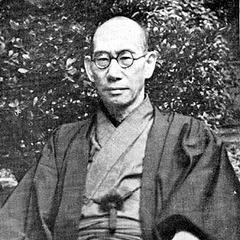
“Shortly after that, I read a book by a philosopher named Nishida Kitaro. He created the Kyoto School of Philosophy that was the first Eastern philosophy that was accepted by Western academia. One of his contemporaries was D. T. Suzuki; they were actually in a monastery for a period of time together. His books kind of bridged the Western and Eastern philosophical gap. So I was reading his stuff and it really started to make sense, and it really, really began to irritate my philosophy professors at school because they had never heard of it, and a lot of them were Christian-based and this is now Zen Buddhist-based, so they didn’t understand it. I was writing these papers and still getting decent grades on them, but the professor was just like, ‘I don’t like this.’
“So after I started reading Nishida Kitaro I decided, ‘Okay, I’ve got to check this out for myself.’ So I started going to different centers. In the beginning because of the Vietnamese connection with Thien, there was Thich Nhat Hanh groups that I sat with. And I sat with a Nichiren Daishonin group, a SGI [Soka Gakkai International] group. We chanted the Lotus Sutra an awful lot. And then I got married and that kind of put a halt to that.”
“Your wife didn’t join you in the chanting?”
“No,” he says laughing. “She wants nothing to do with it. I’ve been married to her for 31 years, and I love her to death. She’s been so patient and loving with through all of this, but she didn’t marry a monk. But she’s stood with me through all this change. She is my Bodhisattva.”
And then, not long after the birth of their daughter, he dropped the keys.
His post-surgery recovery was slow and difficult. “I was depressed and hid from my friends who knew me as a 320-pound Mack Truck. Now I am 200 pounds, and I can’t walk without canes. I would go into the park at night and would practice walking with and without canes so nobody would see me.”
He also came upon a book by the former Catholic monk, Thomas Moore. “It was Care of the Soul. And it re-framed depression and illness. Instead of being negative things, they became positive or at least neutral. Moore taught that there was wisdom within depression, pain, and disability. These experiences became something to be learned from versus something in need of immediate eradication. So what is back surgery and depression teaching me? For example, depression was not negative but a period of deep introspection or being in Saturn. A period to grow. In the west depression and disease are bad things, things that need immediate cures. So you’re depressed, Prozac! Your back hurts, surgery! So, it was re-framing what I saw as, ‘Oh, my God! My life is over! My body is broken; I’m never going to be the same again’ to, ‘You know, this doesn’t define me, and I can learn and actually become stronger from it.’”
He once again looked for groups with which to practice.
“I found a gentleman by the name of John Sellars who was a student of Philip Kapleau. He was a large animal vet, and he ran a zendo in a town called Reading, Pennsylvania, which at the time was about two and half hours from me. He was my first exposure to Japanese Zen. He would usually do readings from one of Kapleau Roshi’s books, and then we would sit for 20/25 minutes, and I remember that after I would sit for those 20/25 minutes, on my way home I felt like I had summited Mount Everest.”
“Did he insist upon formal sitting postures?”
“He was very open, because it was meant to be kind of a conduit to Rochester. So at that time I was sitting on a zafu, sitting Burmese-style, facing the wall. But I remember that every time I left there, I cannot say there was one time I did not feel better than when I came. You know, we’re talking about feeling, and we’re talking about direct connection and experience. And it connected with me in a way that was similar to the sweat but even deeper. So I sat with John for quite a long period of time, and he wanted me to go up to Rochester, and I was going to, but then decided not to for some reason, probably the distance and having young children. But I wanted more, and I ended up finding a place called Mount Equity Zendo. This is Dai-En Bennage. She was a professional dancer from France who ended up in Japan living under a soy vat because she couldn’t find a temple at the time that would take a female nun in. I mean, she was the real deal. And not only that, she was not only ordained in Soto Zen, she was also ordained in Vietnamese Thien Zen. These were two things I was familiar with already.”

“Back up a bit. Did you say she was living under a soy vat?”
“She was living under soy vats. You have to read her book. She is one of the most legitimate teachers that I’ve ever met. So she ran this nunnery. It was almost all nuns. I was one of the only males. Sitting with her was kind of a mix between Thich Nhat Hanh and Soto. So we would do hardcore sitting, but she had this loving open heart. She really opened up Zen practice to me. I always say that if there’s one regret I have from back then, it would be not staying with her for longer. Because now in my head I’m thinking I have to go and practice real, legitimate, hardcore Zen. Mount Equity Zendo was beautiful. It was an old Quaker farmhouse that she had converted into a temple. There were active nuns living there; she had committed students. She’d have regular sesshin and retreat and everything like that, but – I don’t know – being young and immature, I somehow thought I had to go somewhere that was more legitimate. You know, the Asian architecture and the Japanese teacher.”
So he headed for Eido Shimano’s Dai Bosatsu Monastery in the Catskill Mountains
“Shimano was a controversial figure,” I remark.

“I wasn’t sure if I wanted to talk about this with you, to be honest, because I loved Eido Roshi, and I had the greatest respect for him, but also I knew that he hurt an awful lot of people. With that being said, I had a heads up on that even before I went to Dai Bosatsu, so I never really formally took Eido Roshi as a teacher although he was always around. But when I first went to Dai Bosatsu, I first studied with Jiro Afable Osho who was Vice Abbot. Dai Bosatsu, at the time, was probably one of the most severe monasteries in the United States. Japanese monks would complain of the rules and schedule. But for some reason, I loved it! I didn’t sit like everybody else because now my spine is fused, so I’m flip-flopping between a seiza bench and a zafu and maybe a couple of rounds during a week-long in a chair. And at that time there weren’t any other people who had physical limitations at Dai Bosatsu that I ever saw. If you sat on more than one zafu, it was the ‘tower of shame.’”
He visited Dai Bosatsu regularly from 1999 to 2007, until the situation there finally prompted him to leave. At the same time, he was hosting a sitting group at what he called the Blue Mountain Zendo.
“I started Blue Mountain Zendo in 1998, and we’ve had the temple in a different area, but, for the most part, we have lived within them with our two children. My daughter memorized the Heart Sutra in Japanese by the time she was 7.”
He had permission to operate a sitting group because it was a long distance to any of the authorized centers where he could participate. By 2001 Blue Mountain had grown sufficiently that it was incorporated. Visiting teachers conducted sesshin there. “Dai-En Bennage ran sesshins. Denko chipped in. Kobutsu Malone visited us.” Denko was Denko John Mortensen, a Danish Zen student and former Vice Abbot at Dai Bosatsu who has gone by several names – Egmund Sommer / Denko Møller – and is currently known as Choan Bertelsen. He is the founder of the first Zen temple to be established in Denmark. Kobutsu Malone had been the gatekeeper at Dai Bosatsu and then the archivist who collected documents recording the sexual and other improprieties of both Eido Shimano and Joshu Sasaki. Malone was instrumental in connecting Joriki with the man he now recognizes as his primary teacher, Genjo Marinello.
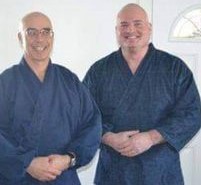
“I heard of Genjo actually through Kobutsu and through the Shimano Archives. We were talking to each other online. And I didn’t have a teacher for I guess it would be about three years. It was just substitutes stepping in and out, and I knew my training was not complete. So I was like, ‘What’s your place like up in Seattle?’ So I ended up travelling to Seattle and doing a sesshin with Genjo at Chobo-ji. And you know that they always say that you have many teachers, and each teacher gives you something special. And you hear me talk about Dae-En Bennage as a core teacher, and she is. Even though I didn’t spend a lot of time with her, she is one of my core teachers. But Genjo is my teacher. It was recognizable immediately, that he was a balance of everything that I was looking for.”
Then his back issues reemerged. “Over the last two years, I’ve had some struggles. I required radical back surgery. My whole lumbar, SI joints, and pelvis are all fused. I almost died the first time. My kidneys shut down; I had toxic shock; suffered effects from hypoxia and was on a ventilator in ICU for two weeks. And then they had to redo the surgery a year later because the first one failed, and I have severe scoliosis.”
Throughout this, he continued his practice with Genjo and eventually received Osho – or priest – status. I ask what being an osho authorizes him to do.
“It authorizes us to do various ceremonies, Dharma talks; and it authorizes us to do koan work with students.”
“It authorizes you to be a teacher.”
“To be a teacher, yes, not an heir. That’s another step.” He points out that, to date, Genjo’s only full Dharma heir is Rinzan Pechovnik.
“So you’re now authorized as a teacher. What does a Zen teacher teach?”
“The thing I would say that is most important is love. And I don’t necessarily mean that just in an emotional way although that is part of it too. Being open – being completely open – to something else, somebody else, the world around you as you. That was definitely a lesson I learned from Genjo. It was something that I had never – other than Dae-En Bennage’s loving presence – I had never really considered before because at Dai Bosatsu it was a such hard-core Rinzai training. It was always so disciplined and militant, and that the form was everything. The ritual. Memorizing the sutras. Not making mistakes. And then all of a sudden to hear, ‘There’s no right way to do it, and there’s no wrong way to do it.’ And what is most important is that you love yourself, and that you love the people around you. And that, to me, was like, ‘Wow!’” He laughs. “And it seems so simple, and it seems like something I would have heard a really long time ago, but I didn’t.”
“How do you – how does one – teach people to love?”
“You don’t. You demonstrate it. And that was the thing. Genjo showed me through accepting me as I was. That had always been a point of contention at DBZ, not being able to sit like all the other monks were. But Genjo accepted that I would sometimes have to sit in a chair, and he would always say, ‘Well, you’re the captain of your own ship when it comes to practice. Only you know when you have to change something.’ I was like, ‘Wow! I am?’ And just his presence and the way he acts, and how open he is to people and not expecting them to move from where they are until they’re ready to. So it was the first time that I felt from a Zen teacher pure acceptance of who I was.”

“Okay,” I say, “but when someone comes to the Blue Mountain Zendo, they don’t come because they want to find love. They come because they’re drawn by something. I’m older than you, and I remember the days when what drew people to Zen was the desire for enlightenment, for awakening. Everybody read Kapleau, and they wanted kensho.”
“That’s what they wanted?” I’m surprised that he sounds surprised.
“Even guys who ended up someplace – like San Francisco – which downplayed the centrality of enlightenment, it was the desire for enlightenment that drew many of them there. What are people seeking for when they come to you?”
“I always address that right off the bat. I call it the proverbial carrot in front of the horse. The issue is we are already enlightened; we are just blind to it. Don’t get me wrong. To get to that point of realizing and feeling that you already are awake and that things already are clear, that takes an awful lot of training.”
“If it isn’t enlightenment people are searching for, what is it that initially draws them to the practice?”
“Suffering. It’s the same thing that people came to Buddha for and everyone since. People come – you and I – our stories, we all come to Buddhism because of some form of suffering, or we think something needs to be changed. We feel something is missing or out of place.”
“And the students who come to you, what specifically are they looking for from you?”
“They have no idea, most of them. The students who stick around, I’ll ask them, ‘Well, was it what you’d expected?’ And they’ll say, ‘I had no expectations. I had no idea about what it would be.’ And the majority of students who stick around are the students who don’t come in with a head full of, ‘I know what Zen practice is.’ But the ones that come in with that ‘I don’t know’ – or beginner’s mind – those are the ones that stick around. They’re the ones that really begin to practice. So if I would hear somebody asking for enlightenment . . .” He chuckles.
“You know,” I point out, “that language isn’t used much anymore, but one person who defended it was Rinzan.”
“Rinzan?”
“Yeah. He said he suspects that people probably still had the desire for enlightenment – although almost everyone says “awakening” now – but they don’t use the language because of a self-consciousness about sounding pretentious.”
Joriki admits that there are different ways of looking at the issue but insists that he still shies away from using terms like “enlightenment.” Just, he adds, as he shies away from the term “meditation.” “It’s really not what we do. We don’t meditate. We do zazen.”
The distinction he is making is between popular understandings of meditation promoted through YouTube videos and Rinzai koan practice.
“And there’s nothing wrong with YouTube videos. I think we all kind of went through that as a gateway. But I’ll tell people, ‘We really don’t do any guided meditation here. The only guides we use in Rinzai is koan practice.’ If it’s a Soto student I will say we don’t exclude doing shikan taza. Sometimes we do ‘just sit and digest,’ especially on the last day of sesshin. But our primary focus is on koan work. And then for those with internet experience only, we will go into what koan work is. And then we’ll move into the initial breath work for their first few weeks of zazen. But I really don’t do a lot of explanation. And that was something I absolutely hated when I first started practicing Rinzai Zen, ’cause nothing was ever explained, and I didn’t understand why. And eventually I realized that it is a disservice to explain something to somebody in great detail about Zen because what you’re doing is you’re giving them your experiences – your insight into it – and not allowing them to develop their own.”
“What do koans do?” I ask.
“I see them as expedients. You know, I told you about when I first hurt myself that flash of lightning and everything was present all at once. I still can’t explain what happened, but that night I saw everything all at once. Form, emptiness, intermingling, everything in a flash. Right? I don’t see that experience as being something that’s special really. I think that’s an experience that a lot of people have. But I perceive the thing that differentiates a Zen student is that a Zen student is not satisfied or doesn’t just settle for just that flash. She wants to understand it more, wants to go deeper with it and explore it until there is combustion. Koans are an expedient to look at the ‘all at once’ picture, that satori picture – you know, if we’re talking about enlightenment – that all at once flash and break it down even more to pure experience. And I always tell people, each koan is like a piece of a puzzle. The puzzle, of course, is satori, the big picture, and the little pieces are the kenshos from the koans that we work on. We get this brief flash of the complete picture which is gone as quickly as it was revealed. The more puzzle pieces we fit together, the deeper the understanding and connection to our essential nature we experience. So, they’re expedients to me. Nothing more. They’re not magical or anything like that. Just expedients.”
“John Tarrant told me they were a designed learning system.”
“An ancient technology. John Tarrant is a wise man. I would agree with that.”
“What do you think he meant by that?”
“I mean, there’s always debate on it when it comes to the koan curriculum and how it’s laid out, whether it was put together in a certain order for certain reasons. There is a symbiotic parallel process that manifests aspects of the ego simultaneously. Koans will bring to light what lurks in the darkness of your mind and bind it with the koan practice. I think the curriculum was put together with a specific reason. And I think it naturally and organically guides you through – the system guides you through – going back and looking at that big picture. So, I think there’s a reason for the order they’re presented. But Jiro Osho – who was my first teacher at Dai Bosatsu – he didn’t necessarily do them in order. He did, ‘Who is he?’ first.”
“Albert Low started with ‘Who are you?’”
“Exactly! Because that really is the starting point. Because until you know, you’re going to be meandering around with out a foundation. That’s an important starting point. So I guess in a way you could mix them up a little bit, although Genjo has always done them in order.”
Joriki tells me that one of the things he particularly admires about Genjo’s teaching is the emphasis placed on the Precepts. So I ask him how he understands the first of the frequently chanted Bodhisattva Vows. “You’ve made this vow, over and over again, that goes something like, ‘All beings without number, I vow to liberate.’ What does that mean?”
“Well, there really isn’t anybody to liberate,” he says with a laugh. “In truth. And in a way, nobody needs to be liberated either. That’s the thing. And we go back to Thomas Moore full circle here – remember? – where people feel that things need to be changed; they think things are not as they should be, that things should be different. And then suddenly we realize that maybe things are as they are for a reason, and that maybe they’re perfect as they are. And everybody’s journey, whatever it is, is exactly the way that it should have been.”
 Richard Bryan McDaniel
One thought on “Joriki Baker”