
Everyday Zen in Berkeley, CA
Exciting things were happening elsewhere in the world as I was attending high school in the mid-’60s in LaPorte, Indiana (population 22,000). As the Bob Dylan put it, “There was music in the cafés at night / And revolution in the air.” But most of that passed us by in LaPorte, where the short haircuts and smooth-shaved cheeks of my classmates were indistinguishable from those of Mormon missionaries. There was, however, a coffee house twenty miles east of us – in Porter, Indiana – called Saturday’s Child established by a man named Dave Sander. Porter was so small (population 2000) that we usually identified it with its larger neighbor, Chesterton (population 6000). On weekend evenings, we would drive there to listen to folk music and bad poetry and feel like we were part of something larger.

“You knew Dave Sander!” Alan Block exclaims.
“Yeah,” I admit. “I used to read poetry at Saturday’s Child.”
“How great! You know, you must be the only person that I could possibly come across who would know about Dave Sander and Saturday’s Child. That’s so amazing. It just blew me away. I wrote to my brothers about it, I was so amazed.”
He’s no more amazed than I was at coming across a reference to a Zen teacher in California who grew up in Chesterton.
“You’re older than I am,” I point out, “and there certainly wasn’t any Zen in Northern Indiana when I was a kid. How did you get involved?”
“My younger brother was living in a commune right down the road from Tassajara,” he tells me. “His best friend, David, in maybe ’67 was building a rocket for his sister in his garage in Chicago, and the rocket blew up and killed him. David was my brother Marty’s best friend in high school. He had been accepted into Harvard in the Fall, and he died that summer. And so the whole family moved to California and set up a commune in this area called Cachagua. It was called Water Brothers.”
“The parents as well?” I ask.
“The parents. Five kids. They established a commune. They bought land in Carmel Valley, and a number of David’s friends who were so upset about his death moved with them including my brother. So I came to visit my brother in ’71. And when I was in the commune, we smoked a lot of dope, baked bread, ate peanut butter. Anyway, somebody said, ‘You know, the Buddhists have bought Tassajara. And the Buddhists are so stupid you can go up there and eat their food and take a hot bath in the hot springs and drink their tea, and they don’t say anything.’ So one day we all got stoned and piled into my car, and we went up the road to Tassajara which was 14 miles on a dirt road where you climbed and dropped almost a mile. I mean it was just a breath-taking road. Still is a breath-taking road. Anyway, we went there. And – you know – intellectually, I had no interest, but emotionally something caught me. And so we hung out there a couple of days swimming and drank their tea and ate their food.”
Alan was 28 at the time and a tenured faculty member at a college in New Jersey, but something drew him back to California.
“So I hiked into Tassajara the next year, because I was curious. And I said, I’m just going to camp up creek and come in and eat their food and take a bath. And they said, ‘You can’t do that. The fire danger is too great.’ They said, ‘You have to leave the watershed because it’s too dangerous.’ So I hiked over to the next watershed, did a big circle, came back three days later, and the same guy was sitting in front of the office at Tassajara – Arnie , who later became an assistant to Thich Nhat Hanh – and Arnie said, ‘You oughta come in here and check this out.’ I had nowhere else to go. I couldn’t get out of there. You know? There was no way to get out of Tassajara unless you had a vehicle. So I said, ‘Alright.’ He said, ‘Three days. Minimum.’ So I checked in for three days, and they put me to work. I liked the work. But the first time I sat – like – I kind of came apart. I had been so involved in achievement and degrees and achieving goals that sitting just completely went through me. I became teary. My whole being was just turned over. And I didn’t know it at the time, but I think at that moment in ’72, that was the beginning of my practice. So I spent three days, and I said, ‘Could I stay for three more?’ I stayed for two weeks.

“So two weeks and I had to go back to teaching. I had a contract. So I went back to New Jersey. Taught. And I thought about it all winter, and I sat in New York that winter at various zendos. The Tibetans. Different people. And then I wrote the San Francisco Zen Center a letter and said, ‘I’d like to come back for two months, next year. I have the spring term off. Can I come back for two months?’ They wrote me back. They said, ‘We remember you. You’re a good worker. You can come back. Just follow the schedule.’ Went back for two months in ’73 and decided that was it. I had tenure – a tenured position – so I had to finish my contract. Took me almost three more years. Basically I took a leave of absence from the college, and I came there, and they had changed the rules. Because a number of people had gone to Tassajara in those days, and it was too much for them. So they said, ‘You have to practice in the city for eighteen months before you can apply to go to Tassajara.’ And so I practised in the city for eighteen months, worked in the People’s Bakery and at Green Gulch and then I applied to go back to Tassajara and was accepted. Anyway, I resigned my academic job before my first sesshin because it was clear that it was over. I took a job in the People’s Bakery. I baked bread for months. And that was a great relief. And then I went back in the spring of ’76 to live at Tassajara. I spent almost three years there.”
“You said you’d been achievement oriented. Was that part of the family culture? An emphasis on success?”
“Yeah. My older brother is a professor of philosophy. He just published a very big book called The Border Between Seeing and Thinking. He gave the William James lectures at Harvard several years ago. We’re close, and, in a lot of ways, academia was what I was expected to do. But I was confused, and I felt like Zen gave me my life for the first time.”
“So how did your family react when you gave up tenure?”
“So the night before I went into the monastery, my mother called me and said, ‘Your aunt has convinced me that you’re going to be in the airport singing “Hare Krishna.”’”
We both laugh, but the fact was that there were other peoples’ children wearing saffron robes and chanting “Hare Krishna” in airports.
“‘Are you going to be in an airport singing “Hare Krishna”?’ I said, ‘No. I’m not going to be doing that.’ So she didn’t say, ‘Don’t go.’ She said, ‘I’m going to come there and take a look.’ And she showed up. She showed up a couple of months later, and she loved it.”
He adds, however, “My family, not knowing what I was going to do, bought me a health insurance policy. Because just in case I went crazy, they wanted to be covered.”
“How did you explain it to people?” I ask.
“What I said to people – my friends – what I said is, ‘Something deep in me wants to pursue this.’ And this college – which I taught at for seven years – and, as I said, I had tenure, so I had security there, it wasn’t feeding me. I felt like I was dying. I had enough money, but I felt like I was slaving in some way to someone else’s life and then rewarding myself with trinkets from the money that I made. And at a certain point, my younger brother, Marty, actually confronted me. He said, ‘What are you doing?’ He said, ‘You’re doing something that’s not feeding you. Is that the way you want to live?’ It took me a while to figure it out. No it’s not the way I want to live. I think also, frankly, I was quite depressed in those years. My last years teaching.”
“Why?”
“Part of it was failed relationships, and an inability to establish a solid relationship. In retrospect, in Zen terms, I just couldn’t settle on myself. Just feeling like I was spinning my wheels. I was living someone else’s life. I wasn’t living my life. And I think that I was much more inclined to activity in the world, even though I still read a lot – I still read several books a week, you know – but I think my real love is construction. Buildings.”
I hadn’t seen that coming.

“So I entered Tassajara in ’76, and I stayed almost three years in the monastery, which was incredible. I mean, I figured maybe I’d be there for one season, and I stayed three years. We lost our main buildings in a fire in ’78. Anyway I learned construction. Paul Discoe – who maybe you know of – had been sent to Japan by Suzuki Roshi to learn temple and tea house carpentry. Came back and they were going to build a walled monastery at Tassajara so they could practice there in the summer and still have guests come and make money. The cost had gone crazy. So they abandoned the idea, and Paul ended up building other things for Zen Center. We built a zendo, and then we built Greens Restaurant. So I worked on those. Then I was part of the crew that built a restaurant in Berkeley called Chez Panisse. And then I went off on my own. So I learned construction at Zen Center.”
He continued to practice Zen with Mel Weitsman at the Berkeley Zen Center although he was no longer formally associated with Tassajara or the San Francisco Zen Center. He admits that that decision was partially in response to the situation that arose around Shunryu Suzuki’s successor. “But I would see Mel Weitsman quite regularly. I worked on the Berkeley Zen Center. Did some of the ceiling there. And we did sesshin every year. But then my wife and I had kids and a mortgage and reality was right there at the door, and I needed to make some money, so contracting was very good for me. In the end, I ended up doing more consulting than I did building, but it was very good for me. I made a good living, and it worked out really well.”
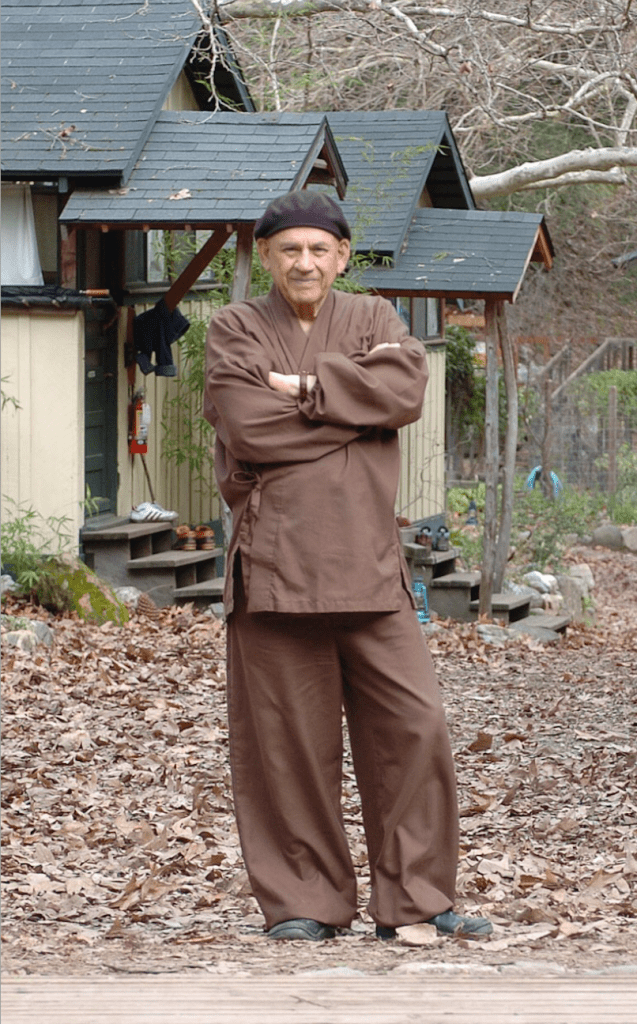
He still has fond memories of Tassajara. “They were great times. In the Spring of ’77 Joan Baez came and stayed a month with us. A month of silence. One day in May of ’77, we came out of the zendo in the morning, about 6:30/7:00, and it had snowed. And everything was white. And she was standing in front of the zendo, and she sang ‘Swing Low Sweet Chariot’ a capella as we all came out. Everybody just put on their shoes and just went on their way.”
“Tell me about Mel Weitsman,” I say.
“Mel was a sweetheart. And Mel was always Mel. You know, I have to say I always felt received by Mel. Whenever I would see him, I would just feel like he would take me in. I went to see him shortly before he died, we had a wonderful talk. And the last thing he said to me is, he said, ‘Don’t be a stranger.’ And I just feel so warmly toward him. It’s not so much that he saw all of me; it was more that he accepted all of me.”
Alan also studied with Norman Fischer who, like Weitsman, was abbot of SFZC for a term. And from Norman, Alan received authorization to teach. I ask if that was the same as denbo.

“No. It’s not denbo or denkai. It’s entrustment is what it’s called. Actually this is a good issue for me to talk to you for a moment about. I love Japanese ritual. I think I’ve had some of my greatest moments of realization during ceremonies. I was ino [head of practice] at Everyday Zen for three years. You know, Richard Baker tried, numerous times, to encourage me to be ordained. And I felt like it wasn’t me, to be ordained, too far outside of my life and outside of the life of others. And so I just sort of went my own way. And then in the 2000s, Mel developed this thing called entrustment for people like me who didn’t want to be ordained but were very serious long-term practitioners. And Norman – who later went off to found Everyday Zen – adopted the entrustment form also. It’s now become a much more widespread method. I’m an entrusted teacher.
“I cannot offer jukai. I need a preceptor to do jukai with me. That’s why Mel’s heir, Alan Senauke, and I are going to do jukai together next November at the Berkeley Zen Center. And previously I’ve done it with Norman. Norman has been very generous with me, he helps me prepare the rakusus for my students – you know – the calligraphy for them, the documents. The kechimyakus. But I feel like if Zen is going to be American, even though I have a deep aesthetic appreciation of Japanese ritual and love to participate in it, but this is the United States. We’re in the West. So I feel very strongly like we need our own rituals. That’s the big quandary in my practice right now. How to make that transition. And I don’t have an answer. You know, when Zen went from China to Japan it changed greatly. When it went from India to China it changed greatly. And I think it’s going have to change again, and I don’t really know how that change will occur or what it will look like, but I feel like the change will have to happen if Zen is going to become any more widespread than it is in the West.”
One of the other things that had intrigued me when I first learned about Alan – in addition to learning he’d come from Chesterton – was that his Zen community has no internet presence.
“And your sangha – the one that doesn’t have an internet presence – what’s it called?”
“The Tuesday Sangha. Everyday Zen in Berkeley. I don’t really have a formal name. I have about fifteen students. This will be my fifth jukai. So I have a core of serious people. Long term serious practitioners.”

“Right there in Berkeley, where Alan Senauke is still heading up the Berkeley Zendo. Why did you open up something separate?”
“I’m peripherally in their lineage but not really. My lineage is slightly different. My lineage is through Norman. Mel was Norman’s teacher. Mel was the one who gave Norman denbo, but Norman has his own teaching at Everyday Zen.”
“I don’t know,” I muse. “It seems to me to be the same lineage: Suzuki Roshi, Mel, Norman, you. So what is it that you do that’s different from what Alan Senauke is doing?”
“I would say it’s pretty much the same teaching. I attended Mel’s koan classes at the Berkeley Zendo for years so really the same teaching. When I started I said, ‘I teach meditation, and a Buddhist approach to life.’ So I am very committed to lay practice. I feel aligned with them at the Berkeley Zen Center. We give money. My wife and I support them. But I don’t really practice with that group even though Alan is a friend, and I’m in a study group with Laurie, his wife. And they call on me as a source of information on the buildings. Whatever it is. Recently it was COVID. ‘How do we get the air exchanges we need?’”
“Okay, this core of fifteen serious people who practice with you. Again, no internet presence. They didn’t look you up online. How did they find you?”
“All through personal connections. Through friends and friends of friends. So I teach online.”
“You don’t have a physical place?”
“I did have a physical place until COVID. I rented a place in Berkeley with David Weinstein. I rented space with him until COVID and then we couldn’t afford it anymore. So I’m teaching online, and I now have several students in Seattle. So if I go back, I have to go back hybrid, and I really don’t have the technological prowess to do it.”
“And the people who choose to study with you, why do they choose you rather than going somewhere else?”
“I think because they want a more personal, smaller practice. More face-to-face. Lay practice is different from monastic or residential practice. What Norman has done that I think is so beautiful is he’s taken a lot of people like me who never completed their training because of all the trouble at the San Francisco Zen Center, and he’s gone back and helped them complete their training and become transmitted or become entrusted. Norman has done that with probably a dozen people who practised for years and years very sincerely but fell away. He provided them a space to come back. And a lot of people who come to my group are people who have been practising in different ways for many years but never really found a practice home or had some personal issue or they fell away, and they’ve been doing it for a long time. Some for twenty/thirty years. So I’ve given them an opportunity to sew a rakusu and take the precepts and to receive jukai. To make a commitment to live their lives by intention and not just by habit.”
“And what do they get out of doing this practice for twenty/thirty years? Why bother? Why, today, do people go to Zen Centers?”
“These are people who are mostly in their 60s and 70s and still seeking. Wonderful people.”
“Aging hippies!” We both chuckle.
“That is part of it.” He reflects a moment. “It just gives them some confirmation in the practice they have been doing. I think that they’re people that are reflecting on their lives. And what I’ve tried to do is give them the basics of Buddhism in a rigorous way. I emphasize to them that the Dharma does not have a copyright on truth. I really believe that. And I think what they have been able to do, and what I emphasize to them, is see their life, see their interactions, see their relationships through the lens of the Dharma. Then you will understand things about yourself and how you get along in the world that you didn’t understand before which will allow you to change your behaviours, to get closer to people, to get closer to yourself, and to understand the world in a much bigger way. And that’s really what I emphasize. I feel I’m pretty rigorous about wanting to teach them the basics. I’m not interested in loosey-goosey. I want to teach the basics of Buddhism, and that’s what I try to do.”
“Does one necessarily need to a Buddhist to practice Zen as you understand it?”
“Well, I talk about what Rinzai said, ‘If you meet the Buddha on the road, kill him.’ And I talk about Krishnamurti in that context, that an identity of loyalty is not an asset. The identity of loyalty, the identity of you’re devoted and committed to the teaching is not an asset. Use the raft as best you can and then leave it behind. But I mean, none of us are at that place. Because one of the things that I really believe is that the Dharma has no ending to the depth that it can go. That you can go further and further. That’s what I try to teach , and I feel like what’s happened in my group is that people have gotten a lot more insight into their lives, and a lot more insight into the problems in their lives, and insight into ‘How do you become intimate with other people? What do we share?’
“And we try different things. At one point, I encouraged my students to stand on the corner in a busy area. Every person that comes by, wish them well. To yourself. You don’t have to say anything. Just every person that comes by, in your heart, wish them well. See what happens. People come back and say, ‘Oh! They smiled at me! I couldn’t believe it!’ I really encourage people to experiment with different ways of being and discover what happens.
“I think what I’m trying to do is give away what was given to me. That’s it right there. It was given to me, and I try to give it away. The bottom line is this practice has allowed me to taste my life in a way that I could never taste my life as an adolescent or as a person in my 20s. And this practice has opened up my world to me in a way that I am so appreciative of. And I’m just trying to give it away. Because that’s the best thing that you can do with it. I think without the Dharma I would be a really unhappy person. I’d probably have a lot of toys and a lot of junk. But, you know, I think I’d be a very unhappy adult. Confused. Deeply confused. Which I was. And – you know – the beauty to me of the Dharma is that it straightens you out – beginning with the Precepts – it straightens you out in a way that’s based on you, not based on someone else’s idea of you. And to me, that’s a really, really beautiful thing. So I really try to give it away.”
A little later, he reminds me, “You know, Dogen said you truly are enlightened, but you don’t know it. And Suzuki Roshi said – something I quote often to my students – the most important thing to be able to enjoy your life and not be fooled by things. That’s sort of my motto. The most important thing is to be able to enjoy your life and not be fooled by things.”

[My conversation with Alan Block took place in June 2023. Hozan Alan Senauke died eighteen months later in December 2024.]
 Richard Bryan McDaniel
I was wondering if, when Alan mentions he worked at the “People’s Bakery”, he meant SFZC’s Tassajara Bakery at 1000 Cole St. SF.
LikeLike