Cynthia Kear

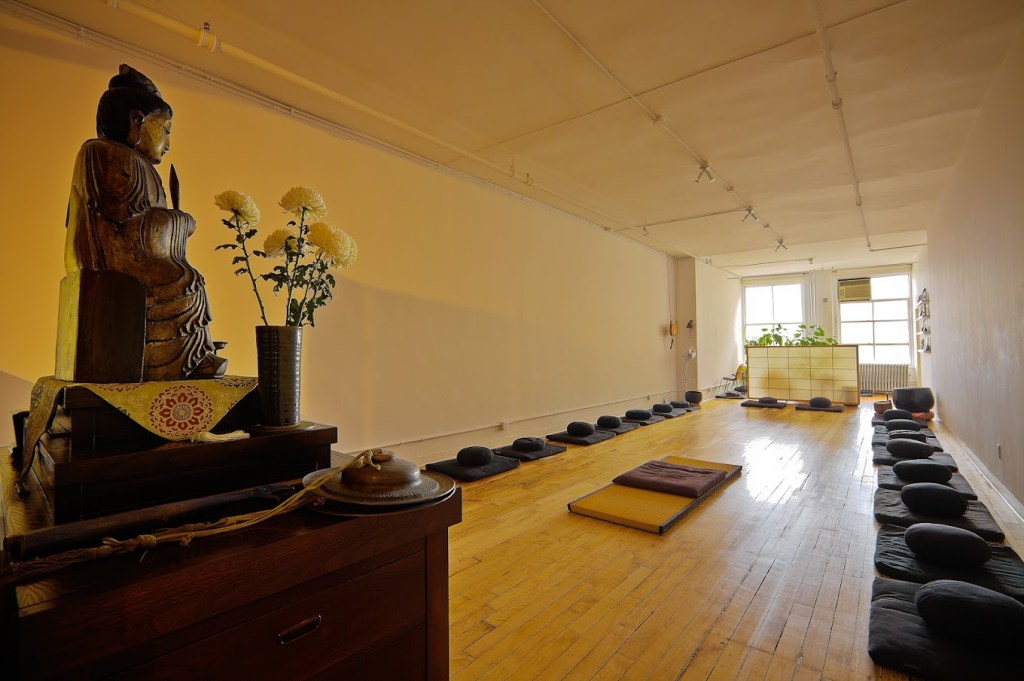
Russian River Zendo

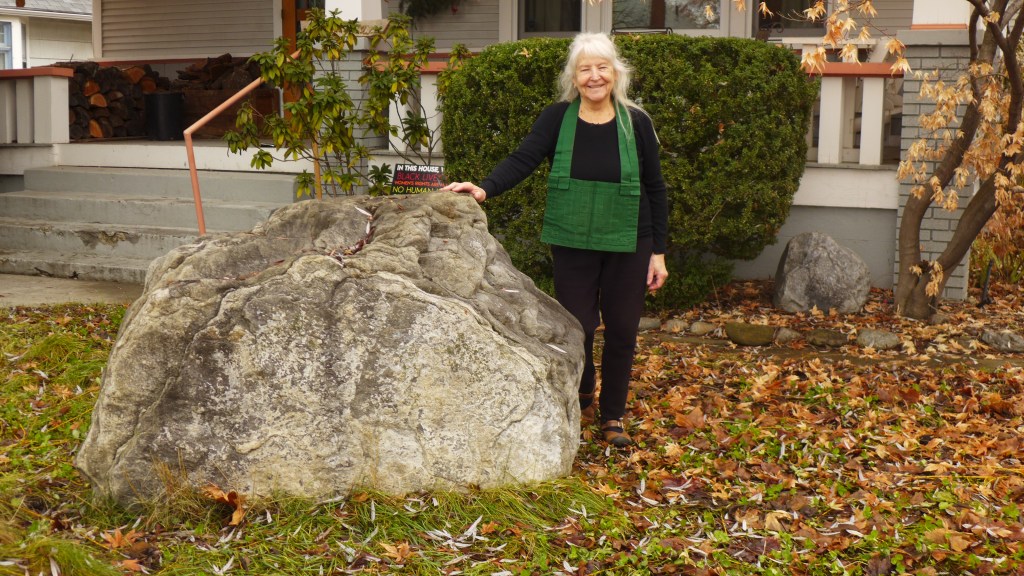
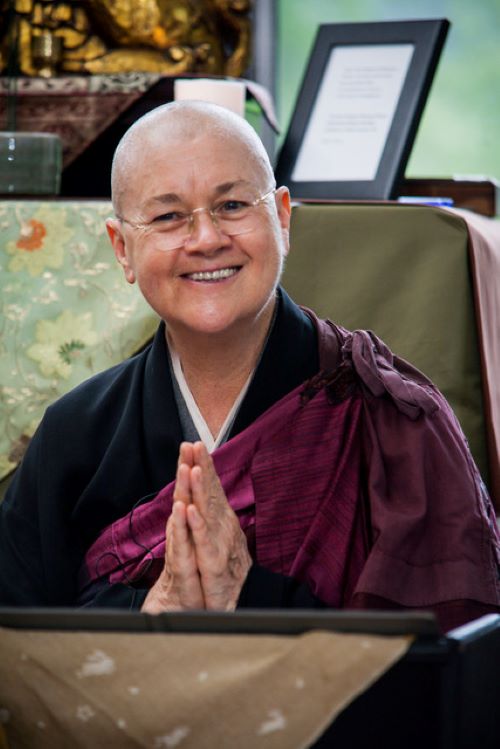
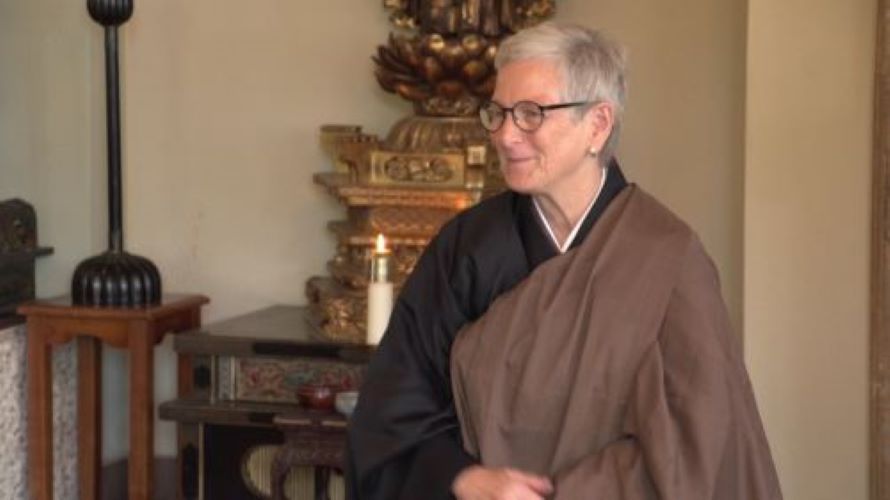
Cynthia Kear is a Soto priest in the Shunryu Suzuki lineage attached to the Russian River Zendo north of San Francisco and an articulate spokesperson for that style of Zen practice.

She was raised on the East coast, but after college she moved across the country to the west coast. “I was looking for a big change, mostly to get away from my suffering family.”

“Suffering in what way?” I ask.

“I grew up in a very dysfunctional family with lots of “-isms” – alcoholism, undiagnosed, untreated mental health – the usual kind of chaos. My father was an alcoholic. We have a lineage going back as far as I can see back to all my ancestors having some sort of an -ism. Co-dependency. My mom was also a heavy drinker. I don’t know if she was an alcoholic, but she did her best to keep up with my dad. And she certainly was a co-dependent. Right? And sadly my father suffered greatly with this all the way through to the end of his life and wound up being estranged pretty much from his family and being a very isolated person who never found a paradigm for resolving his suffering. A solution. And all of my siblings had some form of addiction. So, I thought, of course, as most people who grow up in dysfunctional families think, ‘Oh, I will never be like them.’” She laughs wryly. “My drinking was wine out of very nice crystal; theirs was Budweiser out of Styrofoam coolers.”

“Did your family belong to a faith tradition?

“Yep. Catholicism. We had priests, and we had nuns, and we had very devout practitioners of Catholicism. And by my own choice, half of my education was in Catholic schools including high school. So yes, but in my sophomore year I was introduced to the existentialists and the nihilists, and I thought, ‘Oh, finally! Here’s a paradigm that makes sense! Life is suffering and meaningless. Okay.’ I did eventually grow out of that, but . . . So, yes, after college I wanted to get away and kind of establish a different life. So I came to San Francisco.”

Then when she was 32 she was involved in “a car accident that was the result of being under the influence, and I knew I needed to wake up and to do something different.” The something different was to enter recovery.

“My youngest sister was a cocaine addict who was shipped out to me because I was the ‘more stable one’ – relatively speaking – and together we discovered recovery. And it was kind of like finding Buddhist practice. It was eye-opening. It was like, ‘Oh, wait a second! This is not insanity. This is something very specifically that we can call a certain type of suffering. And here is the solution. Here is the medicine to wake up and transform that suffering.’”

She has now been in recovery for 37 years.

There is a spiritual component to most recovery programs; Cynthia, however, tells me that she knew “a Judaeo-Christian paradigm was not going to work for me. Having, by my own efforts, spent a lot of time in Catholicism, patriarchy, theism, too much emphasis on an afterlife as opposed to here and now. So when I found Buddhist practice, it was like, ‘Wow! Here’s a solution to any other type of suffering that I have in my life.’

I ask how she discovered the practice.

“A friend of mine was going to the San Francisco Zen Center, and we were having dinner, and I said, ‘I’m looking for something else.’ And she said, ‘Well, why don’t you join me?’ And so I did, and I entered the doors at 300 Page Street and that started my journey about 35 years ago. And I really haven’t left. I mean, I kind of stayed on the periphery because at first I thought they were all a little intimidating, and I wondered, ‘Was this a cult?’”

She admits that she didn’t find the people particularly friendly at first.

“But I loved the Dharma talks. They really fed my heart and my mind. So I kind of stayed around the corner – around the periphery, if you will – and a lot of friends said, ‘You should get more involved.’ And I knew that I wanted to get more deeply involved. But I think that from a personal perspective, what kind of deepened my practice and both drove me deeper as well as invited me more deeply into the Dharma of the transformation of suffering was when my younger sister was dying of breast cancer. She was just my favourite person in the world; ten years younger and with little kids, and it was just so traumatizing. I was about 50 at the time. I hadn’t experienced a close or a young death at that point in time. And so I clung to the Dharma. I dove into the Dharma and clung to the Dharma in terms of understanding – you know, trying to understand – with just great fervour. And I did find a lot of wisdom and, again, solace and a way of contextualizing impermanence. Right?  Then Blanche Hartman was giving a Dharma talk one day. And, you know, everybody has kind of their Dharma talk that they give – the essence of it – and this was one of her jukai Dharma talks. And she was talking about the etymology of ‘jukai,’ and that we plunge, we plunge into this life, into these vows knowing that they’re impossible to take. And, you know, I’d been hanging around for three or four years, and I just thought – it was just an epiphany; it was just in that moment – ‘Oh! Like swan diving from up above off of a cliff into the ocean! That’s what I want to do! I want to just plunge! And I want to keep plunging! And I never want to stop!’”

Further Zen Conversations: 17-20; 50; 100-01; 134-40.

Peggy Sheehan

Zen Center of Denver

Peggy Sheehan is one of the Spiritual Directors – along with Karin Kempe  – of the Zen Center of Denver founded by Danan Henry, an heir of Philip Kapleau. Both Peggy and Karin have medical degrees, although Karin is now retired. I ask Peggy if she is jealous.

She laughs and admits, “I didn’t use to be, but I’m getting’ there.”

She encountered Buddhism just prior to entering medical school. She was visiting a friend, Lola Lee, in San Diego. Lee had moved to San Diego to work with the early Zen Pioneer, Henry Platov. While she was visiting, Peggy attended the practice sessions facilitated by Lee and Platov, and, at one them, Lee spoke about the differences between the Christian and Buddhist perspectives. Although she can’t remember the exact words Lee used, the impact of what she said struck Peggy deeply.

“I think the difference was that one is based in ‘original goodness’ and the other emphasized ‘original sin.’ And that had a strong resonance for me, the sense that, ‘Oh, yes, you possess this original goodness that just needs to be touched and uncovered and experienced’ in contrast to being brought up with a strong emphasis that we are originally bad and need healing.”

I was unfamiliar with Lola Lee and Henry Platov, who – it turned out – were responsible for establishing the Hidden Valley Zen Center near San Diego, whose current guiding teacher is Mitra Bishop. In later correspondence after our conversation, Peggy tells me that Platov was briefly referenced in James Ford’s book, Zen Master Who? and that she appreciated Ford noting: “without clear documentary evidence, these early pioneers will continue to be footnotes in the history of Zen Dharma in the West. Nevertheless, they and many others devoted years to sharing the Dharma in the West. Although their influence is gradually vanishing, many contemporary teachers owe a great deal to these increasingly forgotten ancestors.”

“I am one of those who owe a great deal,” Peggy says.

Listening to Lola speak, Peggy says she felt as if “for the first time I heard some authentic teaching. I thought, ‘This I have not heard, and this I have wanted to hear my whole life.’ And that planted a seed that would not go away, would grow and grow over time. I did have to go to medical school and do residency. But I got myself a little meditation cushion and a mat. Lola had given me a koan to work on that I never did work on. But at every transition in my life, I would get out my mat and cushion and would sit there. I would have a place for it. Some weeks or months would go by, and I’d roll it up and put it back in the closet. That happened for ten years. So we call this ‘awakening your bodhicitta’ – the mind that seeks the way. We all possess it. You never know when it will get touched or awakened, but that’s what happened. Lola awakened my bodhicitta, something that I wouldn’t have said I knew was there.”

Peggy didn’t take up what she calls “serious practice” until she had finished her residency and was working. “That kernel stayed with me all that time, and I kept thinking to myself, ‘When are you going to go back to that?’ So, I had been in a relationship that was about ten years strong, and it just fell apart. And that proved to be the right time to go back. That’s when my questions arose again, in those times that are sort of stressful to us. I would wake up very early in the morning, and I would walk to the park. And I thought to myself, ‘Well, you know, what is this thing called “unconditional love”? Because if I truly understand it and embody it, then, of course, it would be completely fine for my lover to leave me like that because I would want them to be happy and to do what they need to do. So that was my question. ‘What is this thing that we call “unconditional love”?’ And I think everybody has some question that drives them to take up a serious spiritual practice. They may not always be able to articulate it. But the question stayed with me, and as you continue to practice there are more things that you inquire into, that open for you. But I’m always happy to remember, to reconnect with that original question.”

She looked “Zen” up in the white pages of the phone directory (web-pages were still a thing of the future) and she found the Denver Zen Center listed there.

“I knew when I made that phone call, I was making a commitment. I didn’t care what it was like, honestly. It felt like genuine practice. It felt like a place that was dedicated to helping us see into the nature of our selves and the world. So, it wasn’t a warm and cuddly place. For a long time, I would go to zazen, and – you know – you put a robe on, and there was a changing room where you might say ‘Hello’ to someone, then you go sit, then you take your robe off, and you leave. And you didn’t really get to know people. You just knew something was compelling you to be there. In my gut and heart, I knew that this practice had this potential. But the container was strong, although it wasn’t – as I said – warm and friendly.”

She pauses a moment then smiles and says, “Oh, here’s one thing that happened: it was only a couple of months in, there was a big snowstorm, and I was at zazen, and they decided to close early. But we were invited to have tea with Danan Roshi. So we went and had tea. And there was – I don’t know – about half a dozen of us sitting there. And Danan Roshi proceeded to tell us about the attrition rates from people taking the introductory seminars. ‘One of you will come back after a seminar. And after five years, only one of you will still be here.’ And as I’m listening to that I knew. I said, ‘Well, I’ll be that one who’s here.’ I just knew it.”

Now that she and Karin are the spiritual directors of the Center, she tells me that they “try to have a little more warmth and friendliness and social time.” But she remains grateful for the training she received and for that initial seed planted by Lola Lee.

Further Zen Conversations: 44; 70-72.

Photo of Peggy Sheehan by Geoff Keeton


Joshin Byrnes

Bread Loaf Mountain, Vermont

Joshin Byrnes is the founder and Guiding Teacher of the Bread Loaf Mountain Zen Community in Vermont. He is also active in Bernie Glassman’s “Zen Peacemakers” and continues the tradition of Street Retreats that Bernie had conducted, bringing Zen practitioners to live among the homeless in urban centers

Joshin’s life story is compelling. He attended a Catholic seminary for a while, although he stopped short of ordination. Instead of becoming a priest, he earned a degree in Medieval Musicology and took up Zen practice, studying with Joan Halifax at the Upaya Zen Center in Santa Fe.

He describes his family as working-class poor. “My dad did blue collar work. Sometimes a truck driver, sometimes a floor manager when he worked. He was often unemployed because of his alcoholism or because he had lost a license for driving while under the influence. And then in ’82, my mother died and soon after that, my father became homeless, which influenced my spiritual life pretty deeply.”

For a long while after his mother’s death, Joshin and his father were alienated from one another. “Then later in life he came out of homelessness, and I was already a Zen practitioner. One of the connections I had to Bernie Glassman’s Zen was the street practice which appealed to me. I did a lot of other things; I’d worked in a lot of social services by then. But by the time my father reappeared, I realized I had compassion for all these anonymous people, these strangers who were suffering, but – boy! – when I dealt with my father there wasn’t much compassion there. And I started trying to work on that a little bit.

“Then he got in touch with me and wanted to see me. At first, I didn’t want to go. At this point, I was already at Upaya; I was already practicing. So, this kind of inner confusion or conflict was interesting to me. So I decided to go, and he was living in a tiny little efficiency apartment. There was cigarette smoke and beer cans and open cans of pork and beans and Fox News blaring in the background. To me it seemed like a Hell realm; to him, I think, it was a little bit of paradise. And he told me then that he had esophageal cancer and was dying. And so I sat with him there for a number of days, and over the course of those days – I didn’t realize it at the beginning, but I realized as the conversations went on – he was going to confession to me. He was talking about his regrets in life and was looking for some kind of forgiveness, I think. And the conversations were slow. He wouldn’t look me in the face. We’d sit side by side watching Fox News, and he’d say things like how terrible he was to my mother or things he did and witnessed when he was in the Korean War. The opportunities that he squandered during his life.

“And it went on and on and on, and it struck me, ‘Oh! He sees me as a priest.’ And something about that kind of melted me and softened me. And by the end of three or four days, I decided I would cook him a meal that I knew would please him very much. It was a meal my mother used to cook a lot. And I saw that as – you know, without saying the words – it was a kind of absolution, and it was very touching to have that meal with him. It was very emotional. And that experience really changed me. Yeah.”

Joshin tells me there is a residential training program for novice priests at Bread Loaf Mountain. I ask what the priests do once ordained.

“That’s a very good question. It’s a question we grapple with all the time. We don’t know exactly. These are the questions on the table. What is priesthood? Why do it? What does it contribute to anything? In our tradition, the terms ‘priest’ and ‘monastic’ have been exchanged with one another at different times. We wonder if we are more New Monastics than we are priests. We’re not in the culture that provided the philosophical and cultural context within which Buddhism emerged, and I think that’s part of the experiment of Buddhism in the West.”

The “New Monasticism” he refers to is a concept developed by lay Christians in Britain during the 1970s and ’80s. “I think the distinction between lay and monastic gets blurred in New Monasticism and quite intentionally,” he explains. “In some ways it’s a funny remnant – isn’t it? – that we think only those that have separated themselves from society are capable of reaching high levels of spiritual insight. That is an odd thing, and I think it’s a cultural remnant. I would say we should question that assumption. Anyone is capable of spiritual insight – profound spiritual insight – and spiritual experience. So what are the structures and systems that allow people to practice rigorously even though they are not living on the outskirts of town or up on top of a mountain or in a cave? I think this is a Zen gift. Can our ordinary daily lives, can washing your bowl be a path to awakening? And if we practice whole-heartedly with whatever we’ve got, wherever we are, no matter what conditions we place ourselves in, isn’t the opportunity of awakening always there? Because Buddha’s always there. Your own Buddha Nature is always there.”

He tells me about a street retreat in which he had recently participated. “We were incognito, but every day we had some meditation time, and we’d do some chanting and stuff. And one guy in a park noticed us doing this. A very large rotund guy with a big smile. And he called me over one day, and he said, ‘Are you guys Buddhists?’ And I said, ‘Ah! It’s interesting that you ask. Yes. We’re doing this as a Zen Buddhist practice.’ And he said, ‘I’m Buddha.’ And then, before I could respond, he said, ‘So are you.’ And I said, ‘Oh, wow. How’d you get there?’ And he said, ‘Years ago I was in prison, and a Zen Buddhist came in and taught. And he sat down with us, and he didn’t tell us his name. He introduced himself as Buddha. And then he made all of us go around and introduce ourselves as Buddha. And I really understood, right there, that everybody’s a Buddha.’ He said, ‘This made total sense to me, ’cause when I was a kid I was always fat and I was always smiling and everybody called me Buddha. But,’ he said, ‘I get it. Everybody’s a Buddha.’” Joshin smiles. “And I thought, ‘That’s the wisdom of the streets. It’s so beautiful.’”

Further Zen Conversations: 68-69; 137-39.

Joshin with Bernie Glassman, 2015

Rafe Martin

Endless Path Zendo, Rochester, NY

Rafe Martin’s Endless Path Zendo is located three blocks from the famous Rochester Zen Center established by Philip Kapleau.

“You went toe-to-toe with the Kapleau people?” I ask, in surprise.

“No,” he assures me. “My wife and Roshi Kapleau and I were very, very close. His daughter says we were like his family.”

Like many of the people who made their way to Rochester in the early 1970s, Rafe learned about Zen from Kapleau’s book, The Three Pillars of Zen. He was attending graduate school in Toronto at the time and had the opportunity to meet Kapleau during one of the latter’s visits to that city. Kapleau invited the Martins to consider relocating to Rochester, but they didn’t take the suggestion seriously.

Rafe did, however, practice on his own, following the instructions provided in the book. For a while things went well, then he ran into problems. “Serious ones,” he tells me. “In the end I really messed up my nervous system from an unhealthy combination of misplaced confidence while practising Zen without a teacher – not recommended! – doing drugs, and being deep in the throes of a combined Masters/Ph. D. program.”

He dropped out of graduate school (one paper and one course shy of completing his Master’s degree) and moved back to the US.

“Rose and I were married already, and we wound up in backwoods Pennsylvania near where we had gone to college – Harpur College which is now Binghamton University – and became part of an extended dropout community. And then we ran into a guy on campus at Harpur who had a sitting group and was going up to Rochester for sesshin. We started sitting with him. And we had lunch with Roshi Kapleau again, this time in Binghamton. And something began jelling. I was still in bad shape. And Roshi kept saying, ‘You should move to Rochester.’ Then when our son was born, we realized we had to grow up as human beings. Now. It was not a joke. It was up to us to take care of this child and do something about it. So we basically gave up whatever last things we still had and moved to Rochester and started going to sesshin.”

When Rafe and Rose arrived in Rochester, they were the same age as many of the other people making their way to the Zen Center, but their situation was different. “We came already married, with an eight-week-old child. So we were in a totally different realm from most of the people our age who planned on being monks or nuns ’cause that’s the only thing they knew about Zen. We had to actually invent our own path.”

The process was slow. “It took me about fifteen years of very painful practice, a lot of sesshin, while our son and then, later, our daughter were both growing up before I finally settled back down and could move on from there. And all along Roshi Kapleau kept telling me, ‘Just keep at it.’ And I did that for about fifteen years, and then things opened up pretty quickly and I moved along.

“But it became clearer and clearer to me that even though Roshi Kapleau and I were extremely close, the style of training going on there would not be mine. In fact, Roshi Kapleau encouraged me to find my own way. He saw early on that the kind of institutional, semi-monastic residential training was not what I was going to be about. And I think less and less it’s what most people who are interested in an actual practice of realization are about these days. I think family, friendships, affinities, vows that bring us to a certain kind of personally meaningful work, all of these are important parts of the Vow of the Bodhisattva, helping us make our way in this world and do some good. Essentially we mature as the people we are, not by turning away from ourselves to become something or someone else. This is our foundation, our ground.”

After Kapleau retired, Rafe was invited to Hawaii as a storyteller and writer, and there he connected with Robert Aitken. “I had old friends who were working with him. And I found significant value in re-doing some of my koan practice with Aitken Roshi, which we did for about four years both in-person and by mail.”

After that, he continued koan work with Danan Henry, who had authorization from both Kapleau and Aitken. “He had both my backgrounds and so could see places where I might be – and usually was – stuck and helped me work through it. Which was transformative. Eventually, working with him, I was able to find a synthesis of the two lineages that had been so deeply important to me.” Danan became Rafe’s transmission teacher.

“As a lay person, for me the Rochester Zen Center was not an optimal kind of training, and I don’t present that kind of training here at Endless Path Zendo, even though I’m three blocks away and we have cordial relations. I respect what they do, but I’m very non-institutional. We’re small, intimate, non-hierarchical. I see breath and koan practices – carried on in your own life just as it is – as the foundation of what we offer.  We have, at this point, twenty or so members most living in Rochester, with some in other far-flung parts of the country and one in Europe. Many of my students have worked in other traditions as well as other Zen lineages, some for some time, though we also have a few total newcomers. All in all, I think we’re a good mix with lots of years of solid sitting as our communal foundation.”

The purpose of lay practice, Rafe tells me, is personal maturation. “You mature as a human being. That’s the whole point of the Bodhisattva in Zen, which really means ‘wisdom-being,’ which means someone who is wisely choosing to mature beyond their own unconscious, habitual self-centeredness. So a ‘wisdom-being’ is simply a ‘growing-up human being,’ and lay life is the perfect ground for that. It isn’t a lesser form than residential training or monastic practice. It has its own form. It’s not only valid but totally so, because you can’t hide out in it. You can’t think you’re getting something and then not function in your actual life. You’ve gotta function in life or people couldn’t care less what your training is or that you’re a Zen Buddhist. It’s how you treat them right then. How you interact.”

“What is there about Zen that makes it worth preserving?” I ask.

He takes twelve seconds to consider the question before answering it.

“It’s a path of practice-realization. Let me clarify what I mean. I don’t have much feeling for Japanese style, for wearing certain kinds of clothing, maintaining a certain kind of protocol or certain formulaic behaviors. But I do have a very deep feeling that maturing as a human being is why we’re here. And I also feel very deeply that Zen is one of the most accessible paths to growing up as a human being that there is. And by ‘growing up’ I simply mean becoming aware of that habitual unconscious self-centeredness and not continuing to build our comfy nest there, not continuing to cling to that, not keeping it in the driver’s seat but gradually – and suddenly – to see through it and let it go, so that more and more of whatever we already selflessly actually are can function in and as this life. To me a Bodhisattva is one who is maturing beyond their own anciently habitual self-centeredness. Who knows what’s possible in such a life? But I feel it’s the happiest form of life we can aspire to as human beings. And when you get through all the cultural clutter surrounding Zen, that’s what it’s about. Zen can help us — to one degree or another — actually do this.”

Further Zen Conversations: 7-8; 59-61; 111-12; 134-37; 147.

Gyokuko Carlson

Dharma Rain, Portland, Oregon

Gyokuko Carlson is the retired abbot of the Dharma Rain Zen Center in Portland, Oregon, which she co-founded with her husband Kyogen Carlson, who died in 2014. The two met at Shasta Abbey, the primary teaching center of the Soto teacher, Jiyu Kennett.

Although Gyokuko served as Kennett’s attendant for a while, she tells me that it was less Kennett herself than the abbey and its schedule which became her teacher.

Her first contact with the abbey had been through a meditation course offered at Reed College by an ordained married couple, Shuyu and Gyozan Singer. One evening Shuyu gave a talk on the ethical Precepts of Buddhism.

“And I started to cry while he was going through this because coming back to that kind of groundwork was like coming home, bringing me back to my Christianity without the Christianity. And one of the things that was important in the way that Zen was presented to me was that it’s method, it’s practice, and it’s a way to discover what is true and not have something dictated and imposed.

“One of the things that had bothered me in my teenage years was that I was supposed to ‘love Jesus,’ but I don’t know how to manufacture love. And to love Jesus and to love God as a commandment felt like an insurmountable hurdle. It’s like from here to there and no intermediate steps, just go from here to there.  And I felt what Zen was offering me was, ‘Don’t worry about there. Just work the steps right here. Just take the next step and see where that leads, and then take the next step.’ And that sense that there is method and there is transformation possible one step at a time was such a relief to me.”

“When you said that you saw the abbey and the schedule as your teacher,” I ask, “what do you mean by that?”

“Well, as I said about the method and the step-by-step, I felt that I was being immersed and disciplined into a way of life that was structuring my mind. We sometimes say about the meditation posture that you’re using your body to direct the mind. And I felt that everything in the schedule and the method of being, the deportment, it was all there to direct the mind.”

“To what end?”

“Clarity in general. I think in my case coming to a realistic and holistic sense of self. A sense of this person being integrated into a larger whole. So I suppose being in community is actually a model for that last piece. You were given a place, a rank, a seat at the table, a seat in the zendo, and you have the integrity of that place, but you also have a responsibility to the whole of the zendo, the whole of the lecture hall, the whole of the community. It’s the model or the microcosm for a larger sense of being a piece, an integral piece, of the whole of the universe. I think one of the gifts in Zen practice is a sense of  what Roshi Kennett used to call ‘natural pride,’ a sense of self worth that is not larger than anybody else’s – does not supersede anybody else’s – but is the basis of respect for all things, that puts you in relationship to all things. I had this sense once walking down the cloister and just being centered in my own breathing and having the sense that my in-breath and my out-breath was the same in-breath and out-breath as the whole of the Earth beneath my feet. And it was not powered by me, and it was not not powered by me.”

“What is about the Precepts that make them so meaningful to you?”

“They are a way of sharpening understanding of self, understanding of karma, understanding where things get screwed up, and how to unscrew them.”

“You’d also said one of the things that caused you to fall away from Christianity was it made demands such as ‘You must love Jesus.’ So how are the Precepts different from the rules and regulations of Christianity?”

“Well, you can teach the Precepts that way. But the way I was taught the Precepts and certainly the way that I try to teach the Precepts, each one of these is a mirror, a koan, it’s something that you cannot keep literally, and because you cannot keep it literally, you need to dig deeper. One of the Precepts that caught me fairly early on is there’s one that says, ‘Do not be proud of yourself and devalue others.’ And, coming out of depression and this feeling that I was worthless, I thought, ‘No problem. I don’t devalue others. I devalue myself. So no problem.’ But then studying the Precepts and reading them over – gliding over that one because it doesn’t have to worry me – there was a day when I realized, ‘Oh! If I turn that upside down, it’s the same Precept. If I’m devaluating myself and elevating others, I’m violating that Precept. So get over yourself, girl.’ Just that if you are making that separation that some are high and some are low, you’re violating that Precept. So where’s the respect in that? Where’s the compassion? So I see the Precepts as a path to joy, not as a path to despair and self-loathing.”

Further Zen Conversations: 102-03.

James Córdova

Benevolent Zen Sangha, Providence

James Córdova was a member of the Boundless Way community in New England, which – as he puts it – “sort of split apart, and then I was affiliated with Greater Boston Zen Center for a while, and then we sort of split apart from them, and now we’re doing another thing.”

“So you were part of the group that separated from Boundless Way?” I ask. I didn’t mean the question to imply a criticism – Zen communities are as susceptible to internal conflicts as any other human endeavor – but I did want to be clear.

“Yeah, that split away from Boundless Way and then split away from Boston. We’re malcontents,” he adds with a laugh.

The “another thing” he’s now doing is the Benevolent Zen Sangha in Providence, Rhode Island.

Zen appeals to a fairly narrow segment of the general population. Zen practitioners, for example, tend to be college educated. A surprising number of Zen teachers are academics or psychologists. James is both. He is the chair of the Psychology Department at Clark University and a licensed clinical psychologist. He encountered Zen while a student at the University of Washington.

“There was a professor, Alan Marlatt, an addictions researcher. The University of Washington was full of a bunch of bigshots, so mostly they didn’t teach; they did their research. But if they ever fell into one of these gaps where they were between grants, then the university made them teach. This is what happened to Alan. He was in a gap between grants and so he agreed to teach a graduate course on the Psychology of Mindfulness, which entailed meeting at his house at 7:00 in the morning and drinking overly strong coffee and browsing through his collection of Buddhist books and then sitting on his couches. He would try to teach us how to meditate, and then we would leave borrowing some of his books and hyper-caffeinated.”

“And that got you interested?”

“It did. It really clicked for me. There were aspects of other things that had been compelling to me up to that point, including,” he says chuckling, “existential psychotherapy and radical behaviourism. And there was a long interest in and exploration of – what? – a  sort of spiritual quest, I suppose, that I fell into as I fell out of Catholicism and started to engage that journey of filling that space and meaning-making in that particular way. So of all the things I’d encountered, the stuff I was making contact with at that point about Buddhism and about Zen just consolidated it.”

He was working on a Ph. D. and didn’t have time to join a practice group, but he did a lot of reading. “All the big ones, like Zen Mind, Beginner’s Mind.

The Three Pillars of Zen?” I suggest.

“Everybody had to read The Three Pillars of Zen! Right?” he says with a laugh. “The ones that you could find at the university bookstore. So whatever I could find, I gobbled up. There was a sitting group just down the street from me when I was living in Illinois, and I played with the idea of going to sit with them, but I never did. I actually didn’t start sitting with a group formally until I moved to Worcester in 2002.”

“Why were you reluctant to join the group in Illinois?”

“I was an assistant professor and there was the mad scramble for tenure. And I think there’s just enough of the barrier of weirdness.”

Then he got a job at Clarke University.

“When I moved here, one of the promises I made to myself was to try to find a community and to start to get serious about Zen and about practice. I knew this was where Kabat-Zinn had started MBSR[1] stuff, and so I wondered about maybe starting there as part of my research work. So I went to talk to the head of their research arm here at U Mass in Worcester.” He laughs at the memory. “They weren’t so much interested in cooperating on research. They had their research arm pretty well locked down. But as I talked to the guy and we played with some ideas and he was politely ushering me out the door, I said, ‘I’m interested in finding a sitting group here. Do you know of any in the area?’ And he just walked me down the hall and introduced me to Melissa Blacker who was working for them at the time. It was like a warm handoff. He introduced me to her, and we clicked right away.”

He joined the group Melissa and her husband, David Rynick, were hosting at a local Unitarian Church. Eventually he would become Melissa’s Dharma heir, which was one of the reasons I wanted to clarify that he was part of the group which later “split apart” from Boundless Way.

I ask, “What do people get from Zen practice?”

James chuckles and says, “I hope they come away with more of a sense of humor.”

“A sense of humor wasn’t always associated with the early Zen pioneers,” I point out.

“Right? That picture of Bodhidharma just scowling! But I think there’s a lightness, a presence, a playfulness that is, for me, one of the hallmarks of intimacy, one of the hallmarks of a thorough-going coming-to-terms-with, ‘Oh! This is what it’s like to be a human being.’ And there’s a sense of community and a sense of common humanity that comes with that, and the letting-go-of, the putting-down-of of the struggle. Like, it’s a little bit like being let in on the joke.”

“I have a basic notion that the default nature of people is to be happy,” I tell him, “even though I don’t know a lot of people who share that opinion.”

“Yeah, I think there is something to that. There is a joy that bubbles up that has nothing to do with anything.”

“What about koans?” I ask. “Do they play a role in helping people encounter what you called intimacy? Help them become good humored?”

“Wow!” as if surprised by the question. “I think, honestly – this is oversimplifying it – but there is something in koan practice that is exhausting, and I think that’s their function. I think they are that part of our human experience that wants to figure something out. That wants to conquer something. That wants to climb to the top of something. It’s like something I once read about encountering a poem. This poet was saying that people basically want to throttle meaning out of a poem. I can’t remember the exact words he used, but it was sort of like, ‘I want them to drift through it.’ So there is something in the koan tradition that I think ultimately allows us to encounter the koan and meet it as art, as the moment, as something the expression of which is lively and fluid and temporary. And the, ‘What does it mean?’ or the ‘Did I pass?’ – right? – doesn’t matter.”

Further Zen Conversations: 67-68; 75; 80-81; 99; 122-23; 143.


[1] Mindfulness Based Stress Relief

Karin Kempe

When Karin Kempe was 17 years old, she walked into the City Lights Bookstore in San Francisco and came upon a copy of Secret Oral Teachings in Tibetan Buddhist Sects by Alexandra David-Neel. “Reading it, I absolutely recognized, ‘This is it! This is what reality is actually like. This is the way things operate.’ The way these masters described the nature of reality was what I saw.”

Her parents were both physicians. Her father, C. Henry Kempe, along with Brandt Steele, first defined the “battered child syndrome” and founded the Center for the Prevention of Child Abuse in Denver. Her mother was a pediatrician and psychiatrist. Karin herself eventually became a physician, although she first thought she would have a career in art and attended the Rhode Island School of Design.

Henry Kempe’s family escaped from Germany during the Nazi era when he was only 16. Karin’s mother was raised Lutheran. “My mom converted to Judaism,” Karin tells me. “But because she wasn’t – you know – a Jewish woman, we didn’t have a super Jewish household.” Karin remembers arguing with the Temple Rabbi when she was only 13 years old about how he knew God existed. His answer didn’t convince her.

I ask her what she meant by saying that the Tibetan masters described things as she saw them.

“That really we only know this moment. Our conception of time is a conceptual process that links together different aspects of what we call reality. It’s a made-up concept. But our actual life, our actual experience is this moment.”

“That’s pretty heady for a 17-year-old, isn’t it? Had you been questioning the nature of reality?”

“Absolutely because like many second-generation survivors – although I didn’t realize all of this until much, much later in my life – I had huge survivor guilt. My dad felt that to be alive, you had to deserve it. He had a great deal of survivor guilt. He was absolutely determined to save these kids, and he wanted all of us – me and my four sisters – all to do something in the world to make a difference. And I felt a great deal of angst, although I didn’t understand it for a long time. And it’s interesting to me that although I decided I wasn’t Jewish – while still only 17 or 18 or 19 years old – I was interested in a religion in which the first vow is to save all sentient beings. Do you see what I’m saying? I think for me, karmically, there was a big relationship between my affinity with Buddhism and my past.”

She was in her teens during the 1960s, a turbulent period in American history when thousands of young people abandoned their traditional religious heritages and flocked to places like Philip Kapleau’s Rochester Zen Center. While Karin was attending RISD, she managed to convince the school “that going to Rochester would be a good part of my schooling. So I went to do a training period at the Rochester Zen Center.”

The experience was profound enough that after graduation, she moved to Rochester.

“I thought I had found my path, and I was very determined. It was a very intensive practice. There was a whole group of people who were not monastics.” Many of these – including Karin – would go on to be significant figures in the development of Zen in North America.

“There were about 300 people in the community, living in houses very close, and we were doing very intensive practice. We’d go early in the morning to sit. We’d go every evening to sit. And then we’d often sit during the day. Many of us were sitting four to six hours a day and going to multiple sesshin a year.”

Karin was cleaning houses to earn money. When she realized that that was not going to be an adequate way to support herself, she received help from her family to enter medical school. While at university, she passed her first koan, married, and became a mother. After completing her residency, she and her family lived for a while in Northern Florida, which turned out to be a political environment which, as she puts it, “was very much at odds with how I wanted my kids raised. I had a few encounters with colleagues which made it clear that their views on racial issues was dramatically different than mine, and the year before I left, the school board labelled ‘Snow White and the Seven Dwarves’ a Satanic piece of writing and outlawed it in the schools.”

Danan Henry

They moved to Denver, where – in addition to maintaining a medical practice – she eventually received Dharma transmission from both Danan Henry (a Kapleau heir) and Shishin Wick.

I go back to her remark about being drawn – while still only 17 – to a religion whose first vow is to “save all sentient beings.”  

“What does that mean?” I ask. “To vow – not just promise, not just consider, but to vow – to save all sentient beings.”

“The vow means that we align our life in a particular way, that we align our energy in a particular way. Sometimes these are called the ‘impossible vows’ ’cause they’re never accomplished, but still we align our energy in that way. That we recognize that that alignment is an expression of who we are together. You and me. And ‘liberate’ does not mean that from the outside I liberate you, but rather that because we are not separate this awakening, opening, which is sort of the functioning of the awake universe – I can’t explain it another way – that that happens simultaneously.”

Or one could say that it was a vow “to do something in the world to make a difference.”

Further Zen Conversations: 44-45; 69-70; 98-99; 113; 131; 157.

Scott Thornton

Scott Thornton is an Assistant Teacher in the Sanbo Zen lineage. He is also married to Valerie Forstman, who recently moved to Santa Fe to share teaching responsibilities with Henry Shukman at Mountain Cloud. Scott’s introduction to meditation came through theatre. The school he attended staged the first college production of the musical Hair, and he had been cast in the role of Claude.

“So Claude meditates at the beginning of the play. He comes out and sits down with kind of an Indian blanket around himself and just sits there for – oh – about fifteen/twenty minutes before the show starts, and the cast kind of gradually starts sort of meandering through the audience and comin’ around and finally the music picks up. So I acted like I was meditating, and, in retrospect, I was meditating. I mean . . .”

“What else was there to do?” I suggest.

It’s a little surprising that the college was in Memphis, Tennessee, where Scott grew up. He still has traces of a Tennessee accent.

“We were Baptists. My mother was very devout. My father went along for the ride.”

“And you?” I ask.

“I was a pretty reverent kid.”

He describes himself as having a naturally devout nature and tells me a story about an event that took place shortly after his baptism.

“So Baptists, supposedly, when we’re kids, we choose to be baptized. There’s really a lot of social pressure to do that.  But I decided to get baptized sometime around fourth grade. I don’t remember a whole lot about the dunkin’, I just remember it happened and yeah, okay, I’m done. About a week later, I was playing army with my friend, who had also been baptized at the same time. And we were out diggin’ trenches with our plastic shovels and our plastic canteens and our plastic helmets and our plastic machine guns. And we were in the shadow, literally, of the church. And I don’t know how to put it, but I stood up, and something came down on me. It had a visual component – I’d call it synesthesia now maybe – but this kind of silvery light came down on me. I turned to my friend, and I said (I’ll do it in my Tennessee dialect) ‘Arncha glad we’re saived?’ And he looked at me like I was nuts. But I just had this glow. It was like I really felt God’s love.”

The sense of devotion lessened as he got older and by the age of 17, “The tenets of the church didn’t hold together for me anymore. So I just sort of eased out. I never declared, ‘I’m not a Baptist,’ but I just kind of eased out and quit going to church.”

A few years after the college production of Hair, he came upon the popular guidebook to marijuana use, A Child’s Garden of Grass.

“There was one section in there about, ‘Can Grass Enhance Meditation?’ Yes! So I tried it. They were debunking TM. They said, ‘You can pay a lot of money to some guru who will give you a “secret” mantra’ or you could use the mantra the book provided for free. And I remember it! As you breathe in, oon; as you breath out, yellimon. And so I practiced, ‘Oon / Yellimon’ quite often. And then I abandoned that.”

Somewhat later, while Christmas shopping, he bought Lawrence LeShan’s How to Meditate. “I was going to give it to a friend, but I started reading it, and I just kept it. And it kinda simmered there in the background for a while. But I remember this moment. My then wife and I were remodeling our house, and it was a construction site. And I had just got licensed as a psychologist about two weeks prior, and I was having one these, ‘Is this all there is?’ moments. And so I sat on top of a pile of construction material in my backyard in March and started counting my breath as Le Shan described. He gave several techniques, but that was the one that caught me for some reason. So I practiced breath counting for twelve years really regularly. And it morphed into what I called, ‘Listening to the Sounds of the World.’ I became absorbed in sound. And that’s what I practiced for a long time. My stepdaughter, meanwhile, had been going to the Maria Kannon Zen Center, and she told me, ‘Hey, Scott, we got this place over here.’”

There he met Ruben Habito.

 “To my delight, the first or second time I met Ruben, he gave me the koan Mu and that fit like a glove. It took – you know – two and a half years, maybe, before I had some breakthrough with Mu. And then that set me on the course of koan study.”

“And if someone – say an old college friend from Hair – were to ask you, ‘Scott, what are koans?’”

“I love that question. In a setting like that, I usually say, ‘They’re pointers; they’re these pithy little exchanges between Zen masters and other masters or sometimes lay people, but basically there’s an exchange with a master, and it can be about anything. They are little stories, little exchanges or anecdotes that help clarify enlightenment.’ And I’d say, ‘You’ve probably heard this one. “What’s the sound of one hand clapping?”’”

“So what do they do? Even if you figured out what the sound of one hand is, what use is that?”

“Yeah . . .” he says, then pauses to collect his thought. “The experience when you (quote) ‘pass a koan’ often is sort of like” – he holds his hands before his face and suggests a series of veils being lifted – “one more film of this opaque view of the world drops off. So there’s little bit more clarity.”

“And how do they do that?”

He sighs forcefully, then we both laugh. “Yeah. How do they?”

Further Zen Conversations: 28-31; 50-51; 66; 67; 75-76; 130-31; 148.

Jean-Luc Foisy

Jean-Luc Foisy informs me that after the death of Albert Low, the Montreal Zen Centre went through an “inevitable period of confusion with regards to who was going to do what. A lot of people had relied on Albert’s presence. He was really the center of the Centre. He was the founder, as you know, and what he built was quite remarkable. The way he dedicated his life to the teaching, the books he wrote, the time and energy and effort he invested created what I guess we call in our language a ‘Dharma’.”

Towards the end of Albert’s life, Jean-Luc served as his attendant, “helping him physically to go to sit for the dokusan to meet the people, to go to the zendo when he was still doing the teishos. And I could definitely appreciate the pain and the difficulty that he was going through. And also his stubbornness, his determination to carry on until his last breath. It was quite remarkable. So after he died, I was invited to join the board.

“The fact that he did not appoint a successor left most of the senior members in an unknown zone. And I find that was actually pretty wise of Albert.” He smiles and chuckles softly. “It’s a very good way – let’s put it this way – especially for the long-term people to reflect, ‘Are you in or not? Are you willing to carry on with this in spite of the difficulty? Are you able to get along together? Are you able to work this out together? And if not, you might as well move onto something else.’ And that’s what many people did, to be honest. I guess I was determined to stay. I have a huge debt of gratitude towards the work that he did, and, as a result, for me it’s a no-brainer. I just cannot go away. So anyway, shortly after I became a part of the board, I took the role of president.”

Not long after Albert’s death, Jean-Luc along and two other senior students – Monique Dumont and Louis Bricault – attended a sesshin in Philadelphia offered by Jeff Shore of Hanazono University in Kyoto.

“I was not really interested in working with another teacher, but Louis insisted. And I am happy he did because it was very interesting to meet somebody completely different from Albert in a personality perspective and from a teaching approach as well. Having worked with Albert for so many years, for me, he was the absolute. There was nothing other than that, and nothing was possible other than this approach, this way of being a teacher. So that kind of opened up a door, I would say.”

Jeff was invited to offer a sesshin in Montreal, which led, as Jean-Luc puts it, “to a lot of concern. Especially some of the long-term members were not able to adjust to this style that Jeff had. You know, he was very amiable, very open, not as autoritaire as Albert was. It was a completely different style, and many people were not able to adapt. And they were questioning, ‘Is this going to be the new teacher in the Montreal Zen Centre?’ And there were people saying, ‘Well, he should not be.’”

At Jeff’s suggestion, Jean-Luc and Louis continued holding the introductory workshops the center offered and facilitated short retreats.

“Jeff said his only reason to be in Montreal was to support the community to go through this transition so that we – among ourselves with our own resources – would be self-sufficient. I took this very seriously, and as a result, I engaged even more into the community. And so we started to do retreats. I started to do what we traditionally called teisho, which we then called ‘Dharma talk.’ One thing I learned from Jeff – and I thought was very interesting – is that the early Buddhism, it was not the master talking and the people listening silently. It was someone talking to people and gathering their input, their feedback, their impressions, their questions, and that – I find – is a very, very interesting way to work.”

Jean-Luc admits readily that he is not formally authorized. “I am kind of on my own doing this. Albert left some material, and I feel a very strong connection with his Dharma and with him. And the feeling is clear: as much as I’m willing to engage, he’s there. As simple as that. And it is not only him, but it’s the whole line of people who dedicated their lives to this . . . this . . . And I don’t have a name for it. But when you line up with this, you feel really a very strong support. And yet you are always in the dark, always in doubt, always wondering if this is the right thing to do.

“So, in a nutshell, that’s where we’re at in the Montreal Zen Center right now.”

I am reminded of the decision taken by Walter Nowick’s students to keep the Morgan Bay Zendo operating on their own after he withdrew from teaching, and, for that matter, of what Toni Packer established with her Springwater Center. These are the outliers. It is a model that probably wouldn’t satisfy people searching for an authorized lineage, but it is a model that appears to work for people who are more interested in practice and community than in formalities and orthodoxy.

Further Zen Conversations: 101-02; 131-33.