Seiho Morris

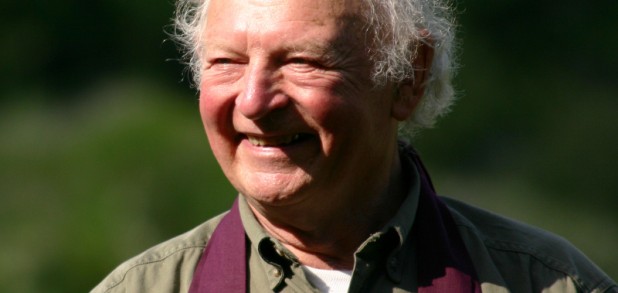
Seiho Morris is an ordained Rinzai priest who was working in an addiction treatment center when I interviewed him in 2018. At the time, he was preparing to lead a retreat in Cincinnati for people engaged in 12 Step programs. I assume the retreat was related to his work at the treatment center, but he tells me it isn’t.

“No, this is Zen. Because the way I intersect with people in my day-to-day Zen practice as a monk is it’s always meeting people where they’re at. And so one of the things I’m experimenting with is not necessarily focusing on practice in a particular place, a temple.

“When I became ordained, I had this vision of what my practice would look like. Which is you marry, you bury, hospice, that kind of thing. Like monks, priests, yogis are like part of a mental health system – physical, mental, emotional, spiritual system – to help individuals who come to them. So that’s how I envisioned it. But what emerged – and it happened after the Trump election – was Zen Buddhism and people of color. And that surprised me. And actually that’s been quite challenging for me because when you get into person of color issues, racism, social justice, equity, that’s the stuff people don’t want to do. It’s not the pretty side of Zen or Buddhism as a whole. There’s not very many African American practitioners out there, much less ordained.

“So it was really strange being confronted with this. I haven’t really had to deal with these issues so directly. You know? But what happened was there’s this thing in Seattle called Festival Sundiata, which is an African American cultural festival, but everyone can attend. It doesn’t matter if you’re a person of color, black, Hispanic, white, whatever. And I led two days of practice just around POC issues. And it was challenging because I hadn’t actively practiced with this issue in this way. ’Cause, honestly, I’m usually around people who are white or Asian. Because it’s Zen. So I don’t encounter a lot of African American people. I know that might sound strange, but it’s true. At any rate, I was sitting there and attempting to learn more about this deeply. And one of the things I recognized that had never occurred to me is that if you’re under a lot of pressure culturally, like the way American society is set up essentially it’s a white, western kind of culture, and you’re the minority of that culture, there’s a lot of pressure. And I was sitting in a group at one of these Person of Color events, and I listened to all these people, not just African Americans. There were indigenous tribal people, people who were Asian, and what I heard in their story is there’s a lot of mental health issues, anxieties, stress, depression – just profoundly so – that interferes with their inward stability, their inward harmony, and so I began practicing with people based on that. The first noble truth – which is dukkha – life, ego is the part of the wheel that’s out of balance. So working on concentration, presence, and mindfulness, and different Buddhist practices from the Eightfold Path, to help them to find an inward stability. When you’re like in a boat on the ocean how to essentially not capsize when the water’s choppy. And Zen is good for that. Buddhism is good for that. How to not run away from your outward circumstances, but how do you turn into it and meet the moment with equanimity, harmony, and a sense of presence?”

Those same qualities are what makes Zen practice valuable to people recovering from addiction. They were what brought Seiho to practice. He was 52 when I interviewed him, and he told me he’d been in recovery since he was 21.

“Does one ever come a point where one can say, ‘I’ve recovered’?” I ask.

“No, it’s very much like having diabetes. I’m not recovered. There’s always more healing, there’s always more integration to do.”

For Seiho, the 12-Steps are “the perfect Zen deal. Which is, we admit that we’re powerless over ego, self-rejecting thought, and, when we follow those thoughts, our life becomes unmanageable. Step two is – the way it’s actually worded is – ‘we came to believe that a power greater than ourselves could restore us to sanity.’ I’ve reframed that for myself as, ‘It’s the power of love, which is greater than ego, which allows us to be restored to – as Trungpa Rinpoche says – “basic sanity” or “basic soundness of mind.”’ And then step three, is to make a decision to turn our will or life over to God – I say ‘the care of love’ – as I understand it in this moment. So, for me, that is Zen.”

The Story of Zen: 395-400, 425

Zen Conversations: 135-37

Other Links:

https://www.youtube.com/channel/UC0A6P0eyTnf-yqrFC85YGGQ

https://www.elephantjournal.com/2010/08/zen-as-zen-jaye-seiho-morris/

https://www.mentorgarden.org/

James Ford

James Ford founded the Boundless Way Zen centers in New England and later established the Empty Moon Sangha in California. He was also, until his retirement shortly after I met him, a Unitarian minister. We first met in his office at the First Unitarian Church of Providence, Rhode Island – located on the corner of Benefit and Benevolent Streets – and discussed the various scandals that were challenging Zen’s credibility at the time. In a wistful tone, he remarked, “I fear there’s a real good chance that we’ll simply attenuate into . . . and—you know—we’ll simply be a historical blip.”

It was a remark that stayed with me for a long while.

Five years after he expressed that concern, he was slightly more optimistic than he had been. “There will be – without a doubt – the great die-off,” he tells me. “The sheer number of boomers interested in and active in Zen – you know, actually giving our lives to it – is coming to an end. And there was a period where it looked like it just wasn’t going to continue. But now what I believe is going to happen – my prediction – is there will be a major shrinkage. I suspect Zen twenty years from now will probably be half to a third the size that it currently is. But the difference is that these will be much better trained people.”

James points out that what draws new students to Zen is often very different from what had drawn their predecessors. “I think they’re most commonly looking for relaxation. I think the mindfulness/relaxation thing has been a tsunami which has changed many things and who comes. There’s always a little bit of a thread because of the koan, because we emphasize the koans, and koans are aligned with awakening experiences. So there’s the occasional person looking for awakening, but mostly people are not coming for that.”

“Do people still achieve awakening?” I ask.          

“Well, koan people do. But it is a more mature approach. I think there are fewer people who are in the kensho-factory kind of mode. You see that with some of the Sanbo Zen people, but even there it’s shifted. It’s a life-practice; it’s not about a momentary experience so much – although the momentary experiences are important – but they are more healthily contextualized, I think.”

“So, if they’re coming for mindfulness or relaxation, why come to a Zen Center rather than doing a Vipassana retreat or taking up yoga or Tai Chi? What is it that draws them to Zen?”

“I think that for many of them, they don’t realize there’s a difference. So it’s a little bait-and-switch. ‘Sure! We’ll help you with mindfulness.’ And others – an interesting sub-set – are people who’ve done mindfulness training and think it’s too attenuated . . .”

“Too shallow?”

“Well, I think . . . well, yeah, I think it often is shallow. It often is. I want to hesitate because I think the mindfulness community can lead to depth, but it usually doesn’t. I mean, if you’re looking for relaxation, you’ll find relaxation. And some people intuit that there’s more to be had, and they drift over to the Zen community, and the next thing they know they’re being encouraged to do retreats.”

And, at retreats, they’re introduced to koan work.

“So koans are a thing that distinguish some Zen teachers from other spiritual traditions,” I say. “What about Soto? Koans aren’t so central to that tradition. Is there anything that distinguishes Soto Zen from the other meditation offerings out there?”

“I think there will be many Soto people for whom there is very little distinction, except their saving grace (in some ways) is also a deep problem with their structure – our structure – with the emphasis on monastic training and the expectation of extensive meditation retreats. The ango, the ninety day retreat. There’s a pretty hard requirement that there be some experience of that in the normative training of a North American Soto priest.

“I think our generation, the boomers, were ‘seekers’ in a sense that the Gen-X were not. Although I have this kind of fascination with the Millennials, because they appear to have a seeker element as well, although it’s somewhat different, and they have different access. When you and I were looking for Zen teachers, we had Three Pillars of Zen and – what? – five teachers on the continent? I mean, it was really hard. And Japan, you know, wasn’t anything. But I know at least five Millennials who they graduated college and they went to Japan. You know, they spend three, four, five years, and come back ordained Soto Zen priests. In fact, it’s kind of ironic; the Millennials tend to be more conservative around their spiritual stuff – not socially but religiously – than we were. Of course, we were mitigated by a lot of drugs and that kind of thing. They are really true believers, and that can be rather graceful and beautiful and totally authentic.”

Cypress Trees in the Garden: 27, 138, 191-205, 208, 210, 211-13, 220, 221, 222, 224, 228-29, 230, 251, 271, 322-23, 324, 417, 418, 468

The Story of Zen: 338-39, 371-73, 379, 382, 389-90, 391, 392

Further Zen Conversations: 55-57; 92; 157.

Other links:

https://en.wikipedia.org/wiki/James_Ishmael_Ford

https://www.patheos.com/blogs/monkeymind/

Tenku Ruff

Tenku Ruff is concerned that Zen in the west is too often presented from the perspective of white boomer males. Currently she is board president of the Soto Zen Buddhist Association – the youngest person to ever hold that office – and is engaged, she tells me, in leading the association through “a generational shift.”

I am a white boomer male.

She wears traditional Buddhist robes and shaves her head. I ask her how important these choices are. “I think it’s important for us to be recognized as monks. I know that a lot of Westerners choose not to keep their head shaved, choose not to wear identifiable clothing, but I made a decision when I was a novice to dress like my teacher and not to let my personal choice come into it. I thought I would see what would happen when I was no longer a novice. What I found is it makes me identifiable as a source of help. People recognize that on the street. I do get questions. People approach me. I don’t mind. In the airport I sit next to somebody who needs to tell their story or ask questions. When people need help, they know to come to me, and that’s what I’m here for. On the flip side of that, I can’t turn it off. I see that as my vow, that we are in this for a lifetime. I don’t want to be a part-time monk. I can’t say, ‘Oh, I don’t feel like being a monk today. I’m going to wear lay clothes and a baseball cap.’ That can feel really tempting, and it’s certainly a relief when it happens, like when I’m exercising. I don’t wear robes then, and people don’t recognize me, which can feel freeing. But I don’t think being a monk is something we should turn off, because the vows that we take . . . they’re very heavy, and they require a lot of responsibility. Being visible as a monk holds us to those vows and that level of responsibility. It asks something more of us.”

“The foreignness of it, the fact that it’s Japanese, is that ever a problem?”

“It could be, but I don’t allow it to be. I have an open question policy that acknowledges, ‘Hey, I look different.’ And anyone is welcome to ask me things. If the question is inappropriate, I just tell them, ‘That’s an inappropriate question.’ But 99.9% of the questions do not come from a mean place. People want to connect. At the hospital, as a chaplain, we come from different faith traditions, but we’re trained to be available to the patients according to their spiritual practice, not ours. I learned that I have one chance for that first connection with them, and that’s the moment I walk through their door. Maybe that won’t be the only chance, but that’s the most valuable one. I’ve learned not to waste my time worrying about how I look but to walk through the door and immediately meet the Buddha in front of me. I’ve had very few people reject my help because of the way I look. That’s the same attitude I take out in the world. It’s our job as priests to be available, to not accept people’s projections, and to just genuinely connect.”

At her zendo, she maintains the Soto forms as she had been taught them but notes, “I’m probably not as strict as my teacher, especially with beginners. I try to adapt to the situation. In my zendo, we keep the forms, but when I go out and teach somewhere else, I’m a little lighter on them. When people come to my zendo, they know what to do. I try not to get rigid about it, and I don’t scold laypeople for not keeping the forms properly. I don’t believe in that.”

The forms, after all, are only useful if they help the practice. In the end, what’s important is that the people who come “feel at home in the world, and that they feel connection and love for the people and the world around them in a way that is genuine and real.”

Another concern is that Zen be socially relevant. So it was that on June 4 (2020) – in response to the deaths of George Floyd, Ahmaud Arbery, and others – Tenku and other SZBA board members issued a Call to Action on Systemic Racism, challenging all Soto centers “to dig deeply into our own roles in institutionalized and systemic racism and engage in the following actions:”

  • Center voices of color and their needs in our Zen communities. Without conscious centering, these voices and needs can get lost in our predominantly white-dominant spaces.
  • Reach out to your members of color and offer emotional, spiritual, and practical support. 
  • Commit to 49 days of meditation, ritual, and mourning for George Floyd and for all who suffer from systemic racism and other forms of injustice.
  • For these 49 days begin your services with the SZBA’s “Statement of Recognition and Repentance.” Include the statement in your monthly Full Moon Ceremony. 
  • Commit to amplifying the voices of Buddhists of Color, especially Black Buddhists, and their teachings. 
  • Speak directly about anti-racism with your Zen communities, through Dharma talks, workshops, and community discussions. Ask for feedback to make sure your message and actions strike the right note for people of color.
  • Engage your community members to make actionable plans for stepping up and speaking out, honoring Right Action and Right Speech. Create community accountability for these plans.
  • Listen deeply. Allow space, voice, and permission for anger and rage without judgment, guilt, or pressure to bypass these emotions. 
  • Reach out to Black clergy and Black social justice organizations in your community and offer your support. 
  • Have your communities commit to a series of brave, fierce conversations on race, privilege, and bias.
  • Vow to hold ourselves, and our leaders, accountable.

The Story of Zen: 401-05, 435

Other Links:

Soto Zen Buddhist Association

Seiso Paul Cooper

Seiso Paul Cooper took jukai – the ceremony in which one formally accepts the precepts and declares oneself a Buddhist – for the first time with Eido Shimano in the Rinzai tradition in the 1980s. He was unable, however, to form a personal relationship with Shimano as a teacher. “I’d just see him on retreats for those little interviews that Rinzai folks do. He’d tell me, ‘Show me your Mu,’ and then hit me with a stick and kick me out of the room.”

Eventually, Paul left Shimano’s sangha and found a home in the Soto tradition with Diane Martin in Illinois. “And I did my jukai again in the Soto tradition when I went through my priest ordination. It wasn’t required, but I felt a need to do it. It was more of an internal need.”

Now he is a practicing psychoanalyst as well as a Zen teacher in Narrowsburg, New York.

He tells me that he has not found the restrictions imposed on social interaction during the covid-19 pandemic particularly onerous. I admit that I hadn’t found the situation difficult either and wonder if people who had some experience with Zen were perhaps better prepared to deal with this situation than others might be.

“Well, I think of the three marks of existence,” he says. “Emptiness, no self – no permanently existing self – and impermanence. If we really have an experiential understanding of those factors it takes the edge off of things. I think what the current situation’s done to people is it’s created an enormous amount of uncertainty. But uncertainty has always been a fact of life, and the illusion of certainty just got stripped away. So in that regard, a Zen practitioner – or a Zen student who takes practice seriously – is gonna be better equipped to deal with the reality of uncertainty because we knew about it already. I think that much of the panic that we’re seeing is related to people who were not prepared in that way.”

Some centers have conducted zazen sessions online, which Paul admits he find a little silly.

“I think it’s useful for people to connect, and the way I’ve approached it is I say, ‘Hey, if you want to sit on your own before we meet, fine. And, in fact, I’ll ring a bell at the beginning of our meeting and we can absorb ourselves in the sound of the bell for – what does it take? – ten or fifteen seconds.’ And then I’ll give a talk. I’m preparing a series of talks on Dogen’s, Expounding a Dream Within a Dream, which I think will be very useful because people talk about how surreal everything seems now.”

I ask him how he explains Zen to people.

“Well, my sister asked me that question, and I said, ‘It’s about being yourself.’ The bottom line is we need to be clear about what our reality is so that we can operate with kindness towards others.”

Traditionally it is said that Zen helps develop both compassion and wisdom or prajna.

“I think prajna is natural. It’s our intuitive way of being in the world, but it gets pushed away through an over-reliance on the intellect. So practice helps bring that perception into the foreground and pull the intellectual discursive thinking into the background, or at least get them into an equal place. But my gripe with seeking prajna or kensho or anything like that – and you’ve probably heard this before from Soto people – but it’s about seeking a state of mind, and my understanding of Dogen’s teachings is that Zen’s about actions and relationships not about a static state of mind.

“I think we live in one huge Ginsbergian ‘Howl.’  And there’s no period at the end of the sentence, nowhere to catch your breath really. So I think my role as a Zen teacher is like I’m like the pitstop guy in the Indianapolis 500.”

He describes some of the activities members of his sangha are engaged with: working with seniors, the homeless, even with victims of sexual trafficking. “So, I don’t do any of these. I’m just there to support them.”

“Like the pit crew at the 500? In what way?”

“Well, I help them change their tires – you know – their psychic tires. Help them stay motivated when they’re feeling burnt out, disgusted, and frustrated. Get them to see how the teaching and practice could help them to face problems, turn the problems into challenges.”

“You said Zen is about getting to know yourself so you can be kinder to others. How does knowing oneself help one to be kinder to others?”

“Because you don’t have to operate out of the three poisons” – greed, hatred, and delusion – “if you’re onto them. If you can see through yourself, you see we have choices. Another way to say it is it gives us more emotional elbowroom to make healthier choices.”

Further Zen Conversations: 43-44; 61-62; 75; 81-85; 118.

Other links:

Two Rivers Zen Community

Hozan Alan Senauke

In the midst of the Vietnam War, students at Columbia protested the university’s involvement in the war effort by occupying the administration building. The police intervened with force. 132 students, four faculty members as well as twelve police officers were injured, and over 700 protesters were arrested. Alan Senauke – Vice Abbot of the Berkeley Zen Center at the time I interviewed him – was one of them.

It was, Senauke tells me, a traumatic experience, and he and a group of friends felt a need to get out of New York, so they went to San Francisco that summer. “Everything was happening in California.”

The situation in California, however, wasn’t much better. “We arrived in the middle of Peoples’ Park, and it was rather disturbing because we had moved into what very much seemed a police state. There were curfews. Cops in pairs and quartets were parading down the streets. It wasn’t exactly an escape. But that was the time when we also began to sit zazen.”

Their apartment wasn’t far from the Berkeley Center, and several of them began to sit there, although at the time Zen didn’t yet seem as important to him as social action. “It seemed like there was a tension between doing Zen practice and the kind of socio-political demands that I felt as a young person. They didn’t fit together to my understanding.”

Senauke and his friends returned to New York and completed their degrees. He is a musician and played with several bands, moving back and forth between New York and the west coast for a while.  Finally, in 1980 he settled in Berkeley again. But it was a difficult personal time. “It became clear to me that there was a limit to where my music was going to go and that I was close to it, and that there was something I was supposed to do in life, and I didn’t know what it was. So I got involved in psychotherapy and in the course of one of the sessions, I asked my psychotherapist, ‘What am I doing on the planet? What is my life supposed to be?’ And she said, ‘That’s really a great question, but it’s not a psychotherapy question. It’s a spiritual question, and you should maybe think about looking for a spiritual response.’”

He tried to return to the Berkeley Zen Center. “But it wasn’t where I had left it. It had moved, but I found the number in the phone book. I called them up, and somebody answered the phone, and I said I had had some experience in zazen instruction years ago, and I’m thinking about taking up the practice again, ‘What do you suggest I do?’ And the person on the other side of the phone said, ‘You should find a blank wall and sit down and stare at it.’ And I thought, ‘Wow. That’s really a peculiar response to somebody cold-calling on the phone. That’s the place for me!’”

It proved to be. Two years later – in 1985 – he took up permanent residence at the center, and thirteen years later he was named one of the Dharma heirs of Sojun Mel Weitsman who founded the center. Senauke also resolved the tensions he’d originally imagined existing between Zen and social action. He was the Executive Director of the Buddhist Peace Fellowship for ten years and continues to be active in the fellowship and in a wide variety of other social justice causes.

“What I mean by ‘awakened,’” he tells me, “is ‘awakened activity,’ action that is premised on our common humanity. Thereby, some fundamental kindness. To respect that kindness doesn’t always mean that everything’s nice and gentle, but it means seeing the all-pervasive nature of Buddha Nature and really challenging yourself when you’re not seeing it, which certainly comes up a lot in our social world. Nonetheless, even if I’m not seeing it in relation to this person or this situation, how do I want to act? How do I want to act in the face of this? That – to me – is enlightened activity. I tend to look at people – or evaluate, if you will – on the basis of what they do. What they say and what they do. Because I really don’t have any way of evaluating what type of meditative experience they might have had. And I don’t think that those experiences are necessarily transformative. It’s not that they’re unimportant, but they have to be able to effect behavior, your relational capacities. That’s the standard I use.”

Shortly after we spoke, the global pandemic brought about significant changes in the way all of us related to both our environment and one another. Alan sent me a copy of a poem which expressed the situation in Buddhist terminology:

The Four Marks of Existence
 
I suffer because I want things
To be different from how they are.
I want to go to the gym
And I have to do sit-ups in my office.
I long for tacos and beans at Picante
And I settle for lukewarm takeout.
 
Impermanence is all I can count on.
The world we knew
Has turned around in a handful of days.
My god, will it always be like this?
Yes, and it always has been this way.
Blossoms fall and weeds grow.
 
The ache of social-distancing
Is the suffering of no-self—
I am pulled away from all of you, who are my self:
The woman behind me on the checkout line;
The prisoner I visit in a narrow steel cage;
The fiddler whose tune is naked without accompaniment.
 
Take a breath and enjoy it.
Things change and we change too
Universal truths flourish even in pandemic
Resisting truth is suffering
Accepting truth is nirvana,
Which does and does not make life any easier.
  

hOZAN ALAN SENAUKE
21 mARCH 2020
bERKELEY, cALIFORNIA

Hozan Alan Senauke died on December 22, 2024, at the age of 77.

Zen Conversations: 23-28; 73-74; 143-44

Rebecca Li

Rebecca Li teaches within the North American Chan tradition. “Zen” is the Japanese pronunciation of the Chinese character denoting “Chan” – . The practice first arose in China, and the classic koan collections are all Chinese. Rebecca is a second-generation Dharma heir of Chan Master Sheng Yen, whose Dharma Drum Foundation now has affiliate centers in fourteen countries.

Rebecca is a retreat leader. The goal, she tells me, is not only to teach people how to meditate but how to “use the method of meditation to work with themselves and to use the practice in their daily life in all kinds of activities. It’s not just a technique, but it is also an adjustment of attitude, mentality, and being aware of where they are.”

An important point for beginners is “unlearning some of the misconceptions they might have developed around what meditation is about. The most common one is they believe meditation involves eliminating everything from the mind. They believe they’re supposed to cultivate a blank mind.”

It is an error that comes about because people lack “adequate guidance. Because a lot of people now do it on apps and stuff, they bring their existing ideas about things to make sense of it. So that’s another layer of what I talk about, that we are bound to go about meditation the wrong way in the beginning because we take our usual habits, our usual mode of operation – which is all about causing suffering – into the meditation. We use meditation to cause more suffering in the beginning. So that’s where we start, and then we learn about how we are causing ourselves suffering by looking at how we approach our meditation.”

She tells me that the current Covid-19 crisis provides “a wonderful opportunity to practice Chan.”

“Right now there’s a lot of suffering. So people are basically taken out of their routine. They are unable to do what they usually get to do that makes them happy or less miserable. Everybody creates some kind of forms of comfort, really various forms of you can call them distractions, you can call them supports in different ways, like being able to visit their loved ones, spend time with them, or do things they enjoy, like go to movies, go to restaurants. With all these different things they fill their lives and know their world. So as a Chan practitioner, this is a good opportunity to see how our world and how we feel really is conditioned by being able to do these things. And we see that these things that we’ve been doing are not there permanently; they themselves are conditioned by many causes and conditions. This provides a good opportunity to get an understanding of the most important teaching in Buddhism: That every moment of our existence – of our world – is the coming together of many causes and conditions. And when people see that their world fell apart, then the truth of the matter is revealed that our world is constantly changing and evolving, and we just created this idea that there’s this world that’s mine, that I’ve created, and we work very, very hard to protect it and make it a certain way, and that’s our idea of what’s going on. We don’t see that it is constantly changing because it’s conditioned. But right now, when it’s disrupted in such a spectacular way, then we’re more able to see what’s been happening that’s less visible for us.

“Another thing is to use the practice of Chan meditation to be with suffering. So one of the talks I gave recently was on how to practice to suffer better. So usually all these distractions or the different things we do in our daily life that now many of us cannot do are put together to avoid suffering, to run away from suffering, but the practice of the Bodhisattva – the practice of cultivating compassion – is not to run away from suffering but to be with the suffering. And not to turn away from the great suffering of the world. So first we notice our entrenched habits of wanting to run away from it, to be numb, and notice how that creates more suffering. And to learn to use the practice of allowing that just to be the way it is and see that suffering, too, is conditioned. And the suffering is actually the result of our resisting what’s emerging in the present moment.

“A lot of people in the first couple of weeks of the lock-down said how much they hate it. My college students, that’s the thing they say; they hate it, it’s so boring, and they want their life back. And the people doing that are resisting the present situation, but maybe they are also feeling, ‘I should not feel like this’ when actually that’s the brain’s natural response to acute danger, to a situation you realize can present a lot of danger. So actually it means your brain is working. It’s pumping out stress hormones to make you more alert. So what we interpret as something being wrong is actually perfectly normal. So not resisting all these abrupt changes is the way to suffer better.

“Of course there will be grief also. You’re grieving some lost time with family and things that you were looking forward to. People could not have weddings or couldn’t spend last days with their loved ones in the hospital. There’s real genuine grief. And so to suffer better not to create more suffering. Because very often when we create more suffering for ourselves, we also create more suffering for other people. That is not compassionate. And so the cultivation of clear awareness of our experience of suffering is critically important for us to not generate more suffering.”

Zen Conversations: 55-57; 116-17; 126  

Other Links:

About

Dharma Drum Retreat Center

Zengetsu Myōkyō Judith McLean

Enpuku-ji is a small Rinzai temple on rue Saint-Dominique in Montreal. It is entered through a small side-garden. The only signage is a notice on the gate post bearing the single word “Zen,” an arrow pointing right, and the street address.

The abbess, Myokyo Judith McLean walks up the street just as I pull into the drive. She unlocks a rear door, and we enter into a single long, narrow, room. The back end is a small kitchen. A table with three wooden chairs is against the wall; this is where we chat. The rest of the room is taken up by the zendo, which currently has two rows of five zafus facing one another.

More than forty years ago, she accompanied a boyfriend to California to attend a sesshin directed by Joshu Sasaki. The boyfriend needed to return to Canada on family business. She stayed. In fact, she remained in the United States illegally for ten years, training under Sasaki Roshi. When he eventually asked her where she wanted her Zen Center to be located, she said Montreal—because it seemed the most interesting place in Canada.

People learn about the temple through word of mouth.  

“When I introduce people to the practice sometimes it’s a knock on the door, but most of the time it’s organized so that people are together in a group, and I begin by asking them why they’ve come. So that kind of flushes out all the possible reasons they might have or all the possible ways in which they think about Zen. And then I speak to each of those things. And I basically say that Zen is a practice; it’s not a lifestyle; it’s not a way of thinking. You don’t need to believe anything when you start Zen practice. It’s a practice. And everyone does the same practice. And through the practice of zazen, peoples’ minds become clearer, and we begin to dissolve the mind that separates us from everything else in this world.

“I think most people come to Zen because they want to make themselves better. So they have a goal in mind. And that goal is usually about becoming a different person, becoming a better person. So I’m pretty clear about slashing that idea to bits.”

The practice, as she describes it, is very simple. “So following the breath but eventually that kind of tightly following the breath disappears. So just very basic zazen, and that’s actually what I’ve done up to this point. Maybe it is shikan taza after a while. You know, just sort of sit.”

She does warn new people, “Anything you’ve read may or may not be something that’s going to happen to you. But mostly what’s going to happen to you is that you’re going to be very uncomfortable sitting in a cross-legged posture, and you’re going to really start thinking a lot about your notions of how life should be and what you should be like and how you are. And so you’ll begin to question all that in the context of quiet sitting in this upright posture that has the potential for making you very present and very ‘in the moment.’ So an experience you’re not having usually. We’re usually way, way far away in our minds.

“I talk about seed thoughts: notions, ideas, feelings, physical sensations, or emotions. As we become conscious of one of these, we decide, first of all, whether we like it or not, or maybe it’s neutral. If we don’t like it, we stuff it back, way down somewhere back and get rid of it. If we like it or it’s just neutral, we just add another thought and that carries on into a story. I reassure everyone that there’s no problem with that. Our minds are creative. The creative process is what our minds are for. The problem is we think that that story is our life. And so in zazen you begin to learn that that’s not correct, that our story is not our life. The effort is to observe what comes up and then to simply let it go away before you even begin to discriminate or make a judgment about that thought, to be so clearly present that you can actually observe what comes up in the mind and then let it go by.

“So people can visualize that or understand the words, but then when they go to do it, it’s absolutely, absolutely difficult. And then, immediately, they’re not present. Right? And so they know that, and I know that, and I say, ‘Then you need to keep going back to the present.’ You need to physically keep placing yourself here. Most of them probably won’t have the . . . the. . . What do you call it? . . . The verve, the desire . . . the tenacity to continue. But, you know, we need to be sparked by something to be tenacious. So I say, ‘Probably most of you won’t have it.’ That’s okay, too. You know?”

Cypress Trees in the Garden: 39-45, 47, 48, 49, 51, 54, 56, 66, 67, 108, 286.

The Story of Zen: 289-90, 326

Zen Conversations: 48; 74-75

Jan Chozen Bays

The Great Vow Monastery is located in Clatskanie, Oregon, a self-proclaimed Christian township of 1700 persons. It is the residential practice center for the Zen Community of Oregon and is under the leadership of Jan Chozen Bays and her husband, Hogen.

Great Vow is dedicated to Jizo Bodhisattva, the protector of children, which seems appropriate for a monastery headed by a woman who is a pediatrician as well as a Zen teacher. There must be hundreds of Jizo statues throughout the building and in an extensive Jizo Garden, where people have left statues in commemoration of lost, sick, or dead children. They are decorated with scarves and knitted hats; some even have booties.

The monks I met during my visit in 2013 ranged in age from “just turned 20” to a man in his late 50s. The majority are very young. The days start at 4:50 and end after 9:00. There are two two-hour sessions of zazen. The rest of the day is taken up with work assignments and study. But study can take unusual forms. One young woman described a formal orioki breakfast at which a dead bird had been passed around for students to examine. Chozen had found it on the property and later dissected it to determine what caused its death.

She explains that many of the young people who come to the monastery had dropped out of university and were still very ignorant about the nature of the world in which they lived. An introduction to basic biology is provided but also training in fundamental life-skills like sewing and cooking.

And then there is marimba playing and square dancing. This area of Oregon is one where marimbas are made, and, after Chozen learned how to play, she started going to the local schools to teach the children. It was one way to help to overcome the initial community suspicions about a Buddhist center. Square dancing was something Chozen (who was 67 when I met her) and her husband had taken up to help keep in shape. Now all Great Vow monks are required to go square dancing at least once. One shy young  monk admits that acquiring social skills is also a valuable part of what he is learning here.

It is a serious practice center, but the atmosphere is warm and welcoming. Chozen smiles easily and is relaxed with her students. She admits she has a mother’s temperament, seeking to ensure that the family all gets along. The Oregon Community does not have an “Ethics Committee” as has been established at many centers, but it does have a “Harmony Committee.”

Besides her work as a teacher and abbot, Chozen still maintains a small medical practice (mostly teaching), consults in child abuse cases, and has become recognized widely as a proponent of mindful eating.

“Is mindful eating a spiritual practice?” I ask.

“Definitely. I mean, spiritual practice is about intimacy, if nothing else. We’re born into separation, and that’s the source of our suffering. This idea of self and other is the source of our suffering, and all of these things that we do—drinking, gambling, pornography—all of the addictive things in our life are based on wanting to get back to Oneness. So we can teach people to be one with what they’re eating. That’s the most intimate thing, where you take another being into your body literally, literally intermingle with your body. So we talk about sex as the ultimate in intimacy, but actually eating is the most intimate thing we do, three, four, five, six times a day. So to be conscious and present to it is a Dharma gate into the experience of Oneness.

“There’s an exercise called ‘Look Deeply into Your Food.’ So if you look into the life of a raisin and play it backwards. I ask people to look at how many peoples’ or beings’ life-energy flowed toward you in this raisin which is in your hand. And I say, ‘Invite those people to the table. Thank them by eating mindfully.’ So here you are at the interface. There’s all of that, and then, within us, there are more living organisms than there are our own cells. So there are others inside us, more DNA from other beings than there are our own cells. So, I help people understand, ‘You’re feeding a universe of beings—not an apartment building, not a city—a universe of beings, 10-to-the-16th beings are being fed by what you eat. So recognize that you’re nourishing them, that you’re giving them a gift.’ So it’s a spiritual practice to help people understand where they are in this continuum of life. Some of them get it, some of them don’t. But for most people, it’s like a big, ‘Ah ha!’”

Cypress Trees in the Garden: 111, 117-18, 122, 227, 239, 271-88, 289, 293, 296, 297, 298, 299, 365, 437, 476

The Story of Zen: 271-72, 302, 309, 320, 327, 343-49, 351, 353, 356, 424

Other links:

https://en.wikipedia.org/wiki/Jan_Chozen_Bays

Zen Community of Oregon

David Weinstein

Koan study is central to the work being carried out at John Tarrant’s Pacific Zen Institute, but when David Weinstein, a supervising teacher at the Institute, first encountered koans, he resisted them.

His Buddhist practice began in Nepal, where – while taking a break from teaching English abroad – he visited the Kopan Monastery outside of Kathmandu for a meditation “course.” “I was surprised that the course was actually a meditation retreat. Where I thought I was going to hear lectures about meditation in a kind of academic way, it was wake up at four in the morning and start meditating and continue meditating until late at night.”

The routine included full-length prostrations. “I didn’t want to do them, but no one said I had to. Just pay attention to what was going on in my experience sitting there not doing them. Eventually one of the Lamas said, ‘Try it out as an experiment. See what happens.’ And I found that it was yet another upaya, another skillful-means, that helped me to just be with my mind. Offering incense, lighting candles, having an altar, all of that arranging of the contingencies of reinforcement around me made lots of sense. I’d been educated as a Skinnerian Behaviorist, and meditation just seemed like, ‘Oh, this is how we take control of the contingencies around us that are impinging on our mind and basically creating unskillful mind habits. And we can change those habits just like we change the behavior of animals running through a maze.’ I asked one of the Lamas if he knew what brainwashing was. And he said, ‘Oh, yes. I read, you know.’ And I said, ‘Well, I feel like I’m brainwashing myself.’ And he said, ‘Very good. Carry on.’”

He stayed at the monastery for three months. “And I loved it. I felt I gained some tools that I could use in life in a very real way.”

Eventually his travels brought him to Hawaii.

“I had the address of Robert Aitken’s Koko An Zendo so I thought I’d check it out. It was a residence near the university, and I went to the front door, which seemed like the thing to do. Knocked on the front door. No one answered, but I looked in through the window, and I could see that the living room was set up like a meditation hall. So I figured you just went in. I opened the front door, which was unlocked, and smashed into John Tarrant, who was walking down the stairs at the time not expecting the door to open, because no one ever opened that door. You went in through the kitchen. That’s how I met John Tarrant.”

David spent three years at Koko An although he didn’t feel he connected very well with Aitken. Then he had an opportunity to go to Japan and study with Aitken’s teacher, Yamada Koun Roshi.

“I’d met him once in Hawaii when he came to give a talk. A group of us went to dinner together before his talk, went to a Chinese restaurant, and sat around a big round table so we could see each other and talk. The waitress came and took our order, and after she took our order there was a little pause, and she said, ‘To drink?’ And there was a kind of a deafening silence, because normally we would all have had a beer or something even though we were going to meditate. But nobody ordered a beer, and the roshi finally broke the silence and said, ‘Well, aren’t you going to have something to drink?’ One of the members of the group said, ‘Well, Roshi, we’re going to meditate after this; we probably shouldn’t drink, should we?’ And he laughed and said, ‘Our minds are always under the influence of one thing or another. Drink, if you want to.’ And everybody sighed and ordered beer, and the waitress came to him. And he looked up at her and said, ‘Tea.’”

At the time, David was uncomfortable with the idea of koan meditation. “But I loved seated meditation. So I’m in Kamakura with Yamada, and he listened to me tell him that I didn’t do koans that I only did shikan taza. I was prepared for him to tell me to leave because what I was basically saying was, ‘I don’t do the practice you do here.’ And he looked at me, and he said, ‘Shikan taza is a very difficult practice. Not many people attain realization with shikan taza. Maybe the last person to attain realization with shikan taza was . . . mmm . . . Dogen [1200-53 CE]. But, I want you to attain realization with shikan taza. Please practice diligently.’ Then he asked me this silly question; he said, ‘I have this question to ask you. But I don’t want you to think about it. You know, just forget it.’ And he asked me how to stop the sound of the distant temple bell which I thought was weird. I didn’t know it was a koan.

“It’s hard for me to say I took up the koan. It feels more like I dropped it down or swallowed it or something. Because he gave me the question, then he told me not to think about it, and I wasn’t really tempted to think about it. It didn’t make sense to me. I thought it was weird, and I just said, ‘Okay.’ But my practice changed. It became less rigid. And maybe that was something to do with the koan. It certainly seemed to allow me to be open when he asked me about the question, as he did from time to time. I didn’t feel on the spot or anxious about responding. It was like, ‘No, I have nothing to respond.’ He’d say, ‘Oh? Okay.’”

In this gentle manner, David was introduced to koan work.

Further Zen Conversations: 32-36; 51; 75; 76-80; 134; 152-53.