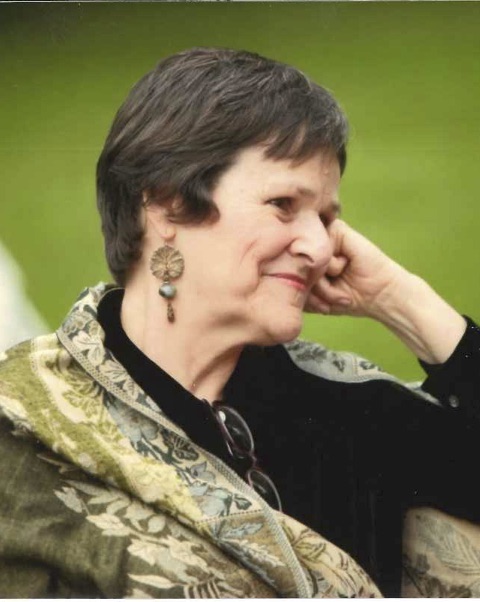
Sally Metcalf

This week – the week following Remembrance Day – is recognized as YMCA Peace Week in Canada

In 1987 – when I had been with the Y for only two years – the International Committee of the Fredericton YM-YWCA was given responsibility for developing the resources for that year’s national Peace Week activities. I and a handful of volunteers (Carole Cronkhite, May Whalen, and Lucie El Khoury) met with Bob Vokey of YMCA Canada to discuss the matter. Before the meeting formally began, Bob gave us an overview of the growing lack of interest in international development matters not only within the Y but among volunteers in other NGOs as well. One of the factors causing this was that celebrities and political figures who allowed their names to be associated with certain causes were lauded for their endorsements while often the volunteers who did most of the on-the-ground work labored anonymously and with little recognition of their efforts.

I suggested that the Y should institute an award to recognize individuals like these, people who – without any special resources – could be held up as exemplars of the types of things all of us could do if we chose. Celebrities and political figures, specifically, would not be eligible. While their activities were valuable, because they had access to special resources they could not be effective models of the contributions ordinary people were capable of making.

The YMCA Peace Medal continues to be awarded by associations across Canada and occasionally in other countries as well. It was, doubtless, the most significant contribution I made in my 27-year career with the Y.

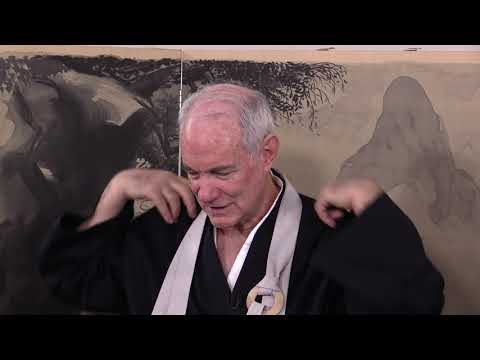
When Genjo Marinello Roshi of Chobo-ji in Seattle learned that I was working on a book about the impact of Zen on practitioners, he advised me to interview Sally Metcalf of his sangha. Sally is a sensei, but she is quick to point out that the title is largely honorific. She tells me that Osho – as she calls Genjo – awards the title as a way of “acknowledging certain people in this sangha who are not ordained but who have done forty sesshin and are active helping the community. It’s his way of acknowledging people who’ve been doing the forms for a while so that other people can rely on them. As you know, there’s a lot of form in Rinzai; so that’s quite helpful.”

“Do you have specific responsibilities in the community?” I ask.

“No. Basically we just wear brown rakusus, and we’re just somebody people can watch who know what they’re doing – ’cause usually we do things correctly – and somebody people can talk to. So that’s what Osho does, if you’re not on ordination track – which has different hoops you have to jump through – it’s his way of acknowledging senior people.”

When I ask her what contributions she makes to the community, her response is modest.

“I’ve got kind of a small life,” she tells me. “I don’t mean that in a deprecatory way. But I’m not like the Dalai Lama who can reach millions of people. Which is pretty incredible. I live this small life. I don’t get around much. I have a job with a small non-profit. I shop at my grocery stores, and I have my much-loved sangha. I wash the laundry, and I wipe the dishes, and I clean the toilets, and I greet people at the door, and so this is my life. And I don’t touch millions of people. I don’t even touch thousands of people. But, that being said, way, way, way, way back, when I first took a Course in Miracles in the Unity Church, there was a prayer that began, ‘I am here only to be truly helpful.’ And that really struck me. ‘I am here only to be truly helpful.’ That just went out to every cell in my body.”

When she began Zen practice, she encountered the same concept in the Bodhisattva Vows. “In the shorthand form we use, it’s to ‘care for all people, everywhere, always.’” She adds that she told Genjo Osho that when Zen practice no longer helped her realize that goal, she would quit it and look elsewhere. “And Osho said, ‘Good. That’s the way it should be.’

“It sounds kind of funny, but I used to row this boat out on Puget Sound. And when you’re rowing slowly, you leave a wake. So I and my dog were out in Eagle Harbor, and we’re going along, and there’s our wake. But what kind of wake am I leaving? When I’m in a coffee shop, I don’t want to just say, ‘Give me my latte’ and get out.” Instead, she wants the encounter with the barista to become personal. So that they treat one another with respect. “We appreciate each other. And I’m trying to do that in my sangha. You know, when a member comes in, I ask them how they are. ‘How are the difficulties you were telling me about your job?’ So, this is my practice. Everywhere. Always. With everyone. This is my practice. Am I helping people on the scale of the Dalai Lama? No, I don’t think so. But am I leaving a good wake? I think so.”

Sally is precisely the kind of person I had in mind when I came up with the concept of the YMCA Peace Medallion.

Further Zen Conversations: 104-05.

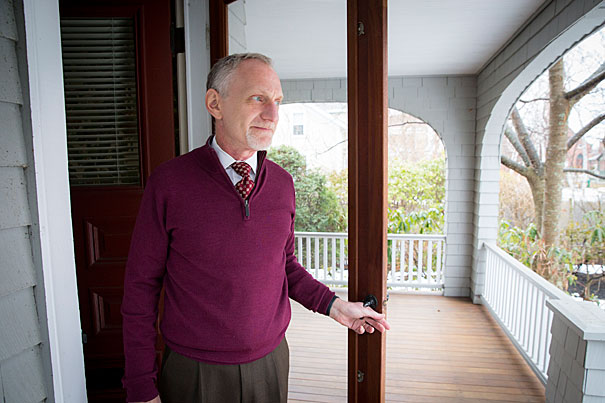
Robert Waldinger

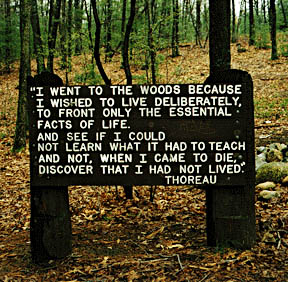
Like Mike Fieleke, Bob Waldinger is the resident teacher of a zendo in Newton, the Henry David Thoreau Sangha (“affectionately known as ‘Hank’”).

He came to Zen relatively late in life. He was in his 50s. “I had been interested in meditation since I was in my 30s because someone I did my psychological training with casually said one day that she and her partner had spent a weekend doing a silent retreat. And I said, ‘You mean, you didn’t say anything?’ I couldn’t imagine spending time with my girl friend being quiet. So I think she recommended Wherever You Go, There You Are, the Jon Kabat-Zinn book, and I read it and was really drawn to basic Buddhist philosophy. The idea of impermanence resonated so much because since I was a teenager at least, reading some of the poets like Yeats, I realized that I was worried about all this stuff that didn’t matter, and that all these ideas about what we were supposed to achieve and what people were supposed to accomplish had this kind of absurdity about it because it was all going to pass away. And that really struck me deeply as an adolescent, but I didn’t have any way to talk about it, and nobody else was seeming to think that way. So I did all these very achievement-oriented things, but all the while kept thinking, ‘There’s a part of this that’s completely made up and absurd.’ Traditional religion hadn’t worked for me. I was raised Jewish, and – like – I would be in services with my family and wanted to stop the action and go up front and say, ‘Okay, raise your hands. How many of you really believe this stuff?’ Of course I could never do that. So there were these ways in which I was hungry for a spiritual practice and a way to make sense of the world.”

He dabbled in various meditation traditions for a while before meeting James Ford. “My son’s friend in middle school had a coming-of-age ceremony at the Unitarian Church where James was the minister. And I sat next to the friend’s mom, and she knew I’d been interested in meditation; she pointed to James and said, ‘You know, he’s a Zen master.’ So I emailed him and asked if I could come see him, and he said, ‘Sure.’ So one weekday morning I went to his office, and it was just a total mess, and he came in with his shirt-buttons wrong and – you know – was just James. And was very down to Earth. And I thought, ‘Oh, I could probably learn from this guy.’ One of the first things James said to me was, ‘We do scruffy Zen.’”

Bob accepted an invitation to try sitting with the group that James was running at his church. “And I went up to him afterwards, and I said, ‘You know, I was really uncomfortable with all the bowing and the chanting.’ And, of course, being James, he said, ‘Good!’ And that was sort of a dare to come back, so I came back, and . . .” He shrugs. “I drank the Kool-Aid.”

“As long as you recognized it’s Kool-Aid,” I say.

“Well, that was actually one of the most helpful things. The Zen I know doesn’t present itself as anything but Kool-Aid that eventually you’ll put down.”

“If someone had asked you – perhaps one of your colleagues who was wondering if you were going off the deep end . . .” He nods his head, grinning broadly. “Oh!” I say. That’s already happened has it?”

“Yeah, so I worked at Harvard Medical School, which is one of the most conservative institutions on the planet, and some of my friends were quite interested. Actually some of my psychoanalyst friends were really interested, because psychoanalysis is about watching the mind as well in a different way, with different frames. So they were interested. Other people were kind of polite. You know there’s that, ‘Oh?’ And my wife was worried that it was a cult perhaps. And I said to her, ‘If I never went back to this Monday night sitting group, no one would even call, no one would know. That’s not what it is.’”

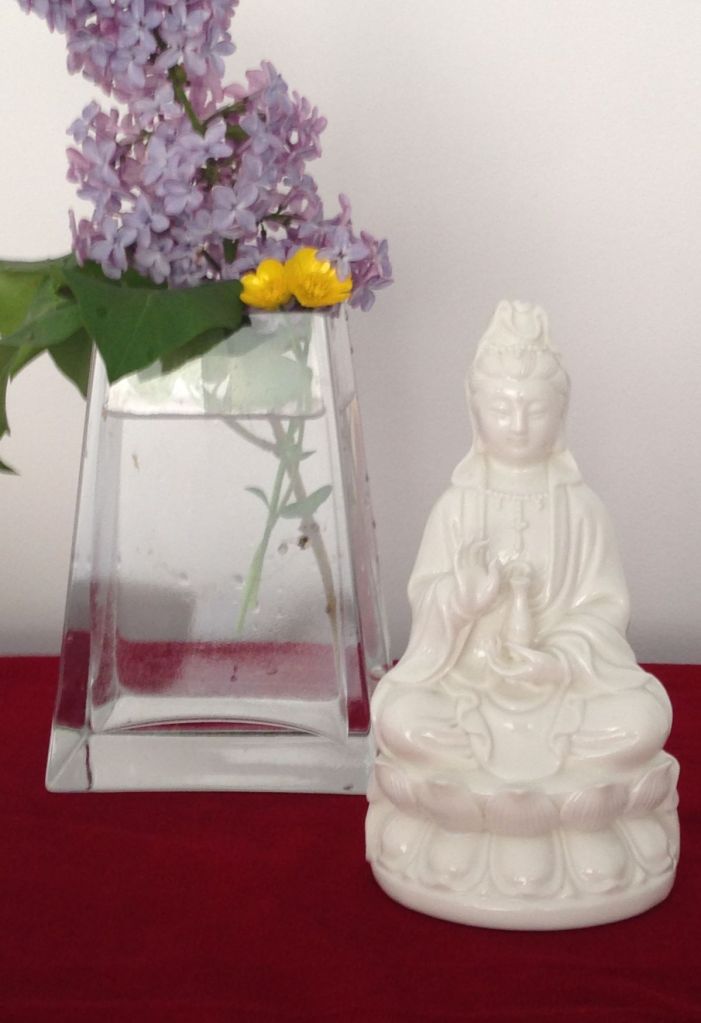
His university office is now decorated with Buddha figures, photos of his teachers, and a picture of Guanyin. “So now I’m really out.” And when he returns after taking time off work to attend sesshin, his colleagues will inquire how it went. “They’ll ask, ‘Was it really relaxing?’ And I say, ‘No, it was intense. Good. But not relaxing.’ I tell them it’s not about relaxation. It’s not about self-improvement. It’s about a radical understanding of the self in the world and what it means to be alive. That’s the elevator speech.

“The structure of Zen works for me, these frequent interviews with teachers are important because I tend to get discouraged. Doubt is a big part of my experience. So I would sit there and think, ‘What the hell am I doing? I might just as well be phoning this meditation in.’ And so it’s really helpful to have another human being working to remind me what this is. So I found that structure helpful. And when Zen talks about ‘already Buddha’ – you know? – what the hell is that? And that seemed to me to be really important and much more . . . um . . . both surprising and real than what I understand from some of my friends in other traditions. Well, they eventually deconstruct all these levels. But most of us never get to that point. Most people don’t get far enough along the path to deconstruct the various levels. What I like about Zen is it keeps knocking you back down and saying, ‘We’re going to deconstruct it moment to moment.’”

The Story of Zen: 389-95, 425

Zen Conversations: 9; 21; 43-44; 58; 87

Other links:

Henry David Thoreau Sangha

Boundless Way Zen

Henry Shukman

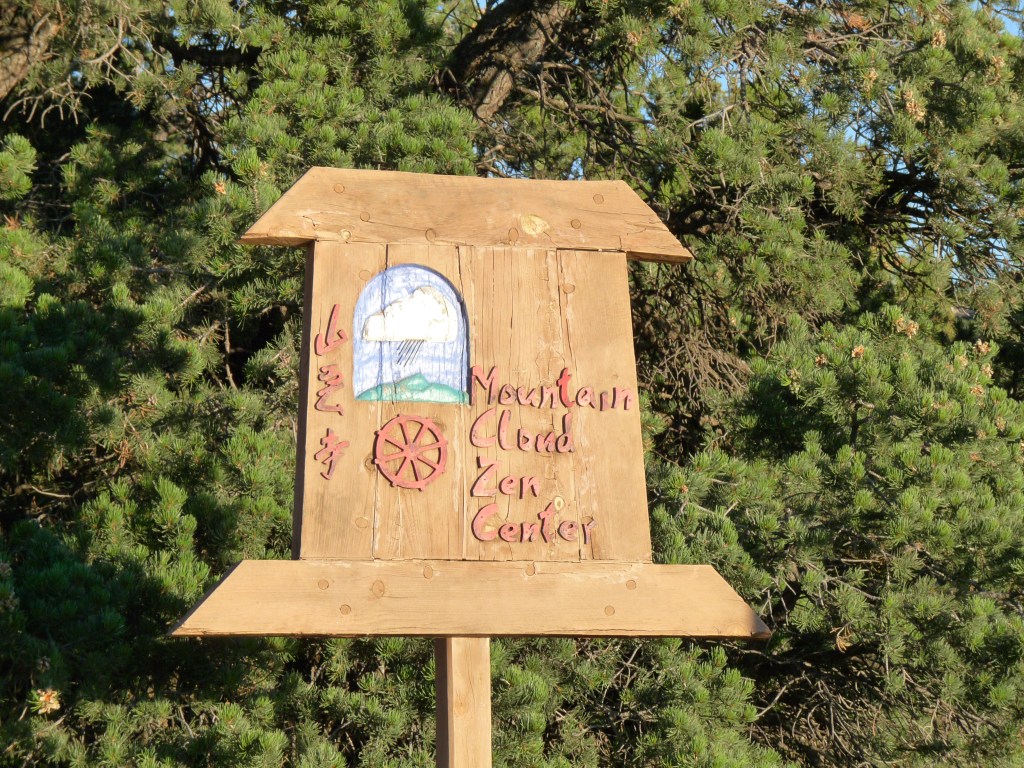
Santa Fe architecture, even for private homes, largely adheres to a handful of local styles—Pueblo, Mission, and what they refer to as “Territorial.” The Mountain Cloud Zen Center on the Old Santa Fe Trail is in Pueblo style: thick adobe walls, flat roof, softly rounded corners, and projecting viga rafters. It was built by Philip Kapleau and a handful of volunteers – including Mitra Bishop – in the mid-1980s. Kapleau had not enjoyed the winters in Rochester and hoped the New Mexico climate would be more congenial. The building is small but appealing with a zendo, just inside the front door, which seats twenty-two on a raised tan.  

As it happened, conditions in Rochester required Kapleau to return there, and he didn’t get back to Santa Fe. A small group of practitioners, however, remained and maintained the zendo and their practice without a teacher for next twenty-eight years. The membership diminished over time, until there were only three people left. One was a man named Will Brennan who learned of a student of Albuquerque Zen teacher, Joan Rieck, who had been recently authorized to teach in the Sanbo Zen tradition.

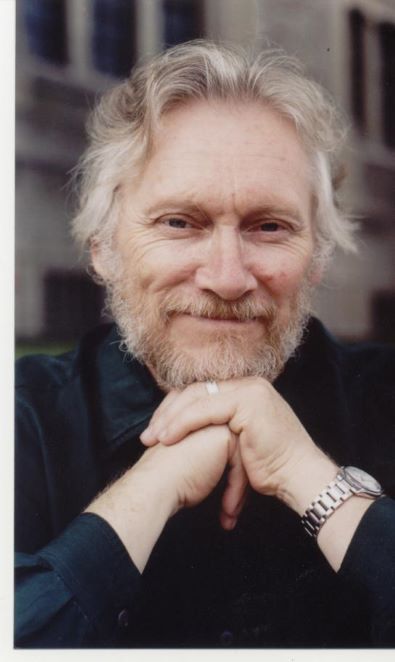
Henry Shukman was born and raised in Oxford, England. He is lean and flexible with an easy and good-humored manner. When I show him the first photo I take of him, he declares it much too serious, and we do another. When I look at the Mountain Cloud website sometime later, I see that second photo alongside his bio.

When he was eighteen years old, his father thought a period of manual labor would be good for his son and arranged for him and a friend to work on a ranch in Argentina. After a year on the farm, “when we’d got enough money, and we’d done our time, we put on our backpacks and hitchhiked from the end of the drive—literally, the end of the farm drive—and went north into Bolivia and traveled right across the Altiplano.” The trip became the basis of his first book, Sons of the Moon.

One day he was watching the sunlight on the ocean off the coast of Ecuador when he had what he called a “run of the mill experience of oneness” which left him feeling “flooded with love, and that love seemed to be everywhere.” There is still some excitement in his voice as he describes the event. His narrative reminds me of a story Melissa Blacker had told me in Worcester, and my own experience in 1971 sitting on a metal bench outside a cottage called Birkenbrae in Fredericton.

But while he was certain this experience was the answer to everything, he did not know what to do with it. He uses the word “suffering” to describe the next ten years, during which he alternately tried to forget about the experience or sought to address it without knowing how to.

He came to New Mexico for the first time in order to research a book on D. H. Lawrence. “Which is the only place he ever owned a home. And while I was here, I very quickly met some very nice people, one of whom was a Zen student, actually a student of Katagiri’s. And one evening we were sitting on our porch downtown, and she was reading to me a passage of Dogen, who I’d never heard of ’til that day. And it was totally bewildering, and I couldn’t forget it.” Although the passage didn’t immediately make sense to him, Shukman realized it was based in the same kind of understanding he had come to on the seaside in Ecuador, and he felt compelled to investigate Zen.

For the next eight years or so, he sat with a variety of teachers both in America and England but wasn’t drawn to accept any of them as his personal teacher until he met John Gaynor. As he tells the story, he muses for a moment on what it is that draws one to a particular teacher. In his case, he says, it was that Gaynor’s Zen was free of the Japanese trappings common elsewhere. Henry knew from his original experience that whatever this was, it was not something limited to a particular culture or people.

Gaynor introduced him to Joan Rieck, with whom he worked after he returned to New Mexico in order to teach at the Institute of American Indian Arts in Santa Fe. He later studied with the abbot of the Sanbo Kyodan school, Ryoun Yamada Roshi – the son of Yamada Koun – in Japan. When he was finally authorized to take his own students, he was recruited by Brennan to come to the Mountain Cloud Center.

When I visited in 2013, Mountain Cloud was only a year old, but was already showing signs of vigor. Five years later, I had an opportunity to chat with Henry again and asked about the Center’s growth.

“Well, of course, one never knows how stable and durable it might be, and the assumption might be ‘neither.’ But if you look at numbers, our sangha – our membership – has been growing quite significantly or quite undeniably over the last five/six years. When I first arrived at Mountain Cloud, we were two, three, four, five people. You know, seven people was a big night. And that was sitting once a week, and now we have a sit every weekday, and we have several other events each week as well. And on a major weekday night, it can be well over forty people. That’s not at all uncommon.”

That was, of course, prior to the pandemic.

Under other circumstances, Mountain Cloud is a center I believe I would feel at home in. The stripped-down characteristics of Sanbo Zen – which derives from the Harada-Yasutani lineage – makes sense to me. It is the style of Zen to which I’d been introduced by Albert Low, who was also in that lineage. The focus is on lay practice; most teachers are lay; the paraphernalia of priestcraft is downplayed. As Henry put it in a recent correspondence, “Sanbo Zen is rather narrow in its focus, which is basically on the awakening process through koan training.”

What more does there need to be?

Cypress Trees in the Garden: 145-154, 173, 174, 213, 377, 473

Zen Conversations: 40-41; 60-63; 85-86; 108-09

Other Links:

Mountain Cloud Zen Center

Wikipedia entry

Grover Genro Gauntt

Genro Gauntt is one of the co-founders of the Zen Peacemakers movement which grew out of Bernie Glassman’s street retreats where, instead of sitting on cushions in a zendo, participants lived for a week on the streets with the homeless.

I ask Genro how that is Zen practice.

“Zen isn’t about learning a Japanese form. It isn’t about striving for enlightenment or gaining anything or knowing anything. So the street retreat was a beautiful way to have people throw off all of their identities as fast as they could, as much as they could, to be in old clothes, look unpresentable, have no money, no ID, and dive into the streets in whatever city we are and have no idea of how it’s going to work out. And it works really fast. To be in a street retreat or a Zen Peacemaker Bearing Witness retreat is like doing years of practice in a couple of days. Because it’s not familiar with the context you find yourself in, your mind can’t process it. It can’t identify with it. That makes us be awake and aware and mindful, because there’s a lot to be mindful of when you’re living on the streets. Eventually what happens is the mind’s not really processing it as data and information; it’s something that needs to be understood. What happens is a deep sort of freeing and happiness arise for the great majority – the great, great majority – and these are people who have never done anything like this, never dreamed of doing anything like this, but for some reason were drawn to do it. And they’re terrified coming in; there’s so much to worry about. How am I gonna find a bathroom? What are we gonna eat? You know? What if I need this or that? We beg for everything, and they’ve never begged before of course. And after maybe the second day of a four-day retreat, they go, ‘Oh, my God! I’ve never been happier in my life, and I really wish this retreat would last a few more days.’ Because they have a freedom they’ve never known before, from themselves, from their own routines, and in their minds about who they are, about what life is. It’s beautiful. So what’s the relation to Zen? Buddha is not-knowing; it’s coming from this space of openness and non-judgement and non-criticism and just wide-open experience. That’s what happens.”

Shortly after starting the street retreats, Glassman was invited to an interfaith peace conference held at Auschwitz. “And one day he walked into the camp and was just overwhelmed by the presence of what he described as souls and spiritual energy. He said, ‘This is an incredible place for people to experience.’ He didn’t know what would happen, but he wanted to bring people there to experience it. And he knew the souls there wanted prayers and presence. That particular concept was confirmed later by Rabbi Zalman Schachter, who told him, ‘Go! It wants you. It needs you.’ That was ’94. The first Auschwitz retreat was ’96.

“It was very powerful. I was recently divorced and was in between the transition of my regular daily life and working fulltime with Bernie. And I was depressed. I was in bad shape. Who knows for what reasons. Right? So I went there with 150 others. And I knew what Bernie was talking about when he said the spiritual atmosphere was dense. It was palpable. There are places on Earth where you walk and you go, ‘My God! Something happened here!’ And it for sure happened there. You could feel it. Days on end we’re doing meditation on the tracks between the two main crematoriums and listening to testimonials from people at night, from survivors and from Polish people whose families were directly involved one way or another, from children of Nazis from Germany, from Israeli Jews who found the courage to go there somehow and were children of survivors. It was huge.” As an unanticipated consequence of taking part in the retreat, Genro overcame his depression.

The retreats became an annual event. “For the next several years, it was heavily attended and over-subscribed. We had to turn people away.

“Then in ’98, it became obvious that we had world religions involved in these retreats – Buddhists, Christians, Jews, Muslims – but no indigenous spiritualities. So I said, ‘Let’s invite somebody.’ I called an elder at the Pine Ridge Reservation, Birgil Kills Straight, and he said ‘I would love to do that, but I can’t. I’ve got other obligations. But I’m gonna send somebody.’ So he sent a Lakota from Pine Ridge named Tuffy Sierra. Never been out of the country. Didn’t have a passport. Got his passport the day before he left. So Tuffy asked Birgil Kills Straight, ‘What am I supposed to do there?’ Birgil Kills Straight said, ‘Pray.’ So that’s what he did.

“And a couple of months later I thought, ‘For somebody to be with us and to do something with us, that’s a huge offering that they made. I’ve got to do something with them. So I called up Birgil Kills Straight, he said, ‘Great. Come do the ride.’ He meant the Big Foot Ride, which is an annual two-week horseback ride, several hundred miles from the Standing Rock reservation – where Sitting Bull was – along the path travelled by Big Foot and his band who were seeking refuge with Red Cloud on the Pine Ridge reservation, and, of course, it ended up with the Wounded Knee massacre. So I went and joined the end of it. Tuffy Sierra was there, and I spent a few days with him. Spent a few days with Birgil and his family. Met medicine people. Incredible stories.”

Out of that encounter Genro came to work with the Lakota in organizing an annual retreat in the sacred Black Hills to bear witness to the genocide of Native Americans.

Zen Conversations: Pp. 29-31; 115-16; 140-42.

Other Links:

Zen Peacemakers

https://en.wikipedia.org/wiki/Bernie_Glassman

From My Correspondence with Albert Low

I recently came upon a file of email exchanges I had with Albert Low when I first began formal Zen practice, during an era prior to the advent of Skype or Zoom. These are some extracts from that correspondence:

“Our practice is to follow the breath. While thoughts may present a great obstacle to doing this, nevertheless the practice is not to empty the mind so that it is possible. We follow in the midst of the distractions. In any case, the real difficulty is not the thoughts but our inability to let be, to let go of the illusion of being the controller, the doer. The great difficulty is that we cannot decide to let go.”

§

As one sits, one will become aware of an “underlying tension, and this tension if allowed to be will become a restlessness, a dissatisfaction, a concern, anxiety, and so on. One must sit in the middle of this confusion.”

Likewise, as one makes an effort to be “present” during the day, one will again be aware of this tension, which is the effort of one’s thoughts to preserve the sense of “I.”

§

“It is following the breath that is the true spiritual exercise, not following the breath. Generally speaking we cannot follow because we are so anxious to be in control. I might have said at the same time that ‘Thy will be done’ is the basis of all spiritual work.”

§

“Let me remind you that the difficulty with counting and following the breath is that we have great difficulty letting go. We want to control the situation, do something, do it for a reason, and so on. This keeps the practice in the ‘conscious’ surface mind and under the illusory control of it.”

§

“Easy or hard, it makes no difference and please do not judge your practice. While you judge your practice you look upon it as something that ‘I’ should do ‘well.’ It is doing the practice that matters, not the result of the practice. I know that this may seem difficult to understand. We are so results oriented. By doing the practice, the deeper parts of the mind are awakened. That you cannot know this is happening makes no difference. It is like a lake. The surface of the lake is always changing but the depths as a rule remain the same. With practice, however, the lake is made progressively deeper. Yet still the surface of the lake is now ruffled, now more calm, now raging, now quiet. The surface is what we are aware of. The depths determine your character; the surface your personality.”

§

Much of our activity is dedicated to nurturing, developing, protecting and enhancing one’s personality, which is made up of the “memories, judgments, prejudices, ideas, thoughts, and reactions that converge upon a core or center and make up what I call ‘me.’”

Elsewhere, Albert noted that the term used by the Buddha in the First Noble Truth – dukkha – is  the word used to describe an axle which is off-center. That results in there being two centers – the center of the wheel and the center of the axel; the result, of course, is a vehicle which wobbles.

That, he suggests, is how it is with our inner life. “It is as though we are trying to establish, in addition to the natural center of gravity in a situation, a personal pivot or an axle around which the world must revolve. All our struggle and effort, all our relationships with others, are dedicated, at one level or another, to establishing, maintaining, perpetuating this pivot, this center of gravity around which the world must revolve. This means, in turn, that our relationships with others are always in the form of cajoling, pushing, persuading, seducing, forcing, manipulating or whatever, to encourage them to revolve around our center.”

That center is our personality, and, as Albert frequently asserted, “Zen has nothing of value for the personality.”

So: “Make no demands on the practice. As long as we expect something from the practice, we are expecting it from the point of view of that central false pole.”

§

“A koan isn’t something you’ve been given to solve. It has to be your own question. And the question becomes the answer. I’m sorry that sounds so zenny, but there you are.”

Koun Franz

The first time I met Koun Franz, a friend and I had arranged to visit his center in Halifax. We arrived early and found the door locked. Then we saw a young man with a shaved head, wearing Japanese samugi, approaching with a wide smile. “Wouldn’t it be great if I wasn’t the guy?” he asked us.

I’ve come to know Koun slightly over the years since; he has been a guest in my house a couple of times. I like him; I admire him. I have no doubt that he’s the genuine article, and yet his concept of Zen is so different from mine that at times is seems they have little in common except the word.

Or perhaps it’s just a matter of vocabulary.

Kensho – awakening – has been fundamental to my understanding of Zen, my personal experience in Zen, and to the teaching of Albert Low, with whom I practised from 2003 until his death in 2016. Albert was blunt: “ . . . the word Buddha means awakened. To be awakened is to be awakened in, and therefore to, true nature. Zen teachers who teach anything less than this are cheating their students.” Just to be clear, what Albert meant when he said “awakening to true nature” is the attainment of “enlightenment.”

“At this point in my life,” Koun tells me without apology, “I really don’t have any interest in enlightenment. That was such a driving force for so long, but to me, now, it doesn’t hold up. The people I’ve met, by and large, who claim to have had some sort of enlightenment experience are no more mature – by any measure – than anyone else that I know.”

That’s something I recognize from personal experience as well. Over the years, I have met several people whose “enlightenment experiences” have been acknowledged as genuine and yet who remain miserably unhappy – and frequently not very nice – people. The fact is that kensho is not necessarily transformative.

So if Zen practice isn’t about kensho – awakening – what is it about?

“What I’m really interested in,” Koun tells me, “is maturity. I think Zen offers a vehicle by which people can grow up in a profound way. I tell this story a lot: When I was in my senior year in high school, I was about to graduate, I went to a Hallmark store in my town, and they had the graduation gifts – you know they always had the shelf for the season – and one was this little framed thing, and it said something to the effect of, ‘Being an adult means taking responsibility for your actions.’ And for me – I was 17 or something – that was a tiny ‘falling away of body and mind.’ I looked at it, and it was absolutely true. And I knew it, and I didn’t want to hear it. I wished I hadn’t seen the sign. But I knew that it was right. And I think what the Zen path does is it offers – through the model of the Bodhisattva – a way to take responsibility for your actions that goes beyond what we usually think that is into a much, much broader vision of adulthood. That’s inspiring to me.”

“What, then,” I ask, “is kensho?”

“It’s an experience. It’s like . . . The first thing I wanted to say is that it’s like a burp of the mind. I mean, it’s a good experience. No one would say it’s not. I think it’s positive when people have those experiences. It’s not a negative. It’s not like, ‘Go put it back.’ But it is as temporary as anything. It doesn’t mean anything. It means you had a good experience. It’s like a drug experience. If someone takes mushrooms, and it inspires them to look more deeply into their mind, to think in a more universal way about something, great. If they take mushrooms and the first thing they do is want to go back and take more mushrooms, they blew it as far as I’m concerned. They missed the opportunity. For me, Zen practice is about a kind of honesty and about a kind of maturity. And that doesn’t require some kind of mind-blowing episode.”

I agree that “mind-blowing episodes” aren’t necessary. In fact, I often find myself agreeing with Koun.

“There’s an important model in my mind of some person who lives in the woods and has no exposure to any of this and discovers all of it. It has to be possible for that person to do that in order for Buddhism to be true, as far as I’m concerned. And if there’s any element of it that that person couldn’t discover, then that is not central to Buddhism. That’s an invention of Buddhism that somehow holds Buddhism up in some way, becomes scaffolding for certain teachings. Right? But to me, that’s a critical part of getting to what’s at the center.”

“Which is?” I ask.

“The basics. Can that person in the woods arrive at impermanence, not-self, and dukkha as kind of unassailable fundamental principles of experience? If they can, that’s a verification, to me, of those things and a verification – to me – of what Buddhism is.”

And that, too, is my personal experience, that one can come to a recognition of these principles without having been led to them by someone else or by the tradition we call Buddhism. But then, I might also have called the attainment of that recognition “kensho.”

The Story of Zen: 382-89, 394, 405, 424, 425, 428, 435.

Zen Conversations: Pp. 44-45; 52-54; 87-88; 103-05; 134; 168-69.

Other Links:

Thousand Harbours Zen

https://www.lionsroar.com/author/koun-franz/

Mike Fieleke

Mike Fieleke is the resident teacher at the Morning Star Zen Sangha in Newton, Massachusetts.

“I was raised Protestant,” he tells me, “and that actually planted the seeds of practice, because I felt as a child – I bet many children do – a kind of sacred presence that was a mystery to me that I gave the name ‘God.’ I felt a sense of connectedness and vastness at a very young age. And when I was an adolescent, my parents were divorced, and I became very lonely and lost in my own religious practice. I think in rejecting my parents – out of anger – I also rejected their religious teachings and traditions and felt quite lost. So that’s part of how Zen made its way into my life. I was looking for something different.”

“And your students at Morning Star, what brings them to your door? What are they looking for?”

“I would say often what they’re looking for is stress reduction. That’s probably one of the most common things that brings people through the door. They just want to feel better, because they’re suffering, and, often, they feel quite alone.”

The question then is, why Zen rather than – for example – yoga or a course in mindfulness?

“I guess it’s what do we do different,” Mike suggests. “The best way for me to put it is the lack of agenda. The idea that we aren’t there primarily as a self-improvement project, and the goal is not to be different from what we are, but to see what we are. And there is a faith that that – in and of itself – is liberating. I took a Mindfulness-Based Stressed Reduction course many years ago, and I think there’s good in these practices. You can really bring people into the moment through a kind of connectedness to their body and their breath and an awareness of what’s unfolding. And I think the notion that it makes you feel better in some way, that it will relieve your stress, is sometimes true and great marketing, and it gets a lot of people in the door. In Zen, while there is a grain of truth that stress can fall away, still I worry that there’s a little bit of a disservice in that goal too. I think that for me what has been most liberating about Zen and what I think it offers is that, of course, we can make changes in our lives and in our thoughts and behaviors, but that we don’t necessarily have to. We can simply see, and everything unfolds, everything goes its own way, and we have the capacity to have faith in this unfolding. And that whatever is alive in the given moment is the Dharma, is exactly what we’re seeking. So I guess it’s that quality of being met in the instant that I love so much about Zen.”

“Do people still seek awakening?”

“In our tradition we do acknowledge the importance of these moments but don’t necessarily set them up as a goal. We’re very careful about acknowledging it in any personal way. Like, ‘Oh! That’s kensho!’ We’re very careful about that because it can set somebody up for years of problems, where they’re trying to aim for the same thing again and get attached to some previous experience and trapped in it. And that, obviously, becomes a problem to them. A hindrance. Or it’s no longer liberating.”

“The early teachers in America often gave the impression that kensho was essential to Zen practice,” I point out. “It was argued that the only suitable response to Mu, for example, was kensho. Anything short of kensho failed to respond to it adequately.”

“I think we have a certain level of expectation around, particularly, the source of Mu. I would say we are looking for a kensho experience in that. But I guess I would say that we allow for a different intensity of that experience, that we aren’t looking for ‘great kensho,’ per se. It might, for some, be like just a subtle release, maybe a tear in the eye, maybe some laughter. But not necessarily like” – deepening his voice – “great awakening.  And I think that – to go back to what people are looking for when they come in – I think you’re right, fewer people come into practice thinking, ‘I’m going to get enlightenment.’ More people are coming in, like I said, saying, ‘I just want to feel less stressed.’ And so the way that we meet people maybe has shifted based on peoples’ hopes.

“I wonder if part of our de-emphasizing awakening – although it is the heart of the matter – aligns a bit with the Soto tradition. And I think that’s really woven into the fabric of who we are, to acknowledge that it’s already true, that there’s nothing to attain, and we just need to realize that. But I think another aspect of it might be that we are meeting people where they are when they come through the door. And if we suddenly say, ‘I know you want less stress, but what you really need is . . .’” He laughs. “Then they’ll just turn and run.

“You know, it’s interesting; teachers can have different views of kensho. I’ve known some who really de-emphasize it and talk about it as makyo [delusion]. There are others who think, ‘No, this is actually compass-setting. This actually matters. This is an important part of our practice.’ For me, it depends. Kensho can become makyo when conceptualized, but the experience in and of itself is not. It’s true waking up to the way things are.”

The Story of Zen: 389-95, 425-26

Zen Conversations: 58-60.

Other Links:

Morning Star Zen Sangha

Dang Nghiem [Huynh Thi Ngoc Huong]

At Blue Cliff Monastery outside Pine Bush, NY, Sister Dang Nghiem tells me people call her Sister D. She is Vietnamese by birth The Vietnamese language is tonal, and there is an element of that tonality in the way in which she speaks English.

“My mother passed away by the time I was twelve, and my grandmother raised me. Grandma told me, ‘When you grow up, first, you should raise your brother. Have him raised well and educated. Then you get a high education yourself. Then you should become a nun, and that will be the best way you can serve society.’ My grandmother planted these seeds in me since I was seven or eight years old. I came to the US; I finished high school; I went to college in Tucson, Arizona; then I went to medical school. I finished medical school; I went to residency. I was able to realize my Grandmother’s first two requests, raising my brother into a wonderful young man and obtaining an education for myself, but becoming a nun was still a strange and haunting thought to me. I went to Thay’s retreat when I was a resident.” “Thay” is the term his disciples use to refer to Thich Nhat Hanh. “Even though I was raised as a Buddhist, I never really practiced it. My grandmother was a very deep practitioner, but I just went along with her. In the US, as a teenager, I never went to the temple because I lived with foster parents who were Christian. In college and in medical school, I had no time for a spiritual life.

“While I was doing residency, one of the doctors said to me, ‘You know, doctor, there is a Zen Master who’s Vietnamese, and he’s giving retreats all over the US. Maybe you’d like to attend one of his retreats.’”

Meditation Hall at Blue Cliff

She attended a retreat in Santa Barbara, and at it, she tells me, “I realized what we call the Four Noble Truths—the Buddha’s essential teaching—about this deep suffering in myself and in my family. I mean, I always knew I suffered, but to have suffering as a noble teaching was something enlightening to me. What also moved me was that all these years, growing up, I thought of myself as a victim, but, in the retreat, I realized that I was the one perpetuating the suffering. I had become a perpetrator. I was no longer a victim but a perpetrator. Then I also learned that there’s a way out. I saw that I could participate actively in the making of the suffering but also in the transformation of the suffering. This realization moved me so deeply. It also changed my views about religion, about Buddhism, because I had thought of religion as something like a superstition. However, in that retreat, I saw it was really a deep practice.”

Back at her residency program, she saw “even more clearly how my suffering continued because of the daily pressure and stress as well as because of my ingrained habit energies. I had so little time to care for myself. Therefore, when difficulties of the past arose, I couldn’t really take care of them. This awareness made me even more depressed than before. Then it happened that my partner died in an accident.”

He had gone swimming in the ocean and didn’t return. His body was never recovered. “His death woke me up. He lived a spiritual life, and, when he passed away, I didn’t regret it for him, because he had lived a deeply joyful and meaningful life. His death woke me up because even though I had all the conditions of happiness, I was unhappy and even desperate at times. If not by the stress and pressure of the present moment, I would be suffering from nightmares about the past. I realized that if I were to die suddenly like him, I would not have peace in my heart. I could not have said that I had lived my life peacefully. I could not have said that I had truly lived my life so that I could just die then like my partner. This realization made me want to change the direction of my life. I wanted to live in such a way that if I were to die anytime in the midst of the day, it would be okay. That was why I left medicine and went to Plum Village.” Plum Village is the community in France where Thich Nhat Hanh resides.

 I ask if it met her expectations.

“To tell you the truth, I thought of Plum Village as only our teacher. I did not realize there was a whole community.” She pauses a moment before continuing. “I had so much suffering, that I didn’t have so many expectations about what it would be like. I just accepted it as it was, more or less, easily. What I needed was a teacher and a practice to help me take care of myself. It turned out that the sangha was there, and the sangha was crucial. My sisters were there, my brothers were there, our teacher was there, and they gave me that embracing environment like a cradle for me to care for my pain and suffering. So I discovered the sangha when I went to Plum Village.”

The Plum Village Tradition has more lay than monastic members, which—to Sister D’s mind—is the way it should be. The laity, she stresses, is essential. “We have to have lay people. In the past and even now in some countries, lay peoples’ main responsibility is to support the monastics. In our tradition, it is the opposite. Lay people’s main responsibility is to practice. We transmit the teaching to lay people, and we only ask that they practice in their daily life. We don’t even encourage them to convert to being Buddhists. Our teacher often says, ‘If you practice mindfulness, you will find the jewel in your own tradition, and you will be able to help revive your own tradition.’”

Cypress Trees in the Garden: 439-63

Zen Conversations: 92-95

Other Links:

https://rickmdaniel.blogspot.com/2014/05/523-blue-cliff-monastery.html         

Blue Cliff Monastery

Sandra González

Driving along a county road in an agricultural region of New York State, I miss the side road to the Springwater Center on my first pass, come to a dead end, turn around, and watch more closely on the way back. Even when I pull onto the gravel road indicated, I’m not entirely sure I’m in the right place until I see a bench set up by a stream. In the reception area at the main building there is a notice that a black bear has been seen in the vicinity of the parking lot. Visitors are warned not to stare at it but to turn and go the other way.

The Springwater Center for Meditative Inquiry had been established by Toni Packer in 1981 after she left the Rochester Zen Center. Philip Kapleau had identified her as his successor, but, after a period of overseeing the Center during one of his absences, she decided she could no longer practice as a Buddhist. The question she found herself facing was whether or not the type of work that took place within the Zen tradition could be done without all the trappings—without identifying it as Buddhist or even calling it meditation.

There is a very informal atmosphere here. There is no religious imagery of any type, although the “sitting room” looks pretty much like a zendo without an altar. The rules are all optional—save for two: Everyone takes on a one hour work period each day, and when silence in called for, people are silent. Other than that, even during retreats, one may choose to sit or not as one wishes.  “You can go for a walk if you want,” Sandra González tells me. Then adds, “But they don’t. They follow the schedule.”

Sandra is from Nicaragua and had studied with Eido Shimano and Joshu Sasaki before learning about Toni Packer in a book and coming here in 1988.

Lunch is prepared by long-time Zen practitioner, Andy Anderson (and is probably the best vegetarian lasagna I’ve ever had). Afterwards, Sandra leads a discussion circle which reminds me of a cross between a Quaker meeting and a group therapy session. People sit in silence for a while and then someone brings up a topic which people are free to respond to in any way they wish. The topic that comes up is “authority”—the authority that teachers have or are given.

Sandra is a “retreat leader” here—she is identified as such in the print material at the Center—but she is hesitant to claim to be an authority or even a teacher. When I push her, she reluctantly agrees to the term “facilitator.”

She had gone to her first face-to-face meeting with Toni Packer with some anxiety. The format was much what she was used to in Zen, seated on a cushion before the “teacher,” and she began by explaining that her work until then had been largely with koans. Toni asked her why she had come to Springwater, and Sandra said, “I don’t know.” “Then that,” Toni told her, “is your koan.” To sit and to wonder—no other practice. That is meditative inquiry.

I try to get a sense of what exactly the term means and how it differs from traditional Zen practice. “Okay,” I say, “let’s pretend I’m someone who’s heard about this place, and I come knocking on the door. I’ve never done any kind of spiritual practice before, but I think I’d like to give it a try. So I come to the door. Who would be the first person who’d speak to me?”

“Reception.”

“Okay,” I say, laughing. “So I come to reception and say, ‘Hi! I wanna try this out. Your sign says “meditative inquiry.” I want to learn how to inquire meditatively.’ What’s the receptionist going to say?”

“‘So you’re interested in this work?’” Then in a deeper voice, gently making fun of me, “‘Yes.’ So there are some people here if you want to meet, if you are interested.’”

“And who are those people? Who would I be directed to?”

“Me or whoever is here.”

“So the receptionist directs me to you, and I tell you that I’ve read a little bit about meditation, maybe even tried it out. But basically I feel there’s something missing in my life, and I’d like to see if there’s something more I can get by coming here.”

“Okay. So, let’s look at this desire that you can get something from here. So we begin to explore. Let’s look at the intention, motivation that brought you here. And that, factually, is meditative inquiry. Let’s explore right now all these motivations that brought you here. What ideas are there? And let’s put it all open. Let’s air the whole thing out. So it’s an inviting.”

“So it comes back to what Toni Packer said to you, ‘This is your koan.’”

“That’s it,” she says, almost in a whisper. “And can be through questioning if we have motives within. You know? Kind of, ‘I came sometime with a confused mind and there is this . . .’ You felt it here during the discussion. You or anybody can ask a question that can bring some person to see that the mind is going zzzzoom! So—you know—this is a space for everything. There can be some wisdom that’s not coming from you but coming from just the seeing what is going on.”

Cypress Trees in the Garden: pp. 385-408

Other links:

Springwater Center

https://rickmdaniel.blogspot.com/2013/06/the-springwater-center-for-meditative.html