Debra Seido Martin

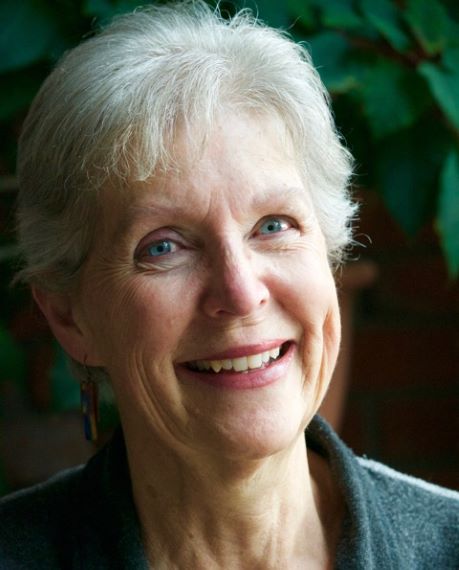
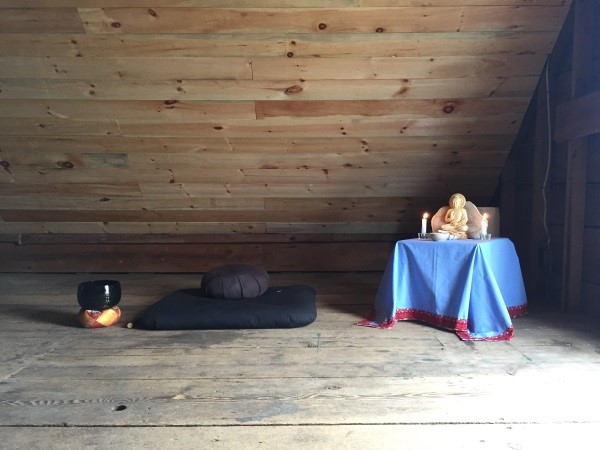
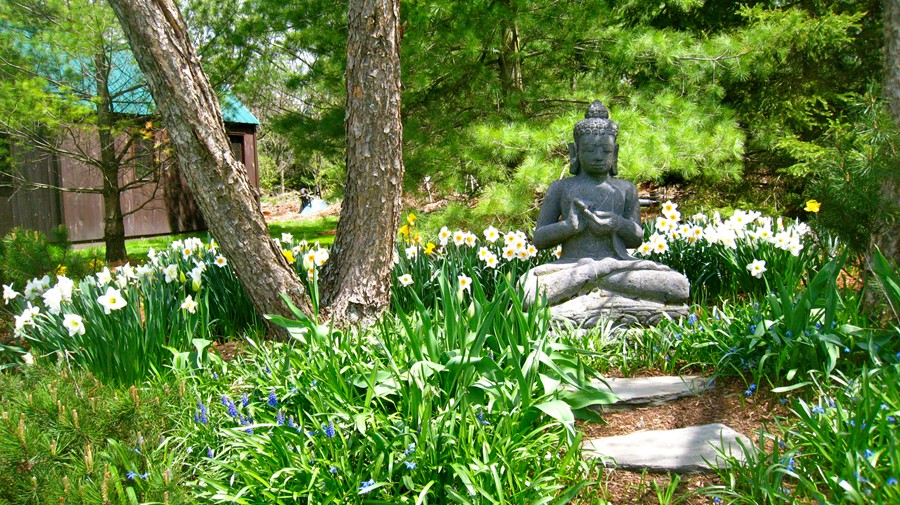
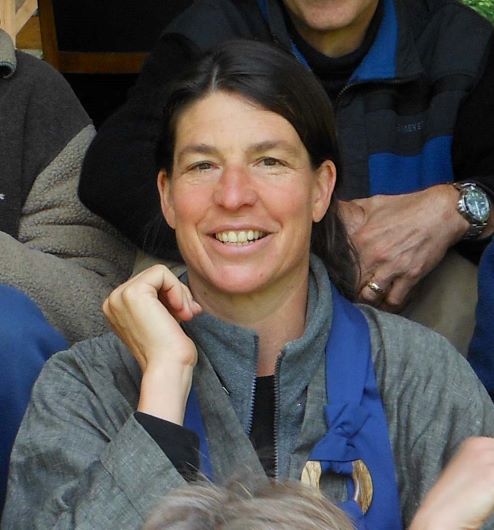
Debra Seido Martin and her husband, Bill Booth, operate Hortan Road Organics in Oregon, a working farm and apprenticeship program for people seeking to learn organic techniques. Seido is also a Dharma heir of the late Kyogen Carlson in Jiyu Kennett’s lineage, and the farm is the location of her Zen West Empty Field zendo.

“Which came first?” I ask. “The farming or the Zen?”

“Farming,” she says.

She had grown up in Massachusetts under difficult circumstances and fled to the west coast where she eventually found work on a farm in the Santa Cruz area. “I just felt found. I fell in love with it. Just bending over picking tomatoes, being out in the natural world, getting out of my head. I began to experience a whole other way of being, a full-bodied way of being. My anxiety fell away. Sometimes I joke that my first Zen teacher was really a tomato. A ripe, juicy tomato completely expressing the moment.”

She met Bill – who had an agriculture background – and moved with him to Oregon to establish their own farm.

She describes this period as a time of healing. “Without understanding it at the time, I was trying to heal my body, heal the past. I had a yearning to reconnect with something fundamental. You know, I grew up in a typical family, very meat and potatoes, but also having its unspoken trauma including alcoholism and violence. I developed an inner life at a very early age in that environment. The organic farms were magical places full of welcome, of the mystery of the natural world, and good wholesome food. My body and mind completely changed immersed in that environment. Later, after many years into the farm, I once again felt pulled towards something new. That was my entry into Zen.

“For the first six or seven years, farming was all absorbing. You eat, sleep, breathe it. If you’re trying to build a farm, it’s your whole life. It’s a bit of an addiction in a way. Perhaps a healthy one; but sometimes unhealthy. After some time though, that earlier sense of dukkha – if you will – reasserted itself. That sense of nameless unease. ‘Is this it?’ The seeking emerged to resolve that anxiety, an existential anxiety that one can’t outrun. And so after working so hard to establish a good life through farming, I saw that was still there. Having been a bit of a seeker prone to self-help books and other types of alternative spiritual traditions, I bought a book one day that trumped all others. It was Joko Beck’s Everyday Zen. The first statement that grabbed me was, ‘There’s nothing wrong with you.’ And that’s the line I needed. That was the koan, and I didn’t know how that could be. It was so outside everything I believed, and the way I’d been living. Joko Beck said you should sit, and I was like, ‘What’s that?’ So I was reading in my kitchen, and I just closed the book and sat on the dirty kitchen floor. I just sat down there. And nothing happened!”

“How perfect,” I say, and we both laugh.

“I know! I know! Now I know that, but at the time, I thought, ‘I think I might need some direction here.’ I decided rather than head on down to San Diego, I’d seek out a group in Eugene. And I was very wary of joining a spiritual group. I was a well-guarded person and didn’t want to become part of some strange cult.  I remember down in the Bay Area, when I was working in a produce room in San Francisco, we’d get these produce deliveries from Zen students from Green Gulch farm.[1] They always seemed so inordinately happy. I was really suspicious of that. I’m like, ‘What are you guys on?’ being a rather cynical politically-minded person. But they were just so full of life and sincerely generous. That was just my east-coast cynicism in the lead. So I sought out a local group in Eugene. I remember driving by the front door of this house for a couple months before I actually parked and knocked on the door to go in. And my rule of thumb was, ‘If they’re at all solicitous of me . . .’ If they’re like, ‘So good to see you! Are you coming back?’ I was not coming back. And they ignored me! They ignored me. It was great. I sat. It was like, ‘Okay. I can do this.’”

For Seido, farming and Zen are the same practice.

“To be a farmer is to be constantly shown a world ‘beyond self.’ In the fields, there is nothing but constant change – death and dying, birth and living, and letting go. If one surrenders to the condition completely, there is the same spirit of practice in the field as in the zendo. You eventually let go into a life of service. If you talk to long-time farmers, you see they have a practice. Attachment to gain and loss takes a backseat to being. Close to the earth, a life force comes through you. Day to day farming is very much like sesshin. You must show up, whether you like it or not. Whether you like that period of zazen or not; it doesn’t matter. You keep showing up. Keep showing up. When you realize farming as this kind of practice, the roles become reversed. You stop doing something to the land and allow the land to farm you. You are being gardened. The soil literally becomes you. You are basically composted by your farm over time. Like my hands, I’m thoroughly saturated with the waters and life of this landscape. It offers a kind of mystical experience if you give yourself to it. And resistance, too, is part of it. To show up and care for one place on this earth – to actually touch one corner of the land in the ecological crisis that we are in – is a profound practice. There is an intelligence within which we are embedded, and if we are listening through the body, that is a deep communion. That’s Zen.”

Further Zen Conversations: 87-88; 91; 117-18; 143-44.

Other links:

Home


[1] Operated by the San Francisco Zen Center.

Wayne Coger

When I first wrote to the Springwater Center for Meditative Inquiry, I said that I was aware it was not directly affiliated with Zen. Wayne Coger wrote back to me: “While we are not a Buddhist Center we are incorporated as a Zen Center. The late Roshi Kapleau once wrote that the ‘spirit of Zen is all pervading.’ So legally, and perhaps in spirit, we are in the Zen tradition.”

After my first visit to interview him and Sandra Gonzalez, I came back to do a week-long retreat in order to get a clearer impression of what goes on here and how it differs from more traditional centers. When I was looking for a way to bring my book, The Story of Zen, to conclusion, I returned to Springwater and Wayne Coger.

Although there is no iconography, there are elements familiar from more traditional zendos. Zafus and zabutons are available, but people may also spend the scheduled sitting period sitting in lounge chairs looking through the windows at the grounds. Wayne believes the freedom the center provides for people “not to have to subscribe to any particular doctrine or creed to be very refreshing and very freeing.” The traditional formalities, Wayne suggests, aren’t necessary. “That’s not to be critical of someone who finds them necessary. What we are doing here has been an on-going experiment. Can this be done? Can it unfold without the formal trappings of a religious organization?”        

“When someone first comes here and seeks instruction, what do you tell them?”

“Do nothing.”

I laugh. “And, of courses, that just pisses them off.”

“Yeah,” Wayne says.

“What do you mean, ‘Do nothing’?”

“To see that all the manipulations, all the efforting, all the self-deception, doesn’t bring us any closer to the presence of this moment; to see that when we are busy doing things, we’re not really listening, we’re not really here. So, we’re looking at the possibility that this doing is a kind of a trap. That it lets us feel that we’re going somewhere, that we’re creating an illusion of kind of a goal, but, in reality, we’re here. And what is calling for attention is here. I wouldn’t say that we’re free of that tendency ‘to do.’ But we’re looking at looking; we’re looking at seeing; we’re looking at looking at the doing, at this incredibly agitated and nervous tendency to always want to have something on the fire, always to have a goal, to always have some way of measuring what kind of progress we’re making. And part of this experiment is to see if it’s possible to be without that.”

“So, if you drop the trappings, then the energy has to come from oneself.”

“Yes. Where else can it come from? The teacher can’t see for you. The teacher can talk about what they’re seeing, what’s present for them. But the seeing has to be here. It’s difficult. And it can be very frustrating. If one’s looking for someone to take one by the hand, and say, ‘Just do this, and everything will be okay’ . . . I don’t know if that’s self-deception, but it involves both of us – if we’re making that kind of contract – in a very precarious situation. I think there’s much more danger for the person doing the leading, but it’s dangerous for both people. We can really get a sense of inflated worth. A lot of mischief can come out of that if we’re the one who’s going to show people the truth, so to speak. That’s quite a heavy responsibility. So the approach here is to see if we can work together, look together. In this kind of together-working, can there be a clarifying, a clarity that emerges?”

“Would you equate these moments of clarity with awakening?”

“Yes. People are infinitely capable of waking up. The coming to is not dependent on the tradition. It manifests in human beings when there isn’t the kind of entanglement with our beliefs, with our sense of oneself or one’s separation or one’s fantasies about one’s self, one’s idea. If there is a break in the continuity of that story, there can be an opening, a freshness, a seeing.”

“The time I did a retreat here, that was an issue which came up at least twice during the discussion periods, participants questioning whether or not awakening was actually possible. And, as I remember the discussion, there seemed to be doubt about that. My feeling was – and I remember saying this – that I think people often have an inflated idea of what awakening is which can get in the way of actually experiencing awakening.”

Wayne nods his head. “That the feeling or idea of what awakening consists of gets in the way of a spontaneous or a free opening? Yes, I would agree with that. I’ll put it the way it happens here. We read about something – enlightenment stories or awakening stories – or we hear somebody talking about this awakening, and not surprisingly, with a lot of ideas flowing, a lot of images, and hopes and dreams. And I think within or without traditions, within the Zen tradition or other meditative traditions, when there is a genuine coming to, waking up, it’s discovered it’s not what we imagined or wanted or thought it was. It’s none of that. It’s not thought. It’s not imagination. And maybe that’s part of the discovery, that we’re living our lives in the imagination, in the realm of thought, in the realm of ideas. Not that there’s anything wrong with thought, we just think that our thought is reality, that it’s all there is in some ways. And we also think that because I’ve thought something it’s invariably true. Again, this work is beginning to look at thought in a more open, unbiased way. To see thought as thought.”

Cypress Trees in the Garden: pp. 385-408

The Story of Zen : 430-36

Zen Conversations: Pp. 95-98.

Other links:

https://rickmdaniel.blogspot.com/2013/06/the-springwater-center-for-meditative.html

Meido Moore

In spite of the stern – one could say ascetic – facial expression on almost all the photographs I have seen of him, Meido Moore smiles easily and laughs frequently. In fact, he’s fun to talk to. Part of that fun comes from the fact that he has clear opinions about current controversies in Western Zen which he articulates with great facility.

I began our conversation by asking what distinguishes Zen practice from other forms of Buddhism

“Buddhism is Buddhism. And Zen is a Mahayana tradition. It is also what we call an expression of the Ekayana, the One Vehicle. So it has a particular orientation, an approach to and an understanding of the Buddha’s teachings. But if I had to say what distinguishes it, I would return always to the four lines that Bodhidharma – the great patriarch who transmitted Zen to China – used to describe Zen: A separate transmission outside the scriptures; not dependent upon – or setting up – words or letters; and, crucially, the last two lines, directly pointing to the human mind; seeing one’s nature, becoming Buddha. Those four lines sketch out the approach and the method of Zen. That it is a path in which the direct pointing activity from the teacher, rapidly, at the entrance or the gate to the path is intended to cause us to have this recognition of our nature that we call kensho. That is the gateway to the path. And then taking that as the basis of all subsequent practice is the maturation, the path of progressive transcendence, post-awakening, which we call becoming Buddha. So, to see one’s true nature and become Buddha through directly pointing at the human mind. If I have to sum it up, in the most pithy way, that’s the Zen approach. It’s not the only Buddhist path that has that kind of direct approach or that is dependent upon the activity of the teacher in that way, but I have to say that is the Zen way. That is what distinguishes it.”

There, are, I point out, contemporary North American teachers who discount the significance of kensho or awakening.

“If you deny the centrality of what we call ‘awakening’— which, of course, is not a culmination or a fruition, a fulfillment at all; it’s just the entrance gate of Zen, the moment when we can say we’re no longer just doing Buddhist practice, now we’re doing Zen Buddhist practice – if you deny that, then you have to deny the words of Bodhidharma and every great master down through the ages. So I cannot understand the kind of people who take that position. I could understand using rhetoric like that to disabuse people of attachment to it, because – again – it is not a culmination. The post-awakening training is the meat of the Zen path, and to deny the centrality of it denies Zen practice totally. Because the rational behind Zen practice is predicated upon taking the content of awakening – if you will – as its basis. The practice itself is based on that. So we cannot have a Zen practice without awakening.”

“Does one have to be Buddhist to practice Zen?” I ask.

“No. Anyone’s welcome. Anyone’s welcome to practice and get whatever benefit they can out of it. But if someone asks me directly, ‘Do I have to be Buddhist to really grasp what Zen training is pointing at?’ I’ll say, ‘Yes. Absolutely.’”

“Why?”

“Because if you remove the core Buddhist teachings and the whole intent behind the training – what the training is pointing to – then it becomes something different entirely. It becomes more of a therapeutic activity. It becomes . . . Well, you can see what it becomes because we have a so-called secular Buddhist movement everywhere. All of the great masters, everything they’ve taught, and even the rationale behind the training – even something like the koan system – it’s all pointing at the core Buddhist teachings and to have experiential understanding of what those are.

“I’m sure you’re familiar with the classifications that come from Guifeng Zongmi, the so-called Five Types of Zen.[1] We have those five types; they’re all valid inasmuch as they give someone some benefit. But if we want to say what Zen ultimately is, it’s so-called Saijojo Zen, it’s the highest realization and ultimately the attainment of liberation in the way that is conceived of in Buddhism. It does not mean that someone cannot do Gedo Zen or Bompu Zen for common benefit. There’s no problem. Those people are welcome. But if they ask me if what they are doing is really Zen, I will tell them honestly, ‘No. It’s not.’ But they’re still welcome. And I don’t care what you call yourself. I don’t need you to become any kind of -ist. I don’t need you to change into some kind of -ism unless you have the interest. But if you ask me, ‘What is the intent of the training?’ I will tell you from the perspective of the Buddhist teachings. What is kensho, actually, from the perspective of the Buddhist teachings? What is the fulfillment of the post-kensho path of liberation? I will tell you from that perspective. Do you need to believe in karma and rebirth? No. You can remain agnostic about those issues, but the whole training is predicated upon it, so if you take it out, you remove a linchpin. It’s fine to do that for yourself if you want. But then there is no need to call it Zen or Buddhism anymore: just call it ‘my own personal spirituality inspired by Buddhism.’ I have no problem with people getting benefit as they see fit and engaging with the tradition as they wish. What I will criticize is people who remove crucial aspects of its framework, like the Four Noble Truths, for example. You know, if you remove the teachings of karma and rebirth – someone said this; I don’t remember who – the Third Noble Truth becomes, ‘You will die.’ The Fourth Noble, instead of revealing the Eightfold Path, becomes, ‘Wait.’ Because suffering will end then.”

He gets me laughing frequently as well.

“So Buddhism is what it is. Of course, there are different expressions of it. Don’t get me wrong. I understand that there is a lot of debate and creativity within it. If someone wants to remove those things – as a person or an organization – that’s fine. Just don’t call it Buddhism. Just call it something else. Just say, ‘This is my personal spirituality inspired or influenced by Buddhism. I get great benefit from it. This is what I’m doing.’ That’s an honest way to approach that kind of thing. So I try to present it to people this way if they come in asking me, ‘Do I have to be Buddhist?’ ‘No, you don’t. But I’m teaching Buddhism. Please get whatever you can get from it. And I leave your own mess  to you,’” he adds with a chuckle.

Further Zen Conversations: 14-17; 39; 46-47; 93-94; 114-16; 142-43.

Other Links:

https://www.korinji.org/

https://terebess.hu/zen/mesterek/MeidoMoore.html


[1] 1) Bompu Zen – meditation practices undertaken for health benefit; 2) Gedo Zen – meditation practices associated with non-Buddhist traditions; 3) Shojo Zen – meditation practices undertaken to acquire psychological equanimity; 4) Daijo Zen – meditation practices associated with Mahayana Schools of Buddhism; 5) Saijojo Zen – practice undertaken to achieve awakening and integrate it into one’s life.

EcoSattvas Downeast

[Bill Humphreys, Wes Burnett, Diane Fitzgerald, Karen Burnett]

When Leslie Gajdukow was ten years old, her parents moved from Massachusetts and bought a mountain outside Farmington, Maine. “The plan was to live off the land but then, within a month of moving in, my dad found a job at a local paper mill.” Living off the land is never as easy as it sounds.

Leslie

Leslie became involved in Zen through a yoga course. “I had been injured as a triathlete and I was trying to make a comeback, and they said, go to yoga class. It will make you better. Which it didn’t, of course. And there’s this woman next to me, and as we’re trying, desperately, to do the positions – because she’s a runner too – we’re laughing most of the time. And then maybe two or three weeks into the class, it was announced that Diane – and I didn’t know it was the person sitting next to me – was going to start a meditation class. I had been looking for a meditation practice. But in Maine there was nothing. Then all of a sudden, they announce that this woman who I’d been kind of hanging-out with was going to start a meditation class.” The woman was Diane Fitzgerald.

Wesley Burnett also “came from away” as they say. His family were originally summer visitors. “We started coming up, doing a little bit of boat riding and that kind of stuff. Liked it well enough that we bought a cabin, which we expected to only be a summer place. But we spent two winters here now, and we survived. We’re off the grid – way off the grid – but we seem to get by. Got lots of firewood and a generator to run the solar batteries during the winter months. We have a thing to keep the wellhead from freezing. And other than that, we’re just watching snow all winter.”

He tells me that he’d long had an interest in Buddhism but hadn’t become active until coming to Maine. “There was a group meeting, and I went once, and I’ve been going ever since.”

Both Leslie and Wes are involved in the Zen Downeast’s EcoSattva program.

Leslie explains that she and Diane had been discussing ways in which the sangha could become more engaged in addressing environmental issues. “And then I saw the movie Plastic Oceans, and I’m like, ‘Let’s do something with this.’”

The sangha showed the movie to groups and led discussions about the need to avoid single-use plastics.

“We did most of our stuff on Campobello, in Canada. We spent a summer doing that. There was a big marathon in Lubec which used to draw thousands of people. We made sure we had booths, and we went to the blueberry festival in Machias.”

They were planning a series of workshops prior to the pandemic, which had to be redesigned for Zoom after restrictions were placed on public gatherings. It proved to be more successful than anticipated.

Wesley, however, felt they should also be engaged in something physical.

Wes

“I told Diane we needed a project where we actually got our hands dirty. I said, ‘We’re doing a lot of political stuff. It’s better to go out and get your hands dirty than to go out and get your soul dirty dealing with politicians.’”

So the EcoSattva group adopted a beach. “Mowry Beach is just a public beach. It’s part of the conservancy program. And it had a reputation of being dirtiest beach in Maine. So, we started going down and picking up the garbage.”

I ask Leslie what concern about ocean plastics has to do with Zen.

“Well, ‘ecosattva’ means compassionate care of the Earth. It’s a combination of ‘ecological’ and  ‘bodhisattva.’ right? So compassionate care for the Earth. As long as you love anything about your life and who you are, you love the Earth just as much as if it is you.”

“One of the things Zen Buddhism teaches is that we should be involved in the world,” Wes tells me. “Because I was a geographer and dealt with a lot of physical stuff and wildlife, it didn’t come to me as any great news that we have a serious environmental problem in front of us, and that we’re having to contend with it. What the EcoSattva program’s done is get us to focus on things that we can do something about here in Maine. I lived in Africa for a long time, and I know what’s going on in the Sahel. But there’s nothing in the world I can do about it right now. I can help my neighborhood up here deal with problems of plastic, sea level rise. These are things right in front of me. These are things I have to live with day to day. And having a clear understanding of the environmental dilemmas in front of us and a clearer understanding of the community that I live in, I can bring help and assistance to that and maybe help the whole world get through this mess or not. If it can’t get through this mess, then I still did the best I could.

“Meditation makes me see the world clearer. It makes me examine the world, to examine reality and see it clearer for what it is and what it’s worth. I’m not saying that everybody that has the clarity is going to focus on the environment. There’s plenty of other problems worth focusing on, but it’s the one I happen to have a background in and I enjoy working with so it’s the one that I focus on.”

“And the connection between the two?” I ask.

“Most desirably I’d be in a state of meditation all the time. I would haul my firewood and chop my firewood and stack my firewood and haul my water, which I have to do, with an entirely different attitude now simply because what I’m doing at the moment is a portion of my practice, it’s a portion of my meditation. I can’t see the two as separate. I have chosen to work in the environment because I have a background in it, and I see that as part of my practice. My task is to save all sentient beings. Right?”

It’s Zen 101. When Master Shitou in 8th century China asked Layman Pang how he filled his time, Layman Pang replied with a poem still remembered today.

Nothing to choose, nothing to discard.
I exercise occult and subtle power.
How miraculous! How wondrous!
Hauling water and carrying wood!

I ask Wes how he would sell involvement in the EcoSattva program to others.

“Well, why don’t you come out to the beach and pick up junk with us. You’ll find it very satisfying. You’ll see a lot of birds and changes in the weather. It’s very exciting. It’s very satisfying. The wind blows. Sometimes it rains. Sometimes it doesn’t. Sometimes you’re comfortable. Sometimes you’re uncomfortable. Sometimes it’s too hot. Sometimes it’s too cold. That’s part of living in nature. It’s just a great experience to come out and do something to make a beach look better just for the beach’s sake. And to let the community that that beach serves to get more joy out of it because it’s cleaner and nicer.”

Other Links: 

https://www.zendowneast.org/

https://www.zendowneast.org/ecosattvas.html


Winifred (Shokai) Martin

Winifred (Shokai) Martin was raised in Dublin, Ireland, in an environment she tells me was “ingrained by Catholicism.” Now she is an ordained priest with the Buddhist Temple of Toledo.

Students at the Toledo Temple commit to the Precepts – the ethical guidelines of Buddhism – before they begin the wisdom teachings and koan study. I am curious about the approach in part because one of the things which drew early North American Zen inquirers to the practice was a desire to find a spiritual alternative to the intrusive moralism associated with Christianity and its imposed ethical mores.

“I can understand that,” Shokai says. “But you used the word ‘imposed.’ And I think that’s the difference. In Catholicism it was imposed; it was separate; it was a list of rules revealed to the hierarchy by God, and you just obeyed them. In Zen – to me – morality is realized. This is awakening too. The precepts are not different from awakening. This is the realization of wisdom and compassion, and ethics is how it operates in the world.”

I mention that in some Zen lineages, formal study of the precepts occurs after one completes the koan curriculum. “You’ve reversed that,” I remark.

“Very intentionally,” she tells me. “And I do see the value of it. Rinsen and Do’on [the founders of the temple] came from Zen Mountain Monastery where you did wisdom training first, and then you did precepts. So they very intentionally made that shift. And a very related shift, I’ve noticed, is the emphasis on compassion teachings. I think a lot of the Zen traditions were wisdom heavy, and they paid a price. They had big crises that were ethically related. There is a danger in the wisdom traditions. There are teachers who were actually realized and yet have done terrible things. So we have a responsibility to expose people to the moral aspects of realization. Personally, and maybe because of the training that I got at the temple, I find it inconceivable that you could be deeply realized in the wisdom teachings and not see that the compassion teachings are no different. But there are teachers who are like birds with one wing tied. I think if you emphasize one over the other, you’re really handicapping people.”

There have been difficulties with personal behaviour at many of the founding centres in North America. Shokai attributes it to the fact that not as much emphasis had been placed on the compassion teachings as on the wisdom teachings. “I’m a big fan of wisdom,” she says. “But you can’t separate them out because they’re interrelated. They’re more than interrelated.”

We discuss the Four Bodhisattva Vows which is the most frequently used chant at Zen Centers worldwide. The first vow explicitly states that one undertakes the practice not on one’s own behalf but to benefit others. In the iteration used in Toledo, the First Vow declares: “Beings are numberless, I vow to free them.”

“From what?” I ask.

“From suffering. From samsara.”

“You’re going to free all beings from suffering?”

“Yes.”

We are speaking playfully here, but there is also a sincerity in her tone that makes it clear she takes this seriously. Seriously enough, I point out, that she has chosen to be ordained, for which she had to formally re-take all of her vows.

“To free all beings from suffering,” I continue. “Realistically, how would one even begin to approach that?”

“It’s an impossible vow. And that’s what makes it possible. Rick, I was talking about operating within the system. It’s not an operation within the system. I can go out there and do great work and alleviate a lot of suffering while still working within the samsaric mind. I’m never going to free all beings. It’s not possible there. This is transcending that system. I’m going to free all beings. Totally impossible. But it’s that impossibility – making it so big and vast and maha – that actually makes this not a crazy thing.

“The vow is there and the prajna part – the wisdom part – of it was emphasized. And absolutely if the prajna part of it isn’t there, it is an impossible vow. But the prajna part of it is not separate from the compassion part of it. And, really, it can be dangerous, I think, even to make that vow without the compassion piece of it there. Because it could speak to power in an egoic mind. Whereas the compassion piece, that ‘no-separation’ which underlies all those vows, which underlines the precepts, which underlies all the vows we take in Zen, if you can’t see the compassion side of it, you’re not seeing it. You’re not seeing the prajna – the wisdom – part of it either, I don’t think.”

“So now you’re a priest,” I remark, “and as a priest you’ve made a commitment to continue this practice into the future. Part of your priestly responsibility is to carry it forward. Right?”

“Yeah.”

“So, what do you hope for this lineage that you now officially represent and the sangha it serves?”

“Well, my profound hope is that First Vow, that we will free all beings and bring ourselves and all beings to complete and full enlightenment in this lifetime.”

“Piece of cake,” I suggest.

“I want us to set a foundation that will go on for generations and generations. And that can bring happiness to our community, that can have an impact in Toledo. And that anyone who is seeking, who is suffering, who is truly seeking ‘What is this?’ can actually come into those doors and be met.”

Further Zen Conversations: 52-53; 57-59.

August 8, 2021

Other links:

https://www.buddhisttempleoftoledo.org/

David Petterson

David Petterson is a participant in Dosho Port and  Tetsugan Zummach’s  “Vine of Obstacles: Online Support for Zen Training.”

For the last nine years, well before the pandemic, Dosho and Tetsugan have been experimenting with online training. In the Afterward to my book, The Story of Zen, Dosho wrote: “The number of people interested in pursuing Zen deeply is small and widely dispersed. The internet is a tool that can connect practitioners who might be living in far-flung places, like Fredericton, New Brunswick, with teachers in equally far-flung places like [Duluth, Minnesota]. I sense that we are just beginning to tap the potential of the internet to support people doing dharma practice.”

He describes the Vine of Obstacles “as an experiment, applying the principles of dharma work from our hybrid background – Soto emphasis on the dynamic synergy of zazen, study, and engagement with the Yasutani-Harada koan curriculum – to support householders in their practice. Cyber Zen, like in-person Zen, is a relational activity. Where a student happens to live is less important than their affinity with a teacher. So every student meets with a teacher every week for a fifteen-minute practice meeting. Students are also required to share in the online forums designed and facilitated in order to keep it personal and focused.”  

David was raised in a devout Christian Science household, but, while he was a college student, his aunt died. “Christian Scientists don’t often talk about illness when they’re sick because the idea is that if you talk about it a lot you make it more real in your thought. And in Christian Science the belief is that ultimately all disease originates in thought. So she died very suddenly and unexpectedly, and she was not getting medical care so far as I knew. So for me that was just a crisis of faith. I didn’t know if I could rely on Christian Science for any kind of medical issue that might come up. And I certainly couldn’t imagine praying for somebody else. But that didn’t mean that the deep spiritual questions or yearnings that I had went away. It’s just that I realized that Christian Science was not going to take me through the rest of my life.”

Eventually, while spending a year studying in France, he came upon a book which helped him find a path that he believed could take him through the rest of his life. “One of my favorite activities in Paris was to just spend hours in the bookstores, and I was browsing through this one section and came across the French translation of Meditation for Dummies.

He tried to follow the instructions in the book during the remainder of his stay in Paris. “I kept at it often enough that by the time I came back to the US, that’s the time that I found my first big Buddhist book, which was Ezra Bayda’s At Home in the Muddy Water. And what I appreciated about that book was there was a lot of frank discussions about things like anger, sexuality, issues which just weren’t talked about in the tradition of Christian Science. So I felt, ‘There’s something here that could be useful.’ And that was the point where I realized I needed a teacher, ’cause I really didn’t know what I was doing.”

He worked with teachers in Oakland, California, and in North Carolina, before finding employment in Pittsburgh, where he studied with Kyoki Roberts. It was through Kyoki that he met Dosho who visited to lead a sesshin. “I immediately felt a heart-connection. And also that was the first time I encountered koans. He offered to let senior people work with Mu during the weekend.”

Dosho and Tetsugan live near Duluth, more than 900 miles from Pittsburgh. But one of Kyoki’s senior students – Jisen Coughlan – encouraged David to work with Dosho online.

David tells me that in Dosho he found someone who he felt embodied Zen. “I felt there was a model that was actually more relatable to me. Most of the other teachers I studied with, I just couldn’t figure out how to bring Zen alive in my own life, but there was something about Dosho. And then getting to do koan work. That’s when I finally felt my Zen practice coming to life.”

He has been in the Vine Obstacles program for about six years. I ask him to describe it.

“So daily practice, study, and engagement. We sit together four days a week in the morning. That’s something myself and another student started in the early pandemic, and now it’s become pretty formalized. There’s weekly Dharma talks or student talks. So it’s a pretty robust online practice platform.”

When I ask what makes it worthwhile to get up and turn on Zoom for morning sitting, he tells me it is the sense of community.

“What is miraculous is, even though you’re not in the same physical space, there still is a co-presence. There still is a feeling of doing something together. It’s not the same as being together, but there still is a co-presence. And it does create a sense of community, especially when you take a few minutes to talk or have tea afterwards. Yeah. It’s more than just text, and that’s what’s nice. Although the primary mode of interaction on the Vine is text. It’s a forum-based platform.

“It’s like an asynchronous online chat. So people can start threads, and then you can add or respond to peoples’ posts throughout the week. And you can get a digest everyday of what the activity on the board is.”

I ask him for a sample of the type of topic that might be discussed.

“So the previous two study focuses were on the Diamond Sutra. And most recently we worked through the complete Record of Empty Hall, which Dosho just put out in translation. That took us six months. And in between those intensive periods, weekly questions can vary. Like ‘What roles do dreams play in Zen practice?’ ‘How do you bring the spirit of Zen into your home environment?’ ‘How would you explain Zen to a total newcomer?’ Actually a great question, considering my own meandering path. And then sometimes people will just post things that they are struggling with or that they need help with. So somebody this week posted, ‘How do I talk to my family about this Zen thing that I do?’ It’s a great source of community. You really get to know other people. I would say that I feel like I know the people that practice on the Vine better than I ever knew anybody in any of the in-person practice groups that I was part of.”

Other Links:

https://www.vineobstacleszen.com/

https://www.patheos.com/blogs/wildfoxzen/

John Pulleyn

The work of Anthony de Mello – a Jesuit from India who sought links between Eastern and Western spiritualities – is generally not well known to Zen practitioners, but I have always admired him. So it was a pleasant surprise to hear Sensei John Pulleyn of the Rochester Zen Center tell me that Anthony DeMello was “his favorite guy.”

“I’m notorious for dragging him into teishos,” he tells me.

I mention that deMello’s Awareness is the book I’m most likely to recommend to people asking about spiritual matters.

“That was his best book,” John agrees. “There are a number of favorite passages I keep coming back to. One is: ‘I’m going to write a book: I’m an Ass, You’re an Ass.’ That’s just wonderful. I was trying to look it up on the web, and lo and behold, up came this Zen teacher giving a talk on that particular DeMello thing and saying exactly what I feel about it. That it just disarms people. I mean, it’s something hopefully you come to understand, which is you have the Shadow side, this limited side. It’s just the habit patterns and the karma, and you can’t walk away from that.”

John is now a second teacher – along with Roshi Bodhin Kjolhede – at the Rochester Center founded by Philip Kapleau. I ask him what exactly a Zen teacher teaches.

“You know, Bodhin Roshi and I have talked about this a fair amount. The teacher’s job, really, is just to keep the student going. There’s nothing the teacher can give the student, as you know. So, really it’s just pointing out when they’re going off the charts, encouraging them when they’re discouraged, deflating them when they’re too full of themselves. Yeah, I really like the model – as I understand it – of the Chinese, where it’s more like an older brother, and not like the Japanese where – as I understand it – it’s more like the daimyo, the Great Lord. You know, the teacher really has a lot of power there. That’s one method. I think it probably depends on the nature of the student which one’s gonna be better. For me, I always thought of Bodhin Roshi as kind of like an elder brother, even though I’m a year or two older than him. I didn’t feel like there was a massive authority looming over me. And then, what can the teacher tell the student? I get students coming in who wanna know, ‘How do I do this? How do I do that?’ And sometimes you can give them a little bit of help, but, in the end, they really need to work it out themselves. Even something as simple as, ‘How do I look into a koan? How do I picture it?’ Well, bang your head against the wall and see what happens. I think Roshi Kapleau maybe said the mark of a good teacher is not helping the student too much. And I know that when Roshi Kapleau died, and he was laying in a coffin in the zendo, and we went up to say our goodbyes, I said, ‘Thank you for not helping me.’ And I meant it.”

“You’re located in a residential neighborhood,” I tell him, “so let’s say that one day a kid from the neighborhood – say 18 or 19 years old – comes by. He’s walked by the building hundreds of times, but one day he comes to the door and asks, ‘What is it you guys do here?’”

“It would really depend, but I might say, ‘We look into ourselves. We try to see who we are. We try to experience our lives directly. Try to get out of our heads.’ Yeah, basically we try to see who we are.”

“And then he might ask, ‘Why? What good is that? What’s it good for?’”

“‘What’s it good for?’” John says reflectively. “It’s good for living a whole-hearted life. It’s good for finding joy even in difficult situations. You have to try it, see if you have some affinity for it, and the only way you find if you have affinity is if you just keep at it. You know, some people begin practice and it’s hard, hard, hard, but they do it anyway for whatever reason. When you look at people and you think, ‘This one’s got it; this one doesn’t have it,’ you’re usually wrong. Because someone who’s a total blockhead will just keep knocking on the door, and then things happen. The magic is doing whole-hearted zazen, and, to get there, you do half-hearted zazen. You just keep going. People just have to trust the process.”

Further Zen Conversations: 23-28; 45; 65-66; 110-11; 121; 147.

Other links:

Michael (Hoshi) Leizerman

Michael Leizerman  is a shoken student at the Buddhist Temple of Toledo, studying with Rinsen Weik, with whom he co-wrote The Zen Lawyer [published by Trial Guides, 2018]. When he tells me that the law is his Zen practice, I suspect at first it is one of those hyperboles Zen practitioners can fall prey to, but, in his case, it turns out to be a simple statement of fact.

At one point in our conversation we discussed the concept of “practice,” what it means to say that one “practices law” or “practices Zen.”

“Practice means ‘to put into action,’” he suggests. “To practice law is to put law into action. To practice Zen is to put Zen into action—to put reality into action.  I’ve thought a lot about that word. Let me start with the ‘practice of law.’ There’s a little bit of humility in it maybe, right? That you can’t get it perfect, that you’re always practicing. On the other hand, I don’t like it if it’s seen as a means to an end, and that at some point the practice will result in the performance. The same thing with Zen practice. It’s a word we fall into, and I wish I had a better word. Sitting on the cushion is just living. Practicing law is just ‘lawing.’ But I don’t have better words, so, yeah, I think it’s a problematic word – ‘practice’ – and I don’t know what to do with that.”

2020 – Hoshi and Rinsen honoring the space where the altar in the soon to be constructed Toledo Temple will be located.

I suspect his Dharma name – Hoshi or “Truth Warrior” – was chosen with care.

“There’s another word we use,” I say. “You identified Rinsen as your ‘teacher.’ You don’t call him your priest or your rabbi or your facilitator. He’s your ‘teacher.’ What does a Zen teacher teach?”

He spends a moment reflecting before answering, and then does so speaking slowly and carefully.

“For me, Zen Buddhist practice . . .” We both catch his use of the word and laugh. After shaking his head, he tries again. “Zen Buddhist ideas –  I mean, language is problematic – is about a few things. One is combusting my life right now with intention, with compassion, with wisdom. To live my life right now in a meaningful way. Can I do that on my own? Sure. Maybe. There are ways in which it would be very arrogant of me to say, ‘I can just do this on my own and ignore thousands of years of tradition and what that might have to teach me.’ There’s a famous Jewish story of, ‘Oh, you go to listen to the rabbi’s talk.’ The other guy says, ‘No. I go to watch him tie his shoes.’ Right? There’s that kind of thing where there’s someone who I respect and can check in with.”

Combusting your life? What do you mean by that?”

“I don’t where that word comes from, if it’s from the liturgy. I know I’ve heard Rinsen use it, and I use it regularly. I lead a Zen Lawyers Sitting every morning for the last couple of years, and on my altar there’s, of course, a candle, and I like the idea that the candle is burning, the incense is burning. So it’s a metaphor. How do I combust my life? Because our life is finite, like a candle melting away.”

He talks unselfconsciously about the importance of ethics. He has formally taken the “Precepts” – the ethical guidelines which Buddhists pledge to abide by – twice, first with the teacher with whom he worked before his met Rinsen and then again with Rinsen.

“What is the importance, to you personally, of those guidelines?”

“They have, for me, an increasingly concrete meaning. In undergraduate school, I studied philosophy. My wife studied philosophy. We both have taught jurisprudence at law school. We can get into conversations about Heidegger and Husserl and existentialism and whatever. You know, you can debate moral philosophy and probably find a way to justify about anything. So that’s the rational mind. Right? What do I use to guide me in everyday decision making? One of my chief complaints about the monotheistic religions is there’s no answer to that. The Bible doesn’t really tell me, ‘Should I take this case? How should I treat this person?’ If other people get that from it, fine. I don’t. So, for me, the moral component that ties into the vows I took is ‘to do no harm.’  If you want to get into the rational mind, it’s impossible to do no harm – do you want me to avoid stepping on the ants? – so, of course, it means to minimize suffering in the world. And I particularly like Zen Buddhism with its focus on being a bodhisattva, being in the world to help reduce my own suffering and to help others reduce their suffering, and to go in the world and actualize good for others. So every morning I meet this group of lawyers, and we say, ‘Today let’s go into the world as people and as lawyers and attempt to reduce suffering in our lives and reduce suffering in the lives of others. Do justice. Do good.’ For me it’s as simple as, ‘Is this reducing suffering? Is this doing good?’ Now you can say, ‘Ah, there might be short-term suffering . . .’ You can get into a whole utilitarian analysis. Set all that aside, and for me that’s the starting place. Am I reducing suffering? Am I doing good? Am I helping others?”

Further Zen Conversations: 103-04; 119-21.

March 8, 2022

Other Links:

https://www.buddhisttempleoftoledo.org/

https://thezenlawyer.com/

Sunyana Graef

The Vermont Zen Center is located in Shelburne, a small, artistically inclined community outside Burlington. Perhaps because there had been one outside my office for several years, I notice the Peace Pole at the foot of the Center’s drive before I see the official sign set in a small flower bed. The sign bears the calligraphy signature—or kao—of the 17th century Japanese Zen Master, Butcho Kokushi—three vertical strokes rising from a single horizontal stroke. This glyph was on the cover and title page of Philip Kapleau’s Three Pillars of Zen when it was first released and has been associated with the Kapleau lineage since. 

I am struck by the care with which the Vermont Center has been designed and maintained. The grounds cover some 72 acres and are lovingly tended. It happens that my visit takes place in May when the magnolia trees are in full bloom, their bases littered with large white petals. The rhododendron is in flower, along with many colorful bedding plants. The center’s teacher, Sunyana Graef, informs me that when the house was purchased it was in the middle of an alfalfa field and there had been only a single tree, a pine which now towers over the property. The sangha celebrated its 25th anniversary the year of my visit, 2013, and a spruce they planted when they first took over the property is now almost as high as the pine. The cedars and all the other trees, plants, bushes, and flower beds have all been added since.

Inside the building, careful craftsmanship is equally apparent. The original house has had several extensions and is now able to comfortably house sixty people during sesshin. The woodwork and the lighting have been designed and constructed thoughtfully. Polished hardwood floors run throughout the building. The first room one enters is a living room with stuffed furniture and a big fireplace. “When I was looking for a place for a Zen Center,” Sunyana tells me, “one of my chief requirements was not a zendo but a living room. What I was looking for was a place where people would have to walk through the living room to get to the zendo. The reason for that is simply that I wanted a sangha to form. And this is where sangha is formed. Not when you’re sitting in silence but when you come together in a social environment. So that’s why I loved this place. You come in, and you have to walk through the living room. And people would sit here and chat and get to know each other.”

Although she tells me that—even after all these years—she finds it difficult to speak in front of groups, she is an accomplished and often dramatic speaker. She stresses her points in various ways, sometimes with a sharp tone, sometimes whispering, sometimes slowing down and pronouncing each word distinctly and separately.

“I would say the function of Zen is to help people be alive. Truly alive. It helps people see who and what they are. Of course, you can practice Zen on many different levels. Right? But if you’re practicing Zen on the deepest level, it enables you to see through all of your habit patterns, your ego delusions, your greed, your anger, your ignorance, and get to that point where you truly see. And once you see who and what you are, your life changes and so does everyone else’s life, because you touch the world. You’re not separate from the world.”

There is a figure of Jizo – the protector of children and travelers – under the magnolias out front, and a small Jizo grove in back. But the dominant devotional figure in the building is Kannon—the Bodhisattva of Compassion. There are several statues of her, including one that greets people who come in the front door. Sunyana trained at Rochester, where the style of teaching at the time was frequently described as “boot camp Zen” or “Samurai Zen.”  The emphasis, she tells me, had been on the attainment of wisdom (awakening), but there may not have been as much emphasis on the attainment of compassion as there should have been.

During the Zen Boom of the late ’70s and ’80s, Rochester had been one of the more disciplined centers. “From day one, the Precepts were emphasized. We took the ceremony of jukai, taking the Precepts, twice a year. We knew that they existed, and Roshi Kapleau didn’t change the wording to make it sound like, ‘Well, well, it’s okay if you drink, but just don’t get drunk too often.’ No. Nothin’ like that. And I’ll tell you one other thing, and I think this is really important. He did not emphasize emptiness. And what I’ve seen, teachers who talk a lot about how empty they are—the importance of emptiness, being truly empty—are people who are . . . not compassionate. Because they’re stuck in this realm of ‘absolute freedom,’ and they’re ‘one’ with everything. But they’ve lost the whole side of the Precepts. And this is critical. You can’t really be enlightened if you’re sitting there on top of that pole feeling just empty. You have to get down into the world and live a true life, and this means engaging with people. And that is just as much part of enlightenment as emptiness. Form and emptiness. Not two. So, anyway, my teacher did not emphasize that, and he did talk about compassion. It’s just that we chose not to hear it, I think.”

The emphasis on compassion in Vermont is clear. “I began teaching Loving Kindness to my students. At every sesshin there would be half an hour where we would do the Loving Kindness, from sending it to yourself, to a friend, so on and so forth.” That focus is obvious throughout the center.

 Cypress Trees in the Garden: 204, 329, 337-51, 361, 374, 388-89, 468.

The Story of Zen: 300, 302, 359-60.

Zen Conversations: 145-46.

Other links:

Vermont Zen Center

http://enlight.lib.ntu.edu.tw/FULLTEXT/JR-ADM/graef.htm