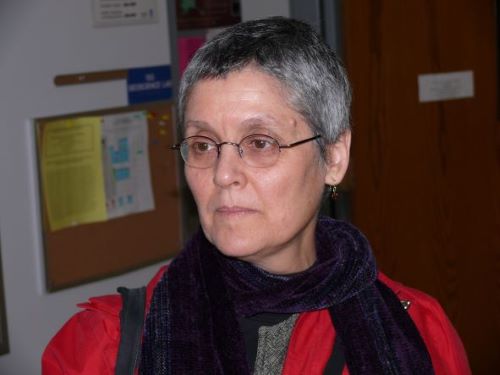
Judy Roitman

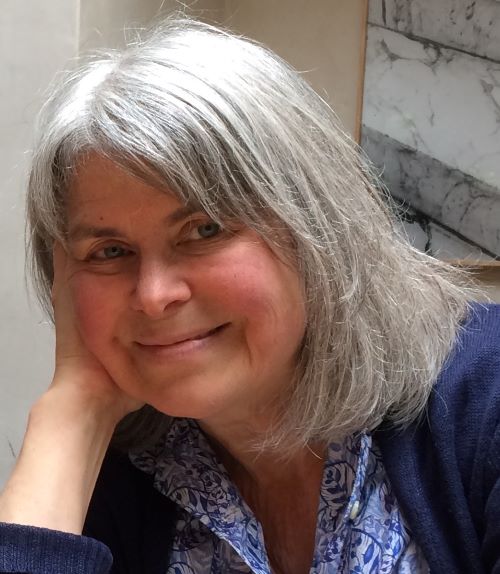
Judy Roitman is one of the primary voices in Further Zen Conversations. She and her husband, Stan Lombardo, are the founding teachers of the Kansas Zen Center in the Kwan Um School of Zen. Kwan Um is a Korean Linji (J: Rinzai) lineage established by Master Seung Sahn. Judy has the official title of Zen Master in the school, which puts her fairly high in their hierarchy of teachers. Her first encounter with Buddhism, however, wasn’t auspicious.

“In my senior year at Sarah Lawrence College, it was advertised that a Buddhist monk would come and give a lecture. It turned out he was Tibetan. I didn’t know what he was at the time because I knew nothing about Buddhism. He had the one-shoulder robe, and he was accompanied by an American guy also wearing the same kind of robe, and the American was very hairy. And the other guy – the teacher – his facial skin was so tight he was like a mummy. And the American attendant/translator looked like a Marine. And they’re just sitting there as everyone’s coming in. You know, the way I tell this story is: I’m from New York; I’d never seen anyone sit still. And that’s actually sort of true. And I was just completely freaked out by these people. The deal was, you’d write a question, and then you’d put it in a little basket, and then they’d open them up sort of randomly and pick one out and answer it. And the answers didn’t make sense. In my memory somebody would ask something like, ‘Is there life after death?’ And the teacher would respond with something like, ‘A butterfly lands on a flower.’ The answers had nothing to do with the questions, so I was getting really freaked out by this, seriously freaked out. I reached a point where I couldn’t sit there anymore, and I walked out. And when I got out of the building, I started screaming. That’s how affected I was.”

It seemed unlikely, at the time, that she would have anything more to do with Buddhism.

She had a difficult time after leaving Sarah Lawrence.

“I’d had an emotionally very difficult childhood and suddenly it was all coming out. I was so angry I didn’t know I was angry. I was over-bearing; I was unpleasant. I didn’t have a sense of proportion. I was delusional. I was suicidal.  I was just sort of weird and strange and deeply, deeply unhappy. To soothe myself I was a binge eater; if I’d known about bulimia, I would have thrown up. That had started my freshman year in college, but I stopped binge eating by becoming a smoker my second year in college, and immediately lost a whole bunch of weight and became a chain-smoker. But then I stopped smoking, and I became a binge eater again. I was deeply, deeply miserable. And I called up this woman, Ludmilla Hoffman – back then you’d call up shrinks and they would actually answer the phone themselves – and so I would call these people up and say, ‘I need an appointment.’ And it was, ‘Well, I have an appointment in six months; I have an appointment in three months.’ And so I called Milla. She goes, ‘I have an appointment in six weeks.’ Then she goes, ‘Is this an emergency?’ And I said, ‘Yes! Yes! It’s an emergency!’ ‘Oh, okay. I can see you next week.’ She saved my life.

“I was very intellectual. I really lived up in my frontal lobes. And with regular shrinks, which I’d had since I was 15, I knew how to dance and step aside and never really look at what I needed to look at. But Milla was a Gestalt shrink. I don’t know if you know anything about Gestalt technique, but here’s an example. One time I walked in Milla’s office, and I said, ‘I actually remembered a dream.’ ‘Oh, great. Tell me about it.’ ‘Okay, so I’m walking down this road.’ And she, ‘Oh. What’s it like to be the road?’ I said, ‘No! That’s not what my dream is about.’ And she says, ‘Well, tell me about the road.’ ‘The road. Let’s see. It’s made of asphalt, and it’s grey, and everybody walks on it, and nobody loves me!’ It’s like kong-ans.[1] They get you from the side. You know? You don’t see it coming. So you can’t dance around it.

“So Milla cured me. Around the same time, I saw an article in the New York Times on relaxation response meditation. And I grabbed that and started doing relaxation response meditation. I worked with Milla, and I did relaxation response meditation for about two years. Then one day I was in Milla’s office, and I looked at her, and I said, ‘I don’t have to be this way, do I?’ And she said, ‘No, you don’t.’ And it lifted, like a tornado. It was just gone. I still get unhappy and angry, but that hint of insanity, that skewed vision, that weird kind of distortion that colours everything, that was gone. It was just absolutely amazing.

“That’s when I decided I could meditate with a group. Before that, I just couldn’t do it. I was too unstable, too self-absorbed. But then I thought, ‘Okay, now I can go sit with a group.’ So I was living in Cambridge, and I would take walks, and there was this beautiful Zen Center that I would walk by. It was just beautiful. Broad manicured lawn and beautiful old building gorgeously maintained. So I looked up Cambridge Zen Center, and I discovered it was in Allston. And I thought, ‘That’s weird. I guess they moved.’ And, of course, it was a different Zen Center. But I didn’t know that. So I walked into this funky old building and Mark Houghton – who later became a teacher – and the woman he was married to at the time, Dyan Eagles – who is also a teacher now – they were in long robes and were chasing each other around with little brass plant sprayers. And Larry Rosenberg, who later became a Vipassana teacher, was in the kitchen, washing the dishes with another guy, Peter Harrington, and I just felt like, ‘Oh, these are my people.’ I walked into the kitchen and one of either Larry or Peter said, ‘Well, what practice do you do?’ And I said, ‘Well, I count my breaths.’ And Peter whirls around and said, ‘How many have you counted?’ And I just thought, ‘I’m home!’”

Further Zen Conversations: 36-39; 62; 110; 141.

Judy Roitman with Master Seung Sahn – 1978

[1] The Korean term for “koan.”

Jeff Shore

When Jeff Shore was twelve years old, he was enrolled in a class to prepare him for baptism in the Presbyterian Church. “We were learning the catechism, and the teacher was a young girl, older than us, but a teenager. So she was trying to get us to memorize the catechism, and I would ask questions about it, ‘What does it mean that life is eternal?’ And she would kinda, ‘Please don’t actually ask difficult questions. We just need to memorize this.’”

In spite of his doubts about what he was being taught, “There was a longing there – for lack of a better word – to live truth. No matter how difficult or demanding that may appear, that’s got to be the thing to do somehow. It was pre-rational in me. To live the truth is what we must do no matter what, and it’s not always easy.”

When he was 16, he had a cleaning job in a department store. “I would mop the floor and collect the trash. But they had a very shitty bookstore – department stores don’t have very good bookstores – but they had An Introduction to Zen Buddhism by D. T. Suzuki. So at night, I would dust-mop my way over to the bookstore and open up D. T. Suzuki. In about a week I had read the whole book, and it made an impression on me.”

“What about it grabbed your attention?” I ask.

“One was those Zen koans, those mondo exchanges. I remember going home and telling my mother them, and she just thought they were wonderful. But underneath there was some kind of . . .” He pauses. “It was okay to have doubt. It was okay to not know. In a way, it was almost a good thing to realize that you don’t know and that you need to make a search.”

“So you grew up in a Protestant Christian environment in which they tried to teach you a creed that you were then supposed to profess you accepted as true – even though you didn’t necessarily – and that was contrasted with the Zen book which essentially said, ‘You know, you really don’t have to believe anything. It’s alright to ask questions.’ Is that about right?”

“You put it a lot more succinctly than I did,” he says with a laugh.

It was the ’60s, and interest in Asian religions was part of the culture. “I hitch-hiked to Woodstock when I was fifteen. I experimented with soft drugs. A lot of us were desperately seeking something, but we didn’t know what it was. But Buddhism and Zen spoke to me. I remember reading the life of Gautama Buddha, and I just felt like an arrow that had been shot twenty-five hundred years ago. Like, he had the same questions, and he refused to compromise. He wanted to live the truth. No matter what. And he was able to do it. That really hit me.”

He experimented with sitting but didn’t begin formal practice until attending graduate school in Hawaii, where he had an opportunity to do a sesshin with Robert Aikten. It did not go as he expected.

“There was this strange kind of vegetarian fare and some of the rituals and things. I was never much into that. I was able to do dokusan, to do the Mu koan with Robert Aitken, but it didn’t work for me it seemed. So what happened at the end of the retreat, ‘Well, I finally got to do a sesshin.’ It didn’t appeal to me at all somehow. But about two days or three days later, I happened to be cooking, and the garlic – I love garlic – the smell of the garlic wafted up from the frypan, and it just went right through me. And I realized Mu. I realized everything is Mu. Just completely. The world was translucent, and I had no idea what to do with it. I went over and sat on the bed, and I think I tried to chant the Four Vows as best I could.”

The next morning he went to see Aitken. “He was able to confirm it, but he could also see that I was very stuck to it. So – if I remember exactly – he said, ‘Yes. But you have very much the stink of Zen.’ And I realized, ‘He’s right. What do I do about this?’ So I continued to practice, but I really struggled. The way I would put it now is I wasn’t ready for that experience. I didn’t have a foundation and so I struggled very badly for a couple of years. Finally everything fell apart. That’s when I first got serious. I decided to go to Japan and practice.”

He remained in Japan training at Tofukuji and eventually became the sole non-Japanese full-time professor at Hanazono University in Kyoto, where until his retirement he taught what he called “Blue-eyed Zen.”

He explains that formal Zen training in Japan is arduous, and many of the students at the university are bewildered by why Americans and Europeans have any interest in it. “Westerners, look at Zen in a very peculiar way.” Most of his students were the sons of priests who would inherit their father’s temple. For these young men, “It’s a very different system. They don’t want to be a priest, but they have to be. And then here’s people like us coming halfway around the world. We’re not even going to become priests; we’re not going to have a temple. And yet we’re putting ourselves through this. Why? So that’s how I try to interest the students because the Japanese students are not interested.”

“You’re teaching Japanese students how westerners see Zen?”

“More or less, yes. What do we see that they don’t?”

The Story of Zen: 423-24, 440

Further Zen Conversations: 53-54; 72-73; 127; 131; 132

Donna (Dhara) Kowal

In 2023, Donna Kowal was appointed co-director of the Rochester Zen Center along with John Pulleyn. When I interviewed her in October of 2021, she was the Head of Zendo at the Center’s retreat house located at Chapin Mill, where I once practiced Tai Chi Chuan beside Philip Kapleau’s grave, then laid a stone on it and was glad to have had the opportunity to do so.

Kapleau’s grave at Chapin Mill

Donna also practices Tai Chi, as well as Kung Fu and Qigong, disciplines which eventually led her – in an indirect manner – to Zen.

“The reason I took up Kung Fu is that I wanted to learn how to fight in the wake of an assault. I was living in Pittsburgh, and I was the victim of a random physical assault that was incredibly traumatizing on many levels. I was hanging out with friends in a club; there was a band playing and a lot of people there. All of the sudden a woman came through the crowd and choked me. Out of nowhere. It turned out she had been discharged from a psychiatric hospital the day before. What really stuck with me was how I didn’t fight back. I just froze. If not for the quick response of the people around me, it might have turned out differently. That’s why I started studying martial arts.” 

“So you took up Kung Fu, Tai Chi, and Qigong. Qigong is a meditation technique, isn’t it?”

“So is Tai Chi,” she tells me. I don’t disagree with her. “It’s very intensive physical training, and it requires you to be fully present.”

“And how did this get you to Zen?”

“At around the same time, there was this new vegetarian café that opened in town, and I went to check it out and got to know the owner. I started talking to her, telling her about tai chi and qigong, and then she tells me, ‘Oh, you would like the Zen Center.’ And I said, ‘What’s that?’ And it turned out she was an early member of the Rochester Zen Center from back in the ’70s. She’s like, ‘Yeah, they offer workshops.’ So I signed up for a workshop.”

“And what was it like?”

“It was a powerful experience. After I signed up for the workshop, the Zen Center sent a brochure in the mail. I opened it up, and there was a picture of Roshi Bodhin Kjolhede. That was my first time seeing him. I didn’t know what a teacher did in the context of Zen, but I immediately felt like there’s something here, something I’ve been looking for. And when I walked into the main entrance, it immediately hit me that this place is for me. This was before the workshop had even started.”

We talk a little about what brings people to Zen practice. The first students to seek out Philip Kapleau in Rochester often did so because they had read his book, The Three Pillars of Zen, and they came seeking awakening, enlightenment, kensho. I ask Donna if that’s still what draws people to Rochester.

“I don’t think so. It is for some but not for all. There are people who are looking to practice with others, they’re looking to learn how to do meditation, and what brings them here is their struggles with stress, anxiety, life difficulties that they’ve encountered. So many people have stories to tell about dramatic life events that led them to pursue meditation, while for others it’s everyday dissatisfactions. On the other hand, in my interactions with new people, there are still those who are inspired by reading Roshi Kapleau’s Three Pillars. They feel this drive, this aspiration to awaken, and I, myself, experienced that. When I first started, I had this drive to experience kensho. But at the same time, I was also seeking to be part of a community of like-minded people.”

“And the people who come because of stress, anxiety, dramatic life events,” I ask, “are they coming to practice as a kind of therapy?”

“I think that is the case for some people, at least initially. They may hardly know anything about Zen and Buddhism. They may not know about the Rochester Zen Center and its reputation at all. Even in the city of Rochester there’s lots of people who don’t have a clue about what the Rochester Zen Center is. I think we are more recognized nationally and internationally than we are locally. There are people who come to the center to sign up for a workshop whose only sense of meditation is from doing it in a yoga class, or maybe they read a book by Jon Kabat-Zinn or some other reading about mindfulness. Or they learned about it at work; there was some meditation program at the organization they work at, and they got a little taste of it, and that led them to see what resources there are locally, and then they come upon the Zen Center, not really knowing anything about Buddhism.”

“I’m still not clear what it is that they’re looking for in that case,” I admit. “Is it that they’re just looking for a technique?”

“Perhaps. I think it runs the spectrum. There’s no one thing that people are looking for that draws them to the Zen Center. Some do aspire to awaken while others are just seeking relief.”

“And as Head of Zendo, what is it that you hope for for the people who come here?”

She laughs. “I hope that they get hooked on zazen, so to speak. I hope that they practice with persistence and patience, that they give it a try long enough to see what fruits might come from it.”

Further Zen Conversations: 121-22; 149-50.

Chris Amirault

Chris Amirault is a practice leader with Shining Window Zen in Tulsa, a satellite center associated with Boundless Way Zen in New England. When I ask if being a “practice leader” puts him on tenure track, he says, “You know, that’s part of what I’m trying to figure out, whether I am on tenure track, and how you square that with ‘no attainment.’”

Around the year 2000, a series of events occurred which changed the direction of Chris’s life. Political corruption in the local school system put his family at risk, his first marriage broke up, and his brother “went through two years of extremely dangerous, troubling behavior which ended with his very successful suicide. So in the midst of all of those things, I felt that there were other ways to live my life than the way I was doing it, and I wasn’t sure what that meant exactly, but I started paying greater attention to those spiritual dimensions that I had been ignoring for quite a while.”

“How did you do that?”

“Doing things like going on walks and talking to certain people. I made some pretty clear decisions about who I wanted to spend time with and who I didn’t. And one of the things that resulted was meeting and then becoming involved with and marrying my current wife, who shares a lot of my same values and ethics in a manner that is more aligned with the way that I lived. She’s not religious, but we were both big travellers. One of the first places we went was to Thailand in 2008, and in preparation I spent about six months reading about Buddhism. And my trip to Thailand was very powerful, spending time in a place that was structured by different understandings about humans and individuality and community that seemed at least to partially derive from Buddhism.”

That led to further reading, and eventually the reading brought him to understand that something more was required. “I spent a lot of time reading and then finally decided, after I don’t know after how long – at least a year, maybe more – that maybe I should actually sit down on a goddam cushion and meditate. I was reading everything, and I was a little annoyed at everyone talking about this thing called ‘zazen’ as if I was supposed to do that too. But then, of course, I finally started doing that, and around that time I met James Ford who was also the minister of the First Unitarian Church of Providence. And I had already read two books about koans, and so I went to a few sits, and then I went out to coffee with him, and I’m like, ‘You’ve gotta give me Mu! You’ve gotta give me Mu!’ And he said,” [speaking in a tired tone], “‘All right. “This student walks up to Chao-chou and da-da-da-da . . . Buddha Nature . . . no.” All right, now you have Mu. Good luck. God bless.’ And – you know – I spent a whole bunch of time chewing on the iron ball.”

James, who has since moved to California, is no longer directly involved with Boundless Way, but Chris continues to think of him as his first teacher. “One of the most important experiences I had was being rung out of dokusan by James and then we went out and had coffee afterwards and talked about it. The pedagogy of dokusan is very well suited to my spiritual needs and learning style, which continues to this day. And I’m also someone who really believes that Dogen was right, that practice, enlightenment, and bodhicitta are one. And I happen to work in a job where I literally think about those questions every minute of every day. I take care of families that are in the foster-care system or homeless or dealing with economic challenges. These are not empty questions. They are not abstractions that pop up while you’re on a mat. And I think James’ commitment to social justice activism, his pastoral care training, his ability to interweave other spiritual traditions in a manner that reflects Unitarian practice, I think, those are all very, very helpful for me, from where I was coming from, even though I’ve never been interested in Unitarian practice particularly, I think that tolerance is important to me.”

“Did you ever resolve Mu?” I ask.

“Oh, gosh. Yeah.”

“Are you comfortable telling me about that?”

“Oh well, you know, for the first several months I had great diagrams, I had written several short papers on Mu. Anybody who wanted to know about Mu, I was ready to explain it. I was the Wikipedia of Mu for about eighteen months, I think. And my breakthrough conversation on Mu was with Melissa Blacker in dokusan, where I gave an answer that was grounded in my thinking brain, and she said, ‘We’re looking for something more intimate.’ That was a turning point for me with my practice. Thinking about this practice as an intimate practice. You know, I have a lot of letters after my name. I teach in higher ed. I’ve written a book. I’ve lived in the world of words and ideas, and I’ve really had to learn about an embodied awareness that is more intimate, that is the ground of my practice. That took a really long time, and I still struggle with it.”

Further Zen Conversations, Pp. 99-100; 145-46; 153-54.

Rafe Martin’s Foreword to “Further Zen Conversations”

Rick McDaniel’s two-book set, Zen Conversations and Further Zen Conversations, goes to the horse’s mouth – Zen teachers themselves – to open up the evolving tale of North American Zen.

Most of the contemporary teachers interviewed are homegrown, having trained in the US or Canada, not in Japan. Many did so with first and second generation Western, not Asian, teachers. Plus, as they are spread across a number of active lineages, these thematically organized conversations offer readers an expansive view.

How Rick, a long-time Zen practitioner, came to travel around North America in-person and, later, after COVID, by Skype and Zoom to chat with contemporary teachers is a tale in itself, one that gets told via the Prefaces of the two books. Yet once he gets these conversations going, he rarely intrudes further but simply allows each teacher or senior student to speak for themselves.

Rafe Martin

Because of Rick’s earlier series of books on the teacher-by-teacher transmission of Zen from China to Japan and then on through the recent North American generations, his Zen Conversations and Further Zen Conversation rest on a solid foundation and the questions he asks are wide ranging: Where is North American Zen teaching and practice at these days? How’s it doing? What are the challenges and issues? How does it deal with tradition and innovation, with the balance of personal and communal practice, with monastic and lay styles and forms, with the demands of citizenship – i.e. environmental awareness and action and politics – while at the same time not watering down actual, intimate, ongoing practice? And what about psychology? In short, how’d we get to where we are and what might the future (or possible futures) of North American Zen look like? In fact, is there even such a thing as “a North American Zen” or are there many, each with its own views and responses?

Rick organizes the conversations he’s gathered thematically rather than teacher by teacher. And it works. And, yet . . . it’s such a rich meal it’s almost like a buffet of deserts – pies, cakes, petit fours – piled high. Reading too much at one time can lead to a sugar high or a bit of a tummy ache. So, even though some of my own conversations with Rick are included in Further Zen Conversations, my recommendation is to go slow, read a section or so, then, stop and digest. Adding some leavening between such “reads” might be wise, too. Which might mean dipping into the Zen writings of such gifted ancestors as Hakuin, Dogen, or Ryokan. Or facing the work of actual practice as presented in Philip Kapleau’s The Three Pillars of Zen or Robert Aitken’s Taking the Path of Zen or in Aitken or Shibyama’s books on the Gateless Barrier (Wumen kuan; Mumonkan). Or just sitting and facing a wall, letting everything go, discovering how little we know, how little can be known, and, indeed, known by whom? Such little bits of bitterness will help the sweet medicine go down. You won’t simply be coasting in on someone else’s words.

Regardless, Rick has graciously done all the necessary legwork. Or, to turn to a food-related old Zen metaphor: he’s kindly peeled the lychee for us and put it in our mouths. All we have to do now is chew. (By the way, Zen Conversations’ introduction offers a history of North American Zen.) To be clear – for one person to report on the state of North American Zen, allowing teachers of diverse styles and lineages to speak for themselves is rather remarkable, revealing deep faith in Zen’s many current North American forms. (A good number of the teaching lines now active in North America are given voice here, though not all.) Admirably, Rick seems to have no personal ax to grind, and shows no need to defend what he himself might think Zen should or should not be. Of course, he selected each conversation and organized them into sections but both books show only openness toward and respect for all the various viewpoints presented. A trustworthy guide, Rick remains truly non-judgmental. Given our deeply polarized times, this is refreshing, even healing in itself. Sitting down with all sorts of Zen teachers – lay, ordained, monastic/celibate, householder; Soto, Rinzai, combined or in-between; those with large centers, those with little zendos, those with many students, those with a handful; experienced teachers and those just starting out – he puts everyone at ease and raises questions central to all.

Hats off to Rick. We are his beneficiaries and owe him a debt of gratitude. Fifty or a hundred years from now when students of religion and historians of Zen look into how what was originally an Asian religion came to flourish so naturally in North America, they will seek out these books. In them they will uncover what Zen teachers of today, themselves a living bridge between East and West were saying, doing, and thinking. The story of the creation of an ordinary, real, genuinely North American Bodhisattvic Zen can be found in these books of simple, straightforward, thoughtful, and often heart-felt conversations.

Get a set. In the future they’re bound to become heirlooms of Zen’s many-roomed house.

Rafe Jnan Martin, founding teacher

Endless Path Zendo, Rochester, New York

Hogen Bays

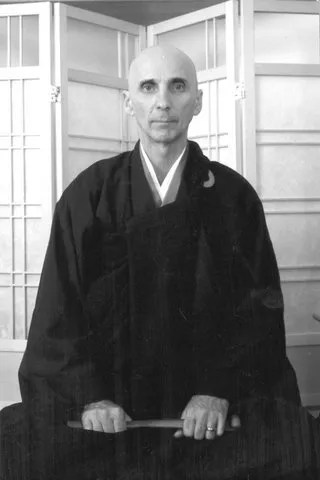
Hogen Bays and his wife, Jan Chozen Bays, are the co-abbots of Great Vow Monastery in Oregon as well as being the spiritual directors and primary teachers with the Zen Community of Oregon.

“In 1968 or so, a friend and I went up to Rochester. He had done a sesshin with Philip Kapleau at Florida Presbyterian College. He said, ‘This is really interesting. Let’s go.’ So we got on an airplane in 1968 and went up to Rochester and spent a week – or a weekend – at the country place they had then. And I remember I didn’t say a word. I asked something about vegetarianism, which was the only thing I could think to talk about. But it was sort of in my mind. So, after my second year of college, I had some angst, and I didn’t know what I wanted to do. I didn’t want to go back to my parents’ house. I went to Rochester. So the marker in my mind is that at 6:00 a.m. on June 9th 1969, I drove into Rochester just about sunrise, and I remember thinking at the time, ‘This is a new beginning of something.’ In a way, maybe, I think my birth is 1969.”

When I ask him what he was anxious about, he corrects me.

“Not anxious. Angst. Angst about the existence of life. Angst is about, ‘What’s the meaning of this?’ Angst is angst in the sense of those fundamental questions which gnaw at one’s heart.”

“Did you associate that angst with a particular set of circumstances?”

“Well, I think many people – certainly me – were just afflicted with doubt, with depression, with the kind of deep, core feelings unresolved. So the impetus to resolve that movement inside has been with me my whole life. And that’s the particular shape it took.”

He eventually left Rochester and moved to the west coast, where he started practice with Taizan Maezumi and the Zen Center of Los Angeles. It was there that he met Chozen, with whom he would revive the Oregon Zen community which originally had been established by one of Walter Nowick’s students ten years prior.

He has been a full-time Zen priest since the mid-1990s. I ask what prompted him to be ordained.

“Some people have a calling, and this just called to me. What I tell people sometimes, I say, ‘Look, if you find something that is helpful and beneficial, you want to share it.’ And you want to find the most skillful way to share it. If you’ve something that has liberated you from suffering, then what way can you help other people be liberated? And I think the commitment, the kind of vow of me stepping forward overtly and consciously as an ordained person was important. Is important.”

“What is the role of a priest?

“There are so many different aspects. There is a story I like to tell about Yamada Mumon Roshi and my teacher, Shodo Harada, who was his disciple.[1] Mumon Roshi was ardently against war. And, after World War II, as an act of atonement, he travelled to places of violence offering ceremonies for all the war dead. One day, when they were travelling together Mumon Roshi saw a person in a military uniform. He said, ‘Isn’t that wonderful.’ And Harada said, ‘Why wonderful? That is a person dedicated to violence.’ Mumon Roshi said, ‘Yes, but this person really shows what they believe in. They are expressing their faith, and that – in this time and age – is very important.’

“I think it is vital that we are people of visible dedication. I think it is significant when people step forward and say, ‘I am reliably confident in this path of Dharma. I wear my faith overtly.’ As you know, in the traditional story about the Buddha encountering the four messengers, the fourth messenger was an ordained priest, a spiritual seeker, a monk. That willingness to be recognized as one who points out that there is a path to awakening is an aspect of being a priest.

Over the years, Great Vow has hosted teachers from several different traditions.

“We have had many Buddhist teachers come here such as Ajahan Amaro from the Theravadan school and several Vajrayana teachers with a Dzogchen perspective and others. In recent years I’ve worked with Byron Katie. My Zen practice has been quite rich, quite wide, looking at the truths of life from many different perspectives.”

“Is there something, in your experience, that distinguishes Zen from other forms of Buddhist?” I ask.

“Well, I think that’s exactly it. It’s experience. If you’re involved with the Theravada or Vajrayana or so other forms of Buddhism, they often first require intellectual understanding, a cognitive understanding of the Path. This is fine. But, in Zen, scholarly understanding is secondary.  For example, often in the Vajrayana tradition the teachings go through layer after layer of, ‘This means this, that means this, this means that, therefore, therefore, therefore.’ So when I read the teachings of Tsongkhapa or Kalu Rinpoche, they appear to divide Buddhism up like the early Indian texts do. They describe Dharma as a granularized teaching. Modern Zen – or at least the Zen I’m familiar with – does not do that. It just asks, ‘What is at the root?’ The mind can endlessly think and particularize things, but what is at the heart of the matter? How can you step into that? Emphasizing what is before words does not make Zen special – because fundamentally everything begins before words – but in Zen Buddhism there is an emphasis on recognizing truth before words, before differentiation. This is important. And this insight can be embodied. It can be lived.”

Further Zen Conversations, Pp. 47-48; 63-65; 119; 133-34; 157.


[1] Both Yamada and Harada are common names. Yamada Mumon was a Rinzai teacher who lived from 1900 to 1988. Harada Shodo is the residing abbot of Sogen-ji in Okayama. He also maintains Tahoma Sogenji in Washington State.

Jissai Jeanette Prince-Cherry

When I first looked up the website for the Louisville Zen Center, Bodhin Kjolhede of Rochester was identified as the Guiding Teacher. The local “Group Leader” and “Resident Novice Priest” was Jeanette Prince-Cherry. At the time, I asked her what the difference between the two roles was.

“A Group Leader is just a hands-on person that helps make things happen,” she explained. “So, because I’m in Louisville and Roshi’s in Rochester – ten hours away – I make sure sittings happen, and I’m authorized to do some instructing. But for people who really want to connect and do longer retreats, they need to go to Rochester to work with Roshi directly.”

“You’re ‘resident’ there in Kentucky?”

“Yeah, it’s my home that we use for most of our sittings, for our retreats, for when we have teachers come. I raised my family here, and I’m the only one left. It just made sense to use this house in some useful way other than there being the echo of me talking to the cat. So this is where most of the things happen with the Louisville Zen Center.”

Because at the time she’d been identified as a “novice priest,” I ask how her situation will change when she receives full ordination.

“It won’t,” she says with a laugh. “I’ll just wear different robes. The thing about our tradition is that regardless whether it’s for ordination or head cook, you start slowly doing more and more of that work until you’re doing it all the time, then it gets recognized. ‘Yeah, okay, I guess we can call you Head Cook now ’cause you’re doing that already.’”

After I interviewed her, she received full ordination on October 23, 2022, and was give the Dharma name Jissai, meaning “True Encounter.”

She grew up in North Carolina in a Southern Baptist family. “My sister is a minister. My father did ministry. So we were well steeped in religious tradition.

“I grew up in this little city High Point, North Carolina. And it was very, very segregated. I grew up in a Black neighborhood. My parents owned their home, but we lived across the street from a sprawling housing project. People in the projects thought we were rich because we had our own house. But we were ‘house poor.’ Most of my parents’ income went towards paying the bills for the house. We were just as poor as my friends in the projects were. Not only was my hometown segregated, it was racially hostile with few meaningful job opportunities for Black people, so I left when I was 18 and went into the Air Force. My older brother had gone into the Marines, and I was like, ‘I’m getting’ out of here, too!’ And I think the Air Force, the military, and those experiences opened the door in allowing me to practice Zen. Opened up that possibility in my mind and my heart.”

When I ask how it did that, her answer surprises me.

“The military lifestyle. Everything was standardized. We wore uniforms. Everything was uniform. But even within all of that structure, there was so much freedom. It’s like when one of my sons, before he learned to swim, he would hold onto the side of the pool for support. Because he didn’t know how to swim he could only circle the perimeter of the pool holding onto the sides. Then when he learned to swim,he could go anywhere in the pool – on top of the water, under the water, the shallow end, the deep end – but it was still a pool. He was still bound by the swimming pool. But he had all this freedom in it. That’s how I felt in the military. There was this firm, stable structure that let me find out what I liked, what I didn’t like, who I was. I was able to explore with the help of the supports.”

When she left the Air Force after eight years, she found the transition to civilian life challenging.

“I’d spent my entire adult life in the Air Force. I mean, I didn’t know how to dress. I didn’t know the language. I’m in a new area. I was working as an industrial engineer here in Louisville, and I was used to military etiquette. As a civilian that’s different. I was a supervisor, and as a supervisor in the military, you just tell people what to do, and they just do it. It’s not quite the same as a civilian. I’ve got to be nice and all that. I didn’t know any of that. Truly. I had no idea. So I had a hard time.”

Then she was house bound for a while, recovering from gallstone surgery. “Feeling sorry for myself and flipping channels on television. And all the talk shows seemed to have got on the same programming. I would go to the Oprah Winfrey show, and she had this segment on meditation. I’m like, ‘Nope.’ Click. Went to the next talk show, and that person had a section on meditation. Click. And then with the third one, ‘Okay. Maybe I need to pay attention to this.’ And so I watched the show and went to our public library to get a book on meditation.”

She read all the books the library had on secular meditation but was reluctant to look at the Buddhist books. Eventually, there were no more secular meditation books left.

“But I’d gotten enough insight to see the resistance about these Buddhist books. I still identified as Christian. And as a Southern Baptist, you don’t even touch books about other religions. But it felt really unhealthy to reject them out of hand. So, I was, ‘I’m going to pick up the most Buddhist book I can find.’ The thinnest, but the most Buddhist book. ’Cause I don’t want to be committed to reading some big book. The book I chose was What the Buddha Taught by Walpola Rahula, and I was so embarrassed to check that out of the library! So I read this book and discovered the way I feel about the world in its pages. I could not believe it. I couldn’t . . . I couldn’t believe how . . . Yeah . . . It was like reading my heart.”

“In what way?” I ask.

“In Christianity there’s all this talk about original sin and original impurity, and that was absent. It talked about original perfection, and how it is through our own habits and conditioning where we don’t function out of that perfection. That really resonated with me. It talked about suffering, and I could immediately understand suffering. I remember it said dukkha was like a wheel not being right on its axle. And it reminded me of grocery carts, ’cause there’s always this cart that’s not rolling right. And you can function. You can go to the grocery store, get your groceries; you can make your way through the grocery store, but it’s a pain and a struggle. Okay! I understand that. Dukkha. You could still function, but it’s a struggle. And these concepts, even the realms of unenlightened existence as psychological states of mind. Hell and hungry ghosts and thirsty spirits and fighting humans and animals and all of that, I could so relate to it. Maybe I could relate to Christianity now, as an adult. I don’t know. But the dharma – the Buddhadharma – it just really spoke to me. I felt like I had been trying to fit myself into the mold of Christianity, whereas in Buddhism, it just flowed in me. I flowed with it. There wasn’t the need to put this round peg into this square hole.”

Further Zen Conversations: 106-08; 119.


Mountain Cloud Zen Center

Mountain Cloud outside of Santa Fe has recently been designated the hub Sanbo Zen community in North America, although for many years it was barely hanging on.

The building was constructed in mid-1980s by members of Philip Kapleau’s Rochester Zen Center who skillfully and beautifully combined the structure of a traditional Japanese zendo with local architectural features such as exposed vega beams and adobe walls.  It was intended as a place for Kapleau to retire to, although that didn’t work out as he had hoped.

I think there were two factors that entered into his leaving after a year,” Mitra Bishop tells me.

One was the situation in Rochester where the person left in charge – Toni Packer – realized she could no longer claim to be a Buddhist. The other had to do with the community that had formed in Santa Fe.

“I picked him up at the airport when he moved here. We’d already bought a house for him and renovated it to work for him, but I took him directly to a picnic that the sangha had planned as a welcome for him.  At the picnic, one of the sangha members – one of the local sangha members – stood up and said, ‘Roshi, we love having you here. We want to have you here. But we don’t want you to tell us what to do.’ He quietly took it in.”

Will

When I visited Mountain Cloud in 2013, the teacher – Henry Shukman – and Mitra both told me about Will Brennan; it would be another nine years, however, before I meet him. Will is from Chicago where, after a short stint in the Peace Corps in the late 1970s, he first encountered Zen Practice at a local center maintained by Wally Muszynski. “Wally was really part of the Rochester Zen Center,” Will tells me, “and he was stern. But there was some sweetness underneath there. But when I sat down there in the zendo – oh, boy! – I knew I was home. I knew I was home; however, I got the impression, ‘Well, yeah, this is the practice, but this,’” he laughs, “‘this is not the group I want to work with.’ I’m an intimate fellow. I’m one of these touchy, huggy guys. And I didn’t feel it there.

“But I was down in the basement one day about three or four months after I started – that’s where we hung our coats – and I noticed a sign, and it said, ‘Zen Center starting up in Santa Fe, New Mexico.’ And I said, ‘Oh, shit! I had a dream one time about New Mexico.’ So, I immediately got my airplane ticket.”

The group in Santa Fe was very different from the people he had met in Chicago and Rochester. “Everyone was laughing, everyone was smiling. I stayed here for a week – stayed in Santa Fe for a week – and I knew immediately that, ‘Yeah. This is my home. This is where I’m going to practice with these people.’”

But first he needed to return to Chicago to tie up some business, including explaining to Lucie – the woman he was seeing at the time – that he was moving to New Mexico. The next thing he knew, she had packed all her belongings in her old Volkswagen, and they drove west together.

Over time, however, the group which established the Santa Fe center dissolved.

“I’d say by about 1985, Lucie and I looked around. ‘Where is everybody?’”

Rachel

They and a handful of others kept the center open in part by renting space to a local Vipassana Meditation Group. Rachel Belash was a member of the Vipassana Community.

“The Vipassana people were renting from the Zen community because the Zen Community had shrunk to almost nothing,” she tells me. “There was Will and Lucie and two or three others, and that was it. And so they needed the income from the Vipassana group. And I sat with the Vipassana group for ten years on a Tuesday night, but then they lost their teacher, and they decided they were going to continue without a teacher. But I began to feel the practice melting away because I didn’t have a teacher.”

In the meantime, Will – who had established a plumbing business in Santa Fe – was commuting to Albuquerque in order to study with Joan Rieck, a Sanbo Zen teacher there. She eventually introduced him to Henry. “Henry is a person who exudes love,” Will tells me. “So it felt just right for me.”

“Will Brennan brought me here,” Henry told me in 2013. “He’s a friend and kind of sometime-student of Joan Rieck. And at a certain point when our abbot – Yamada Roshi – had appointed me as a teacher, Will invited me to come here and join the very last remnants of the original Kapleau group that had built the center, which was basically he and his wife, Lucie, and maybe one or two other people. And they were sitting here regularly on Wednesday nights and had never stopped for twenty-eight years!” he says in amazement.

When the Vipassana group lost its teacher, Rachel noticed that the Zen community appeared to have acquired one. “And this was Henry. So I made an appointment with him one day and said, ‘I would like you to be my teacher.’ Of course, I had no knowledge of Zen at all. I just wanted him to be my teacher, and he said, ‘Well, we’ll see.’ And I was so amused and taken by that response that I thought, ‘Mmm. I’d better find out what this is all about.’”

Karen

Karen Klinefelter had a similar experience. She had been working with another Zen teacher in the area but felt uncomfortable with him.

“A good friend of mine was one of the originals at Mountain Cloud with Will, and she kept saying, ‘Karen, you should come. There’s this guy. I really like him. Will found him. You should come.’ And first I just went to one of the daily early morning sits. And then I did a week-long sesshin with Henry, who I really admired because he said to me, ‘Karen, you know what? You are someone else’s student. Until you clear that up, I’m very happy to see you in dokusan, but I cannot formally be your teacher.’”

So she spoke with the teacher she had been working with and formally separated with him, after which she was able to join the Mountain Cloud community.

The community has thrived since Henry has been there, and he is no longer the only teacher. Valerie Forstman – an heir of Ruben Habito – is now teaching at Mountain Cloud as well. I also mention to Will that I’d heard that he too had recently been appointed an Assistant Teacher in the Sanbo Zen lineage.

“Yeah,” he says. There is a sense of wonder in his tone. Then he laughs. “But don’t tell nobody! You know, I had a wonderful time with Valerie and her husband, they came over and we had a little gathering at our house. So we were sittin’ there, and I said something to the effect, ‘You know, this Assistant Teacher business, it’s kinda like a meditation robe. But it doesn’t fit!’” He laughs and shakes his head in amazement. “It doesn’t fit! Maybe someday, some year, but it just feels so weird.”

I suspect it fits him better than he imagines.

Maria Reis Habito

During my conversation with Ruben Habito, he mentioned that his wife, Maria, was now the principal teacher at a Zen center in Indiana. “Where in Indiana?” I asked.

“South Bend, near the campus of Notre Dame.”

“I grew up in LaPorte, about 25 miles west of South Bend,” I told him. “It’s been a while.” (Well, fifty years; however, childhood memories linger.) “But certainly, when I was living there, there was no Zen anything in Northern Indiana.”

“Well, you never know where these Zen communities will mushroom up,” Ruben said.    

It is a basic principle of Buddhism and Zen that all things change – even, it appears, Indiana.

Maria grew up in Germany, and like many Europeans is multi-lingual. When I ask how many languages she speaks, she tells me,  “I think about six maybe. Five or six.”

“So many you can’t remember!”

“Well, of course, you don’t speak Latin as such. We start out with German and then, of course, French and English. Chinese. Japanese. And now I’m learning modern Hebrew.”

I ask how she came to learn Chinese and Japanese, and thereby hangs a tale:

“After I graduated from high school, my mother knew a Chinese Catholic priest in Taiwan. And he had invited her and my aunt to visit, and so she said as my high school graduation present she would bring me along. So I went, and I fell in love with the country and the language, and it was very easy for me to pick up everything. I had already been involved in the university in Saarbrücken to study sociology and philosophy, but I had always been interested in Chinese philosophy, so I decided to go back to Taiwan and learn the language. And that’s what happened.”

She enrolled in the Taiwan Normal University in Taipei and resided in the international students’ dormitory. When she had been there a few months, one of the other residents asked if she would like to meet a Buddhist hermit. “And I said yes, and that’s when I met my Buddhist master, Hsin Tao. Now he’s well-known, but then nobody knew him. He was meditating in graveyards and lived in this little tiny tucked-away hermitage near a lake in the middle of Taiwan.”

Hsin Tao was still a young man of about 30 at the time, although he was already being addressed as Shih-fu, or Master. “He grew up in Myanmar,” Maria tells me. “He was born of Chinese parents in Myanmar in  ’48, and there was still some struggle going on between the Communists and the Taiwan Kuomintang. He got caught up in this. So he lost his mother when he was three, lost his home, and his father died when he was about four, and so he was an orphan and became a child soldier.”

“Really!”

“Yes. At age eight. So he saw so much wars, suffering, death. And as a child he had all these questions on his mind, ‘What is life all about?’ So when he came to Taiwan, he continued being in the army school, and actually it was not easy for him to leave. But he finally decided to become a Buddhist monk to explore these questions of ‘What’s the truth of life?’ And ‘What’s suffering?’ And he found that the traditional training that he received as a monk wasn’t enough for him. So he decided to go on and practice on his own in the wilderness.”

There were several other people at the event to which Maria had been brought. “I didn’t speak Chinese then. I had just been in Taiwan for three months, and I knew a little bit but not too much. And Shih-fu was sitting on the terrace, serving tea to a handful of people. I was just contemplating the lake until I realized that they were talking about me. And then I asked the gentleman who’d brought me, ‘What’s going on?’ And he said, ‘They are all excited because the master has said there’s a very deep karma between him and you.’ And I said, ‘Karma? What does that mean?’ I wasn’t even familiar with that expression. And then the Dharma Master said, ‘It’s a connection from a previous life.’ And I thought to myself, ‘What connection can there be between a Buddhist master and a German Catholic?’”

At the end of this visit, Hsin Tao told her, “You are a tree that can bring rich fruit. Therefore I want to plant your roots in fertile ground.” He invited her to come see him as often as she wished, and, although she felt her roots were firmly planted in Christianity, she did feel drawn back to the hermitage and returned frequently.

In 1983, he told her that because she understood him better than many of his other visitors, he would like her to formally become his disciple. He was planning to undertake a world tour, and he would value her assistance as a translator.  When Maria explained that she felt her German-Christian heritage made her an unlikely disciple of a Buddhist master, he said that in order to open up “to truth completely, you need to learn not to make an image of yourself. Don’t cling to your German ‘I’ and to your Christian notions. Don’t make them into hindrances on your path but let them help you instead.” She took refuge vows and was given the Dharma name Hui-yueh (meaning “Wisdom Moon”). With that, she said, she became a “freshly hatched Buddhist Christian.”

Catholicism and Zen: 68, 107-119, 145