An excerpt from The Story of Zen –
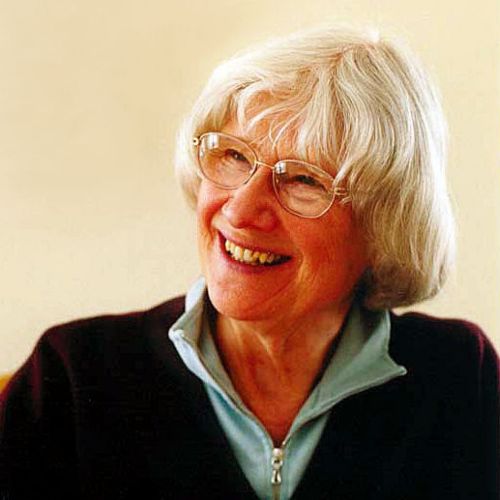
Toni Eggert was born in Berlin in 1927. Her parents both held Ph. D.’s in chemistry; her father was instrumental in the development of color photography. When Toni was six years old, the Nazis came to power, putting the family at risk because her mother was Jewish. While her father’s position at IG Farben afforded them some protection, the family still needed to be circumspect. When she was eight years old, Toni copied some negative remarks she had heard about the Nazi Party in her journal. Her father found the passage and lectured her on the danger of putting such things in writing.
Although her parents weren’t religious, the children were baptized and raised Lutheran. Toni had a naturally religious attitude and chose to be confirmed when she was fifteen. As she grew older and more aware of what was happening in Germany, however, her belief in the concept of a caring God faltered. The Nazi years also left her with a profound suspicion of all forms of external authority.
After the war, her family moved to Switzerland where she met and married an American university student – Kyle Packer – who eventually brought her to the United States. They settled in western New York, and she enrolled at the University of Buffalo. She acquired an interest in Zen from reading and began sitting on her own guided by the instructions provided in The Three Pillars of Zen. When Kapleau opened the Rochester Zen Center, only 75 miles from her home, she and Kyle became members.
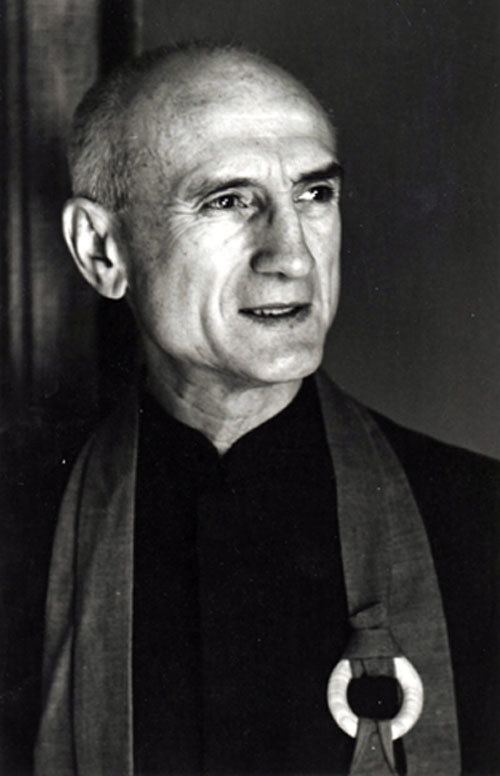
Toni was older and more mature than most of the members of the center, and she was driven by more profound life experiences. She attended as many sesshin as she was able and progressed rapidly in koan work, gaining Kapleau’s notice and respect. By 1975, he invited her to give Dharma talks at the center and even entrusted her with leading sesshin both in Rochester and in Europe.
When Kapleau began to think about retirement, he told Toni it was his intention that she become the resident teacher at the center in his place. He explained that he believed the community would respond well to a lay leader with family responsibilities. Toni was nonplussed by the suggestion, but, since Kapleau’s retirement was still some years off, she didn’t argue with him. Besides which, as she later admitted, she felt an obligation to do whatever her teacher asked of her.
Kyle wasn’t comfortable with the ceremony and ritual at the Zen Center and withdrew from formal practice. Toni also came to question the necessity of certain structures such as the use of the kyosaku and the practice of prostrating before the teacher, especially when she was the one to whom the prostrations were being made. Then she and Kyle began reading Jiddu Krishnamurti’s books.
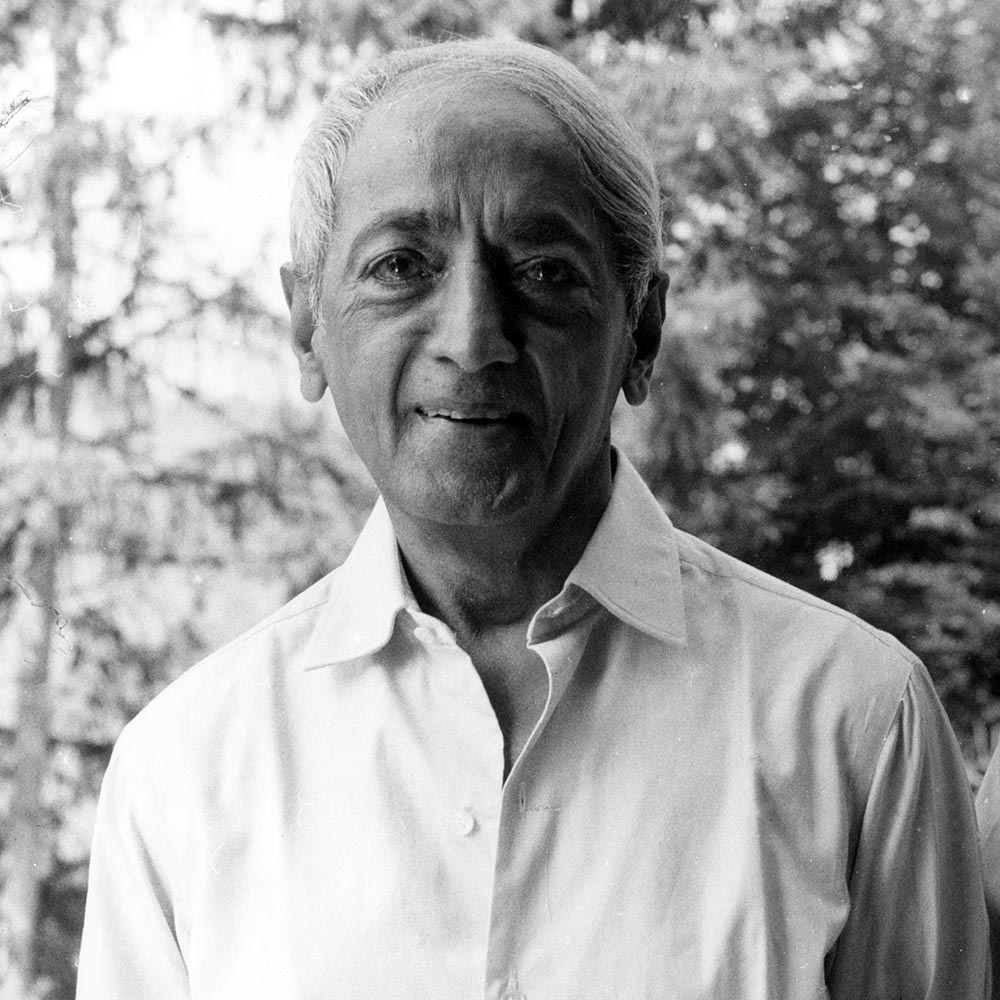
When he was still a child in 1929, Krishnamurti had been identified by the Theosophical movement as the incarnation of Maitreya, the Buddha of the future, and they groomed him to become the “World Teacher.” When he reached the age of 34, however, he dissolved his association with the Theosophists, denied their claims for him, and advised would-be disciples and followers to question all forms of authority or religious formulae. Toni and Kyle attended several talks given by Krishnamurti, and his thinking began to impact the way Toni looked at both Buddhism and Zen.
In 1981, Kapleau left Toni in charge of the Rochester Zen Center and went to Santa Fe where he hoped to open a new center and eventually move. Toni struggled with the forms Kapleau expected her to maintain in his absence. In an interview she gave to Lenore Friedman just a few years after these events, Toni said:
I myself was doing all these prostrations, and lighting incense, and bowing, and gassho-ing and the whole thing. I realized that I was influencing people, just by the position I was in, the whole setup. I could see it, and I wasn’t going to have any part in it anymore.
She believed that people could become dependent on the structures of Zen in an unproductive manner.
The system is very supportive to not questioning some things. Even though it claims to question everything. You question everything and you “burn the Buddha,” but then you put him back up!
I examined it very carefully: did I have any division while I was bowing? It had always been said, “When you bow, you’re not bowing to the Buddha, you’re bowing to yourself. And when you’re prostrating, everything disappears, you disappear, the Buddha disappears and there’s nothing.” I tried to look, and it wasn’t completely clear. I could see there was often an image, of the bower, or of the person who “has nothing.” Often there was a shadow of something, somebody there who was doing it. Or maybe the idea of being able to do it emptily![1]

She decided to loosen some of the structures and relax the atmosphere at the center, but her action caused a rift between members. Many supported and even welcomed her changes; others however – perhaps proving her point – believed the changes subverted the taut atmosphere they felt necessary for Zen practice. People wrote to Kapleau, and, under pressure, he returned to Rochester. A meeting was held in which the members who were unhappy with the way Toni was running things were allowed to voice their complaints. Some of the things said reminded Toni of the denouncements which had taken place in the Germany of her youth, and she found it hurtful. In the end, Kapleau expressed his support for her and gave her permission to bring about whatever changes she felt appropriate. It was too late, however. Toni had already begun to wonder if she could continue to view or present herself as a Buddhist.
Instead of returning to Santa Fe that June, Kapleau went to Mexico to work on a book. Two weeks before he was scheduled to return for a trustees’ meeting, Toni flew there to inform him that she could no longer continue to work within the Buddhist tradition.
She left the Rochester Center and established the independent Genesee Valley Zen Center. Nearly half of the Rochester members went with her. Others, discouraged by the division in the community, fell away from practice altogether.
Toni explained that the term “Zen” in the title of her new center was not intended to imply affiliation but was rather a descriptor of the method of seated meditation used. The group continued to meet in Rochester until 1984, when they purchased 284 acres of undeveloped farmland in Livingston County. In an interview recorded with Joan Tollifson, Toni explained that she wanted a place where people could “be in close touch again with land and sky and running water.”[2]
The new place was called the Springwater Center for Meditative Inquiry.
A period of stripping down followed the break from Kapleau’s group. At first, Toni continued to have students work with koans, then she gradually ceased to do so. Rules – even those governing retreats – became flexible. Participants were free to attend scheduled sittings or not as they chose. Nothing was mandatory except a daily work assignment and silence in certain places at certain times.

Toni encouraged her students to examine and question their assumptions about practice, about the roles of student and teacher, and to challenge any concept that came between themselves and the direct perception of self, others, and the external environment. She may have questioned Buddhism as an institution, but, in a classic sense, her approach was that of the Buddha himself when he told his disciples: “The bhikkhus must not accept the words of the Tathagata out of respect. Nor should they believe the words of the Tathagata solely because others do. The bhikkhus must analyze the teachings of the Tathagata as a goldsmith analyzes gold by cutting, melting, scraping, and rubbing it.”
There was, Toni pointed out, no “technique” for doing this. As a result, some people found the approach discouraging. They wanted direction, and she refused to define procedures. There were, she insisted, no “authorities” who could lead one to what she called “awareing” or the “work of the moment.” One needed only to attend simply and directly to what was happening moment to moment. She advised her students to maintain a “not knowing” mind. “Not knowing,” she explained, “means putting aside what I already know and being curious to observe freshly, openly, what is actually taking place right now in the light of the question. Not knowing means putting up with the discomfort of no immediate answer.”
She went on to say that the “essence of meditative inquiry is not obtaining answers but wondering patiently without knowing.”
Toni Packer raised the question whether Zen insight necessarily needed to be cultivated within a Buddhist framework. Essentially she was asking whether that insight was linked with a specific spiritual tradition or if it was universal.

[1] Lenore Friedman, Meetings with Remarkable Women (Boston: Shambhala, 2000), pp. 52-53.
 Richard Bryan McDaniel