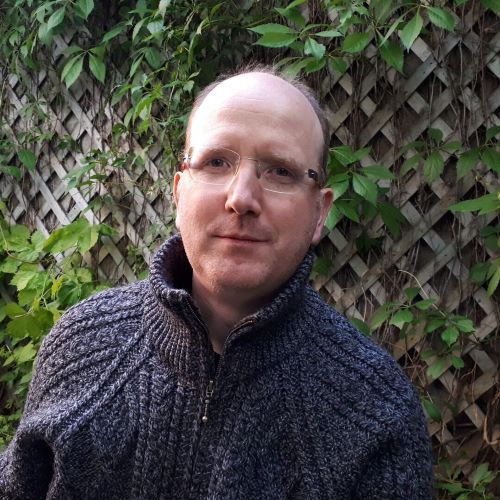
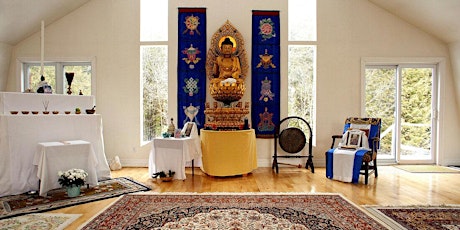
Awakened Meditation Center, Toronto –
Matthew Sullivan is a Zen Master in the Korean Zen (Soen) lineage of Hwasun Yangil Sunim and a Dharma Teacher at the Awakened Meditation Centre in Toronto.
“What I talk about when I’m teaching meditation to new students – what remains true for me – is there is no particularly good reason to go into Zen,” he tells me. “It’s not something you do for a goal. It’s not something that you can accomplish. It’s not something that you do for any collateral benefits. I think I was originally drawn to the suchness of Zen. At the time, it was the one thing in my life that had ‘suchness.’ You do it for its own sake. And that’s a wonderful thing to encounter.”
When he was a child growing up in Southern Ontario, his family “skirted around faith. My mother was a Protestant and would take us to church every once in a while, but my older brother decided very early on that he was an atheist. And he would get into these big arguments with my mother when she would try to take him to church on Easter or Christmas, but they would come to some interesting compromises. One year he allowed himself to be dragged along to an early morning service as long as he could wear a placard over his sweater that said in big letters, ‘I AM AN ATHEIST.’ Another accommodation my parents made with him that I thought was very sweet was because he was a Communist at the time – I mean, he was about eleven – we agreed that we would have borscht for Christmas dinner every year, and that is a tradition we have maintained for the last thirty or forty years. I still have borscht every Christmas.
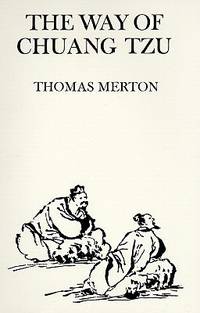
“My father introduced me to Buddhism because he became very interested in meditation as he got older – he was never particularly religious when I was growing up – as he got older he started meditating a little bit, and – you know – the thing that I think really drew me towards Buddhism as a young person was he had a copy of Thomas Merton’s translations of Daoist poetry.[1]”
Matthew’s father had grown up in a small town, an “outport,” in Newfoundland called Brent’s Cove; it’s current statistical information states that it has 119 persons living in 64 dwellings. “It was extremely isolated. And my dad grew up in a very big, very devout Catholic family. They were so isolated they didn’t have a priest on a regular basis, so my grandfather would be the one who would go to church and say the prayers, lead the congregation in . . . What would they say? I guess it was the Hail Mary. My grandfather owned the big town store. I think the Sullivans’ claim to fame is they opened one of the first salmon canneries in Newfoundland. So my father had been brought up Catholic, but, by the time he was an adult, he had shaken it off.”
“Do you know what got him interested in meditation?” I ask.
“I don’t to be honest. I wish I had asked him that. I suspect it was stress both with work and with – without delving too much into my parents’ life – I mean, he had a difficult time with my mother, and so I think meditation gave him some mental space to help deal with that.
“I was about six and somewhat anxious as a child. I remember working myself into this kind of tizzy when Dad started meditating, and I thought, ‘Well, where’s this going to end? He’s going to run off and become a monk. I’m going to be abandoned!’ Much later I learned there is a term for this, ‘the Dharma widow.’ I guess I was afraid I was going to become a Dharma orphan, but my fears were premature, and all he ever did was meditate in a chair for fifteen minutes a couple of times a week.”
After high school – where he was introduced to Tai Chi – Matthew went to the University of British Columbia. “I took Religious Studies at the University of BC. Mainly what I was studying was Christianity, the origins of Christianity and Judaism. Which had a big impact on the way that I would eventually approach Zen.”
“In what way?” I ask.
“Well, when you study religion in university you begin to understand that there are two ways of understanding any religion. There’s the way within the religion, the internal theological approach, and then there is the external, historical, and sociological approach, what at the time we called the phenomenological approach where you just look at the religion as a fact rather than inquiring into whether it’s good or true or useful. And that would play out, for example, when you’re studying Christianity with inquiries like, ‘Who was the historical Jesus?’ Getting beyond the picture that we have from the way the gospels are cobbled together and told as a unified story. What can we ascertain about the historical figure? Did he exist in the first place? If he did exist, how did he understand himself? How did his contemporaries understand him? How did he operate in the context of his society at the time. And also how do you critically read the sources that we do have – like the gospels or Josephus – how do we read those sources critically in order to be able to separate what was later religious or rhetorical accretions from what have been more reliable historical facts. So that dual way of looking at religion has had a big influence on my approach to Zen because I’ve tried to look at Zen both ways. I’ve practised within the religion, but I’ve never been able to remove the lens of looking at it phenomenologically, so I’ve always been interested in how to critically read our ancient texts to understand how they would have been understood at the time. I’ve tried to be always sensitive to what in Religious Studies we call the redaction history of documents, that is to say the way that they are edited over time. You have some kind of an original kernel of a story. A great example is Zen Master Linji’s koan about ‘there is a true man of no rank going in and out of the red portals of your face,’ which climaxes with Linji’s fantastic exclamation of, ‘The true man of no rank, what a piece of shit he is.’ That story has a redaction history that we can trace, where it actually starts out much more simply and less punchy, and over time it’s edited and in someways lengthened and in someways shortened to become this extremely memorable, pungent koan that I think is one of the great treasures of our tradition. But it wasn’t spoken that way by Linji. If it was spoken by him at all, it was a very different thing. So all of that is to say I’ve always had a foot in each side of the divide, and it’s given me this kind of weird 3D glasses half-in/half-out way of approaching the Zen tradition.”
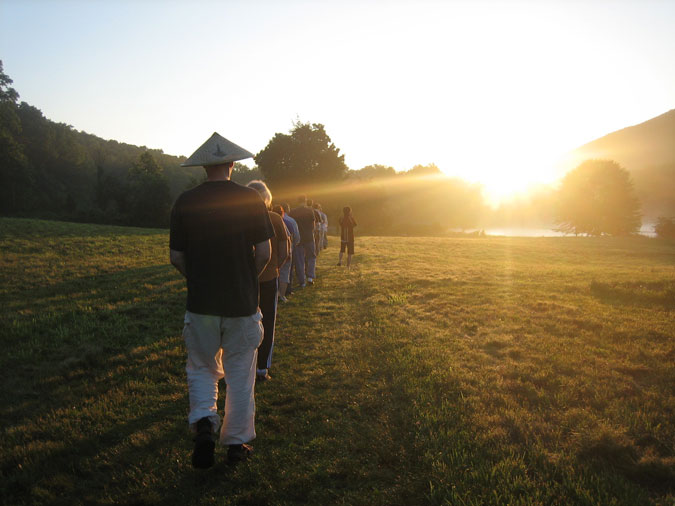
While in university he “borrowed” another book from his father, Lawrence LeShan’s, How to Meditate. “I loved that book,” he tells me, “and I used it to teach myself meditation.”
I ask why.
“Well, I did it because I was very unhappy. I don’t know if I was any more unhappy than most undergraduates, but I was unhappy. And I was lucky enough to find this book and start using it at the same time that I started attending some cognitive therapy sessions through the university. And that was a real life-altering combination for me. I found that the two things worked very well together.”
“Do you mind telling me what prompted you to take up therapy?”
“I mean, I was quite unhappy. I had a tumultuous relationship with my first serious girl friend. That relationship was a proving ground for a lot of emotional literacy for me, and if it prompted me to get into therapy and take up meditation, that is something I’m deeply grateful for because it’s a wonderful combination, and it worked extremely well for me. And it really converted me to the joys of both things. The joys of good, crisp, purpose-oriented therapy and the joys of meditation as a way of understanding your own mind.
“So that made me very curious about Buddhism. And I did a year-exchange program at the University of Glasgow where I continued to study the origins of Christianity and Judaism, but I also started attending regular meditation classes associated with the Friends of the Order of the Western Buddhist. I got to go on my first meditation retreat. I was never tempted to get too deep into that particular organization, but I was grateful for the instruction that I got from them. And the pivotal entry for me was, before I left for Glasgow I married my first girl friend – the one with whom I had the tumultuous relationship – and then, while I was in Glasgow, we broke up. So it didn’t take. But I was very upset about this, and I returned to Vancouver to try and patch together the relationship.”
“She had not gone to Glasgow with you?”
“She had not.”
“And that hadn’t seemed problematic at the time?”
“Yeah, in hindsight it seems so clear. So I went back to Vancouver and was not able to patch together the relationship, but what I was able to do was a friend of mine had found a retreat centre – by chance almost – on Salt Spring Island, which is one of the Gulf Islands off the coast of British Colombia. And when I came back to Vancouver, I thought, ‘Well, I really need somewhere to put my head on straight.’ So I contacted them and asked if I could come just for a couple of days, and it was a life changing experience for me.”
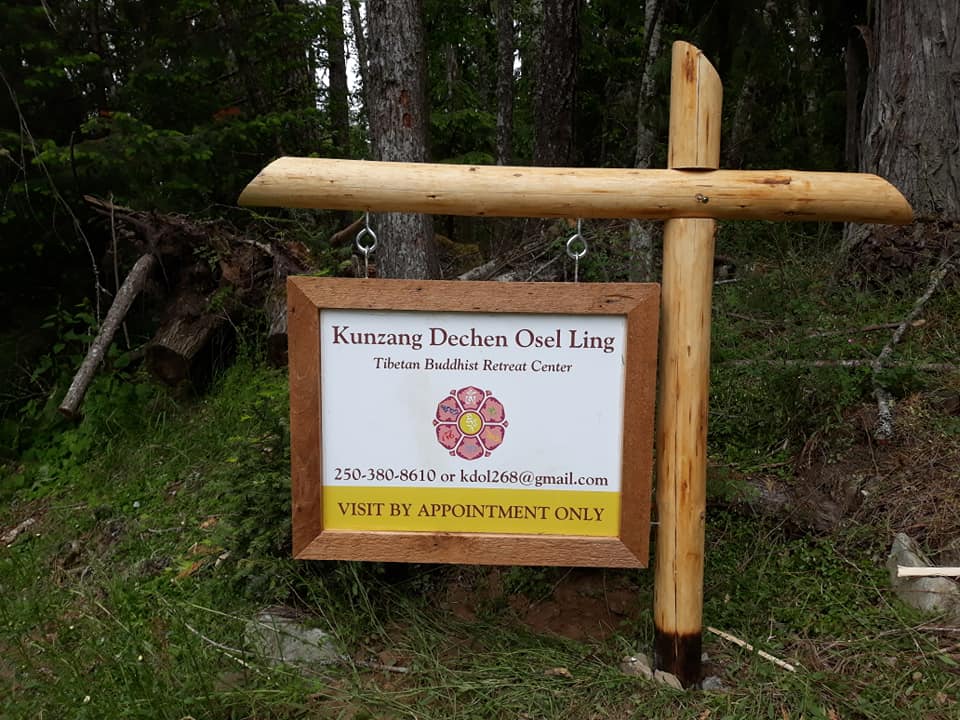
It helped him gain insight into the relationship which allowed it to end well. It also introduced him to the idea that “the Dharma isn’t something that is only carried by people or books. It’s also carried in place. Sometimes places are a teacher in themselves. It was a Tibetan Buddhist retreat center in the Shangpa Kagyu tradition of Kalu Rinpoche. He had founded this retreat center to be one of the first places in North America where western students could complete the enclosed three-year retreat that is necessary if you want to become a lama in that tradition. It’s almost at the top of a pretty small mountain overlooking the water on Salt Spring Island. Very isolated. To get to it, you have to climb up a long logging road. And it has the imprint of decades of devotion. Students have built retreat cabins and retreat spaces up there. All the buildings just have a lot of love in them, and so it was a really special place to find. When I first went there, it was even more special because it didn’t have electricity. If you wanted to see in the dark, you needed oil lamps. And it’s a magical experience to rise in the morning for group meditation and light your oil lamp and go into the shrine room. A wonderful introduction for me. I really fell in love with that place.”
His first visit was only two days long. Then he did a week-long retreat. “And after that week, the lamas invited me to come up for a summer and pay for my stay by working in the kitchen and doing other tasks around the retreat center including being the librarian.” He stayed three months and considered an even longer stay, but he finished his undergraduate work and practicalities took over. He decided to return to Ontario and go to law school at the University of Toronto.
“But I wasn’t very happy in Law School. So I thought what I should do was take a year off and go on retreat back to Salt Spring Island.” The school “with some grace” allowed him to interrupt his studies for a year, and, at the age of 25, he spent a year on retreat. “Cooking. Meditating. I don’t know how well you know the Tibetan tradition, but there’s a long preparatory practice called the ngondro which involved things like doing 100,000 full body prostrations as well as doing visualizations and that sort of thing. So I took the year to do the ngondro and also learned to cook, which was probably more useful.
“But it was an immensely influential year for me. If you read my book,[2] you’ll see that even though I’m writing about Zen Buddhism, a lot of the reflections arise out of things that happened to me during the year, realizations that I had during that year. Perhaps the most important realization I had during that year was I did not want to become a monk, that I was more suited to lay life. But it was a wonderful experience. And I returned to Toronto after it, graduated law school.”
He found work at the Department of Justice where to this day, twenty-two years later, he works as a research lawyer in the Litigation, Extradition and Advisory Division. And he felt the need to find a sangha in Toronto.
“I also realized that as much as I loved the retreat center, and as close a bond as I had with the two teachers who taught there, doing the ngondro showed me that Tantric Buddhism wasn’t my bag. And so I decided to look around to what other kind of teachers I could find in Toronto.”
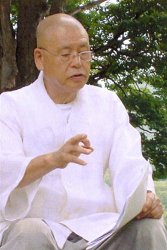
The teacher he found was Hwasun Yangil Sunim. “He’s a Zen monk born in Korea who immigrated to Canada in the mid-80s and started his own temple. And when I met him, I almost immediately realized, ‘This is my teacher!’ And I have been in and around his temple ever since.”
“What struck you about him?” I ask. “You said you liked the Tibetan teachers you’d met on Salt Spring but didn’t stay with them. What did Yangil Sunim have that they didn’t?”
He reflects a moment before answering. “Sunim[3] is a teacher of great charisma, as many teachers of his generation were, and almost as soon as I met him, I felt like he had something to teach. He had a Dharma, and he had a Dharma that he could transmit.”
“A sense of authenticity?” I suggest.
“It’s more than just authenticity. He has authenticity, but he also has the thing that I now realize is indispensable in Zen, which is you have to have your own take on it. It’s not a generic teaching; it can’t be a generic teaching. It’s only real teaching when it is put inside a vessel of its own shape. And when I met Sunim, I immediately realized this man is a vessel of his own shape, and if I stick around him long enough maybe I will be able to form my own shape.
It was at this point that I asked him what the function of Zen practice was, and he told me that it had none.
I take another tack. “You’re still a lawyer.”
“Part time.”
“So I’m guessing you occasionally come across people who say things like, ‘I hear you meditate; I hear you’re involved with Zen.’ If you’re talking with someone who has some familiarity with the tradition, you might be able to talk about its ‘suchness,’ but how do you explain it to someone who’s just curious?”
“It is you, Rick, who should be the lawyer. You’re doing exactly what a good cross-examiner would, which is pinning me down. And now that I am pinned down, I will absolutely confess Zen practice, attending a temple, studying under a teacher has lots of collateral benefits, and these are all collateral benefits, I admit, that I enjoy. I enjoy the sense of community. I enjoy the collateral benefits of meditation which are being happier, understanding your own mind better. A satisfying sense of transcending the worst parts of day-to-day existence and enjoying the best parts of day-to-day existence. I enjoy Buddhism because it’s changed my whole way of thinking about very important useful things like boredom, like a lack of self-improvement, like embracing your own very faulty nature, all those things I learned through Buddhism. Those are all marvelous collateral benefits. I mean, it’s fun just watching the mind pivot, and this is something that anyone who likes learning understands. But anyone who studies Zen will understand even more. It’s like learning to do yoga exercises that move your mind in ways you didn’t know your mind could move. And merely making those motions is itself a delightful experience. And so those are all collateral benefits that have kept me in Zen, but, counsel, I return to my original point which is that it has no purpose.”
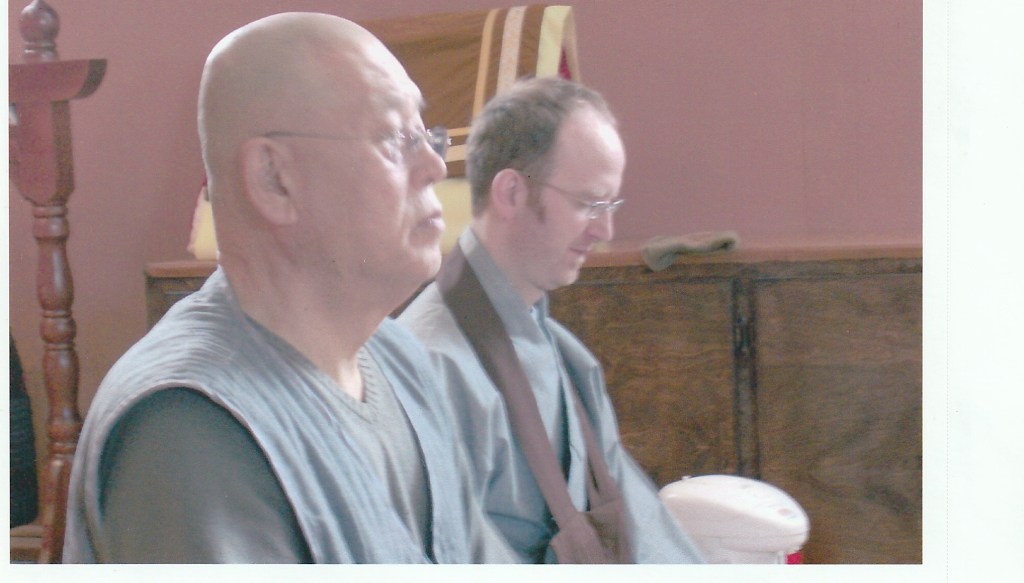
I know a little bit about the Kwan Um School of Zen, and the various stages of authority people who become teachers pass through. Matthew tells me that Yangil Sunim had been influenced by that model but had also modified it. “So, like in their tradition, he would ordain someone as a Dharma Teacher first. I believe I was the first person to be ordained by him as a Dharma Teacher. Lots of people would subsequently be given that designation. And then he would ‘transmit his Dharma’ and designate people as a Zen Master. I believe he did that with me in 2016.”
“Does anyone ever get Dharma transmission and then not use it? Does not go on to teach.”
“Well, his method is very interesting. I mean, he put very few institutional requirements on any of us, I would say. Certainly not official ones; certainly not regular patterns. The strength and the weakness of the Awakened Meditation Center under him is that it is very informal. I love his Dharma partially because it has this lack of stricture. I think it’s one of the reasons why he came to North America and one of the reasons why he stayed. He doesn’t actually have a ton of time for institutionalizing things. And in fact my Zen temple right now is in a bit of a twilight period because last year Sunim announced he was retiring, and he was going to return to Korea and never coming back. His western students – myself included – would take over teaching westerners, and a new Korean monk would come from Korea to attend to the needs of the Korean congregation because his temple had always that kind of dual role. So we said tearful farewell, and then within four months he was back at the temple because he just didn’t like living in a monastery, I think. So he’s largely retired but not exclusively, and so, as I say, we’re in this liminal period where he’s still kind of the boss and yet he’s both just devolving and undevolving responsibilities to us. He has named people Dharma heirs and not everyone who does that teaches. A few people who have received that transmission have gone off on their own and done their own thing, not under the umbrella of the Awakened Meditation Center.”
“As teachers?”
“Yeah. He’s transmitted to about eight people now. Somewhere around that number. And at our temple now are three or four who regularly come who have received transmission, and three of those four take an active teaching role, myself being one of them.”
“What does a Zen teacher teach?”
“That’s an excellent question.”
“Since it has no purpose.”
Matthew laughs. “I think the most important thing we do is teach newcomers the basics of sitting. I love doing that, and it’s nice when they come back. But I just like putting it out into the world, and if I never see them again that’s just fine.”
“I’m guessing that’s most of them.”
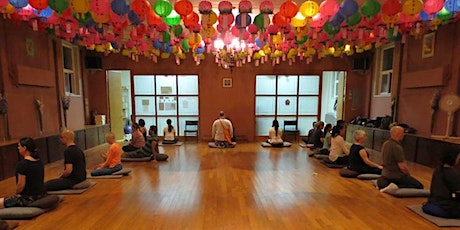
“Yeah, but it’s enough to just put it out there. And then at my temple, we always begin every class with a tea ceremony which has always been a big part of Sunim’s Dharma. In fact, he doesn’t give Dharma talks very often, but the last one he gave at the last retreat we had was about the unity of tea and Zen. So we always have a tea ceremony, and then we give instruction to those who are new. We sit in a group, and then one of the teachers will give a short Dharma talk usually talking about a koan or something like that.”
He explains that the Korean approach to koan introspection differs for the Japanese tradition in certain regards.
“We don’t really graduate through koans. There is no program or curriculum of koans. It would be very normal for someone to have one koan for their entire life. And the koans we use – I think this is also true in the Kwan Um School – the koans we use are often not derived from Zen stories. Often they’re just simple questions like ‘What am I?’ or ‘What is this?’ or ‘Put it down.’ That sort of thing. Someone might use one of those koans for decades.”
“What is the value of koans?” I ask. “I mean the more traditional koans like Gutei’s finger or the turtle-nose snake on the South Mountain. What do they do?”
“I think koans are the great treasure of the Zen tradition, and what they will do for us is give us a new way of reading. Instead of reading in order to gather information or to acquire information, koans are much more like poetry in that the purpose of the koan is to evoke something in you. But unlike poetry which is meant to evoke an emotion or a feeling, koans are more like what we spoke about earlier, the motions that your mind makes in Zen. The point of a koan is that when you read it – I won’t every koan but many koans – the point is that when you read it and you stub your toe on it, you’re frustrated with it. And sometimes that encounter, that hard encounter, is a long grueling ‘What-in-the-name-of-Jesus-H.-Christ-does-this-mean?’ kind of encounter, and sometimes it’s a very short, sharp, instantaneous stubbing of the toe. You know, you read something, and your mind just stops for a moment. But however it happens for the individual, the point is that your mind doesn’t work the same way as you want it to work. The koan has shoved you into a different stream. And our first instinct, of course, certainly before we study Zen – but even for most Zen students – is that you want to get out of that new rut. You want to get back into the world of understanding, or you want to get back to the way of digesting this as some information that you can assimilate into yourself. But what Zen hopefully teaches you is that, no, this getting knocked into a different route is itself precisely the point. That is a motion of your mind. And the more that you get to experience that, the more familiar you get with those kinds of abrupt, strange motions, the more interesting life becomes.”
“Okay. What is ‘awakening’?”
“Overrated,” he says with a laugh.
It’s such a delicious answer, I consider stopping the interview there.
“Coming to the realization that awakening is overrated is central,” he continues. “It’s extremely helpful. In the Blue Cliff Record it says speaking about these things isadding frost to snow. But, of course, awakening is real. It happens. It’s good . . . Until it’s bad. But it’s overrated, and there are other things to do, like sitting or being nice to people.”
This brings us to a discussion of the role of compassion (karuna) in Zen practice, as well as to the role of the Precepts – which are very important in the Kwan Um School – in Yangil Sunim’s tradition.
“That is an excellent question, and, taking a step back, I would say that is one of the great tensions within Zen. It is easy to judge a lack of compassion in Zen practice, and I think it is a mistake because it cuts you off from the great realization that ‘egoless’ and ‘compassion’ are ‘two words the same thing.’ Real compassion – not, like, abstract ‘loving every human being’ – but actual practical compassion is sort of the answer to meditation, to getting high on emptiness and that sort of thing. So it’s a very important tension. In my tradition, I can’t say that we follow the Kwan Um School as closely, which is to say that Precept instruction has never been a big part of Sunim’s teaching. I remember once asking him some question about what to do in an ethical situation, and he said to me, ‘Sometimes your Precepts are open, and sometimes your Precepts are closed. Don’t ask me when your Precepts are open and when they are closed.’ And that was the extent of his teaching on the Precepts. And this is quintessential Yangil Sunim. When he thought you were developing as a student, when he thought you were a serious student, he would also arrange to have a big formal Precept-taking ceremony for you, and everyone would gather, and there were congratulations, and it was a sweet moment. But we never knew what the Precepts we were taking were. And once you looked at the form he would give us – listing the Precepts we’d just agreed to – they would always be things that none of us would do, and he knew we would never do. I’ve sworn a Precept to never use money and never sleep on a bed higher than six inches off the ground. That’s his way. That’s what makes him what he is. And in its own way – I mean it’s wacky – but it also gets at one of the essential truths about the Dharma, which is it’s deceiving. The Dharma is a trickster, and you can’t get too attached to it because, on the one hand, it’s the most important thing in the world, and on the other hand it’s a bundle of lies and chicanery.”
“Oh,” I say, feigning to be scandalized, “are you going to tell me that Shakyamuni didn’t really twirl that flower?”
“Well, what an excellent hook-back to what we were discussing earlier about my early education in the origins of Christianity. One of the things I do in my book is I am very interested in both celebrating and talking about the myths of Buddhism, the essential myths of Zen. The Flower Sermon is one example. It was news to me, but I felt very important, when I discovered that the Flower Sermon wasn’t mentioned I think before the 11th Century.”
“Nope,” I say. “Not in the Pali Canon. It’s like when the Protestants translated Bible into the vernacular and discovered that things like indulgences weren’t in it.”
“Exactly! But unlike Martin Luther, I think we Zen students – mature Zen students – can be flexible about what this means. It doesn’t mean that I don’t teach the Flower Sermon. It doesn’t even mean I don’t revere the Flower Sermon. It just means the Flower Sermon joins just about everything else in that it is both sacred and an invention.”
“In the way most people,” I suggest, “acknowledge that their lineage charts which are supposed to go back to the Flower Transmission and Mahakasyapa aren’t actual historical documents that stretch back with any accuracy much beyond the 9th century.”
“That’s right. But at the same time, I think lineage is extremely important. I mean, I agree with you, and yet I think lineage is important because I think it’s good to know where someone is coming from; I think it’s instructive to know who their teacher was and how they have shaped their teacher’s Dharma into their own Dharma. And it’s useful to know if someone has had approval from a teacher in order to teach themselves. All those things are very useful.”
[1] Thomas Merton, The Way of Chuang Tzu, 1965.
[2] The Garden of Flowers and Weeds. 2021.
[3] “Sunim” is an honorific title for a senior monk.
 Richard Bryan McDaniel