
Sangha Jewel Zen Center, Corvallis, Oregon –
Mushin Abby Terris is the founding teacher of the Sangha Jewel Zen Center in Corvallis, Oregon.
She was raised in a household in the Bronx which she describes as culturally Jewish, although her mother’s family were members of the High Church of England. “My father was Jewish, although more a political Jew than a practicing Jew. But his parents had escaped Russia, and they were communist organizers. Or his father was. So they came over when they were very young. I was born in 1947, and there was a very strong Reformed Judaism tradition and subculture where I was living. So kind of by contact with my friends – many of whom were Jewish – I came to identify with that tradition. My grandmother – my father’s mother – was always raising money for trees in Israel. Two things I remember about her: she raised money for trees, and she was a great cook.”
“So culturally but not necessarily religiously Jewish?” I suggest.
“Culturally absolutely. And I went to Temple with friends of mine but was not at all interested in the spiritual aspect of things. My father was a sculptor; my mother was a poet. They both were college professors. I spent a lot of my childhood in museums and galleries and at readings, and that was much more of my spiritual – I don’t know – temperament? There weren’t beliefs involved; it was just an underlying sense of where I belonged.”
Her introduction to Eastern spiritual practices came about after she and her husband left Manhattan for the West Coast.
“It was a beautiful spring day, living on the Upper Westside of Manhattan, and my husband and I couldn’t find a place to sit down in the park. And we said, ‘This is ridiculous. We’ve got to go somewhere where we don’t have to wait every time we step outside.’ He was at Columbia in Graduate School. So he looked at programs across Canada and down the west coast, and we took a trip. When we got to Seattle, we thought, ‘Yeah.’ So he transferred to Seattle. At Columbia, he had been studying Japanese language and literature, but when we got to the University of Washington, he switched to Intellectual History and the History of Science. So I didn’t meet Zen through that connection.”
She found work at a shelter for runaway girls, and one of her co-workers was involved in Transcendental Meditation. “So I went with her to a meeting, and I got my initiation.”
I ask her why she went.
“Well, this was the early ’70s, and everything I saw around me was unsatisfactory. I was young, and I thought, ‘How am I going to live into this life?’ And so this was one possibility. So I checked it out. And it had the promise of something unarticulated. So I did that on my own for a couple of years. But there was no information, no teaching. I didn’t have a sense of context, and I wasn’t having any particular experiences except that I was developing kind of a constancy in my schedule around meditation. But then I gave it up, and I got divorced. I moved. I made friends with someone who was on his way to a yoga class and invited me, so I said, ‘Sure. I’ll go.’ And I started doing yoga. And that very same week, the same person said, ‘If you’re interested in yoga, you might be interested to come to the Zen sit with me.’ So we went to the Zen group which was being taught by Professor Glenn Webb.”
Glenn Webb was an art professor at the University of Washington who eventually became an ordained priest in the Obaku sect of Zen. He was instrumental in introducing several people I’ve interviewed – including Genjo Marinello and Wendy Nakao – to Zen practice. The sitting group he hosted met in an art studio on campus.
“And, of course,” Mushin tells me, “my father was an artist. I walked in there, and it was like, ‘Oh, wow. I’m home. The paints . . . This is so familiar. This is so much my native surroundings.’ Sat down and started doing meditation. I mean, I had no idea what I was doing. But I immediately felt like, ‘Oh! I know this!’ And what I discovered many years after, I was at a Rohatsu retreat, and I realized that I had asthma my whole life starting when I was two. So since I was two, I had many asthma attacks, and I had to pay attention to my breath. So I had actually been practicing zazen since I was two. Which in another way, how did I come to Zen? I just came back to Zen in that way.”

Shortly after Mushin began Zen practice, Webb arranged for the Japanese teacher, Katsufumi Hirano, to come to the university in order to lead a retreat. “I didn’t know his name was Katsufumi,” she admits. “I just knew him as Hirano Osho. Which just means priest. Priest Hirano. He was very impressive in his dignity. It was a seven-day sesshin, and I couldn’t believe that I had signed up for this really difficult practice.” She chuckles at the memory. “I was in so much physical pain, but I was really determined. I was really determined from the beginning.” She pauses a moment. “One thing I haven’t said about my family – and I actually don’t really want to go into it – but it was a very, very troubled family. And I always felt – maybe because I started Zen when I was two – I always felt like, ‘How can these people be so disturbed?’ You know? The whole family system was so disturbed, and I always saw so clearly what was going on. But I was pretty desperate. I came to Zen with a feeling of desperation. I needed to sort out whether I was crazy or whether I was going to go crazy or if I was actually okay. And it was my very good fortune to come across Zen.”
“What made you fear you might be crazy?”
“Well, my father was very paranoid, and so I didn’t see things the way he saw them. And now I’ve come to – especially at this moment[1] – I’m coming to appreciate how he grew up a Jew during World War II when antisemitism in New York and in this country was huge. But that wasn’t my experience at all. And he was bi-polar – what we say now, bi-polar – and didn’t get along with people. He was very difficult.”
“And how was it that Zen helped you address that?”
“I began to trust my own perception of things as being as valid as any other perceptions.”
It takes me a moment to parse this. “It helped you feel confident that your perception of things was as valid as your father’s?”
“At least. And I’ve come to recognize . . . One of the first koans that was mine to do, the daily primary koan was about the two truths, the relative and the absolute. Being able to see the samsaric view where we’re really caught by our narrative, and that there is a way of seeing that is not caught by narrative, that understands the nature of mind and narrative. That was personal koan, ‘Am I crazy?’ You know, the Genjokoan. Pre-Dogen,” she says with a laugh. “The primary koan of daily life. That’s the form it originally took, and it was very, very pressing for me to investigate. That was really the desperation that underlay my commitment to Zen practice.
“So I did that retreat with Hirano Osho, and I had one very brief moment that was crystal clear, pure, and spacious. It was like one breath. It was like ten steps during walking meditation. That was it. That was, ‘Okay. This is true. This is true.’ So then Hirano and Glenn Webb and myself and about four other people, that following week, we had an appointment at McNeil Island Penitentiary to sit with some of the prisoners. We took the launch, which actually was an incredibly beautiful old boat on a private dock, and there was a macrame pad stretched about twenty feet along to pad it so that when the boat hit against the pier it wouldn’t be scratched, and that was such an incredible work of art. And I never understood macrame before I saw that. That’s how it originated! It was a sailor’s craft. It was wonderful. Anyway, we went over there. And we were sitting in a room. There may have been twenty prisoners in that room with us. And it went for eight hours or something. It was a long day. And we were right next door to the gym, and there was a basketball game going on. And I was in so much pain that I thought the only thing that I could do is get absorbed in listening to the basketball game. And I did, and I had quite a breakthrough in that moment. So when I came back from that, at the end of the day, I was in downtown Seattle waiting for the bus to go home, and I felt like I could read everybody’s mind. I could see everybody’s state of mind. I was looking around, like, ‘Whoa! You can just see who’s thinking what, how disturbed or how happy they are.’ There was a transparency that lasted a number of days. So that was quite powerful. And also a trap, because then I tried to get back to that same state,” she adds, laughing. “So any time I had experiences like that . . . You meditate for fifty years, you have a few of those moments that stand out as particularly pure. They’re always also traps till you wise up and you know . . .” She leaves it there.
She continued to sit with Glenn Webb’s group, and one day he announced that an American Zen Master would be visiting the following week and asked people to make an effort to be in attendance.

“About a month before that I had a dream, and I’ll tell you the dream. It was at night. The air was filled with the ringing of millions of insects. And I was a woman in my 40s. It was very graphic, and it had the feel of the turn into the 20th century, so early 1900. Maybe it had that sensibility because I had just seen The African Queen which had the same feel to it. I was in a house that had no walls, just a big roof, and I looked over into the living room area and there was man I recognized as my husband who was very tall, a missionary or a priest or something. And he was surrounded by all of these very short kings from the hill tribes around us, and there was a war going on. I was kind of in the kitchen area; I looked back, and there was my 8-year-old daughter being held by her nurse, who was looking anxiously out into the night. And I looked back, and one of the kings was reaching back and put a dart into my husband’s temple. And my husband collapsed, and a pool of blood gathered on the grass matting. Then the nurse was pushing my daughter toward me, pushing us both out the back door and saying, ‘If you can get to them out there, you’ll be safe.’ And we ran. I took my daughter’s hand, and I was very aware of her little hand in mine. Ran toward a campfire out in the darkness, jumped over a deep divot in the ground and reached for grass to pull us up. And when we did that, I cut my hand. And at the cut of the hand at the same time I heard them talking, and I breathed this huge sigh of relief because I knew we were safe. And I woke up. That was the dream.”
“Did you actually have an 8-year-old-child at the time?” I ask.
“No. And I wasn’t 40. I was – I don’t know – younger. And when I woke up, I went, ‘Ouf! That wasn’t a dream.’ It didn’t feel like a dream. It had an uncanny feeling about it. And I’ve had experiences like that actually. It’s not unusual. I mean, it’s only occasional, but . . . So the following week, the American Zen Master was visiting us at the Zen Center, and in walks the man who was my husband in the dream. It was like, ‘Oh my God! That’s the person in my dream.’ It was Robert Aitken Roshi. So, he said that he was going to have a weekend retreat coming up, and I attended that. And I told him about the dream. And he said so wisely – I now as a teacher recognize his wisdom in this – he said, ‘It’s true we have an affinity. I have an affinity with many people.’ So what he was saying was is when you’re a teacher you get all kinds of projections on you, and he was letting me know right from the start that, of course, we had an affinity. We met. But he would often talk about mysterious affinities when he spoke about the whole realm of karma, all the karmic suggestions, the things we call karma. There are the classical teachings on karma, but there’s also what we notice about where we get born, the families we’re born into, the people we meet. This remarkable affinity with Zen. Different affinities fall under the heading of ‘karma.’ So he said, at that point, ‘You might want to consider a three-month practice period that’s coming up at the Maui Zendo.’ And, of course, I didn’t even hesitate. I got that lined up, and I went, and I studied with him for three months. That was on Maui. I only saw him about four times after that when he would come to Seattle as a peace activist. I never went back to Hawaii.
“He was very much a political activist, and I was too. And after that practice period, he was coming over to Seattle because we were organizing the Stop Trident campaign. The Trident subs. And he was involved with that. I was involved with that. And during that time, we took a canoe – I forget who else was in the canoe with us; it was a fairly large canoe – down the Puget Sound, right to the naval base. And we got off across from the naval base, and we walked back and forth chanting the Heart Sutra. It was quite wonderful. Oh, yeah! We were with the monks who were beating the drum, the monks who came for that particular action. And during that action, I met a man who I was very drawn to, but I didn’t know him very well. And he was very drawn to me. And I became pregnant just at that time. I mean, right away. We met, and I got pregnant. We looked at each other, and I was pregnant. And I said, ‘Roshi. I don’t know what to do.’ Because at that point, I wasn’t ready to have a child. And he said, ‘Well, you know, this is the way that life behaves. Go with your heart. If you want to be with him, go ahead; do it.’ Even though I wasn’t sure that he was the right person for me. So we did. We stayed together. Eventually we got married, and we have two kids. And we are divorced,” she muses, laughing gently, “after a very, very conflictual long relationship. But it’s fine. And, oh, my goodness! The two daughters that got born through my connection with him are terrific.”
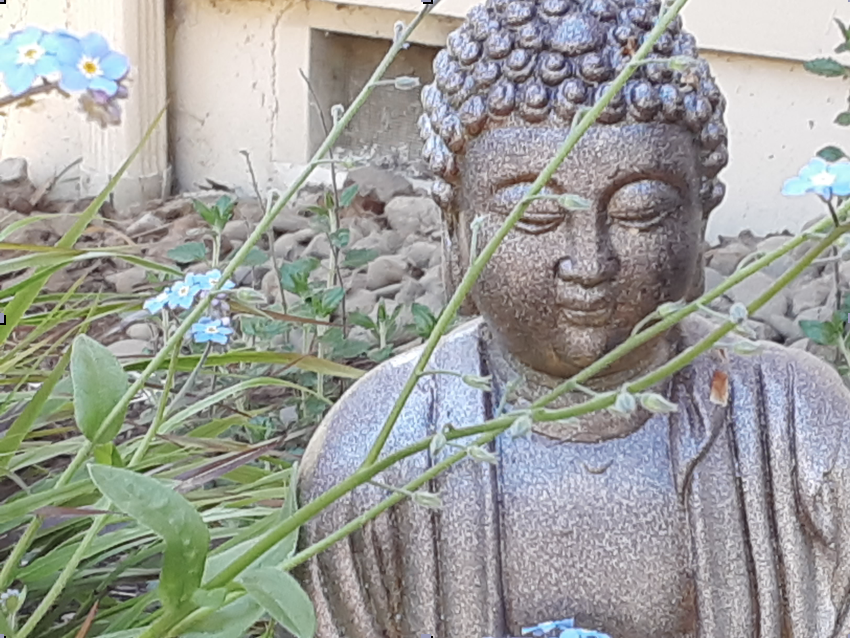
She went onto to train as a psychotherapist and eventually it was time to leave Seattle.
“When I got there in ’72, it was great, but it really, really grew. And I didn’t like it. It was kind of like when we left New York. It was just too much. So I was a psychotherapist, and I was doing Zen, and I had connected with Chozen Bays in Oregon. So my husband and kids and I decided we would look for a place, a small town that had an edge where I could have a Zen group and a therapy practice. It had to have a university, so we would get good movies,” she chuckles. “And we would be closer to Chozen, so Corvallis is the place we moved.”
I ask how she met Chozen.
“Well, I became aware of her when in 1983 she published an article in The Journal of Ten Directions, which was put out by ZCLA. I think it was about being married to somebody who doesn’t practice, and what that required; how to approach that as a practitioner. And when I read that article, I said, ‘Oh, there’s somebody I want to practice with.’ And then I found out she had started a group in Portland, Oregon. That was one of the things that began to percolate the idea of moving down here.”
I ask what Chozen was like.
“Well, first of all she is so bright. So bright. And she’s a doctor. She was the golden child in her family. She was the golden child at ZCLA. So she doesn’t have any withholding energy about her at all. And she’s really very funny. I don’t know if you sampled that, but she’s really a natural comedian. She uses art and music. They have the marimba band. Some of those marimbas I gave them because my daughter and husband were part of a marimba band. So when everybody grew up and left, I had these marimbas that I gave to Chozen when she started the band. But everybody who trains at the monastery learns marimba.”
“As well as square dancing,” I point out, remembering my visit to Great Vow Monastery when I first began this series of interviews. Chozen’s was the third interview I conducted.
“Square dancing. And art. You know, she did that whole project on Jizo at the 50th anniversary of the atomic bombing of Japan. They gathered thousands and thousands and thousands of memorial flags and sent them to Japan. She does all kinds of stuff all the time and takes advantage of any Dharma gate to teach.”
“And you have Dharma transmission through her?” I ask.
“I have sangha transmission through her.”
“Which means?”
“It means I was never transmitted as a priest. Which is a little confusing because at jukai, we all receive sixteen precepts, and our vows are all in common. If you ordain as a priest, you also make additional commitments to live at the monastery for five years and train there. And I never trained residentially with her. They’re really training people to maintain the ritual function, and, actually, since transmission, I’ve been down here in Corvalis. I started a center here which is growing. I’m about to have two assistant teachers. In one way I do feel at a disadvantage because I don’t have the ritual choreography in my body. When you train as a priest, you really get it in your body because you do it over and over and over again. But the advantage of that is that I can adapt the rituals to a lay community, which in some ways serves it. The two people who are coming in as my assistants are trained at Great Vow Zen Monastery – they are Zen priests – and I’m really glad they’re coming because I think we’re going to find a middle way here.”
“The whole issue of lay transmissions is a controversial one,” I remark. “Chozen’s Dharma brother, Bernie Glassman, specifically set aside his priestly robes. What value is there in having a priestly lineage in North American Zen practice?”
“Well, it depends. Zen and Buddhism aren’t the same. And I think we have to consider temperaments. There are different spiritual temperaments, and if I’m going have a center that serves all the temperaments, there needs to be some of the traditional trappings on offer. Because this whole idea of having services which are always the same is that some people rest into it and learn it. It can be part of resting into, ‘I belong here. This is my home.’ And it’s very intimate. It’s also in the course of developing oneself in a ritual way that you really are confronted with what you like and what you don’t like. ‘I don’t bow! I don’t bow!’ You know? And then in the end, people say, ‘I love bowing.’ It opens up a way of relating to the self project. That ‘I don’t bow’ is pure self. It has a lot of, ‘I’m this way, and I’m not that way.’ In the religious offering, which is wider, we come to be able to identify all parts of our self, all the different aspects and energies that we are, some of which have become shadow material. I mean, the thing about Zen is that we really see everything that we’re identifying ourselves as and these fixities are released. I always say, ‘What’s the liberation?’ That’s the liberation.”
I ask how her group in Corvalis first came about.
“It started as a home sitting group. The first week that I moved to Corvalis, I was at a community clinic, and I let people know that I was going to start a Zen group. I’ve always known that I was going to lead a center. I just always knew it. It didn’t even feel personal.”
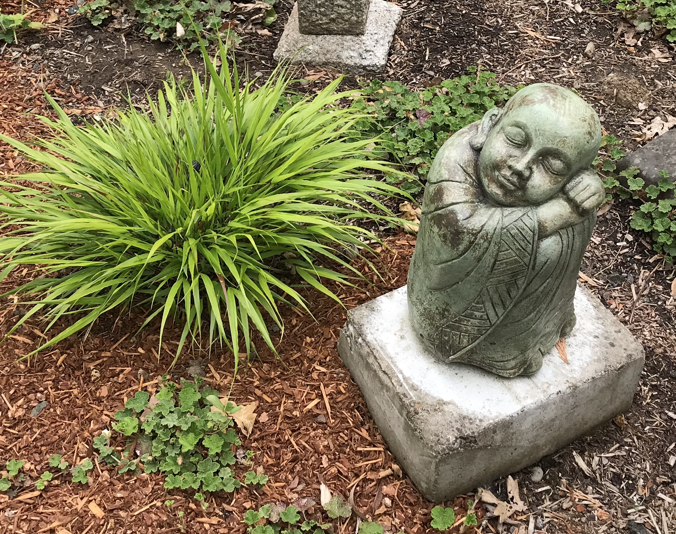
“And how do you see your role there? What’s your job description?”
“The job description of an abbot? Let’s see . . . I mean, in taking on these assistant teachers, we have a long list of everything involved in being the teacher of a center. Overall maintenance. Holding the vision and running every developmental aspect through that vision to see what supports it. A vision of bringing a full practice – a full, liberating practice – forward for anybody who’s seeking it. And that involves everything. In Sangha Jewel Zen Center, every aspect of our practice is the practice. So if you have training positions – you know, the tenzo and the shuso, all that – they’re all there to support the wider mission of maintaining strong, clear practice to transmit the Dharma, to realize the Dharma, realize the significance of these teachings. And that includes giving Dharma talks, doing sanzen interviews. I’ve started something called ‘dao ran’ which is a ‘people of the way group’ for people who have received jukai. These are people who have taken refuge and want to continue to study more deeply.”
“So if they’ve taken jukai, they’ve formally become members of the Buddhist community. Can one practice Zen outside of Buddhism?”
“Absolutely.”
“In that case, what’s the advantage of formally becoming a Buddhist?”
“Practicing Zen is full presence on your own wherever you are. Right here. Clear. Responsive. Responsible. But there’s no necessary sangha to keep you company in your clarity. So there are Three Treasures in Buddhism: Buddha, Sangha, Dharma. Three Treasures. You know? There are all the teachings.”
Then she asks me if I considered myself a Buddhist, and I admit I don’t. “For me, Zen has been a very practical way of developing a spirituality that isn’t necessarily Buddhist. If I’m pressed, what I usually say is that I’m a Roman Catholic by birth and heritage and a Zen practitioner by nature and temperament.”
“Are you still a Roman Catholic?” she asks.
“By birth and heritage. In the same way that you’re still Jewish by birth and heritage.”
She nods. “Exactly. That’s the karmic . . . uh . . . soup in which we are little morsels.”
“The point is that there are authorized teachers I’ve interviewed who do not necessarily self-identify as Buddhist,” I go on. “They describe themselves, rather, as Zen practitioners. And they see Zen partially as a technique, but also as a way of life, although not necessarily connected with a specific philosophical perspective. On the other hand, other teachers have told me they are first and foremost a follower of the Buddhadharma and that Zen practice is just as one upaya they make use of. There’s a range. On that scale, where do you see yourself?”
“Yeah. I love this question. I appreciate the forms I got from Chozen. I didn’t particularly get them with Aitken Roshi. But if it’s the choice is, ‘This is Buddhist!’” – she holds up one hand – “You know, robes and all the paraphernalia, and this is Zen practitioner” – holding up the other hand some distance lower – “I’m right down here.” She indicates the Zen practitioner hand. “But I do say that this is a way of life, and a part of what people learn are the Precepts. The Precepts are part of the Buddhist teachings. So the three legs are meditation, precepts, and study, which I might call ‘not knowing.’ I mean, everything supports ‘not knowing,’ but study really supports ‘not knowing.’ Because when you start to study the history of Buddhism and all of the teachings, you’re left with the same questions that you are asking now. There’s such a wide variety. And it’s not a matter of belief; it’s a matter of self-experience. But the study can help clarify the view of your own experience. Right? The meditation is essential . . . Although some people say that meditation is not essential. But I think in a culture such as ours, meditation is quite essential because it’s a regular quieting and calming.”
“I think I’d find it difficult for someone to claim to be a Zen practitioner if they didn’t meditate,” I say. “Although I could understand someone self-identifying as a Buddhist and not meditating. You know, the original Soto Zen communities on the west coast were made up of Japanese immigrants who saw themselves as Buddhists and believed that meditation was something monks did rather than lay people.”
“Let me say one thing about that, which is I think that people who are serious poets, people who are practitioners of some very demanding activity that is not a means to something else but in and of itself, those are Zen practices.”
I tell her that David Weinstein had said something similar. I paraphrased him to her at the time, but I was pretty close to what he’d actually said to me: “Meditation is not something we have to learn, we just have to remember it, and we have moments of it all the time. So when someone new comes to me, I don’t say, ‘Okay, we’re going to count your breath.’ I say, ‘What do you love?’ And they tell me, ‘I love rock climbing.’ ‘Tell me about rock climbing.’ And they’ll tell me about rock climbing. And as they’re telling me about rock climbing, I’m identifying in their story, ‘That’s meditation. What you’re doing there. What you’re describing to me, what’s going on in your mind and your body and your heart when you’re doing that.’”
Mushin nods her head, telling me that, coincidentally, one of her daughters is a rock climber. “And whenever I see her, she wants to talk. She wants to share the Dharma with me. And there’s no difference between her Dharma and my Dharma.”

[1] The interview took place during the Israeli response to the Hamas attack of October 7, 2023. There was a rise in antisemitic activity and rhetoric around the world at the time we spoke.
 Richard Bryan McDaniel